2027 Best AI Pilot Design Courses for Managers

Co-Founder and Chief Data Scientist
Managers seeking to lead AI pilot projects often face challenges such as lack of technical expertise, unclear implementation strategies, and difficulty aligning AI initiatives with business goals. These obstacles hinder effective decision-making and slow adoption of innovative technologies within organizations.
For professionals transitioning from unrelated fields, finding flexible, accredited courses tailored to managerial roles in AI pilot design is crucial. This article evaluates the top programs that equip managers with the skills to bridge the gap between AI technology and practical business applications. It aims to guide readers toward the best educational pathways to confidently initiate, manage, and scale AI projects.
Key Things You Should Know
- Top AI pilot design courses for 2026 focus on integrating managerial skills with practical AI applications, addressing a 35% projected increase in AI-related leadership roles by 2030.
- Programs emphasize ethical AI use and regulatory compliance, reflecting a 2025 uptick in government policies impacting AI deployment in businesses.
- Most courses offer hands-on experience with cutting-edge AI tools, enhancing managers' ability to oversee AI projects within cross-functional teams effectively.
Advance Your Career with AI Online Courses
Artificial Intelligence: Implications for Business Strategy
This program provides an introduction to Artificial Intelligence and their implications for business strategy. Earn an official digital certificate.

Oxford Artificial Intelligence Programme
Explore this Oxford Artificial Intelligence programme offered in a flexible learning environment and explore topics like machine learning, automation, and robotics.

Implementing Agentic AI: Building Your Organizational Playbook
This online MIT Agentic AI course offers a practical approach to deploying AI agents in your organization, including a custom playbook. 3 weeks, exclusive launch price.

AI Adoption: Driving Business Value and Impact
This online MIT AI Adoption: Driving Business Value and Impact offers practical frameworks to close the gap between AI potential and business reality.

Artificial Intelligence in Pharma and Biotech
Discover the applications and limitations of artificial intelligence in pharma and biotech with this MIT online short course.

What is an AI pilot design course for managers and who should take it?
An AI pilot design course for managers in the United States equips professionals to develop, implement, and evaluate pilot projects that integrate artificial intelligence solutions within organizations. These courses bridge the gap between technical AI capabilities and strategic business goals by teaching essential skills for managers in AI pilot program development.
Participants learn to design low-risk, scalable AI experiments that test models in controlled environments, minimizing costly failures and ensuring alignment with company objectives.
Managers involved in digital transformation, innovation, or strategy—including product managers, project leads, operations managers, and executives—will find such courses valuable. They focus on project design, stakeholder coordination, risk assessment, data governance, and performance metrics specific to AI pilots.
For example, a retail product manager might design a pilot to test AI-driven recommendation engines on a limited user base before wider deployment. Similarly, an operations manager in manufacturing could evaluate AI predictive maintenance tools to reduce downtime risk.
A 2024 survey highlights the urgency for acquiring these skills: 79% of corporate strategists see AI-enabled decision support as critical to achieving their business priorities by 2026. This emphasizes the importance of effective AI pilot programs to avoid missed opportunities.
Professionals seeking to understand practical AI applications without deep coding experience may explore what is applied AI engineering to enhance their strategic impact through AI pilots.
Advance Your Career with AI Online Courses
Artificial Intelligence: Implications for Business Strategy
This program provides an introduction to Artificial Intelligence and their implications for business strategy. Earn an official digital certificate.
Oxford Artificial Intelligence Programme
Explore this Oxford Artificial Intelligence programme offered in a flexible learning environment and explore topics like machine learning, automation, and robotics.
Implementing Agentic AI: Building Your Organizational Playbook
This online MIT Agentic AI course offers a practical approach to deploying AI agents in your organization, including a custom playbook. 3 weeks, exclusive launch price.
How can AI pilot design training help managers lead practical AI projects at work?
AI pilot design training equips managers with essential AI pilot project management skills, bridging the gap between technical knowledge and strategic leadership. It helps define clear objectives, select suitable AI tools, and establish measurable success criteria, ensuring pilots deliver actionable results aligned with business goals. This practical artificial intelligence training for workplace leadership teaches managers to coordinate cross-functional teams, including data scientists, engineers, and business stakeholders, reducing communication errors and project delays.
Risk management is a key component, guiding managers to identify ethical, operational, and privacy challenges early. They learn to apply compliance frameworks and make informed decisions regarding data use and model deployment. Recognizing AI limitations prevents overambitious pilots that fail to scale and fosters realistic project scopes.
Courses promote iterative development and feedback loops, enabling continuous refinement of AI models based on pilot results. This agile methodology accelerates value extraction and improves project outcomes. For instance, a retail manager trained to lead AI pilot projects can adjust personalized recommendation models based on customer feedback data.
With AI adoption expected to surge to 75% of companies by 2029, managers skilled in pilot design will be critical in evaluating vendor solutions, integrating AI with existing systems, and scaling pilots to full deployment. Specific benefits include:
- Clear project frameworks reducing costly trial-and-error.
- Enhanced collaboration between technical and business units.
- Improved data governance and ethical oversight.
- Accelerated time-to-value for AI initiatives.
Those interested in combining AI training with practical career advancement might also explore the cheapest online mechanical engineering degree, integrating technical expertise with leadership skills.
What types of AI pilot design programs do U.S. schools and providers offer?
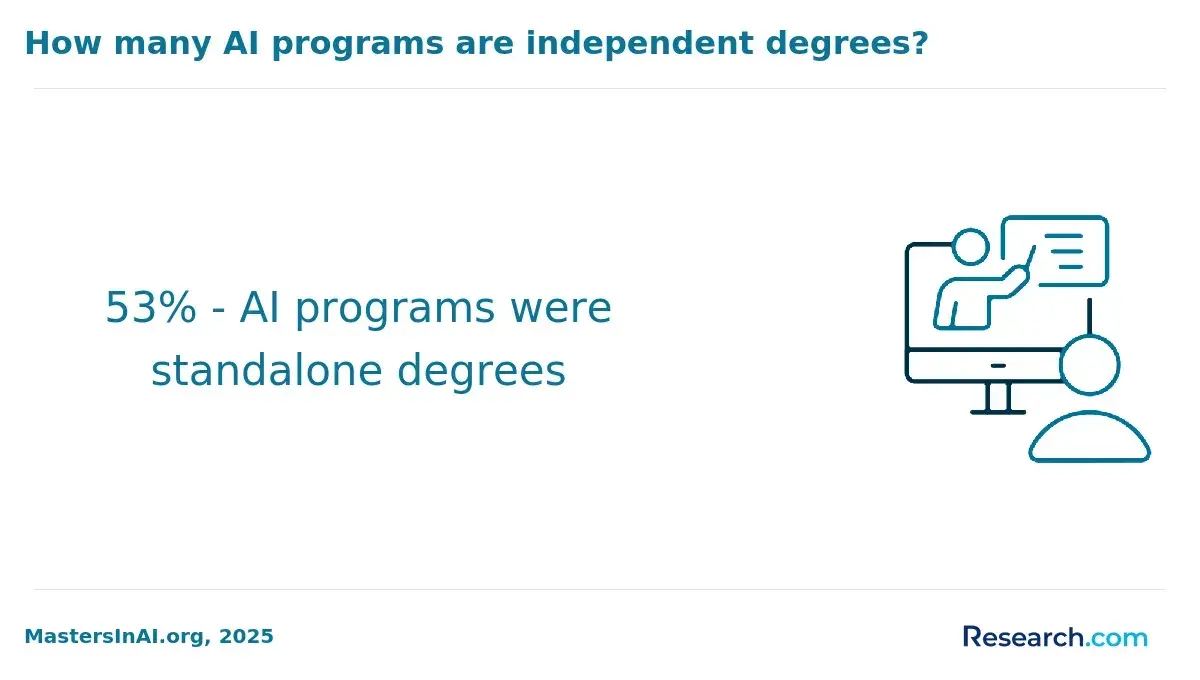
U.S. schools and providers offer a variety of AI pilot design certificate programs in the U.S. tailored for managers aiming to lead AI initiatives effectively. These programs generally fall into three categories: certificate courses, executive education, and specialized graduate-level programs.
Certificate courses emphasize hands-on skills like pilot project roadmaps, stakeholder alignment, and risk management, often focusing on integrating AI into business workflows and governance frameworks.
Executive education targets mid- and senior-level managers with a blend of strategic thinking and technical knowledge. Topics include ethical AI deployment, cross-functional leadership, and data-driven decision-making, frequently using case studies and simulations to address real-world pilot challenges.
Graduate programs, such as specialized master's or MBA tracks, adopt an interdisciplinary approach, combining AI technologies with project management and innovation strategy. These prepare managers to design pilots aligned with organizational goals, budget constraints, and compliance demands.
Managers who pursue manager training in artificial intelligence pilot projects gain valuable skills that impact career growth. LinkedIn's Future of Work Report highlights a 21% median salary premium for roles requiring AI expertise versus similar roles without it.
Key focus areas across programs include stakeholder communication, ethics, risk assessment, and performance metrics. Prospective learners should choose programs with practical projects and current AI tools to ensure business readiness. Those interested in broadening their technical skills might also consider a cybersecurity online degree as a complementary option.
What should managers look for in the curriculum of an AI pilot design course?
Managers seeking an AI pilot design course curriculum for managerial decision-making should look for programs that integrate theoretical knowledge with practical leadership applications. Core topics include AI strategy development, ethical considerations, and data governance to enable responsible project design aligned with business objectives. Emphasis on measurable outcomes and scalability is essential for effective pilot initiatives.
Essential skills in AI pilot design for business managers include proficiency in cross-functional collaboration. Effective courses address communication between technical teams, data scientists, and stakeholders, helping managers clearly convey AI capabilities and limitations. Real-world case studies demonstrate successful pilot frameworks across various industries, illustrating challenges and adaptations.
Risk management is another critical area, focusing on bias identification, compliance, and operational risk mitigation during AI implementation. Practical workshops that involve current tools and platforms allow managers to engage in iterative design and evaluation firsthand.
Data literacy remains vital, with training on interpreting data outputs, performance metrics, and feedback loops to enhance pilot refinement. With 73% of organizations increasing AI-related training budgets last year and 44% allocating more than a 25% boost, according to Deloitte's 2024 Global Human Capital Trends, leadership capacity to drive AI adoption is paramount.
Flexible learning methods, such as combining synchronous sessions and self-paced modules, support working professionals. Managers should also consider advanced study options like a PhD data science online to deepen their expertise and guide AI pilot projects from conception to organizational integration.
How do online AI pilot design courses compare with campus and hybrid options?
Online AI pilot design courses offer flexibility essential for busy professionals but often lack the interactive and project-based learning that enhances skill retention. Campus courses provide immersive experiences with direct instructor access and peer collaboration, fostering immediate feedback and stronger networking opportunities. Hybrid models attempt to blend convenience with in-person benefits, though physical attendance requirements may limit accessibility for some.
A recent McKinsey survey demonstrates that organizations using cohort-based, project-driven AI training for managers see 1.7 times higher productivity gains compared to those relying solely on self-paced learning. This highlights how structured, collaborative programs drive real-world results.
Cohort-based online programs, featuring live workshops, group projects, and expert mentoring, effectively replicate many benefits of campus environments while maintaining online accessibility. When selecting an AI course format, managers should weigh the following:
- The value of networking and peer learning, strongest in campus and hybrid courses but possible in virtual cohorts.
- Flexibility needs, where self-paced courses excel.
- The impact of hands-on AI pilot projects on skill application and return on investment.
- Access to expert feedback, typically richer on campus but growing in live online formats.
Well-designed cohort-based online AI courses can match campus outcomes when prioritizing interaction and applied learning.
How can managers evaluate accreditation and institutional quality for AI pilot programs?
Managers assessing institutional quality for AI pilot programs should prioritize accreditation by recognized bodies such as regional agencies endorsed by the U.S. Department of Education or the Council for Higher Education Accreditation (CHEA). Such accreditation ensures programs meet rigorous standards in curriculum design, faculty expertise, and resource availability-essential for specialized AI pilot training.
Review program content carefully to ensure alignment with industry demands. Favor courses led by instructors with demonstrated AI research or applied project experience. Check if the curriculum includes AI ethics, data governance, and practical deployment strategies, which are critical for AI-augmented leadership roles.
Institutional partnerships with AI industry leaders or research centers often enhance program relevance. Collaborations may provide access to cutting-edge technology, case studies, internships, or capstone projects valued by employers.
Evaluate graduate outcomes as key indicators of program impact. Data on AI-related job placements, promotion rates, and leadership advancement reflect an institution's success in preparing managers for evolving AI-driven roles. According to PwC's 2024 AI Jobs Barometer, up to 30% of jobs might be automated by the early 2030s, increasing demand for AI-savvy leaders.
Consider program flexibility, duration, and delivery modes. Accredited online options with strong student support can offer comparable quality to traditional on-campus programs, accommodating busy professionals' schedules.
What are the typical admissions requirements and time commitment for these courses?
Admissions for AI pilot design courses targeting managers usually require a bachelor's degree in business, engineering, computer science, or related fields. Candidates often need three to five years of experience in technology management, product development, or strategy roles.
Some programs assess foundational knowledge of data analytics or AI concepts through prerequisites like coursework, certifications, or entrance exams. Executive programs may also require employer endorsement, highlighting the course's relevance to active AI initiatives in the workplace.
Course durations range from 8 to 20 weeks, depending on the format. Part-time options demand about 6 to 10 hours per week for lectures, case studies, and group projects, enabling managers to balance professional duties. Intensive bootcamps condense learning into 1 to 2 weeks of full-day sessions, requiring focused short-term commitment but less overall time. Hybrid courses combine asynchronous learning with live sessions, offering flexibility for working professionals.
A Boston Consulting Group report shows 60% of companies face a "pilot trap," scaling fewer than 15% of AI use cases broadly. To combat this, many courses emphasize applied projects that mirror real-world AI pilot challenges, aiming to improve scaling success. Prospective students should be ready for rigorous schedules and prepare adequately to meet course demands effectively.
How much do AI pilot design programs cost, and what funding options exist?
AI pilot design programs in 2026 generally cost between $1,000 and $10,000, depending on length, depth, and provider. Shorter bootcamps focused on skills typically range from $1,000 to $3,500, making them suitable for managers seeking a quick yet comprehensive introduction.
More intensive certificate programs offered by universities or tech organizations usually fall between $5,000 and $10,000, featuring hands-on projects and strategic frameworks tailored to leadership roles.
Funding options can significantly lower expenses. Employers often sponsor AI training since employees with AI training were 1.6 times more likely to report productivity gains of 30% or more, according to Microsoft's 2024 Work Trend Index. Professionals are encouraged to request employer sponsorship or include program costs in professional development budgets.
Other financial support comes from federal and state grants aimed at technology upskilling, especially for public sector or nonprofit workers. Workforce Innovation and Opportunity Act (WIOA) grants provide additional assistance for eligible candidates.
Balancing program costs against expected productivity gains and career advancement opportunities is crucial to maximizing return on investment when pursuing AI education.
What roles, promotions, and career paths can AI pilot skills open for managers?
Managers skilled in designing, launching, and scaling artificial intelligence pilot programs are increasingly valued for leadership positions like AI program manager, digital transformation lead, and innovation strategist. These roles demand a deep understanding of how to align AI initiatives with business objectives to produce measurable results and secure organizational support.
Progression into senior roles such as chief AI officer, head of data science, or director of AI strategy often depends on proven success in managing pilot projects that demonstrate AI's business value. Expertise in pilot execution also facilitates cross-functional leadership, enabling managers to coordinate efforts between IT, product development, and operations to accelerate AI adoption.
Specialized career paths emerge in areas like AI ethics compliance and AI governance, addressing the growing need for transparency and risk management in AI deployment. Developing these competencies helps managers navigate evolving regulatory environments effectively.
Investing in executive education is another strategy to solidify these skills. According to a 2024 GMAC survey, tuition for advanced AI programs ranges from USD 2,500 to 12,000, with most programs costing USD 4,000 to 7,000. Such education supports managing realistic budgets and optimizing AI project ROI.
Additionally, AI pilot experience opens doors to consulting opportunities, where professionals advise firms on strategic AI integration and pilot validation, becoming essential drivers of digital innovation and competitive advantage.
Are there industry-recognized AI or project certifications that complement pilot design training?
Industry-recognized AI and project management certifications strongly support pilot design training for managers, validating both technical and leadership skills required to oversee AI initiatives.
Key certifications include the Certified Artificial Intelligence Practitioner (CAIP) and the AI-900 Microsoft Azure AI Fundamentals, which focus on foundational AI knowledge and practical uses. For project management expertise, credentials like the Project Management Professional (PMP) and Certified ScrumMaster (CSM) equip managers to handle agile frameworks essential for AI pilot projects.
Combining AI-specific and project management certifications creates a well-rounded skill set. For example, CAIP stresses model design and deployment strategies that bridge the gap between technical teams and business goals. Meanwhile, PMP certification guides managers in controlling project scope, schedules, risks, and stakeholder engagement—key aspects of successful AI pilot implementations.
According to IDC's 2024 Worldwide Artificial Intelligence Spending Guide, global AI spending is expected to hit USD 500 billion by 2027, with training and consulting growing at over 30% annually. This growth highlights the value of investing in certifications that enhance proficiency in fast-evolving AI environments.
Prospective students should verify that certification programs include real-world AI pilot scenarios and continuously update content around emerging AI ethics, regulations, and technologies. Employers particularly value certifications demonstrating measurable impact on AI projects, especially in regulated sectors like healthcare, finance, and manufacturing where compliance is critical.
Other Things You Should Know About Artificial Intelligence
Managers often encounter challenges related to data quality, employee skill gaps, and resistance to change when implementing artificial intelligence. Ensuring alignment between AI initiatives and business goals is critical, as is fostering a culture that embraces experimentation and learning. Additionally, managers must navigate ethical considerations and data privacy concerns during deployment.
Ethical considerations are vital in artificial intelligence pilot projects to prevent biases, ensure transparency, and protect user privacy. Managers must integrate ethical frameworks early in the design phase to guide decision-making and compliance. This approach helps build trust among stakeholders and supports long-term project sustainability.
Managers should develop skills in project management, data literacy, and AI fundamentals to effectively oversee artificial intelligence projects. Communication skills are essential for translating technical concepts to non-technical stakeholders. Understanding risk management and regulatory requirements also enhances successful AI implementation.
In 2027, top AI pilot design courses for managers cover hands-on AI tool usage, strategic project oversight, and ethical AI implementation. Leading programs include those at MIT Sloan, INSEAD, and Stanford Online, emphasizing frameworks for managers to navigate AI advancements effectively.
References
- AI for Project Managers Certification https://agileseekers.com/artificial-intelligence/ai-for-project-managers-certification-training
- 10 Online AI Courses for Spring/Summer 2026 - Future Product Days Blog https://www.futureproductdays.com/blog/5-online-ai-courses-that-you-might-want-to-check-out
- High School Classes Required for College Admission - National Association for College Admission Counseling (NACAC) https://www.nacacnet.org/high-school-classes-required-for-college-admission/
- Pilot-First Pathway to AI Management Systems Accreditation Readiness https://iaf.news/2025/09/30/pilot-first-pathway-to-ai-management-systems-accreditation-readiness/
- AI Pilot Programs in K-12 Settings https://www.ecs.org/ai-artificial-intelligence-pilots-k12-schools/
- How to create an AI pilot program that delivers results. | Aquent https://aquent.com/blog/how-to-create-an-ai-pilot-program-that-delivers-results
- Major Organizations Commit to Supporting AI Education https://www.whitehouse.gov/releases/2025/09/major-organizations-commit-to-supporting-ai-education/
- How managers can use AI to accelerate growth | Workleap | Workleap https://workleap.com/blog/skills-ai-helps-managers-accelerate-employee-growth
- Best AI Design Courses [2026] - Emeritus Online Courses https://emeritus.org/blog/best-ai-design-courses/
- Campus AI vs. Commercial AI: Comparing How Students and Employees Perceive their University’s LLM Chatbot vs. ChatGPT https://arxiv.org/html/2509.15826v3