2027 Best Computer Vision Courses Online

Co-Founder and Chief Data Scientist
Many professionals with non-technical backgrounds face barriers when attempting to enter the computer vision field, often due to a lack of accessible, structured learning paths. The challenge lies in finding credible, flexible courses that provide both foundational theory and practical skills to transition effectively into this rapidly evolving sector.
Computer vision requires a blend of programming, mathematics, and domain-specific knowledge that can be daunting without proper guidance. This article examines top online computer vision courses designed for learners seeking to build expertise efficiently and credibly. It aims to help readers identify programs that suit their career goals and learning preferences.
Key Things You Should Know
- Top computer vision courses in 2026 emphasize practical skills in deep learning frameworks like TensorFlow and PyTorch, reflecting industry demand for real-world application expertise.
- Enrollment in AI-related visual recognition courses grew by over 40% between 2024 and 2025, highlighting career momentum in autonomous systems and healthcare imaging.
- Certification from accredited platforms increasingly influences hiring, with 68% of employers preferring candidates with verified online credentials in computer vision competencies.
Advance Your Career with AI Online Courses
Artificial Intelligence: Implications for Business Strategy
This program provides an introduction to Artificial Intelligence and their implications for business strategy. Earn an official digital certificate.

Oxford Artificial Intelligence Programme
Explore this Oxford Artificial Intelligence programme offered in a flexible learning environment and explore topics like machine learning, automation, and robotics.

Implementing Agentic AI: Building Your Organizational Playbook
This online MIT Agentic AI course offers a practical approach to deploying AI agents in your organization, including a custom playbook. 3 weeks, exclusive launch price.

AI Adoption: Driving Business Value and Impact
This online MIT AI Adoption: Driving Business Value and Impact offers practical frameworks to close the gap between AI potential and business reality.

Artificial Intelligence in Pharma and Biotech
Discover the applications and limitations of artificial intelligence in pharma and biotech with this MIT online short course.

What are the best computer vision courses online?
Top computer vision courses online in 2026 serve a range of skill levels and career paths, emphasizing practical knowledge and the latest frameworks. The best computer vision courses for professionals include hands-on projects using real-world datasets, covering topics like image processing, deep learning architectures, and model deployment.
Popular platforms such as Coursera, edX, and Udacity offer top-rated computer vision training online with a focus on:
- Deep learning, particularly convolutional neural networks (CNNs) and transformer models.
- Applications in autonomous driving, medical imaging, and augmented reality.
- Programming with Python and frameworks like TensorFlow and PyTorch.
- Recent research trends including self-supervised learning and vision-language models.
Courses like Stanford's CS231n and the University of Michigan's Applied Machine Learning in Python stand out for combining academic rigor with industry relevance. Specialized tracks on Udacity and Coursera often include capstone projects to enhance learning through real deployment challenges.
Demand for computer vision engineers is growing rapidly, with the market expected to expand at a compound annual growth rate of 33.3% through 2030, reaching $82.4 billion. This highlights the importance of enrolling in programs that emphasize cutting-edge techniques and practical skills for immediate impact.
Prospective students should consider course depth, instructor expertise, and project opportunities. Exploring accelerated computer science programs can also be a strategic way to build expertise quickly in this evolving field.
Advance Your Career with AI Online Courses
Artificial Intelligence: Implications for Business Strategy
This program provides an introduction to Artificial Intelligence and their implications for business strategy. Earn an official digital certificate.
Oxford Artificial Intelligence Programme
Explore this Oxford Artificial Intelligence programme offered in a flexible learning environment and explore topics like machine learning, automation, and robotics.
Implementing Agentic AI: Building Your Organizational Playbook
This online MIT Agentic AI course offers a practical approach to deploying AI agents in your organization, including a custom playbook. 3 weeks, exclusive launch price.
How do computer vision courses differ by skill level?
Computer vision courses for beginners vs advanced learners demonstrate clear differences in content and complexity. Beginner courses focus on foundational skills such as image processing, feature detection, and classification using simple algorithms like edge detection or k-nearest neighbors. These classes often rely on Python and libraries like OpenCV, emphasizing practical projects without heavy mathematical or programming challenges, making them ideal for students with minimal coding experience.
In contrast, intermediate and advanced offerings deepen the focus on machine learning models, including support vector machines and convolutional neural networks (CNNs). Intermediate courses require proficiency in Python and frameworks like TensorFlow or PyTorch and cover mathematical concepts such as linear algebra and probability.
Advanced learners explore state-of-the-art architectures, optimization techniques, and emerging topics like generative adversarial networks (GANs), expecting familiarity with research papers and innovation in solving real-world issues. These skill level differences in online computer vision training influence course design and enrollment demands.
Enrollment data reflects this growth. Coursera's 2024 Global Skills Report notes a 1,000% surge in AI and data science course enrollments since 2016, highlighting computer vision and deep learning as leading subtopics. This surge underscores increased interest across all levels and the importance of accessible pathways. Prospective students should explore online degrees in AI to identify programs matching their skill level and career goals.
Which computer vision course format fits your goals?
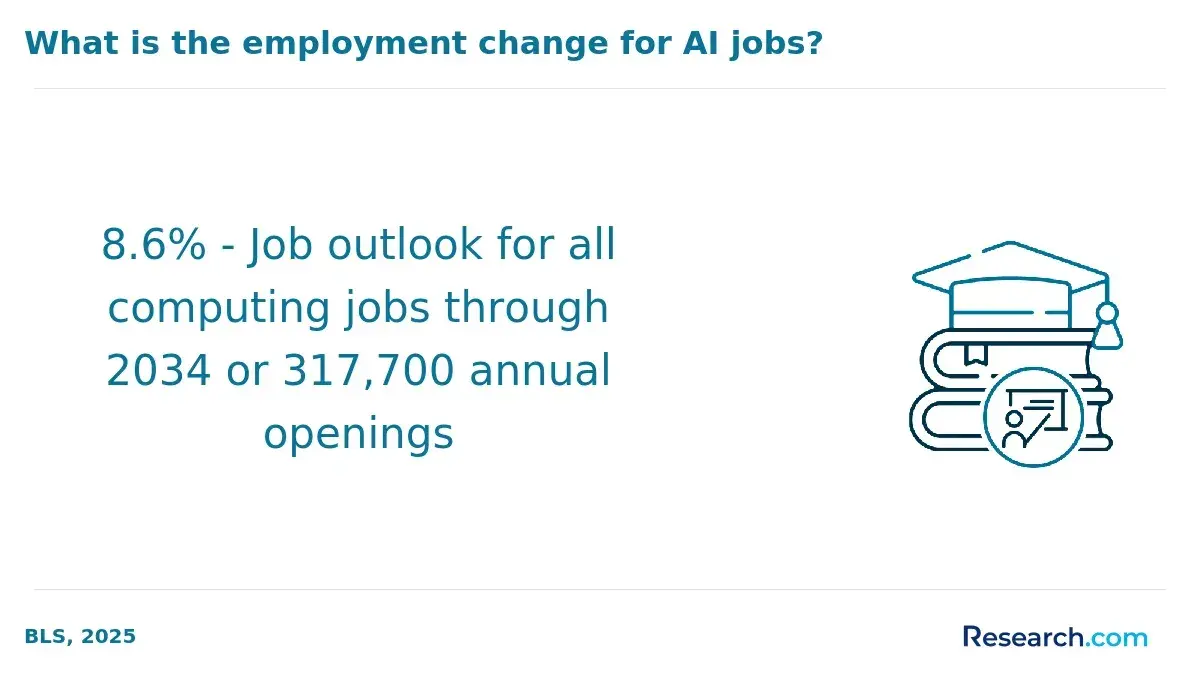
Choosing the best online computer vision course format depends on your goals and skill level. Beginners benefit from structured, lecture-based courses with clear theory, quizzes, and coding assignments to build a strong foundation. Intermediate and advanced learners should seek project-based courses that emphasize real-world applications and portfolio building. Job postings requiring computer vision projects have increased significantly, highlighting the demand for demonstrable experience.
Flexible computer vision learning options are crucial for working professionals. Self-paced courses with modular content and downloadable resources allow steady progress alongside job commitments. Compatibility with platforms like Jupyter or Google Colab enhances practical learning without strict deadlines.
Students aiming for research roles should prioritize programs offering access to current computer vision papers, advanced algorithm implementations, and opportunities for peer collaboration and instructor feedback. Those focused on industry applications need courses featuring case studies in fields such as autonomous vehicles, medical imaging, or retail analytics to understand practical challenges well.
When choosing, consider flexibility, professional networking, and alignment with specific career paths. For example, some may explore online AI PhD programs to deepen their research credentials and advance in academia or specialized roles.
What topics do computer vision courses cover?
Computer vision courses explore foundational and advanced topics critical for building systems that interpret visual data. Core subjects include image processing techniques such as filtering, edge detection, and color space transformations, alongside feature extraction methods like SIFT and SURF. These tools enable pattern and object recognition in images, essential in many computer vision and machine learning applications. Common challenges covered include image segmentation, object detection, and 3D reconstruction, often enriched by practical examples.
More advanced studies focus on deep learning techniques tailored for vision tasks, featuring convolutional neural networks (CNNs), recurrent networks for video analysis, and transformers adapted for images and videos. Real-world applications in facial recognition, gesture detection, and autonomous driving highlight the relevance of these models. Students also learn training strategies, data augmentation, evaluation metrics, and transfer learning to improve generalization across datasets.
Hands-on projects using frameworks like TensorFlow and PyTorch help bridge theory and practice, applying algorithms to areas such as medical image analysis and surveillance. According to the AI Index Report 2024, research in computer vision has surged by more than 70% since 2019, underlining rapid technological advances students need to master. Those interested in further specialization may explore multi-modal learning, video understanding, and real-time system optimization.
Addressing challenges such as occlusions, lighting variability, and biases requires techniques like synthetic data generation and domain adaptation. For professionals seeking leadership or research roles, online options like a doctorate in data analytics online can deepen expertise in these evolving areas.
What prerequisites do computer vision courses require?
Computer vision courses often require a solid foundation in programming, particularly in Python, as it is the main language for developing computer vision algorithms. Proficiency with libraries like OpenCV, TensorFlow, or PyTorch significantly enhances learning and practical application. Mathematics knowledge-including linear algebra, calculus, and probability-is essential for grasping image processing techniques and model creation.
Many programs expect students to have familiarity with machine learning basics such as supervised learning, neural networks, and optimization techniques. These concepts help learners understand deep learning models used to analyze visual data. While some courses start at an introductory level, it's recommended to complete preliminary classes in AI or data science for better readiness.
Professional certificate programs affiliated with universities typically list requirements like:
- Intermediate Python programming skills
- Understanding of basic statistics and linear algebra
- Prior exposure to neural networks or machine learning frameworks
Access to powerful computing resources, including GPUs or cloud platforms, is often necessary for processing large datasets and training deep neural networks. Time availability and experience with data handling also influence success in these courses.
Research indicates that learners completing AI-related professional certificates, such as those in computer vision, can expect a median salary increase of 20% or more within a year, highlighting the value of mastering these prerequisites.
How long do online computer vision courses take?
Online computer vision courses vary significantly in duration based on their complexity and learner goals. Typically, introductory courses last 4 to 8 weeks and focus on foundational topics such as image processing, basic neural networks, and introductory object detection methods. These are ideal for beginners wanting a solid grasp of core concepts without intensive technical demands.
Intermediate courses generally run 8 to 16 weeks, covering advanced topics like convolutional neural networks (CNNs), transfer learning, and practical use of frameworks like TensorFlow or PyTorch. These often include hands-on projects that build real-world experience with datasets.
For professionals targeting production deployment and MLOps, advanced courses extend from 12 to 24 weeks. They emphasize overcoming industry challenges by teaching pipeline automation, model monitoring, and scaling techniques. A Viso Suite survey highlights that over 80% of companies piloting computer vision struggle to move beyond proof-of-concept, underscoring the importance of deployment skills.
Self-paced formats offer flexibility but require sustained weekly commitment—usually 6 to 10 hours—to achieve mastery over several months. Students focused on career growth should seek courses that include capstone projects or practical problem-solving aligned with industry needs.
In summary:
- Short introductory courses: 4-8 weeks
- Intermediate courses with practical projects: 8-16 weeks
- Advanced deployment and MLOps-focused courses: 12-24 weeks
Choosing the right course length depends on your background, career objectives, and the necessity to balance computer vision theory with operational deployment expertise.
How much do computer vision courses cost?
Computer vision courses vary significantly in cost based on provider, depth, and focus area. Basic introductory courses are often free to around $100, available on platforms such as Coursera or Udemy, ideal for beginners or those exploring the field. More advanced professional certificates and specializations typically range from $300 to $1,200. Programs emphasizing niche topics like medical imaging or autonomous vehicles usually carry higher fees due to specialized content and industry demand.
University-level courses and intensive bootcamps offering hands-on projects, mentorship, and industry-recognized certification frequently exceed $1,500. These options are designed to prepare students for employment with career support services included.
Specialized training for sectors such as healthcare, automotive, or security reflects high market demand and growth potential. For instance, the medical imaging AI market is forecasted to grow at an approximate 34% CAGR through 2030, reaching around $19.6 billion, according to a 2024 Grand View Research report.
Additional costs may include software, hardware, or exam fees. Financial aid and employer sponsorship can alleviate expenses. When evaluating courses, consider outcomes like portfolio development and job placement to assess true value beyond price.
Which certifications come with computer vision training?
Computer vision training programs commonly offer certifications that validate expertise and boost career opportunities in AI fields. These certifications are often integrated within broader artificial intelligence or machine learning courses focused on computer vision applications. For instance, Udacity's AI and computer vision Nanodegree programs award official certificates recognized by tech employers.
Similarly, Coursera's deep learning specialization, which contains dedicated computer vision modules, grants professional certificates endorsed by institutions such as Stanford University.
Certified programs cover a range of skill levels and topics, including image processing, object detection, and neural network design. Platforms like edX, Google AI, and Microsoft Azure incorporate hands-on projects, helping students demonstrate practical mastery. Such credentials are especially valuable for careers in robotics, autonomous systems, and healthcare technologies that rely on visual data interpretation.
Financial considerations matter since some certifications can be costly, but Udacity's outcome data shows graduates often see salary increases between $20,000 and $30,000 within a year, indicating a strong return on investment. Many programs also offer financial aid or flexible payment options, making advanced education more accessible.
When selecting a certification, evaluate curriculum depth, instructor expertise, and how well the program aligns with your career goals. Industry-recognized certificates with project-based learning usually provide the greatest benefit.
What jobs can computer vision skills lead to?
Computer vision expertise opens pathways to diverse specialized roles in industries such as automotive, healthcare, security, and retail. Professionals often work as computer vision engineers, focusing on designing systems for image and video analysis, object detection, and facial recognition. These roles demand proficiency with Python-based frameworks like PyTorch, TensorFlow, and OpenCV, which over 70% of computer vision developers use professionally, according to the 2024 Stack Overflow Developer Survey.
In autonomous vehicles, engineers develop real-time environment perception, while robotics vision specialists integrate vision algorithms with hardware. Healthcare applications include diagnostic tools that enhance the detection of abnormalities through medical imaging. Security and surveillance sectors rely on computer vision for threat detection and automated monitoring, requiring skills in anomaly detection and pattern recognition.
Retail and e-commerce professionals utilize computer vision to build visual search engines and automate inventory. Data scientists and machine learning engineers with computer vision expertise focus on optimizing algorithms for large-scale image datasets, emphasizing Python ecosystems for model training and deployment.
To succeed in these roles, choosing educational programs with an emphasis on PyTorch, TensorFlow, and OpenCV is essential. Mastery of these tools prepares candidates for challenges ranging from real-time video processing to advanced image understanding, increasing employability in a fast-growing field.
How do you choose a reputable computer vision course?
Prioritize practical experience and alignment with current technology when choosing a computer vision course. Analysis by Roboflow shows that over 85% of computer vision job listings on Indeed and LinkedIn require hands-on skills with at least one deep learning framework, such as TensorFlow or PyTorch, alongside major cloud platforms like AWS, Azure, or Google Cloud.
Look for programs offering real-world datasets and assignments that reflect industry challenges. Essential topics to check include image processing, convolutional neural networks, object detection, and segmentation. Courses led by instructors actively involved in computer vision research or industry provide added credibility.
Consider reading reviews or testimonials from alumni who landed jobs applying skills gained during the course. Transparent syllabi and clear learning outcomes help you assess whether the content supports career goals in areas like autonomous vehicles, medical imaging, or robotics.
Additional factors include course length, certification recognition, and support for incorporating portfolio projects into job searches. Mentorship or active community engagement can offer valuable networking and career guidance.
Evaluate your current skill level and availability. Working professionals may benefit from part-time or modular options with flexible schedules, while recent graduates might prefer comprehensive programs featuring capstone projects.
Ultimately, choose a course balancing theoretical foundations with extensive hands-on applications aligned to the technologies required by top employers today.
Other Things You Should Know About Artificial Intelligence
Artificial intelligence has applications across numerous industries beyond computer vision, including healthcare for diagnostics and personalized medicine, finance for fraud detection and algorithmic trading, and manufacturing for predictive maintenance and automation. It is also widely used in natural language processing, robotics, and autonomous vehicles, making it a versatile technology in the modern digital economy.
In 2027, top online computer vision courses include "Deep Learning Specialization" by Andrew Ng on Coursera, "Computer Vision Nanodegree" by Udacity, "Applied AI with DeepLearning" on edX, and "Computer Vision A-Z" on Udemy. These courses offer varied levels of engagement, hands-on projects, and are taught by industry-recognized experts.
Artificial intelligence is transforming the workforce by automating repetitive tasks, enabling data-driven decision-making, and creating new roles that require skills in AI development and management. While some jobs may be displaced, AI also generates opportunities in fields like data science, AI ethics, and human-AI collaboration, emphasizing the need for continual learning and adaptation.
A strong foundation in mathematics, particularly linear algebra, calculus, and statistics, is crucial for AI careers. Programming skills in languages such as Python, proficiency in machine learning frameworks, and understanding of data structures are equally important. Additionally, problem-solving ability, critical thinking, and knowledge of AI ethics are valuable for effective AI practice.
References
- GoogleCloud: Computer Vision Fundamentals with Google Cloud | edX https://www.edx.org/learn/artificial-intelligence/google-cloud-computer-vision-fundamentals-with-google-cloud
- The Best Online Course for Learning Computer Vision in 2025 - PyImageSearch https://pyimagesearch.com/the-best-online-course-for-learning-computer-vision-in-2025/
- 3800+ Computer Vision Online Courses for 2026 | Explore Free Courses & Certifications | Class Central https://www.classcentral.com/subject/computer-vision
- Computer Vision Fundamentals with Google Cloud | Google Skills https://www.skills.google/course_templates/18
- Computer Vision Technology Costs: Key Factors & Use Cases https://www.it-jim.com/blog/computer-vision-costs/
- Exploring Costs of Computer Vision for Modern Industries https://viso.ai/computer-vision/cost-of-computer-vision/
- Learning path of computer vision https://community.deeplearning.ai/t/learning-path-of-computer-vision/587485
- What are the career options related to computer vision? https://milvus.io/ai-quick-reference/what-are-the-career-options-related-to-computer-vision
- Free Computer Vision Course with Certificate [2026] https://www.mygreatlearning.com/academy/learn-for-free/courses/introduction-to-computer-vision