2027 Best Harvard Online AI Courses Online

Co-Founder and Chief Data Scientist
Many professionals with backgrounds unrelated to STEM face the daunting challenge of entering the AI field without formal training. Limited time, lack of resources, and uncertain program quality complicate the transition. Selecting an online program from a reputable institution is critical to gaining relevant skills and industry recognition. Harvard's online AI courses offer accredited, flexible learning paths designed to address these obstacles. This article examines the best Harvard online AI courses available, highlighting their features, structure, and benefits to help prospective students make informed decisions and successfully pivot into the AI industry.
Key Things You Should Know
- Harvard's 2026 online AI courses emphasize practical skills and theory, featuring cutting-edge tools used by over 60% of AI professionals globally as of 2025.
- Flexible scheduling and affordable payment options cater to working professionals and students, with course completion linked to a 45% average salary increase in AI roles nationwide.
- Courses integrate interdisciplinary research from Harvard's leading AI labs, fostering expertise particularly in machine learning, ethics, and AI applications in healthcare and finance.
Advance Your Career with AI Online Courses
Artificial Intelligence: Implications for Business Strategy
This program provides an introduction to Artificial Intelligence and their implications for business strategy. Earn an official digital certificate.

Oxford Artificial Intelligence Programme
Explore this Oxford Artificial Intelligence programme offered in a flexible learning environment and explore topics like machine learning, automation, and robotics.

Implementing Agentic AI: Building Your Organizational Playbook
This online MIT Agentic AI course offers a practical approach to deploying AI agents in your organization, including a custom playbook. 3 weeks, exclusive launch price.

AI Adoption: Driving Business Value and Impact
This online MIT AI Adoption: Driving Business Value and Impact offers practical frameworks to close the gap between AI potential and business reality.

Artificial Intelligence in Pharma and Biotech
Discover the applications and limitations of artificial intelligence in pharma and biotech with this MIT online short course.

What are the best Harvard online AI courses available and who are they designed for?
Harvard offers several leading online AI courses designed for diverse learners, from beginners to seasoned professionals. The CS50's Introduction to Artificial Intelligence with Python course suits those with programming experience seeking to understand AI fundamentals such as search algorithms, knowledge representation, machine learning, and neural networks. This course focuses on practical Python applications, ideal for software developers wanting to add AI skills to their toolkit.
For professionals interested in AI-driven insights, Harvard's Data Science: Machine Learning course provides a technical yet accessible approach to supervised and unsupervised learning methods. It is well suited for data scientists and analysts aiming to leverage AI for predictive modeling in industries like finance, healthcare, and marketing. This makes it one of the best Harvard online artificial intelligence courses for professionals in technical roles.
Executives and managers can explore Harvard's Artificial Intelligence: Implications for Business Strategy, which emphasizes strategic understanding over technical depth. It covers AI's impact on business operations, innovation, and competitive advantage, aligning well with leaders preparing for digital transformation.
These offerings are timely considering the World Economic Forum's Future of Jobs Report 2025, which states that 86% of companies expect AI to reshape their industries by 2030. Employers are prioritizing AI and big data skills, increasing demand for relevant education. Prospective students should choose courses aligned with their skill level and career goals to maximize opportunities, especially if pursuing an artificial intelligence degree.
Advance Your Career with AI Online Courses
Artificial Intelligence: Implications for Business Strategy
This program provides an introduction to Artificial Intelligence and their implications for business strategy. Earn an official digital certificate.
Oxford Artificial Intelligence Programme
Explore this Oxford Artificial Intelligence programme offered in a flexible learning environment and explore topics like machine learning, automation, and robotics.
Implementing Agentic AI: Building Your Organizational Playbook
This online MIT Agentic AI course offers a practical approach to deploying AI agents in your organization, including a custom playbook. 3 weeks, exclusive launch price.
How do Harvard's online AI courses compare to its on-campus AI programs?
Harvard's online AI courses provide a rigorous and contemporary education comparable to its on-campus programs, with the primary differences being accessibility and format. The online "AI Essentials for Business" course costs $1,950, reflecting its focus on executive education, according to Harvard Business School Online. This contrasts with the broader, more research-intensive on-campus curriculum, which requires full-time enrollment and on-site presence.
The differences between Harvard's online and on-campus AI education emphasize flexibility versus depth. Online courses suit working professionals seeking targeted, practical AI skills such as machine learning integration and ethical AI deployment. These are ideal for managers and executives aiming for strategic insights without career disruption. In contrast, on-campus programs delve deeper into foundational theory, research methodologies, and hands-on lab experience, preparing students for advanced research or doctoral studies.
Key structural differences include:
- Online courses run part-time with flexible schedules, while on-campus study demands full-time commitment.
- On-campus students gain direct access to labs and faculty researchers.
- Online learners benefit from digital networking with a global peer group.
Prospective students should consider their career goals and time availability. Harvard's online AI courses provide strategic executive education at a premium price, while on-campus programs offer comprehensive training. For those exploring AI education options, a useful resource is the online masters in AI programs curated by research.com.
What are the admission requirements and application steps for Harvard online AI courses?
Admission requirements for Harvard online artificial intelligence course admission criteria vary widely based on the program's difficulty and format. Beginner-friendly foundational courses generally do not require prior coding or math experience, making them accessible to learners from diverse backgrounds. These courses emphasize basic concepts and practical AI applications. In contrast, more advanced professional certificates or graduate-level programs typically expect a solid foundation in programming, mathematics, and prior experience in machine learning or data science.
Steps to apply for Harvard online artificial intelligence programs start by creating a profile on Harvard's platform with personal details, education, and relevant work experience. Graduate-level applicants may need to submit transcripts, letters of recommendation, and personal statements outlining their AI interests and goals. Admissions can be rolling or deadline-based, depending on the course.
International students often must prove English proficiency via TOEFL or IELTS. Professional certificate seekers might also provide documentation of previous coursework or certifications in computing. These requirements ensure readiness for rigorous AI study.
An example is Harvard's introductory AI course, noted in a LinkedIn Learning Workplace Learning Report for aligning with the growing demand for generative AI skills prioritized by 47% of learning leaders. This highlights the practical relevance of accessible AI programs for professionals. Prospective students can explore related fields as well, such as game design online, which can complement AI expertise in tech careers. Careful review of course-specific admissions can streamline enrollment and success.
What AI topics and skills do Harvard's online courses typically cover in their curriculum?
Harvard's online artificial intelligence course curriculum spans essential topics such as machine learning algorithms, neural networks, natural language processing, computer vision, and robotics. The program is designed to build both foundational knowledge and key skills taught in Harvard's artificial intelligence online programs, with a strong emphasis on hands-on programming, especially in Python. This approach helps students implement AI models while grasping vital math concepts like linear algebra and probability.
The curriculum also covers critical areas including search algorithms, optimization techniques, and knowledge representation. Ethical considerations and the societal impact of AI are integrated throughout, encouraging learners to evaluate concerns like bias and privacy. For instance, Harvard's CS50's Introduction to Artificial Intelligence with Python takes students from basic problem-solving to advanced machine learning applications, promoting a comprehensive theoretical and practical understanding.
Practical skills extend to data handling methods such as supervised, unsupervised, and reinforcement learning, along with working knowledge of popular AI frameworks. Real-world datasets are used to simulate professional challenges, equipping students with relevant experience for career advancement and academic growth.
The extensive reach of Harvard's CS50 AI track within the edX professional certificate ecosystem-with over 70 million enrollments globally-reflects widespread trust and demand. Prospective learners exploring AI education can also consider related fields by reviewing the best cybersecurity courses available online.
How long do Harvard online AI courses take to complete and how are they structured?
Harvard online ai courses typically span 8 to 20 weeks, depending on how deeply each program is structured. For example, the Computer Science for Artificial Intelligence Professional Certificate consists of modular courses, each designed for completion within 4 to 6 weeks. This flexible pacing supports learners balancing education with work or personal responsibilities.
Course formats usually combine video lectures, quizzes, coding assignments, and peer discussion forums. Many include hands-on projects that involve machine learning algorithms, data processing, and ai model development, helping students gain practical experience alongside theory. Early courses cover essentials like Python programming and basic machine learning, while advanced ones dive into neural networks and deep learning applications.
Programs often offer both self-paced and cohort-based delivery. Self-paced options allow learners to progress independently, ideal for busy professionals. Cohort-based schedules provide fixed timelines and group interaction, appealing to those who value structure and peer support.
The U.S. Bureau of Labor Statistics predicts software developer employment growth of 17% from 2023 to 2033, highlighting the career advantage of acquiring ai-related coding skills. Choosing courses with milestone assessments and real-world coding tasks can help build a strong professional portfolio. Prospective students should review course details carefully to ensure alignment with career goals and availability.
What do Harvard online AI courses cost and what financial aid options are available?
Harvard's online ai courses typically cost between $1,600 and $2,800 per course, depending on the length and depth of the program. For instance, the well-known "Data Science: Machine Learning" course is priced around $2,800, while shorter, more specialized options may cost approximately $1,600. These costs reflect Harvard's comprehensive curriculum and access to experienced faculty. Some programs offer course bundles or professional certificates, which can increase the overall investment but provide broader educational value.
Financial aid is available to eligible students through Harvard's online platforms, with need-based scholarships covering 50% to 90% of tuition fees. Applicants must submit financial documentation, and although competitive, these awards aim to broaden access. Employer sponsorships are also possible, especially where AI skills are a priority for workforce development.
Government funding such as federal aid or workforce development grants may apply to some Harvard ai courses, especially for continuing education students. Pell Grants and state-specific funds might also be available depending on residency and employment. Many Harvard-affiliated MOOCs offer free audit options, granting course content access without certification.
McKinsey's AI survey highlights that 78% of organizations now use ai in at least one business area, underscoring the growing demand for ai skills. Understanding the financial commitments and aid options helps prospective learners strategically invest in their education and career growth.
Are Harvard's online AI offerings accredited, and how do they appear on transcripts or résumés?
Harvard's online ai courses, offered through Harvard Extension School and HarvardX, hold recognized accreditation within Harvard University's established academic framework. Credits earned in many of these courses can be applied toward Extension School degrees or professional certificates, providing official academic recognition. Transcripts from these programs clearly state the course titles, grades, and the awarding entity, reinforcing their value to employers and graduate schools.
Professional certificates from HarvardX typically do not carry formal university credit but include a verified digital certificate that confirms successful course completion by a Harvard instructor. These certificates are valuable résumé additions, demonstrating expertise in ai fields increasingly in demand. For instance, IBM's 2025 global data shows 42% of enterprise-scale companies use ai, highlighting the career relevance of skills proved by such certificates.
Prospective students should verify each course's accreditation status, especially when planning to transfer credits or apply to graduate programs. While many Harvard Extension ai courses offer graduate credit, HarvardX primarily provides non-credit professional development opportunities. Understanding these differences helps learners align their education with career and academic goals.
What career paths and roles can Harvard online AI training help you pursue?
Harvard online AI training prepares individuals for diverse career paths where artificial intelligence is a key driver of innovation. Graduates often secure roles such as AI engineer, designing machine learning models and intelligent systems, or data scientist, analyzing extensive datasets to generate predictive insights. Leadership opportunities include AI product manager and strategist positions, where business goals are aligned with AI solutions.
Expanding fields such as AI ethics and policy offer avenues to address regulatory and societal implications of AI technologies. Careers in AI research also benefit from these programs by enhancing expertise in advanced AI theories applicable in academia and private sectors.
Industries leveraging Harvard's AI credentials encompass healthcare, finance, technology, and manufacturing. For example, healthcare professionals can develop AI-driven diagnostic tools and streamline patient care, while finance specialists apply AI for algorithmic trading and risk mitigation. Tech firms recruit graduates to advance natural language processing and automation.
The Graduate Management Admission Council's 2025 survey indicates 75% of employers intend to hire business school graduates, underscoring the value of programs blending AI proficiency with business strategy. This combination opens doors to roles like AI business analyst and digital transformation consultant, enhancing career prospects across sectors.
What salary ranges and job outlook can AI learners expect after completing Harvard online courses?
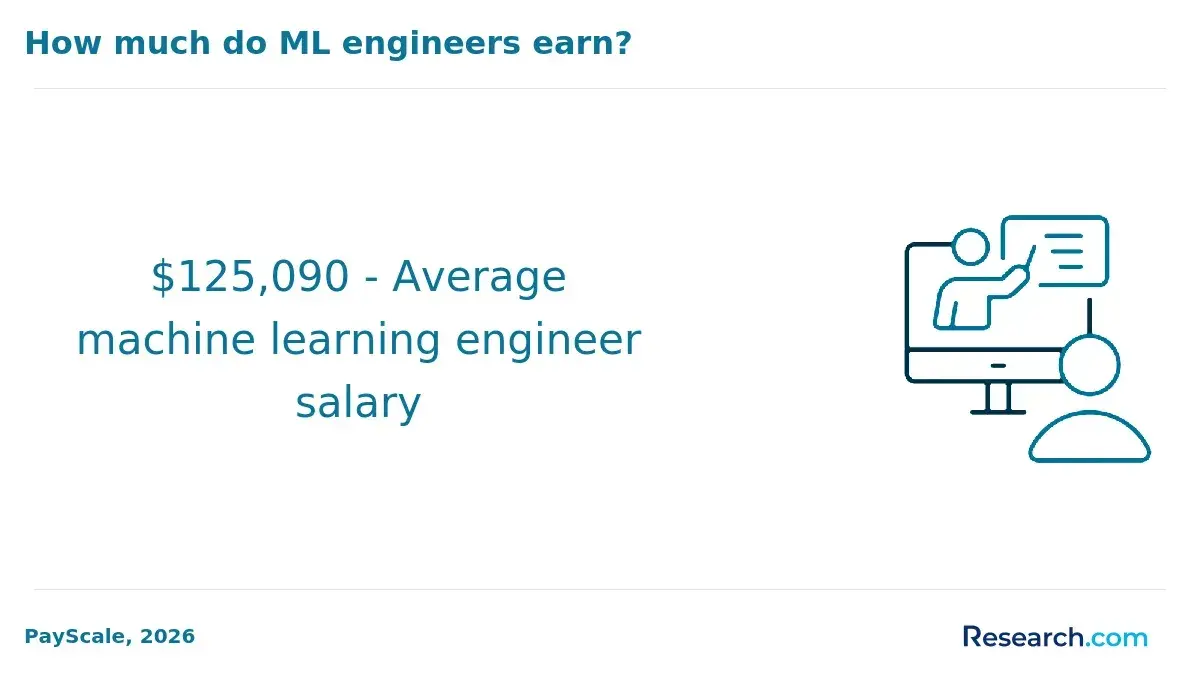
Completing Harvard online AI courses can lead to annual salaries ranging from $90,000 to $180,000 or more, depending on experience, role, and industry. Entry-level roles such as AI analysts or junior machine learning engineers typically earn between $90,000 and $120,000. Mid-career professionals with expertise in AI algorithms, data science, or software engineering often reach $130,000 to $160,000. Senior positions like AI architects, research scientists, or AI product managers frequently command salaries above $180,000, especially in major tech hubs.
The job market for AI professionals remains robust, fueled by significant investment. For instance, the U.S. led private AI funding with $109.1 billion in 2024, vastly outpacing China, according to Stanford HAI's 2025 AI Index. This underscores strong industry demand in sectors such as healthcare, finance, autonomous systems, and cybersecurity.
Factors like geographic location, company size, and specialization greatly impact compensation. Holding a credential from Harvard can open doors to top employers and leadership tracks in this competitive field.
How should students choose between different Harvard online AI certificates, microcredentials, and programs?
When choosing between Harvard online AI certificates, microcredentials, and programs, focus on alignment with your career goals and market demand. According to Lightcast's 2025 labor-market analysis, job postings mentioning generative AI skills have more than tripled year over year. This emphasizes selecting courses that emphasize skills and tools employers actively seek rather than relying solely on school prestige.
Certificates typically cover foundational skills or specific tools, making them ideal for career entrants or those switching fields. Microcredentials often target specialized areas like machine learning applications or natural language processing, suited for professionals seeking focused skill upgrades.
Consider duration and format carefully. Intensive microcredentials completed within weeks may support rapid skill acquisition, while longer certificate programs provide deeper, comprehensive AI knowledge. For instance, data scientists wanting to specialize in generative AI should prioritize courses featuring up-to-date modules on technologies like GPT and diffusion models.
Cost and credential recognition matter too. Assess how employers perceive each credential and whether it fits your budget. Some programs also offer networking opportunities and project experience to enhance practical readiness.
Evaluate prerequisites and your skill level before enrolling. Advanced AI programs require programming or statistics knowledge, while beginners should opt for introductory certificates covering core AI concepts. Use course syllabi, alumni reviews, and career services as key decision factors to ensure your educational investment translates into tangible job-market benefits supported by recent labor data.
Other Things You Should Know About Artificial Intelligence
For 2027, the top Harvard online AI courses include "CS50’s Introduction to Artificial Intelligence with Python," "Data Science: Machine Learning," and "Using Python for Research." These courses are designed to provide a robust foundation in AI principles, coding, and practical application.
Artificial intelligence has the potential to automate repetitive and routine tasks, which may displace some jobs. However, it also creates new roles that require managing, developing, and overseeing AI systems. Many experts agree that AI will augment human work rather than fully replace it in most sectors.
Python is the most widely used programming language in artificial intelligence due to its simplicity and extensive libraries for AI development. Other common languages include R, Java, and C++, which are often chosen based on project requirements and performance needs.
Ethics in AI development focuses on ensuring fairness, transparency, and accountability in AI applications. Developers must address issues like bias, privacy, and potential misuse to build trustworthy AI systems. Many institutions, including Harvard, emphasize ethical considerations in their AI curricula to prepare responsible practitioners.
References
- SISTMR AUSTRALIA https://ausjournal.com/view_article.php
- Best online certificates for career growth | edX https://www.edx.org/certificates
- Online vs Campus Artificial Intelligence Degree Programs: Complete Comparison https://hakia.com/compare/artificial-intelligence-online-vs-campus/
- World’s Most Popular Online Course Adopts AI: Harvard’s CS50 https://www.onlineeducation.com/features/harvards-popular-online-course-and-ai
- 16 Artificial Intelligence Career Paths https://www.calmu.edu/news/artificial-intelligence-career-paths
- How to Access the Harvard AI Course Free: A Step-by-Step Guide for 2026 https://techtimeslive.com/how-to-access-the-harvard-ai-course-free-a-step-by-step-guide-for-2026/
- How Long Does It Take to Learn AI Completely? https://blog.nobledesktop.com/learn/ai/how-long-do-ai-courses-take
- Knowledge Base https://harvard.service-now.com/ithelp
- What kind of jobs can I expect after completing an AI course with placement support? https://www.h2kinfosys.com/blog/what-kind-of-jobs-can-i-expect-after-completing-an-ai-course-with-placement-support/
- How is Artificial Intelligence Being Taught at Harvard? | Harvard Magazine https://www.harvardmagazine.com/2024/05/jhj-ai-course