2027 Best AI Courses for Business Students With Certificates

Co-Founder and Chief Data Scientist
Many business students face challenges when attempting to transition into the artificial intelligence field due to a lack of relevant technical skills and recognized credentials. Without access to flexible, industry-recognized courses, they struggle to demonstrate proficiency and compete in a fast-evolving job market.
Bridging this knowledge gap is essential for enhancing career prospects in data analytics, machine learning, and AI-driven decision-making roles. This article outlines the best AI courses offering certificates specially designed for business students seeking credible, adaptable programs. It aims to guide readers toward effective learning paths that facilitate successful career pivots into artificial intelligence.
Key Things You Should Know
- Business students benefit from AI courses offering certificates that enhance employability in fields like analytics, marketing, and finance, reflecting a 23% job market growth by 2026.
- Top AI courses integrate practical applications with ethical considerations, preparing students for real-world challenges in business decision-making and automation.
- Online and hybrid AI courses provide flexible learning paths, with 68% of certified students reporting career advancement within six months post-completion.
Advance Your Career with AI Online Courses
Artificial Intelligence: Implications for Business Strategy
This program provides an introduction to Artificial Intelligence and their implications for business strategy. Earn an official digital certificate.

Oxford Artificial Intelligence Programme
Explore this Oxford Artificial Intelligence programme offered in a flexible learning environment and explore topics like machine learning, automation, and robotics.

Implementing Agentic AI: Building Your Organizational Playbook
This online MIT Agentic AI course offers a practical approach to deploying AI agents in your organization, including a custom playbook. 3 weeks, exclusive launch price.

AI Adoption: Driving Business Value and Impact
This online MIT AI Adoption: Driving Business Value and Impact offers practical frameworks to close the gap between AI potential and business reality.

Artificial Intelligence in Pharma and Biotech
Discover the applications and limitations of artificial intelligence in pharma and biotech with this MIT online short course.

What are the best AI courses for business students that include a verified certificate?
Top online AI certificate programs for business professionals focus on practical applications of artificial intelligence tailored to business needs, often including verified certificates. Programs like Andrew Ng's "AI For Everyone" on Coursera offer foundational knowledge about AI's influence on business strategy. For those seeking advanced skills with certification, "Business Applications of Machine Learning" from MIT Sloan provides expertise in applying AI across finance, marketing, and supply chain domains.
Business students benefit from courses balancing theory with hands-on projects. The "AI for Business Leaders" program by Wharton, for example, combines case studies and real-world datasets with verified certification, equipping leaders to harness AI for competitive advantage.
Verified certificates are increasingly valued as LinkedIn's Global Future of Work Report reveals that graduates with AI and machine-learning competencies earn 47% higher salaries on average. Other respected options include the University of Pennsylvania's "Artificial Intelligence: Implications for Business Strategy" and IBM's "Applied AI with Deep Learning" professional certificate, both accommodating flexible schedules for working professionals.
When choosing the best AI courses for business students with verified certificates, consider:
- Industry relevance of AI tools covered
- Certificate recognition by employers
- Balance between theory and application
- Support for non-technical students
Those interested in expanding their computer science credentials might explore an accelerated computer science degree to complement AI expertise and boost career prospects.
Advance Your Career with AI Online Courses
Artificial Intelligence: Implications for Business Strategy
This program provides an introduction to Artificial Intelligence and their implications for business strategy. Earn an official digital certificate.
Oxford Artificial Intelligence Programme
Explore this Oxford Artificial Intelligence programme offered in a flexible learning environment and explore topics like machine learning, automation, and robotics.
Implementing Agentic AI: Building Your Organizational Playbook
This online MIT Agentic AI course offers a practical approach to deploying AI agents in your organization, including a custom playbook. 3 weeks, exclusive launch price.
How do AI courses for business students differ from general computer science AI programs?
AI courses tailored for business students emphasize practical applications, strategic decision-making, and integration with business functions, distinguishing them significantly from general computer science AI programs. Instead of focusing on algorithms, coding, and system architectures, these programs concentrate on applied artificial intelligence in business education.
Students explore how AI enhances customer insights, automates workflows, and uses predictive analytics aligned with market trends. For example, business AI courses often involve case studies that illustrate improvements in sales forecasting or supply chain efficiency, prioritizing managerial insight over technical coding skills.
These courses also cover data-driven marketing, financial modeling, and ethics within corporate contexts, helping students evaluate AI's return on investment and operational impact. A 2024 Coursera survey found that 71% of professionals enroll in AI and data courses to advance their careers or increase pay, highlighting why business programs emphasize measurable outcomes such as project management using AI tools and interpreting AI outputs to guide strategy.
Additionally, training in AI platforms with minimal coding prepares business students to collaborate effectively with technical teams. Topics like organizational change management and regulatory compliance, often overlooked in computer science curricula, are included. Prospective students wanting to pursue AI-driven business innovation should consider these differences, along with options like the cheapest online engineering degree, when exploring ai courses for business students vs computer science.
What types of AI certificates can business students earn (credit, noncredit, microcredentials)?
Business students seeking AI certification programs for business students can choose among credit certificates, noncredit certificates, and microcredentials depending on their career goals. Credit certificates, awarded by accredited universities, often count toward degree programs and are suitable for those wanting formal academic recognition or to apply course credits to advanced degrees. Many institutions provide graduate-level AI certificates combining business analytics and machine learning, accessible part-time or online.
Noncredit AI credentials for business are popular among working professionals aiming to quickly boost AI skills without enrolling in full academic programs. These include professional development courses from platforms like edX and Coursera, focusing on practical AI applications such as marketing analytics or business process automation.
Microcredentials offer focused, stackable certifications in specialized AI topics like natural language processing or AI ethics. These are often provided by universities and industry leaders and allow learners to progressively build expertise.
Enrollment in beginner "AI for business" courses on Coursera surged by 284% between 2022 and 2024, reflecting growing demand for flexible and skill-focused certification. Those interested should weigh formal credential needs versus practical skills enhancement and time commitments.
For professionals balancing multiple priorities, options like the cybersecurity masters online showcase the growing availability of quality online programs in related fields.
How can students evaluate the accreditation and credibility of AI certificate programs?
Students need to evaluate accreditation standards for AI certificate programs to confirm that they meet established quality benchmarks. Accreditation from recognized bodies like those approved by the U.S. Department of Education or the Council for Higher Education Accreditation ensures ongoing curriculum review. Additionally, industry certifications from organizations such as IEEE or IBM boost a program's credibility and practical relevance.
It is also important to verify the credibility of AI certificate courses for business students by examining the credentials of instructors and institutions. Instructors with advanced degrees and relevant experience elevate the program's value. Institutions known for AI research, partnerships with technology companies, or strong technology education rankings typically offer more robust courses.
The curriculum should align with current industry demands and cover core AI skills, data analytics, ethical considerations, and real-world business applications. Look for programs featuring hands-on projects or case studies that demonstrate practical implementation. Review alumni success stories and career outcomes, as programs sharing employment rates and job advancements in AI-related roles show tangible impact.
According to McKinsey's report, businesses applying AI in marketing and sales analytics are significantly more likely to achieve notable revenue growth.
Finally, ensure the certificate's respect among employers by checking endorsements, industry partnerships, and professional association recognition. Programs awarding certificates valued by hiring managers carry greater weight. For those exploring career options such as what is an AI trainer, these factors are especially relevant to making informed decisions.
What should a high-quality AI for business curriculum include in terms of coursework?
A quality AI for business curriculum combines technical skills with practical applications. Students need a solid foundation in machine learning basics, data analytics, and statistics. Key topics include algorithm design and natural language processing, which power generative AI tools widely used in business settings.
Courses often focus on real-world AI uses such as marketing analytics, customer behavior forecasting, and automating financial tasks. Ethical principles and data privacy training prepare students for responsible AI deployment in corporate environments.
Hands-on projects and case studies sharpen problem-solving alongside business insight. Examples include analyzing AI's role in boosting supply chain efficiency or improving decision-making in retail. Familiarity with programming languages like Python and platforms such as TensorFlow or PyTorch enhances applied skills.
Classes in business strategy and AI management train students to lead AI initiatives, evaluate project feasibility, and oversee cross-functional teams. Understanding AI's economic impact and measuring return on investment supports effective leadership in AI-driven organizations.
According to Burning Glass Institute's analysis, roles requiring generative-AI expertise offer an 18-25% salary premium compared to similar positions without these skills.
- Machine learning fundamentals
- Data analytics and statistics
- AI ethics and data privacy
- Applied projects with AI tools
- Business leadership in AI
How do online AI certificate programs for business compare with on-campus options?
Online AI certificate programs offer flexibility and accessibility for business students, allowing working professionals and graduates to balance studies with job or personal commitments. Many online courses use asynchronous learning, enabling students to complete materials at their own pace, which suits those needing adaptable schedules.
Conversely, on-campus programs provide structured learning with face-to-face interaction, direct faculty access, and valuable networking opportunities helpful for career advancement. However, they usually require physical attendance and fixed schedules, which may not work for all, especially employed students.
Both online and on-campus options cover essential AI skills in business, with online programs increasingly focusing on practical applications like AI in finance, accounting, and fintech. According to the CFA Institute's 2024 FinTech survey, 71% of investment professionals expect AI and machine learning to be "very important" to their firm's strategy within three years, indicating strong industry demand for specialized skills.
Online programs often update curricula faster to match industry trends and offer certifications from accredited institutions and platforms such as Coursera, edX, and LinkedIn Learning-credentials that can enhance resumes comparably to traditional certificates. When choosing between formats, prospective students should assess accreditation, faculty expertise, and career alignment.
Overall, online AI certificates provide timely, practical content and convenience, while on-campus programs deliver deeper immersion and networking with less flexibility.
What are the typical admission requirements and time to completion for AI certificates?
Admission requirements for AI certificates geared toward business students usually include a bachelor's degree or equivalent experience in business, technology, or related areas. Some programs expect basic knowledge of statistics, programming (commonly Python), or data analysis, though many courses accommodate working professionals by not requiring prior coding skills. Beginners are often encouraged to complete introductory modules first.
The application process typically involves submitting an online form, academic transcripts, and occasionally a statement of purpose or proof of professional experience.
Completion times vary based on course format and intensity. Part-time programs generally take 3 to 6 months, allowing flexibility for working students, while full-time intensive courses may finish within 6 to 8 weeks. For instance, a 12-week program might require 6-8 hours of study per week. Self-paced options enable personalized pacing, usually within 6 months. It is important to check if capstone projects or exams are required, as these can extend the timeline.
Practical training often emphasizes real-world applications such as marketing and sales analytics. According to Salesforce's State of Marketing 2024 report, 60% of marketers use generative AI for campaign targeting or content, with 79% expecting significant ROI gains within two years. Certifications that showcase these skills can enhance career prospects.
Choosing programs affiliated with reputable universities or tech companies ensures greater recognition in the job market. This recognition strengthens the value of the certificate in hiring decisions.
How much do AI courses with certificates cost, and what financial aid is available?
AI courses with certificates vary widely in price based on the provider, course duration, and depth of content. Entry-level courses on platforms like Coursera or Udemy generally cost between $50 and $300. More advanced professional certificate programs or university-affiliated online courses usually range from $1,000 to $5,000. Programs from reputable universities often exceed $2,000, reflecting a comprehensive curriculum and expert instructors.
Financial aid options differ by platform. Many providers offer need-based scholarships or tuition discounts. For example, Coursera enables eligible students to apply for full financial aid by submitting an explanation of their financial situation. Employers frequently subsidize or fully cover certification costs, recognizing the career value of AI skills.
A survey by BCG and Microsoft found that 49% of employees using generative AI tools earned promotions or expanded roles within twelve months, compared to 28% of non-users, making employer support an attractive resource.
Students should consider payment plans, subscription models, or tuition reimbursement programs to make costs manageable. Community colleges and some universities provide affordable AI courses with certificates that might qualify for federal aid or grants. Comparing course fees, length, and certificate recognition helps identify the best fit for individual career goals.
What careers can AI-literate business graduates pursue, and what salaries can they expect?
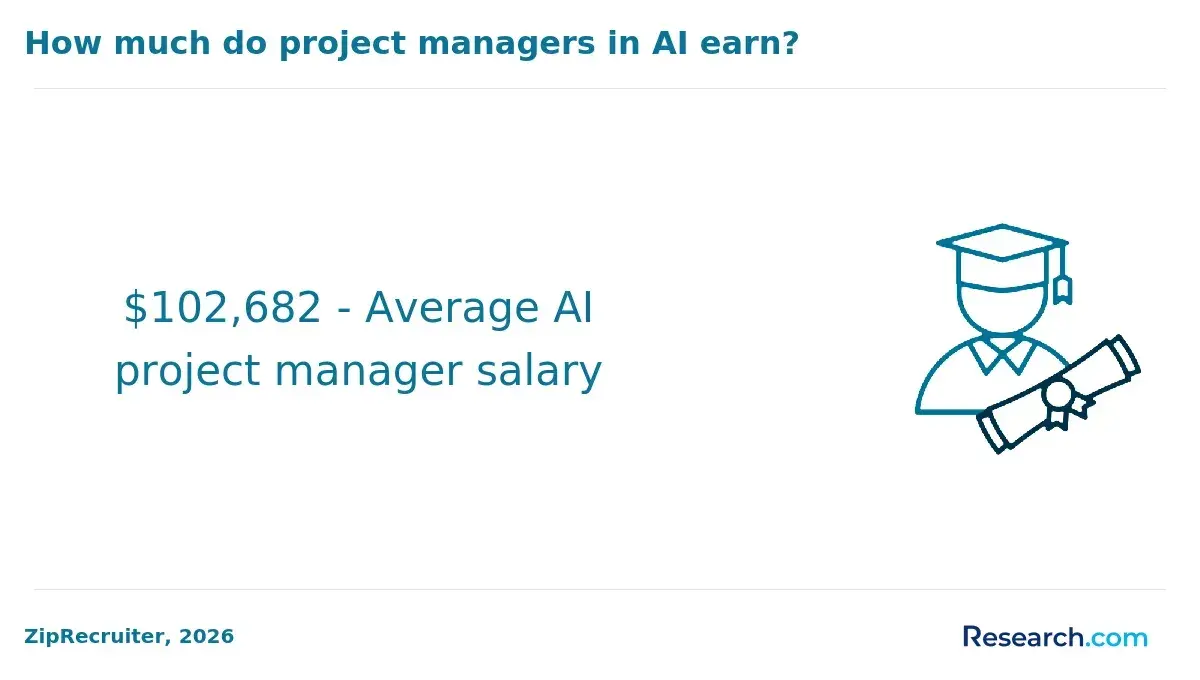
Business graduates skilled in artificial intelligence can explore diverse careers such as data analyst, AI project manager, business intelligence analyst, and AI-driven marketing strategist. These roles demand a unique combination of business insight and technical proficiency with AI models and tools. Salaries vary by position and experience:
- Entry-level data analysts with AI expertise typically earn between $65,000 and $85,000 annually in the U.S.
- Mid-career AI consultants or product managers command salaries ranging from $110,000 to $150,000.
- Senior leaders who integrate AI solutions in business strategies often earn upwards of $180,000.
Additional opportunities exist in emerging areas such as AI ethics compliance, risk management, and AI-enhanced customer experience, with salaries generally between $90,000 and $130,000. Industries benefiting from AI literacy include finance, healthcare, retail, and technology, where fluency in AI tools provides a significant competitive edge.
Access to AI education continues to improve globally. For instance, according to Coursera's 2024 Pricing & Access report, learners in low- and middle-income countries obtained over $45 million in financial aid for AI-related certificates last year, marking a 62% increase compared to the previous period. This trend highlights growing affordability and availability of AI training, enabling more business professionals to build rewarding careers.
How do AI certificates strengthen MBA or business degrees and long-term career prospects?
AI certificates add significant value to MBA and other business degrees by providing specialized skills crucial for today's competitive job market. These credentials confirm expertise in AI-driven analytics, automation, and decision-making, enabling graduates to handle strategic projects that rely on data insights. For example, MBA holders with AI certificates can lead initiatives like predictive modeling or customer segmentation, increasing their attractiveness to employers.
The demand for professionals who combine business acumen with technical AI knowledge is rising sharply. According to the World Economic Forum's Future of Jobs Report 2025, jobs requiring AI and machine learning skills are projected to grow by 39% by 2028. This trend offers greater job security and higher earning potential for those equipped with both skill sets.
Benefits of earning an AI certificate alongside a business degree include:
- Expanded career opportunities beyond traditional finance, marketing, or operations roles
- Positions such as AI project manager or data strategist become attainable
- Demonstrates a commitment to continuous learning in fast-evolving industries
Practical training from AI certification helps professionals apply skills to real-world challenges, like optimizing supply chains or enhancing customer experiences through AI-driven personalization. This hands-on experience accelerates career growth and leadership readiness in the evolving workforce shaped by technology.
Other Things You Should Know About Artificial Intelligence
Many AI courses designed for business students assume little to no prior programming knowledge. Basic familiarity with concepts like data analysis and logical reasoning can help, but introductory courses often cover essential programming skills within the curriculum. However, more advanced AI courses may require some Python or R coding experience.
Yes, AI certifications can significantly enhance a business professional's decision-making capabilities by providing insights into data analysis, predictive modeling, and machine learning. These skills help professionals make data-driven decisions, optimizing strategies and identifying opportunities for business growth in 2027.
Many institutions offer advanced courses and specialization tracks following an initial AI certificate. These opportunities allow learners to deepen expertise in areas like machine learning, natural language processing, or AI strategy. Continuous learning is important due to the rapid evolution of AI technologies and business applications.
References
- What’s the Difference Between Artificial Intelligence and Computer Science? https://www.oxfordscholastica.com/blog/technology-articles/whats-the-difference-between-artificial-intelligence-and-computer-science/
- Artificial Intelligence Course Guide: Eligibility, Admission Process, Scope & Careers https://www.tmu.ac.in/blog/artificial-intelligence-course-details-admission-scope-and-eligibility-criteria
- Knowledge Base https://www.becomeaicertified.com/knowledge-base
- AI For Business High School Curriculum | Mujo Learning https://www.mujo.com/high-school/business-textbooks/ai-for-business/
- 3 Ways to Tell if Your AI Certification is Credible - Bizzuka https://www.bizzuka.com/3-ways-to-tell-if-your-ai-certification-is-credible/
- Ultimate Guide: How to Choose the Right AI Training Course to Boost Your Career - ONLC https://www.onlc.com/blog/how-to-choose-ai-training-courses/
- Online Course Certificates: Still Meaningful in the AI Era? https://iplso.com/https-iplso-com-online-course-certificates-ai/
- Best AI Certifications to Boost Your Career in 2026 – Dataquest https://www.dataquest.io/blog/best-ai-certifications/
- Is a Computing and IT Degree Still Worth It in the Age of AI? https://sbmedu.com.tr/blog/is-a-computing-and-it-degree-still-worth-it-in-the-age-of-ai
- Use ChatGPT to Develop a College AI Curriculum | Wally Boston https://wallyboston.com/ai-curriculum/