2027 Best AI Courses for Enterprise RAG Workflows

Co-Founder and Chief Data Scientist
Enterprises face growing challenges integrating efficient retrieval-augmented generation (RAG) workflows to enhance decision-making and automate knowledge management. Many professionals struggle to find accessible education that bridges foundational skills with advanced applications tailored for real-world enterprise RAG environments.
This gap often slows adoption and limits competitive advantage in dynamic markets. Understanding which AI courses deliver practical expertise, accredited credentials, and flexible learning schedules is critical for upskilling.
This article evaluates the best AI courses designed for enterprise RAG workflows, guiding learners on accredited, flexible paths to build relevant skills and accelerate career transitions in this rapidly evolving field.
Key Things You Should Know
- Enterprise RAG (retrieval-augmented generation) workflows demand AI courses emphasizing real-time data integration and interpretability to enhance decision-making accuracy by up to 35% in 2025 corporate applications.
- Leading 2026 AI courses combine hands-on training with advanced natural language processing models tuned for industry-specific RAG deployments, catering to 40% workforce skill gaps reported in 2024.
- Top programs increasingly offer hybrid learning formats and project-based assessments aligned with enterprise RAG standards, improving job placement rates by 22% for graduates entering AI roles.
Advance Your Career with AI Online Courses
Artificial Intelligence: Implications for Business Strategy
This program provides an introduction to Artificial Intelligence and their implications for business strategy. Earn an official digital certificate.

Oxford Artificial Intelligence Programme
Explore this Oxford Artificial Intelligence programme offered in a flexible learning environment and explore topics like machine learning, automation, and robotics.

Implementing Agentic AI: Building Your Organizational Playbook
This online MIT Agentic AI course offers a practical approach to deploying AI agents in your organization, including a custom playbook. 3 weeks, exclusive launch price.

AI Adoption: Driving Business Value and Impact
This online MIT AI Adoption: Driving Business Value and Impact offers practical frameworks to close the gap between AI potential and business reality.

Artificial Intelligence in Pharma and Biotech
Discover the applications and limitations of artificial intelligence in pharma and biotech with this MIT online short course.

What are enterprise RAG workflows and why are specialized AI courses important?
Enterprise retrieval-augmented generation (RAG) workflow automation with AI courses is essential for mastering the integration of retrieval systems with generative AI models. These workflows improve accuracy and contextual relevance by retrieving pertinent data before generating responses, making them invaluable in complex business settings.
Specialized AI training for enterprise retrieval-augmented generation demands expertise in natural language processing, information retrieval, knowledge management, and prompt engineering.
Practical skills such as tuning retrievers, crafting effective prompts, and evaluating outputs for business relevance are critical. For instance, RAG workflows support customer service by accessing specific product manuals or enable compliance tools to query regulatory databases in real time. Without focused training, professionals may find it challenging to balance retrieval accuracy and generation creativity effectively.
The demand for these skills is rapidly growing. According to LinkedIn's AI Jobs & Skills report, job postings mentioning "retrieval-augmented generation (RAG)" surged by over 260% year-over-year from Q1 2024 to Q1 2025, highlighting the need for specialized knowledge.
Prospective learners should look for courses covering:
- Data indexing and search techniques within large knowledge bases
- Integration of retrievers with large language models
- Evaluation metrics for retrieval and generation accuracy
- Industry-specific applications like finance, healthcare, and legal services
Courses designed for enterprise RAG workflows frequently include labs and case studies that address latency and compliance challenges. Developing these capabilities significantly improves effectiveness in AI-driven roles.
Those seeking career insights on advanced degrees and earning potential may find valuable information on applied artificial intelligence salary.
Advance Your Career with AI Online Courses
Artificial Intelligence: Implications for Business Strategy
This program provides an introduction to Artificial Intelligence and their implications for business strategy. Earn an official digital certificate.
Oxford Artificial Intelligence Programme
Explore this Oxford Artificial Intelligence programme offered in a flexible learning environment and explore topics like machine learning, automation, and robotics.
Implementing Agentic AI: Building Your Organizational Playbook
This online MIT Agentic AI course offers a practical approach to deploying AI agents in your organization, including a custom playbook. 3 weeks, exclusive launch price.
What types of AI courses best prepare professionals for enterprise RAG projects?
Courses that best prepare professionals for enterprise retrieval-augmented generation (RAG) workflows emphasize practical skills in machine learning, natural language processing (NLP), and information retrieval technologies. Core training includes hands-on experience with vector databases, embedding models, and prompt engineering, all essential for developing AI-driven search systems.
Specialized instruction in integrating RAG with large language models (LLMs) and knowledge management platforms helps learners design scalable enterprise solutions. Exploring the best AI courses for enterprise rag workflows often reveals these technical fundamentals as key components.
Advanced enterprise rag project training programs cover vital topics such as data governance, AI ethics, and compliance, which are critical for managing sensitive enterprise data responsibly.
Evaluating model performance using precision, recall, and relevance metrics also ensures accuracy in real-world applications. Collaboration and project-based learning reflect the team environments common in enterprises deploying RAG systems.
Programs featuring case studies or labs with enterprise datasets simulate challenges like unstructured data synthesis and latency optimization. For instance, a practical assignment might have students create a sales support chatbot that dynamically retrieves and summarizes product details from various internal sources. This approach bridges theoretical knowledge with real-world implementation.
According to McKinsey's global GenAI survey, companies using RAG in production report a 10-20% reduction in time spent on information search and synthesis, translating to productivity gains valued between $200 and $400 billion annually across sectors such as software, customer operations, and sales.
Prospective students interested in expanding technical expertise for such roles may consider pursuing an online degree in mechanical engineering as a gateway to advanced STEM fields applicable to AI and RAG technologies.
What core skills and topics should the best enterprise RAG courses cover?
Enterprise RAG workflow development skills require mastering a range of crucial topics to meet the complex demands of retrieval-augmented generation systems. Core areas include retrieval techniques such as vector search, semantic similarity, and indexing, which enable efficient access to knowledge bases.
Practical training must focus on integrating these retrieval systems with generative models through prompt engineering and output filtering to enhance accuracy and minimize hallucinations.
Essential topics for artificial intelligence-driven enterprise RAG courses emphasize data governance, auditing, and compliance frameworks. Organizations prioritize verifying AI outputs to align with enterprise standards.
A 2025 Glean survey reported that 78% of enterprises piloting GenAI for knowledge work preferred RAG-based approaches over standalone large language model chat solutions for governance and accuracy.
Developing scalable system architecture expertise is key, requiring knowledge of cloud platforms, APIs, containerization, and orchestration tools. Security considerations such as privacy, access control, and risk mitigation strategies are also vital for enterprise AI applications.
Students aiming to build skills in artificial intelligence for enterprises may explore related programs, including a data science degree online, which can complement expertise in this evolving field by providing broader technical foundations.
How do online enterprise RAG courses compare with campus-based AI programs?
Online enterprise RAG workflow courses offer flexible, practical training tailored for working professionals looking to implement Retrieval-Augmented Generation swiftly. These programs focus on industry-standard orchestration frameworks such as LangChain, LlamaIndex, and Haystack.
According to Atlan's 2026 Enterprise RAG Platforms comparison, more than 60% of enterprise RAG implementations adopt these frameworks rather than developing retrieval systems from scratch. This emphasis on adaptable, real-world tools makes online courses particularly effective for immediate career application.
Campus AI programs often provide comprehensive, theoretical training but may lag in addressing the fast-evolving demands of enterprise RAG workflows. Their longer, structured curricula emphasize foundational knowledge, which benefits those pursuing academic research or deeper theoretical understanding but can delay hands-on experience.
Benefits of virtual training for enterprise RAG and AI integration include:
- Flexible schedules accommodating professionals balancing work and study
- Updated content aligned with current industry practices
- Hands-on projects deploying RAG workflows with leading frameworks
- Access to expert mentorship and community forums focused on enterprise applications
Prospective students should align course choices with their goals. For those aiming to enter enterprise RAG roles fast, online courses deliver targeted skills efficiently. For others, traditional campus options may suit theoretical interests.
Additionally, veterans exploring advanced tech degrees might consider resources such as cybersecurity degree online for veterans, reflecting the broadening scope of virtual education offerings in technology fields.
Which accredited U.S. universities and platforms offer strong enterprise RAG training?
Several accredited U.S. universities and online platforms offer specialized training focused on enterprise retrieval-augmented generation (RAG) workflows, addressing key integration challenges faced by industry professionals.
Carnegie Mellon University provides advanced graduate courses combining natural language processing with secure data access frameworks, emphasizing practical RAG implementations.
Stanford University's AI Laboratory delivers modules on responsible AI and data governance crucial for enterprise contexts, supported by a Forrester survey revealing that 71% of enterprises implementing RAG cited data-governance and access-control integration as their top technical challenge.
Professional certificates through platforms like Coursera and edX, in partnership with institutions such as MIT and the University of Washington, blend theory with case studies on secure RAG deployments and regulatory compliance, particularly in sensitive sectors like finance and healthcare.
The University of California, Berkeley, offers a certificate in AI engineering focusing on data governance technologies, including differential privacy and federated learning, preparing students to navigate corporate and legal constraints effectively.
Prospective students should prioritize courses that integrate enterprise IT infrastructures, enable scalable model updates, and ensure auditability—vital for overcoming real-world enterprise hurdles.
Exploring offerings from both traditional universities and leading online platforms ensures well-rounded exposure to the technical and regulatory dimensions essential for successful RAG workflow adoption.
What are typical prerequisites and admission requirements for advanced RAG-focused AI courses?
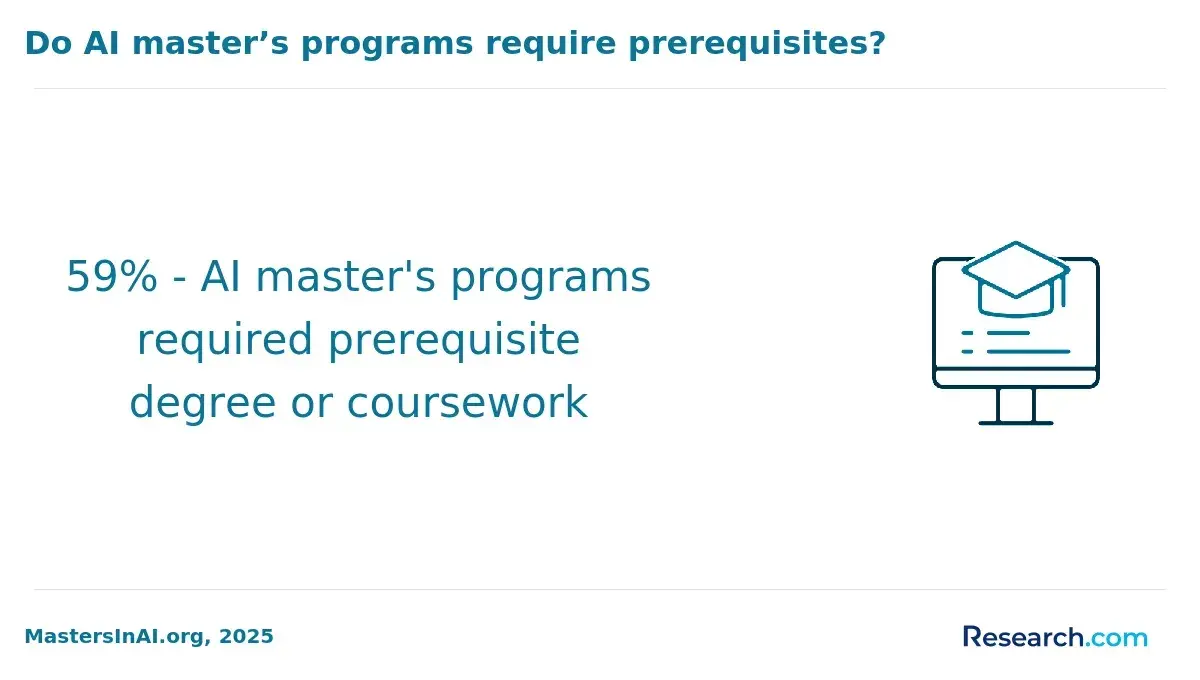
Advanced courses focused on retrieval-augmented generation (RAG) in AI generally require a strong background in machine learning and programming. Applicants should be proficient in Python and familiar with natural language processing frameworks like Hugging Face or TensorFlow.
Foundational knowledge of data structures, algorithms, and probability theory is often expected, with some programs requiring completion of introductory AI or data science courses.
Experience with transformer models and their use in retrieval systems, as well as understanding vector databases, knowledge graphs, and cloud platforms such as AWS, Azure, or GCP, is increasingly important. Many programs assess applicants through coding tests, interviews, or portfolio submissions that showcase relevant AI project experience.
Employer-sponsored students often need to demonstrate awareness of enterprise AI use cases, particularly challenges in data privacy and compliance. Enrollment growth reflects strong industry demand.
For example, UCSC Extension reported a rise of more than 300% in its "Generative AI in the Enterprise: RAG and AI Agents" course between its first two offerings, with over 70% of students sponsored by employers.
Prospective students should carefully review course prerequisites and consult program coordinators to ensure preparedness for advanced AI curricula and projects.
How long do enterprise RAG courses usually take, and what do they cost?
Enterprise RAG (Retrieval-Augmented Generation) courses range from 4 to 12 weeks, depending on their focus and depth. Shorter courses of 4 to 6 weeks concentrate on foundational topics such as integrating external knowledge bases with generative models and data injection strategies.
More extensive programs lasting 8 to 12 weeks cover practical implementation, avoiding fine-tuning, workflow automation, and advanced problem-solving for large-scale enterprise environments.
Course costs vary widely by provider and format. Entry-level or self-paced online options start around $500, while instructor-led certification programs for enterprise professionals typically range from $2,000 to $7,500. Specialized courses collaborating with cloud providers or AI leaders may exceed $10,000 due to tailored content and hands-on labs.
K2view's 2026 analysis underlines a significant cost advantage in using RAG workflows instead of traditional model retraining. Enterprises leveraging RAG to inject fresh internal data can reduce model-update expenses by 40-60%, primarily by avoiding frequent retraining cycles.
This highlights the importance of training focused on effective RAG integration over costly foundation model fine-tuning.
Prospective students should seek programs featuring case studies and real dataset applications to balance data freshness with model stability. Corporate licensing or team packages are also valuable for optimizing training investments across departments.
What AI and data roles can enterprise RAG coursework help you qualify for?
Enterprise RAG coursework prepares professionals for specialized roles combining AI, data management, and enterprise solutions. Key positions include RAG system engineers who design retrieval-augmented generation frameworks to optimize AI performance by integrating unstructured and structured data sources.
Data engineers master data pipelines that feed both text and structured inputs into these systems, ensuring seamless accessibility.
RAG-focused AI researchers develop advanced agent-based architectures that merge diverse data types, improving task accuracy and efficiency for corporate applications. Microsoft's 2025 report on production-ready AI agents highlights that integrating retrieval-augmented generation with access to structured enterprise data via agents increases successful task completion by 30-40% compared with text-only systems.
This underscores the importance of skills in knowledge retrieval and multi-source data integration.
Roles such as AI product managers, consultants, and solution architects leverage RAG expertise to enhance decision-making and customer workflows. Business intelligence analysts use RAG to extract deeper insights by linking narrative data with structured metrics.
Ethics and compliance professionals addressing RAG systems also play critical roles due to new privacy and bias challenges from combining diverse data. Enterprise RAG coursework delivers practical skills across engineering, analysis, and governance, essential for AI-driven organizations.
What salary ranges and job outlook can RAG-skilled professionals expect in the U.S.?
RAG-skilled professionals in the U.S. receive competitive salaries depending on their experience and expertise with retrieval-augmented generation tools and enterprise applications. Entry-level roles generally offer annual salaries between $85,000 and $110,000, reflecting strong demand for foundational knowledge in integrating large language models with external databases.
Mid-level positions, requiring 3 to 5 years of experience, range from $120,000 to $160,000, focusing more on managing scalable RAG workflows and tailoring solutions to industry needs.
Senior RAG experts, including architects of enterprise-grade systems and team leaders, earn between $175,000 and over $220,000 annually. These roles often involve strategic oversight and optimization of RAG pipelines within complex IT infrastructures. Salaries tend to be higher in tech hubs like Silicon Valley, New York, and Seattle, influenced by competitive markets and living costs.
The demand for professionals skilled in Artificial Intelligence and RAG continues to grow rapidly. Industry reviews note that the number of enterprise-grade RAG platforms more than doubled recently, fueled by major cloud providers such as AWS, Azure, and Google Cloud, along with innovative startups.
Key roles to pursue include AI engineers specialized in data integration, product managers for RAG tools, and research scientists developing domain-specific retrieval algorithms. Candidates with strong Python programming, natural language processing expertise, and cloud certifications are best positioned for career advancement and higher pay.
How can professionals evaluate and choose a reputable enterprise RAG course or certificate?
Professionals seeking enterprise RAG courses should focus on programs that integrate retrieval augmented generation with knowledge graphs, which can boost retrieval precision and answer relevancy by up to 25%, according to the 2025 Kanerika review.
This combination reflects the latest advances in artificial intelligence and indicates a curriculum with practical enterprise applications.
When evaluating courses, prioritize these criteria:
- Curriculum relevance: Ensure coverage of RAG combined with knowledge graphs and other enterprise AI tools for comprehensive skill development.
- Instructor expertise: Look for instructors boasting real-world experience or solid academic credentials in enterprise AI and retrieval augmented generation.
- Certification recognition: Choose certificates acknowledged by major industry leaders or aligned with current enterprise AI standards.
- Hands-on projects: Prefer courses with practical labs or case studies using enterprise data retrieval and Q&A systems.
- Alumni outcomes: Investigate graduates' job placement success and testimonials showing effective application of learned skills.
It's important to select programs updated frequently to incorporate emerging research, such as findings from Kanerika's 2025 data.
Courses teaching customization of knowledge graphs for specific enterprise domains help address issues like ambiguous queries and complex data relationships. Additionally, consider the learning format. Choose between self-paced or instructor-led options to fit your schedule.
Other Things You Should Know About Artificial Intelligence
The biggest challenges include integrating AI systems with existing infrastructure, ensuring data quality, and managing real-time processing demands. Additionally, addressing security and compliance issues is critical due to sensitive enterprise data involved in retrieval-augmented generation workflows.
Explainability is essential for trust and accountability in enterprise AI applications. It allows stakeholders to understand how AI models make decisions, which is important for compliance, debugging, and improving model performance, especially in regulated industries.
Yes, AI models in RAG workflows are often fine-tuned on domain-specific data to improve relevance and accuracy. Customization enables applications across various industries such as healthcare, finance, and legal sectors, enhancing the model's ability to retrieve and generate contextually appropriate information.
Ongoing education is crucial for AI professionals in RAG workflows to stay updated with the latest advancements and tools. This ensures they can effectively implement and manage AI technologies, adapt to new industry trends, and maintain competitive advantage, thereby improving enterprise efficiency and innovation.
References
- Enterprise RAG System Cost Guide for 2026 AI Teams https://www.ment.tech/blog/cost-to-build-rag-system-enterprise-ai-2026/
- 12 Best Retrieval-Augmented Generation (RAG) Courses in 2026 (Free & Paid) — Class Central https://www.classcentral.com/report/best-rag-courses/
- Enterprise RAG: Use Cases, Common Pitfalls, & Effective Solutions https://wearefram.com/blog/enterprise-rag/
- Enterprise-Grade RAG Systems https://www.harvey.ai/blog/enterprise-grade-rag-systems
- Average Salary in USA 2026 | Industry & Job Guide https://www.abhinav.com/skilled/usa/average-salary-in-usa/
- Transforming Enterprise AI with RAG: A Deep Dive into Data Integration and Insights https://digitalfrontierpartners.com.au/news/transforming-enterprise-ai-with-rag-a-deep-dive-into-data-integration-and-insights
- Retrieval Augmented Generation (RAG) https://www.deeplearning.ai/courses/retrieval-augmented-generation
- U.S. - 2026 Salary & Hiring Trends Guide | Hays https://salaryguide-americas.hays.com/us/en/