2027 Best AI Governance Courses for Procurement and Sourcing Teams

Co-Founder and Chief Data Scientist
Procurement and sourcing teams face increasing pressure to ensure ethical and transparent use of artificial intelligence tools amid growing regulatory scrutiny and complex supply chains. Without proper governance knowledge, teams risk compliance failures, biased decision-making, and operational inefficiencies. Many professionals in unrelated fields struggle to find tailored, accredited courses that address these unique AI challenges in procurement contexts.
This article highlights the best AI governance courses designed specifically for procurement and sourcing teams, providing guidance on upskilling through flexible programs that emphasize practical application and regulatory compliance to help organizations minimize risks and maximize AI benefits.
Key Things You Should Know
- Courses for procurement and sourcing teams increasingly focus on AI governance to manage ethical risks, compliance, and supply chain transparency, with 72% of programs updated post-2024.
- Training emphasizes real-world applications, including bias mitigation and regulatory alignment, essential as over 65% of procurement leaders expect AI-integrated solutions by 2027.
- Hands-on modules and case studies dominate curricula, boosting decision-making skills with AI tools, while certification rates in AI governance have risen by 40% since 2024.
Advance Your Career with AI Online Courses
Artificial Intelligence: Implications for Business Strategy
This program provides an introduction to Artificial Intelligence and their implications for business strategy. Earn an official digital certificate.

Oxford Artificial Intelligence Programme
Explore this Oxford Artificial Intelligence programme offered in a flexible learning environment and explore topics like machine learning, automation, and robotics.

Implementing Agentic AI: Building Your Organizational Playbook
This online MIT Agentic AI course offers a practical approach to deploying AI agents in your organization, including a custom playbook. 3 weeks, exclusive launch price.

AI Adoption: Driving Business Value and Impact
This online MIT AI Adoption: Driving Business Value and Impact offers practical frameworks to close the gap between AI potential and business reality.

Artificial Intelligence in Pharma and Biotech
Discover the applications and limitations of artificial intelligence in pharma and biotech with this MIT online short course.

What is AI governance for procurement and sourcing teams, and why does it matter?
AI governance frameworks for procurement teams are essential to ensure that AI applications in sourcing and purchasing function transparently, ethically, and securely. These frameworks help mitigate risks such as biased decision-making, data privacy breaches, and compliance failures-issues that arise when AI automates supplier selection, contract management, or risk assessments. Without proper governance, procurement teams risk legal challenges, reputational harm, and operational disruptions.
The importance of AI governance in sourcing processes grows as procurement increasingly relies on AI-driven analytics and automation. For example, KPMG's report notes that while 61% of supply chain leaders find generative AI highly relevant, only 23% have formal governance in place. Practical measures include defining accountability for AI outcomes, auditing algorithms regularly, and requiring transparency from AI vendors about data sources and model training.
Procurement professionals should evaluate whether AI tools align with organizational ethics and risk tolerance, ensuring decisions are explainable and supplier data remains protected. Specialized governance training enables critical assessment of AI tools before integration. Understanding these aspects also supports better trust in AI-enabled sourcing.
For those interested in careers influenced by these technologies, exploring roles linked to applied artificial intelligence salary trends can offer valuable insights into the evolving job market shaped by AI governance and procurement innovation.
Advance Your Career with AI Online Courses
Artificial Intelligence: Implications for Business Strategy
This program provides an introduction to Artificial Intelligence and their implications for business strategy. Earn an official digital certificate.
Oxford Artificial Intelligence Programme
Explore this Oxford Artificial Intelligence programme offered in a flexible learning environment and explore topics like machine learning, automation, and robotics.
Implementing Agentic AI: Building Your Organizational Playbook
This online MIT Agentic AI course offers a practical approach to deploying AI agents in your organization, including a custom playbook. 3 weeks, exclusive launch price.
What types of AI governance courses are best for procurement and sourcing professionals?
The best AI governance training programs for procurement teams emphasize regulatory compliance, risk assessment, and supplier management as critical elements within a rapidly evolving AI landscape. Aligning courses with frameworks like the EU AI Act, ISO 42001, and NIST AI RMF equips sourcing professionals to navigate legal and ethical requirements shaping procurement strategies. For instance, the EU AI Act changes supplier evaluation criteria, with 78% of large EU organizations expected to adopt stricter contract requirements.
Effective sourcing practices in AI governance courses include instruction on practical risk management, such as systematically mapping AI systems across the supply base-a process currently initiated by only 28% of companies. Procurement teams gain valuable skills in AI system auditing and ongoing monitoring to reduce third-party risks, supported by case studies exploring public-sector AI governance variations.
Hands-on experience with tools like compliance checklists and supplier AI risk scoring models enhances actionable proficiency. Programs covering policy interpretation, ethical issues, and technology oversight help prepare professionals to address the intersection of AI governance and supply chain resilience, safeguarding operational continuity.
Students interested in expanding their skills alongside affordability may explore options such as the cheapest engineering degree, which can complement governance expertise with technical foundation.
What should you look for in an AI governance curriculum tailored to procurement and sourcing?
An AI governance curriculum tailored for procurement and sourcing teams should emphasize practical frameworks that ensure ethical, legal, and operational compliance across the entire AI lifecycle. This includes clear risk management strategies designed for supply chain and contract data, bias detection tools for vendor algorithms, and methods to maintain transparency with all stakeholders. Incorporating integrated sourcing and AI governance strategies enhances organizational resilience and decision-making.
Procurement professionals require training on regulatory requirements such as data privacy laws and audit protocols specific to AI-driven sourcing decisions. The technical side of the curriculum must teach critical evaluation of AI vendor claims with validation processes to avoid dependence on black-box models. Case studies demonstrating governance failures highlight the impact on procurement efficiency and legal compliance.
Accountability systems should be robust, defining clear roles and fostering collaboration between procurement, legal, and AI ethics teams. Continuous monitoring and policy updates are vital to address the dynamic nature of AI technology. A notable IBM Institute for Business Value study found that organizations with mature AI governance are 3.5 times more likely to report "significant" or "very significant" ROI from AI deployments. This validates the importance of governance training not only for compliance but also for measurable improvement.
For those aiming to deepen expertise beyond foundational skills, pursuing an online PhD in AI can equip professionals with advanced knowledge to tackle technology adoption challenges and develop decision-making frameworks balancing innovation with risk mitigation.
How do online AI governance programs compare with campus-based options for working professionals?
Online AI governance courses for working professionals offer significant flexibility, blending self-paced modules with evening or weekend live sessions to fit diverse schedules and time zones. These formats help procurement and sourcing teams develop skills without compromising job or personal commitments. Campus-based AI governance programs vs online learning show notable differences: in-person options provide immersive workshops, hands-on labs, and richer networking opportunities with faculty and peers, but often require relocation or time away from work.
Procurement organizations face an urgent need to close the AI literacy gap, with Gartner reporting that by 2027, 70% must demonstrate AI knowledge across multiple roles while only 16% of staff have formal training. Online programs focusing on AI risk management and ethical governance can be rapidly deployed, addressing this challenge effectively at scale.
Prospective students should assess programs on curriculum relevance, instructor expertise, and practical case studies tailored to sourcing and procurement roles. Accredited online certificates from recognized institutions often hold industry weight, making them ideal for busy professionals. For specialized research or advanced credentials, consider reviewing data science doctorate online options.
Overall, working professionals find online training better suited to scalable, effective skill building while campus-based programs remain valuable for those prioritizing immersive learning and deeper academic networking.
Which U.S. universities and providers offer accredited AI governance courses for procurement roles?
Several leading U.S. universities offer accredited courses in AI governance tailored for procurement and sourcing professionals managing third-party AI solutions. Carnegie Mellon University's Heinz College provides a graduate certificate focusing on AI ethics, governance, and risk management critical for procurement teams working with AI vendors. Stanford University's Center for Legal Informatics offers an executive program emphasizing regulatory compliance, contract negotiation, and supplier risk assessment.
The University of Southern California's Marshall School of Business features a Professional Certificate in AI Strategy and Governance, covering AI model validation and vendor audit processes essential for supply chain sourcing. Northwestern University's Kellogg School provides specialized courses that address ethical procurement and AI risk mitigation, focusing on contract frameworks and transparency.
For working professionals seeking flexible learning, organizations like the Institute for Supply Management (ISM) and Procurement Leaders Academy offer accredited modules highlighting real-world AI vendor risk scenarios and best contractual practices. These programs respond directly to findings such as PwC's 2024 Global Digital Trust Insights survey, which found that 55% of organizations experienced AI-related incidents from third-party vendors, though only 32% have AI-specific clauses in contracts.
When selecting a course, prospective students should consider accreditation, relevance to procurement challenges, and a strong integration of legal, ethical, and technical governance perspectives to ensure practical preparation for AI procurement roles.
What are the typical admission requirements and prerequisites for AI governance certificates or degrees?
Admission to AI governance certificate or degree programs generally requires a bachelor's degree from an accredited institution, often in related fields like business, information technology, law, or data science. Advanced or executive courses might ask for 2-5 years of professional experience in procurement, sourcing, risk management, or compliance. Foundational knowledge of artificial intelligence concepts, data privacy regulations, and supply chain management is commonly expected.
Applicants may need to show competency in quantitative analysis or AI ethics through prior coursework or certifications. Some programs require completing introductory courses in AI applications or corporate governance frameworks to ensure participants can engage in complex topics such as algorithmic accountability and operational risk.
Additional requirements often include a statement of purpose explaining interest in AI governance within procurement, letters of recommendation from supervisors or mentors, and sometimes an interview to assess understanding of AI risks.
Poor AI governance in procurement and third-party operations poses significant financial threats. According to McKinsey's 2024 research, inadequate AI risk management can impact 5-15% of annual EBITDA through supply disruptions, compliance penalties, or reputational damage. This highlights strong industry demand for qualified professionals able to mitigate these risks effectively.
How long do AI governance programs take, and what do they cost for procurement learners?
AI governance programs for procurement teams usually last between four and twelve weeks, depending on the depth and delivery style. Shorter courses focus on foundational topics like compliance frameworks, ethical AI use, and risk mitigation specific to procurement and sourcing. Longer programs often add practical case studies, policy workshops, and simulations for managing AI-driven supplier interactions.
Costs vary considerably. Entry-level or self-paced online courses typically range from $500 to $1,500. Instructor-led programs with certification options cost between $2,000 and $5,000, reflecting the benefits of interactive learning and personalized feedback. Corporate or customized group training sessions usually have higher fees but offer tailored solutions aligning with organizational needs.
Accenture's 2024 "Pulse of AI in the Enterprise" study reveals that 76% of employees in procurement and supply chain use generative AI at least weekly, yet only 27% report having clear organizational policies on AI use. This gap emphasizes the urgent need for comprehensive AI governance education to reduce shadow AI risks.
Effective programs cover key topics such as:
- Developing and enforcing AI use policies within sourcing teams
- Integrating AI risk assessments into vendor evaluation
- Ensuring transparency and accountability in AI-supported procurement decisions
Selecting a course that addresses these areas helps procurement professionals master AI's complexities while balancing budget and time constraints.
What careers, job titles, and advancement paths can AI governance training unlock in procurement?
AI governance training in procurement opens diverse career paths for professionals skilled in data-driven decision-making and risk management. Key roles include AI procurement analyst, digital sourcing strategist, and AI compliance officer, all focused on integrating ai tools for supplier selection, contract management, and ethical ai adoption within supply chains.
Professionals often advance to leadership positions like AI procurement manager or director of AI sourcing, where responsibilities include overseeing AI deployment, ensuring regulatory compliance, and managing vendor algorithms. Specialized roles such as AI audit lead or AI ethics consultant are also available, emphasizing ai risk assessment and governance within procurement departments.
This training addresses challenges like mitigating algorithmic bias and managing data privacy, essential for robust supply chains. Strong knowledge of regulatory frameworks enhances contract negotiations involving AI technologies and ensures alignment with industry standards.
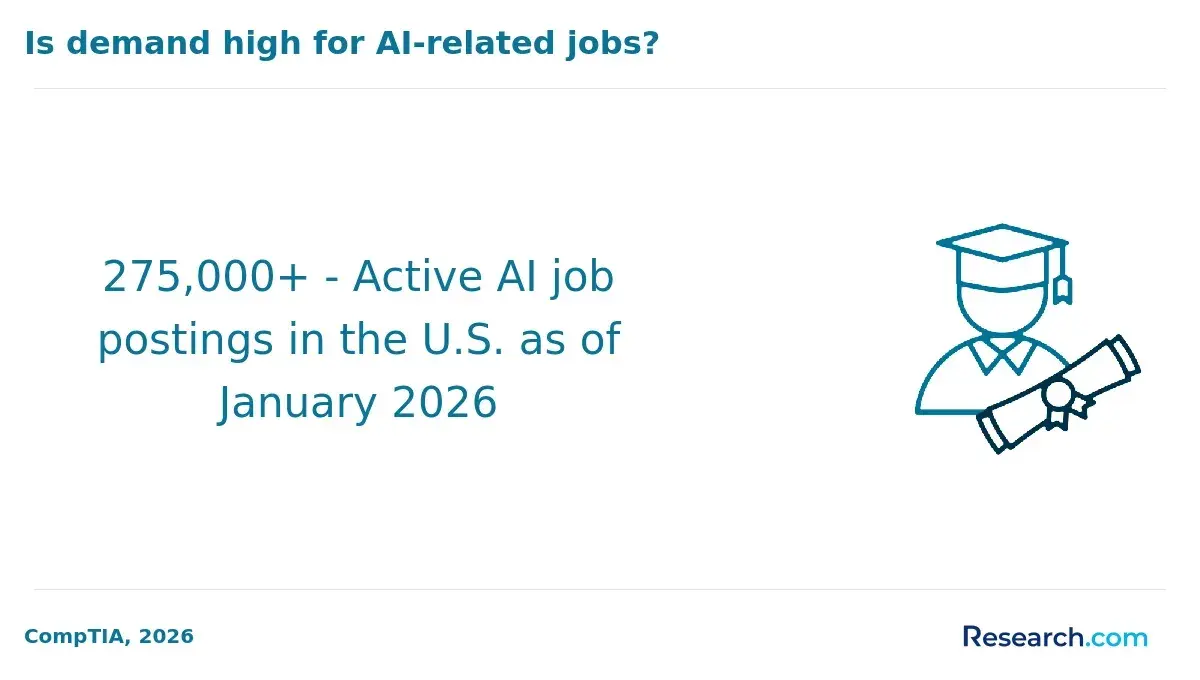
Job demand and salaries reflect these trends: job postings mentioning both "procurement" and "AI" or "machine learning" increased by 54% year-over-year globally, and median salaries for these roles are about 19% higher than for procurement positions without AI skills. Developing AI governance expertise creates advantages across manufacturing, retail, and technology sectors relying on intelligent sourcing systems.
- Lead in ethical AI oversight and compliance enforcement
- Drive strategic AI tool implementation
- Enhance risk management and supplier evaluation
What salary ranges and job outlook can procurement specialists expect with AI governance skills?
Procurement specialists with AI governance expertise can earn between $75,000 and $130,000 annually, influenced by experience, location, and company size. Entry-level positions start around $75,000, while mid-career roles handling AI integration and compliance typically range from $90,000 to $110,000. Senior specialists or managers responsible for AI governance frameworks often make over $125,000. The growing use of AI tools in procurement is increasing demand for professionals skilled in both sourcing strategies and AI regulation, boosting salaries.
The job market for procurement experts with AI governance skills is expanding quickly. IDC's 2024 Worldwide Corporate Learning and Skills Forecast projects a 32% compound annual growth rate in spending on AI-related procurement and supply chain training through 2027, reaching about $1.3 billion. This investment reflects the importance organizations place on AI governance competence, creating strong career opportunities.
Key roles include AI procurement analyst, AI compliance officer, and AI sourcing manager. Specialists are expected to ensure compliance with evolving AI ethics, data privacy, and risk standards, navigating vendor selection and contract negotiation effectively.
To enhance earning potential, pursue certifications in AI governance and data ethics and gain hands-on experience with AI procurement platforms. Understanding regulatory frameworks and aligning AI initiatives with procurement goals can set candidates apart in a competitive market.
Are there industry certifications or compliance standards linked to AI governance in procurement?
Industry certifications and compliance standards are increasingly vital for AI governance in procurement. These certifications emphasize ethical use, risk mitigation, transparency, and accountability when sourcing AI technologies. Programs like the Certified Ethical Emerging Technologist (CEET) and those from the Institute for Supply Management (ISM) integrate AI governance principles tailored specifically for procurement roles.
Compliance standards often align with larger AI ethical frameworks but focus on procurement challenges such as vendor assessments, contractual safeguards, and ongoing monitoring of AI-powered suppliers. Frameworks like ISO/IEC 38507 offer guidance for governing digital technology throughout the procurement lifecycle.
Key performance indicators (KPIs) help enforce these governance standards. A Boston Consulting Group survey found that organizations tracking AI procurement KPIs-like the percentage of AI-enabled suppliers assessed for risk and ethics-achieve an average 18% reduction in AI-related incidents and 12% faster time-to-contract compared to those without such KPIs.
Certifications equip procurement professionals with skills to apply contractual controls, evaluate supplier transparency, and embed ethical policies. Compliance standards ensure audit-ready procedures that satisfy regulatory and stakeholder requirements. Together, they prepare professionals to manage ai risks, enforce compliance, and promote responsible procurement strategies aligned with evolving legal and technological demands.
Other Things You Should Know About Artificial Intelligence
Yes, AI governance plays a critical role in reducing risks in procurement by establishing clear policies and oversight mechanisms to ensure AI tools are used ethically and transparently. It helps prevent biases, data misuse, and compliance violations that may arise when AI automates supplier selection or contract management. Strong governance frameworks increase accountability and improve trust in AI-driven procurement decisions.
In 2027, the top AI governance courses for procurement and sourcing teams include the "AI Governance and Ethics for Procurement" course by CIPS and the "AI in Supply Chain Management" certification by Coursera, both of which address ethical AI use and risk reduction in sourcing.
Explainability is essential in AI governance because it allows procurement professionals to understand and justify decisions made by AI systems. It ensures transparency in processes such as supplier evaluation or spend analysis, making outcomes auditable and compliant with regulatory standards. Explainable AI helps teams maintain control and confidence in automated sourcing tools.
Procurement teams must consider ethical issues including data privacy, bias mitigation, and fairness when deploying AI solutions. Governance frameworks establish standards to prevent unethical outcomes like discriminatory supplier selection or data misuse. Awareness and adherence to ethical guidelines promote responsible AI adoption aligned with organizational values and legal requirements.
References
- Mercanis | Blog: Upskilling for AI in Procurement: What's Actually Worth Your Time (and Budget) https://www.mercanis.com/blog/ai-procurement-training-guide
- AI governance salaries 2026: what does the market pay? https://verifywise.ai/blog/ai-governance-salary-report-2026
- Procurement Academy | 24 Courses on AI, Sourcing & RFX | Nvelop https://nvelop.ai/academy
- AI Governance Professional Certification | CertiProf https://certiprof.com/products/ai-governance-certification-iso-42001
- *Planning* and procurement strategy tips - Buying AI https://buyingai.open-contracting.org/chapter/11-planning-and-procurement-strategy-tips
- AI Governance Specialist Salary Australia 2026 (Guide) https://www.aitalentondemand.com.au/article/ai-governance-specialist-salary-australia-2026
- AI in Procurement: Automation, Governance & Risk Management https://www.ivalua.com/blog/ai-in-procurement/
- An AI governance certification will boost your career | The Corporate Governance Institute https://www.thecorporategovernanceinstitute.com/insights/guides/an-ai-governance-certification-will-boost-your-career/
- State of AI in Procurement in 2026 https://artofprocurement.com/blog/state-of-ai-in-procurement
- AI Governance Jobs: Your Ultimate Career Guide https://www.peopleinai.com/blog/ai-governance-jobs-guide