
2027 Graduate Public Health Preparation for Global Health Program Officer Roles

Co-Founder and Chief Data Scientist
Global health program officers help turn funding and public health goals into workable programs, often across organizations and countries. For a student or early-career practitioner, the challenge is choosing graduate preparation that builds the right skills without treating an MPH as a substitute for experience.
This guide connects degree choices, coursework, fieldwork, and hiring expectations to the work officers actually do. It will help you identify the gaps in your background and decide whether graduate school, a targeted course, or a supervised program role is the best next step.
Key Things You Should Know
- An MPH can prepare you for program design and evaluation, but relevant implementation experience and evidence of managing partners, budgets, or reporting often matter as much as the degree.
- Choose coursework and fieldwork around the work you want to do: epidemiology for interpreting evidence, evaluation for measuring results, and management for delivering programs responsibly.
- "Global health program officer" is not a standardized occupation or salary category. Compare actual postings by employer, seniority, funding source, and travel expectations before paying for a degree.
What education prepares you for global health program officer roles?
A global health program officer typically helps plan, coordinate, monitor, and improve health initiatives involving funders, implementers, governments, or community partners. The position may emphasize grant oversight at a foundation, operational delivery at a nonprofit, or technical support on a health project. Education is most useful when it addresses the tasks in the jobs you want.
A bachelor's degree plus relevant work can lead to program assistant, coordinator, or grants support roles. An MPH adds population-health methods and an applied practice orientation; it can be particularly useful if you need to move from general administration into program planning or evaluation.
Someone already coordinating health projects may gain more immediately from supervised responsibility for a budget, reporting cycle, or partner relationship than from another degree.
If you are still building your undergraduate foundation, public health bachelor's accelerated study schedules may help you compare routes to degree completion. Check what a faster schedule leaves available for internships and work experience; speed alone will not establish program-officer readiness.
What degree is best for becoming a global health program officer?
For many applicants seeking broad program responsibilities, an MPH with strong evaluation and implementation opportunities is the most direct graduate fit. The degree label is less important than the curriculum, field placement, employer connections, and work you can document afterward.
The comparison below shows when an alternative may be better.
| Path | Best fit for this goal | Important limitation |
| MPH | Population-health program planning, implementation, partnerships, and evaluation | May offer limited depth in finance or advanced analysis unless you select it deliberately |
| Research-oriented MS | Technical roles centered on epidemiology, data, or evaluation methods | A thesis or methods-heavy curriculum may offer less operational preparation |
| MPA or MHA | Public-sector administration, grants management, or health-organization operations | May require separate study of population-health methods and global health systems |
| Targeted courses or certificate | Experienced staff with a specific gap in evaluation, budgeting, or grants | May not meet a posting's stated graduate-degree requirement |
Review public health graduate concentration selection against actual course offerings, not concentration names alone. A global health label is valuable only if its courses and applied work prepare you for the functions in your target postings.
What qualifications do global health program officers need?
There is no universal program-officer qualification. Employers commonly look for a relevant degree or equivalent experience alongside evidence that a candidate can coordinate deliverables, communicate with partners, track spending, interpret results, and report problems accurately.
Senior roles may require experience managing awards or teams; an entry-level applicant should expect supervised responsibilities rather than immediate authority over a large program.
Start with postings from the kind of employer you want and separate required qualifications from preferences. Then document comparable work you have done. For example, maintaining a project timeline, reconciling expenditures, contributing to a monitoring plan, or translating findings for nontechnical stakeholders.
Experience with US community organizations can be relevant, but do not present it as experience working in another country's health system. If you do not yet hold a bachelor's degree, comparing online undergraduate public health programs can help you assess that first step.
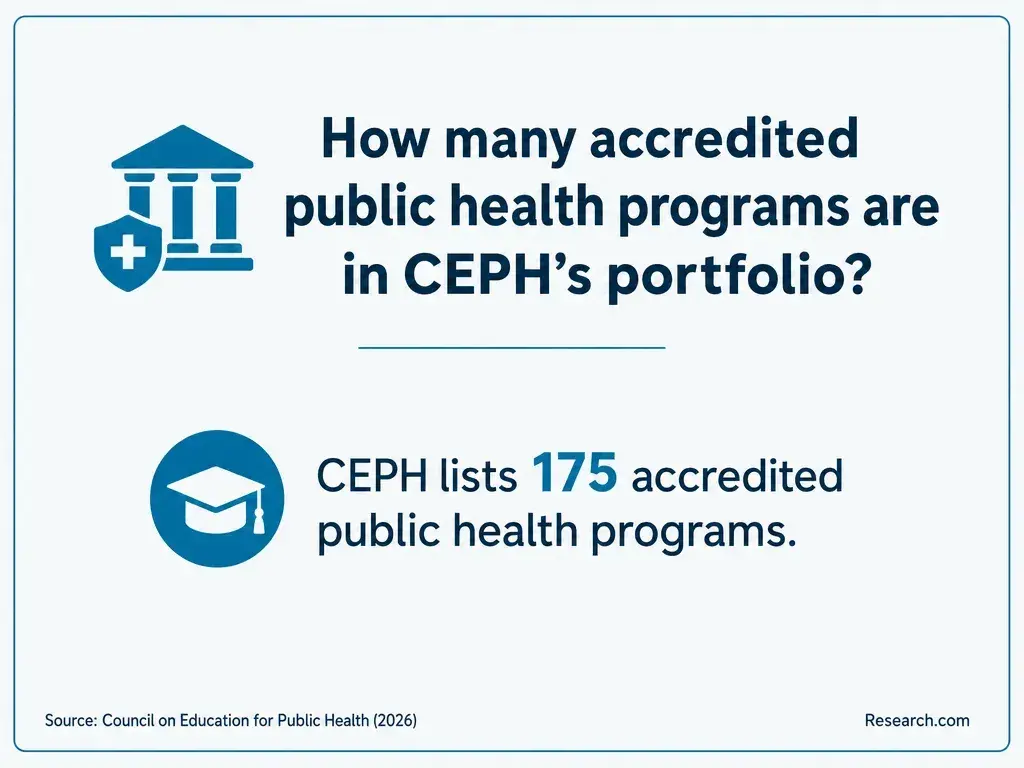
The Council on Education for Public Health, or CEPH, accredits eligible public health schools and programs. Its accreditation can be useful evidence that a program meets public health education standards.
It is distinct from the institution's accreditation, and the scope matters: confirm that the specific school, unit, and degree you are considering are covered rather than assuming every health-related degree at the university is included.
CEPH accreditation does not establish that a program has a global health concentration, an overseas placement, or a pathway into a particular employer. Ask admissions for the degree's accreditation status and review the accreditor's directory, then examine courses, fieldwork approval, and graduate outcomes separately. Online MPH program accreditation comparisons can provide a starting point, but verify the current scope before applying.
Useful preparation combines population-health reasoning with the mechanics of running a program. Epidemiology and biostatistics help an officer question disease estimates and interpret findings; health systems and policy courses provide context for decisions made by governments and funders. Planning, implementation, monitoring, and evaluation courses are especially relevant because officers must connect activities to credible measures of progress.
Look beyond course titles for assignments resembling real work: a logic model, monitoring plan, budget justification, partner briefing, or evaluation memo. A practicum is strongest when you can produce an approved deliverable under qualified supervision.
Confirm who secures the site, what remote work is permitted, and what permissions govern data and portfolio use. Work involving identifiable information or community partners may require additional review and approval.
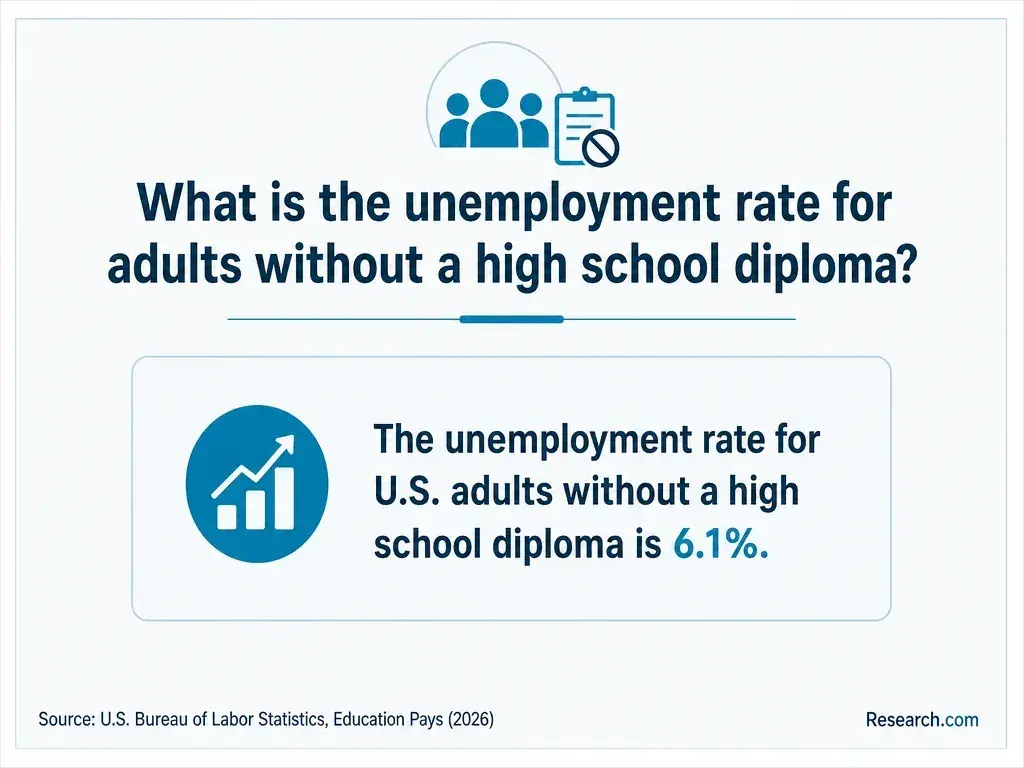
If a target role is chiefly quantitative, balancing employment with a biostatistics master's may be worth considering. For a generalist officer role, however, advanced modeling is usually less urgent than sound data interpretation and the ability to act on findings with partners.
Choose the format that lets you complete relevant work, not simply the one that appears most convenient. Online study may preserve a current job and allow a practicum with a local or existing partner, subject to school approval.
It may still require live classes, group meetings across time zones, campus visits, or fieldwork during business hours. Campus study can make it easier to build local faculty and employer relationships, but attendance and relocation may restrict your ability to work.
Ask each program for a sample term schedule, residency requirements, field-site rules, and examples of how students find supervised placements. If you already work for a health nonprofit, ask whether an appropriately scoped project at your employer could qualify; employment alone does not secure practicum approval.
Affordable shorter online public health degrees are worth comparing only after you establish that their pace leaves room for the experience your target jobs require.
Requirements vary by school and degree. Applicants generally need to document prior higher education and explain their goals, but individual programs set their own rules for prerequisites, grades, recommendations, tests, and professional experience.
An undergraduate major outside public health is not automatically disqualifying. Statistics or other methods preparation may be required by one program and merely recommended by another.
Before applying, check each program's published requirements for your intended entry term. Compare them with your transcript and experience, then ask admissions whether outstanding coursework can be completed before enrollment and whether relevant professional work strengthens an application.
If references are difficult to obtain, public health master's programs that omit reference letters may broaden your options; confirm each program's current policy before relying on it.
Time and cost depend on credit requirements, enrollment pace, tuition policy, and fieldwork logistics. A full-time master's usually takes less calendar time than a part-time route, but the faster option can reduce earnings or make meaningful work experience harder to maintain. An online format may remove relocation costs without removing placement travel, technology expenses, or time away from work.
Request a degree plan and a written cost estimate for your likely pace. Include tuition, mandatory fees, any required visits, placement expenses, and the cost of delaying paid work. Ask whether employer assistance applies and what conditions it carries.
A doctorate adds a substantially different time and funding decision; online PhD programs in public health by cost should not be treated as a cheaper substitute for an MPH when your immediate goal is program delivery.
Likely stepping-stone titles include program assistant, project coordinator, grants associate, and monitoring and evaluation assistant. With relevant experience, candidates may move into program officer, technical adviser, grants manager, or program management roles. The duties behind those titles vary considerably: one officer may oversee awards and reporting, while another supports implementation with local partners.
There is no single US Bureau of Labor Statistics occupation or wage median for "global health program officer." Occupational data for epidemiologists or other public health specialists describe different jobs and should not be presented as an officer's expected pay.
For a realistic comparison, examine US-based postings with similar duties, seniority, location, and travel requirements, and distinguish stated salary ranges from total compensation or short-term contract rates.
Advanced research careers are another pathway, not the default next promotion. If your goal changes toward leading independent epidemiologic research, investigate training, funding, and opportunities separately; even epidemiology doctorate scholarships and grants address a different decision from entry into program management.
Which certifications and experience strengthen global health career prospects?
Supervised, relevant experience is usually the clearest way to strengthen a program-officer application. Seek work in which you can show what you contributed to a reporting process, partner meeting, implementation plan, or evaluation deliverable. Record the scope of your responsibility without disclosing confidential budgets, identifiable data, or partner information you lack permission to share.
Targeted training in grants management, project management, evaluation, or data tools can fill a documented gap. The Certified in Public Health credential may be relevant to some public health careers, but eligibility rules and employer preferences must be checked with the credentialing body and target employers. A certificate or professional credential does not replace a required degree or demonstrate that you have managed a program.
A practical next step is to collect several target postings, mark their recurring tasks, and choose one supervised project that would let you demonstrate a missing skill. Use that gap analysis, not the appeal of an additional credentia, to decide what training comes next. Moreover, look into online public health doctoral costs and professional opportunities for higher-level roles.
Other Things You Should Know About Public Health Programs
No. Some roles are US-based and coordinate with overseas teams remotely; others require frequent travel or relocation. Check each posting's duty station and travel expectations.
It depends on the position and partners. Language ability can be valuable, but a posting's specified proficiency level matters more than a general assumption that all global health jobs require it.
No. Admission to an online program and US employment authorization are separate matters. Verify any applicable immigration and employer requirements independently.
Not by virtue of the program-officer title or an MPH. Clinical practice requires the appropriate professional education and licensure; program officers generally coordinate, fund, monitor, or evaluate the response.
- Essential Skill and Knowledge Required for Health Data Professionals: A Content Analysis of Job Advertisements | nih.gov https://pmc.ncbi.nlm.nih.gov/articles/PMC11605378/
- Careers at WHO https://www.who.int/careers
- Competencies for Public Health Professionals | cdc.gov https://www.cdc.gov/infrastructure/training-professional-development/competencies-for-public-health-professionals.html
- How to Choose the Right Master of Public Health Program for You | Fairfield University https://www.fairfield.edu/news/insights/nursing-health-studies/how-to-choose-the-right-public-health-mph-program-for-you.html
- Public Health Needs People With Diverse Skills and Backgrounds - Here Are 9 Careers to Consider | Emmanuel College https://careercenter.emmanuel.edu/blog/2025/10/23/public-health-needs-people-with-diverse-skills-and-backgrounds-here-are-9-careers-to-consider/
- Master of Public Health - Global Health | Harvard T.H. Chan School of Public Health https://hsph.harvard.edu/program/mph-global-health/
- MHA vs MPH | Online MHA | NYU Wagner https://onlinemha.wagner.nyu.edu/insights/comparing-master-health-administration-vs-master-public-health
- 18 Public Health Skills Needed for Upskilling | 5 Public Administration Careers for MPA Graduates https://www.augusta.edu/online/blog/upskilling-public-health-skills
- MPH in Global Health | In-Person & Online | NYU GPH https://publichealth.nyu.edu/master-public-health/concentrations/global-health


