2027 Best AI Training Roadmaps Courses Online

Co-Founder and Chief Data Scientist
Many professionals with backgrounds unrelated to artificial intelligence struggle to find credible, flexible education pathways that fit their schedules and prepare them for a career pivot. The rapid evolution of AI technologies often leaves learners overwhelmed by the variety of course options and uncertain about which programs deliver recognized credentials and practical skills. Navigating these challenges requires a clear roadmap that balances foundational knowledge with advanced topics, suited to diverse learning needs.
This article highlights the best AI training roadmaps and courses online, offering a curated guide to help readers make informed choices aligned with their career objectives.
Key Things You Should Know
- AI training roadmaps in 2026 focus on practical skills like machine learning, deep learning, and natural language processing, reflecting industry demand for job-ready expertise.
- Over 65% of AI course providers include hands-on projects and real-world datasets, significantly improving graduates' employment prospects in the U.S. tech market.
- Affordable online AI courses now offer flexible learning paths, enabling working professionals to upskill amid a 23% projected growth in AI-related jobs through 2031.
Advance Your Career with AI Online Courses
Artificial Intelligence: Implications for Business Strategy
This program provides an introduction to Artificial Intelligence and their implications for business strategy. Earn an official digital certificate.

Oxford Artificial Intelligence Programme
Explore this Oxford Artificial Intelligence programme offered in a flexible learning environment and explore topics like machine learning, automation, and robotics.

Implementing Agentic AI: Building Your Organizational Playbook
This online MIT Agentic AI course offers a practical approach to deploying AI agents in your organization, including a custom playbook. 3 weeks, exclusive launch price.

AI Adoption: Driving Business Value and Impact
This online MIT AI Adoption: Driving Business Value and Impact offers practical frameworks to close the gap between AI potential and business reality.

Artificial Intelligence in Pharma and Biotech
Discover the applications and limitations of artificial intelligence in pharma and biotech with this MIT online short course.

What is an AI training roadmap and how do online courses structure skill progression?
An AI training roadmap for skill development offers a structured sequence of learning goals that build from fundamental concepts to advanced expertise. Online courses structure for AI learning progression typically begins with programming basics, such as Python, combined with foundational math like linear algebra. From there, learners move into core AI topics including machine learning algorithms, data preprocessing, and neural networks.
Intermediate stages often concentrate on practical fields like natural language processing, computer vision, and deploying models in real-world environments. Advanced courses then focus on optimization techniques, reinforcement learning, and specialized AI architectures, preparing students for complex problems in industry or research. This phased learning minimizes overwhelm and ensures mastery at each level.
Many online platforms incorporate hands-on projects, quizzes, and collaborative assignments keyed to this structure, reinforcing knowledge and application. Some even use adaptive learning paths that tailor progress according to individual performance. Selecting a roadmap aligned with specific career goals-whether as a data scientist, AI engineer, or research scientist-is vital since each role demands unique skill sets. For example, AI engineers emphasize scalable deployment, whereas research scientists prioritize theoretical innovation.
With generative AI projected to automate up to 30% of U.S. working hours by 2030, mastering an AI training roadmap is crucial for future-proofing careers. Prospective students may also consider pursuing an online computer science degree to deepen their expertise and improve employability.
Advance Your Career with AI Online Courses
Artificial Intelligence: Implications for Business Strategy
This program provides an introduction to Artificial Intelligence and their implications for business strategy. Earn an official digital certificate.
Oxford Artificial Intelligence Programme
Explore this Oxford Artificial Intelligence programme offered in a flexible learning environment and explore topics like machine learning, automation, and robotics.
Implementing Agentic AI: Building Your Organizational Playbook
This online MIT Agentic AI course offers a practical approach to deploying AI agents in your organization, including a custom playbook. 3 weeks, exclusive launch price.
Which types of online AI courses are best for beginners, upskillers, and career changers?
Online ai training courses are tailored to meet the needs of beginners, upskillers, and career changers. For beginners, foundational courses cover programming basics like Python, statistics, and introductory machine learning. These often include hands-on projects on platforms such as Coursera or edX, helping learners grasp core concepts like supervised learning, data preprocessing, and neural networks. Such AI training courses for beginners and career changers build a strong foundation in the field.
Upskillers, typically professionals with some technical background, benefit from intermediate to advanced programs focusing on deep learning, natural language processing, and reinforcement learning. These courses emphasize practical skills, including model tuning and deployment with real-world datasets, often using cloud platforms and open-source frameworks. Certifications from providers such as Udacity's Nanodegree or fast.ai validate industry-relevant competencies, representing some of the best online artificial intelligence upskilling programs.
Those pursuing a career change often opt for comprehensive bootcamps or specializations combining theory and applied skills. These focus on mastering tools like TensorFlow or PyTorch and gaining experience through capstone projects or internships. Many bootcamps offer career services to support job placement in AI roles.
In the U.S., machine learning engineers earn a median salary of $174,000, with top earners reaching $241,000. Choosing a well-structured course is crucial to maximize this return on investment. For flexible study options, consider programs like a mechanical engineering program online that also integrate AI fundamentals.
How do you choose the best online AI training program for your goals and schedule?
Define your objectives when selecting the best online ai training programs for flexible schedules. Determine if you want foundational skills, specialize in machine learning algorithms, or apply artificial intelligence in industries such as healthcare or finance. Programs differ in focus-some emphasize theory, others prioritize hands-on projects or coding proficiency. Choose courses aligned with your career goals.
Since globally Python is used by 80% of data and AI developers, according to JetBrains "State of Developer Ecosystem," selecting courses with strong Python training is critical for practical skills. Consider formats and time commitments: self-paced modules offer flexibility, while live sessions provide structure but require fixed schedules. Modular learning options help focus on relevant topics efficiently.
Look for measurable outcomes like industry-recognized certificates, portfolio projects, or mentorships that enhance career prospects. Review alumni feedback to evaluate how well the curriculum prepares students for AI roles. Check prerequisites carefully, as advanced courses often require math, statistics, and programming experience, while beginners should start with introductory programs.
Assess cost against value-higher prices don't always mean better quality. Evaluate instructor expertise and job placement support to make informed decisions. Also, verify accessibility features and learner support services suited to your environment.
For related fields, consider affordable options such as cybersecurity masters online to expand your expertise. Many top ai training courses aligned with career goals incorporate interdisciplinary approaches useful across tech sectors.
What AI skills, tools, and topics are typically covered in high-quality online roadmaps?
High-quality online roadmaps for AI training typically cover essential ai skills and tools for advanced machine learning, including programming languages like Python and R, which form the foundation for coding AI models. Strong competence in mathematics-especially linear algebra, calculus, and probability-is critical for developing and understanding algorithms and model behavior.
Key topics in comprehensive artificial intelligence training courses include machine learning algorithms such as supervised, unsupervised, and reinforcement learning, as well as deep learning architectures like convolutional and recurrent neural networks. Natural language processing (NLP) techniques for managing text data, alongside data preprocessing, feature engineering, and model evaluation metrics, ensure practical skills for preparing and assessing AI models.
Training programs often introduce popular AI frameworks like TensorFlow, PyTorch, and scikit-learn to provide hands-on experience with building and deploying models. In addition, familiarity with cloud platforms such as AWS, Google Cloud, or Azure prepares learners for scalable AI infrastructure. Emerging subjects like explainable AI, ethical AI, and AI system security are integrated to meet current industry needs.
Many programs emphasize practical projects bridging theory and real-world application, preparing students for careers in fields including data science, machine learning engineering, AI research, or AI product management. For veterans interested in technical programs, relevant options include electrical engineering programs online for veterans, which can complement AI educational pathways.
Worldwide spending on AI software, especially core machine learning tools and platforms, is expected to grow rapidly, highlighting the expanding demand for expertise in this domain.
How do online AI certificates, bootcamps, and degrees differ in depth and outcomes?
Certificates in artificial intelligence focus on specific skills such as machine learning basics or Python for AI. Typically lasting weeks to months, they provide practical training ideal for professionals seeking targeted upskilling or newcomers without a deep technical background.
Bootcamps offer a more intensive experience, usually spanning three to six months full-time. These programs emphasize hands-on, project-based learning in areas like computer vision and natural language processing, preparing graduates for junior to mid-level roles in startups or industries prioritizing applied AI knowledge.
Online AI degrees deliver in-depth academic training over one to four years, covering extensive theory, including mathematics, statistics, and fundamental algorithms. Degrees often integrate research opportunities and interdisciplinary courses that prepare students for advanced roles in research, development, or leadership within AI fields.
The deep learning market is forecasted to grow rapidly at a CAGR of roughly 35% from 2024 to 2030, driven by applications in computer vision, NLP, and autonomous systems.
What accreditation, quality standards, and industry recognition matter for online AI courses?
Accreditation by reputable U.S. educational bodies such as ABET, WASC, or NEASC confirms that an online AI course meets high academic standards and is regularly reviewed for relevance and rigor. Without this, credentials may be undervalued by employers or other institutions. Quality standards are upheld through well-designed curricula, knowledgeable instructors, and hands-on learning experiences. Leading programs often incorporate projects, real-world datasets, and tools from industry leaders like OpenAI or Google.
Look for courses aligned with recognized AI competencies from organizations such as the Association for Computing Machinery (ACM) or IEEE. These frameworks ensure comprehensive coverage of topics like machine learning algorithms, ethical AI, and deployment challenges. Industry recognition also plays a critical role. Certifications from Microsoft, Google Cloud, or IBM indicate proficiency in widely used AI platforms and enhance employability.
With generative AI adoption rising sharply-McKinsey reports an increase from 33% to 65% of organizations regularly using it-investing in accredited, quality courses with strong industry connections is essential. This approach helps ensure skills remain current and valued.
How long do online AI training roadmaps take and what do they cost overall?
Online ai training programs generally range from 3 to 12 months based on the complexity and specialization selected. Entry-level courses focusing on foundational machine learning often take 3 to 6 months, while advanced paths covering deep learning, natural language processing, and MLOps may last a year or more. Accelerated bootcamps, designed for professionals seeking swift upskilling, typically run 8 to 12 weeks but demand intensive daily effort.
Costs vary significantly depending on the provider and course depth. Free or low-cost options through MOOCs start at $0 to $200 for basic certificates. University-affiliated programs and specialized bootcamps command fees from $1,000 to $15,000. For instance, comprehensive MLOps certification courses hover between $2,000 and $5,000, reflecting the rising market demand.
The surge in MLOps job postings-up over 300% globally since 2020 according to Lightcast labor market analytics-illustrates the expanding operational focus within ai careers. This growth exceeds the general ai job market expansion, emphasizing the value of investing in this niche specialization.
Prospective students should balance course length and cost with career objectives, deciding between immediate job readiness or long-term expertise. Shorter programs prioritize practical skills and portfolio development, while longer courses provide essential theoretical foundations critical for research and leadership roles.
What admission requirements and prior experience are needed for popular online AI programs?
Popular online artificial intelligence programs typically require applicants to hold at least a bachelor's degree in computer science, data science, engineering, mathematics, or a related quantitative field. Foundational knowledge of programming languages such as Python, Java, or R is often expected, along with familiarity with basic machine learning concepts and statistics. Advanced courses frequently ask for experience in linear algebra and calculus, essential for understanding AI algorithms deeply.
Enrollment in specialized AI tracks demands relevant coding skills demonstrated through projects or coursework. Programs like those at Stanford and MIT emphasize proficiency in data structures and algorithms to prepare students for complex modeling tasks. By contrast, foundational AI courses may accept learners with limited technical background but usually recommend preparatory programming and math classes.
Professional experience requirements vary. Boot camps and certificate programs welcome professionals with some coding or data analysis experience but rarely expect extensive AI expertise. Master's degree programs in AI or machine learning often favor candidates with software development or research experience and strong quantitative skills.
The growth of applied AI fields like computer vision-which is projected to expand to around $37-38 billion by 2030 with a 16% CAGR from 2024 (Fortune Business Insights)-makes domain-specific knowledge increasingly valuable. Prospective students should carefully review prerequisites and consider online preparatory courses to address any gaps.
What AI and machine learning careers can these online training roadmaps prepare you for?
Online training roadmaps in artificial intelligence and machine learning equip students for specialized roles such as machine learning engineer, data scientist, AI researcher, and AI product manager. Other growing fields include computer vision engineering, natural language processing (NLP), and robotics engineering, each targeting fast-expanding industry needs.
These programs cover core technical skills like Python programming, neural networks, deep learning frameworks, and cloud-based AI platforms. Graduates can apply these skills directly; for instance, computer vision engineers develop image recognition software used in healthcare diagnostics or autonomous vehicles, while NLP specialists create chatbots and voice assistants using advanced language models.
Upskilling with focused AI training shows tangible benefits. Intensive tech bootcamps result in a median salary increase of around 51% after completion, highlighting the return on investment compared to traditional education (Course Report Coding Bootcamp Outcomes Report). Such roadmaps fast-track entry into mid-level and senior AI roles with strong earning potential.
Additionally, these curricula prepare learners for real-world challenges like model bias mitigation, scalability, and ethical AI design. This versatility ensures graduates thrive across sectors including finance, healthcare, automotive, and tech startups.
What are typical AI and machine learning salaries and job outlook after completing training?
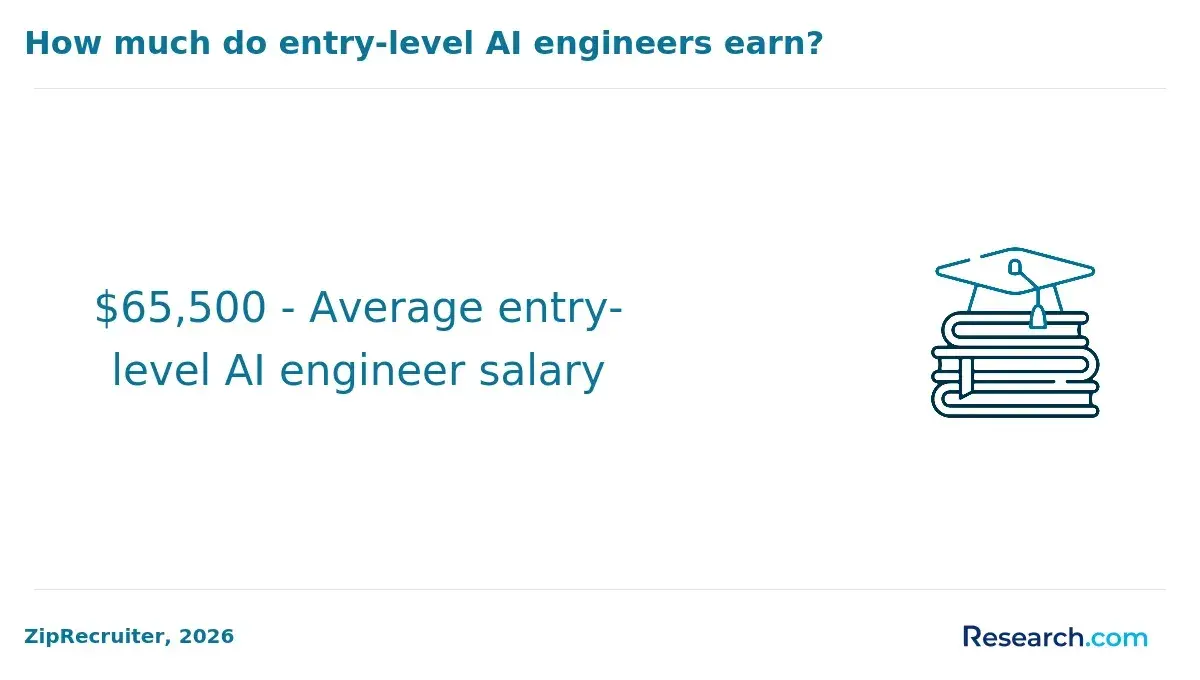
Salaries in ai and machine learning in the United States show significant variation based on experience, role, and location. Entry-level positions typically start between $85,000 and $110,000, while mid-career professionals earn from $125,000 to $160,000. Senior roles, such as machine learning engineers or data scientists in tech hubs like Silicon Valley, often exceed $200,000 annually. Positions like ai research scientist or machine learning architect generally offer the highest pay due to specialized expertise.
The demand for skilled professionals continues to grow rapidly as industries like healthcare, finance, and autonomous systems increase their adoption of ai technologies. Employment growth in these fields outpaces many others, reflecting the essential role ai plays in automation and innovation.
Strong project portfolios significantly improve hiring prospects. Data from the Microsoft-LinkedIn Work Trend shows candidates with robust project work are 2.5 times more likely to receive interview callbacks than those relying mainly on degrees or certifications. Gaining hands-on experience through open-source projects, internships, or applied research is crucial.
Job seekers should focus on developing expertise in frameworks such as TensorFlow or PyTorch, understanding model deployment, and learning domain-specific applications. Networking within the ai community and engaging in continuous learning are key strategies for success in this competitive market.
Other Things You Should Know About Artificial Intelligence
As of 2027, many online AI courses do not require prior programming experience. Beginners can find courses designed to teach programming alongside AI principles. However, having a basic understanding of programming can be beneficial for grasping advanced AI concepts more efficiently.
Yes, many online AI training programs offer specialization tracks such as natural language processing, computer vision, robotics, or reinforcement learning. These specializations allow learners to focus on niche areas after mastering core AI concepts, aligning their skills with targeted industry demands.
Modern AI training programs increasingly include modules on ethics, addressing issues like bias in algorithms, privacy concerns, and the societal impact of AI technologies. Understanding these aspects is crucial for responsible development and deployment of AI systems.
AI is a rapidly evolving field, so high-quality courses regularly update their curricula to reflect the latest research, tools, and best practices. Many providers also offer access to ongoing resources or community forums to support continuous learning beyond the formal course period.
References
- Online AI Training with Real Projects for Career Switchers: A Practical Roadmap https://www.h2kinfosys.com/blog/online-ai-training-with-real-projects-for-career-switchers-a-practical-roadmap/
- Online Course Certificates: Still Meaningful in the AI Era? https://iplso.com/https-iplso-com-online-course-certificates-ai/
- 6 Best Online AI Courses for Beginners [Updated 2026] | GoSkills https://www.goskills.com/ai/resources/best-ai-course-beginners
- The Future of Quality Assurance in Online and AI-Driven Learning: Ensuring Trust, Innovation, and Global Standards https://iacde.org/uncategorized/the-future-of-quality-assurance-in-online-and-ai-driven-learning-ensuring-trust-innovation-and-global-standards/
- Roadmap to get started as a beginner https://community.deeplearning.ai/t/roadmap-to-get-started-as-a-beginner/689522
- Your guide to AI in training - 12 AI training platforms, tips and smarter choices https://www.flowsparks.com/resources/ai-training-platforms-to-try
- How to Choose the Right AI Training Program for Your Team https://learnwithwhitney.com/blog/how-to-choose-the-right-ai-training-program-for-your-team-2
- Your Roadmap to a Machine Learning Career https://blog.avenuecode.com/your-roadmap-to-a-machine-learning-career
- What Is the AI Learning Roadmap? Three Levels From Basic Prompting to Autonomous Agents https://www.mindstudio.ai/blog/ai-learning-roadmap-three-levels/
- Redefining Educational Accreditation in the Era of AI and Digital Disruption https://www.ieac.org.uk/44-Redefining-Educational-Accreditation-in-the-Era-of-AI-and-Digital-Disruption-blog.php