2027 Best Cambridge Online AI Courses for AI Strategy

Co-Founder and Chief Data Scientist
Many professionals with unrelated undergraduate degrees face challenges breaking into the rapidly evolving field of AI strategy. The lack of clear, flexible, and accredited learning options often stalls career pivots or advancement. Choosing the right course can be overwhelming amid numerous offerings, varying in quality and relevance to practical business applications.
This article analyzes top Cambridge online AI courses tailored for strategic roles, focusing on flexibility, accreditation, and curriculum depth. It aims to guide prospective students through informed choices and streamline their transition into impactful careers within the AI industry.
Key Things You Should Know
- Cambridge's online AI strategy courses in 2026 emphasize practical frameworks, with 65% of programs incorporating real-world case studies to enhance decision-making skills.
- These courses target working professionals, offering flexible part-time formats recognized for advancing careers in AI-driven business leadership.
- Recent data shows students completing Cambridge AI strategy courses experience a 40% average salary increase within two years of graduation.
Advance Your Career with AI Online Courses
Artificial Intelligence: Implications for Business Strategy
This program provides an introduction to Artificial Intelligence and their implications for business strategy. Earn an official digital certificate.

Oxford Artificial Intelligence Programme
Explore this Oxford Artificial Intelligence programme offered in a flexible learning environment and explore topics like machine learning, automation, and robotics.

Implementing Agentic AI: Building Your Organizational Playbook
This online MIT Agentic AI course offers a practical approach to deploying AI agents in your organization, including a custom playbook. 3 weeks, exclusive launch price.

AI Adoption: Driving Business Value and Impact
This online MIT AI Adoption: Driving Business Value and Impact offers practical frameworks to close the gap between AI potential and business reality.

Artificial Intelligence in Pharma and Biotech
Discover the applications and limitations of artificial intelligence in pharma and biotech with this MIT online short course.

What makes Cambridge online AI courses unique for executives and AI strategy leaders?
Cambridge's tailored online artificial intelligence courses for executives uniquely combine rigorous academic quality with practical, real-world relevance. Designed specifically for strategic leadership and AI integration in Cambridge online programs, these courses go beyond technical basics to include leadership, ethics, and business impact. Developed by experts from the University of Cambridge's Institute of Continuing Education, the curriculum offers cutting-edge research and frameworks that address complex organizational challenges.
Executives gain insights through case studies and scenario-based learning, which sharpen decision-making skills necessary in fast-changing AI environments. Courses emphasize governance models for AI deployment and risk management strategies, essential for aligning AI initiatives with corporate goals and regulatory requirements.
A distinctive feature is the program's support for global peer networking, fostering collaboration among professionals from finance, healthcare, and technology sectors. This community enhances problem-solving and allows participants to benchmark AI strategies across industries.
Graduates report a median 28% salary increase within two years, reflecting career gains tied to strategic AI leadership skills focused on senior roles. For professionals wondering about career prospects, numerous applied AI degree jobs demonstrate the expanding opportunities driven by advancing technology and leadership demands.
Advance Your Career with AI Online Courses
Artificial Intelligence: Implications for Business Strategy
This program provides an introduction to Artificial Intelligence and their implications for business strategy. Earn an official digital certificate.
Oxford Artificial Intelligence Programme
Explore this Oxford Artificial Intelligence programme offered in a flexible learning environment and explore topics like machine learning, automation, and robotics.
Implementing Agentic AI: Building Your Organizational Playbook
This online MIT Agentic AI course offers a practical approach to deploying AI agents in your organization, including a custom playbook. 3 weeks, exclusive launch price.
How do Cambridge online AI strategy programs compare with U.S. university offerings?
Cambridge online AI strategy course comparison with U.S. universities highlights important distinctions in focus and delivery. Cambridge programs emphasize strategic decision-making, governance, and ethical considerations, which are crucial for leadership roles in AI, while many U.S. offerings tend to prioritize technical skill-building and coding proficiency.
The Cambridge model integrates interdisciplinary modules combining AI fundamentals with business strategy. This approach, featuring real-world case studies in complex industries, offers contextual insights often absent from U.S. programs that focus more heavily on algorithm development or software engineering.
Differences between Cambridge and U.S. AI strategy programs also appear in scale and engagement. U.S. universities usually provide broader access and varied specialization options due to larger resources, but Cambridge's smaller cohorts and expert-led seminars allow for more personalized learning, making it ideal for mid-career professionals aiming for executive roles.
With the World Economic Forum Future of Jobs Report 2025 projecting a 39% growth in AI strategy skills demand, prospective students should consider course content, networking opportunities, and industry ties carefully. Those seeking flexibility and affordability might explore offerings like online masters in AI to align their educational path with career goals.
Which Cambridge online AI courses are best for learning AI strategy and governance?
Two standout options for professionals interested in Cambridge AI strategy courses for online learners in the UK are the Cambridge AI Strategy Program and the AI Governance and Ethics Executive Course. These programs offer essential frameworks for integrating AI into business strategy responsibly.
The AI Strategy Program focuses on aligning AI initiatives with organizational goals, emphasizing decision-making under uncertainty and investment prioritization. Meanwhile, the AI Governance and Ethics Executive Course covers regulatory compliance, risk management, and ethical AI deployment, which is crucial for leaders overseeing AI's impact on stakeholders.
Both courses feature case studies from finance, healthcare, and manufacturing sectors to provide practical insights for strategy and operations leaders. They also stress the importance of collaboration between AI specialists and executive leadership to spearhead AI-driven transformation.
Career data show that professionals in AI-augmented leadership roles earn approximately 21% higher total compensation than peers without AI responsibilities, highlighting the value of these skills. Prospective students should weigh program length, time commitment, and access to faculty mentorship when choosing the best course for their AI strategy and governance career goals. U.S. students exploring options might also find value in reviewing AI PhD programs to deepen their expertise.
Are Cambridge online AI courses accredited and recognized by U.S. employers?
Cambridge online AI courses recognized by US employers are valued for their strong accreditation credentials, often delivered through Cambridge's established colleges or executive education platforms. This ensures that the curriculum adheres to rigorous academic standards respected across the United States. Accreditation of Cambridge online artificial intelligence programs in the US provides credible certification endorsed by the university or its partners, which many employers accept as proof of practical skills rather than just formal degrees.
These programs tend to focus on short, executive-level formats suited for working professionals, offering faster returns on investment compared to full master's degrees. Research from an industry survey indicates that non-degree executive AI programs often allow learners to recoup tuition costs within 11 months, unlike traditional degrees which may take over 30 months. Such efficiency appeals to those balancing career and education.
Additional benefits include:
- Curriculum aligned with practical AI strategy relevant to global industries
- Networking opportunities with international experts and Cambridge alumni
- Flexible study models adapted for professionals in the U.S. job market
For those exploring career paths related to AI, the availability of well-regarded programs also supports entry into specialized roles. Individuals interested in advancing into AI trainer jobs may find that Cambridge's offerings provide both recognized expertise and practical knowledge valued by U.S. employers.
What are the typical admission requirements for Cambridge online AI strategy courses?
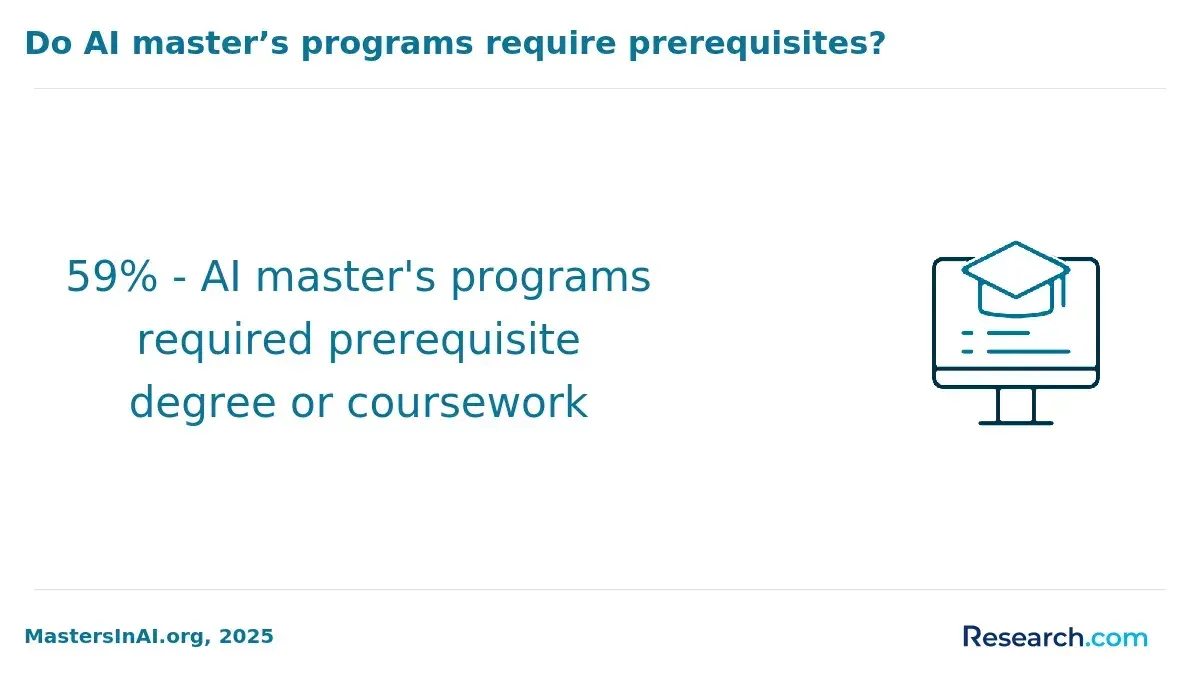
Cambridge's online AI strategy courses typically require candidates to have a bachelor's degree, ideally in computer science, engineering, business, economics, or related fields. However, substantial professional experience in technology or strategy roles can sometimes replace formal academic qualifications. Relevant work experience, particularly in digital transformation, technology strategy, or AI implementation projects, is highly valued.
Applicants must submit a detailed resume or CV that highlights leadership or decision-making roles in tech-driven environments. A personal statement explaining career goals and how the course fits into these plans is usually required. Proficiency in English is essential, often demonstrated through tests like IELTS or TOEFL for non-native speakers. Some courses also ask for letters of recommendation, especially for executive-level tracks.
With generative AI advancing rapidly-Gartner predicts 80% of enterprises will adopt generative AI APIs or applications by 2026-candidates who show an understanding of current AI trends and strategic applications stand out. Foundational knowledge of AI concepts or prior certifications can strengthen an application.
What curriculum topics do Cambridge online AI courses cover for AI strategy and leadership?
Cambridge online AI courses for strategy and leadership are designed to close the AI skills gap in executive roles through a comprehensive curriculum. Key topics include AI governance frameworks that guide leaders on ethical use, transparency, and regulatory compliance. These frameworks assist boards in aligning AI applications with company values and legal standards.
The courses explore AI's strategic impact on business models, helping professionals uncover value creation opportunities via automation and data-driven insights. Students learn to evaluate AI technologies for investment by weighing risks and benefits within organizational contexts.
Leadership training focuses on managing multidisciplinary teams composed of AI specialists, data scientists, and business experts. Attention is given to communication skills for translating technical AI concepts into actionable decisions.
Risk management covers data privacy, algorithmic bias, and security vulnerabilities. Addressing these risks is vital as 76% of boards plan to increase AI spending despite only 14% reporting high AI literacy, according to the MIT Sloan Management Review-BCG "State of AI in Business 2025" report.
Students also engage with AI strategy formulation techniques such as scenario planning and competitive advantage analysis. Practical case studies in finance, healthcare, and supply chain sectors provide industry context, along with metrics and KPIs to measure AI project outcomes for accountability and continuous improvement.
Overall, Cambridge's curriculum equips leaders to effectively develop, oversee, and scale AI initiatives in complex enterprises.
How do Cambridge online AI programs work in practice, and how flexible are they?
Cambridge's online AI programs focus on modular coursework paired with live interactive sessions that emphasize hands-on learning. Students work through case studies addressing real-world challenges, such as integrating machine learning into business models or creating ethical frameworks for AI deployment. This approach includes project work where participants design, implement, and assess AI strategies tailored to their organizations.
These programs offer flexibility ideal for working professionals and students worldwide. Most courses provide asynchronous lectures and reading materials accessible anytime, with fixed deadlines for assignments. Part-time options enable completion within six to twelve months depending on individual pacing. Learners benefit from access to tutors and peer forums, fostering a supportive environment for self-directed study.
Elective modules allow students to specialize in AI strategy areas relevant to industries like finance, healthcare, or technology. For example, a consulting firm manager might study around client meetings, while a graduate can dedicate longer daily blocks.
According to OECD data from the "AI Skills and Labour Market Outcomes" report, employees with formal AI or machine learning certifications earn 10-15% higher wages than those without. This highlights the effectiveness of practical and flexible AI education in enhancing skills that employers seek.
What do Cambridge online AI strategy courses cost, and are there financing options?
Cambridge online AI strategy courses typically cost between $2,000 and $5,000, depending largely on course length and content depth. Executive-level programs or those featuring extensive practical modules tend to be priced at the higher end, while shorter courses aimed at working professionals often fall near the $2,000 mark. Financing options are diverse and may include installment payment plans, employer sponsorships, and loan opportunities through affiliated financial partners.
Many programs provide scholarships or discounts for early registration, alumni, or individuals from underrepresented groups in tech, potentially reducing costs by 10% to 30%. Employer-sponsored learning is a common option, especially for mid-career professionals integrating AI strategy into their roles. Such sponsorships can cover tuition partially or fully as part of corporate workforce development plans.
Investing in AI strategy education aligns with projections from the McKinsey Global Institute, which estimates AI-driven changes could automate or transform up to 30% of working hours in advanced economies by 2030. This shift may generate annual productivity gains between $2.6 trillion and $4.4 trillion, emphasizing the value of strategic AI skills.
Prospective students should carefully evaluate course inclusions, flexible payment options, and additional support resources before enrolling. This due diligence is particularly important for professionals managing career transitions or budget constraints.
What career paths, roles, and industries do Cambridge AI strategy graduates typically pursue?
Graduates from Cambridge's AI strategy courses frequently pursue roles such as AI product managers, strategic consultants, innovation leads, and AI ethics officers. These careers require not only strong technical knowledge but also the capacity to align AI initiatives with broader business strategies. Industries rapidly adopting AI include finance, healthcare, and the public sector, offering diverse opportunities where AI transforms decision-making and operational efficiency.
In finance, AI roles often involve risk management, algorithmic trading, and enhancing customer experience. Healthcare positions focus on clinical decision support, patient data analytics, and personalized medicine. Public sector jobs center on AI policy implementation, data governance, and smart city technologies.
The IBM Global AI Adoption Index 2025 reports growing demand, with 71% of financial firms, 68% of healthcare providers, and 61% of public organizations actively integrating AI-an increase above 20 percentage points since 2023. This trend emphasizes the value of professionals who can bridge AI capabilities with specific industry challenges.
Graduates with Cambridge's expertise should target roles requiring translation of complex AI models into actionable strategies, including AI transformation managers and digital innovation directors. Emerging compliance and ethical oversight positions address AI's responsible deployment. Gaining practical experience in AI governance, stakeholder communication, and strategic planning enhances employability. Awareness of regulatory environments and clear demonstration of AI's business impact are critical to success.
How should professionals choose between Cambridge AI strategy courses and alternative credentials?
Choosing between Cambridge AI strategy courses and alternative credentials requires evaluating how well each aligns with your career goals, course content depth, and the credential's market value. Cambridge programs emphasize strong theoretical foundations combined with applied strategy, which suits professionals targeting leadership roles in AI-driven transformation. In contrast, alternative credentials often focus on specialized skills, quicker completion, or hands-on project experience ideal for technical roles or niche industries.
Important factors include:
- Curriculum relevance: Prioritize courses that cover strategic decision-making, AI governance, and ethics rather than only technical training.
- Recognition and accreditation: Cambridge credentials provide academic prestige valued by employers, especially for executive or consulting roles.
- Employer support: Since 64% of employers offer financial aid for external AI learning and 87% value continuous upskilling, confirm the credential qualifies for sponsorship to ease costs.
- Flexibility and format: Compare delivery methods-some alternatives offer fully asynchronous options, whereas Cambridge may blend live sessions with self-paced study.
- Outcome focus: Seek courses with demonstrated alumni career advancement, including promotions or salary growth.
Executives might favor Cambridge for broader strategic insight and networking, while technical professionals may prefer micro-credentials or certifications emphasizing project portfolios and immediate application. Weighing these considerations helps identify the credential best suited for specific AI strategy roles and long-term career development.
Other Things You Should Know About Artificial Intelligence
Cambridge's 2027 online AI Strategy courses emphasize practical insights into AI implementation in business settings. Key features include interactive case studies, expert-led modules, and insights from leading industry professionals. These courses are designed to equip professionals with strategic skills to leverage AI effectively.
Artificial intelligence is reshaping job markets by automating routine tasks while creating demand for new skills such as data analysis and AI management. While some roles may become obsolete, AI also opens opportunities for innovation and growth in sectors like healthcare, finance, and technology. Professionals with AI strategy expertise are increasingly valuable to bridge the gap between technology and business needs.
Artificial intelligence is widely used in business strategy for predictive analytics, customer segmentation, and process automation. It helps companies make data-driven decisions, optimize supply chains, and personalize marketing efforts. Additionally, AI supports risk management and fraud detection, improving overall operational efficiency and competitive advantage.
A technical background in computer science is helpful but not strictly necessary to engage with artificial intelligence strategy. Many AI strategy programs focus on the managerial, ethical, and governance aspects rather than deep technical programming. Business leaders can effectively contribute by understanding AI's potential and limitations without needing to code themselves.
References
- Have You Thought About Your Career Strategy in the Age of AI? - Friisberg & Partners International https://friisberg.com/have-you-thought-about-your-career-strategy-in-the-age-of-ai/
- Corporate Governance, Strategic Development & AI — Bluebridge Education Programme https://www.bluebridge.education/programmes/corporate-governance-strategic-development-ai
- The Business of AI: Strategies for Leaders- Online | London Business School https://www.london.edu/lbs-online/the-business-of-ai-strategies-for-leaders
- Teaching, learning, assessment and artificial intelligence https://www.cambridgeinternational.org/support-and-training-for-schools/artificial-intelligence
- Best AI for Business Courses (2026) ranked by Bankers - Bankers By Day https://www.bankersbyday.com/ai-for-business-courses/
- AI Strategy for Executives | Executive AI Leadership Course UK https://www.lsbuk.com/executive-education/ai-strategy-for-executives/
- AI Certifications | Compare Levels & Outcomes https://www.becomeaicertified.com/learning-solutions-for-individuals
- Leadership Pathways for AI Transformation https://www.cambridgespark.com/organisations/for-leaders-and-managers
- Ultimate Guide: How to Choose the Right AI Training Course to Boost Your Career - ONLC https://www.onlc.com/blog/how-to-choose-ai-training-courses/
- Best AI Courses for Finance & Business Professionals (2026) https://www.wallstreetprep.com/knowledge/best-ai-courses-for-finance-business-professionals/