2027 Best LinkedIn Learning AI Courses Online

Co-Founder and Chief Data Scientist
Many professionals with backgrounds outside of technology face challenges when seeking to enter the artificial intelligence field. They often struggle to find affordable, flexible, and accredited learning options that fit around demanding schedules. Traditional educational routes can be time-consuming and costly, delaying career transitions or growth. Access to relevant skill-building courses is vital to stay competitive in this rapidly evolving industry. This article evaluates top LinkedIn Learning AI courses, highlighting their strengths in curriculum, flexibility, and practical relevance to help readers identify the best pathways for gaining expertise and advancing in artificial intelligence roles.
Key Things You Should Know
- LinkedIn Learning offers over 150 AI courses updated through 2025, focusing on machine learning, data science, and ethical AI applications to meet growing industry demands.
- Enrollment in AI-related LinkedIn Learning courses increased by 45% in 2024, reflecting rising interest from professionals seeking career advancement in technology sectors.
- Top courses emphasize practical skills, with 70% including hands-on projects and real-world AI tool training to boost employability in U.S. job markets.
Advance Your Career with AI Online Courses
Artificial Intelligence: Implications for Business Strategy
This program provides an introduction to Artificial Intelligence and their implications for business strategy. Earn an official digital certificate.

Oxford Artificial Intelligence Programme
Explore this Oxford Artificial Intelligence programme offered in a flexible learning environment and explore topics like machine learning, automation, and robotics.

Implementing Agentic AI: Building Your Organizational Playbook
This online MIT Agentic AI course offers a practical approach to deploying AI agents in your organization, including a custom playbook. 3 weeks, exclusive launch price.

AI Adoption: Driving Business Value and Impact
This online MIT AI Adoption: Driving Business Value and Impact offers practical frameworks to close the gap between AI potential and business reality.

Artificial Intelligence in Pharma and Biotech
Discover the applications and limitations of artificial intelligence in pharma and biotech with this MIT online short course.

What are the best LinkedIn Learning AI courses online?
The best online LinkedIn Learning artificial intelligence courses focus on practical skills and foundational knowledge essential for diverse career paths. Popular options include "Artificial Intelligence Foundations: Machine Learning," offering hands-on experience with supervised and unsupervised learning, and "Deep Learning: Face Recognition," which showcases AI in computer vision. These courses are well-suited for beginners and intermediate learners aiming to build relevant skills efficiently.
For professionals targeting AI application in business, "Artificial Intelligence for Business Leaders" covers strategy, implementation challenges, and ethical considerations. It prepares managers and decision-makers to effectively use AI technology. "Natural Language Processing with Python" offers a technical deep dive valuable for data scientists and software engineers focused on AI-driven text analysis.
LinkedIn Learning integrates market trends into course design, meeting growing employer demand. Job postings requiring AI skills grew 21 times globally from 2016 to 2024 according to LinkedIn Economic Graph (2025). Enrollment in AI courses on LinkedIn Learning rose 65% year-over-year in 2024, highlighting industry recognition.
Choosing the right training requires attention to career goals, whether technical mastery or AI strategy. Combining foundational and specialized courses ensures comprehensive skill development aligned with the pace of technological change. Many prospective students also consider pursuing a computer science degree online to supplement their learning in AI.
Advance Your Career with AI Online Courses
Artificial Intelligence: Implications for Business Strategy
This program provides an introduction to Artificial Intelligence and their implications for business strategy. Earn an official digital certificate.
Oxford Artificial Intelligence Programme
Explore this Oxford Artificial Intelligence programme offered in a flexible learning environment and explore topics like machine learning, automation, and robotics.
Implementing Agentic AI: Building Your Organizational Playbook
This online MIT Agentic AI course offers a practical approach to deploying AI agents in your organization, including a custom playbook. 3 weeks, exclusive launch price.
Which LinkedIn Learning AI courses suit beginners and professionals?
LinkedIn Learning offers some of the best LinkedIn Learning AI courses for beginners, such as "Artificial Intelligence Foundations: Machine Learning" and "AI for Everyone." These courses provide a practical introduction without requiring programming skills, helping learners understand AI's impact across industries and prepare for the predicted disruption of nearly 44% of workers' core skills by 2030, according to the World Economic Forum Future of Jobs Report 2025.
For more seasoned individuals, advanced LinkedIn Learning artificial intelligence classes for professionals include in-depth courses like "Deep Learning Explained," "Applied AI: Building AI Solutions," and "AI in Practice: Ethical and Social Implications." These focus on coding, frameworks such as TensorFlow and PyTorch, real-world problem-solving, and the ethical aspects of AI integration, supporting those aiming to build AI models or manage AI projects.
Additionally, strategic courses like "AI Strategy for Business Leaders" target decision-makers who need a strong grasp of AI concepts without coding expertise.
Recommendations for those learning AI:
- Start with fundamental courses if you lack AI or coding background.
- Progress to specialized and technical classes after grasping basics to boost your AI development or management career.
- Integrate ethical and strategic knowledge to meet increasing multidisciplinary market demands.
The structured path aligns with growing demand for AI literacy in both technical and non-technical roles. For those considering further education, exploring online degrees in AI can provide affordable options to deepen expertise and advance careers.
How do LinkedIn Learning AI courses compare with college programs?
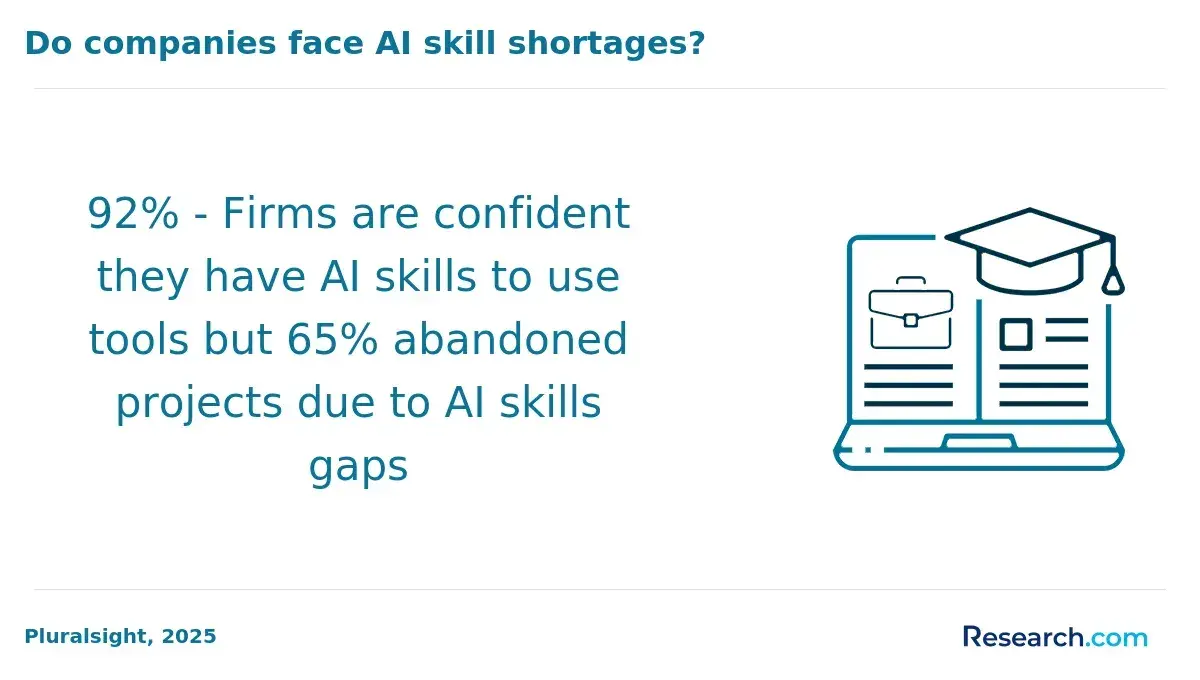
LinkedIn Learning AI courses offer practical, focused training that adapts quickly to industry needs, unlike traditional college programs that take years. These courses range from a few hours to weeks, enabling professionals to upskill or pivot careers rapidly. This flexibility is a key benefit of online AI certification compared to university degrees.
Traditional college AI programs provide a broad foundation covering theory, ethics, and advanced mathematics, but often lack the immediacy demanded by today's job market. LinkedIn Learning updates its curriculum frequently, incorporating the latest AI trends such as generative AI frameworks, and aligns closely with business applications. According to McKinsey & Company's 2024 survey, 79% of global professionals now use generative AI in at least one business function, a sharp rise from 33% the previous year, highlighting how rapidly AI skills need to evolve.
LinkedIn Learning emphasizes hands-on experience with AI platforms and business workflow integration, ideal for those seeking applied skills. College programs are better suited for learners aiming for deep theoretical knowledge or research careers. For example, a working professional can complete a LinkedIn Learning course on machine learning deployment in days and earn industry-recognized certification, whereas college credentials take semesters.
This accessibility helps individuals stay competitive in a job market where companies adopting AI at scale are 3.5 times more likely to achieve revenue growth of 10% or higher. Those exploring specialized educational paths might also consider video game programs as a complementary skill area.
What AI skills do LinkedIn Learning courses teach?
LinkedIn Learning courses for mastering artificial intelligence tools cover essential practical AI skills, including understanding machine learning algorithms, natural language processing, computer vision, and AI model deployment. Learners gain hands-on experience building, training, and interpreting machine learning models using Python and popular frameworks like TensorFlow and PyTorch.
Many classes emphasize AI-driven data analysis and predictive analytics, helping students extract actionable insights from large datasets-skills highly valued in data science and business intelligence careers. Automation of routine tasks with AI-powered tools also features prominently, making these courses ideal for office workers seeking productivity boosts. Microsoft's Work Trend Index revealed employees who leverage AI for daily routine tasks save an average of 1.9 hours a day, with 90% saying AI helps them focus on high-priority work.
Examples in the curriculum include building AI chatbots for customer service and applying AI in marketing campaign optimization. Ethical AI development is also covered, addressing bias, fairness, and regulatory compliance to prepare professionals who ensure responsible AI integration. LinkedIn Learning effectively prepares users with a comprehensive suite of AI skills relevant across industries.
Additionally, for those interested in expanding their technology skill set, exploring trusted resources about cyber security online courses can complement AI expertise and enhance career prospects.
How long do LinkedIn Learning AI courses take to complete?
LinkedIn Learning offers AI courses ranging from 1 to 10 hours, tailored to different skill levels and professional needs. Short courses, lasting 1 to 3 hours, focus on foundational topics or specific tools, making them ideal for quick skill refreshers. More comprehensive offerings, such as those on machine learning algorithms, neural networks, or AI applications in data analytics and business intelligence, typically require 6 to 10 hours and include hands-on projects and assessments.
Course lengths vary to accommodate busy professionals as well as recent graduates. For instance, a course on AI basics for business users might take around 2 hours, while advanced modules on AI-driven decision intelligence in analytics can extend up to 8 hours. Many courses feature a modular structure, allowing learners to pause and resume easily without losing progress, supporting flexible study schedules.
Lessons are broken down into video segments lasting 2 to 15 minutes, facilitating focused learning on specific concepts such as Python for AI and data visualization techniques. Certification options are available after completion but generally do not add to the overall time commitment.
Given Gartner's forecast that organizations integrating AI-driven decision intelligence into analytics will outperform competitors by 20% or more in revenue growth and customer satisfaction by 2026, investing 6 to 10 hours in advanced AI courses related to data analytics and business intelligence on LinkedIn Learning can offer significant career advantages.
How much do LinkedIn Learning AI courses cost?
LinkedIn Learning offers subscription-based access to its comprehensive library of courses, including those focused on artificial intelligence and software development. Individual courses are not sold separately. Pricing options include a monthly subscription for about $39.99 or an annual subscription priced near $299.88, effectively reducing the monthly cost to approximately $24.99 when billed yearly. Both plans provide unlimited access to all courses and often include a certification of completion, useful for enhancing resumes and LinkedIn profiles.
This flexible pricing suits various learning needs: monthly plans are ideal for professionals seeking short-term upskilling, while annual subscriptions benefit learners aiming for deep, long-term skill development. Businesses and teams can explore LinkedIn Learning's enterprise solutions, which feature custom pricing and additional management tools for sustained training aligned with organizational goals.
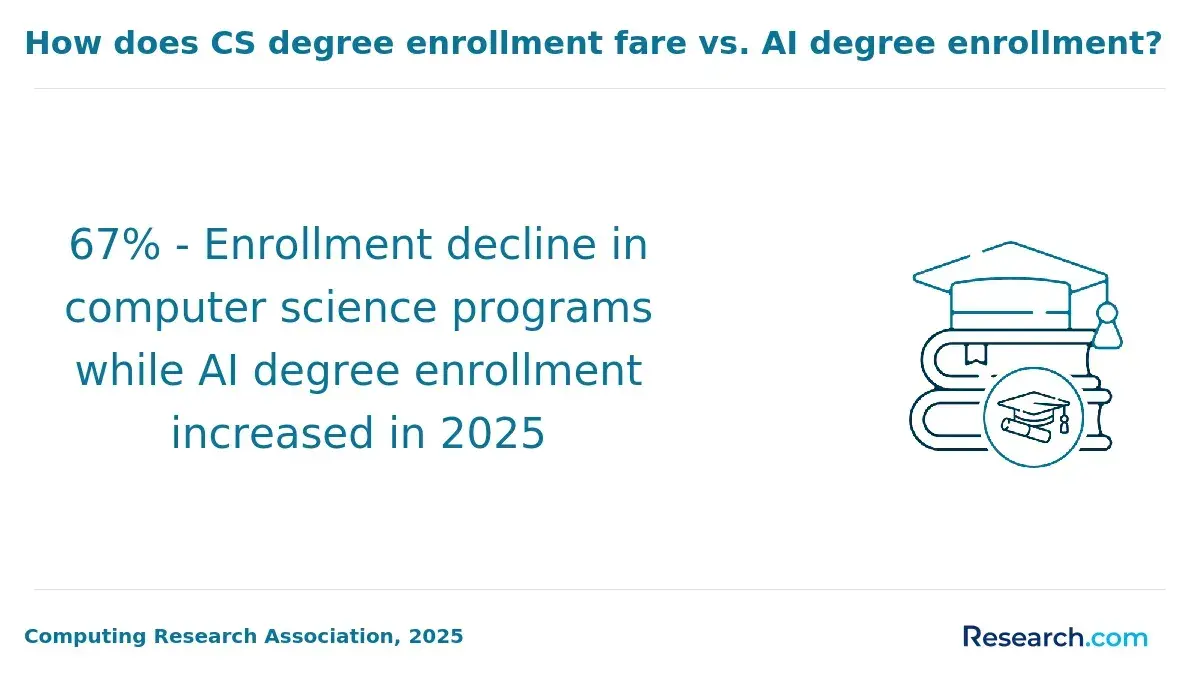
Industry trends emphasize the value of such investments. According to GitHub's State of the Octoverse report, 92% of U.S.-based developers use AI coding tools, boosting productivity by up to 55%. This underscores the growing demand for AI expertise across the tech sector.
Continuous access to regularly updated courses is critical, as AI technology evolves rapidly. Prospective learners should evaluate how LinkedIn Learning's all-access subscription aligns with their need for ongoing professional growth in AI and software development.
Do LinkedIn Learning AI courses offer certificates employers recognize?
LinkedIn Learning AI courses provide certificates recognized by many employers, though their value varies by industry and company. These certificates demonstrate completion and mastery of specific AI skills, which can enhance a résumé and improve job prospects, particularly in fields involving emerging technologies. While not accredited degrees, certificates from LinkedIn Learning are often acknowledged in tech, marketing, and sales sectors as valid proof of upskilling and relevant knowledge.
Employers focused on AI-driven marketing tools or data analysis commonly accept these certificates to verify practical skills. For instance, Salesforce's 2024 State of Marketing report reveals that 75% of top-performing marketing teams use generative AI, and those leveraging AI for personalization see a 41% increase in campaign ROI compared to those who do not. This highlights the importance placed on AI expertise in the workplace.
Candidates can highlight specialized skills in areas such as machine learning applications in marketing, AI ethics, or foundational skills that can also be learned in online data science programs. To further boost the practical value of these certificates, learners should couple them with real-world projects, portfolios, or accredited coursework. Clear communication of skills during interviews, backed by measurable outcomes from AI implementations, strengthens how employers perceive these credentials.
Which jobs can LinkedIn Learning AI courses help prepare you for?
LinkedIn Learning AI courses are designed to equip professionals with skills across diverse roles integrating artificial intelligence in business, technology, and management. These programs are valuable for project managers, operations specialists, data analysts, and software developers seeking to enhance productivity and innovation with AI-driven solutions.
Project managers benefit as AI increasingly automates workflows, leading to efficiency boosts. According to PwC's 2024 Global CEO Survey, 70% of CEOs plan to implement AI for automating project and operational tasks within three years. Companies adopting AI are 1.6 times more likely to achieve significant cost reductions, highlighting AI literacy's importance in leadership focused on performance and cost management.
Data analysts and scientists gain expertise in machine learning algorithms, data preprocessing, and AI model deployment, enabling them to extract actionable insights and create predictive models. Software engineers sharpen skills in AI programming, model training, and system integration to develop scalable applications.
Besides technical roles, LinkedIn Learning supports careers in AI ethics, product management, and digital transformation strategies, reflecting the growing need for professionals who understand AI's societal and business impact.
Overall, these courses align with career paths in project management, operations, data science, software development, and strategic AI roles, meeting market demands for AI proficiency.
What salary can AI course learners expect in U.S. jobs?
AI course learners in the U.S. can anticipate salary ranges reflecting the specialized skills gained through these programs. Entry-level roles like AI analysts or junior machine learning engineers typically earn between $70,000 and $95,000 annually. Mid-career professionals with practical experience and certifications often see salaries from $110,000 to $145,000. Senior positions focusing on AI strategy, governance, or architecture command upwards of $160,000, with some experts in AI ethics and policy earning beyond $180,000 due to their crucial role managing risks linked to AI deployment.
The demand for AI professionals skilled in ethics, governance, and policy remains strong. The IBM Institute for Business Value's 2024 AI & Ethics study found that 91% of organizations using AI faced at least one compliance, ethical, or security incident recently, yet only 35% have formal AI governance frameworks. This creates a significant need for experts who can develop AI systems responsibly while implementing governance mechanisms, enhancing their market value.
Salary variations also depend on industry and location. Technology hubs such as Silicon Valley, Seattle, and Boston typically offer compensation 20% or more above national averages. Sectors like healthcare, finance, and government increasingly require AI governance roles where professionals blend ethical oversight with technical skills, often negotiating salaries comparable to technical-only positions.
Prospective students should choose courses covering AI compliance, risk management, and ethical frameworks to boost job prospects and qualify for higher-paying roles balancing AI's societal impacts with algorithmic development.
How do you choose a credible AI course on LinkedIn Learning?
Selecting a credible AI course on LinkedIn Learning starts with pinpointing the specific skills you aim to develop, such as machine learning, natural language processing, or AI ethics. Choose courses led by instructors with verified expertise and professional experience in these fields.
Review the course syllabus to ensure it offers a detailed and up-to-date outline aligned with industry standards and the latest technologies through 2026. Practical components like exercises, real-world case studies, and projects are essential for applying knowledge effectively.
Consider course ratings and learner feedback, focusing on reviews that highlight improvements in career progression or job performance. According to LinkedIn's 2025 Workplace Learning Report, 90% of companies plan to maintain or increase AI training budgets. Employees dedicating at least 10 hours yearly to online learning are 2.1 times more likely to earn promotions, underscoring the value of well-chosen courses for career growth.
Flexibility and course length matter-those with busy schedules may prefer shorter or self-paced modules. Verify that the course provides verifiable completion certificates to enhance your LinkedIn profile and resume, demonstrating your commitment to ongoing professional development.
Other Things You Should Know About Artificial Intelligence
Ethical concerns in artificial intelligence include issues such as bias in algorithms, privacy violations, and the potential for automation to displace jobs. AI systems may unintentionally reinforce social inequalities if not designed with fairness in mind. Additionally, transparency and accountability in AI decision-making remain major challenges for developers and policymakers.
Artificial intelligence is transforming industries like healthcare by improving diagnostics and personalized treatments. In finance, AI enhances fraud detection and automates trading strategies. Manufacturing benefits from AI-powered automation and predictive maintenance, increasing efficiency and reducing downtime across various sectors.
To learn artificial intelligence effectively, foundational knowledge in mathematics, especially linear algebra, probability, and calculus, is important. Programming skills, particularly in Python, enable hands-on experimentation with AI models. A background in data science principles and machine learning also helps in understanding core AI concepts and applications.
In 2027, prerequisites for learning an AI course on LinkedIn typically include a fundamental understanding of mathematics, proficiency in programming languages such as Python, and basic knowledge of data science and machine learning concepts. Familiarity with statistics and probability can also be beneficial.
References
- 5Mins.ai vs LinkedIn Learning | Learning Platform Comparison https://www.5mins.ai/compare/5mins-ai-vs-linkedin-learning
- Entry-Level AI Engineer Salary Calculator https://tripleten.com/tools/entry-level-ai-engineer-salary/
- LinkedIn Learning Pricing 2026: Costs, Discounts & Free Access https://www.outx.ai/blog/linkedin-learning-individual
- 10 Top LinkedIn Learning AI Courses to Build Skills in 2025 | DigitalOcean https://www.digitalocean.com/resources/articles/linkedin-learning-ai-courses
- LinkedIn Learning Subscription Price 2025-2026: Full Cost Breakdown https://postiv.ai/blog/linkedin-learning-cost
- AI Salaries - How Much AI Jobs Pay https://www.tractionkeys.com/post/ai-salaries---how-much-ai-jobs-pay