2027 Best AI Courses for Design Automation Teams

Co-Founder and Chief Data Scientist
Design automation teams often face challenges integrating advanced tools to keep pace with rapidly evolving industries. Many professionals find their existing skill sets insufficient for leveraging emerging AI technologies effectively, creating bottlenecks in workflow optimization and innovation. This skill gap limits the potential for automating complex design processes, reducing competitiveness in a dynamic market.
Navigating the vast array of AI courses available can also be overwhelming, especially for those transitioning from unrelated fields. This article highlights the best AI courses tailored for design automation teams, focusing on flexible, accredited programs that equip learners with practical skills to address these challenges and accelerate career growth.
Key Things You Should Know
- AI courses for design automation teams in 2026 emphasize hands-on skills in machine learning frameworks and generative design, with 67% of programs incorporating real-world project collaborations.
- Recent curricula integrate interdisciplinary approaches, combining AI with CAD and robotics, addressing the 40% annual growth in demand for AI-driven design skills in U.S. industries.
- Certification from top AI design automation courses increases employability by 35%, as companies prioritize candidates proficient in AI tools for innovation and efficiency enhancement.
TITLE Student Enrollment in Exclusively Online Programs
SOURCE NCES, 2024
YAXIS Number of Students
TYPE standard bar
---
Public Undergraduate 2712561
Public Graduate 588617
Nonprofit Undergraduate 695939
Nonprofit Graduate 529238
Advance Your Career with AI Online Courses
Artificial Intelligence: Implications for Business Strategy
This program provides an introduction to Artificial Intelligence and their implications for business strategy. Earn an official digital certificate.

Oxford Artificial Intelligence Programme
Explore this Oxford Artificial Intelligence programme offered in a flexible learning environment and explore topics like machine learning, automation, and robotics.

Implementing Agentic AI: Building Your Organizational Playbook
This online MIT Agentic AI course offers a practical approach to deploying AI agents in your organization, including a custom playbook. 3 weeks, exclusive launch price.

AI Adoption: Driving Business Value and Impact
This online MIT AI Adoption: Driving Business Value and Impact offers practical frameworks to close the gap between AI potential and business reality.

Artificial Intelligence in Pharma and Biotech
Discover the applications and limitations of artificial intelligence in pharma and biotech with this MIT online short course.

What are the best AI courses for design automation teams and who are they right for?
Top AI courses for design automation teams focus on practical skills in machine learning, computer vision, and process optimization. Leading programs like Stanford's Machine Learning for Design Automation and MIT's AI for Engineering Systems teach algorithmic approaches to automate repetitive design tasks and improve system performance. These courses suit teams aiming to accelerate CAD workflows or integrate AI-driven predictive analytics effectively.
Those wondering who should take design automation AI training will find these courses best for engineers, data scientists, and design automation specialists with intermediate programming knowledge and experience in CAD or engineering software.
Beginners without skills in Python, statistics, or system design might struggle with the material. Advanced courses covering deep learning architectures and reinforcement learning prepare professionals to lead AI integration projects and develop adaptive automation pipelines.
Investing in AI skills through such training delivers measurable business benefits. McKinsey's 2024 State of AI report notes that firms applying AI in one or more business functions are 1.5× more likely to see revenue growth exceeding 10% compared to those that don't. This highlights the importance of equipping design teams with AI capabilities.
Additional training on cloud AI services, such as Google Cloud AI or Azure Machine Learning, is valuable for teams focusing on scalable deployment.
Design automation leaders should prioritize courses featuring real-world projects that cover data preprocessing, model evaluation, and integration with existing tools, ensuring practical skill application over theory alone. For those looking to expand technical education quickly, consider a fast track computer science degree.
Advance Your Career with AI Online Courses
Artificial Intelligence: Implications for Business Strategy
This program provides an introduction to Artificial Intelligence and their implications for business strategy. Earn an official digital certificate.
Oxford Artificial Intelligence Programme
Explore this Oxford Artificial Intelligence programme offered in a flexible learning environment and explore topics like machine learning, automation, and robotics.
Implementing Agentic AI: Building Your Organizational Playbook
This online MIT Agentic AI course offers a practical approach to deploying AI agents in your organization, including a custom playbook. 3 weeks, exclusive launch price.
What skills and outcomes should AI courses for design automation professionals reliably deliver?
AI courses for design automation professionals must develop key skills for design automation professionals using AI, blending domain-specific engineering knowledge with advanced AI techniques.
Essential competencies include understanding machine learning algorithms, data preprocessing, and model evaluation tailored to design tasks. Mastery of automation frameworks that improve CAD, simulation, and robotics workflows is critical.
Expected outcomes from AI courses in design automation focus on practical application through projects solving real-world design issues like optimizing component layouts or automating quality control. Proficiency in programming languages such as Python and tools like TensorFlow or PyTorch is necessary.
Courses should prepare learners to build AI models that integrate effectively with existing design systems and manage large engineering data sets.
Additionally, AI literacy covers data ethics, interpretability, and model validation to ensure trustworthy automation results. Graduates need to diagnose AI model shortcomings and fine-tune performance for specific design contexts.
Practical skills include cross-functional collaboration, enabling clear communication between AI experts and design engineers. This skillset helps translate design requirements into AI workflows and interpret AI outputs for actionable engineering decisions.
The World Economic Forum predicts a 39% net job growth for AI and machine learning specialists by 2025, underscoring the need for robust, practically oriented curricula. Prospective students looking for an effective path can explore opportunities through an AI degree that meets these evolving demands.
How do AI courses for design automation differ from general artificial intelligence programs?
AI courses tailored for design automation teams differ significantly from general artificial intelligence programs by focusing on domain-specific applications related to electronic design automation (EDA). Rather than emphasizing broad topics like machine learning algorithms or natural language processing, these courses concentrate on automating chip design, verification, and testing processes.
Such specialized training covers AI techniques adapted to hardware description languages and circuit optimization, often integrating with EDA software tools. For example, reinforcement learning may be used to improve placement and routing in chip layouts, while neural networks assist in defect detection through pattern recognition.
The practical methods taught in these courses equip students with immediately applicable skills in semiconductor industries, contrasting with general artificial intelligence programs that can be more theoretical.
This focus addresses challenges such as time constraints, resource management, and ensuring compatibility across various EDA platforms. Differences between design automation AI training and standard artificial intelligence courses lie primarily in this industry-aligned and workflow-integrated approach.
Deloitte's global AI talent research highlights that companies upskilling internal technical staff in AI technologies spend 30-40% less than those relying on external hires, while maintaining similar project outcomes. This cost-efficiency makes targeted AI education for design automation teams especially valuable.
Prospective students seeking leadership in AI-assisted chip design should prioritize programs emphasizing practical projects and collaboration with hardware engineers. Those interested might also explore game design schools online to understand cross-disciplinary applications of AI skills.
Which degree, certificate, and bootcamp pathways support AI careers in design automation?
Degrees, certificates, and bootcamps offer distinct pathways tailored to different educational needs and timelines for careers in AI design automation. Bachelor's and master's degrees in computer science, data science, or AI provide a strong technical foundation, with some programs offering electives focused on design automation and workflow optimization.
These degree programs for AI design automation careers are well-suited for those aiming at research or development roles requiring deep theoretical knowledge.
Certificates, especially professional or post-baccalaureate credentials, are ideal for working professionals seeking to quickly gain relevant skills without committing to a multi-year degree. Industry-recognized options like machine learning specialization tracks on Coursera or university-backed AI certificates emphasize practical automation and design tool integration, offering flexible learning.
A recent internal Coursera 2025 learner outcomes survey reports that 52% of working professionals taking AI/ML specializations for automation use cases experienced productivity gains or role expansion within six months of completion.
Bootcamps focus on intensive, hands-on training aimed at immediate job readiness. These programs often emphasize AI applications in automation frameworks and software tools, making them ideal for professionals transitioning careers or enhancing existing design skills with AI. The certificate and bootcamp pathways for ai design automation professionals accelerate applied learning and rapid impact on workflows.
Choosing the right pathway depends on your technical background and career goals. Degrees build theoretical expertise, certificates provide flexible skill upgrades for mid-career learners, and bootcamps offer quick, project-based experience. For more detailed guidance on AI careers, explore what does an AI trainer do.
How do online and campus-based AI programs for design automation compare?
Online and campus-based AI programs for design automation differ mainly in delivery style, hands-on experience, and how deeply they integrate with engineering systems.
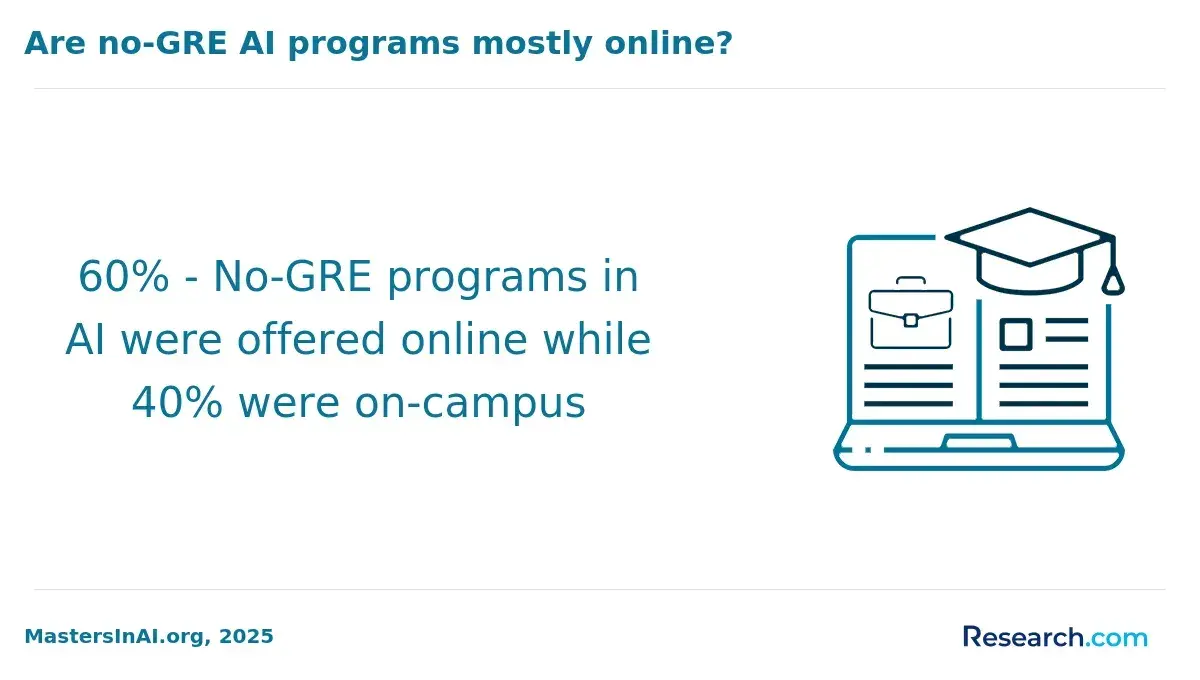
Online options suit working professionals and remote learners, offering flexible, modular content focused on skills like machine learning models for automation and AI-driven CAD tools.
Campus-based programs provide immersive experiences, including access to specialized hardware, direct mentorship, and collaborative projects that mirror real-world design automation challenges.
According to Microsoft's 2024 AI skills readiness study, 71% of organizations implementing AI solutions cite a lack of advanced AI integration skills with existing tools and infrastructure as a top-three barrier. This underscores the importance of programs that deliver deep technical expertise tailored to integrating AI within complex design workflows.
Campus programs often feature lab sessions and interdisciplinary teamwork, crucial for grasping system interoperability, data pipelines, and infrastructure scaling. Meanwhile, online courses excel in delivering current theoretical frameworks and coding practicums accessible worldwide. Hybrid models are emerging, blending online theory with on-campus workshops or industry internships to fill skill gaps.
Students should align their choice with their goals: campus offerings favor comprehensive, research-oriented expertise, while online courses enable rapid, flexible reskilling in AI automation tools. Employers increasingly prefer candidates with hands-on experience using advanced integration techniques in real-world design automation software.
What core curriculum topics are covered in AI courses for design automation teams?
AI courses for design automation teams combine automation techniques with user-centered design principles and practical AI applications tailored to creative workflows.
Core curriculum topics include machine learning fundamentals, covering supervised and unsupervised algorithms crucial for automating pattern recognition in design data. Instruction often highlights computer vision and natural language processing to automate tasks such as image analysis and content generation.
Emphasis on human-in-the-loop systems teaches how to design AI tools that support rather than replace human decision-making, preserving creative control while enhancing efficiency. User experience (UX) design for AI tools also addresses usability, ethical considerations, and accessibility, ensuring human-centric automation interfaces.
Strong programming skills in Python and AI frameworks like TensorFlow or PyTorch are typical, enabling hands-on model development. Courses typically include data preparation and management to provide accurate inputs for AI models. Practical projects may involve automating repetitive design tasks like layout generation, prototyping, and validation through AI-driven simulations.
Data from Nielsen Norman Group's UX & AI survey reveals that 65% of UX professionals use AI tools, yet only 18% have formal AI-specific design training.
This skills gap underscores the need for integrated curricula that combine technical AI knowledge with design challenges, ethics, interpretability, and collaboration tools for multidisciplinary teams.
Such training prepares design professionals to apply AI solutions that boost creativity without compromising usability or human oversight, aligning with current industry demands.
What admission requirements, time commitments, and costs do these AI programs typically involve?
Admission to AI courses designed for design automation teams generally requires a foundation in computer science, engineering, or related technical fields. Candidates should have programming skills, particularly in Python, and a basic understanding of machine learning.
Advanced programs might ask for experience in data analysis or software development. Course options suit varying skill levels-from beginner-friendly classes with no prerequisites to specialized certifications emphasizing AI frameworks and MLOps practices.
Time commitments depend on course format. Short bootcamps or professional certificates typically span 8 to 12 weeks with 8 to 15 hours weekly, ideal for working professionals.
Extended programs like university certifications or master's modules may last 4 to 12 months, requiring 10 to 20 hours per week. Self-paced online courses provide flexibility but recommend completion within six months to keep pace with rapidly evolving AI fields.
Costs range considerably:
- Entry-level online courses start around $200.
- Professional certificates usually cost between $1,000 and $3,000.
- University programs or specialized MLOps certifications can exceed $10,000.
Many employers sponsor these courses due to clear benefits. For example, Google Cloud's 2024 State of DevOps report reveals teams trained in MLOps are three times likelier to deploy ML models into production within 30 days, highlighting a strong return on investment for tuition or subscription fees.
Prospective students should evaluate admission requirements, weekly time demands, and employer reimbursement opportunities to select programs that balance learning goals with financial feasibility.
Which accreditations and industry partnerships matter most for AI design automation programs?
Accreditations and industry partnerships play a crucial role in enhancing the value of AI design automation programs. Certifications from respected organizations such as IEEE, ACM, and NSCAI confirm proficiency in essential AI techniques, machine learning frameworks, and design automation tools.
Collaborations with leading companies like Cadence, Siemens, and NVIDIA help educational programs stay aligned with the latest industry standards. These partnerships often provide practical experience through internships or project-based learning, which is important for students aiming to work in AI-driven design automation roles.
Programs connected with semiconductor manufacturers or EDA tool vendors offer unique insights into integrated circuit design workflows improved by AI.
Credentials like the Certified AI Engineer or specialized machine learning certificates tied to design automation processes boost credibility and build employer trust.
Junior AI automation specialists in Europe typically start with salaries between €48,000 and €60,000, while experienced freelancers can command higher rates, according to Generative AI & Agentic Workflows for EDA and CAD WBS Coding School's 2026 AI automation market analysis. Demonstrating applied skills and holding recognized accreditation are essential for accessing these opportunities.
Prospective students should seek programs with confirmed industry engagement and clear accreditation paths to maximize employability and salary potential in AI design automation.
What roles, industries, and career paths can AI design automation training lead to?
AI design automation training creates diverse career opportunities across industries such as manufacturing, automotive, aerospace, consumer electronics, and software development. Professionals skilled in AI tools optimize product design, reduce development time, and improve accuracy.
Key roles include AI design engineers, automation specialists, machine learning model developers, and systems architects who integrate AI into design workflows.
Beyond technical positions, careers also open up for AI project managers, product strategists, and quality assurance experts overseeing AI integration in design processes. Research and development professionals benefit from training focused on algorithm optimization and data analysis related to design automation.
For example, automotive companies use AI to streamline vehicle component design, while aerospace firms apply AI for predictive maintenance and design simulations. Software developers leverage these skills to create AI-powered design platforms that enhance user experiences and automate coding tasks.
A 2024 Pearson VUE global certification survey shows that 69% of IT leaders believe employees with relevant technical certifications deliver higher quality work than non-certified peers. Certification in AI design automation not only validates expertise but also significantly improves promotion prospects and access to senior roles.
What salary ranges and job outlook can AI-trained design automation professionals expect?
AI-trained design automation professionals in the U.S. typically earn between $85,000 and $150,000 annually, with entry-level roles starting near $80,000. Those with advanced skills in machine learning integration, CAD automation, or generative design tools, especially senior engineers, AI architects, or team leads in sectors like semiconductor design and automotive automation, can earn salaries exceeding $140,000.
The demand for these roles is growing. LinkedIn Learning's 2024 Workplace Learning Report highlights that 90% of organizations have increased or maintained budgets for AI and data skill development, reflecting strong employer investment in upskilling.
AI content consumption on LinkedIn Learning also rose by 65% year-over-year, indicating escalating interest in AI capabilities among engineering teams.
Hiring managers prioritize candidates who can automate complex design workflows, accelerate throughput, and reduce time-to-market with AI-driven tools.
Job functions range from crafting AI-powered CAD automation scripts to overseeing full AI design pipelines. Professionals possessing interdisciplinary expertise in AI algorithms and engineering principles have expanding opportunities.
Hands-on experience with TensorFlow, PyTorch, Python, or MATLAB is highly valued. Certifications and completed courses proving proficiency in applying AI to real-world automation challenges enhance job competitiveness.
Overall, professionals investing in targeted AI upskilling will find robust career growth and lucrative salaries in the evolving landscape of AI-enhanced engineering design.
Other Things You Should Know About Artificial Intelligence
Artificial intelligence is transforming design automation by enabling faster, more accurate modeling and simulation. AI algorithms can optimize complex design parameters, reducing manual workload and minimizing errors. This leads to improved efficiency, lower costs, and innovative product solutions within engineering and manufacturing sectors.
In 2027, leading AI courses for design automation teams include MIT's AI for Engineering Design, Stanford's Machine Learning for Design Automation, and Udacity's AI Ethics and Design Integration course. These courses focus on practical AI applications and tool integration to enhance design processes in various industries.
Yes, many AI tools are designed to integrate seamlessly with popular computer-aided design (CAD) software. These integrations enhance automation capabilities by providing predictive analytics, design recommendations, and automated error detection. This interoperability helps design teams leverage AI benefits without replacing established workflows.
Common challenges include data quality issues, lack of skilled personnel, and high initial implementation costs. Additionally, integrating AI into legacy systems can be complex, requiring careful planning and training. Overcoming these obstacles is crucial for teams to fully realize AI's potential in design automation.
References
- AI research tools for for Academics and Researchers https://www.litmaps.com/learn/best-ai-research-tools
- How Universities Must Redesign Curriculum for AI, Automation & Industry 5.0 https://www.vupune.ac.in/blog/how-universities-must-redesign-curriculum-for-ai-automation-industry
- AI in College Admissions: How ChatGPT and Other Generative AI Programs Are Reshaping Higher Education Admission Decisions & Practices https://www.sageridge.org/community/news/details/~board/news/post/ai-in-college-admissions-how-chatgpt-and-other-generative-ai-programs-reshaping-higher-education-admission-decisions-practices
- How to Become an AI Automation Engineer: Your Complete Career Roadmap - tripleten.com/blog https://tripleten.com/blog/posts/how-to-become-ai-automation-engineer
- AI for Design Workflows | NN/g Training Course https://www.nngroup.com/courses/ai-for-design/
- The Intersection of Design Thinking and AI: Enhancing Innovation https://www.ideou.com/blogs/inspiration/ai-and-design-thinking
- University Degree vs AI Bootcamp: Which is Best Career Path? https://agilefever.com/university-degree-vs-ai-bootcamp-which-is-best/
- Top 10 Best-Selling AI Courses on Udemy (2026) https://travis.media/blog/top-selling-ai-courses-udemy/
- Best Careers After AI & Automation https://talentoindia.com/blog/best-careers-after-ai-automation/