2027 Best Columbia Online AI Courses for AI Adoption

Co-Founder and Chief Data Scientist
Many professionals with unrelated undergraduate degrees face challenges entering the artificial intelligence field due to limited access to flexible, credible learning options. The rapid evolution of AI technologies demands upskilling through targeted and reputable courses. Finding programs that balance academic rigor with practical skills for industry relevance can be overwhelming.
This issue is critical for individuals seeking to pivot careers without disrupting current commitments. This article explores top Columbia online AI courses designed for accessibility and quality, providing guidance to help prospective students identify programs that support successful artificial intelligence adoption and career transitions.
Key Things You Should Know
- Columbia University's online AI courses in 2026 emphasize practical skills in machine learning and natural language processing, reflecting industry demand for advanced AI competencies.
- Recent curriculum updates incorporate ethical AI use and bias mitigation, aligning with growing regulatory focus estimated to affect 72% of AI applications by 2026.
- Enrollment in Columbia's AI online programs grew by over 40% from 2024 to 2025, highlighting increased interest from working professionals aiming for career advancement in AI adoption fields.
Advance Your Career with AI Online Courses
Artificial Intelligence: Implications for Business Strategy
This program provides an introduction to Artificial Intelligence and their implications for business strategy. Earn an official digital certificate.

Oxford Artificial Intelligence Programme
Explore this Oxford Artificial Intelligence programme offered in a flexible learning environment and explore topics like machine learning, automation, and robotics.

Implementing Agentic AI: Building Your Organizational Playbook
This online MIT Agentic AI course offers a practical approach to deploying AI agents in your organization, including a custom playbook. 3 weeks, exclusive launch price.

AI Adoption: Driving Business Value and Impact
This online MIT AI Adoption: Driving Business Value and Impact offers practical frameworks to close the gap between AI potential and business reality.

Artificial Intelligence in Pharma and Biotech
Discover the applications and limitations of artificial intelligence in pharma and biotech with this MIT online short course.

What are the best Columbia online AI courses for AI adoption?
Columbia University offers some of the best Columbia programs for AI integration, focusing on foundational knowledge paired with practical applications. Key courses such as "Artificial Intelligence (AI)" and "Machine Learning" equip students with skills in algorithms, data analysis, and AI system design. These programs emphasize hands-on projects that simulate real-world challenges like natural language processing and computer vision.
The curriculum supports learners interested in Columbia online AI courses for practical adoption by covering scalable AI solutions and ethical considerations. Training includes how to integrate AI into existing software infrastructure, facilitating smoother transitions for organizations. Quality assurance and validation techniques are also central to maintaining reliable AI systems.
Columbia's modular course structure allows students to tailor their learning by combining AI with data science, robotics, or cybersecurity, aligning with specific career goals such as predictive analytics or autonomous systems. This flexibility is valuable for professionals enhancing targeted skills.
Employment projections emphasize the relevance of these skills; the U.S. Bureau of Labor Statistics predicts a 26% growth in roles like software developers and quality assurance analysts through 2032, well above average. Columbia's offerings prepare graduates to meet this demand.
Prospective students looking for an affordable data science degree will find Columbia's balanced focus on practical implementation, ethics, and technical mastery well suited for AI adoption across industries.
Advance Your Career with AI Online Courses
Artificial Intelligence: Implications for Business Strategy
This program provides an introduction to Artificial Intelligence and their implications for business strategy. Earn an official digital certificate.
Oxford Artificial Intelligence Programme
Explore this Oxford Artificial Intelligence programme offered in a flexible learning environment and explore topics like machine learning, automation, and robotics.
Implementing Agentic AI: Building Your Organizational Playbook
This online MIT Agentic AI course offers a practical approach to deploying AI agents in your organization, including a custom playbook. 3 weeks, exclusive launch price.
Are Columbia online AI programs accredited and credible?
Columbia online AI programs accreditation status is assured by the Middle States Commission on Higher Education, confirming full regional accreditation. This rigorous oversight guarantees that Columbia University's online artificial intelligence courses maintain high academic standards, ensuring credits are transferable and qualifications respected by employers. Columbia's Ivy League reputation further solidifies the credibility of its offerings.
The curriculum is designed to reflect the latest industry developments, with faculty who are actively engaged in AI research. For instance, the Prompt Engineering & Programming with OpenAI course teaches practical skills aligned with current market demands. OpenAI's report that ChatGPT reached 100 million weekly users highlights prompt engineering as a key, growing skill in AI careers.
Prospective students looking for credible Columbia online artificial intelligence courses will find programs recognized worldwide by employers. These programs include hands-on projects essential for careers in machine learning, natural language processing, and automation. Columbia's certificates and degrees support career advancement by combining theory with real-world application.
Key points about the program's credibility include:
- Regional accreditation by a respected agency ensures quality and transferability.
- Faculty involvement in cutting-edge AI research enhances relevance.
- Continuously updated course content meets fast-changing AI industry needs.
- Certificates and degrees widely recognized for employment and growth.
Those interested in pursuing an online engineering degree can consider Columbia's well-established AI programs as a strong option.
Which Columbia online AI course fits your career goals?
Choosing the right Columbia online artificial intelligence courses for career advancement depends on your specific goals within this rapidly evolving field. For professionals focused on large language models (LLMs) and generative AI, the "Building Customized LLMs with OpenAI" course provides hands-on training in developing and fine-tuning AI models.
This is particularly valuable for software engineers and data scientists looking to align skills with growing industry demand, especially as Stanford's AI Index 2025 highlights $252.3 billion in global private AI investment fueled largely by generative AI. Those aiming for leadership or research roles should seek courses emphasizing theoretical foundations and ethical considerations, which form the frameworks necessary to guide AI projects strategically and responsibly.
Business professionals interested in AI-driven innovation may benefit from electives on AI integration and management within enterprise environments, focusing on practical deployment. When selecting courses, consider your background and goals carefully:
- Technical professionals with coding experience should prioritize LLM creation and programming modules.
- Newcomers or those in non-technical roles will find foundational AI courses helpful for collaboration and basic understanding.
- Aspiring AI product managers or policy experts should choose programs with AI ethics and market analysis content.
Evaluating your career path against course syllabi ensures the development of skills employers want, especially in LLM-building proficiency, which is increasingly critical. For a broader view of online programs, including related disciplines, exploring options like a game design degree can also provide complementary technical expertise. The best Columbia AI programs for professional development balance practical training with strategic insight.
What AI topics and skills do Columbia online courses teach?
Columbia online AI courses curriculum and skill development covers machine learning algorithms, deep learning, natural language processing, computer vision, and reinforcement learning. Coursework emphasizes practical programming skills using Python libraries like TensorFlow and PyTorch to build and optimize models. Students also develop expertise in data preprocessing, feature engineering, and model evaluation to create reliable AI systems.
The curriculum includes specialized modules on ethical AI development, bias mitigation, and societal impacts, equipping learners to manage governance and compliance challenges in real-world AI adoption. Integration of scalable AI solutions using cloud platforms and APIs further enhances students' readiness for enterprise deployment.
Practical experience is gained through case studies across finance, healthcare, and autonomous systems. For instance, natural language processing coursework often involves projects such as sentiment analysis and chatbot development, while computer vision covers object detection and image recognition. These domain-specific skills prepare students for varied AI applications.
Columbia online AI training for artificial intelligence adoption aligns with labor market demands, reflecting data from the U.S. Bureau of Labor Statistics that show a median annual wage of $136,620 for data scientists. This makes machine learning expertise highly valuable in today's job market. For those aiming to deepen research skills, pursuing an online PhD in data science is a natural next step to advance their career in this growing field.
How do Columbia online AI courses work for remote learners?
Columbia's online AI courses offer a flexible, asynchronous format tailored for remote learners who need to balance education with work or personal responsibilities. The curriculum features high-quality video lectures, interactive coding exercises, and case studies accessible anytime through a dedicated platform, allowing students worldwide to progress at their own pace.
Assessments include quizzes, programming assignments, and final projects that emphasize practical AI applications. Many courses incorporate peer discussion forums and instructor feedback sessions to create a collaborative learning environment despite the physical distance.
Remote students often face challenges such as staying motivated and grasping complex AI concepts without in-person support. Columbia addresses this by providing structured timelines, periodic check-ins, accessible teaching assistants, and community discussion boards for prompt doubt resolution.
The demand for AI expertise is growing rapidly. According to the World Economic Forum's Future of Jobs Report 2025, 86% of employers expect AI and related technologies to transform their industries by 2030. This underscores the importance of programs like Columbia's for acquiring industry-relevant skills remotely.
The course design targets both beginners and advanced learners, segmenting content into modules on machine learning, natural language processing, and computer vision. This modular approach enables students to customize their learning based on goals and experience without needing campus attendance.
What are the admission requirements for Columbia online AI courses?
Columbia's online AI courses typically require a bachelor's degree from an accredited institution, often in STEM fields like computer science, engineering, mathematics, or statistics. Applicants usually submit official transcripts showing strong academic performance in quantitative subjects. Practical experience with programming languages such as Python or basic knowledge of machine learning can enhance applications, though some programs offer introductory courses for beginners.
Advanced certificates and graduate-level courses often demand a minimum GPA around 3.0. Professional experience in AI-related roles is considered a plus. Specialized programs, like the AI for Business & Finance Certificate, favor applicants with backgrounds in finance, business analytics, or economics, aligning with curriculum goals.
Typical application materials include a statement of purpose outlining career objectives and AI interest, recommendation letters, and sometimes GRE scores, although many courses waive testing for experienced professionals. Strong communication skills are important for collaborative online learning, while reliable internet and capable computer systems are essential for participation.
Reflecting growing corporate AI adoption, Deloitte's 2025 State of Generative AI in the Enterprise report states 78% of organizations use generative AI in at least one business function. This trend underscores the value of finance-focused AI training and may increase competition among applicants with relevant experience.
How long do Columbia online AI courses take and what do they cost?
Columbia University offers a variety of online artificial intelligence courses lasting from 4 to 16 weeks, suitable for both beginners and advanced learners. Introductory courses typically span 4 to 8 weeks, focusing on foundational skills, while more specialized programs extend up to 16 weeks to explore complex topics in depth. These courses cater to working professionals by providing part-time pacing options.
The cost of Columbia's AI programs varies depending on the course type and certification status. Traditional credit-bearing graduate courses have tuition fees aligned with Columbia's university standards. In contrast, many non-credit professional development courses are priced under $2,000. A notable feature is Columbia's Columbia Plus promotion, which offers free access to select AI courses.
This greatly reduces financial barriers compared to the average annual tuition of $43,350 at private nonprofit four-year colleges. Students aiming for recognized credentials often enroll in paid certified programs, while others seeking foundational knowledge or upskilling can benefit from free course options available through the Columbia Plus initiative.
Career changers and employers should weigh the benefits of longer credit-bearing programs against flexible, cost-effective alternatives that deliver essential AI insights. Overall, Columbia's online AI offerings provide flexible timelines and various pricing options, ranging from free courses to several thousand dollars for formal graduate certificates.
What jobs can you get after Columbia online AI training?
Graduates of Columbia's online AI training often secure roles such as AI engineer, machine learning engineer, data scientist, and AI research scientist, working on developing AI models for industries like healthcare, finance, automotive, and technology. Specialized careers include a natural language processing (NLP) engineer, who focuses on enabling machines to understand human language, and a computer vision specialist.
Positions such as product manager and AI consultant combine technical knowledge with business strategy to help organizations implement AI effectively. Emerging fields also include AI ethics and policy, which address the responsible creation and deployment of AI systems.
The AI ecosystem is expanding rapidly; the U.S. has led the creation of 40 notable AI models in recent years, driving demand for skilled professionals. Graduates benefit from hands-on experience with Python, TensorFlow, and PyTorch, along with strong skills in statistics and data analysis. Familiarity with cloud platforms like AWS or Google Cloud is increasingly valuable. Real-world projects or internships greatly improve job prospects.
What salary can AI-trained professionals expect in the U.S.?
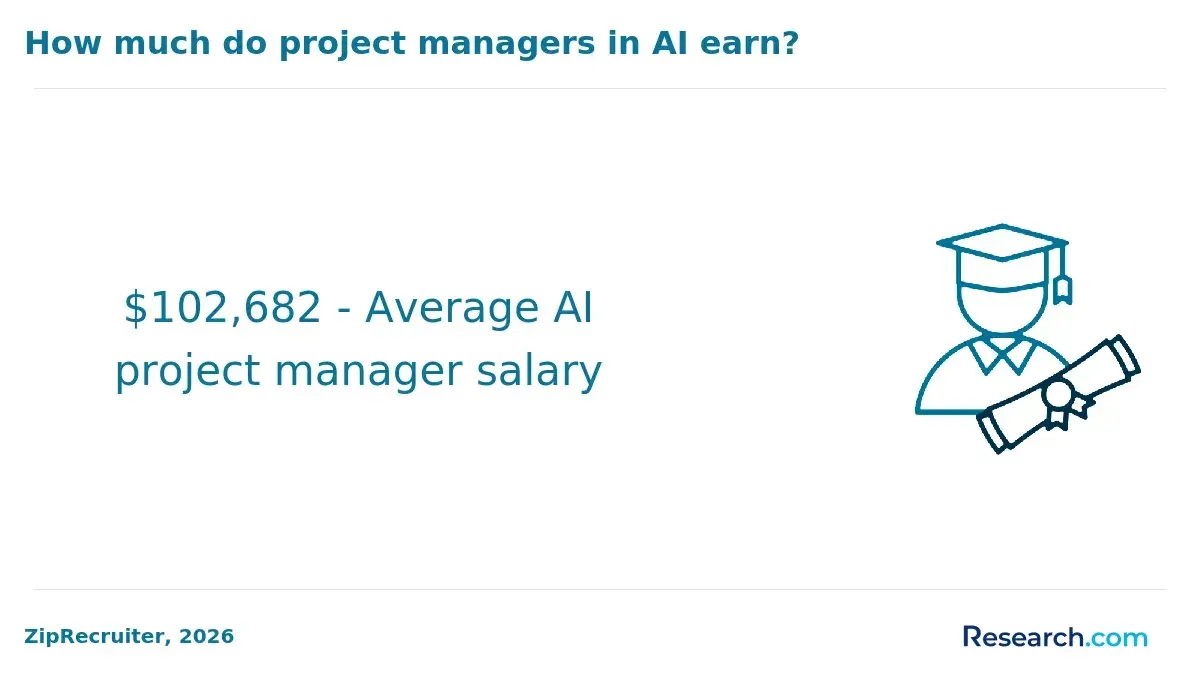
AI-trained professionals in the U.S. have salaries that vary widely depending on role, experience, and industry. Entry-level AI specialists usually earn between $85,000 and $110,000 annually. More experienced AI engineers and data scientists often make over $140,000, while senior roles such as machine learning architects or AI research scientists can exceed $180,000, especially in major tech hubs like Silicon Valley and New York City.
Salary differences also reflect specific AI applications. For instance:
- AI software developers specializing in natural language processing may earn $120,000 to $150,000.
- Data analysts with AI skills typically make between $90,000 and $125,000 depending on the sector and company size.
- AI consultants and strategists with strong business expertise can reach compensation beyond $160,000 due to their role in directing AI adoption.
Continuous learning is essential as workplace skills evolve. According to the World Economic Forum's Future of Jobs Report 2025, 39% of core skills will change by 2030. Columbia's online AI courses offer professionals a way to stay competitive by developing relevant skills that match technological trends.
Geographic and sector differences also influence pay. Government and research roles may provide more stability but generally lower salaries, while startups often offer higher pay to attract cutting-edge AI talent. Ongoing education and certification remain key to maximizing earnings in this dynamic field.
What certifications should you earn after Columbia online AI courses?
Completing Columbia's online AI courses is a strong foundation, but earning industry-recognized certifications is crucial for advancing your career in artificial intelligence. Credentials like the Certified Artificial Intelligence Practitioner (CAIP) or the Google Professional Machine Learning Engineer certification validate your skills in machine learning and AI implementation. These certifications emphasize practical experience in building AI models.
For those targeting leadership roles or AI strategy positions, executive-level certifications from the Columbia Business School Executive Education AI Programs offer significant credibility. According to McKinsey's 2025 Global Survey on AI, 78% of organizations employ AI in at least one function, and 71% regularly use generative AI, highlighting the value of combining technical expertise with strategic AI education.
Specialized certificates in data science, natural language processing, or computer vision, often offered through platforms like Coursera or edX in partnership with top universities and industry bodies, further enhance your specialization.
Consider these points when selecting certifications:
- Focus on those with hands-on components reflecting real-world applications
- Choose credentials recognized in your target industry
- Combine technical and leadership certifications to broaden career opportunities, such as AI project management or consultancy
Other Things You Should Know About Artificial Intelligence
In 2027, standout Columbia online AI courses include "Machine Learning for Data Science and Analytics" and "Artificial Intelligence: Principles and Techniques." These courses focus on core AI concepts and practical applications, offering students essential skills for AI adoption.
Artificial intelligence is transforming various sectors such as healthcare, finance, manufacturing, and retail by automating tasks, improving data analysis, and enhancing decision-making processes. In healthcare, it aids in diagnostics and personalized treatment, while in finance, AI supports fraud detection and risk management. The impact is broad, driving efficiency and innovation across fields.
Key skills for AI professionals include programming languages like Python, a strong understanding of machine learning concepts, data manipulation abilities, and knowledge of neural networks. Additionally, critical thinking and problem-solving skills are vital for designing effective AI models and interpreting their results accurately.
Artificial intelligence systems can augment human judgment by providing data-driven insights and automating routine decisions, but they cannot fully replace the nuanced understanding and ethical considerations humans provide. AI tools are best used as complements to human expertise, especially in complex or sensitive contexts where empathy and moral reasoning are required.
References
- Best AI Courses & Certificates Online 2025 https://everworker.ai/blog/best-ai-courses-certificates-online-2025
- What Career Opportunities Are Available After Completing an AI Certification? https://www.h2kinfosys.com/blog/what-career-opportunities-are-available-after-completing-an-ai-certification/
- AI Salaries - How Much AI Jobs Pay https://www.tractionkeys.com/post/ai-salaries---how-much-ai-jobs-pay
- 16 Artificial Intelligence Career Paths https://www.calmu.edu/news/artificial-intelligence-career-paths
- Free Course: Artificial Intelligence (AI) from Columbia University | Class Central https://www.classcentral.com/course/artificial-intelligence-columbia-university-artif-7230
- Columbia Engineering Announces New Program: Master of Science in Artificial Intelligence | Newswise https://www.newswise.com/articles/columbia-engineering-announces-new-program-master-of-science-in-artificial-intelligence
- Best AI for Business Courses (2026) ranked by Bankers - Bankers By Day https://www.bankersbyday.com/ai-for-business-courses/
- Certifications in AI that would allow you standout in job hunting https://community.deeplearning.ai/t/certifications-in-ai-that-would-allow-you-standout-in-job-hunting/871654
- Ultimate Guide: How to Choose the Right AI Training Course to Boost Your Career - ONLC https://www.onlc.com/blog/how-to-choose-ai-training-courses/
- Best AI Certifications to Boost Your Career in 2026 – Dataquest https://www.dataquest.io/blog/best-ai-certifications/