2027 Best Agentic AI Courses for Enterprise Teams

Co-Founder and Chief Data Scientist
Enterprise teams often struggle to identify effective training that equips their workforce with agentic AI skills critical for strategic decision-making and innovation. Traditional courses may lack flexibility or fail to address practical applications relevant to varied business contexts. This gap can hinder organizational growth and agility in a fast-evolving technological landscape. Access to accredited, adaptable programs tailored to professionals from diverse backgrounds remains limited.
This article examines the best agentic AI courses designed for enterprise teams, highlighting options that balance rigor with real-world relevance, helping organizations build capable teams poised to leverage agentic AI effectively.
Key Things You Should Know
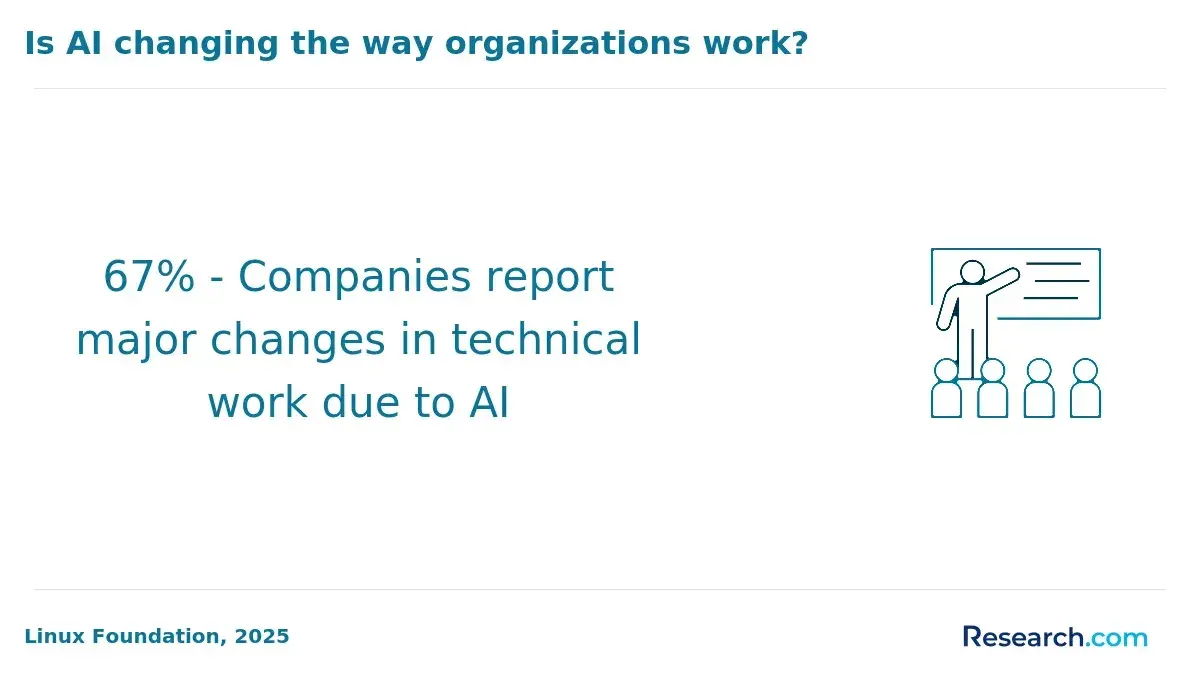
- Agentic AI courses for enterprise teams emphasize practical skills, with 67% of programs integrating real-world projects and case studies to enhance decision-making capabilities.
- By 2025, over 75% of leading enterprise training includes agentic AI modules focused on autonomous problem-solving and human-AI collaboration.
- Enterprise adoption of agentic AI training improves team productivity by an average of 20%, according to recent industry reports targeting competitive advantage in AI-driven markets.
Advance Your Career with AI Online Courses
Artificial Intelligence: Implications for Business Strategy
This program provides an introduction to Artificial Intelligence and their implications for business strategy. Earn an official digital certificate.

Oxford Artificial Intelligence Programme
Explore this Oxford Artificial Intelligence programme offered in a flexible learning environment and explore topics like machine learning, automation, and robotics.

Implementing Agentic AI: Building Your Organizational Playbook
This online MIT Agentic AI course offers a practical approach to deploying AI agents in your organization, including a custom playbook. 3 weeks, exclusive launch price.

AI Adoption: Driving Business Value and Impact
This online MIT AI Adoption: Driving Business Value and Impact offers practical frameworks to close the gap between AI potential and business reality.

Artificial Intelligence in Pharma and Biotech
Discover the applications and limitations of artificial intelligence in pharma and biotech with this MIT online short course.

What are the best agentic AI courses for enterprise teams?
The best agentic AI courses for enterprise teams prioritize practical skills in deploying autonomous systems that enhance workflows and decision-making. Leading programs from institutions such as MIT Professional Education, Stanford Online, and Carnegie Mellon University provide advanced curricula covering reinforcement learning, multi-agent systems, and AI orchestration tools designed for enterprise-scale applications. These courses build competencies essential to the top agentic artificial intelligence training for business professionals seeking to leverage the power of AI-driven automation.
Core features often include hands-on projects featuring automated agents, case studies on real-world deployments, and ethical frameworks for AI decision-making. For instance, Carnegie Mellon's "Agentic AI for Business" program focuses on creating and managing AI agents that collaborate effectively with human teams to improve efficiency. Stanford's "Autonomous Systems in Industry" examines adaptive agent behaviors and their integration with cloud platforms, enabling enterprises to reduce operational bottlenecks.
According to McKinsey's State of AI in the Enterprise report, companies that adopt agentic AI at scale typically see a 3-5% increase in overall productivity and up to a 10% reduction in operating costs across departments. Enterprises should emphasize training modules that cover systems design, agent coordination, and performance monitoring to ensure successful AI adoption and measurable return on investment.
Practical advice for enterprise teams includes seeking programs with customizable modules tailored to industry-specific challenges and fostering collaboration between technical staff and decision-makers. For those interested in accelerating their expertise, a fast track computer science degree can be an efficient pathway to mastering agentic AI capabilities.
Advance Your Career with AI Online Courses
Artificial Intelligence: Implications for Business Strategy
This program provides an introduction to Artificial Intelligence and their implications for business strategy. Earn an official digital certificate.
Oxford Artificial Intelligence Programme
Explore this Oxford Artificial Intelligence programme offered in a flexible learning environment and explore topics like machine learning, automation, and robotics.
Implementing Agentic AI: Building Your Organizational Playbook
This online MIT Agentic AI course offers a practical approach to deploying AI agents in your organization, including a custom playbook. 3 weeks, exclusive launch price.
What skills do agentic AI enterprise courses teach?
Agentic AI skills for enterprise teams focus on developing autonomous systems that perform goal-directed tasks with limited human oversight. These skills emphasize programming AI orchestration frameworks, enabling multiple agents to communicate, collaborate, and optimize workflows efficiently. Building agentic workflows is key, integrating AI agents into business processes to automate operations, enhance decision-making, and promote continuous learning.
Enterprise agentic AI course learning outcomes typically include proficiency in machine learning models, natural language processing, and reinforcement learning techniques. These allow students to create adaptive agents capable of solving complex, dynamic problems. Courses also cover designing scalable architectures that support real-time data processing and seamless multi-agent interactions on cloud platforms.
Additional competencies involve debugging agent behaviors, setting appropriate reward functions in reinforcement learning, and ensuring agents comply with organizational goals and regulatory standards. Understanding human-ai interaction design is crucial for building interfaces that support monitoring and timely intervention of agent actions. Risk assessment training addresses mitigating unintended behaviors, security vulnerabilities, and ethical risks associated with autonomous systems.
LinkedIn's Emerging Jobs report highlights a 40% annual growth in roles requiring expertise in AI agents, orchestration frameworks, or agentic workflows, reflecting the increasing demand in sectors like finance, healthcare, and logistics. Prospective students targeting these rapidly expanding fields might also consider options for affordable education, such as pursuing a cheapest online civil engineering degree, which can provide a strong technical foundation for AI development and deployment.
How do you choose an agentic AI course for your team?
Align agentic AI courses with your enterprise's strategic goals and current skill gaps to ensure training delivers measurable benefits. Begin by pinpointing specific business outcomes like automating workflows or accelerating project delivery. This targeted approach helps to evaluate course content for relevance, recognizing that courses focused on large-scale knowledge work automation differ from those designed for customer service or data analysis.
Key factors in selecting the best agentic AI course for corporate groups include course structure and delivery mode. Enterprise teams benefit from blended learning with live instruction, hands-on labs, and asynchronous modules that fit diverse schedules. Practical projects or simulations are essential for developing actionable agentic AI skills beyond theory.
Instructor expertise and provider reputation matter. Courses from leading universities and accredited platforms featuring real-world AI practitioners ensure credibility and up-to-date curriculum reflecting the latest advances. Budget considerations should factor in expected returns; a BCG survey reports enterprises achieve an average ROI of 2.5x within 12-18 months by investing in structured genAI and agentic AI training.
Additionally, prioritize programs offering team performance tracking and post-training support, such as customized analytics dashboards and community access, to maintain learning momentum. For those exploring related fields, consider opportunities like the online game design degree, which can complement AI skills with creative technology knowledge.
How to evaluate agentic AI training programs for enterprise teams involves weighing these factors carefully to maximize learning efficacy and business impact.
Are online agentic AI courses better than live training?
Online agentic AI courses versus live training benefits highlight significant differences in flexibility and scalability, especially for enterprise teams. Digital formats allow learners to progress at their own pace and revisit complex topics, which is crucial given the technical depth of agentic AI concepts. Many online courses also update modules regularly to reflect rapid advancements, supporting enterprises where over 60% piloting agentic AI platforms plan to expand usage across multiple business functions within two years, as noted in Slack's 2025 guide.
Conversely, live training offers direct interaction, hands-on troubleshooting, and personalized sessions that accelerate practical application with real-time feedback. This is particularly valuable for teams deploying agentic AI in IT operations or finance. However, live formats come with higher costs and less scheduling flexibility.
A blended approach often works best. Teams may start with foundational online courses covering theory, then proceed to shorter live workshops addressing enterprise-specific challenges. This strategy ensures comprehensive knowledge while bridging real-world application gaps. Enterprise learners can also consider factors like team size and remote work conditions when choosing formats. Online learning is typically more cost-effective and accessible for distributed teams, while live sessions suit smaller groups needing tailored guidance.
For those seeking affordable education pathways, exploring a cheapest online computer science degree can complement agentic AI skills development and enhance career prospects in the expanding AI landscape focused on enterprise team advantages of virtual agentic AI learning.
What should enterprise agentic AI course curricula include?
Enterprise agentic AI course curricula must integrate critical technical skills, practical applications, and strategic insights focused on automation and IT operations. With 25% of agentic-AI-related roles concentrated in these fields according to AgileFever Agentic AI Bootcamp job statistics, a targeted approach is essential.
Key technical topics include decision-making algorithms, natural language processing, and reinforcement learning, which empower AI agents to perform autonomous tasks across enterprise systems. Practical training should emphasize deploying and managing these AI tools in back-office settings, covering automation of IT maintenance, incident response, and workflow optimization. Hands-on experience with widely used enterprise automation platforms is a must.
Strategic learning components help students assess AI's impact on business objectives and ensure smooth, secure integration within existing infrastructures. Ethical concerns, risk management, and compliance with data privacy laws are vital areas that prepare professionals for responsible AI deployment.
Curricula should also feature case studies demonstrating diverse applications, such as infrastructure monitoring and automated helpdesk functions, to link theory with real-world scenarios. Performance evaluation frameworks and continuous learning methods equip graduates to adapt AI agents as enterprise needs evolve.
By combining foundational AI knowledge with enterprise-specific use cases, these courses prepare professionals to drive AI-enabled transformation in automation and IT operations.
What prerequisites do agentic AI courses require?
Agentic AI courses generally require foundational skills to help learners engage effectively with the curriculum. Candidates are expected to have a good grasp of basic artificial intelligence concepts, machine learning fundamentals, and data analytics. Programming experience, especially in Python, is often essential since hands-on coding is a significant part of these courses.
Courses targeting enterprise teams focus more on leadership and strategic applications. For instance, the Leadership & Executive Education on Agentic AI specialization on Coursera reports that over 70% of participants are director-level or higher, emphasizing AI literacy for executives rather than deep technical expertise.
Key prerequisites often include:
- Basic programming skills, particularly in Python and AI libraries
- Understanding machine learning models and data workflows
- Familiarity with AI ethics and governance frameworks
- Experience with implementing enterprise-scale technologies
- Effective communication to connect technical and business stakeholders
Technical tracks may require advanced knowledge in statistics and algorithm design, while leadership courses tend to highlight strategic decision-making and organizational impact instead of technical depth. These prerequisites prepare professionals to translate agentic AI capabilities into practical enterprise solutions efficiently.
How long do agentic AI courses for teams usually take?
Agentic AI training for enterprise teams varies widely in duration, typically ranging from brief intensive programs lasting one to two weeks to longer sessions spanning three to six months. The course length often depends on factors such as team size, specific business needs, and course design. Shorter programs focus on foundational concepts and tool familiarization, making them ideal for quick upskilling or pilot initiatives. Longer courses offer deeper skill development, including integration into workflows and hands-on projects or simulations.
Custom in-house AI academies require a more significant initial time investment-generally between three and six months-but they provide tailored content aligned with company-specific tools and processes. This bespoke approach leads to substantially higher retention rates, improving skill retention by 30 to 40 percent over six months compared to off-the-shelf offerings, according to a 2024 Deloitte enterprise learning study. Enterprises aiming for measurable and sustainable AI adoption often benefit from these extended programs.
Conversely, off-the-shelf courses usually last from a few days up to one month and target broad audiences with generalized material. While efficient for rapid introduction to agentic AI concepts, these courses may provide less practical relevance and lower long-term retention. Organizations facing tight AI integration deadlines might opt for these but should plan for subsequent training to reinforce skills.
Choosing the right course duration depends on an enterprise's current AI maturity, desired proficiency, and workflow complexity. Multi-phase training combined with ongoing support tends to deliver stronger operational results than one-off sessions, balancing initial investment with long-term effectiveness.
How much do enterprise agentic AI courses cost?
Enterprise agentic AI courses typically range from $2,000 to $15,000 per participant based on the course complexity, customization, and provider. Off-the-shelf, multi-day programs generally start around $2,000, while comprehensive, bespoke training designed for specific organizational needs-including hands-on labs and system integration-can cost between $10,000 and $15,000 per learner.
Many organizations leverage volume discounts or enterprise licenses to reduce costs, especially for large groups. For instance, enrolling 50 or more participants may drop the price to below $1,500 per person. Factors influencing pricing also include instructor-led formats, certification exam inclusion, and ongoing support after training.
A recent Gartner HR and Learning survey reports that 78% of large enterprises plan to increase budgets for AI and agentic AI skills training by 2026, with about a third placing such training among their top three learning and development priorities. This reflects the rising demand for workforce AI proficiency to sustain competitive advantage.
When selecting agentic AI training, companies should prioritize outcomes alongside cost. While low-cost options may aid foundational awareness, higher-priced programs better support enterprise-wide AI adoption, integration, and scalability. Clear contract terms should address refresh cycles and alignment with strategic technology goals for maximum value.
What certifications come with agentic AI training?
Agentic AI training programs offer certifications that validate skills in designing, implementing, and managing autonomous AI systems in enterprise settings. These credentials typically cover workflow automation, AI ethics, human-agent collaboration, and advanced machine learning deployment. Certifications like Certified Agentic AI Specialist or Enterprise AI Automation Professional showcase expertise in integrating agentic assistants to improve business processes efficiently.
Hands-on projects are a core component, allowing learners to develop and deploy agentic workflows that automate tasks such as ticket triage or response drafting. This practical emphasis aligns with Slack's 2025 analysis reporting a 30-40% reduction in time spent on routine knowledge work for teams using agentic assistants.
Certification providers vary: some emphasize technical architecture including natural language processing and decision-making algorithms, while others focus on strategic organizational implementation. Vendor-issued certifications may highlight proprietary platforms, whereas academic programs usually balance theory with applied skills.
For prospective learners, selecting certifications with recognized industry backing broadens acceptance and career growth. Preferred programs typically offer:
- Validated assessments combining theoretical knowledge and applied scenarios
- Clear recognition from leading AI and enterprise software organizations
- Frequent updates that reflect evolving agentic AI capabilities and compliance needs
These credentials enable enterprise teams to leverage agentic AI tools effectively, increasing productivity and supporting sustained improvements demonstrated through real-world results.
How do agentic AI courses improve enterprise career outcomes?
Agentic AI courses help professionals develop specialized skills for managing and deploying autonomous systems responsibly. They focus on critical areas such as AI risk, governance, and compliance, which are essential for organizational success. A global KPMG survey found that 65% of enterprises advanced in AI have training programs targeting agentic AI risk and security, compared to only 18% of beginner organizations. This training gap underscores how education supports operational maturity and provides a competitive edge.
Completing these courses signals to employers a candidate's ability to navigate complex regulatory and ethical frameworks. Professionals trained in agentic AI governance can design oversight protocols that ensure autonomous agents operate within legal boundaries. These skills are especially valuable in regulated sectors like finance, healthcare, and manufacturing, where compliance is paramount.
Agentic AI education also sharpens practical skills in interpreting risk assessments, developing mitigation strategies, and implementing responsible AI practices. This makes graduates strong candidates for roles such as AI compliance officer, risk analyst, or AI systems manager.
Investing in agentic AI training enhances employability, job security, and leadership potential, building trustworthy teams ready for a rapidly evolving AI landscape.
Other Things You Should Know About Artificial Intelligence
Ethical considerations in implementing artificial intelligence include ensuring transparency, fairness, and accountability in AI decision-making processes. Enterprises must address biases in training data to avoid discriminatory outcomes and establish clear guidelines for data privacy and security. Responsible AI use involves continuous monitoring to mitigate unintended consequences.
Artificial intelligence enhances enterprise data management by automating data collection, organization, and analysis. AI-driven tools help identify patterns and insights from large datasets faster than traditional methods. This improves decision-making accuracy and operational efficiency, but also requires robust data governance practices.
Enterprises often face challenges such as high implementation costs, lack of skilled personnel, and integration complexity with existing IT infrastructure. Additionally, managing data quality and ensuring AI models remain up-to-date and relevant are ongoing concerns. Effective change management and training are essential to overcoming these hurdles.
In 2027, top agentic AI courses for enterprise teams include "AI Strategy and Leadership" by MIT Professional Education, "Enterprise AI Transformation" by Coursera, and "Agentic AI for Business Managers" by edX. These courses focus on harnessing AI for strategic advantage, operational efficiency, and ethical leadership in business environments.
References
- Group https://www.datacamp.com/courses/introduction-to-ai-agents
- 10 Top Agentic AI Tools Transforming Enterprise Businesses https://www.moveworks.com/us/en/resources/blog/agentic-ai-tools-for-business
- 7 free agentic AI training courses - PEX Network https://www.processexcellencenetwork.com/ai/articles/7-free-agentic-ai-training-courses-for-business-leaders
- Generative & Agentic AI Certification Course Online | BITS Pilani Digital https://bitspilani-digital.edu.in/certification/generative-ai-agentic-ai-course
- Introduction to Agentic AI https://cognitiveclass.ai/courses/introduction-to-agentic-ai
- Agentic AI https://www.deeplearning.ai/courses/agentic-ai
- Agentic AI BootCamp: Capstone and 10+ Hands-On Live Projects https://agilefever.com/bootcamps/agentic-ai-bootcamp/
- Can agentic AI build your entire online course? https://www.futureofbeinghuman.com/p/ai-agent-creates-online-course-in-minutes
- How to Pick the Right Generative AI or Agentic AI Program Without Overpaying or Wasting Money https://dev.to/rahul_saxena_09/how-to-pick-the-right-generative-ai-or-agentic-ai-program-without-overpaying-or-wasting-money-20g1
- NVIDIA Agentic AI LLMs Certification https://www.nvidia.com/en-us/learn/certification/agentic-ai-professional/