2027 Best AI Courses for Innovation Leaders

Co-Founder and Chief Data Scientist
Leaders aiming to drive innovation often face knowledge gaps in emerging technologies, hindering their ability to implement effective AI strategies. Without tailored education, they struggle to integrate AI tools that enhance decision-making and operational efficiency. This challenge grows as AI rapidly reshapes industries and demands new competencies from leadership. Identifying courses that combine flexibility, accreditation, and practical insights becomes essential for career pivots into AI roles. This article examines top AI courses designed for innovation leaders, focusing on accessible pathways that equip professionals from diverse backgrounds with skills to lead transformative AI initiatives confidently.
Key Things You Should Know
- Leading AI courses in 2026 emphasize practical innovation skills, with 72% of programs integrating real-world projects and cross-disciplinary collaboration to prepare leaders for evolving industries.
- Emerging curricula prioritize ethical AI use and regulatory compliance, reflecting a 45% increase in course offerings addressing bias, transparency, and governance since 2024.
- Online and hybrid AI education options have surged by 60% from 2024, expanding access for working professionals and driving a more diverse and inclusive innovation leadership pipeline.
Advance Your Career with AI Online Courses
Artificial Intelligence: Implications for Business Strategy
This program provides an introduction to Artificial Intelligence and their implications for business strategy. Earn an official digital certificate.

Oxford Artificial Intelligence Programme
Explore this Oxford Artificial Intelligence programme offered in a flexible learning environment and explore topics like machine learning, automation, and robotics.

Implementing Agentic AI: Building Your Organizational Playbook
This online MIT Agentic AI course offers a practical approach to deploying AI agents in your organization, including a custom playbook. 3 weeks, exclusive launch price.

AI Adoption: Driving Business Value and Impact
This online MIT AI Adoption: Driving Business Value and Impact offers practical frameworks to close the gap between AI potential and business reality.

Artificial Intelligence in Pharma and Biotech
Discover the applications and limitations of artificial intelligence in pharma and biotech with this MIT online short course.

What makes an AI course valuable for current and aspiring innovation leaders?
Valuable AI courses for current and aspiring innovation leaders must focus on practical skills tailored to real-world challenges. Innovation leaders benefit most from training that links AI capabilities directly to business strategy, enabling measurable impact. Key features of effective artificial intelligence training for innovation professionals include frameworks for critical decision-making, ethical considerations, and innovation management techniques specific to AI deployment.
Hands-on projects using generative AI tools are essential, reflecting that 65% of organizations use generative AI regularly in at least one business function, according to McKinsey & Company's global survey. This emphasis on real-world application equips leaders to successfully guide their teams through AI adoption, optimization, and scaling.
Since innovation leaders operate at the nexus of technology, business, and customer experience, courses should cover cross-functional collaboration and clear communication of AI capabilities to non-technical stakeholders. Including industry-specific case studies enhances understanding of how AI drives innovation across sectors. Customized learning pathways that adapt to varying expertise help fill precise skills gaps and ensure relevance amid rapidly evolving AI trends.
Key criteria for valuable AI courses for innovation leaders include:
- Strategic frameworks for AI-driven innovation
- Ethical and regulatory implications of Ai deployment
- Practical experience with generative AI applications
- Communication and leadership skills focused on AI adoption
- Industry-specific case studies and trends analysis
Prospective students seeking quality education options can consult the data science master US ranking to identify programs that blend affordability with rigorous AI-related training.
Advance Your Career with AI Online Courses
Artificial Intelligence: Implications for Business Strategy
This program provides an introduction to Artificial Intelligence and their implications for business strategy. Earn an official digital certificate.
Oxford Artificial Intelligence Programme
Explore this Oxford Artificial Intelligence programme offered in a flexible learning environment and explore topics like machine learning, automation, and robotics.
Implementing Agentic AI: Building Your Organizational Playbook
This online MIT Agentic AI course offers a practical approach to deploying AI agents in your organization, including a custom playbook. 3 weeks, exclusive launch price.
Which types of AI programs best fit innovation-focused careers (certificates, master's, MBAs)?
AI certification programs for innovation leaders offer a practical pathway to acquire specific skills in machine learning, data analytics, and AI strategy without lengthy commitments. These certificates are ideal for professionals needing immediate, applicable knowledge to integrate AI into product development and business workflows. For instance, a certificate focusing on AI-driven innovation can help product managers and tech leads accelerate AI solution deployment.
Master's and MBA programs in AI for career advancement cater to distinct goals. Master's degrees deliver a thorough, research-driven understanding and emphasize hands-on projects that encourage innovative thinking. They suit candidates targeting technical leadership or advanced AI research roles. Meanwhile, MBAs with AI concentrations prepare professionals to steer AI-driven transformations at the organizational level, combining business insights with AI strategy to manage teams and scale AI adoption effectively.
Workforce trends reinforce the need to choose education that balances technical expertise with strategy. According to the World Economic Forum's Future of Jobs report, 40% of employers expect to reduce staff where AI can automate tasks, highlighting the importance of strategic AI skills for innovation leaders.
For those exploring affordable educational options, consider an online mechanical engineering degree as it often includes AI-related coursework and can complement AI-focused career paths.
How can innovation leaders choose between online, hybrid, and on-campus AI courses?
Innovation leaders carefully evaluate online versus on-campus AI courses by considering learning objectives, time availability, and networking needs. Online courses offer flexible schedules ideal for professionals balancing work and study, with access to current content and insights from a global instructor pool. However, hands-on experiences and real-time collaboration may be limited. Hybrid courses combine online flexibility with periodic in-person sessions, making them suitable for those who want a mix of engagement and adaptability. This blend supports practical labs and some face-to-face interaction.
On-campus courses provide immersive learning environments with direct faculty access, peer collaboration, and specialized facilities. They favor mastering complex AI systems requiring lab work or group projects, though fixed schedules and commuting can challenge working professionals. Choosing the best AI course format for innovation leadership development involves weighing these factors and aligning them with professional and personal priorities.
- Can you manage flexible study hours (online or hybrid)?
- Do you need hands-on AI tool experience (on-campus or hybrid)?
- Is direct professional networking a top priority (on-campus)?
Microsoft and LinkedIn's 2024 Work Trend Index reports 75% of knowledge workers use AI tools at work, emphasizing the need for courses to focus on practical, real-world AI applications. Evaluate curricula for industry-relevant problem-solving exercises and AI tool integration. For those interested, a cybersecurity online degree might also complement AI skills in emerging tech sectors.
What core AI skills and topics should innovation leaders look for in the curriculum?
Innovation leaders focusing on AI leadership skills for innovation management need a strong foundation in core AI topics that blend technical expertise with strategic insight. Key areas include machine learning fundamentals-covering supervised, unsupervised, and reinforcement learning-to assess model fit for business needs. Knowledge of natural language processing (NLP) is vital, as it underpins advancements in generative AI and conversational technologies.
Core artificial intelligence topics for innovation executives also involve understanding data literacy, emphasizing data management, preprocessing, and interpretation. This is essential for effective AI outcomes grounded in quality data. Familiarity with AI system architecture, including neural networks and deep learning, provides valuable perspective on development complexity and resource allocation. Practical skills in AI integration-embedding AI into workflows-enhance innovation efficiency.
Courses addressing emerging trends like generative AI, explainable AI, and AI-driven automation offer a competitive edge. Trainers must navigate challenges including model transparency, scalability, and risk management. The IBM Institute for Business Value's CEO Study reveals that 75% of CEOs view the risk of lagging behind on generative AI as greater than over-investing, highlighting urgent demand for tailored AI education in leadership.
For veterans and professionals expanding their skills, exploring online electrical engineering degree programs for veterans can complement AI learning pathways and career growth opportunities.
How do accreditation and institutional reputation impact AI education for leaders?
Accreditation plays a vital role in AI education by ensuring programs meet rigorous academic standards, offering leaders reliable frameworks and credentials recognized by employers and peers. Graduates from accredited programs at top universities such as Stanford or MIT often experience accelerated career progress, as employers trust the quality of these institutions' curricula and faculty expertise.
Institutional reputation further enhances opportunities by providing access to leading AI research labs, exclusive industry partnerships, and insights from top practitioners. These advantages equip leaders with practical skills essential for innovation management and strategic decisions in their organizations.
Prospective students should evaluate:
- If the program holds accreditation from recognized bodies such as ABET or regional agencies.
- The institution's performance in AI research, the expertise of its faculty, and successful alumni outcomes.
- How employers value the institution within hiring and promotion frameworks in the innovation sector.
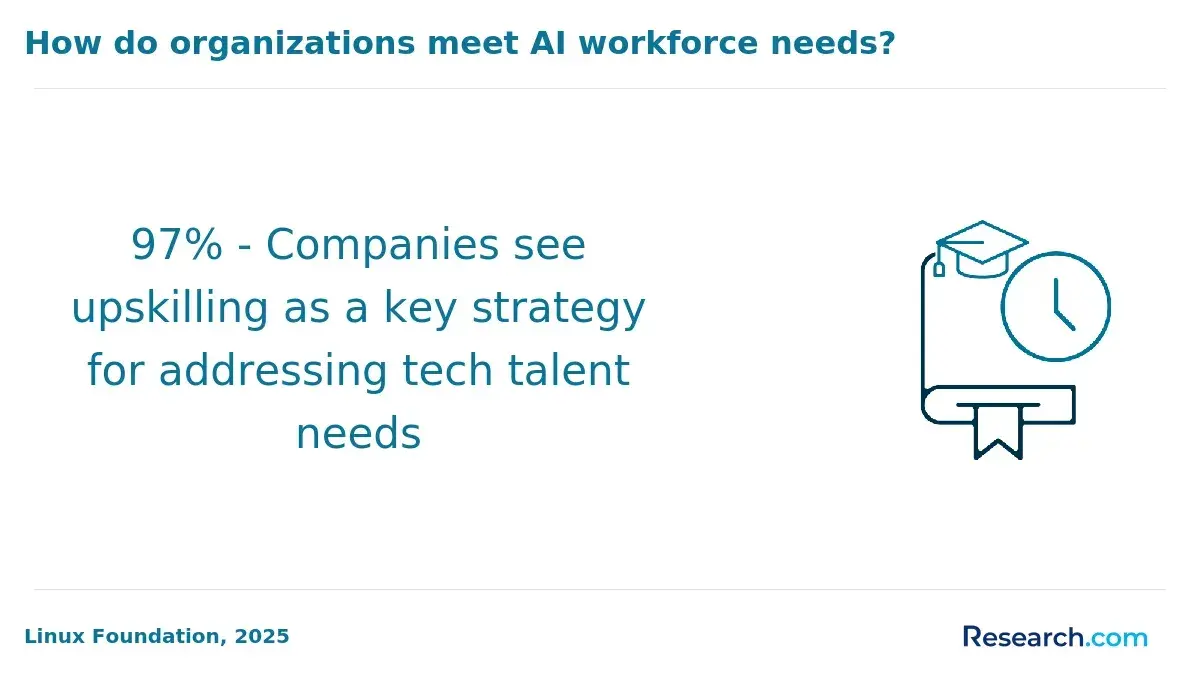
The demand for AI education is rapidly increasing, with Coursera's data showing a 1,060% year-over-year rise in enrollments for generative AI courses. This growth highlights the need to distinguish accredited and reputable programs from the many emerging offerings that may lack updated or substantive content, which can hamper one's ability to apply AI effectively in their leadership role.
What admission requirements and professional experience do top AI leadership programs expect?
Top AI leadership programs typically require candidates to have strong academic backgrounds, often holding a bachelor's degree in computer science, engineering, mathematics, or related STEM fields. Many prefer advanced degrees such as a master's or PhD, especially for technical leadership roles. Professional experience-usually 3 to 5 years in data science, machine learning, software development, or product management-is essential. Leadership experience in AI-driven projects is highly valued, showcasing the ability to manage interdisciplinary teams and strategic decision-making.
Admission committees evaluate both technical proficiency and managerial skills. Applicants may need to submit project portfolios or case studies demonstrating AI implementation, emphasizing innovation and impact. Strong programming skills in Python, R, or similar languages, along with familiarity with machine learning frameworks like TensorFlow or PyTorch, are commonly expected.
Business acumen and strategic thinking, shown through roles interfacing with cross-functional teams or leading AI initiatives, can set candidates apart. Effective communication skills, especially the ability to explain complex AI concepts to non-technical stakeholders, are crucial in competitive admissions.
Additional credentials such as industry certifications, publications, or patents in AI fields improve prospects but are not mandatory. Some programs may require standardized tests like the GRE or GMAT.
According to ZipRecruiter's 2025 market data, AI-related roles such as AI product manager and AI engineer earn six-figure salaries, with some specialist positions exceeding $150,000 annually, highlighting the value of rigorous admissions aligned with high career potential.
How long do AI programs for innovation leaders take, and what do they cost?
AI programs for innovation leaders vary widely, typically lasting from a few weeks up to six months. Intensive bootcamps or certificate programs often run between 4 to 12 weeks and focus on practical skills and strategic AI applications. University executive education courses usually extend from 3 to 6 months, combining asynchronous learning with live workshops designed for busy professionals.
Costs differ based on program length, reputation, and delivery format. Short-term courses usually range from $2,000 to $7,000, while mid-length executive programs can cost between $8,000 and $25,000. For instance, university-affiliated executive certificates tend toward the higher price due to comprehensive content and valuable networking opportunities.
Choosing an AI program depends on your available time, budget, and goals. A 6-week bootcamp can quickly establish foundational knowledge, whereas a 6-month program offers deeper strategic frameworks and leadership-focused AI insights. According to Deloitte's 2025 State of Generative AI in the Enterprise, 74% of organizations report that their most advanced generative AI initiatives meet or exceed ROI expectations, highlighting the importance of training that drives measurable business value.
Look for programs incorporating real-world projects or mentorship, as hands-on experience accelerates AI adoption in organizations. Also consider courses that integrate cross-functional AI perspectives, preparing innovation leaders to bridge technical and business strategies effectively.
What AI-related leadership roles can these courses lead to, and in which industries?
Leadership roles in artificial intelligence span industries such as healthcare, finance, manufacturing, and technology, focusing on strategic deployment, ethical governance, and innovation management. Typical positions include AI Project Manager, AI Ethics Officer, Chief AI Officer, and Data Science Director. These leaders oversee AI applications, ensure compliance with regulations, and drive collaboration across teams to maximize technology benefits.
In healthcare, AI leaders integrate machine learning to enhance diagnostics and patient care. Finance professionals develop AI-driven risk assessment tools using predictive analytics. Manufacturing emphasizes AI-powered automation and predictive maintenance, while technology companies prioritize scaling AI products and services.
Key challenges facing AI leadership involve addressing data privacy, mitigating model bias, and ensuring system transparency. According to Cisco's 2025 AI Readiness Index, only 13% of organizations are fully prepared to deploy AI safely at scale, highlighting a significant leadership gap in AI governance.
Advancing in AI leadership requires mastering AI frameworks, ethical standards, and risk mitigation strategies. Executives must align AI initiatives with business goals, coordinating between technical and corporate teams. Prospective students should pursue programs emphasizing governance, strategic AI applications, and multidisciplinary collaboration to prepare for these roles.
Such education equips graduates to address the growing need for responsible AI integration and positions them for leadership across multiple sectors.
What salary ranges and job outlook can AI-trained innovation leaders expect in the U.S.?
AI-trained innovation leaders in the U.S. earn starting salaries typically between $90,000 and $130,000, with mid-career roles offering $130,000 to $180,000. Senior positions, such as those in AI strategy or innovation management, can exceed $200,000 annually. Compensation varies by industry, location, and company size, with tech and finance sectors generally providing higher pay. For instance, a Director of AI Innovation in Silicon Valley commands a higher salary than a similar role in a mid-sized manufacturing firm.
Job demand for AI professionals is strong and expanding across sectors. According to GMAC's 2024 survey on executive education and buying behavior, 67% of business school candidates expect AI to influence their career paths. Growth areas include AI-driven product development, business model transformation, and intelligent automation, all creating leadership opportunities.
Top employers prefer candidates combining AI expertise with business acumen, rewarding skills in machine learning integration, AI ethics, and change management. This hybrid knowledge is valuable not only in traditional tech hubs but also emerging markets like healthcare, energy, and retail.
To maximize employability and salary potential, innovation leaders should pursue specialized courses emphasizing practical AI applications alongside leadership training. Continuous skill development is essential as AI technologies rapidly evolve and reshape roles.
How can working professionals evaluate bootcamps, microcredentials, and executive AI courses?
When choosing bootcamps, microcredentials, or executive artificial intelligence courses, focus on relevance and practical application aligned with industry needs. According to PwC's 2025 Global CEO Survey, 56% of CEOs anticipate generative AI and automation will boost company efficiency within the next year. Effective programs address skills in data science, AI strategy, or ethical AI implementation tailored to your field.
Assess instructor expertise, prioritizing those with real-world experience and recognized industry standing. Executive courses often include leaders and researchers who provide valuable networking and career insights.
Consider the program's length and flexibility relative to your schedule. Microcredentials are ideal for quick upskilling within weeks. Bootcamps offer immersive learning but require significant time, while executive courses strive for balance, often at higher costs.
Accreditation and recognition matter-select programs backed by reputable universities or that integrate respected industry certifications. This enhances your credential's credibility and employer recognition.
Examine post-completion support like career services, mentorship, and alumni networks, which improve skill retention and application in the workplace. A clear path to professional growth is essential in driving innovation and leadership in artificial intelligence sectors.
Other Things You Should Know About Artificial Intelligence
Artificial intelligence is significantly transforming industries such as healthcare, finance, automotive, and retail. In healthcare, AI assists in diagnostics and personalized medicine. The finance sector uses AI for fraud detection and algorithmic trading, while the automotive industry advances with AI-powered autonomous driving technologies.
In 2027, top AI courses for innovation leaders include "AI for Leaders" by MIT, "Artificial Intelligence: Business Strategies and Applications" by UC Berkeley, and "AI Leadership" by Stanford Online. These courses focus on strategic AI application, ethical considerations, and leadership in AI-driven innovation.
Integrating artificial intelligence can automate routine tasks, enhance decision-making, and improve efficiency. However, it may require restructuring workflows and upskilling employees to effectively collaborate with AI systems. Successful integration balances technology adoption with human oversight for optimal outcomes.
Artificial intelligence evolves rapidly, making continuous learning essential for leaders to stay current. Challenges include navigating a vast range of emerging tools, understanding evolving ethical standards, and adapting strategies to shifting market demands. Keeping pace often involves leveraging professional networks and ongoing education.
References
- Navigating the Impact of AI in Leadership: A Social Process Continues https://www.ccl.org/articles/leading-effectively-articles/navigating-the-impact-of-ai-in-leadership-a-social-process-continues/
- AI Courses https://www.ideou.com/collections/ai-courses
- AI Governance in Higher Education: Policies That Enable Innovation https://feedbackfruits.com/blog/ai-governance-higher-education
- Leadership with AI | ISB Online Executive Programme https://online-er.isb.edu/leadership-with-ai/index.php
- Best AI Certifications 2025: Skills Employers Value Most This Year https://www.strategicaileader.com/best-ai-certifications-skills-employers-value/
- Best Hybrid AI Executive Programs in 2026 - Emeritus Online Courses https://emeritus.org/blog/best-hybrid-ai-executive-programs/
- AI-First Leadership: Embracing the Future of Work - Harvard Business Impact https://www.harvardbusiness.org/insight/ai-first-leadership-embracing-the-future-of-work/
- How Leaders Can Use AI to Drive Growth and Innovation - Mindtools https://www.mindtools.com/amw2avt/how-leaders-can-use-ai-drive-growth-innovation/
- Leadership for the AI Age https://online.professionalprogramsmit.com/leadership-ai-age
- AI’s Role in Shaping Future Work & Strategy https://www.techclass.com/resources/learning-and-development-articles/next-frontier-thought-leadership-on-ais-role-in-work-enterprise-strategy