2027 Best Wharton Online AI Courses for Corporate Teams

Co-Founder and Chief Data Scientist
Corporate teams often struggle to keep pace with rapid advances in artificial intelligence, affecting their ability to innovate and stay competitive. Many professionals lack accessible, flexible options to gain relevant expertise without disrupting work commitments. This gap hampers organizational growth and limits the strategic adoption of AI-driven solutions. Identifying credible, practical courses tailored for busy teams is crucial for bridging this skills divide. This article evaluates the top Wharton online programs designed to equip corporate teams with actionable knowledge in artificial intelligence, enabling organizations to enhance proficiency and integrate AI technologies effectively into their operations.
Key Things You Should Know
- Wharton's online AI courses for corporate teams in 2026 emphasize practical strategy integration, with 68% of participants reporting improved decision-making skills post-completion.
- Designed for professionals, these courses combine data science and leadership, offering flexibility through asynchronous and live sessions tailored to evolving AI business applications.
- Corporate uptake is rising by 24% annually, reflecting demand for workforce AI literacy to drive innovation and maintain competitive advantage in diverse industries.
Advance Your Career with AI Online Courses
Artificial Intelligence: Implications for Business Strategy
This program provides an introduction to Artificial Intelligence and their implications for business strategy. Earn an official digital certificate.

Oxford Artificial Intelligence Programme
Explore this Oxford Artificial Intelligence programme offered in a flexible learning environment and explore topics like machine learning, automation, and robotics.

Implementing Agentic AI: Building Your Organizational Playbook
This online MIT Agentic AI course offers a practical approach to deploying AI agents in your organization, including a custom playbook. 3 weeks, exclusive launch price.

AI Adoption: Driving Business Value and Impact
This online MIT AI Adoption: Driving Business Value and Impact offers practical frameworks to close the gap between AI potential and business reality.

Artificial Intelligence in Pharma and Biotech
Discover the applications and limitations of artificial intelligence in pharma and biotech with this MIT online short course.

What makes Wharton's online AI courses effective for corporate team training?
Wharton's online AI courses for corporate team skill development provide tailored training that blends cutting-edge curriculum with practical applications designed for business challenges. Emphasizing real-world problems through case studies, simulations, and projects, these programs prepare learners to apply AI concepts directly within their industries. The curriculum is regularly updated to cover the latest advances, including generative AI and machine learning strategies, responding to urgent skills gaps highlighted by industry reports.
Effective corporate training with Wharton AI online programs supports collaborative learning in cohort-based virtual sessions, promoting cross-functional understanding and peer interaction. Expert instructors with industry backgrounds offer actionable insights that balance both technical expertise and strategic decision-making. Structured learning paths address foundational AI principles, ethical concerns, and AI tool deployment in operational workflows, enabling teams to confidently manage AI projects from ideation through execution.
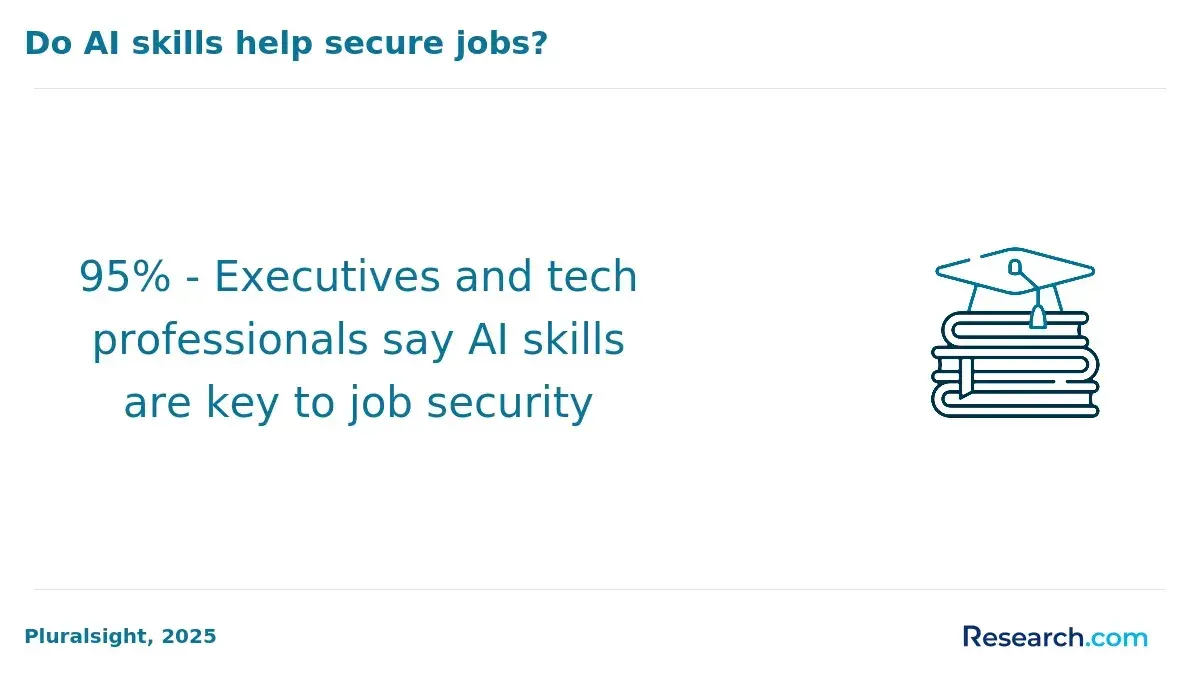
This rigorous skill development is critical as a 2025 IBM Institute report reveals that 51% of CEOs are urgently hiring for generative AI roles that were non-existent a year ago, while 63% foresee AI skill shortages impeding business goals by 2027. Wharton's courses reduce barriers to adoption and foster innovation-driven growth. For those considering further education in data science, the cheapest master in data science options provide affordable pathways to deepen expertise.
Advance Your Career with AI Online Courses
Artificial Intelligence: Implications for Business Strategy
This program provides an introduction to Artificial Intelligence and their implications for business strategy. Earn an official digital certificate.
Oxford Artificial Intelligence Programme
Explore this Oxford Artificial Intelligence programme offered in a flexible learning environment and explore topics like machine learning, automation, and robotics.
Implementing Agentic AI: Building Your Organizational Playbook
This online MIT Agentic AI course offers a practical approach to deploying AI agents in your organization, including a custom playbook. 3 weeks, exclusive launch price.
Which Wharton online AI programs are best for different corporate roles and functions?
Wharton's online artificial intelligence courses for corporate teams deliver tailored content for diverse business functions. Executives and senior managers engage with AI and digital strategy curricula designed to foster decision-making, transformation leadership, and competitive advantage. These programs highlight ethical, strategic, and deployment challenges suitable for C-suite leaders driving enterprise-wide AI integration.
Technical professionals such as data scientists, machine learning engineers, and analysts benefit from advanced AI training focused on algorithmic design, predictive analytics, and model interpretation. These courses sharpen skills in data-driven problem solving, model validation, and optimizing AI performance, meeting the need for experts who turn complex models into actionable insights.
Marketing and product development teams access AI tools for customer behavior analysis and personalized campaigns, improving targeting and ROI. Operations and supply chain managers study AI-powered automation and demand forecasting to boost efficiency and reduce costs. The 230% enrollment surge in Wharton's AI programs reported among corporate clients indicates growing demand for targeted training by function.
Finance teams emphasize credit risk modeling and fraud detection, while HR professionals pursue AI-assisted talent analytics to enhance recruiting and retention. This focused approach ensures improved operational effectiveness and strategic innovation. For detailed choices on AI education, prospective students can explore options such as the AI degree offerings recognized for affordability and quality.
These comprehensive Wharton AI programs align with the best Wharton AI programs for business functions, ensuring corporate teams gain skills relevant to their specific roles.
How do Wharton's online AI courses compare with other top business schools for executives?
Wharton's online AI courses provide a unique blend of measurable career impact and executive-level relevance that sets them apart from other top business schools. The flagship "AI for Business" specialization on Coursera reports a 46% average salary increase and a 39% rate of job change or promotion within 12 months after completion, according to the Coursera Learner Outcomes Survey (2024). These figures highlight Wharton's strong track record of translating education into tangible career advancement.
When comparing Wharton online AI courses versus top business schools, a key difference lies in their integration of foundational artificial intelligence concepts with business strategy, leadership, and ethics. This approach aligns with the needs of executives who apply AI to decision-making and innovation, unlike programs from Harvard or MIT that focus more heavily on technical AI skills, which may be less accessible for non-technical leaders.
Designed for busy professionals, Wharton's flexible format allows learning at an executive pace without sacrificing rigor. The curriculum emphasizes real-world case studies and cross-industry applications, helping learners tackle workplace challenges such as responsible AI implementation and optimizing AI-driven customer experiences. In contrast, many offerings emphasize theory over practical business context.
For those interested in advancing their careers with AI education, exploring a master of data science online can complement Wharton's focus on leadership. Overall, Wharton Online's executive education artificial intelligence programs comparison shows a clear advantage through leadership development and career progression metrics.
What AI topics and skills do Wharton's corporate-focused courses actually cover?
Wharton's corporate AI skills development for business leaders addresses essential topics for those leading digital transformation initiatives. The curriculum merges foundational technical knowledge with strategic and operational insights. Key areas of focus include understanding AI's impact on business, data-driven decision-making, and AI ethics.
Courses equip teams with practical skills such as:
- Designing AI strategies aligned with organizational goals
- Evaluating technologies like machine learning, natural language processing, and computer vision
- Building capabilities to manage and scale AI projects effectively
- Interpreting AI-driven analytics to enhance customer experience and efficiency
- Navigating legal, ethical, and governance challenges around AI deployment
The "Digital Strategy in the Era of AI" certificate highlights creating cohesive teams to pilot AI projects, delivering measurable ROI. Wharton Online reported a 17% average uplift in digital project ROI within a year for participating organizations, demonstrating the program's emphasis on actionable leadership outcomes.
Wharton's online courses for teams also cover AI's role in sustaining competitive advantage and managing risk, helping managers prioritize innovation balanced with compliance. This comprehensive approach prepares corporate groups to integrate AI solutions sustainably across business functions.
Those considering AI education should also explore factors like computer science degree cost when planning their career path in technology-driven industries.
How are Wharton's online AI courses structured, delivered, and scheduled for working professionals?
Wharton's online AI courses for corporate teams provide flexible, effective learning tailored to busy professionals. These modular programs combine asynchronous video lectures, case studies, and live sessions to fit diverse schedules, with participants dedicating 4 to 6 hours weekly. Cohorts typically last 4 to 8 weeks, delivering an intensive yet manageable pace for quick skill application in the workplace.
Interactive elements, such as live virtual workshops and discussion forums, foster collaboration among peers and instructors. Executives engage in practical exercises like data-driven decision-making and industry-specific AI integration challenges. Recorded sessions add flexibility, accommodating learners across different time zones or variable work hours.
Scheduling is optimized for professionals through multiple cohort start dates annually, enabling alignment with business cycles. Group enrollments promote shared learning experiences, accelerating organizational adoption of AI tools and strategies.
- Weekly commitment: 4-6 hours
- Cohort duration: 4-8 weeks
- Flexibility with live and recorded sessions
- Multiple start dates for rolling enrollment
Outcomes highlight program impact: 72% of executives report implementing new AI initiatives within six months post-completion, and 41% observe measurable revenue or cost benefits. These results reflect Wharton's effective integration of practical learning and real-world business impact, as detailed in the Wharton Executive Education Participant Outcomes Survey.
What are the enrollment options, eligibility criteria, and cohort models for corporate teams?
Wharton's online AI courses for corporate teams offer flexible enrollment options that cater to different organizational needs. Companies can select from open enrollment models with multiple cohorts or dedicated cohorts exclusively for their employees. Cohort sizes typically range from 15 to 50 participants, balancing focused attention with rich peer collaboration. Some programs allow self-paced learning, while others require participation in live sessions spread over several weeks.
Eligibility often emphasizes professional experience over academic background, targeting mid- to senior-level managers and executives responsible for AI strategy. Participants generally need five or more years of management experience or a proven role in digital transformation initiatives. These criteria help ensure engagement with advanced leadership content and foster diverse perspectives by allowing cross-functional teams to enroll together.
Corporate cohort programs emphasize practical, collaborative learning through group projects, case studies, and live faculty discussions that simulate real-world AI challenges. Flexible start dates help companies align training with strategic goals. According to a Deloitte 2025 survey, companies with executives who undergo structured AI leadership training are 1.6 times more likely to achieve significant productivity gains from AI deployments, highlighting the benefits of these cohort-based leadership programs.
How much do Wharton online AI courses cost, and what are typical corporate funding models?
Wharton online AI courses for corporate teams generally cost between $3,000 and $6,000 per participant, depending on program length and depth. Customized or cohort-based options, especially executive programs, may be priced higher. Companies enrolling 20 or more employees often receive bulk discounts, significantly lowering costs per learner.
Corporate funding for these courses usually comes from one of three sources:
- Centralized training budgets: Many organizations set aside annual learning and development funds for executive education, including AI, ensuring consistent investment and bulk enrollment.
- Department-specific funds: Business units or innovation teams may fund participants when training aligns with strategic goals.
- Performance-linked tuition reimbursement: Companies might reimburse employees after successful course completion or milestone achievement.
According to Wharton's 2024 Corporate Learning Client Study, firms sending at least 50 employees to AI and analytics programs reported an average 3.2x return on investment within 18 months. This underscores the substantial value gained from improved automation and decision-making capabilities.
For organizations considering AI training investments, negotiating volume pricing and aligning programs with internal funding models can maximize impact. Larger cohorts benefit from streamlined enrollment and measurable ROI, while smaller teams might focus on targeted modules best suited to their specific workflows.
What career and business outcomes can companies expect from Wharton AI training?
Wharton's AI training equips corporate teams with advanced skills to strategically apply artificial intelligence across operations. Participants learn to design AI-driven solutions that improve decision-making, optimize workflows, and enhance customer experiences. Examples include developing predictive analytics to forecast trends and automating routine tasks to boost efficiency and reduce costs.
Companies investing in Wharton AI courses experience stronger talent retention and quicker innovation cycles. By fostering AI literacy across departments, organizations break down silos and accelerate data-driven initiatives, which often leads to revenue growth and a competitive edge. Managers leave the program better prepared to lead AI projects that align with overall business objectives.
Ranked in the top 5% globally for enterprise learner satisfaction, Wharton's AI specializations boast a 96% recommendation rate according to Coursera's 2025 Enterprise Partner Benchmarking Report. This reflects the program's robust, practical design trusted by businesses for workforce development. It addresses the needs of both technical and non-technical professionals aiming to translate AI concepts into actionable business value.
Key outcomes include:
- Enhanced ability to identify AI opportunities aligned with strategic goals
- Faster project delivery through AI-enabled automation
- Improved cross-functional collaboration on AI initiatives
- Better risk management powered by data-driven insights
- Greater employee engagement and diversified skill sets
Ultimately, Wharton's AI training transforms corporate teams into agile, AI-capable units driving measurable business impact.
How can learning leaders integrate Wharton AI courses into existing L&D and upskilling strategies?
Learning leaders can integrate Wharton AI courses into existing L&D and upskilling strategies by aligning course content with corporate goals like process improvement and innovation. Embedding Wharton's modular AI coursework within broader training programs focused on digital transformation or analytics helps teams develop data-driven decision-making skills. For instance, assigning relevant modules to operational teams fosters practical AI application.
Combining asynchronous Wharton coursework with live workshops or coaching creates a blended learning model that encourages real-time problem-solving and peer collaboration. Periodic assessments from the courses help track progress and customize further training based on skill gaps.
AI skills development can be incorporated into career pathways by enabling employees to apply lessons directly in their roles. Cross-functional projects led by Wharton AI graduates can drive workflow redesigns or task automation. According to the Wharton AI for Business Alumni Outcomes Survey, 58% of alumni redesigned core business processes, and 35% achieved cycle-time reductions of 20% or more.
Addressing tech resistance through case studies of Wharton-trained teams and maintaining executive sponsorship ensures sustained momentum for AI upskilling. Integrating Wharton AI credentials into talent recognition and incentive programs motivates participation and practical use of skills.
What factors should organizations consider when choosing among Wharton's AI offerings for teams?
Organizations choosing among Wharton's AI offerings for corporate teams must evaluate key factors to ensure effective upskilling aligned with business goals. The program's relevance to current and future roles is vital. Programs for non-technical staff emphasizing AI in decision-making or marketing differ greatly from those aimed at data scientists or engineers.
Course format and duration should complement the team's workflow. Options range from short intensive workshops to multi-week modular formats. Companies with limited time may opt for asynchronous online courses, while others gain from live sessions with interactive case studies.
The curriculum should balance foundational knowledge and advanced techniques. Newcomers may need basics in machine learning, ethics, and AI strategy, while experienced teams could focus on areas like natural language processing or predictive analytics. Pricing and scalability depend on participant numbers and opportunities for ongoing learning or certification.
Support features such as faculty access, peer collaboration, and post-course resources improve knowledge retention and real-world application. Wharton's use of business case studies and expert guidance adds notable value.
Gartner forecasts that by 2027, 75% of enterprises will have formal AI upskilling programs for non-technical staff, up from 15% previously. This highlights partnerships with leading business schools as a crucial delivery model, emphasizing the need for reputable, well-structured AI education tailored to enterprise needs.
Other Things You Should Know About Artificial Intelligence
The 2027 Wharton Online AI courses for corporate teams focus on equipping professionals with AI strategies for business optimization, decision-making skills, data analytics, and ethical AI implementation, ensuring that teams can effectively leverage AI technologies in corporate settings for improved productivity and innovation.
Artificial intelligence automates repetitive and data-intensive tasks, which can reshape job roles by shifting human focus towards strategic and creative responsibilities. While some routine jobs may be reduced, AI also creates new roles centered on managing, developing, and interpreting AI systems. Corporate teams that adapt can leverage AI to enhance productivity and innovation.
Professionals should cultivate a combination of technical literacy, critical thinking, and domain expertise. Understanding AI fundamentals such as machine learning concepts, data analysis, and algorithmic reasoning is valuable. Additionally, skills in effective collaboration with AI tools and ethical judgment are essential as AI becomes more embedded in business processes.
Artificial intelligence systems analyze large datasets to identify patterns and make predictions or recommendations based on learned insights. These decisions are often probabilistic and rely on algorithms trained on historical data. However, AI decision-making must be regularly evaluated to ensure accuracy, fairness, and alignment with organizational goals.
References
- How elite business schools like Wharton are overhauling curriculum as AI reshapes Wall Street bankers' futures https://www.businessinsider.com/ai-elite-business-schools-wharton-overhauling-curriculum-2025-11
- New Research: How AI Transforms $400 Billion Of Corporate Learning JOSH BERSIN https://joshbersin.com/2026/02/new-research-how-ai-transforms-400-billion-of-corporate-learning/
- Wharton Online Launches Best-In-Class AI for Decision Making Certificate Program https://techrseries.com/hr/wharton-online-launches-best-in-class-ai-for-decision-making-certificate-program/
- What AI Brings to Corporate Training Evolution | TTMS https://ttms.com/what-corporate-training-using-ai-brings-to-everyday-workplace-learning/
- WHARTON ONLINE LAUNCHES BEST-IN-CLASS AI FOR DECISION MAKING CERTIFICATE PROGRAM https://www.prnewswire.com/news-releases/wharton-online-launches-best-in-class-ai-for-decision-making-certificate-program-301698066.html
- How to Analyze Eligibility Criteria Early to Improve Diversity in Clinical Trials | OneStudyTeam https://www.onestudyteam.com/blog/analyze-eligibility-criteria-early-to-improve-diversity-in-clinical-trials/
- Wharton AI and Analytics Course Curriculum Deep Dive - Emeritus Online Courses https://emeritus.org/blog/wharton-ai-analytics-course-curriculum/
- The Impact of AI on Corporate Training https://www.absorblms.com/blog/the-impact-of-ai-on-corporate-training
- Wharton Launches MBA in Artificial Intelligence for Business https://www.stacyblackman.com/blog/wharton-launches-mba-in-artificial-intelligence-for-business/
- How to Integrate AI Training Seamlessly into L&D Strategy https://www.infoprolearning.com/blog/how-to-integrate-ai-training-into-your-existing-ld-strategy/