2027 Best AI Courses for AI Content Quality Control Teams

Co-Founder and Chief Data Scientist
Teams responsible for AI content quality control often face challenges in managing the accuracy, relevance, and ethical standards of automated outputs. Poorly trained staff can lead to inconsistent review processes, compliance risks, and diminished user trust. The rapid evolution of AI tools makes it difficult for professionals from unrelated fields to rapidly adapt and ensure high-quality monitoring.
Addressing these issues requires targeted education that bridges foundational knowledge and practical skills. This article explores the best courses designed to equip learners with essential competencies, offering flexible, accredited pathways for effective career transitions into AI content quality control roles.
Key Things You Should Know
- AI content quality control courses in 2026 emphasize data labeling accuracy and bias detection, reflecting a 35% increase in industry demand for skilled professionals since 2024.
- Top programs integrate practical training with tools like machine learning frameworks, boosting graduates' job placement rates to over 80% within six months.
- Curricula focus on ethical AI use alongside technical skills, addressing growing regulatory requirements and ensuring compliance in content moderation and generation workflows.
Advance Your Career with AI Online Courses
Artificial Intelligence: Implications for Business Strategy
This program provides an introduction to Artificial Intelligence and their implications for business strategy. Earn an official digital certificate.

Oxford Artificial Intelligence Programme
Explore this Oxford Artificial Intelligence programme offered in a flexible learning environment and explore topics like machine learning, automation, and robotics.

Implementing Agentic AI: Building Your Organizational Playbook
This online MIT Agentic AI course offers a practical approach to deploying AI agents in your organization, including a custom playbook. 3 weeks, exclusive launch price.

AI Adoption: Driving Business Value and Impact
This online MIT AI Adoption: Driving Business Value and Impact offers practical frameworks to close the gap between AI potential and business reality.

Artificial Intelligence in Pharma and Biotech
Discover the applications and limitations of artificial intelligence in pharma and biotech with this MIT online short course.

What are the best AI courses for content quality control teams in marketing and media?
For content quality control teams, the best AI courses for content quality control teams focus on practical skills like data analysis, natural language processing (NLP), and machine learning tailored to content evaluation. These programs often include automated content verification, sentiment analysis, and bias detection to enhance accuracy and consistency in marketing and media contexts.
Top AI training programs for marketing and media quality assurance provide specialized modules using AI-driven tools in quality assurance workflows. Notable examples include Coursera's "AI For Everyone" by Andrew Ng and edX's "Data Science for Marketing Analytics," which combine marketing insights with predictive modeling. These courses help teams interpret AI outputs critically, reducing false positives and improving decision-making.
Experts recommend selecting courses with hands-on projects that apply real marketing data, allowing learners to scale content evaluation effectively and detect plagiarized or low-quality material quickly. Ethical AI use and bias detection coverage are also essential for maintaining media integrity. LinkedIn notes that AI literacy ranks as the most in-demand skill in 2025 learning, underlining the importance of mastering AI tools.
Important features to seek include:
- Training in NLP techniques for text and sentiment analysis
- Hands-on experience with AI content moderation platforms
- Coverage of bias detection and ethical AI standards
- Case studies focused on marketing and media contexts
For those considering further studies, reviewing data science undergraduate rankings can help identify affordable programs that incorporate AI and data science effectively.
Advance Your Career with AI Online Courses
Artificial Intelligence: Implications for Business Strategy
This program provides an introduction to Artificial Intelligence and their implications for business strategy. Earn an official digital certificate.
Oxford Artificial Intelligence Programme
Explore this Oxford Artificial Intelligence programme offered in a flexible learning environment and explore topics like machine learning, automation, and robotics.
Implementing Agentic AI: Building Your Organizational Playbook
This online MIT Agentic AI course offers a practical approach to deploying AI agents in your organization, including a custom playbook. 3 weeks, exclusive launch price.
How do AI content quality control courses differ from general artificial intelligence programs?
AI content quality control training programs focus specifically on evaluating, refining, and managing outputs generated by artificial intelligence systems. Unlike general AI courses that cover broad foundational concepts such as machine learning algorithms, neural networks, and data structures, these specialized courses equip professionals with skills like bias detection, error correction, and compliance with content guidelines.
These training programs offer practical modules on prompt engineering, contextual relevance assessment, and regulatory standards compliance. Hands-on exercises with AI tools for text generation, image synthesis, or speech recognition simulate real-world quality assurance scenarios. General AI courses, by contrast, emphasize theory, mathematics, and coding skills necessary for AI model development but often overlook content reliability and user-facing concerns.
Differences between AI quality control and general AI courses include:
- Learning outcomes focused on content evaluation workflows and quality metrics
- Faster completion times suitable for team upskilling; for example, Dataquest's 2026 comparison reveals Google AI Essentials takes under 10 hours, ideal for rapid onboarding
- Education on ethical considerations and misinformation mitigation in AI outputs
- Emphasis on collaboration with cross-functional teams managing AI content deployment and feedback loops
Working professionals seeking immediate application benefits often find content quality control courses more efficient than comprehensive AI degrees. These programs train learners to identify hallucinations, flag biased content, and optimize AI performance in client-facing or regulatory-heavy environments. For those exploring pathways in AI education, consider exploring an AI online degree to gain broader knowledge alongside specialized content quality skills.
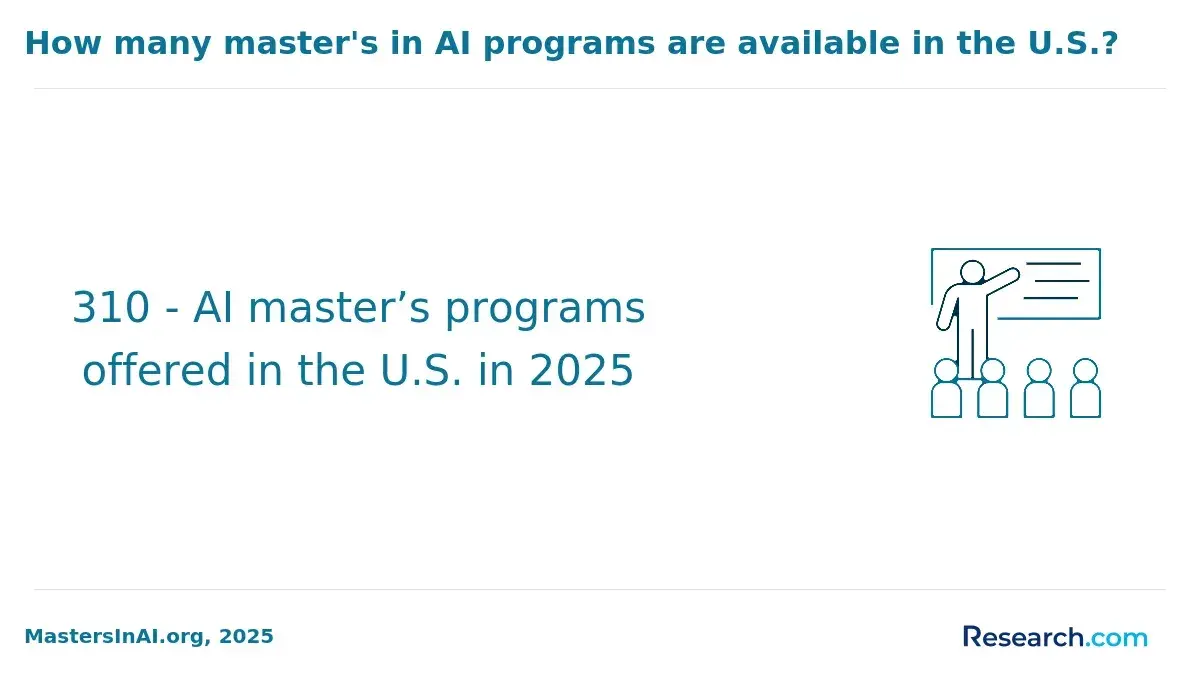
Which accredited U.S. universities and providers offer AI programs focused on content quality control?
Several top accredited U.S. universities for AI content quality control programs offer specialized curricula that address the growing demand for expertise in managing AI-generated content accuracy and bias. Carnegie Mellon University incorporates AI ethics and quality assurance within its master's in artificial intelligence, featuring courses on data validation and content auditing.
Similarly, the University of California, Berkeley's School of Information provides certificate programs designed for content quality control teams, emphasizing trustworthiness and reliability of AI outputs. Georgia Tech presents a Professional Master's in Computer Science with electives focused on AI model evaluation and quality metrics, preparing students to tackle real-world content quality challenges.
For working professionals, targeted certifications like the PMI-CPMAI, with costs typically between $500 and $800, offer industry-recognized validation in advanced AI project and content management without requiring full degree enrollment. Leading AI content quality control courses offered by U.S. institutions often combine technical training with ethical and regulatory perspectives.
Stanford University and MIT integrate AI governance alongside quality control, equipping students to identify and resolve data biases and content inaccuracies effectively. Given the evolving nature of AI content generation, programs stressing continuous model monitoring and human-in-the-loop review are essential.
These practices are critical to addressing hallucinations and ensuring compliance with legal standards. Professionals seeking advanced study may also explore the online PhD in artificial intelligence USA for deeper expertise.
What skills and topics do AI content quality control courses typically cover in their curriculum?
AI content quality control courses develop advanced AI content quality control techniques essential for ensuring the reliability and accuracy of AI-generated outputs. These programs cover natural language processing basics, data annotation methods, and ethical issues in AI content. Participants enhance key skills taught in AI quality assurance courses, such as detecting errors, biases, and hallucinations in AI models, crucial for applications like chatbots and recommendation engines.
Curriculum modules provide hands-on experience with tools for content validation, use case testing, and quality metrics analysis. Students also learn to integrate quality assurance seamlessly within AI development workflows, emphasizing model limitations, iterative feedback, and regulatory compliance including data privacy laws. These components prepare learners to tackle real-world challenges in AI content supervision roles.
Courses often balance accessibility and affordability-for example, an IBM program allows free auditing with certificates available for around $50 per month. This pricing model appeals to professionals aiming to boost career prospects by mastering analytical skills and domain-specific knowledge.
For those interested in advancing their career further, pursuing an online PhD in data science offers a path to deepen expertise in AI methodologies and quality control frameworks.
How do online, hybrid, and campus-based AI programs compare for content quality control training?
Online AI programs provide flexibility and are ideal for content quality control teams needing adaptable schedules and quick access to emerging tools. These courses prioritize practical, job-ready skills through hands-on projects and real-world datasets. Data from LinkedIn's 2025 learning analysis highlights a strong preference for applied AI education, demonstrating demand for skill-building over theory alone.
Online learning suits professionals aiming to upskill promptly without career interruptions. Hybrid AI programs combine online coursework with in-person sessions, offering valuable direct collaboration and mentorship. They often include group projects and lab work, essential for mastering AI applications where team coordination and iterative feedback play crucial roles. This format supports learners who value both flexibility and face-to-face interaction.
Campus-based AI programs deliver immersive experiences with access to on-site labs, expert faculty, and networking opportunities. These programs dive deeper into theory and advanced tools through supervised practicum. Best for full-time students or those shifting careers, campus programs provide a structured environment but demand significant time and financial investment.
Key considerations when choosing include current work commitments, preferred learning styles, and career objectives. Content quality control teams focused on immediate upskilling often benefit most from the practical nature of online and hybrid courses, while those seeking foundational knowledge and research should consider campus options.
What are the admission requirements and prerequisites for AI courses geared toward content quality teams?
Admission criteria for AI courses focused on content quality control often require foundational skills in computer science and data management. Candidates should be proficient in programming languages like Python and have a basic understanding of machine learning and natural language processing.
Many programs expect prior coursework in data science, statistics, or information technology, with prerequisites including experience using AI frameworks or tools relevant to content moderation and semantic analysis. Hands-on familiarity with APIs for large language models and automated quality assurance systems is commonly required to ensure students can apply techniques in real-world scenarios.
Professional experience may substitute for formal education when applicants present relevant project portfolios or work in content management, QA testing, or AI model training. This flexibility benefits working professionals aiming to enhance their skills. Some courses offer accessible options, such as UC Berkeley's Large Language Model Agents, which includes a free online version.
This expands opportunities for learners lacking traditional credentials but showing commitment and foundational knowledge. Applicants should carefully check course catalogs for specific admission details, including mandatory prerequisite classes, GPA thresholds, or standardized test requirements. Increasingly, proficiency in data ethics and regulatory compliance is essential, highlighting AI quality control's role in responsible and fair content moderation.
How long do AI content quality control programs take, and what do they cost to complete?
AI content quality control programs often take three to six months to complete, depending on course depth and format. Intensive bootcamps typically last 8 to 12 weeks, while comprehensive university-affiliated courses run five to six months. Self-paced options allow flexibility but may extend learning time if progress is slow.
Costs vary according to the provider and program scope. Professional certificates or specialization courses generally range from $300 to $1,200. Many platforms offer tiered pricing that includes basic access and premium options with mentor support or project feedback. University programs with official certifications or credits tend to cost between $1,000 and $3,500, reflecting their credential value.
Key skills expected by employers include Python, machine learning, and data analysis. These baseline technical competencies are essential for AI content quality roles, as emphasized in Coursera's 2026 generative AI guidance. Courses covering these topics often require more hours, affecting length and price.
When planning your study, consider:
- Short bootcamps (around 3 months) focused on practical tools for job readiness
- Extended courses (5-6 months) covering theory and applied AI quality control techniques
- Budgeting between $500 and $1,500 depending on certification and course depth
Combining online courses with hands-on projects can improve portfolios and employment prospects, though it may lengthen your learning time. Scholarships and employer tuition assistance programs can help reduce costs.
What job roles can AI content quality control training prepare you for in content operations?
Training in AI content quality control is essential for roles that ensure data accuracy, compliance, and optimized processes in content operations. Data quality analysts develop and apply AI-driven validation systems to detect and fix errors in content datasets, maintaining high standards that reduce bias and improve reliability.
Content auditors use AI tools to systematically review large volumes of text, images, and multimedia, focusing on identifying anomalies and policy violations. Research from Acceldata highlights that AI-based management significantly enhances accuracy and anomaly detection in content pipelines, underscoring the importance of automated monitoring.
Quality assurance specialists design workflows integrating machine learning for automated issue resolution. They collaborate with data engineers and content strategists to balance AI capabilities with human oversight, ensuring compliance with evolving regulatory requirements.
Other critical roles include AI trainers, responsible for curating and labeling training data to refine algorithms, and compliance officers who use AI training to detect risks like misinformation and intellectual property breaches.
What salaries and career advancement opportunities exist for AI content quality specialists and managers?
AI content quality specialists earn between $65,000 and $95,000 annually based on experience and technical skills, while managers in this field can command salaries ranging from $110,000 to $150,000. These figures highlight the growing demand for expertise in AI content validation, error reduction, and ethical compliance. Advanced certifications and practical experience with machine learning frameworks significantly improve earning potential.
Career progression usually begins with entry-level specialist roles advancing to senior analyst positions where professionals handle complex datasets and establish quality benchmarks. From there, experienced individuals can move into AI content quality management or director roles, focusing on team leadership, project management, and strategic AI policy input. Some experts transition to AI ethics advisory positions, applying deep knowledge of content biases and risk management.
Domo's 2026 AI tools roundup identifies a rising market for AI-assisted data analysis, showing that data teams increasingly integrate AI tools alongside ongoing training. This trend creates demand for specialists able to turn AI outputs into reliable, high-quality content, expanding roles to include strategic content improvement rather than routine checks.
Key skills accelerating career growth include natural language processing expertise, data annotation quality control, and AI bias detection. Knowledge of regulatory environments is critical for managers handling compliance challenges. Continuous education and cross-functional projects remain essential to stay competitive and reach high-level positions.
How can teams evaluate and choose a reputable AI course for content quality control needs?
Teams seeking AI courses focused on content quality control should carefully evaluate several key factors to align training with their specific needs. Prioritize curricula that emphasize quality assurance, governance, bias detection, data integrity, and AI model auditing rather than purely technical AI development. These topics are fundamental for roles centered on maintaining content standards.
Ensure the institution or trainers possess accredited credentials and practical experience, particularly in AI ethics, compliance, or quality assurance. Hands-on elements such as case studies and simulations reflecting real-world quality checks improve skill application beyond theory.
Consider course format and duration based on team availability and learning preferences, with options like flexible online classes or intensive workshops enabling effective upskilling. Additionally, review participant feedback focusing on tangible improvements like enhanced AI content evaluation accuracy and reduced error rates.
- Curriculum relevant to AI content governance and bias detection
- Accredited trainers with expertise in AI ethics and compliance
- Practical case studies and simulations
- Flexible delivery suited for professional schedules
- Focus on measurable quality outcome improvements
- Inclusion of regulatory and ethical standards
- Cost-effective programs with certification value
The Knowledge Academy's AI-for-quality-managers training page highlights the expanding market for quality-driven AI upskilling. This growth confirms that AI education increasingly supports governance and content quality alongside technical development, making tailored courses vital for quality-focused teams.
Other Things You Should Know About Artificial Intelligence
In 2027, top courses include "AI in Content Analysis" by Coursera, "Machine Learning for Media" on edX, and "Content AI Quality Control" from Stanford Online. These programs offer insights into sophisticated AI systems essential for maintaining high-quality content.
Explainability refers to how well an AI system's decision-making process can be understood by humans. In content quality control, explainability is critical because it helps teams identify why certain content was flagged or approved. Transparent AI models improve trust, allow for easier error correction, and ensure compliance with ethical standards and regulations.
Domain expertise is essential for effective AI content quality control as it guides the creation of accurate training data and evaluation criteria. Experts help define what constitutes high-quality content within specific industries or subjects, ensuring AI systems are tailored to detect relevant errors or inconsistencies. This specialized knowledge enhances the AI's precision and relevance.
Teams typically use metrics such as precision, recall, and F1 score to evaluate AI model performance in content quality control. Regular testing against labeled datasets helps monitor accuracy and identify areas needing improvement. Continuous feedback loops and auditing processes also enable teams to maintain and enhance model reliability over time.
References
- qa.com | AI Courses & Training Programmes https://www.qa.com/browse/courses/ai/
- How Much Does AI Software Cost? https://www.zedrox.nl/en/blog/how-much-does-ai-software-cost/
- Artificial Intelligence (AI) Specialist - who are they and how to become one? https://en.antal.pl/insights/article/artificial-intelligence-ai-specialist-who-are-they-and-how-to-become-one
- Top AI courses in 2025 https://firebrand.training/en/blog/top-ai-courses
- Professional AI Training: How to Choose the Right Program https://www.strategicaileader.com/professional-ai-training-how-to-choose-the-right-program/
- The Complete Beginner's Guide to AI Content Evaluation (2026) https://metaflow.life/blog/beginners-guide-to-ai-content-evaluation
- Artificial Intelligence (AI) for Quality Control & Manuf... https://oxford-management.com/course/artificial-intelligence-ai-for-quality-control-manufacturing-analytics
- A hybrid model combining environmental analysis and machine learning for predicting AI education quality - Scientific Reports https://www.nature.com/articles/s41598-025-92556-x
- Early Curriculum for Artificial Intelligence (Ai) Enhancing the Quality of Education https://acr-journal.com/article/early-curriculum-for-artificial-intelligence-ai-enhancing-the-quality-of-education-862/
- Exploring GenAI and machine learning in external quality assurance • ENQA https://www.enqa.eu/news/exploring-genai-and-machine-learning-in-external-quality-assurance/