2027 Best Cambridge Online AI Courses for Corporate Teams

Co-Founder and Chief Data Scientist
Corporate teams often struggle to keep pace with rapid advancements in artificial intelligence, especially when transitioning from unrelated fields. This knowledge gap can hinder innovation and competitive advantage within organizations. Busy professionals need flexible, reputable learning options that accommodate work schedules while delivering robust, industry-relevant skills.
Without structured guidance, identifying credible courses becomes overwhelming, leading to inefficient investment. This article reviews premier Cambridge online courses designed specifically for corporate teams, highlighting accredited programs that offer practical, adaptable learning paths. It aims to help professionals seamlessly pivot into artificial intelligence roles with confidence and competence.
Key Things You Should Know
- Cambridge's online AI courses for corporate teams in 2026 emphasize practical skills, with over 70% of participants reporting improved workplace efficiency within six months.
- These courses integrate cutting-edge AI developments from 2024-2025, focusing on ethical AI implementation and advanced machine learning applicable to various industries.
- Flexible schedules and tailored team modules cater specifically to corporate training needs, helping businesses upskill employees amid rising demand for AI expertise, projected to grow 35% by 2030.
Advance Your Career with AI Online Courses
Artificial Intelligence: Implications for Business Strategy
This program provides an introduction to Artificial Intelligence and their implications for business strategy. Earn an official digital certificate.

Oxford Artificial Intelligence Programme
Explore this Oxford Artificial Intelligence programme offered in a flexible learning environment and explore topics like machine learning, automation, and robotics.

Implementing Agentic AI: Building Your Organizational Playbook
This online MIT Agentic AI course offers a practical approach to deploying AI agents in your organization, including a custom playbook. 3 weeks, exclusive launch price.

AI Adoption: Driving Business Value and Impact
This online MIT AI Adoption: Driving Business Value and Impact offers practical frameworks to close the gap between AI potential and business reality.

Artificial Intelligence in Pharma and Biotech
Discover the applications and limitations of artificial intelligence in pharma and biotech with this MIT online short course.

How do Cambridge online AI courses for corporate teams compare to other university options?
Cambridge online artificial intelligence courses versus other UK university programs stand out for their practical emphasis and academic rigor. These courses integrate real-world case studies and current AI deployment scenarios, ensuring skills are directly transferable to corporate environments. The focus on practical applications within diverse business contexts allows corporate teams to align their learning with strategic objectives more effectively.
Corporate team training in artificial intelligence: Cambridge compared to leading university courses shows notable strengths, including access to leading experts who provide research-backed content. Topics such as explainable AI, ethical constraints, and scalable deployment are emphasized-addressing enterprise challenges often missed by other programs.
The holistic approach balances technical proficiency with strategic impact, which is vital as 94% of business leaders plan to increase or maintain AI investments in the coming years. Cambridge-trained teams are well-prepared to drive AI-led transformations by understanding both technology and organizational factors.
Besides academic prestige, Cambridge offers scalable cohort models and customized learning pathways that combine British academic excellence with international business relevancy. For U.S. professionals considering flexible options, Cambridge's offerings compare favorably to a 1-year computer science degree online, providing a robust alternative for rapid upskilling.
Advance Your Career with AI Online Courses
Artificial Intelligence: Implications for Business Strategy
This program provides an introduction to Artificial Intelligence and their implications for business strategy. Earn an official digital certificate.
Oxford Artificial Intelligence Programme
Explore this Oxford Artificial Intelligence programme offered in a flexible learning environment and explore topics like machine learning, automation, and robotics.
Implementing Agentic AI: Building Your Organizational Playbook
This online MIT Agentic AI course offers a practical approach to deploying AI agents in your organization, including a custom playbook. 3 weeks, exclusive launch price.
Which Cambridge institutions offer accredited online AI programs suitable for corporate training?
Several Cambridge institutions offer accredited online artificial intelligence courses designed for corporate training. The University of Cambridge's Institute of Continuing Education provides professional development programs blending foundational theory with practical AI applications. These courses emphasize real-world data handling, machine learning techniques, and ethical AI deployment, making them ideal for corporate teams seeking structured skill advancement.
The Cambridge Judge Business School offers an accredited online AI strategy program tailored for managers and executives. This program focuses on integrating AI into business models and operational processes to enhance decision-making through data-driven insights. Participants engage with interactive case studies and project-based learning that align AI with organizational goals.
Cambridge Assessment Admissions Testing also delivers specialized AI training modules designed for workforce development. These focus on algorithmic thinking and automation in recruitment and assessment, making them well-suited for HR and talent acquisition professionals aiming to leverage AI tools effectively.
Organizations that implement structured AI upskilling programs like these are 2.8 times more likely to report transformational value from AI initiatives compared to those relying on ad-hoc training, according to McKinsey's "The State of AI in 2024." This underscores the value of comprehensive and accredited Cambridge online AI programs for corporate training.
When exploring options, consider specific learning goals such as technical proficiency, strategic integration, or operational deployment. Many programs offer customization or modular learning to align with various corporate priorities and team skill levels. For those seeking affordability in related fields, explore the cheapest mechanical engineering degree online.
How can employers choose the best Cambridge online AI course format for their teams?
Employers selecting the best Cambridge online AI course formats for corporate teams should evaluate their goals and team expertise. Technical groups benefit from courses featuring hands-on labs and coding exercises that encourage real-world AI application.
Conversely, a Cambridge AI Leadership Programme via Emeritus showed non-technical executives reached a 20-25% faster time-to-deployment for AI projects by completing leadership courses emphasizing strategy and governance. Choosing effective Cambridge online AI training options for employer teams involves considering key factors:
- Interactivity: Live virtual classrooms promote collaboration and immediate problem-solving for dynamic learning experiences.
- Flexibility: Self-paced modules accommodate varied schedules but require motivation and discipline.
- Customization: Tailored content aligning with company priorities like AI ethics or innovation is crucial.
- Duration and intensity: Intensive bootcamps expedite competency, while modular formats allow gradual skill growth based on project demands.
Hybrid course formats support cross-functional team collaboration by blending theoretical learning with applied projects. Verifying instructor qualifications and course accreditation ensures quality and relevance. Corporate learners may also explore complementary options such as a game design online degree for expanding technical creativity alongside AI expertise.
What topics and skills do Cambridge online AI courses typically cover for professionals?
Cambridge online courses in artificial intelligence for corporate skill development focus on building practical expertise with machine learning algorithms, data analysis, natural language processing, and computer vision. These trainings equip professionals to develop, deploy, and assess AI models using tools like Python, TensorFlow, and PyTorch.
Corporate teams benefit from learning how to apply AI to real business challenges such as process automation, predictive analytics, and decision-making optimization. Marketing-specific modules highlight generative AI's role in enhancing personalization, customer segmentation, and content creation.
According to Boston Consulting Group, marketing teams that utilize generative AI experience a 30% boost in campaign productivity and a 12% revenue increase compared to those who do not leverage AI. Key topics and practical skills covered in Cambridge AI training for professionals also include ethical AI deployment, governance, regulatory compliance, project management, and cross-functional collaboration.
Practical projects often involve building chatbots, sentiment analysis tools, or automating routine tasks while integrating AI with cloud services and data infrastructures to support scalable solutions. For those seeking to expand their technical and business acumen, Cambridge AI courses are a valuable option. Professionals interested in related fields might explore an accelerated cyber security degree online to complement AI expertise.
What are the admission or enrollment requirements for Cambridge online AI courses for teams?
Cambridge's online AI courses for corporate teams focus on ensuring participants have relevant professional experience and clearly defined training goals. Most programs require a foundational knowledge of data analytics, programming, or specialized industry expertise to enhance practical application from the start. Teams in HR, finance, or operations should pinpoint key business processes where AI can add value.
Enrollment usually involves submitting a summary of the team's skills and familiarity with AI to tailor the curriculum effectively. Corporations must often register groups of 5 to 10 learners to qualify for corporate pricing and bespoke support. Some courses also mandate pre-course assessments or preliminary modules to maintain consistent skill levels and aid collaboration.
Documentation from corporate training managers or HR departments outlining enrollment intent and team roles is typically required. This ensures course content aligns with organizational goals and emphasizes use-case development over theory alone. Technical readiness is essential; corporate learners must have secure digital platforms for remote learning and interactive labs that provide real-time feedback.
Function-specific AI training yields notable results. Organizations focusing on HR, finance, and operations report a 36% higher success rate in scaling AI use cases compared to general awareness training. This reflects the value of Cambridge's admission criteria emphasizing skill relevance and team alignment, as highlighted by Deloitte.
How long do Cambridge online AI programs for corporate learners usually take to complete?
Cambridge's online AI programs for corporate learners typically range from 3 to 12 months, depending on curriculum depth and customization. Shorter options, around 3 to 6 months, focus on foundational AI concepts and practical business applications. More extensive programs, lasting up to a year, delve into technical skills, integration strategies, and hands-on projects tailored to specific industries or corporate goals.
Customized AI academies by Cambridge Faculty Enterprises, often developed with academic partners, demonstrate the benefits of longer timelines. These programs, designed to systematically close skill gaps, required about 12 months for substantial impact. According to the IBM Institute for Business Value's "AI Academy Impact Study 2024," such academies achieved a 40% reduction in AI skill shortages and a 3.4 times increase in AI project throughput.
Corporate teams must balance pacing to match their objectives. Accelerated courses enable rapid skill adoption within a few quarters, while extended academies support complex, iterative AI initiatives and cross-functional collaboration.
When choosing a program, consider these factors:
- Your team's existing AI expertise and learning capacity
- The strategic scope of AI deployment in your organization
- Availability for project-based, experiential learning
- The mix of theoretical instruction and practical application
Evaluating program duration alongside your desired outcomes helps align learning with corporate goals and ensures measurable AI proficiency gains over time.
What are typical tuition costs and funding options for Cambridge online AI corporate training?
Tuition for Cambridge online AI corporate training ranges from $1,500 to over $10,000 per participant, influenced by course complexity, length, and customization. Foundational courses typically cost between $1,500 and $3,000, while advanced or industry-specific programs may exceed $8,000. Volume discounts often apply for teams of more than ten employees.
Funding sources commonly include professional development budgets and training allocations. Some programs qualify for workforce development grants or tax incentives aimed at supporting skills growth in emerging technologies. For instance, the U.S. Small Business Administration and various state governments offer grants to promote AI upskilling initiatives.
Cost-effective training strategies include blended learning options, mixing self-paced online modules with instructor-led virtual sessions to lower travel and scheduling expenses. Subscription-based models let organizations pay fixed fees for multiple enrollments across training cycles.
- Median ROI on AI and analytics projects for organizations with no formal AI training programs is about 1.8x.
- Organizations investing in structured corporate courses, such as those by Cambridge, see a median 3.5x ROI.
This data highlights how tuition investments can strongly influence project success and overall business outcomes, making funding strategies key when planning AI corporate education.
What AI-related roles and career pathways can these Cambridge online courses support?
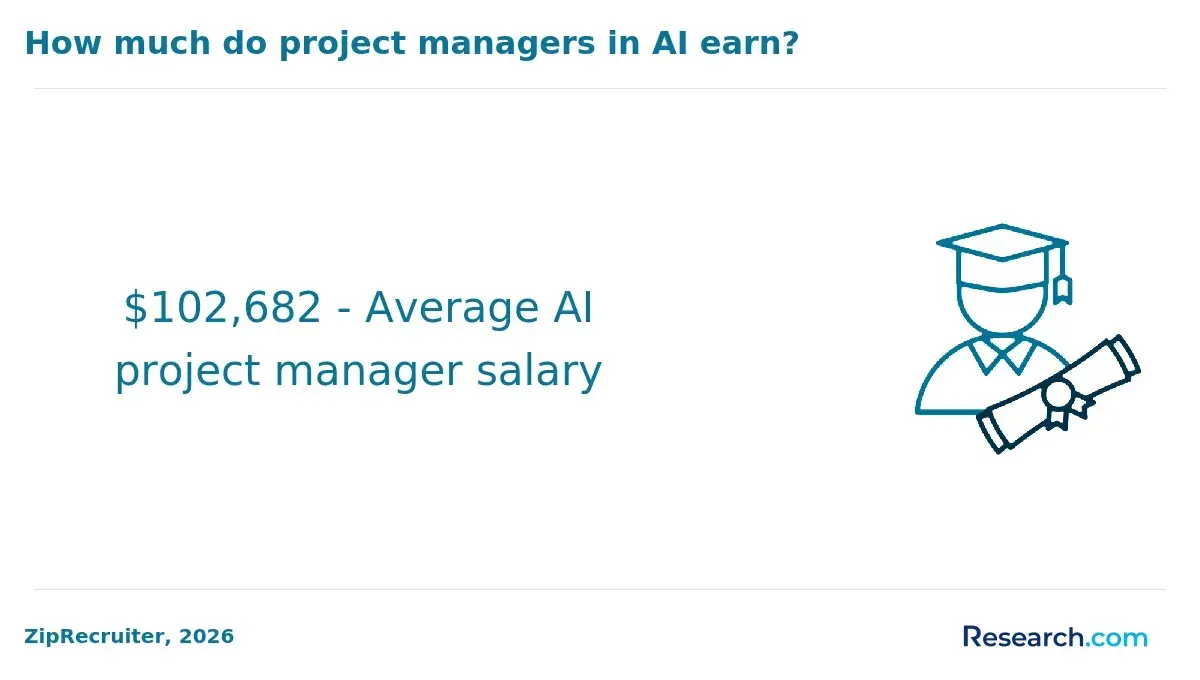
Cambridge's online AI courses prepare corporate teams for diverse AI roles like data scientists, machine learning engineers, AI project managers, and AI ethics consultants. Specialized training covers natural language processing, computer vision, and AI infrastructure development, essential for deploying effective business solutions. Professionals can also develop skills as AI strategists, aligning technology with organizational priorities, or as AI product managers overseeing AI tool lifecycles.
The programs emphasize practical challenges such as integrating AI into workflows, managing data pipelines, and promoting responsible AI use. For instance, data scientists learn to design and assess predictive models, while project managers focus on coordinating interdisciplinary teams to deliver AI projects on time.
Core skills include programming, statistical analysis, and AI system deployment, thoroughly addressed across the courses. Emerging roles like AI compliance officers and trainers are also supported, reflecting industry demands for regulatory and human-in-the-loop AI expertise. Cambridge's curriculum highlights ethical and legal frameworks crucial for these positions.
According to IDC's Worldwide Artificial Intelligence Spending Guide 2025, global corporate spending on AI training is forecasted to grow at a 33% CAGR, reaching $17 billion by 2027. This growth underscores the importance of upskilling through reputable programs like Cambridge's for teams aiming to meet evolving AI market needs.
What salary and promotion outcomes are realistic after Cambridge online AI upskilling?
Professionals completing the Cambridge online AI upskilling report median salary increases of 15% to 35%, varying by experience and role fit. Data scientists and AI engineers with targeted Cambridge coursework often see base salaries rise from $95,000 to over $125,000 within 12 to 18 months. Mid-career managers focusing on AI strategy have experienced promotion rates 20% higher than peers without specialized training.
Gartner's "Building an AI-Savvy Workforce 2024" underscores that organizations tailoring AI training by team size and maturity are 4.2 times more likely to achieve strong outcomes compared to those using uniform programs. Customized learning paths increase skill relevancy, boosting readiness for promotions and salary gains.
Corporate teams leveraging Cambridge AI courses show varied benefits by specialization:
- Technical roles with hands-on machine learning and deep learning training often secure advanced specialist titles within 1-2 years.
- Cross-functional teams combining AI basics with business analytics become eligible for strategic planning and product management promotions.
- Smaller teams with foundational upskilling tend to stabilize salaries with incremental raises rather than immediate jumps.
Aligning courses to employee capabilities and goals reduces skill mismatches and accelerates advancement. This focus encourages leadership to invest in AI-focused roles, forming clearer promotion pipelines. Prospective learners should evaluate team maturity and function before choosing Cambridge AI courses to ensure outcomes match organizational needs and personal ambitions.
How can employers evaluate ROI and learning impact of Cambridge online AI training?
Employers seeking to measure the impact of Cambridge online AI training need to establish clear, measurable objectives that align with broader business goals before starting the program. Tracking key performance indicators (KPIs) such as employee proficiency improvements, application of skills to real projects, and enhanced process efficiency provides tangible evidence of training outcomes.
Pre- and post-training assessments help quantify knowledge gains and reveal skill gaps addressed through the courses. This quantitative data should be paired with qualitative feedback from peer reviews and manager observations, offering insight into how effectively employees apply new AI skills.
Additional metrics include monitoring project outcomes driven by AI solutions developed by trained teams, further demonstrating the organizational value of the training. Employers can embed these evaluations into broader workforce analytics to connect AI competency development with business results like revenue growth, cost savings, or faster time-to-market.
According to Gartner's Future of Work: AI Skills Imperative 2025, by 2028, 90% of large enterprises will have formal AI competency programs, highlighting the importance of evaluating return on investment. Continuous learning checkpoints allow adjustment of learning paths, reinforcing retention. Regular review of engagement and course completion rates also signals effectiveness.
Other Things You Should Know About Artificial Intelligence
Cambridge's 2027 online AI courses for corporate teams emphasize real-world applications, with customizable modules to suit various business sectors. They focus on ethics, data-driven decision-making, and AI integration strategies, providing interactive sessions led by expert instructors to enhance team collaboration and problem-solving.
Many corporate AI courses, especially those designed by leading universities, provide options for learners with varying levels of technical background. While some foundational understanding of programming or data concepts can be helpful, introductory tracks are often available to bring all team members up to speed. This flexibility enables broader participation across different roles within a company.
Ethical issues such as bias, privacy, and transparency are increasingly integral parts of AI curricula for corporate learners. Training programs include modules that emphasize responsible AI development and deployment, preparing teams to navigate compliance and societal impacts. This helps corporations build trustworthy AI solutions aligned with regulatory standards.
Common challenges include integrating AI systems into existing workflows, scaling pilot projects, and maintaining data quality. Additionally, cultural resistance and skill gaps can slow adoption. Effective training addresses these hurdles by combining technical knowledge with change management strategies and cross-functional collaboration.
References
- How Long Does It Take to Learn AI Completely? https://blog.nobledesktop.com/learn/ai/how-long-do-ai-courses-take
- AI Course in Bangalore Best Artificial Intelligence Training 2026 https://cambridgeinfotech.io/ai-course-in-bangalore/
- camrbidge entry requirements | LLM GUIDE https://llm-guide.com/board/uk-ireland/camrbidge-entry-requirements-76489
- Measuring ROI on AI Courses — Framework for… https://www.pertamapartners.com/insights/measuring-roi-ai-courses
- AI Course for Marketers | Corporate Training https://www.marketingcollege.com/corporate-training/248/ai-course-for-marketers-corporate-training
- How Long Does It Take to Complete Artificial Intelligence Online Training? https://www.h2kinfosys.com/blog/how-long-does-it-take-to-complete-artificial-intelligence-online-training/
- Tuition & Fees https://www.cambridgecollege.edu/tuition-aid/tuition-fees
- Measuring the ROI of AI in corporate training and academies https://www.evolmind.com/en/blog/measuring-the-roi-of-ai-in-corporate-training-and-academies/
- Corporate Governance, Strategic Development & AI — Bluebridge Education Programme https://www.bluebridge.education/programmes/corporate-governance-strategic-development-ai
- Measuring learning impact, justifying your investment in training initiatives https://thellpa.com/news/measuring-learning-impact-justifying-your-investment-in-training-initiatives/