2027 Agentic AI Courses vs Generative AI Courses

Co-Founder and Chief Data Scientist
Professionals seeking to enter the ai industry often struggle to choose between agentic ai courses and generative ai courses. The rapid evolution of ai technologies complicates understanding which path aligns best with specific career goals. Deciding which course offers greater practical skills or relevance to future job markets can be overwhelming without clear guidance. This dilemma hinders timely and strategic career transitions for those with unrelated undergraduate degrees.
This article compares agentic ai and generative ai courses, focusing on curriculum focus, skill development, and career impact, to help readers make informed educational choices.
Key Things You Should Know
- Agentic AI courses emphasize autonomous decision-making skills, differentiating from generative AI courses focused on content creation and pattern recognition techniques.
- By 2025, agentic AI curricula grew by 35%, responding to industry demand for AI systems with independent problem-solving capabilities.
- Generative AI courses remain popular for creative industries, with enrollment up 40%, reflecting widespread use in media, design, and language processing.
Advance Your Career with AI Online Courses
Artificial Intelligence: Implications for Business Strategy
This program provides an introduction to Artificial Intelligence and their implications for business strategy. Earn an official digital certificate.

Oxford Artificial Intelligence Programme
Explore this Oxford Artificial Intelligence programme offered in a flexible learning environment and explore topics like machine learning, automation, and robotics.

Implementing Agentic AI: Building Your Organizational Playbook
This online MIT Agentic AI course offers a practical approach to deploying AI agents in your organization, including a custom playbook. 3 weeks, exclusive launch price.

AI Adoption: Driving Business Value and Impact
This online MIT AI Adoption: Driving Business Value and Impact offers practical frameworks to close the gap between AI potential and business reality.

Artificial Intelligence in Pharma and Biotech
Discover the applications and limitations of artificial intelligence in pharma and biotech with this MIT online short course.

What is the difference between agentic AI courses and generative AI courses for students?
Agentic AI courses focus on developing autonomous systems capable of independent decision-making and goal-driven actions. These programs emphasize skills in reinforcement learning, planning algorithms, and system integration to create intelligent agents operating in dynamic environments. In contrast, generative AI courses concentrate on building models that generate new content, such as text, images, or audio, using neural network architectures like transformers and GANs.
Students choosing agentic AI programs typically learn to simulate reasoning and self-directed behavior, applicable in robotic systems, autonomous vehicles, and adaptive user interfaces. For instance, a project might involve designing an AI-powered drone that navigates obstacles without human input. Generative AI students often specialize in natural language processing or computer vision, crafting technologies similar to chatbots or art generation tools. This agentic AI courses vs generative AI courses explained for students helps clarify different skillsets and career paths.
By 2025, 29% of organizations report using agentic AI systems, with 44% planning adoption soon, indicating a surge in demand, according to igmGuru's 2026 analysis. This growth suggests broader opportunities in emerging tech for agentic AI expertise, while generative AI remains essential in creative sectors, marketing, and content automation.
Students should evaluate their interests in autonomy and system control versus content creation. Agentic AI requires a strong foundation in decision theory and control systems, whereas generative AI demands deep knowledge of probabilistic models and deep learning. Both require solid programming skills, making programs like a computer science accelerated program valuable starting points for mastery of either path.
Advance Your Career with AI Online Courses
Artificial Intelligence: Implications for Business Strategy
This program provides an introduction to Artificial Intelligence and their implications for business strategy. Earn an official digital certificate.
Oxford Artificial Intelligence Programme
Explore this Oxford Artificial Intelligence programme offered in a flexible learning environment and explore topics like machine learning, automation, and robotics.
Implementing Agentic AI: Building Your Organizational Playbook
This online MIT Agentic AI course offers a practical approach to deploying AI agents in your organization, including a custom playbook. 3 weeks, exclusive launch price.
Which skills and learning outcomes do agentic AI courses focus on compared with generative AI?
Agentic AI course skill development focus lies in autonomous decision-making, goal-setting, and dynamic problem-solving. These programs train students to design systems that independently perceive environments, plan actions, and execute tasks without constant human input. Core skills include reinforcement learning, multi-agent systems, and ethical considerations for autonomous behavior. Learners program AI agents to adapt in real time, essential for robotics, autonomous driving, and intelligent assistants.
Generative AI course learning outcomes comparison highlight a focus on creating and manipulating content like text, images, audio, or code. These courses emphasize deep learning architectures such as transformers, generative adversarial networks (GANs), and diffusion models. Students acquire skills in training models to generate human-like creativity, fine-tuning techniques, output evaluation, and bias mitigation. Practical applications include content generation, virtual design, and natural language processing.
The generative AI market is projected to grow from $25.86 billion to $1,005.07 billion over a decade, with a 44.2% CAGR, according to igmGuru's 2026 industry report. This drives specialization in generative AI training while agentic AI remains vital for autonomous systems requiring decision-making under uncertainty.
When choosing courses, career goals should guide decisions. Agentic AI suits roles in adaptive and autonomous robotics, whereas generative AI fits creative tech and content automation. Combining these skills enhances versatility in emerging AI careers. For those seeking affordable pathways in related fields, consider a cheap online engineering degree to complement AI studies and boost job prospects.
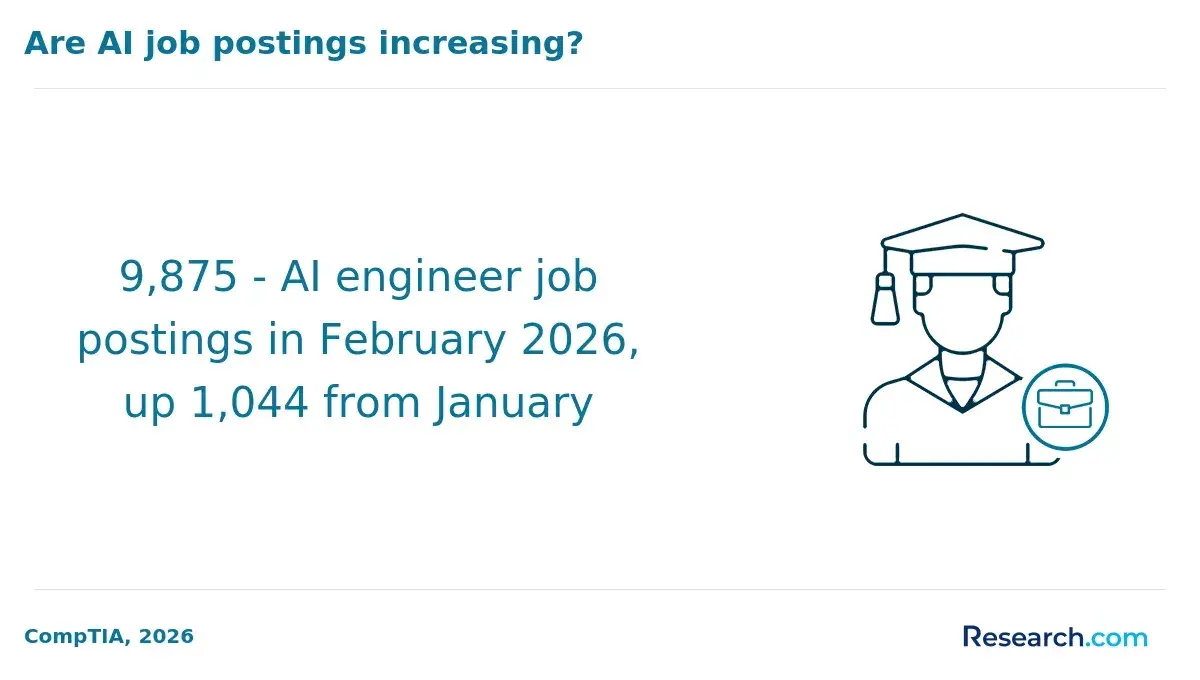
How do career paths and job roles differ for graduates of agentic AI vs generative AI programs?
Graduates of agentic AI programs typically pursue career opportunities and job roles that emphasize autonomy in decision-making and control systems. Common roles include autonomous robotics engineer, AI systems architect, and AI product manager. These positions demand creating AI agents capable of independent goal-setting, complex interactions, and adaptive behaviors in uncertain environments. Industries such as aerospace, defense, and advanced manufacturing often employ these graduates, where AI must operate with minimal human oversight.
In contrast, generative AI program graduate career pathways focus on creative content generation, natural language processing, and data synthesis. Job titles in this field commonly include generative AI specialist, prompt engineer, and machine learning engineer working with language or image models. These roles are highly sought after in marketing, entertainment, customer service, and software development sectors where novel text, images, or code production is essential.
Both agentic and generative AI fields offer strong salary prospects, with a reported 45% premium for positions requiring skills in these areas over comparable tech roles without such expertise. Career paths also vary technically: agentic AI emphasizes reinforcement learning, multi-agent coordination, and system integration for leadership roles. Generative AI prioritizes deep learning architectures, transformer models, and ethical AI use in innovation-driven companies developing conversational AI or content automation.
Prospective students should consider if they prefer advancing autonomous AI for self-directed systems or AI focused on content creation and augmentation. Exploring options such as an ms data science online degree can provide a strong foundation for either path.
What types of degrees and certificates are available in agentic AI and generative AI?
Degrees and certificates in agentic AI and generative AI vary notably, reflecting their different maturity and adoption levels. Generative AI professional certificates and diploma courses are widely accessible at universities and online platforms, often as certificates, minors, or concentrations within computer science and data science programs. These offerings focus on practical skills such as model training, prompt engineering, and deploying large language models and image synthesis tools.
Agentic AI degree programs and certification options, however, are less common due to the experimental nature of autonomous AI systems. Fewer than 20% of enterprises have deployed agentic AI technologies, so most education paths emphasize advanced research degrees like PhDs or specialized master's tracks in multi-agent reinforcement learning and AI safety. Certificates related to agentic AI typically come from specialized research institutes or labs rather than general public programs.
Students should consider these distinctions carefully, as generative AI courses provide job-ready skills for roles in content generation and AI-assisted design, while agentic AI education suits those aiming for research and system-level integration roles. Cross-disciplinary programs integrating ethics and robotics also support agentic AI expertise.
Professionals exploring AI education might also find value in exploring online cybersecurity degree programs for veterans, which can complement AI skills in many industries.
How do online and on-campus agentic AI and generative AI programs compare in quality and flexibility?
Agentic AI programs, offered both online and on-campus, provide greater scheduling flexibility than generative AI courses, making them ideal for working professionals. These programs focus on workflow integration and autonomous decision-making, often including hands-on projects with in-person collaboration. Conversely, generative AI courses tend to be more theory-focused and are typically available fully online, allowing students to learn asynchronously.
Agentic AI curricula often feature advanced enterprise tools and real-world case studies that demonstrate measurable business impacts. For instance, IBM's analysis found that agentic AI copilots save 30-50% more process time than standalone generative AI models during enterprise pilots, highlighting their practical advantage. This results in courses offering deeper operational insights and real-world applications.
Those prioritizing flexibility might choose online agentic AI programs with synchronous sessions or hybrid formats that blend remote lectures with on-campus workshops. Generative AI courses excel in foundational knowledge but may lack extensive operational exposure. Students aiming for careers in workflow automation and efficiency improvements benefit from agentic AI training with lab access, while those focused on research or content generation might find fully online generative AI courses adequate.
Institutions increasingly offer micro-credentials and certificates tailored to agentic AI skills, balancing quality education with learner flexibility.
What coursework and specializations are typically included in agentic AI and generative AI curricula?
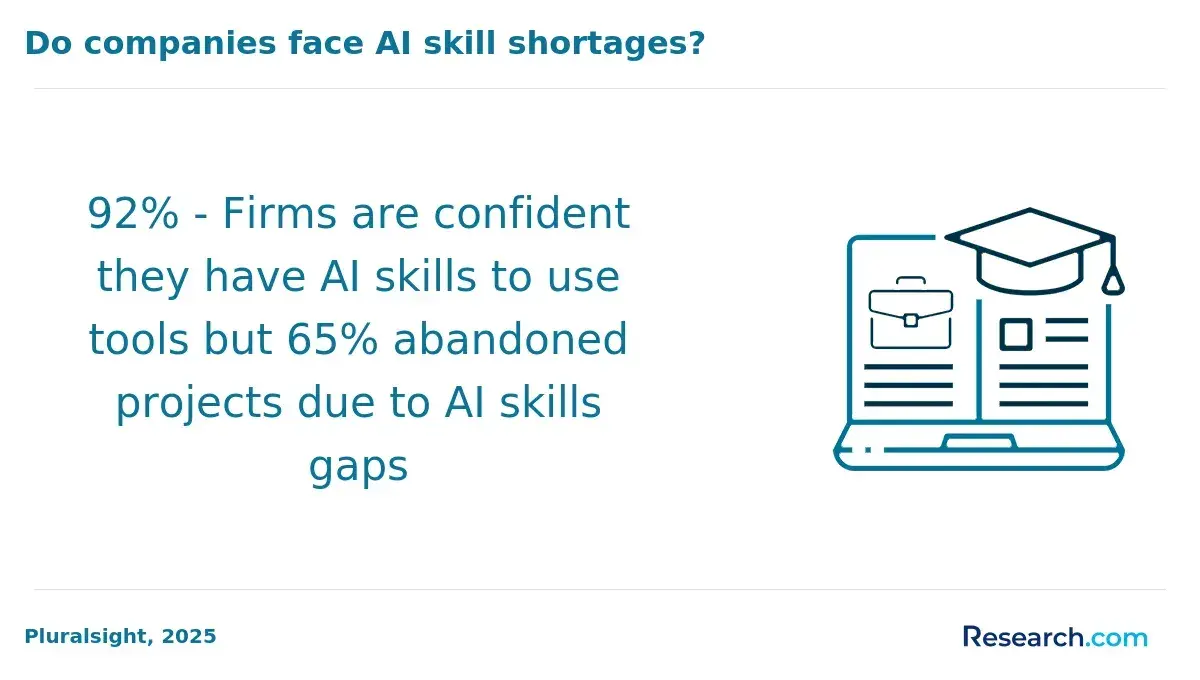
Agentic AI coursework emphasizes autonomy, orchestration, and tooling, preparing students to design and manage AI agents capable of executing complex tasks with minimal human input. Key topics include multi-agent systems, reinforcement learning, automated planning, and AI orchestration frameworks. Core skills develop around tool integration, decision-making algorithms, and real-time interaction with environments. With over 60% of organizations experimenting with generative AI reporting a major skills gap in this area, according to IBM's 2025 agentic AI skills and readiness survey, practical training is crucial. Modules often cover agent communication protocols and ethics related to autonomous systems.
The generative AI track focuses on foundational and applied machine learning methods used to generate new content. Coursework covers neural networks, transformers, natural language processing, computer vision, and generative adversarial networks (GANs). Specializations include text, image, and audio generation, as well as prompt engineering. Students gain experience with training and fine-tuning pre-trained models, understanding latent spaces, and evaluating model outputs. Common projects involve building chatbots, content creation tools, and creative AI applications.
Choosing between these paths depends on career objectives. Agentic AI suits roles in AI system integration and orchestration, demanding strong programming and system design skills for real-time problem solving. In contrast, generative AI aligns with research, development, and creative AI deployments, requiring deep learning expertise and creativity.
What admission requirements and prerequisites do U.S. schools set for these AI programs?
U.S. schools offering agentic AI and generative AI courses often have distinct admission requirements that reflect their specialized focus. Agentic AI programs typically require a strong background in computer science, including programming languages such as Python and Java. Applicants usually need prior coursework in algorithms, data structures, and machine learning fundamentals, with some programs expecting experience in autonomous systems or multi-agent frameworks. Graduate-level tracks often require a bachelor's degree in computer science, engineering, or related STEM fields, plus research or project experience involving AI agents.
Generative AI courses generally have broader prerequisites, welcoming students from fields like computer science, mathematics, and statistics, provided they have an understanding of neural networks and deep learning basics. Many programs offer accelerated preparatory modules for those new to these concepts.
The demand for agentic AI education is rapidly increasing. According to a Udacity 2025 topic demand snapshot, enrollments in agentic AI and AI agent courses have surged at a triple-digit percentage rate since 2023, outpacing generative AI growth.
Applicants should confirm specific program prerequisites, which may include GRE scores, letters of recommendation, or portfolios featuring AI-related projects. Working professionals often find part-time or certificate programs that emphasize practical experience over formal requirements.
How long do agentic AI and generative AI programs take and what do they cost to complete?
Agentic AI programs usually take 3 to 6 months to complete, reflecting their focus on automating strategic workflows and complex, multi-step tasks. These courses combine live instruction with project-based learning, which explains their longer duration and higher cost, typically ranging from $2,000 to $8,000. Corporate and specialized bootcamps often charge more due to hands-on experience.
Generative AI courses tend to be shorter, completed in 4 to 12 weeks, and generally self-paced. They emphasize creative content generation like text, images, or code and have a wider price range-from free introductory classes to $3,000 for advanced certifications.
ROI for agentic AI training can exceed 300% within a year, according to IBM's AI skills investment report, highlighting its value for roles that automate decision-making. Generative AI skills better suit creative industries and content creation.
Time, budget, and career goals should guide course selection. Agentic AI suits learners targeting automation-heavy jobs, while generative AI fits those pursuing content-driven roles.
What accreditation, certifications, or industry standards should these AI programs meet in the U.S.?
Agentic AI and generative AI programs in the U.S. should align with recognized accreditation and certification standards to maintain academic quality and industry relevance. Regional accreditations, such as those from the Accrediting Commission for Senior Colleges and Universities of the Western Association of Schools and Colleges (WASC) or the Middle States Commission on Higher Education (MSCHE), play a crucial role in validating the overall educational excellence of degree programs, which supports the credibility of AI curricula.
AI courses benefit from specific certifications, including those from the Institute of Electrical and Electronics Engineers (IEEE) and collaborations with industry leaders like Google AI or Microsoft Certified: Azure AI Engineer Associate. These highlight practical skills such as AI workflows, tool integration, and algorithmic ethics.
For programs within computer science or engineering, compliance with ABET (Accreditation Board for Engineering and Technology) standards ensures students gain expertise in designing secure and scalable AI systems that meet professional benchmarks.
With over half of new enterprise generative AI features by 2025 focusing on agent orchestration, integration, and automation (IBM, 2025), curricula that include hands-on projects in these areas-supported by certifications from AI industry consortia or cloud providers-offer strong preparation for careers.
Additionally, students should confirm whether programs address data privacy laws like CCPA or HIPAA, which are vital for AI applications in healthcare and finance sectors, ensuring training encompasses legal and ethical responsibilities crucial for deployment.
What are the salary expectations and job outlook for careers using agentic AI vs generative AI?
Salaries in agentic AI tend to be higher than those in generative AI due to the specialized skills required. Entry-level roles in generative AI, such as prompt engineers or AI content developers, typically start between $90,000 and $110,000 annually in the U.S. By comparison, agentic AI positions, which involve autonomous agents capable of complex decision-making, offer starting salaries from $110,000 to $140,000. Experienced agentic AI professionals often exceed $160,000, reflecting expertise in reinforcement learning and multi-agent systems.
Job prospects also differ significantly. IBM's 2025 assessment forecasts that agentic AI roles will comprise about one-third of advanced AI openings by 2027, highlighting a rising demand for professionals who can build autonomous AI systems. Meanwhile, generative AI jobs remain more plentiful but may experience slower wage growth as the technology becomes more mainstream.
Key skills for agentic AI careers include deep understanding of AI frameworks, simulation environments, and autonomous system safety. For generative AI, proficiency in natural language processing, large language model tuning, and creative application development is critical. Both paths lead to sectors like robotics, autonomous vehicles, and intelligent virtual assistants, yet agentic AI's complexity often commands a salary premium and offers long-term career stability.
Other Things You Should Know About Artificial Intelligence
Both agentic AI and generative AI courses typically cover important ethical topics such as bias, transparency, and responsible AI use. Agentic AI courses emphasize the implications of autonomous decision-making systems, while generative AI courses focus more on content generation risks, including misinformation and deepfakes. Understanding these ethical challenges is critical for developing trustworthy AI applications.
Yes, having programming experience, especially in languages like Python, can significantly ease the learning process in both agentic and generative AI courses. Programming fundamentals help students understand algorithm design, model development, and data manipulation, which are essential in AI coursework. However, many programs offer introductory classes or prerequisites to build these skills if students have limited coding background.
Hands-on learning is a key component in both types of AI courses to ensure practical skill development. Students engage with real data sets, build AI models, and work on projects that simulate industry challenges. Agentic AI programs might include simulations of autonomous agents, whereas generative AI classes often involve creating and refining models such as language or image generators.
References
- Agentic AI Jobs in 2026: Skills, Careers & Industry Demand https://online.iitkgp.ac.in/blog/agentic-ai-jobs
- Agentic AI vs. generative AI: What sets them apart https://www.zendesk.fr/blog/ai/agentic-ai/agentic-ai-vs-generative-ai/
- Best AI platforms for school admissions and enrollment in the US? https://www.schoolxp.ai/post/best-ai-platforms-for-school-admissions-and-enrollment-in-the-us
- Horizon University College, UAE https://www.hu.ac.ae/it-hub/artificial-intelligence/ai-in-education-generative-agentic-systems
- How to Pick the Right Generative AI or Agentic AI Program Without Overpaying or Wasting Money https://dev.to/rahul_saxena_09/how-to-pick-the-right-generative-ai-or-agentic-ai-program-without-overpaying-or-wasting-money-20g1
- Guidance on the Responsible Use of Artificial Intelligence (AI) in Accredited Continuing Education (CE) - ACCME https://accme.org/resource/guidance-on-ai/
- Agentic AI Courses: Top Certifications & Learning Resources 2026 https://planetarylabour.com/articles/agentic-ai-courses
- Cost Guide: Agentic AI Deployment – Pricing and Planning https://www.gravitee.io/blog/cost-guide-agentic-ai-deployment-pricing-and-planning
- ANAB-Accredited ISO 42001 Certification for Responsible AI Governance https://www.schellman.com/services/ai-governance/iso-42001
- Agentic AI https://www.deeplearning.ai/courses/agentic-ai