2027 Best NLP Courses With Python Projects

Co-Founder and Chief Data Scientist
Many professionals with non-technical backgrounds aim to transition into artificial intelligence but struggle to find practical, project-based learning that bridges theory and real-world application. The challenge lies in acquiring relevant skills, such as natural language processing (NLP), alongside hands-on Python experience to stand out in a competitive job market.
Without structured guidance, navigating course options can be overwhelming and inefficient. This article reviews the best NLP courses featuring Python projects designed for individuals seeking a credible, flexible pathway into artificial intelligence careers.
Key Things You Should Know
- Top NLP courses with Python projects in 2026 emphasize hands-on experience, addressing a 35% job market growth in NLP roles predicted by 2025 in the U.S.
- Courses integrate transformer models like GPT and BERT, reflecting breakthroughs from 2024-2025 that enhance natural language understanding and generation.
- Certification completion rates climbed by 22% in 2025, signaling growing demand for practical NLP skills aligned with industry needs and real-world applications.
Advance Your Career with AI Online Courses
Artificial Intelligence: Implications for Business Strategy
This program provides an introduction to Artificial Intelligence and their implications for business strategy. Earn an official digital certificate.

Oxford Artificial Intelligence Programme
Explore this Oxford Artificial Intelligence programme offered in a flexible learning environment and explore topics like machine learning, automation, and robotics.

Implementing Agentic AI: Building Your Organizational Playbook
This online MIT Agentic AI course offers a practical approach to deploying AI agents in your organization, including a custom playbook. 3 weeks, exclusive launch price.

AI Adoption: Driving Business Value and Impact
This online MIT AI Adoption: Driving Business Value and Impact offers practical frameworks to close the gap between AI potential and business reality.

Artificial Intelligence in Pharma and Biotech
Discover the applications and limitations of artificial intelligence in pharma and biotech with this MIT online short course.

What are the best NLP courses with Python projects?
Top natural language processing courses with Python projects emphasize hands-on experience in key NLP techniques. Stanford's "Natural Language Processing with Deep Learning" course explores transformers, attention mechanisms, and practical Python applications such as sentiment analysis and machine translation.
For beginners, the "Applied Text Mining in Python" course from the University of Michigan offers valuable projects on text preprocessing, classification, and topic modeling using libraries like NLTK and scikit-learn, making it one of the best Python NLP projects and courses for beginners.
Deeplearning.ai's "Deep Learning Specialization" includes a focused NLP segment covering sequence models and recurrent neural networks with Python coding exercises. Fast.ai's "Practical Deep Learning for Coders" supports rapid prototyping of NLP systems through interactive Python notebooks, addressing tasks like text generation and named entity recognition.
These courses provide:
- A clear learning progression from basic text handling to advanced neural methods.
- Projects demonstrating chatbot development, summarization, and sentiment classification.
- Integration with Python frameworks such as TensorFlow and PyTorch.
- Realistic datasets and exercises to simulate natural language challenges.
Growing demand for NLP skills is evident as employment for related roles is expected to increase by 35% from 2022 to 2032, highlighting the career value of mastering Python-based NLP techniques.
Students seeking to combine computer science education with these practical skills may consider pursuing an accelerated bachelor's degree computer science online to advance their understanding and industry readiness in artificial intelligence and machine learning fields.
Advance Your Career with AI Online Courses
Artificial Intelligence: Implications for Business Strategy
This program provides an introduction to Artificial Intelligence and their implications for business strategy. Earn an official digital certificate.
Oxford Artificial Intelligence Programme
Explore this Oxford Artificial Intelligence programme offered in a flexible learning environment and explore topics like machine learning, automation, and robotics.
Implementing Agentic AI: Building Your Organizational Playbook
This online MIT Agentic AI course offers a practical approach to deploying AI agents in your organization, including a custom playbook. 3 weeks, exclusive launch price.
What topics do NLP courses with Python projects cover?
NLP courses with Python projects focus on essential natural language processing techniques with Python projects like tokenization, stemming, lemmatization, and stopword removal to preprocess text data effectively. These foundational skills lead into advanced syntax and grammar parsing using libraries such as spaCy and NLTK to identify meaningful linguistic patterns.
Machine learning applications in NLP courses cover classification, sentiment analysis, and topic modeling using algorithms like Naive Bayes, Support Vector Machines, and neural networks. Deep learning modules often include recurrent neural networks (RNNs), long short-term memory (LSTM) networks, and transformers, targeting tasks such as named entity recognition, machine translation, and question answering.
Hands-on projects apply these skills to build chatbots, text summarization tools, and predictive text generators. Students learn to use Python libraries like TensorFlow, PyTorch, and Hugging Face transformers in practical settings and tackle challenges such as imbalanced datasets, feature engineering, and model deployment.
Evaluation metrics like precision, recall, F1-score, and BLEU are taught to help students interpret and optimize model performance. According to a Coursera survey, 87% of learners completing online courses reported career benefits within 12 months, highlighting the importance of courses that blend theory with applied Python experience.
For those considering further education in related STEM fields, exploring an online mechanical engineering degree can open additional career pathways.
How do you choose an accredited NLP program?
Choosing among natural language processing certification programs in the US demands close attention to curriculum quality, accreditation, and hands-on learning opportunities. Programs that integrate project-based learning, especially with Python, are highly recommended since practical experience with libraries like spaCy, NLTK, or Hugging Face helps solidify complex NLP techniques.
Codecademy highlights that learners who complete at least one guided project in a skill path are 2.5 times more likely to finish the full path, underscoring the importance of applied practice.
When selecting the best accredited NLP courses with hands-on Python projects, verify the program's accreditation by recognized educational or industry organizations to ensure academic and professional credibility. It is essential that curricula stay up to date with innovations such as transformer models, sentiment analysis, and text generation.
Consider diverse course delivery formats—whether asynchronous, live, or hybrid—that accommodate your schedule. Qualified instructors with industry experience often enhance comprehension of sophisticated algorithms and Python tools.
Support mechanisms such as mentorship and vibrant learning communities foster motivation and practical problem-solving. Reviewing alumni success and job placement rates can further inform your decision.
For those comparing costs, exploring options like the cheapest online data science masters programs may also provide pathways into data science and AI research roles aligned with strong NLP training.
Are online NLP courses better than campus programs?
Online NLP courses with Python projects offer greater flexibility and quicker adaptation to emerging technologies compared to campus programs. While traditional campus-based courses often have fixed curricula that can lag behind rapid advances in natural language processing, many online platforms incorporate practical Python projects using state-of-the-art models like transformers. This approach helps learners develop market-ready skills that are directly applicable to industry roles.
DataCamp statistics reveal that enrollment in its "Natural Language Processing in Python" track grew by over 60% between 2022 and 2024, reflecting a strong preference for accessible, up-to-date training. Working professionals especially benefit from the self-paced nature of online learning, which balances study with job and personal commitments and emphasizes hands-on coding experience to improve job readiness.
Key advantages of online courses include extensive peer and mentor support, active discussion forums, and career resources that can rival traditional campus networking. However, campus programs may be preferable for students seeking formal accreditation or a solid theoretical foundation, typically at bachelor's or master's levels.
The choice between campus vs. online NLP course advantages depends on individual goals. For those aiming for rapid skill acquisition and immediate application in data science or AI roles, online options remain a more efficient pathway. For foundational knowledge paired with academic credentials, campus programs hold value.
Those interested in advancing their careers in fast-evolving tech fields may also consider pursuing a fast cyber security degree to complement their NLP expertise.
What are the admission requirements for NLP courses?
Admission requirements for NLP courses in 2026 typically demand a strong foundation in programming, mathematics, and linguistics. Proficiency in Python and familiarity with libraries like NLTK, SpaCy, or TensorFlow are commonly expected. A solid grasp of statistics, linear algebra, and calculus helps students understand machine learning models underlying NLP techniques.
Some advanced programs require prior coursework or experience in machine learning or data science. Applicants without coding experience should consider introductory programming courses or beginner-friendly NLP classes that provide hands-on Python projects and guidance. Graduate-level NLP specializations often require a bachelor's degree in computer science, engineering, mathematics, or related STEM fields.
Professionals in data analytics or software development with demonstrated Python skills are frequently accepted into certificate programs aimed at upskilling or reskilling. Online platforms may offer flexible prerequisites, allowing learners to start without formal degrees but requiring completion of preparatory modules.
Hands-on project experience in text preprocessing, sentiment analysis, topic modeling, and language model implementation is essential. Employers expect practical skills applying NLP techniques to real-world data. According to Coursera's 2025 GenAI skills report, enterprise enrollments in advanced AI and NLP specializations increased by more than 1,500% between 2023 and 2025, emphasizing the growing demand for expertise in large language models.
How long do NLP courses take and what do they cost?
NLP courses vary in length, typically lasting from 4 to 12 weeks depending on the course format and depth. Bootcamp-style options generally take 4 to 6 weeks and emphasize practical Python projects, while comprehensive university-backed professional certificates extend from 8 to 12 weeks and blend theory with hands-on coding and real-world applications. Self-paced choices allow flexibility to fit individual schedules.
Costs range significantly: entry-level courses available on online platforms cost between $30 and $100, whereas university-affiliated certificates often run from $400 to over $1,000, reflecting their extensive curricula and credential recognition. Payment options commonly include one-time fees, monthly subscriptions, or financial aid for eligible learners.
Career benefits differ between university-backed and platform-based certificates. Data from Coursera shows 81% of learners with university-affiliated certificates reported career improvements, compared with 69% for non-university tracks. This gap indicates stronger employer recognition and potential salary growth for university-supported programs.
Working professionals or graduates might find value in longer certificates with stronger industry credibility, while those with limited time or budgets may prefer shorter, focused courses to build project portfolios.
What Python projects are included in NLP training?
Python projects in NLP training develop skills in text processing, model building, and domain-specific challenges. Common projects include sentiment analysis on social media, entity recognition in news articles, and text summarization for long documents. These teach essential techniques like tokenization, part-of-speech tagging, and dependency parsing using libraries such as NLTK, spaCy, and Hugging Face Transformers.
Advanced tasks often focus on creating chatbots with natural language understanding and recommendation systems utilizing user reviews. Trainees also engage in language model fine-tuning, applying transfer learning to specialized corpora.
Industry-specific projects—such as financial news classification, healthcare record de-identification, and legal document analysis—reflect high market demand. McKinsey estimates generative AI and NLP could generate $60-110 billion annually for banking and $50-100 billion for retail, underscoring the value of mastering context-aware models tailored to jargon, regulations, and domain sensitivities.
Additional work covers text generation, topic modeling, and multilingual NLP to prepare for global roles. Training with real-world datasets and cloud deployment equips students for practical challenges in the field.
Look for courses featuring diverse projects, clear deliverables, and guidance on evaluation metrics like precision, recall, and F1 scores. Building a strong portfolio is critical for standing out to employers targeting actionable NLP solutions.
What jobs can you get after an NLP course?
Completing an NLP course with Python projects opens doors to high-demand technology roles such as natural language processing engineer, machine learning engineer, data scientist, and AI researcher. These professionals create algorithms enabling machines to understand and generate human language, develop chatbots, improve search engines, and analyze social media sentiment.
Other career opportunities include computational linguist, where language expertise meets programming, and data analyst roles focusing on text data. Business roles like AI product manager or technical consultant also become viable with hands-on NLP and Python experience.
Building a portfolio with at least three applied AI or machine learning projects significantly increases employability. According to LinkedIn's 2024 Workplace Learning Report, job seekers displaying multiple projects receive roughly 50% more recruiter contacts. These projects showcase coding skills and real-world problem-solving ability—key factors for hiring.
Examples of strong projects include sentiment analysis tools and named entity recognition systems using NLP libraries like NLTK, SpaCy, or transformers. Tailoring projects to sectors such as healthcare text mining or financial sentiment prediction further enhances relevance and job-market appeal.
What salary can NLP professionals expect?
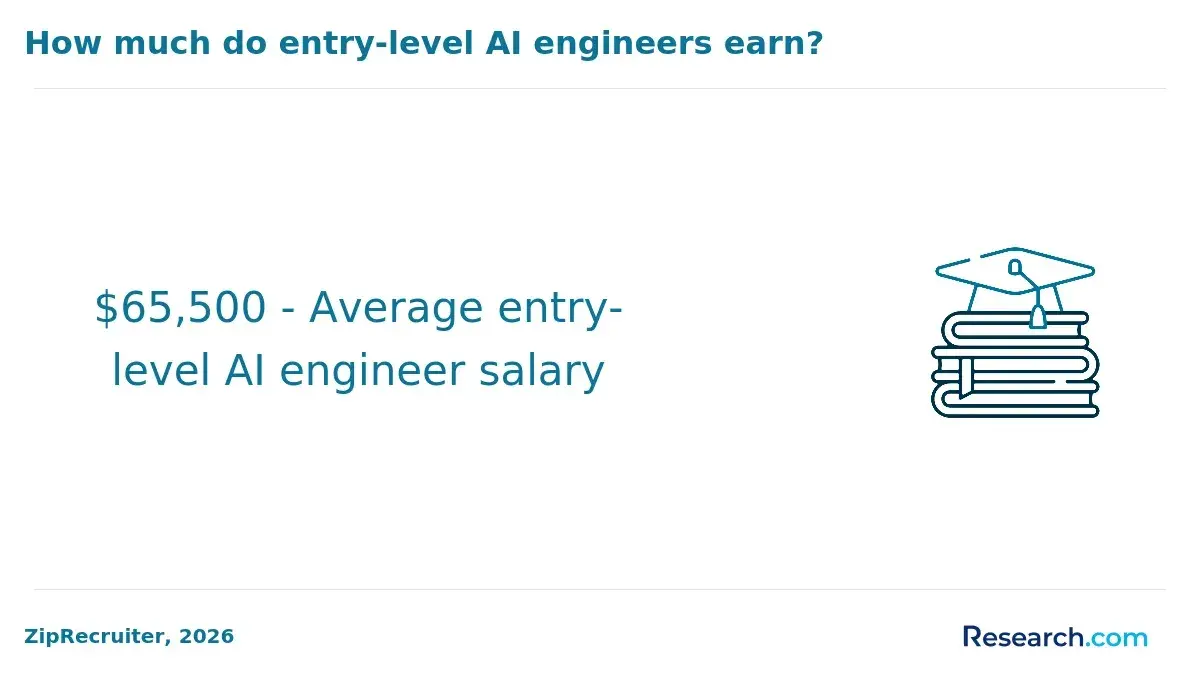
NLP professionals in the United States can expect starting salaries generally ranging from $85,000 to $110,000 annually, influenced by education, experience, and location. Mid-level experts typically earn between $120,000 and $150,000, while senior NLP engineers and research scientists often surpass $180,000. Compensation varies significantly by industry, with tech giants and finance firms offering the highest pay compared to academic or nonprofit sectors.
Proficiency in Python-based projects—such as natural language understanding, generation, and model tuning—provides a strong advantage in salary negotiations. Real-world project experience highlights practical skills essential for roles focused on development and deployment. Mastering complex NLP pipelines alongside frameworks like TensorFlow or PyTorch correlates with notable salary growth. Skills in adjacent fields, including machine learning engineering or data engineering, can increase pay by 10-20% annually.
Investing in continuous learning is vital. DataCamp's internal analytics indicate paid course subscriptions have 2-3 times higher completion rates than free options, suggesting financial commitment enhances follow-through, job readiness, and salary prospects.
Job seekers should prioritize roles emphasizing Python-based NLP projects and develop certifications or portfolios that demonstrate applied expertise. Quantifying contributions to NLP applications during negotiations can further improve compensation.
What certifications help validate NLP skills?
Certifications that validate NLP skills offer concrete evidence of expertise and boost employability in a fast-changing field. Key credentials come from tech leaders and educational platforms blending theoretical understanding with practical Python projects.
For example, the Google Cloud Professional Machine Learning Engineer certification tests proficiency in deploying and managing machine learning models, including core natural language processing techniques. Likewise, the DeepLearning.AI Natural Language Processing Specialization on Coursera provides hands-on programming assignments and projects using Python, which help learners demonstrate real-world NLP abilities.
Other important options include Microsoft's Azure AI Engineer Associate certification, which validates skills in integrating AI models with applications focusing on natural language understanding. IBM's AI Engineering Professional Certificate also emphasizes NLP within wider AI education, using extensive Python coding exercises. These programs vary by focus—some prioritize system deployment, others algorithmic innovation or applied project experience.
Employers increasingly seek candidates who can build, fine-tune, and deploy NLP models, not just those familiar with theory. Certifications featuring true Python projects give candidates an advantage by proving practical coding and implementation skills.
According to the World Economic Forum's 2025 "Future of Jobs" report, AI and machine learning specialists—NLP engineers included—are the fastest-growing job family, with demand projected to rise about 40% in five years. Pursuing certifications with hands-on Python experience aligns well with these hiring trends and skill needs.
Other Things You Should Know About Artificial Intelligence
Developing artificial intelligence systems involves challenges such as managing large datasets, ensuring algorithmic fairness, and avoiding biases in the training data. Another significant hurdle is creating models that can generalize well beyond their training environments. Additionally, maintaining transparency and explainability in AI decision-making remains a key concern for developers.
Artificial intelligence systems often rely on vast amounts of personal data, raising concerns about privacy and data security. Improper handling or inadequate safeguards can lead to unauthorized data access or misuse. Regulations like GDPR and CCPA aim to protect individuals, but ethical AI development must prioritize transparency and consent to mitigate privacy risks.
In 2027, some of the best NLP courses with Python projects include "Natural Language Processing with Python" by the University of Michigan on Coursera, "Advanced Natural Language Processing" on edX by IBM, and "Chatbot Development with Python" on Udemy. These courses offer hands-on projects to solidify learning.
Artificial intelligence can simulate certain creative tasks such as generating artwork, composing music, or writing text by learning patterns from data. However, this form of creativity is fundamentally different from human creativity, as it is based on algorithms and training data rather than original thought or consciousness. AI-generated creativity is primarily a product of programmed models and data input.
References
- What Can You Do With an NLP Certification? https://nlptopcoach.com/what-can-you-do-with-an-nlp-certification/
- How to select an ICF approved program https://nlpcoach.in/how-to-select-an-icf-approved-program/
- Online NLP classes Versus Live Training: What should I do? | NLP Training Concepts https://nlptrainingconcepts.com/2020/01/02/online-nlp-classes-versus-live-training-what-should-i-do/
- Certificate in AI & Natural Language Processing https://www.europeanscrum.org/certificate-in-natural-language-processing.html
- Top Career Opportunities After NLP Training in the Netherlands https://coachtransformation.com/top-career-opportunities-after-nlp-training-in-the-netherlands/
- NLP Certification Guide https://thoughtlabs.co/nlp-certification-guide/
- Apply Natural Language Processing with Python | Codecademy https://www.codecademy.com/learn/paths/natural-language-processing
- NLP Training Courses | Certified UK NLP Training https://nlpuktraining.com/
- Which NLP Certification Is Right for You? Practitioner vs Master vs Integrated Tracks Explained for Mumbai, Pune, Delhi, Bangalore, London, New York & Singapore https://www.anildagia.com/solutions/nlp/positioning/which-nlp-certification-is-right-for-you