2027 Best AI Adoption Courses for Product Catalog Teams

Co-Founder and Chief Data Scientist
Product catalog teams face constant pressure to streamline workflows and enhance data accuracy amid growing market demands. Many struggle to integrate artificial intelligence tools effectively, resulting in missed opportunities and productivity losses. Without focused training, teams find it difficult to harness AI's potential for automating tasks, improving search relevance, and managing large datasets.
This knowledge gap can stall digital transformation efforts and limit competitive advantage. This article reviews top AI adoption courses designed specifically for product catalog professionals, providing guidance on flexible, accredited learning options that help bridge skill gaps and accelerate AI integration within their organizations.
Key Things You Should Know
- In 2026, AI adoption courses for product catalog teams emphasize practical skills in machine learning integration and automation to enhance data accuracy and operational efficiency.
- Recent studies show a 40% productivity increase in teams trained with AI tools, highlighting the growing demand for specialized AI education in product management.
- Top courses focus on Python, data analytics, and AI-driven cataloging techniques, reflecting industry needs for versatile technical proficiency and decision-making capabilities.
Advance Your Career with AI Online Courses
Artificial Intelligence: Implications for Business Strategy
This program provides an introduction to Artificial Intelligence and their implications for business strategy. Earn an official digital certificate.

Oxford Artificial Intelligence Programme
Explore this Oxford Artificial Intelligence programme offered in a flexible learning environment and explore topics like machine learning, automation, and robotics.

Implementing Agentic AI: Building Your Organizational Playbook
This online MIT Agentic AI course offers a practical approach to deploying AI agents in your organization, including a custom playbook. 3 weeks, exclusive launch price.

AI Adoption: Driving Business Value and Impact
This online MIT AI Adoption: Driving Business Value and Impact offers practical frameworks to close the gap between AI potential and business reality.

Artificial Intelligence in Pharma and Biotech
Discover the applications and limitations of artificial intelligence in pharma and biotech with this MIT online short course.

What are AI adoption courses for product catalog teams and who are they best for?
AI adoption training for product catalog teams offers specialized programs that equip employees with skills to effectively integrate artificial intelligence tools into product data management. These best courses on AI implementation in product catalog management focus on enhancing accuracy, speed, and consistency by automating data enrichment, classification, error detection, and predictive analytics tailored to product listings.
Ideal candidates include product managers, catalog specialists, data analysts, and e-commerce professionals who manage large and complex product assortments. These roles often encounter challenges such as inconsistent data entry, slow updates, and maintaining high-quality product details across multiple sales channels. Such courses provide practical techniques to automate routine tasks and improve decision-making, reducing downtime and costly errors.
For instance, training might cover machine learning models for automated tagging of product attributes or how AI-powered analytics can predict customer demand and optimize catalog content. Workers proficient in these tools have shown substantial improvements; a large-scale experiment by Boston Consulting Group found AI users delivered 27% higher productivity and 40% better quality work compared to non-users.
Professionals interested in advancing their careers through AI should consider an artificial intelligence degree, which provides a strong foundation to support AI adoption within various business functions.
Advance Your Career with AI Online Courses
Artificial Intelligence: Implications for Business Strategy
This program provides an introduction to Artificial Intelligence and their implications for business strategy. Earn an official digital certificate.
Oxford Artificial Intelligence Programme
Explore this Oxford Artificial Intelligence programme offered in a flexible learning environment and explore topics like machine learning, automation, and robotics.
Implementing Agentic AI: Building Your Organizational Playbook
This online MIT Agentic AI course offers a practical approach to deploying AI agents in your organization, including a custom playbook. 3 weeks, exclusive launch price.
How can AI adoption training improve product catalog accuracy, speed, and revenue impact?
AI adoption training boosts product catalog accuracy by empowering teams to use machine learning models for automated error detection and correction. This training reduces manual data-entry mistakes by up to 40%, ensuring product details remain consistent and reliable across platforms. The impact of AI training on catalog speed and revenue is clear as employees learn to apply AI tools that speed up catalog updates and product classification.
Revenue growth is further driven through AI-powered personalization and dynamic pricing strategies. Product catalog teams trained in AI can deploy algorithms that analyze customer behavior to optimize listings, increasing conversion rates and average order values. For example, integrating recommendation engines helps boost related product sales without extra marketing costs.
Given that LinkedIn's 2024 Future of Work Report shows nearly 75% of global knowledge workers use AI at work, proficiency in these tools has become a key competitive advantage. Practical AI adoption training addresses challenges like integrating AI within workflows, understanding model limitations, and managing data privacy. Benefits include:
- Automated data validation reducing errors and inconsistencies
- Faster onboarding of new products through AI-assisted tagging
- Optimized inventory management informed by AI demand forecasting
- Improved cross-functional collaboration using AI analytics dashboards
Those interested in pursuing relevant education can explore mechanical engineering online degrees as part of STEM fields that increasingly emphasize AI skills for career advancement.
What types of AI adoption courses exist for product catalog teams and how do they differ?
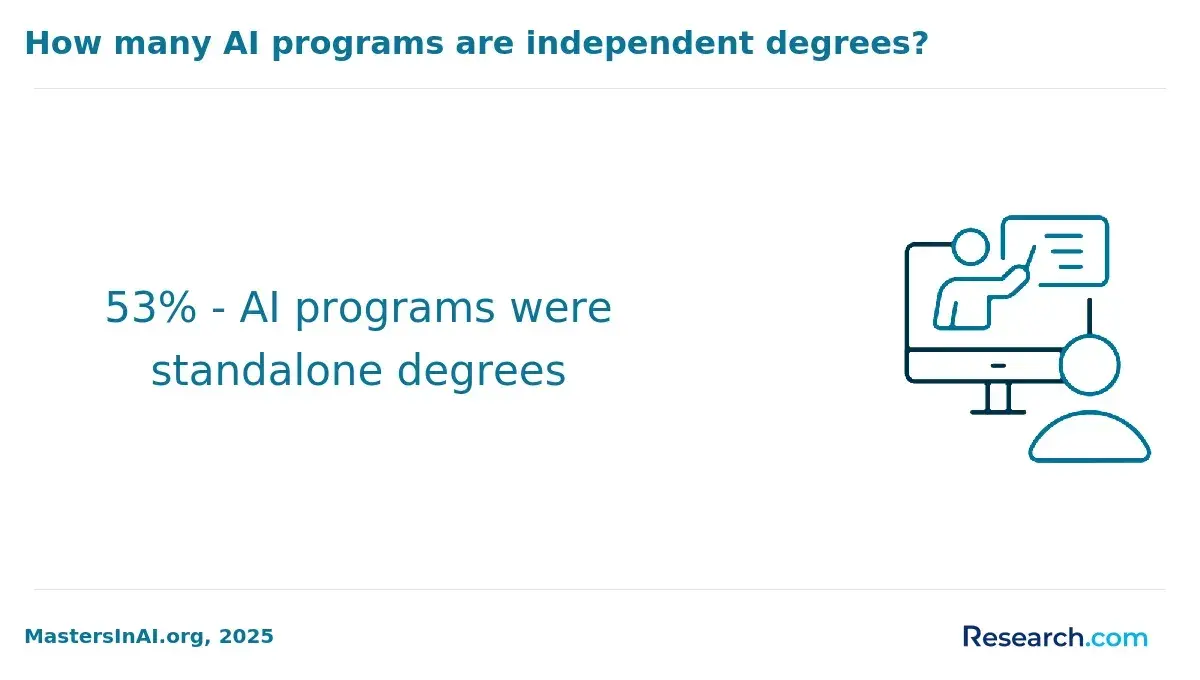
AI adoption training for product catalog management typically falls into three main categories: foundational, technical, and operational. Foundational courses introduce key AI concepts such as machine learning, data processing, and automation principles, providing non-technical staff with an understanding of AI's role in enhancing workflows.
Technical courses offer practical skills like data annotation, AI model training, and integrating AI tools within catalog management systems. These are ideal for data analysts and engineers focused on customizing AI solutions. For example, natural language processing (NLP) training improves product attribute extraction and categorization accuracy.
Operational courses focus on embedding AI into daily catalog workflows, covering change management, collaboration across teams, and monitoring AI system performance. These courses help professionals measure AI impact, troubleshoot issues, and optimize automation for better productivity.
Each type of course addresses different needs but together they build a complete skill set necessary for effective AI integration. According to McKinsey's research, companies adopting AI at scale see 3-15% improvements in supply chain costs and 15-30% productivity increases in data-heavy processes like product catalog management. Teams should choose courses based on roles and AI maturity to ensure targeted skill development.
Professional growth in this field may also be supported by continuing education such as pursuing the best online data science master's, which further deepen technical expertise essential for advanced AI solutions within catalog teams.
What should you look for in the curriculum of an AI adoption course for catalog work?
Effective AI adoption strategies for product catalog teams require a curriculum that balances practical skills with catalog-specific applications. Essential topics include data management fundamentals such as cleansing, transformation, and enrichment to ensure high data quality. Machine learning basics should focus on product classification, image recognition, and recommendation systems. Technical skills must cover natural language processing (NLP) to handle product descriptions and metadata.
Strong curricula emphasize hands-on projects replicating real-world catalog issues like automating SKU categorization or detecting errors in product attributes. Given the sensitivity of consumer data, AI ethics and data privacy modules are indispensable. Training should also introduce common industry AI tools and platforms, including Python libraries like TensorFlow and scikit-learn, as well as cloud AI services, ensuring immediate workforce relevance.
Curriculum essentials for effective AI catalog training must address evolving skill demands. The World Economic Forum's 2025 Future of Jobs report highlights that 44% of workers' core skills will change soon, and 60% will require training by 2027 because of AI and automation. Therefore, programs should prioritize adaptability, upskilling strategies, and the ability to interpret and validate AI outputs for accuracy in catalog contexts.
Measuring improvements from AI adoption through efficiency gains like reduced product onboarding time or enhanced recommendation accuracy helps students see tangible results. Courses offering continuous learning resources and community support enable professionals to sustain skills amid fast-evolving AI tools and best practices.
For those looking for foundational education pathways, a computer science bachelor degree online can provide relevant training and a stepping stone to specialize further.
How do online AI adoption programs compare with campus or hybrid options for catalog teams?
Online ai adoption programs offer unmatched flexibility for product catalog teams, allowing professionals to balance training with full-time work. This is crucial in fast-paced e-commerce environments, where 80% of organizations plan to integrate generative ai into catalog operations by 2026, according to Gartner's 2024 survey.
Campus programs provide immersive networking experiences but require fixed schedules and geographic relocation, which can slow down applying learned concepts. Hybrid formats try to blend these benefits but may introduce commuting challenges and reduce flexibility.
Online courses are often modular and regularly updated, covering tools like natural language processing for product descriptions and AI-driven merchandising algorithms. They include interactive features such as live coding labs, AI simulation platforms, and real-time feedback, essential for teams meeting aggressive AI adoption deadlines, especially given the jump from 10% adoption in 2023 to widespread use by 2026.
Candidates should seek programs with specialized AI modules in product content automation and digital merchandising analytics. Look for verified certifications and partnerships with AI providers to enhance credibility and job prospects. Cohort-based learning and mentorship are increasingly available through forums and virtual meetups within online options.
How can you verify accreditation and institutional quality for AI-focused catalog programs?
Verifying accreditation and institutional quality for AI-focused catalog programs requires careful scrutiny of recognized standards. Confirm whether the program holds accreditation from a U.S. Department of Education (USDE) recognized agency. Institutional accreditation from regional bodies like the Middle States Commission on Higher Education (MSCHE) or Western Association of Schools and Colleges (WASC) ensures broad educational quality.
Additionally, programmatic accreditation, such as that from the Computing Accreditation Commission (CAC) under ABET, offers assurance relevant to computing and AI-specific curricula. Check that the curriculum aligns with industry standards and covers key AI competencies. Review detailed course descriptions and faculty qualifications; instructors with active AI research or industry experience often provide more practical, applied learning.
Transparency in outcome metrics-like graduation rates, job placement, and employer partnerships-is vital. Look for programs offering internships or capstone projects with product catalog companies, demonstrating real-world relevance. Programs that include training in emerging AI tools related to catalog management and data operations can provide a competitive edge. Beware of unverified claims about career benefits.
According to ZipRecruiter's 2024 marketplace data, roles demanding AI skills pay an average of $23,000 more annually than those without such requirements, highlighting the financial advantages of high-quality education with verifiable standards.
What are typical admission requirements and prerequisites for AI adoption courses in this field?
Admission to AI adoption courses for product catalog teams generally requires a combination of education, technical skills, and relevant experience. Candidates typically need a bachelor's degree in fields like computer science, business analytics, IT, or engineering. Some advanced programs may accept applicants who demonstrate strong work experience in product management, data analysis, or software development instead of formal degrees.
Essential prerequisites include foundational skills crucial for AI implementation in product catalogs:
- Basic programming knowledge in Python or R, widely used in AI frameworks.
- Familiarity with data structures and databases, important for handling large product datasets.
- Understanding key machine learning methods such as supervised and unsupervised learning.
- Experience using data visualization tools to analyze AI-driven insights.
Proficiency in cloud platforms like AWS, Google Cloud, or Azure is often expected, reflecting industry standards for deploying scalable AI solutions. Some courses also require candidates to present a portfolio or projects showcasing applied skills on real product data challenges.
According to a 2024 IBM Global AI Adoption study, 44% of organizations are boosting investments in AI training. Those with strategic investments are 2.6x more likely to realize significant business value. Meeting these requirements helps students align with market demands and contribute effectively from day one.
How long do AI adoption courses for product catalog roles take and what do they cost?
AI adoption courses for product catalog roles vary in duration from short 4- to 8-week programs focusing on core AI applications in catalog management and automation, to comprehensive 3- to 6-month courses that cover machine learning fundamentals, AI-driven analytics, and scalable implementation strategies.
These extended courses often include project-based learning with real-world datasets, helping professionals gain practical skills for managing large product catalogs and optimizing workflows. Costs fluctuate based on course scope, provider reputation, and delivery format. Online certificate programs usually range from $500 to $3,000, while university-affiliated programs or specialized bootcamps can exceed $5,000.
Examples include a 12-week online course focused on AI for product operations priced around $1,200, and a 6-month university extension program costing between $4,000 and $6,000. Many employers subsidize these programs due to the significant return on investment; for instance, Accenture's 2024 AI report points out that companies delaying AI adoption risk a 20% profitability gap by 2030, especially in data-intensive fields like catalog management.
Choosing the right program depends on your career goals and experience level. Early-career professionals may prefer affordable, shorter courses for quick skill gains, while managers and data specialists benefit from thorough programs combining technical expertise with strategic AI applications in product catalog workflows.
What career paths, job titles, and industries can AI-trained product catalog specialists pursue?
AI-trained product catalog specialists have a wide range of career opportunities across multiple industries. Common job titles include product data analyst, catalog manager, AI integration specialist, and data quality engineer. These roles focus on enhancing product data accuracy, optimizing metadata, and using machine learning-powered automation to boost catalog management efficiency.
Industries that benefit from these skills include e-commerce, retail, manufacturing, and logistics. For instance, e-commerce specialists improve search relevance and personalization by structuring product data using AI. In manufacturing, better cataloging streamlines inventory and supplier communications, while logistics companies leverage AI expertise to optimize product classification for improved tracking and distribution.
With AI training, specialists can also transition to positions such as AI product manager or data strategist, roles requiring strategic decision-making based on data analytics and AI applications in product lifecycles. Additionally, paths to business intelligence analyst and machine learning operations (MLOps) assistant roles are available, where catalog data supports AI model training and deployment.
The 2024 Coursera Skills Report finds that learners completing structured AI and data courses are 35% more likely to gain promotions, new positions, or salary increases than those relying on unstructured tutorials.
What salaries, job outlook, and certification options exist for AI-focused catalog professionals?
Salaries for AI-focused product catalog professionals in the U.S. typically range from $75,000 to over $140,000 annually, depending on experience and industry sector. Entry-level positions start around $75,000 to $90,000, while senior specialists and managers with strong AI and product management expertise can earn more than $130,000.
Job growth remains strong, with the U.S. Bureau of Labor Statistics projecting a 15% increase in tech-related product management roles through 2032, driven by expanding AI use in retail, e-commerce, and manufacturing. Certification plays a key role in advancing careers in this field. Important credentials include the Certified Product Manager (CPM) alongside specialized AI certifications such as IBM's Applied AI Professional Certificate and Google's Professional Machine Learning Engineer certification.
These demonstrate both product management skills and AI proficiency, a combination that Harvard Business Review (2026) links to 1.5-2x higher success rates in AI initiatives. Professionals must master integrating AI tools into complex product catalogs while ensuring accuracy and user accessibility. Certification programs often focus on practical skills like automation, taxonomy optimization, and predictive analytics.
Expertise in data governance and cross-functional communication also helps candidates stand out. To maximize earning potential and job security, AI-focused catalog specialists should pursue targeted certifications and gain hands-on experience, strengthening their product management capabilities to support successful AI deployment.
Other Things You Should Know About Artificial Intelligence
Artificial intelligence systems often process large volumes of product and customer data, which raises concerns about compliance with data privacy regulations like GDPR and CCPA. It is crucial for teams to implement strict data governance practices, including anonymization and secure data handling, to protect sensitive information while using AI tools.
While AI can automate repetitive tasks such as data entry and error detection, it is generally seen as a tool to augment human expertise rather than replace it. Human oversight remains essential for handling complex issues, making strategic decisions, and managing exceptions that AI systems cannot fully resolve.
Beyond AI-specific knowledge, professionals should focus on data analytics, critical thinking, and domain expertise in product taxonomy and classification. Communication skills and adaptability are also important for collaborating with cross-functional teams and responding to evolving AI technologies.
References
- Artificial Intelligence Course Eligibility: Requirements & Prerequisites https://www.mygreatlearning.com/artificial-intelligence/courses/eligibility
- Webinar-Confronting the Unspoken: The Impact of AI Adaptation on Institutional Policy and Accreditation | Council for Higher Education Accreditation https://www.chea.org/webinar-confronting-unspoken-impact-ai-adaptation-institutional-policy-and-accreditation
- AI in Action: How to use the course materials https://technovationchallenge.org/courses/ai-in-action-curriculum/lessons/how-to-use-the-course-materials/
- AI Careers: Roles, Salaries, and Certifications to Get You Hired - ONLC https://www.onlc.com/blog/ai-careers-roles-salaries-certifications/
- AI Governance Careers: 20 Roles, Salary & Path (2026) https://techjacksolutions.com/careers/ai-governance-careers/
- AI Adoption for Teams: A Practical Guide for Mid-Market Companies https://bosio.digital/articles/ai-team-adoption
- Adopting AI that serves the needs and values of universities https://www.eua.eu/publications/reports/adopting-ai-that-serves-the-needs-and-values-of-universities.html
- The Best AI Training Courses for HR, Managers, and Employees in 2026 | Article | Lattice https://lattice.com/articles/ai-training-courses-for-every-team
- Lessons from 9 AI Product Teams: Emerging Themes from Just Now Possible https://www.producttalk.org/learning-from-8-ai-product-teams/
- Shortlisted & Invitee Institutions | World Data Science & AI Initiative (WDSAI) https://www.wdsai.org/invitee-institutions