2027 Best AI Courses for Operations Managers Managing AI Adoption

Co-Founder and Chief Data Scientist
Operations managers tasked with implementing AI adoption often face challenges such as unclear technical knowledge, resistance from staff, and difficulty aligning AI initiatives with business goals.
These hurdles can stall progress and reduce the impact of AI investments. Without proper training, managers may struggle to navigate complex AI tools or effectively communicate changes across teams.
This article explores top AI courses designed specifically for operations professionals, offering practical insights into program content, flexibility, and accreditation. It aims to guide readers toward informed decisions that enhance their ability to manage AI integration successfully and drive measurable business value.
Key Things You Should Know
- Operations managers adopting AI benefit most from courses emphasizing practical deployment, with 72% of learners reporting improved decision-making efficiency after completion in 2025.
- Programs integrating ethical AI use and change management prepare managers to handle workforce impacts, reflecting a 35% increase in companies prioritizing responsible AI adoption.
- Top AI courses for operations emphasize data literacy and automation skills, essential for optimizing business workflows amid a projected 40% rise in AI-driven operational roles by 2026.
Advance Your Career with AI Online Courses
Artificial Intelligence: Implications for Business Strategy
This program provides an introduction to Artificial Intelligence and their implications for business strategy. Earn an official digital certificate.

Oxford Artificial Intelligence Programme
Explore this Oxford Artificial Intelligence programme offered in a flexible learning environment and explore topics like machine learning, automation, and robotics.

Implementing Agentic AI: Building Your Organizational Playbook
This online MIT Agentic AI course offers a practical approach to deploying AI agents in your organization, including a custom playbook. 3 weeks, exclusive launch price.

AI Adoption: Driving Business Value and Impact
This online MIT AI Adoption: Driving Business Value and Impact offers practical frameworks to close the gap between AI potential and business reality.

Artificial Intelligence in Pharma and Biotech
Discover the applications and limitations of artificial intelligence in pharma and biotech with this MIT online short course.

What do AI courses for operations managers typically cover, and who are they designed for?
AI courses for operations managers equip professionals with practical skills to integrate AI technologies within industrial and business processes. Key skills covered in AI courses for operations management include machine learning fundamentals, data analytics, predictive maintenance, and process automation.
These courses enable managers to interpret AI-driven insights that improve decision-making, optimize supply chains, and boost operational efficiency while addressing ethical deployment considerations.
Designed for mid- to senior-level operations managers, process engineers, and business analysts, these programs help bridge AI technical teams with operational units. For example, managers learn AI adoption strategies for operations managers, such as collaborating with data scientists to implement predictive maintenance that reduces downtime by anticipating equipment failures.
Instruction often includes real-world case studies focusing on manufacturing, logistics, and quality control. Participants gain experience with AI tools for real-time monitoring, anomaly detection, and resource allocation. Some advanced courses even feature hands-on labs using popular AI software frameworks, allowing managers to prototype solutions tailored to organizational goals.
By 2028, it is expected that 80% of industrial companies will use AI and machine learning in operations, more than double the current rate. This surge highlights the importance of understanding AI fundamentals to lead successful technology adoption initiatives effectively.
Prospective students can discover affordable and reputable options by exploring data science programs that align with their career goals.
Advance Your Career with AI Online Courses
Artificial Intelligence: Implications for Business Strategy
This program provides an introduction to Artificial Intelligence and their implications for business strategy. Earn an official digital certificate.
Oxford Artificial Intelligence Programme
Explore this Oxford Artificial Intelligence programme offered in a flexible learning environment and explore topics like machine learning, automation, and robotics.
Implementing Agentic AI: Building Your Organizational Playbook
This online MIT Agentic AI course offers a practical approach to deploying AI agents in your organization, including a custom playbook. 3 weeks, exclusive launch price.
Which AI skills do operations managers need to lead AI adoption effectively?
Operations managers aiming to excel in AI leadership skills for operations managers need several key competencies.
A strong foundation in AI literacy significantly boosts performance in cost, quality, and throughput, according to BCG's AI-Driven Operations Benchmarking. This includes understanding how AI algorithms work, the capabilities and limitations of machine learning models, and interpreting AI-driven insights effectively.
Data literacy is equally important. Managers must assess data quality, select relevant datasets, and understand data governance to ensure ethical, compliant AI use. Recognizing biases in training data is crucial for sound operational decisions.
Project management skills tailored to AI initiatives help leaders scope projects realistically, coordinate cross-functional teams, and oversee AI lifecycle stages from development to deployment and monitoring.
Change management and communication skills play a vital role in addressing employee concerns, promoting collaboration between human and AI resources, and encouraging continuous learning cultures. Practical operational knowledge combined with AI tool familiarity enables managers to identify processes ripe for AI intervention, such as automating inventory forecasting or predictive maintenance.
These key competencies for managing AI adoption in operations ensure a balanced and effective approach. For those seeking to deepen their expertise, pursuing an online mechanical engineering degree can provide valuable technical and analytical skills relevant to AI-driven environments.
How can operations managers choose the best AI course or certificate for their goals?
Operations managers seeking AI training programs for operations managers should focus on courses aligned with specific business goals and measurable outcomes.
The IBM Institute for Business Value "Skills Signal 2024" report reveals that only 27% of AI upskilling programs for managers earn a "high impact" rating, with those linked to clear business KPIs three times more likely to achieve this distinction. Prioritize programs emphasizing practical applications in operations and tools for tracking improvements in efficiency, cost, or customer satisfaction.
Review course content for key operational challenges such as process automation, predictive analytics, or supply chain optimization. Industry-relevant case studies or projects enhance applicability.
For example, manufacturing managers benefit from predictive maintenance modules, while retail leaders gain from AI in inventory management. When choosing the best AI certification courses for business leaders, verify instructor credentials and industry-recognized certifications that support career growth.
Look for ongoing support options like mentorship or peer networks that help translate theory into practice. Flexible learning formats such as self-paced online modules or hybrid options help fit busy schedules. It's also important to weigh course costs against expected ROI and to examine alumni outcomes for insights into leadership readiness in AI.
For those aspiring to deepen expertise, consider pathways like an online PhD AI, which can provide advanced knowledge and credentials in the field.
What types of AI education pathways exist for operations leaders, from bootcamps to degrees?
Operations leaders aiming to boost their expertise often explore AI education pathways for operations leaders tailored to various learning goals and time commitments. Short-term bootcamps and certificate programs provide intensive, under-8-week training focused on practical AI applications in business workflows.
These emphasize real-world problem-solving and tool integration. According to the LinkedIn Learning Workplace Learning Report, 72% of professionals completing such concise AI courses use AI weekly within three months, compared to just 37% from longer, more theoretical programs.
Mid-length professional certificates, spanning a few months, blend AI fundamentals with strategic implementation, targeting managers who want to understand AI's transformative role without the depth of data science.
Graduate certificates and master's degrees offer comprehensive academic study of AI theory, ethics, and advanced analytics, suited for leaders in innovation or technical oversight roles, though these require greater time investment and less immediate operational focus.
Microcredentials and modular courses allow segmented learning to build AI skills progressively, supporting continuous education without interfering with work schedules.
For managers exploring operations management bootcamps and degree programs in AI, a phased approach is key: start with short, applied courses and supplement with targeted certificates or advanced degrees as needed to balance time constraints and relevance.
For veterans and others considering specialized paths, options like online electrical engineering degrees for veterans can provide complementary skills useful in AI-driven operations environments.
How do online AI programs for operations managers compare with on-campus and blended options?
Online AI programs provide operations managers with unmatched flexibility, enabling them to study without disrupting demanding work schedules. Unlike traditional on-campus courses that require fixed hours and commuting, online options allow learners to balance job responsibilities and education seamlessly.
This approach supports continuous career growth while keeping pace with rapid advancements in AI tools tailored for strategic operations management.
Blended programs, which mix online and in-person learning, offer valuable interaction but still require occasional campus visits. These visits can be challenging for busy managers or those located far from educational centers. Purely on-campus programs facilitate face-to-face networking but often involve higher time and financial costs.
Research such as the Coursera Global Skills Report 2024 highlights the significant impact of applied AI certificates. Managers completing these online programs experience an average 21% salary increase within 18 months and 1.8 times higher promotion rates than peers without such credentials. The hands-on, project-based curriculum aligns well with operational leaders' needs for effective AI integration.
When choosing a program, evaluate the rigor of course content, instructor expertise, and the availability of practical projects. Online offerings with capstone projects or simulations frequently rival or exceed the experiential benefits of blended and on-site formats.
What should operations managers look for in accreditation and institutional quality for AI programs?
Operations managers choosing AI programs should focus on accreditation from reputable organizations such as ABET, AACSB, or regional accrediting bodies.
These accreditations ensure programs meet strict educational standards and include up-to-date content on compliance, ethical AI use, and sector regulations. Institutional quality matters, with strong faculty expertise in both AI technologies and operational management enhancing practical application.
Look for programs offering a balanced curriculum that combines technical AI skills with strategic operational knowledge, covering areas like data analytics, process optimization, and change management. Partnerships with established universities or industries often bring valuable case studies and hands-on projects, making theoretical knowledge actionable in real operations.
Smaller class sizes and mentorship opportunities improve learning experiences by providing personalized guidance and promoting deeper discussion. Certification recognized by industry peers adds credibility and aids career growth. Additionally, programs with continuing education or update modules keep managers current with the fast-evolving AI landscape.
For instance, manufacturing plants managed by leaders with dedicated AI-in-operations training demonstrated a 15-20% increase in overall equipment effectiveness versus 5-7% in those without targeted training (Deloitte "Smart Manufacturing and the AI Advantage" 2024). This evidence highlights the value of accredited, quality programs that connect learning outcomes directly to operational improvements.
What core courses and specializations are included in AI programs for operations management?
AI programs for operations management blend essential knowledge in AI fundamentals, data analytics, and machine learning with a focus on practical applications in operational settings. Core coursework covers AI-driven process optimization, predictive maintenance, and supply chain automation. Students also explore integration with enterprise resource planning (ERP) systems alongside ethical considerations and risk management in AI deployment.
Typical courses include:
- Introduction to AI and machine learning concepts for operations
- Data-driven decision making and KPI analysis
- AI project management and change leadership
- Automation technologies and robotic process automation (RPA)
- Operational risk and compliance in AI implementation
Specializations often concentrate on vertical applications like inventory forecasting or quality control, empowering managers to use AI techniques specific to their industries. Programs emphasize leadership skills, recognizing that organizations with managers trained in AI project leadership are 3.4 times more likely to scale AI pilots successfully compared to those limiting training to technical staff (MIT Sloan Management Review & BCG "The State of AI in Business" 2024).
High-quality curricula integrate case studies, hands-on AI tools, and strategic frameworks to address challenges such as stakeholder engagement and technology integration. Students learn to define project scopes, assess AI vendors, and measure operational impact effectively.
For professionals, combining AI technical expertise with leadership abilities ensures AI initiatives deliver measurable business value beyond mere technical deployment. This balanced approach distinguishes leading AI programs for operations managers.
What are the typical admissions requirements, time commitment, and costs for these AI programs?
AI courses for operations managers usually require a bachelor's degree or comparable experience in business, management, or related technical areas. While some programs expect prior knowledge of data analytics or programming, many include foundational modules suitable for beginners.
Applicants may need to submit a resume and statement of purpose that emphasize their managerial background and motivation to adopt AI. More selective executive programs sometimes require letters of recommendation or interviews to gauge leadership potential and commitment to strategic AI use.
Time commitments vary. Certificate programs and short courses often run 6 to 12 weeks with 4 to 10 hours of weekly study, ideal for professionals balancing work.
Extensive tracks such as specialized master's degrees or professional certifications may last 6 months to 2 years, merging asynchronous learning with live workshops. Flexible pacing helps managers integrate studies with ongoing responsibilities.
Program costs range widely by type and provider: short online courses typically cost $500 to $2,000; specialized certifications fall between $2,000 and $8,000; advanced degrees and executive programs may exceed $20,000.
According to PwC's AI Business Value and Upskilling Survey 2024, employers investing at least $1,000 per manager annually in AI training see a median 11x return on investment through cost savings and revenue gains. This highlights the strategic value of dedicated training budgets.
What roles, responsibilities, and salary ranges can AI-trained operations managers expect?
AI-trained operations managers now balance traditional oversight with strategic AI implementation and governance.
Their duties include managing AI integration projects, ensuring data quality and algorithmic fairness, collaborating with teams to align AI tools with business goals, and complying with ethical and regulatory standards. They also design AI adoption roadmaps, train staff in AI use, and evaluate AI system performance to boost efficiency.
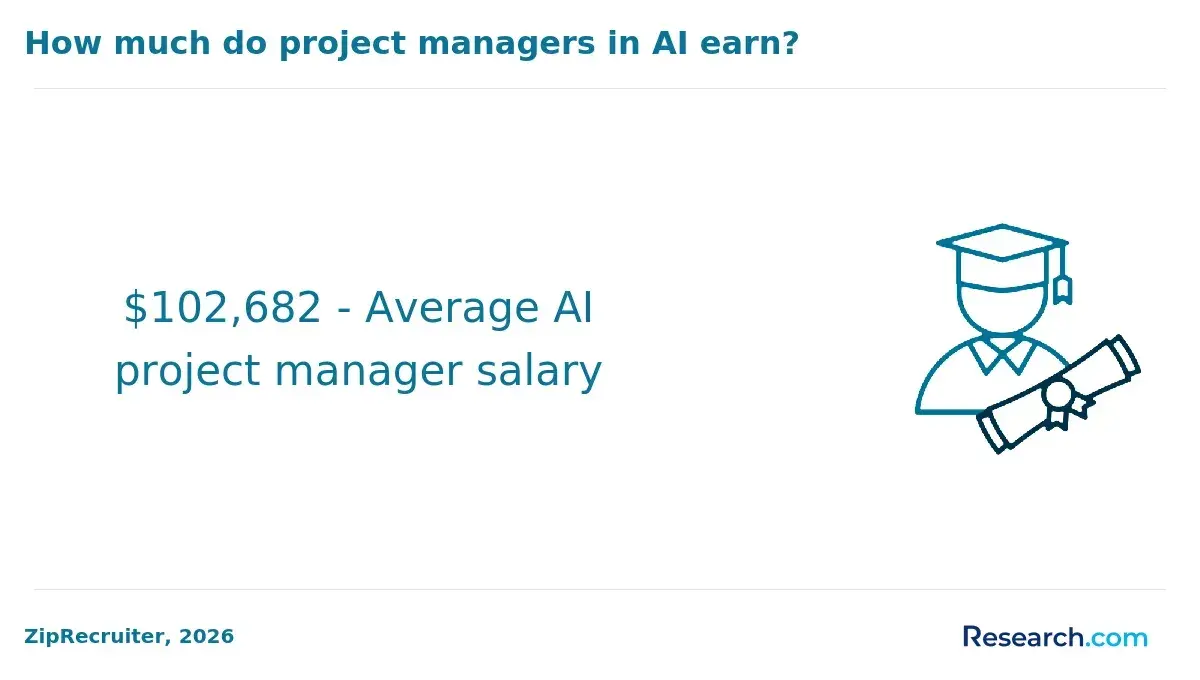
In the U.S., salaries for these roles vary by industry and experience. Entry-level positions typically range from $85,000 to $110,000 annually.
Mid-level professionals with AI leadership skills earn between $110,000 and $145,000. Senior managers and directors with deep AI expertise and strategic oversight may make $145,000 to over $180,000.
Operations managers dedicating at least five hours per month to structured AI learning improve promotion chances to AI governance roles by 46% within two years, according to the World Economic Forum Future of Jobs Insight Report 2025.
Building learning paths focused on AI strategy, data ethics, and project management can accelerate growth. Managing resistance to AI adoption involves change management and cross-training to avoid disruptions.
Relevant titles include AI program manager, AI compliance officer, and AI-enabled process improvement lead. Proficiency in AI tools, understanding AI's impact on KPIs, and certifications in AI governance enhance career prospects and compensation.
Are there industry-recognized AI certifications that enhance credibility for operations managers?
Industry-recognized AI certifications boost credibility for operations managers leading AI adoption by validating both technical skills and strategic insight.
Certifications like the Certified Artificial Intelligence Professional (CAIP) from the Global Academy of Finance and Management and the AI in Business Certificate from institutions such as Cornell University and MIT Sloan focus on real-world application aligned with operational goals, helping reduce unusable knowledge.
Research shows that nearly 60% of managers who completed at least one AI course recently struggled to apply their learning at work. Additionally, 41% attributed this to a lack of business-operations context (Microsoft Work Trend Index "AI at Work Is Here" 2024).
This highlights the need for certifications emphasizing operational relevance over purely technical content. Managers should seek programs featuring case studies, business frameworks, and implementation strategies tailored to operational challenges.
Many certifications include specialization tracks in AI strategy, change management, and data-driven decision-making. These options enable managers to effectively lead AI adoption while addressing workforce adaptation, ethics, and performance metrics.
Credentials from respected bodies improve hiring outcomes and build stakeholder trust by showcasing adherence to industry standards.
Evaluating course provider reputation, curriculum relevance, and available post-certification support is essential. Aligning certification choices with industry needs prevents inefficient training investments that lack focus on operations management.
Other Things You Should Know About Artificial Intelligence
In 2027, top AI courses for operations managers include Stanford’s AI in Business Strategy, MIT’s AI in Operations, and Duke’s Digital Transformation with AI. These courses cover AI integration, ethical implications, and strategic implementation, equipping managers to effectively manage AI adoption in their operations.
AI can automate routine tasks, enabling staff to focus on higher-value activities, which can improve overall productivity. However, operations managers need to plan for workforce reskilling and address potential job displacement concerns. Successful AI adoption requires balancing automation benefits with human roles to maintain morale and operational effectiveness.
High-quality, accurate data is critical for AI models to produce reliable outcomes. Operations managers should prioritize data governance practices such as cleaning, validation, and secure storage. Poor data quality can lead to flawed AI insights, which may result in costly mistakes or strategic missteps.
Success metrics should include improvements in key performance indicators such as efficiency, cost savings, and error reduction. Managers can also track employee adoption rates and customer satisfaction to evaluate AI's impact. Regular review of these metrics ensures continuous alignment of AI initiatives with organizational goals.
References
- AI Policies Every Online Institution Should Adopt Before 2027 https://iacde.org/uncategorized/ai-policies-every-online-institution-should-adopt-before-2027/
- Intelligent Operations: AI's Impact on Operations Managers - Quickbase | Quickbase https://www.quickbase.com/blog/intelligent-operations-ai-operations-manager
- Certified AI Operations Manager - The Case HQ Online https://thecasehq.com/courses/certified-ai-operations-manager/
- AI in University Admissions: What Works at Scale https://edutech.global/ai-in-university-admissions-scale/
- Top 7 Skills for Managers to Adopt AI | GMI Cloud Blog https://www.gmicloud.ai/en/blog/top-7-skills-managers-should-be-prepared-for-to-adopt-ai-into-their-workforce
- AI Adoption: Driving Change With a People-First Approach https://www.prosci.com/ai-change-management