2027 Best Generative AI Courses for Chief Legal Officers

Co-Founder and Chief Data Scientist
Chief Legal Officers face mounting pressure to understand generative AI's impact on compliance, contracts, and risk management. Without specialized knowledge, they risk costly oversights and missed opportunities in AI governance. Traditional legal training seldom covers the technical and ethical nuances required to navigate this evolving landscape. This gap challenges legal leaders to acquire practical skills that integrate AI fluency with their strategic responsibilities. This article outlines top generative AI courses tailored for Chief Legal Officers, focusing on flexible, accredited programs designed to enhance expertise and decision-making in this critical domain.
Key Things You Should Know
- Generative AI courses for chief legal officers focus on integrating AI tools to enhance contract review, compliance, and risk management, improving efficiency by up to 40% according to 2025 industry reports.
- Many top courses emphasize ethical and regulatory implications of AI adoption in legal contexts, preparing executives to navigate evolving federal and state laws impacting AI use.
- Programs increasingly offer hybrid formats combining legal expertise with technical skills, reflecting a 35% annual growth in demand for AI-literate legal professionals in the U.S. market.
Advance Your Career with AI Online Courses
Artificial Intelligence: Implications for Business Strategy
This program provides an introduction to Artificial Intelligence and their implications for business strategy. Earn an official digital certificate.

Oxford Artificial Intelligence Programme
Explore this Oxford Artificial Intelligence programme offered in a flexible learning environment and explore topics like machine learning, automation, and robotics.

Implementing Agentic AI: Building Your Organizational Playbook
This online MIT Agentic AI course offers a practical approach to deploying AI agents in your organization, including a custom playbook. 3 weeks, exclusive launch price.

AI Adoption: Driving Business Value and Impact
This online MIT AI Adoption: Driving Business Value and Impact offers practical frameworks to close the gap between AI potential and business reality.

Artificial Intelligence in Pharma and Biotech
Discover the applications and limitations of artificial intelligence in pharma and biotech with this MIT online short course.

What makes a generative AI course specifically valuable for chief legal officers?
A generative AI course designed for chief legal officers (CLOs) must address the unique challenges at the intersection of legal expertise and AI's operational impact. CLOs need training focused on managing legal and ethical risks tied to AI deployment in corporate settings. A Thomson Reuters survey found that 67% of CLOs believe generative AI will significantly transform their legal functions, yet only 13% feel well prepared for these changes. This highlights the need for focused education on regulatory compliance, data privacy, intellectual property, and AI governance frameworks.
Key components of effective programs on generative AI applications in legal risk management include:
- Legal risk assessment specific to AI outputs and decision processes.
- Guidance on crafting policies that ensure AI use is transparent and fair.
- Up-to-date coverage of legislation on algorithmic accountability and bias mitigation.
- Case studies focused on AI-related litigation, contract negotiation, and compliance.
- Collaboration techniques bridging legal and technical teams effectively.
Such training enables CLOs to anticipate and manage AI risks proactively. Ethical considerations are emphasized to help maintain legal responsibility and organizational trust. Additionally, CLOs benefit from understanding how AI can streamline contract analysis, e-discovery, and risk prediction.
Professionals interested in these areas may explore accelerated computer science programs to deepen their technical skills.
Advance Your Career with AI Online Courses
Artificial Intelligence: Implications for Business Strategy
This program provides an introduction to Artificial Intelligence and their implications for business strategy. Earn an official digital certificate.
Oxford Artificial Intelligence Programme
Explore this Oxford Artificial Intelligence programme offered in a flexible learning environment and explore topics like machine learning, automation, and robotics.
Implementing Agentic AI: Building Your Organizational Playbook
This online MIT Agentic AI course offers a practical approach to deploying AI agents in your organization, including a custom playbook. 3 weeks, exclusive launch price.
Which types of generative AI courses best fit a chief legal officer's career goals?
Generative AI courses tailored for chief legal officers (CLOs) emphasize risk management, compliance, and governance frameworks critical to navigating AI's legal challenges. CLOs must understand how generative AI affects legal liability, intellectual property rights, and data privacy, while ensuring ethical AI deployment aligned with corporate values. This expertise enables CLOs to lead company-wide AI strategies that comply with emerging regulations.
Specialized training in AI governance is crucial, especially since a Gartner survey predicts that by 2026, 80% of large enterprises will have formal AI governance. However, only 25% currently involve CLOs as key decision-makers in AI risk oversight. CLOs investing in these programs position themselves as indispensable advisors within executive teams.
Essential course topics include:
- Legal implications of generative AI outputs and copyrights
- AI regulatory compliance across jurisdictions
- Frameworks for AI transparency and accountability
- Data governance and privacy risk management
- Ethical AI aligned with societal norms and corporate values
For CLOs aiming to boost their skills, the best generative AI training for legal leadership roles often combines legal expertise with strategic risk management and governance. Technical literacy courses explaining AI model operations also enhance collaboration with data scientists and policymakers. Case studies of AI-related legal failures and enforcement actions help predict regulatory trends.
Prospective students interested in broader AI education may explore options such as the cheapest online masters in artificial intelligence to deepen their understanding further.
How should chief legal officers evaluate online versus campus generative AI programs?
Chief legal officers compare generative AI online and campus programs by weighing flexibility against immersive experiences. Online programs offer asynchronous learning that fits demanding workloads, crucial as 76% of in-house legal departments using generative AI report significant time savings-some over 50%-in contract review. These courses often include practical tools tailored to legal workflows, allowing direct application. Campus programs, however, provide face-to-face interaction with faculty and peers, fostering richer networking important for strategic partnerships and vendor relationships related to AI deployment.
Key factors for chief legal officers choosing generative AI education formats also include curriculum relevance and faculty expertise. Courses focusing on corporate legal functions like contract review automation, regulatory risk assessment, and intellectual property management are essential. When online options lack this depth, campus programs may be preferable.
Cost and time commitment differ: online courses reduce travel and accommodation expenses, while campus programs offer immersive experiences and access to specialized legal tech labs. CLOs should consider these questions:
- Does the program provide hands-on AI legal tools training?
- Is faculty experience aligned with corporate legal AI applications?
- What networking opportunities exist?
- Can the format accommodate ongoing legal responsibilities?
Some CLOs also explore related continuing education, such as game design online courses, to enhance understanding of interactive technologies influencing AI interfaces and applications.
Ultimately, selecting the right program aligns educational delivery with professional goals and organizational capacity to implement AI-driven efficiencies.
What admissions and professional background do generative AI programs expect from legal executives?
Generative AI programs designed for legal executives often require applicants to demonstrate a strong professional background in law, particularly in senior roles. Admission committees prioritize candidates with 5 to 10 years of experience in legal operations, compliance, or corporate law. Leadership in managing legal teams or guiding technology adoption within legal departments is especially valued, reflecting the growing integration of AI in legal workflows.
Such programs typically expect foundational legal expertise, usually evidenced by a Juris Doctor (JD) or equivalent legal degree. Some courses also seek familiarity with areas like data privacy, cybersecurity, or intellectual property law, given AI's regulatory implications. Applicants benefit from highlighting management experience related to legal technology, as legal executives lead more AI-driven initiatives. Indeed, Deloitte's Legal Operations Survey noted that departments allocating over 5% of their budget to legal tech, including generative AI, are more likely to see significant productivity gains.
Effective cross-disciplinary collaboration skills, such as working with IT, risk, or compliance teams, further strengthen candidates' profiles. Certifications in project management or legal operations add weight, and some programs provide prerequisite AI or data analytics modules for those with limited technical background. Candidates exploring preparatory education may also consider options like a computer science bachelor degree online to build relevant technical skills.
In summary, admissions criteria for generative AI courses for legal executives emphasize:
- Substantial legal experience at the executive level
- Proof of leadership in legal technology or innovation
- Formal legal education credentials
- Understanding of regulatory and ethical AI considerations
- Cross-functional collaboration skills
Meeting these professional background requirements for generative AI programs in law ensures candidates are prepared to navigate the legal and technological challenges ahead.
What core topics and legal-focused skills are covered in generative AI courses for CLOs?
Generative AI courses tailored for chief legal officers (CLOs) focus on aligning legal expertise with evolving AI technology. These programs cover compliance with AI regulations, intellectual property rights for AI-generated content, and data privacy laws related to AI applications. CLOs learn to assess risks in AI deployment, particularly in areas like contract automation, algorithmic decision-making, and content creation.
Ethical and legal challenges such as AI bias and transparency feature prominently. Training equips CLOs to detect discriminatory AI outputs and establish frameworks to promote fairness and accountability. According to the World Economic Forum's 2024 Global AI Governance report, 62% of regulators expect CLOs to ensure AI transparency and non-discrimination compliance, underscoring the importance of these skills.
Practical abilities developed in these courses include:
- Evaluating AI models for compliance with federal and state laws.
- Drafting AI governance policies and audit procedures.
- Handling intellectual property issues for AI-created works.
- Managing cross-border data transfers and AI compliance challenges.
- Understanding liability related to AI system failures or harms.
CLOs also receive insights into AI's effects on employment law and regulatory reporting. Coursework covers evolving legal standards, including FTC AI guidance and the EU AI Act, helping CLOs anticipate risks and advise organizational leadership-essential for leading AI governance in complex environments.
How long do generative AI programs for chief legal officers take and how much do they cost?
Generative AI programs for chief legal officers (CLOs) typically last between 4 and 12 weeks, offering focused and practical training. Shorter courses of 4 to 6 weeks emphasize foundational AI literacy and core applications in legal operations. Longer programs, running 8 to 12 weeks, cover deeper subjects such as AI ethics, regulatory compliance, risk management, and strategic implementation specific to in-house legal teams.
Costs vary widely depending on the program's scope. Entry-level offerings start around $1,500 for basic certifications or workshops, while premium executive courses can range from $5,000 to $15,000. High-end programs often include live case studies, hands-on tools training, and personalized coaching. Some providers also offer subscription or tiered pricing models based on course length and access to additional resources.
- 4-week intensive options support rapid upskilling and immediate AI integration in legal workflows
- Longer courses foster comprehensive understanding of evolving AI legal frameworks and strategic leadership
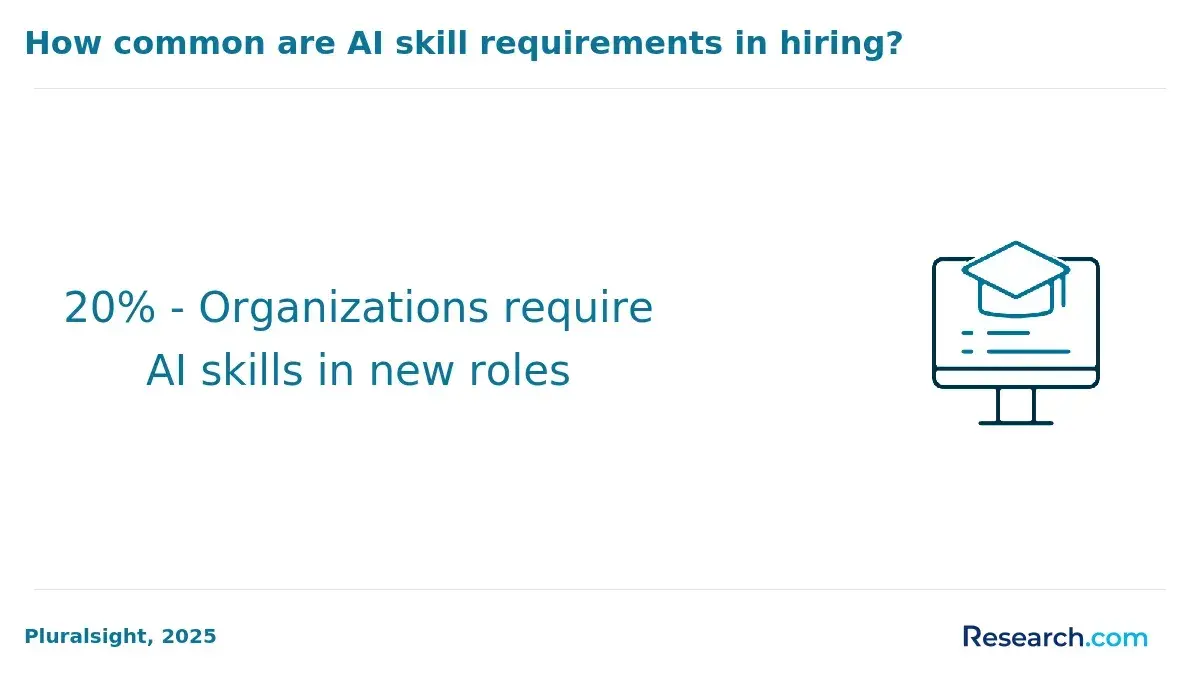
A recent study by the Association of Corporate Counsel finds that 58% of CLOs will require AI literacy or data fluency skills in certain roles by 2025, up from 19% a few years earlier. This highlights the urgent need for AI education tailored to legal professionals.
Choosing customizable or modular programs helps CLOs adapt training to areas like contract automation, predictive analytics, and AI governance, balancing cost and relevance for maximum impact.
How can chief legal officers verify accreditation and program quality for generative AI studies?
Chief legal officers (CLOs) evaluating generative AI programs should first verify institutional accreditation from recognized bodies such as regional accreditors approved by the U.S. Department of Education or CHEA. This ensures the program adheres to established educational standards and accountability requirements.
Programs must align their curriculum with the latest legal and technological standards, covering essential topics like AI ethics, data privacy, regulatory compliance, and risk management. Faculty expertise is key: courses led or advised by professionals actively engaged in AI and law sectors add significant credibility.
Look for practical learning components such as vendor due diligence frameworks, case studies, and hands-on projects that simulate real-world AI legal tool evaluations. Considering that 72% of corporate legal departments depend on external generative AI vendors but only 31% have standardized due diligence, programs encompassing vendor assessment, security evaluation, and bias mitigation offer strong practical value.
Assess outcomes through graduate placement in legal tech roles, industry certifications, and partnerships with leading AI vendors. Transparent documentation on assessment methods, peer reviews, and advisory boards from legal and AI firms strengthens program reliability.
Finally, confirm the provider's reputation via alumni testimonials and third-party reviews from legal education evaluators. Ensuring these factors will help CLOs select a high-quality program that supports effective AI governance and vendor management.
What career outcomes and expanded responsibilities can generative AI training unlock for CLOs?
Generative AI training equips chief legal officers (CLOs) to enhance decision-making efficiency, drive innovation, and lead digital transformation within legal departments. CLOs with expertise in generative AI take on strategic roles such as overseeing AI integration, optimizing contract lifecycle management, and improving compliance monitoring through AI-powered analytics. This positions them as key leaders in navigating complex regulatory environments and managing emerging risks with precision.
Structured AI training is linked to significant adoption and productivity gains. A McKinsey survey found legal teams training over half their staff were nearly three times more likely to achieve broad AI use, with more than 60% of lawyers using AI weekly. CLOs proficient in AI can lead adoption initiatives, fostering innovation and higher team efficiency.
Expanded CLO responsibilities with generative AI include:
- Overseeing ethical AI governance to comply with evolving regulations.
- Implementing AI-assisted due diligence and risk assessments to speed up transactions.
- Enhancing dispute resolution via AI-driven predictive tools.
- Collaborating with IT and data science teams to tailor AI solutions for legal workflows.
- Designing continuous AI training programs to sustain departmental expertise.
By mastering generative AI, CLOs transform from traditional legal advisors into influential leaders shaping enterprise-wide innovation and competitive advantage.
What salary and bonus upside can CLOs expect after adding generative AI expertise?
Chief Legal Officers (CLOs) who develop expertise in generative AI can expect salary increases from 10% to 25%, alongside notable bonuses linked to successful AI governance and strategy execution. In the U.S., CLO base salaries generally range between $250,000 and $450,000, but specialized skills in generative AI often push compensation toward or beyond the upper end, especially in technology-driven sectors.
Bonuses typically range from 15% to 40% of base salary and are tied to the CLO's contribution to cross-functional AI initiatives and managing risks associated with emerging AI tools. CLOs leading AI policy development, compliance, and ethical frameworks mitigate organizational risks and enhance operational efficiency, which supports larger performance-based incentives.
Collaboration with Chief Information Officers (CIOs) and Chief AI Officers (CAIOs) increases a CLO's impact. According to a 2024 EY report, companies with CLOs involved in AI steering committees are 1.7 times more likely to have a clear, enterprise-wide AI strategy, correlating with higher compensation due to strategic leadership and oversight.
Examples of generative AI expertise that can boost compensation include:
- Leading AI ethics frameworks
- Negotiating AI technology licensing agreements
- Managing data privacy and compliance in AI deployment
Additionally, CLOs with these advanced AI competencies often receive equity incentives and profit-sharing aligned with AI innovation success, reflecting their critical role in guiding responsible artificial intelligence adoption.
Which certificates or credentials in generative AI are most respected for senior legal leaders?
Senior legal leaders seeking top credentials in generative AI should focus on certifications emphasizing risk management, ethical governance, and strategic implementation. Prestigious programs often come from institutions specializing in AI policy and compliance rather than purely technical fields. Notable examples include the Certified AI Governance Professional (CAIGP) and the AI Ethics and Governance Certificate offered by leading law schools and legal professional bodies.
These credentials cover crucial areas like AI accountability frameworks, data privacy, and bias mitigation-key concerns for chief legal officers (CLOs) who manage regulatory compliance and corporate governance.
Leading programs from universities such as Stanford or Harvard, alongside industry groups like the IEEE Standards Association, provide rigorous curricula and expert faculty, enhancing their credibility and influence.
Candidates should seek certificates including modules on:
- AI risk assessment
- Vendor management for AI tools
- Relevant regulations, including the EU AI Act and U.S. federal guidelines
- Practical skills like AI audit trails and litigation preparedness
The 2024 Edelman Trust Barometer Special Report on AI shows 68% of board members value CLO expertise in AI risk and governance when considering promotions or compensation. Specialized AI governance certificates empower CLOs to advise boards, reduce liability, and shape strategic AI adoption within organizations.
Other Things You Should Know About Artificial Intelligence
Ethical concerns revolve around bias in AI data and algorithms, transparency in decision-making, and accountability for AI-driven actions. Legal professionals must ensure AI tools do not perpetuate discrimination or violate confidentiality. Understanding these issues is crucial for chief legal officers to apply AI responsibly within their organizations.
Artificial intelligence significantly speeds up legal research by quickly analyzing large volumes of documents and case law. It improves due diligence accuracy through pattern recognition and predictive analytics. This allows legal teams to identify risks and relevant information more efficiently than traditional methods.
Artificial intelligence can assist legal professionals by providing data-driven insights and automating routine tasks, but it cannot replace human judgment. Complex legal decisions require contextual understanding, ethical considerations, and intuition that AI alone cannot provide. Chief legal officers should view AI as a tool that complements, not substitutes, human expertise.
In 2027, top generative AI courses for Chief Legal Officers include Stanford's "AI and Law: Bridging the Gap," Harvard's "Advanced AI Applications for Legal Professionals," and MIT's "Generative AI Strategies for Legal Leadership," which focus on blending AI advancements with legal skills.
References
- Guiding Effective Use of GenAI: A Supervisory Course for Law Firm Partners https://www.altaclaro.com/classes/guiding-effective-use-of-genai
- The Role of Generative AI in Proving Corporate Law Department Value https://www.acc.com/resource-library/role-generative-ai-proving-corporate-law-department-value
- CLO Skills: Drive Corporate Learning with AI & LMS https://www.techclass.com/resources/learning-and-development-articles/essential-skills-for-modern-clos-driving-corporate-training-with-ai-and-lms
- Generative AI skills bring nearly 50% salary bump: Indeed https://www.hrdive.com/news/generative-AI-salary-indeed/708224/
- Use Cases for Generative AI in Workforce Development https://www.jff.org/idea/use-cases-for-generative-ai-in-workforce-development/
- Generative AI and the Law https://www.lexisnexis.com/html/lexisnexis-generative-ai-story/
- AI Courses for Legal Professionals: The In-House Shortlist â GC AI https://gc.ai/blog/ai-courses-for-legal-professionals
- Ten Things: 100 Practical Generative AI Prompts for In-House Lawyers – Ten Things You Need to Know as In-House Counsel® https://tenthings.blog/2025/03/31/ten-things-practical-generative-ai-prompts-for-in-house-lawyers/
- CLO’s Guide to Generative AI: Risks and Opportunities for Legal Departments https://apptad.com/insights/clos-guide-to-generative-ai-risks-and-opportunities-for-legal-departments/
- How Generative AI is changing legal department functions https://www.deloitte.com/global/en/services/legal/perspectives/how-generative-ai-is-changing-legal-department-functions.html