2027 Best Udacity AI Courses for AI Adoption

Co-Founder and Chief Data Scientist
Many professionals with unrelated degrees struggle to break into the rapidly evolving field of AI, facing challenges in accessing relevant, flexible education that fits their schedules and career goals. The demand for skilled AI practitioners grows, yet finding credible, accredited courses tailored to career changers remains difficult. This gap often delays their transition or leads to suboptimal learning paths. This article reviews the best Udacity AI courses available, focusing on flexibility, industry relevance, and practical skills development, to guide readers toward effective pathways for adopting AI and advancing their careers in this dynamic domain.
Key Things You Should Know
- Udacity's 2026 AI courses focus heavily on practical skills for AI adoption, with over 65% of content updated based on 2024-2025 industry demands and emerging technologies.
- Completion of Udacity Nanodegree programs improves AI job placement rates by approximately 40%, reflecting increased employer trust in targeted, skills-based learning.
- Courses emphasize ethical AI implementation and hands-on projects, ensuring students are prepared for real-world challenges in AI adoption across diverse sectors.
Advance Your Career with AI Online Courses
Artificial Intelligence: Implications for Business Strategy
This program provides an introduction to Artificial Intelligence and their implications for business strategy. Earn an official digital certificate.

Oxford Artificial Intelligence Programme
Explore this Oxford Artificial Intelligence programme offered in a flexible learning environment and explore topics like machine learning, automation, and robotics.

Implementing Agentic AI: Building Your Organizational Playbook
This online MIT Agentic AI course offers a practical approach to deploying AI agents in your organization, including a custom playbook. 3 weeks, exclusive launch price.

AI Adoption: Driving Business Value and Impact
This online MIT AI Adoption: Driving Business Value and Impact offers practical frameworks to close the gap between AI potential and business reality.

Artificial Intelligence in Pharma and Biotech
Discover the applications and limitations of artificial intelligence in pharma and biotech with this MIT online short course.

What makes Udacity's AI courses valuable for learners and career changers?
Udacity's AI courses provide practical artificial intelligence skills for professional growth through a curriculum developed alongside industry leaders such as Google, NVIDIA, and Amazon. This ensures content stays relevant to real-world challenges, covering key areas like machine learning, deep learning, and natural language processing. The hands-on projects included help learners develop competencies that employers actively seek.
Career changers find Udacity's project-based approach especially beneficial, engaging with real-world scenarios like computer vision and recommendation systems to showcase their abilities. The platform also offers personalized mentorship and career support tailored to career switchers, making it one of the best AI training programs for career switchers.
Designed to fit busy schedules, Udacity's flexible online platform allows learners to focus on specific skill gaps or pursue comprehensive nanodegree programs. This model aligns well with the increased demand for structured learning that improves AI adoption in organizations, as highlighted in a recent global survey by McKinsey. For professionals considering a rapid advancement in tech, combining Udacity's offerings with options such as a 1 year computer science degree online can enhance career prospects efficiently.
Advance Your Career with AI Online Courses
Artificial Intelligence: Implications for Business Strategy
This program provides an introduction to Artificial Intelligence and their implications for business strategy. Earn an official digital certificate.
Oxford Artificial Intelligence Programme
Explore this Oxford Artificial Intelligence programme offered in a flexible learning environment and explore topics like machine learning, automation, and robotics.
Implementing Agentic AI: Building Your Organizational Playbook
This online MIT Agentic AI course offers a practical approach to deploying AI agents in your organization, including a custom playbook. 3 weeks, exclusive launch price.
Which Udacity AI courses are best for beginners with no programming background?
Udacity's AI Programming with Python Nanodegree is ideal for beginners with no programming experience. It covers foundational topics like Python, NumPy, pandas, and basic machine learning, equipping students with essential skills for AI careers. This approach aligns with the increased demand for Python proficiency in entry-level AI and data roles, as highlighted by LinkedIn's Global AI Talent Trends report showing a 46% rise year-over-year.
Students benefit from a hands-on learning style that combines theory with practical assignments, guiding them through programming logic and Python library use. For non-coders interested in introductory Udacity artificial intelligence courses for non coders, options like "Intro to Artificial Intelligence" and "AI for Everyone" offer valuable context without heavy coding requirements, though pairing these with Python training improves career readiness.
Taking these steps builds a solid foundation to advance into specialized fields like deep learning and computer vision. For those exploring educational pathways, resources like AI degree online programs can offer affordable routes to gaining AI expertise.
What are the top Udacity AI nanodegree programs for applied AI in industry?
Udacity's top AI nanodegree programs for industry applications emphasize practical skills aligned with market needs. The AI Programming with Python Nanodegree builds foundational knowledge in Python, NumPy, Pandas, and machine learning essentials, making it ideal for beginners seeking roles in AI development by mastering core programming and algorithms.
For professionals, the Machine Learning Engineer Nanodegree focuses on designing scalable machine learning models, covering advanced supervised and unsupervised methods with tools for model deployment and data pipeline optimization. It prepares students to implement AI solutions within established industry workflows.
The Deep Learning Nanodegree targets applied neural network techniques in computer vision, natural language processing, and generative AI, featuring frameworks like TensorFlow and PyTorch. This is crucial as global generative AI spending is forecast to reach $55.7 billion by 2026, according to IDC's 2024 Worldwide Generative AI Spending Guide, highlighting the importance of mastery through applied courses for sustained career relevance.
These courses help students address practical challenges such as data quality, model bias, and scalability, essential for AI adoption across sectors like healthcare and finance. They offer project-based learning that results in portfolio-ready applications, supporting professional growth and skill development.
In parallel fields, those interested in creative digital careers might explore the game design and development degree, which complements technical expertise with artistic and interactive design skills, beneficial for a well-rounded technology career. For those pursuing the best Udacity applied AI courses for professional development, these nanodegrees provide relevant, hands-on experience that meets industry demands.
How do Udacity AI programs compare with university AI degrees and certificates?
Udacity AI programs offer a practical, hands-on approach compared to traditional university degrees, focusing heavily on immediate industry application rather than theoretical foundations. This makes Udacity especially appealing for working professionals who need flexible, project-based learning that fits busy schedules and delivers portfolio-ready AI models using tools like TensorFlow and PyTorch. The benefits of Udacity AI certificates versus traditional university AI programs include shorter time frames and direct skill application, which contrast with the multi-year, academically deep curricula universities offer.
University AI degrees typically cover extensive subjects such as mathematics, statistics, and ethical considerations, attracting those pursuing research or deeper technical mastery. However, their length and focus on theory may be less accessible for professionals aiming for swift AI adoption. An emerging market need exists for AI leadership fluency, highlighted by EY's data showing a significant gap in executives' readiness to lead AI projects, which Udacity's targeted programs aim to address.
Professionals weighing AI education options should consider their career goals carefully. For those looking to accelerate strategy execution, Udacity's practical, skill-based training is advantageous. Conversely, aspiring researchers may find university degrees better aligned with their objectives. Additionally, prospective students interested in allied fields may explore a fast track cyber security degree as a complementary skillset.
What skills, tools, and projects do Udacity AI courses typically cover?
Udacity AI courses develop practical skills across industries with a strong focus on Python programming, machine learning algorithms, and deep learning frameworks like TensorFlow and PyTorch. These programs emphasize hands-on experience for data collection, preprocessing, and visualization, preparing students to work efficiently with real-world datasets.
Students engage in projects building and deploying AI models for natural language processing, computer vision, and predictive analytics. Examples include creating image recognition systems using convolutional neural networks and developing chatbots with recurrent neural networks. These projects simulate real industry challenges, boosting both technical expertise and problem-solving abilities.
In addition to core technical skills, courses integrate cloud platforms such as AWS and Google Cloud to teach model deployment and scalability. Learners gain insights into evaluation metrics like accuracy, precision, recall, and F1-score to ensure high-performing AI solutions ready for production use.
Professional skills such as version control with Git, collaborative workflows, and communicating results via dashboards and reports are also emphasized. Graduates finish with portfolios demonstrating full AI system development, increasing their employability in emerging, data-driven roles. The global computer vision market's rapid growth-projected to reach $45.7 billion by 2029 at a 21.5% CAGR-reflects the rising demand for expertise in AI applications for image and video analysis.
How long do Udacity AI programs take, and what do they cost overall?
Udacity's AI nanodegree programs generally range from 3 to 6 months, depending on the course and the student's pace. For instance, the Machine Learning Engineer Nanodegree is designed as a 4-month commitment, assuming about 10 hours of study per week. Meanwhile, the AI Programming with Python Nanodegree can be completed in roughly 3 months at the same weekly effort. More advanced tracks like the MLOps Engineer Nanodegree usually take 4 to 6 months, reflecting the complexity and depth of skills taught.
Tuition is charged monthly, typically between $399 and $499. Thus, overall costs vary according to program length and completion speed. For a 4-month course, students can expect to pay approximately $1,600 to $2,000. Some accelerate their studies to lower costs, while others may extend the duration to accommodate work or other commitments. Udacity sometimes offers scholarships and discounts that may reduce fees.
Those with existing coding and data science experience might find shorter programs sufficient, while beginners or professionals targeting the rapidly growing MLOps field-projected by Gartner's 2024 report to be adopted by 60% of large organizations by 2025-may benefit from longer, comprehensive courses. Such timing and pricing considerations are essential when planning a career path in AI.
What prerequisites and admissions expectations exist for Udacity AI courses?
Udacity AI courses require candidates to meet specific prerequisites to ensure they are prepared for advanced study. Foundational programs typically expect proficiency in programming languages like Python, alongside understanding algebra and statistics. For example, the AI programming nanodegree demands knowledge of linear algebra and Python scripting for effective machine learning task management. More advanced courses also require familiarity with calculus, probability, and data structures.
Applicants without a strong STEM background should consider preparatory courses before enrolling in specialized AI tracks. Udacity offers modules to build essential skills. Students must demonstrate problem-solving abilities and know software development environments since projects often involve coding and algorithm implementation.
Admission is generally open and does not require formal testing, but completing prerequisite materials is critical for maintaining pace and comprehension. Many nanodegree programs recommend experience with machine learning libraries like TensorFlow or PyTorch, supporting hands-on learning components.
The increasing adoption of cloud-based AI models highlights the need for cloud platform awareness. According to IDC's 2024 Cloud Pulse research, 67% of enterprises run at least one production AI/ML workload on public cloud infrastructure, up from 48% two years prior. Udacity courses favor students familiar with cloud platforms such as AWS and Azure and how AI workloads integrate with these environments.
What AI career paths and job roles can Udacity AI training support?
Udacity ai training equips learners for a variety of roles in the artificial intelligence sector, targeting practical applications that meet industry needs. Graduates develop skills for positions such as ai engineer, machine learning engineer, data scientist, computer vision specialist, and natural language processing (NLP) engineer. These roles involve building, deploying, and refining ai models in real-world scenarios.
Key responsibilities include designing algorithms, developing neural networks, managing extensive datasets, and integrating ai solutions within existing systems. For example, ai engineers focus on end-to-end model development, data scientists analyze trends to optimize models, computer vision specialists create image recognition systems, and NLP engineers work on language-driven ai like chatbots and translators.
Udacity also prepares learners for emerging roles such as ai product manager and ai research scientist, which require a mix of technical skill and strategic planning. Success in these areas often depends on knowledge in project management, statistics, and experimental design.
Artificial intelligence specialists earn a global median salary of $120,000, ranking among the highest-paid professionals worldwide, according to Coursera's 2025 Global Skills Report. This highlights the value for Udacity graduates entering these fields.
Prospective learners should assess their interests in software development, data analytics, or research to select appropriate Udacity nanodegrees and projects. These targeted programs support smooth career transitions into high-demand sectors such as tech, healthcare, automotive, and finance.
What salary ranges and job outlook can Udacity AI learners realistically expect?
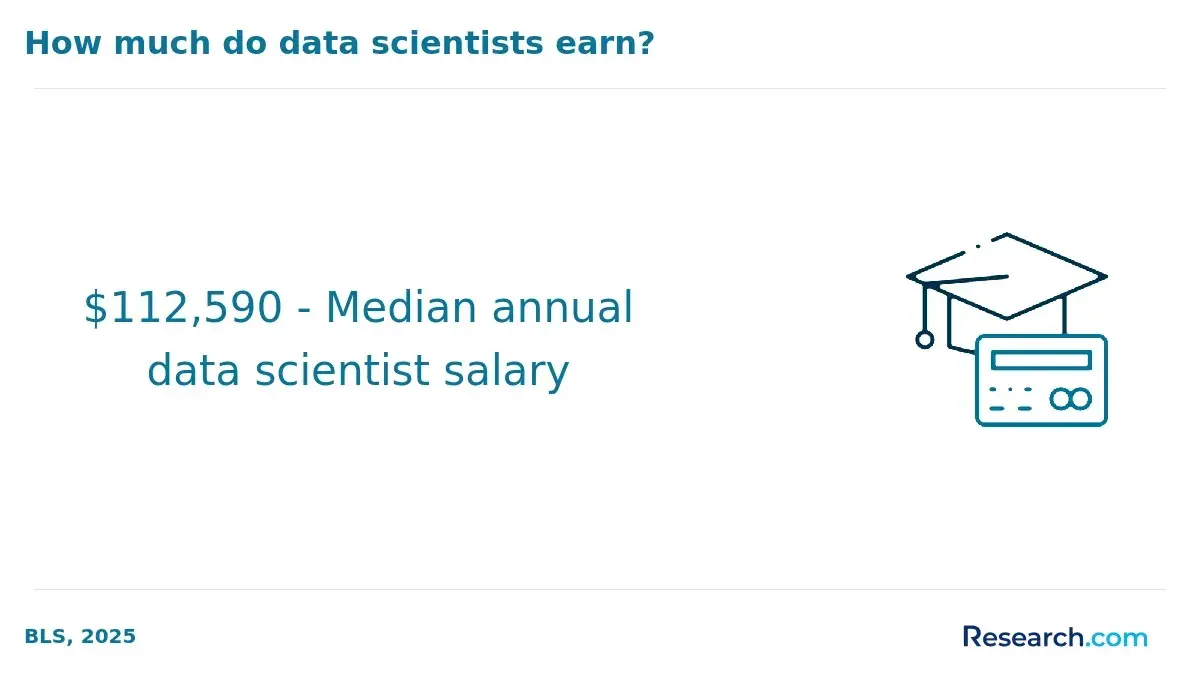
Udacity AI learners can expect salaries ranging from $85,000 to $150,000 annually, influenced by experience, role, and industry. Entry-level roles like AI data analysts or machine learning engineers typically start between $85,000 and $100,000. More specialized or senior positions, such as AI research scientists or software architects, often exceed $130,000. Geographic location and company size also significantly affect compensation; tech centers like Silicon Valley tend to offer the highest salaries.
The demand for Udacity AI graduates remains robust. IBM's Global AI Adoption Index 2024 reports that 69% of organizations face a "moderate or significant" AI skills gap, with 56% indicating this gap hinders AI adoption. This creates strong opportunities for learners with practical skills gained from nanodegree programs.
Salary growth often depends on industry, with finance and healthcare investing heavily in predictive analytics and personalized medicine, leading to faster wage increases. Manufacturing roles related to AI infrastructure and automation offer steady demand and competitive pay. Specialization in areas like natural language processing, computer vision, or reinforcement learning can further boost job prospects and earnings.
Prospective students should assess job placement rates and course relevance in their target industries. Building a portfolio and completing internships aligned with desired roles enhances employability. Continuous learning is critical as AI technologies evolve rapidly.
How should learners choose the best Udacity AI course for their goals and experience?
Selecting the ideal Udacity AI course depends on your current skills and career ambitions. Beginners should consider foundational courses like Introduction to Artificial Intelligence or AI Programming with Python to develop essential programming and math abilities. Those with some coding experience but new to AI may benefit from intermediate courses focused on machine learning techniques and data handling. Advanced learners targeting specialization can explore nanodegree programs in deep learning, natural language processing, or computer vision.
Align course choices with specific career goals:
- For data science roles, prioritize courses centered on machine learning algorithms and data analytics.
- For AI software engineering, select courses covering AI model deployment and scalable architectures.
- For research or innovation careers, seek programs featuring projects with emerging AI technologies.
Consider course duration and workload relative to your schedule. Udacity's project-based approach helps you build a portfolio that demonstrates skills to prospective employers. Regular curriculum updates ensure material stays relevant amid rapid industry advances.
Market demand for AI skills is growing rapidly. PwC's Global AI Jobs Barometer projects that AI could add $15.7 trillion to global GDP by 2030, with 55% from productivity gains, highlighting the value of choosing up-to-date courses. Support services like mentorship and career guidance also enhance learning outcomes and job placement, especially for professionals transitioning into AI fields.
Other Things You Should Know About Artificial Intelligence
In 2027, Udacity offers several top-tier AI courses ideal for businesses seeking AI adoption. Recommended courses include the AI for Business Leaders Nanodegree, which provides strategic AI integration insights, and the Machine Learning Engineer Nanodegree, which covers essential machine learning concepts and implementation strategies.
Artificial intelligence contributes significantly to job automation by handling repetitive and data-intensive tasks more efficiently than humans. While this can lead to job displacement in certain sectors, it also creates opportunities for new roles focused on developing, managing, and improving AI systems. The impact varies greatly depending on industry and job type.
Common challenges include data quality issues, lack of skilled personnel, integration with existing systems, and managing costs. Businesses must also navigate regulatory and ethical considerations while ensuring AI solutions align with strategic goals. Overcoming these obstacles requires careful planning and ongoing evaluation.
AI is reshaping professional skill demands by increasing the need for data literacy, machine learning expertise, and the ability to interpret AI outputs. Soft skills like critical thinking and adaptability are also becoming more important as employees collaborate with AI-driven tools. Continuous learning is essential to keep pace with AI advancements.
References
- My Review of Udacity After Completing 7 Nanodegrees https://oscarleo.com/udacity-review/
- Ultimate Guide: How to Choose the Right AI Training Course to Boost Your Career - ONLC https://www.onlc.com/blog/how-to-choose-ai-training-courses/
- DeepLearning.AI vs Udacity Gen AI Courses: Which is Right for You? https://futurense.com/blog/deeplearning-ai-vs-udacity-gen-ai-courses
- HyperAI https://hyper.ai/en/stories/17f5cfccd869028ccc1657f1391c810a
- Udacity Tackles AI Skills Gap With Master’s Program https://www.dice.com/career-advice/udacity-tackles-ai-skills-gap-with-masters-program
- 16 Artificial Intelligence Career Paths https://www.calmu.edu/news/artificial-intelligence-career-paths
- Top 26 Careers in AI and Machine Learning: Roles, Salaries, Skills, and 2026 Outlook - AscendurePro https://ascendurepro.com/careers-in-ai-and-machine-learning/
- Choosing the Right AI Course: A Comprehensive Guide https://www.upskillist.com/blog/choosing-the-right-ai-course-a-comprehensive-guide/
- An AI Future: Why AI Courses Are Your Ultimate Career Power Move https://protrain.edu/an-ai-future-why-ai-courses-are-your-ultimate-career-power-move/