2027 Best AI Courses for Retail Operations Leaders

Co-Founder and Chief Data Scientist
Retail operations leaders face mounting pressure to optimize supply chains, personalize customer experiences, and enhance decision-making amidst rapidly evolving technologies. Many struggle to grasp how artificial intelligence can streamline these processes without a technical background.
This knowledge gap limits their ability to implement AI-driven solutions that boost efficiency and competitive advantage. Navigating credible educational resources tailored for non-technical professionals becomes essential.
This article explores top AI courses designed specifically for retail operations leaders, highlighting flexible and accredited programs that enable a practical pivot into the AI industry and empower informed leadership decisions.
Key Things You Should Know
- AI courses for retail operations leaders in 2026 emphasize practical skills in predictive analytics, inventory optimization, and customer behavior modeling to drive efficiency and profitability.
- Recent studies show 68% of retail leaders who completed AI training report measurable improvements in supply chain decisions and real-time data application.
- Top courses integrate case studies from 2024-2025, reflecting advances in AI-powered automation and ethical considerations relevant to retail management roles.
Advance Your Career with AI Online Courses
Artificial Intelligence: Implications for Business Strategy
This program provides an introduction to Artificial Intelligence and their implications for business strategy. Earn an official digital certificate.

Oxford Artificial Intelligence Programme
Explore this Oxford Artificial Intelligence programme offered in a flexible learning environment and explore topics like machine learning, automation, and robotics.

Implementing Agentic AI: Building Your Organizational Playbook
This online MIT Agentic AI course offers a practical approach to deploying AI agents in your organization, including a custom playbook. 3 weeks, exclusive launch price.

AI Adoption: Driving Business Value and Impact
This online MIT AI Adoption: Driving Business Value and Impact offers practical frameworks to close the gap between AI potential and business reality.

Artificial Intelligence in Pharma and Biotech
Discover the applications and limitations of artificial intelligence in pharma and biotech with this MIT online short course.

What are the best AI courses tailored specifically for retail operations leaders?
The best AI courses for retail operations leaders focus on key areas such as supply chain optimization, store operations, and data-driven decision-making. These AI training programs tailored for retail management combine practical retail challenges with advanced AI methods, preparing leaders to implement solutions that enhance profitability and efficiency.
According to McKinsey, AI could increase global retail EBITDA by $400-$800 billion annually, with 60% of this growth stemming from supply-chain and store-operations improvements, emphasizing the strong demand for specialized skills.
Top courses often include:
- Predictive analytics to improve demand forecasting and reduce stockouts or excess inventory.
- AI-powered inventory management to automate replenishment and optimize warehouse layouts.
- Machine learning models for customer behavior analysis to personalize retail experiences.
- Process automation in point-of-sale operations and logistics management.
- Ethical ai use and data governance focused on retail environments.
Examples of AI-focused education for retail professionals include executive education programs from top business schools, such as those that combine AI with retail strategy. These programs often offer certifications in retail analytics or AI for supply chain professionals.
Platforms like MIT Sloan or Wharton emphasize real-world retail case studies alongside AI tools such as Python and R. For working professionals, modular formats that allow practical application on the job are highly effective, particularly programs with hands-on projects like AI-driven staff scheduling or predictive routing for last-mile delivery.
Choosing courses with up-to-date content reflecting recent advancements is crucial given the fast pace of ai innovation in retail. Those interested may explore opportunities in applied artificial intelligence to further enhance their career prospects.
Advance Your Career with AI Online Courses
Artificial Intelligence: Implications for Business Strategy
This program provides an introduction to Artificial Intelligence and their implications for business strategy. Earn an official digital certificate.
Oxford Artificial Intelligence Programme
Explore this Oxford Artificial Intelligence programme offered in a flexible learning environment and explore topics like machine learning, automation, and robotics.
Implementing Agentic AI: Building Your Organizational Playbook
This online MIT Agentic AI course offers a practical approach to deploying AI agents in your organization, including a custom playbook. 3 weeks, exclusive launch price.
How can AI courses help retail operations leaders improve efficiency, margins, and customer experience?
AI courses help retail operations leaders leverage technology to boost efficiency, margins, and customer experience. These courses cover data analytics, predictive modeling, and automation techniques, enabling leaders to optimize inventory management, minimize waste, and streamline supply chains.
For instance, AI-driven demand forecasting prevents stockouts and overstocking, directly enhancing profit margins. Automation powered by AI also cuts manual labor costs and speeds up repetitive tasks such as restocking and order processing.
Improving retail efficiency and customer experience with ai courses is a key benefit, as leaders learn to apply natural language processing and customer behavior analytics to personalize marketing and improve service. This leads to increased customer satisfaction and loyalty through tailored recommendations and quicker issue resolution.
AI training programs for retail operations leaders emphasize overcoming integration challenges by detecting operational bottlenecks and measuring AI project ROI. Practical knowledge about managing change helps ensure AI solutions align with business goals, avoiding ineffective experimentation.
Data from Deloitte's "State of AI in the Enterprise, 6th Edition" shows that 79% of large retail companies using AI in operations report positive ROI within three years, with 35% achieving payback in under 12 months.
Key skills gained include:
- Data-driven decision-making for inventory and logistics
- Implementation of AI-powered automation tools
- Customer insights using machine learning analytics
- Managing AI system deployment and team adaptation
Those interested in cost-effective pathways to enhance their AI knowledge might consider pursuing the cheapest engineering degree, which can complement AI skills with a solid technical foundation.
What types of AI programs exist for retail leaders (certificates, bootcamps, degrees, MBAs)?
Retail leaders looking to improve their AI skills have various education paths including certificates, bootcamps, degrees, and MBA programs, each suited to different career stages. ai certification programs for retail leaders often focus on specific applications like demand forecasting or customer analytics, offering practical knowledge completed within a few months without long-term commitment.
Bootcamps offer immersive, hands-on experiences typically lasting several weeks. These programs emphasize coding, machine learning models, and AI tool implementation, which benefit leaders managing AI projects or collaborating with data teams. Many bootcamps simulate real retail challenges to build practical skills, making them a strong choice for rapid upskilling.
For deeper knowledge, bachelor's and master's degrees in data science, AI, or business analytics blend theoretical foundations with retail-centered case studies. These programs usually last one to two years and equip leaders to drive AI-driven transformations. Individuals exploring ai degree and bootcamp options in retail management may also consider comprehensive graduate programs.
MBAs with AI or analytics concentrations combine management and technical perspectives, preparing executives to align AI strategies with retail business goals while addressing leadership, ethics, and technology adoption challenges.
IBM's "Global AI Adoption Index" reports that 42% of retail executives say lack of AI skills is the main barrier to scaling AI initiatives, highlighting the need for training tailored to both managerial and technical retail demands. Professionals seeking advanced education may explore the best online MS in data science programs for affordable and flexible options.
What AI skills and topics should retail operations leaders look for in the curriculum?
Retail operations leaders need ai applications in retail operations management that improve supply chains, inventory management, and customer experience. Key skills include machine learning for demand forecasting, natural language processing to analyze consumer sentiment, and computer vision for automated checkout and loss prevention. Mastering predictive analytics helps anticipate market trends and minimize stockouts or overstock challenges.
Essential curricula cover the practical use of AI tools such as AI-driven chatbots for enhanced customer support and robotic process automation (RPA) to streamline repetitive tasks like order processing. Ethics and data privacy knowledge is crucial due to the extensive consumer data involved in retail settings.
Developing key artificial intelligence skills for retail leaders also involves strategy formulation to align AI adoption with business goals. This includes workforce impact assessment and change management to ensure smooth team adaptation to new technologies.
Hands-on projects using real retail data are invaluable, alongside familiarity with programming languages like Python and platforms such as TensorFlow or Azure AI. These skills allow leaders to collaborate effectively with technical teams.
With demand for AI fluency in retail operations growing sharply, job postings requiring such expertise increased 168% year-over-year. These roles also typically offer 12-20% higher median pay (Source: LinkedIn Economic Graph, "Global AI Skills Report," 2024). Prospective students may explore a data analytics master's degree to build a strong foundation in these areas.
How do online AI programs for retail compare with campus and hybrid options?
Online AI programs for retail operations leaders offer valuable flexibility, allowing professionals to learn without interrupting their work or relocating. This is crucial amid demanding retail deadlines and shifting team priorities. Campus programs provide in-person networking and collaboration opportunities, which enhance real-time problem solving. Hybrid formats try to balance these benefits but can struggle with engagement.
Asynchronous online courses let participants revisit complex AI topics such as natural language processing or predictive analytics at their own pace. This approach supports practical applications like optimizing supply chains and improving customer experiences. Campus options may include workshops or labs for hands-on learning but require more time. Hybrid models vary in effectiveness depending on how well they combine digital and face-to-face elements.
Direct experience with AI tools is a key factor for retail leaders. According to Capgemini Research Institute, 62% of retailers piloting generative AI assistants saw at least a 20% increase in agent productivity and a 10-25% rise in customer satisfaction. Programs featuring case studies or simulations based on such data help prepare students to successfully implement AI solutions.
Choosing the best learning format depends on your schedule, preference for face-to-face interaction, and hands-on practice. Online courses rapidly update content to keep pace with evolving AI in retail, while campus and hybrid options support networking and structured guidance.
Which U.S. schools and platforms offer reputable AI courses focused on retail operations?
Several top U.S. universities and online platforms provide specialized AI courses tailored for retail operations leaders. Carnegie Mellon University offers focused programs on AI applications such as supply chain management and demand forecasting, crucial for lowering costs and optimizing inventory. The Massachusetts Institute of Technology presents courses in AI and data science covering predictive analytics, customer behavior modeling, and optimization techniques designed for retail settings.
Online platforms like Coursera collaborate with institutions including the University of Illinois to deliver courses about machine learning, AI-driven retail analytics, and operational decision-making. Similarly, edX features offerings from the University of California, Berkeley, highlighting AI's impact on improving retail strategies and automating workflows.
Retail leaders gain practical skills in AI-powered demand forecasting, a method proven by the Boston Consulting Group to reduce stockouts by up to 50% and cut inventory holding costs by 20-30%. These competencies enable better implementation of AI tools across procurement, warehousing, and customer engagement.
Choosing courses combining theory with hands-on projects and real-world retail datasets accelerates readiness to apply AI effectively. Programs featuring retail case studies, AI tool training, and supply chain simulations, especially from institutions partnered with retail firms, offer the most relevant curriculum for operational leaders.
What admission requirements apply to AI programs designed for mid-career retail professionals?
Mid-career retail professionals seeking artificial intelligence programs generally must have 3 to 5 years of relevant experience in retail management, marketing, operations, or analytics. This experience ensures they can apply AI tools to real-world retail challenges. Academic requirements usually include a bachelor's degree in business, IT, data science, or related fields. Candidates with non-technical degrees may qualify if they bring strong practical experience in data-driven retail roles.
Quantitative skills such as statistics or basic programming are often required. Many programs expect completion of preparatory courses in Python, data analysis, or machine learning fundamentals before starting. Professional certifications in retail technology or analytics can boost applications by validating industry expertise.
Admissions committees value letters of recommendation emphasizing leadership and technology-driven improvements in retail. Some programs ask for a personal statement about career goals related to AI in retail, problem-solving evidence, or work portfolios. International applicants might need TOEFL or IELTS scores.
According to Salesforce's State of the Connected Customer, retailers using AI personalization see 4.6 times higher conversion rates and 3.2 times more revenue per visitor compared to rule-based methods. Programs select candidates ready to apply advanced AI for measurable business growth. Hybrid and online formats offer flexibility while maintaining these admission standards.
How long do AI courses for retail operations leaders take, and what do they cost?
AI courses for retail operations leaders vary widely in length and depth, from brief intensive workshops lasting 2 to 5 days to comprehensive certificate programs spanning 8 to 16 weeks. Short courses tend to focus on practical skills such as automating inventory management and improving customer analytics, while longer programs explore AI tools, data integration, and strategic deployment within retail environments.
Costs range based on provider and course scope: entry-level workshops typically start between $500 and $1,500; mid-tier online certificate courses usually cost $1,200 to $3,000; and advanced professional or university programs may require $4,000 to $8,000 or more. Weighing program content and access to industry expertise is crucial when evaluating price.
Practical skill development is especially important, as intelligent automation could transform or eliminate nearly 40% of routine retail tasks, according to estimates from Accenture. Courses emphasizing use cases like supply chain automation, demand forecasting, and customer interaction optimization offer immediate operational benefits.
Working professionals should prioritize part-time or hybrid formats to balance education with job commitments. Those pursuing leadership roles should seek programs covering AI deployment case studies and change management, even if it requires longer study periods.
What career outcomes, roles, and salary ranges can AI-skilled retail leaders expect?
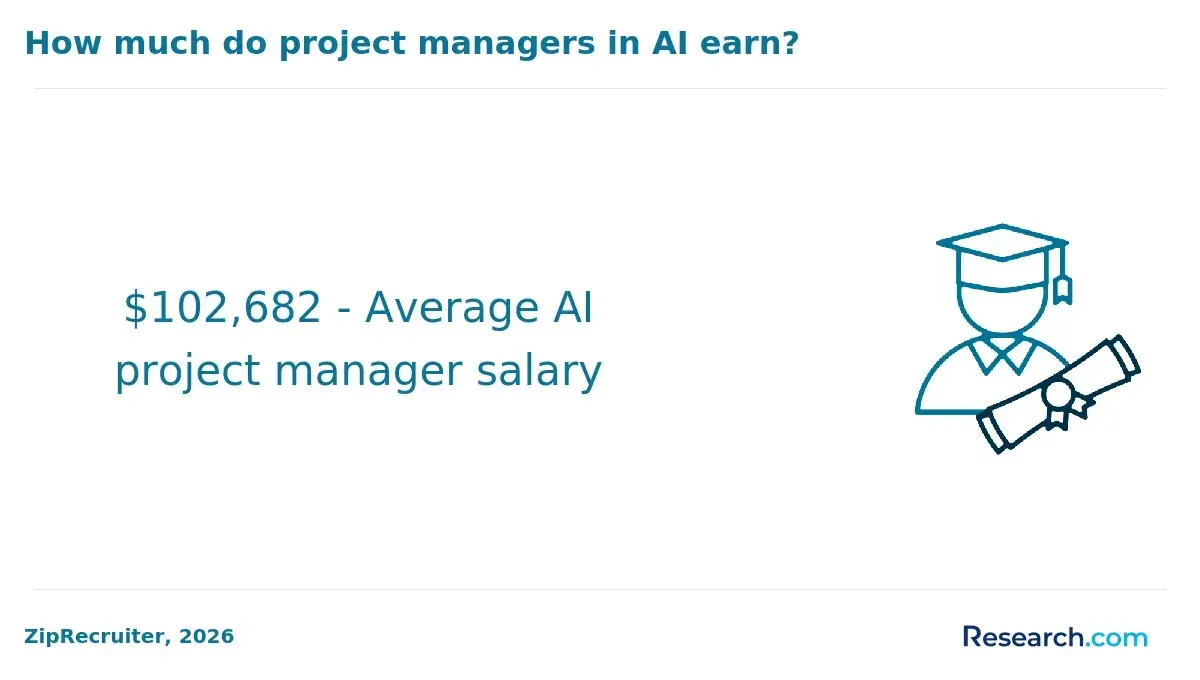
Retail operations leaders with skills in artificial intelligence can advance into roles like AI project manager, data analyst, supply chain strategist, and customer experience director. These jobs involve managing AI-driven automation, demand forecasting, inventory management, and personalization efforts. Salaries start around $80,000 for entry-level roles and exceed $160,000 for senior leadership, with mid-career professionals typically earning between $110,000 and $140,000 annually.
Strong AI expertise allows leaders to shape business strategy and technology adoption, opening paths to positions such as chief innovation officer or head of AI governance. These leaders focus on ensuring AI ethics and regulatory compliance, a vital need since 71% of retail and consumer companies currently lack formal AI governance frameworks, according to PwC. Moreover, 64% of executives identify reputational risk related to AI as a top concern in this sector.
Career achievements often include overseeing AI-powered inventory systems that reduce stockouts by 20%, launching chatbots to boost customer satisfaction, and conducting AI risk assessments to prevent regulatory issues. Mastery of AI governance brings competitive advantages and higher compensation. Retail professionals should prioritize certifications and training in AI ethics, compliance, and implementation to remain competitive in this evolving field.
How can retail operations leaders evaluate accreditation and credibility of AI programs?
Retail operations leaders can assess the credibility of ai programs by examining key indicators such as accreditation by recognized bodies like ABET or regional agencies. Accreditation guarantees that the curriculum meets quality standards and undergoes regular review. The expertise of instructors is also vital; programs led by professionals with retail AI experience offer stronger practical relevance.
Evaluate whether the curriculum covers retail-specific applications like demand forecasting, inventory optimization, and customer analytics. Partnerships with reputable retail or tech firms can enhance learning through case studies and networking opportunities. Alumni success metrics-such as graduate employment rates and leadership advancement-further establish credibility.
The World Economic Forum notes that companies investing in focused digital and ai upskilling for operations leaders can achieve productivity gains of 15-20% within 12-18 months, highlighting the importance of programs with measurable ROI.
Additional practical considerations include reviewing syllabi for hands-on projects, access to AI tools used in retail, and ongoing support like mentorship. Prospective students should also consider program duration and flexibility to balance professional commitments.
- Check accreditation status
- Investigate instructor credentials
- Review retail-specific ai curriculum
- Look for industry partnerships
- Examine alumni outcomes
Making informed decisions on AI programs ensures retail leaders gain validated skills and a credible learning experience aligned with industry demands.
Other Things You Should Know About Artificial Intelligence
Top AI courses for retail operations leaders in 2027 include "AI in Retail by MIT," focusing on integrating AI technologies, Coursera’s "AI For Everyone" by Andrew Ng, and edX’s "Retail and AI: Strategies for Efficiency and Innovation." These courses offer practical insights into AI’s role in enhancing retail operations.
Artificial intelligence enhances decision-making by providing real-time analytics and predictive insights, improving inventory management and demand forecasting. It allows retail leaders to optimize logistics, reduce costs, and quickly respond to market changes with data-driven strategies. This results in more efficient supply chains and better customer satisfaction.
While AI automates repetitive and data-intensive tasks, it is more likely to augment rather than completely replace human roles in retail. AI frees up employees for strategic activities by handling routine processes like stock replenishment or customer queries. Human oversight remains critical for ethical judgment, relationship management, and complex problem-solving.
Leaders must ensure transparency and fairness in AI algorithms to prevent bias and discrimination. Protecting customer data privacy is critical, as is compliance with relevant regulations. Ethical AI use also involves clear communication with customers about AI-driven processes and safeguarding against unintended negative consequences.
References
- AI in retail 101: a store operations guide https://yoobic.com/blog/ai-in-retail-101-a-store-operations-guide/
- Gen AI In Retail Certification https://www.scu.edu/business/retail-management-institute/gen-ai-in-retail-certification/
- AI Certification Courses | tryBusinessAgility https://trybusinessagility.com/executive-programs/certifications/ai/
- Retail and AI: what are the changes in skills? https://www.neobrain.io/en/blog/retail-ai-skills-changes
- 16 Artificial Intelligence Career Paths https://www.calmu.edu/news/artificial-intelligence-career-paths
- Best AI Courses for Finance & Business Professionals (2026) https://www.wallstreetprep.com/knowledge/best-ai-courses-for-finance-business-professionals/
- AI Courses | Practical, Fast, and Impact-Driven https://www.sectionai.com/courses
- How Generative AI Is Transforming Retail: Practical Use Cases https://www.cegid.com/global/blog/practical-applications-of-generative-ai-in-retail/
- AI Manager | Course for Digital Leadership https://executiveacademy.at/en/management-training/ai-manager
- AI Executive Certificate https://esmt.berlin/executive-education/analytics-ai/ai-executive-certificate