2027 Best AI Courses for Consultants With Certificates

Co-Founder and Chief Data Scientist
Consultants without a technical background often struggle to demonstrate proficiency in artificial intelligence when seeking new projects or career advancement. This gap can limit opportunities in industries increasingly driven by data and automation. Finding flexible, credible AI courses that offer certificates is essential to validate skills and build confidence.
Many available programs lack practical relevance or recognized accreditation, complicating the decision-making process. This article highlights the best AI courses tailored for consultants aiming to pivot successfully, focusing on flexible learning options, certification value, and career impact to help guide informed choices in a competitive market.
Key Things You Should Know
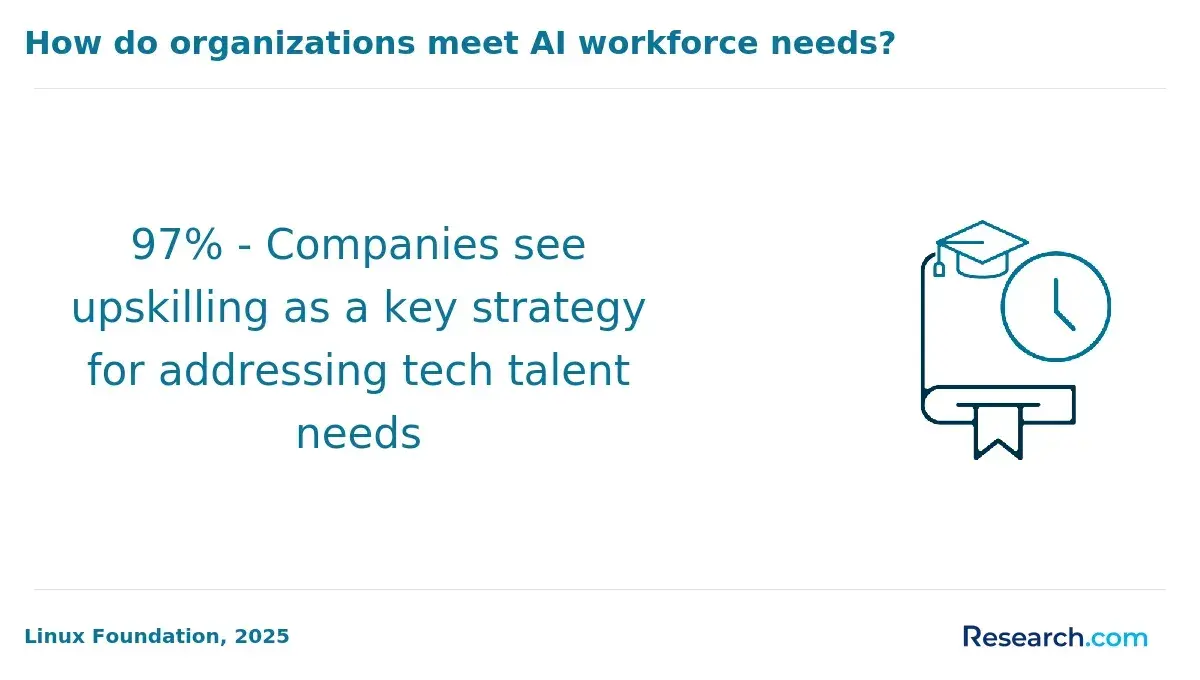
- Top AI courses for consultants in 2026 emphasize practical skills in machine learning, data analytics, and ethical AI deployment, reflecting the 37% year-over-year demand growth in AI expertise across consulting firms.
- Many programs now offer industry-recognized certificates, enhancing employability by validating advanced AI knowledge crucial for consulting roles involving AI integration and strategy.
- Flexible online and hybrid course formats enable professionals to upskill without career interruption, with 58% of learners preferring self-paced AI courses to accommodate work schedules.
Advance Your Career with AI Online Courses
Artificial Intelligence: Implications for Business Strategy
This program provides an introduction to Artificial Intelligence and their implications for business strategy. Earn an official digital certificate.

Oxford Artificial Intelligence Programme
Explore this Oxford Artificial Intelligence programme offered in a flexible learning environment and explore topics like machine learning, automation, and robotics.

Implementing Agentic AI: Building Your Organizational Playbook
This online MIT Agentic AI course offers a practical approach to deploying AI agents in your organization, including a custom playbook. 3 weeks, exclusive launch price.

AI Adoption: Driving Business Value and Impact
This online MIT AI Adoption: Driving Business Value and Impact offers practical frameworks to close the gap between AI potential and business reality.

Artificial Intelligence in Pharma and Biotech
Discover the applications and limitations of artificial intelligence in pharma and biotech with this MIT online short course.

What are the best AI courses for consultants that include a recognized certificate?
Top AI courses for consultants with recognized certification blend practical skills and strategic insight. Stanford's "Machine Learning" by Andrew Ng on Coursera provides foundational knowledge with an industry-respected certificate. Similarly, Stanford's "AI For Everyone" focuses on AI's business applications and delivers an employer-recognized verified certificate. For hands-on skills, IBM's "Applied AI Professional Certificate" uses Watson tools and offers a widely accepted credential.
With the McKinsey Global Institute estimating generative AI's potential to add $2.6-$4.4 trillion annually, impacting consulting and knowledge work, there is strong demand for AI courses that merge technical expertise and strategic AI deployment. MIT Sloan School of Management's "Artificial Intelligence: Implications for Business Strategy" appeals to consultants by emphasizing AI integration in projects and providing certificates valued by corporations.
Consultants seeking the best artificial intelligence training programs for consultants with certificates should prioritize:
- Recognition from leading institutions or industry experts.
- Focus on AI applications in business decision-making.
- Practical exercises using real-world data and AI tools.
- Clear certification to elevate professional credentials.
Beginners often benefit from introductory courses like Google's "Machine Learning Crash Course," while experienced consultants may pursue advanced strategy courses from Wharton or Harvard Extension School with professional certificates. Platforms such as edX offer stackable certificates like the MicroMasters in Artificial Intelligence to support ongoing skill development.
For professionals exploring comprehensive academic options, consider exploring accelerated computer science programs which often include AI-focused curricula and recognized certificates.
Advance Your Career with AI Online Courses
Artificial Intelligence: Implications for Business Strategy
This program provides an introduction to Artificial Intelligence and their implications for business strategy. Earn an official digital certificate.
Oxford Artificial Intelligence Programme
Explore this Oxford Artificial Intelligence programme offered in a flexible learning environment and explore topics like machine learning, automation, and robotics.
Implementing Agentic AI: Building Your Organizational Playbook
This online MIT Agentic AI course offers a practical approach to deploying AI agents in your organization, including a custom playbook. 3 weeks, exclusive launch price.
How can AI courses help consultants improve strategy, analytics, and client outcomes?
AI courses help consultants develop a hybrid skill set combining domain expertise, AI fluency, and change-management capabilities. Such advanced ai strategy development for consultants is critical, especially since a Deloitte survey found 71% of business leaders struggle to scale AI pilots due to a lack of relevant talent. Consultants trained in AI gain practical skills for data-driven decision-making, enabling them to create business strategies aligned with client goals.
Through hands-on work with machine learning, natural language processing, and predictive analytics, consultants enhance their ability to detect trends and manage risks. This leads to better forecasting, resource allocation, and market positioning. For instance, AI-driven customer segmentation can optimize marketing efforts and increase ROI. Improving client outcomes with ai analytics training also empowers consultants to suggest scalable automation solutions that streamline operations and lower costs.
AI education emphasizes change management, teaching consultants to help clients adopt new technologies, manage resistance, and sustain innovation. This skill set increases project success and client satisfaction. Furthermore, courses focusing on real-world case studies, ethical AI use, and cross-functional collaboration prepare consultants to translate AI insights into measurable business impact effectively.
Many aspiring professionals seek affordable and flexible paths to gain these skills. Options like engineering degrees online can provide a strong foundation for entering AI-focused consulting roles.
What types of AI certificates are most valuable for management and technology consultants?
For management and technology consultants, valuable AI certification programs for management consultants focus on practical application, strategic integration, and foundational understanding. Certificates that emphasize AI strategy, ethics, and business transformation equip consultants to manage organizational change effectively. Programs such as "AI For Everyone" and specialized certifications in AI business strategy from reputable platforms provide essential skills in these areas.
Technology consulting artificial intelligence credentialing options often include certificates in machine learning, data science, and AI engineering, granting technical expertise to develop and deploy AI solutions. Additionally, certifications covering cloud AI platforms and automation tools enhance a consultant's ability to design scalable AI systems, increasing their market competitiveness.
A Coursera learner outcomes report revealed that 77% of non-technical learners completing introductory AI courses applied AI concepts to improve workflows within six months, highlighting the value of foundational certificates that focus on AI's impact, use cases, and implementation challenges without requiring coding skills.
Certificates commonly valued by consultants include:
- Foundational AI courses tailored for business professionals, emphasizing AI literacy and deployment strategies.
- Advanced machine learning and data analytics certificates designed for technology consultants.
- Courses addressing AI ethics, risk management, and governance for compliance navigation.
- Hands-on certificates involving tools like TensorFlow, Azure AI, or Google AI Platform.
Consultants selecting credentials should prioritize those endorsed by recognized institutions or industry leaders that demonstrate measurable skills and practical application over purely theoretical knowledge. For professionals seeking further education options, exploring game design courses online can also offer valuable technical skill development complementary to AI expertise.
How do online AI certificate programs for consultants compare with on-campus options?
Online AI certificate programs benefits for consultants are substantial, especially compared to on-campus options, largely due to flexibility and accessibility. These online programs allow busy professionals to learn at their own pace without geographic limits, making it easier to balance work and study. Many online courses incorporate interactive tools, real-world projects, and AI software simulations designed to reflect typical consulting workflows.
On-campus programs, by contrast, offer face-to-face networking, mentorship, and immersive lab experiences that enhance collaboration but usually require relocation or time off work, which can be impractical for many. The evolving landscape of AI in consulting is driving certificate programs to keep pace; Gartner forecasts that by 2026, 80% of consulting projects will integrate generative AI, up dramatically from less than 10% in 2023. Online programs tend to adapt faster by incorporating the latest AI tools and cloud-based resources, while on-campus curricula may be slower to update due to approval cycles.
Consultants should weigh their learning preferences, career stage, and credential needs. Certificates from reputable online platforms are increasingly recognized by employers, particularly when emphasizing applied AI skills, though some firms might prefer traditional university credentials for strategic roles. A clear comparison of on-campus and online AI courses for consultants shows these practical distinctions:
- Online programs excel at immediate application of AI tools relevant to consulting tasks.
- On-campus courses may provide deeper theoretical grounding and structured peer collaboration.
- Costs and time commitments generally favor online certificates.
For professionals exploring further options, specialized cybersecurity courses online with certificates offer additional pathways in related tech fields.
What should consultants look for in accredited AI programs and certificate providers?
Consultants aiming to earn accredited AI certificates should focus on programs recognized by respected institutions, such as universities or established technology organizations. Accreditation confirms the curriculum aligns with industry standards and the latest AI advances. Effective programs balance foundational knowledge-machine learning, data analytics-with ethics, governance, and real-world implementation challenges.
Accenture's 2024 research shows companies embedding AI into at least three core business processes achieve 1.8x higher EBITDA growth, yet only 27% have the organizational change capabilities required. This highlights the need for courses emphasizing practical applications in strategy, operations, and change management.
Look for providers offering hands-on projects or case studies that simulate consulting scenarios, alongside continual updates to keep pace with rapid AI evolution. Certificates widely accepted in your target industry or consulting network add value. Program delivery modes vary-online, blended, and self-paced options accommodate busy professionals.
Evaluate instructor expertise, ideally AI practitioners with consulting experience, and examine alumni outcomes for measurable career advancement. Prioritizing these factors ensures a certificate not only validates your skills but enhances your ability to support AI-driven transformations within organizations.
What core topics and tools are typically covered in AI courses for consultants?
AI courses for consultants focus on equipping learners with essential skills such as machine learning fundamentals, data analysis, and natural language processing. These areas enable consultants to build predictive models, automate text-related tasks, and interpret AI-driven insights effectively. Training commonly covers Python programming for data manipulation, along with tools like TensorFlow, PyTorch, and scikit-learn.
Cloud platforms such as Microsoft Azure AI and Google Cloud AI are also integral to these courses, reflecting their role in real-world AI implementations. Ethics is another core component, emphasizing responsible AI deployment and bias mitigation to meet legal and societal standards. Consultants gain knowledge in project management techniques tailored for AI workflows, including change management strategies that support leadership in AI initiatives.
Practical applications highlight tools like Microsoft Copilot and Google Workspace AI integrations. Data from Microsoft's Work Trend Index Special Report 2024 shows that early Copilot users cut document drafting time by 70% and improved information retrieval speed by 29%, demonstrating significant productivity gains.
Courses often tailor AI skills to specific sectors such as finance, healthcare, or marketing, ensuring solutions address industry-specific challenges. Fundamentals of model evaluation, data preprocessing, and deployment best practices prepare consultants to deliver scalable and maintainable AI projects.
What are the usual admission requirements and time commitments for AI certificate programs?
Admission to AI certificate programs typically requires a bachelor's degree in fields like computer science, engineering, mathematics, or business. Professionals with relevant work experience, especially in data analysis or programming, may also qualify. Some courses expect basic knowledge of Python or statistics, while others provide introductory lessons to support newcomers.
Program durations vary: many designed for consultants take 3 to 6 months part-time, committing 5 to 10 hours per week. Intensive bootcamps condense learning into 6 to 8 weeks with daily classes, and self-paced options allow flexible schedules over several months. Comprehensive certifications often include 40 to 80 hours of instruction combining lectures, assignments, and projects.
Practical application through projects and case studies is common, focusing on consulting scenarios to boost real-world skills. A portfolio or capstone project may be required for completion. Applicants should check deadlines and application materials carefully; some programs request letters of recommendation or statements of purpose, while others have open enrollment. A 2025 LinkedIn Workforce Report found consultants holding AI certificates saw a 33% increase in recruiter engagement within a year, highlighting the career advantage of completing these programs.
How much do AI courses with certificates cost, and what funding options exist for consultants?
AI courses with certificates for consultants vary widely in cost, ranging from free options to programs exceeding $3,000. Entry-level courses, often available through online platforms, typically cost under $200 and serve as introductory or self-paced training modules. More extensive certification programs offered by universities and leading tech providers generally cost between $500 and $3,000. For instance, specialized AI certifications from well-known institutions can range from $1,500 to $2,500, reflecting advanced coursework and career services.
Consultants can explore several funding options to offset these costs including:
- Employer sponsorship or reimbursement, especially in companies focused on digital skills advancement.
- Professional development budgets that may partially or fully cover tuition based on company policies.
- Scholarships and grants which some providers offer to professionals moving into AI-related roles.
- Flexible payment plans or installments to ease upfront financial burden.
- Tax deductions on education expenses for self-employed consultants following U.S. regulations.
Investing in AI skills offers clear financial benefits. According to the Robert Half Salary Guide, U.S. management consultants with AI expertise command billable rates approximately 20-25% higher than peers without such skills. This premium highlights the significant return on investment that certified AI knowledge can provide by enhancing marketability and earning potential.
What career paths, roles, and consulting niches can AI training open up?
AI training opens diverse career paths for professionals aiming to boost expertise and marketability. Key roles include AI strategy consultants who help integrate AI into business processes, data scientists focused on machine learning models for predictive analytics, AI solution architects designing tailored AI frameworks, and AI ethics advisors ensuring responsible deployment in line with legal and social standards.
Consultants often specialize in sectors such as healthcare, finance, supply chain, and marketing, applying AI to enhance outcomes like patient diagnostics, risk analysis, logistics, and personalized customer engagement. For example, healthcare consultants use AI to streamline workflows and improve diagnostic accuracy, while financial advisors focus on fraud detection and algorithmic trading strategies.
Training also covers emerging niches like robotic process automation (RPA), natural language processing (NLP), and AI-enabled cybersecurity, addressing enterprise needs for automation, better interfaces, and threat detection.
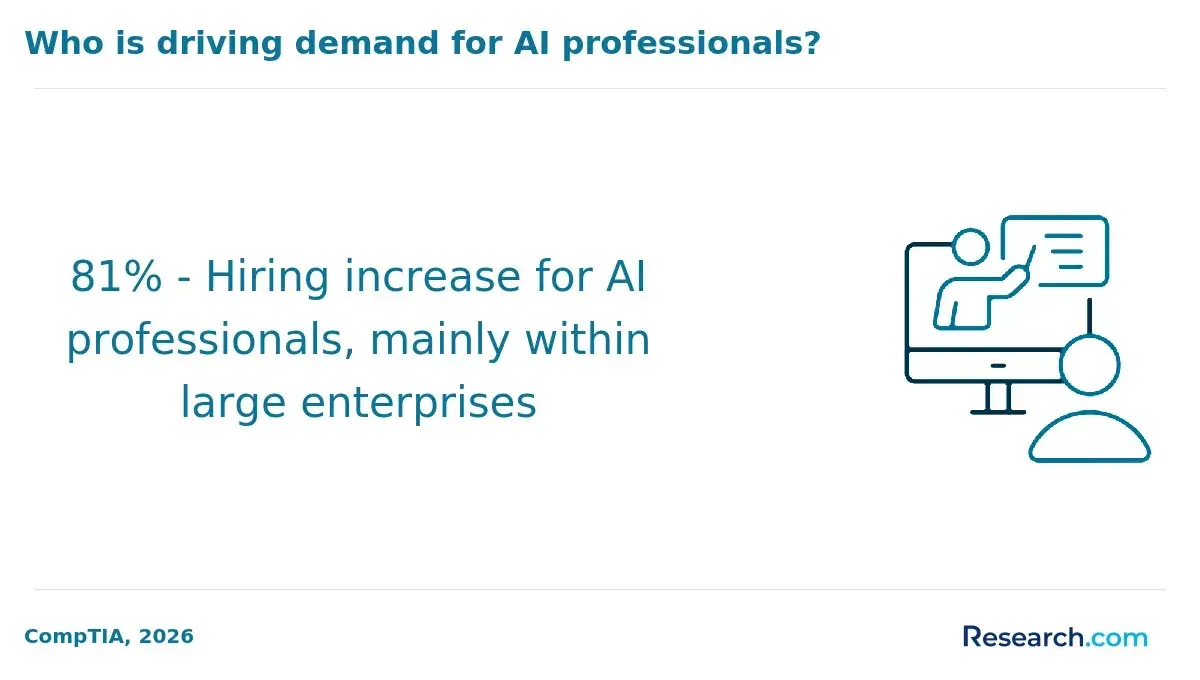
According to PwC's Global CEO Survey, 69% of CEOs plan significant AI upskilling investments within three years, prioritizing consulting and advisory capabilities. Practical AI training equips consultants to overcome challenges such as client education, data quality, and regulatory compliance, with certificates validating skills for roles like AI transformation leads and industry-specific advisors.
What are typical salaries and job outlooks for consultants with AI skills and credentials?
Consultants with AI skills and certifications in the United States typically earn between $85,000 and $150,000 annually, depending on experience, specialization, and industry. Entry-level consultants may start around $85,000, while those with advanced credentials and project success in sectors like finance or healthcare can surpass $130,000. Senior AI consultants specializing in machine learning or natural language processing often command salaries above $150,000.
The job outlook for AI consultants remains strong, with the U.S. Bureau of Labor Statistics projecting a growth rate of over 35% through 2030 for roles involving AI expertise, outpacing average consulting job growth. Employers prioritize candidates who have demonstrated structured learning achievements and verifiable skills via sequential certifications.
According to DataCamp's 2025 "State of AI Education" report, professionals completing a structured AI learning path of three or more sequential courses were 46% more likely to experience a promotion, role change, or salary increase within a year compared to those with standalone courses. This highlights the industry's preference for comprehensive AI education frameworks.
Consultants should focus on certifications that blend technical knowledge with practical application in current AI frameworks, including model deployment, data ethics, and AI project management. Building on prior coursework through progressive sequencing offers competitive advantages in salary negotiations and career mobility.
Other Things You Should Know About Artificial Intelligence
Success in AI courses requires a strong foundation in data analysis, statistics, and programming languages such as Python or R. Consultants should also possess critical thinking skills to interpret AI model results and domain expertise to apply AI solutions effectively in business contexts. Familiarity with machine learning concepts and cloud computing platforms can further enhance learning outcomes.
Many AI certificates, especially those offered by reputable universities and industry leaders, are increasingly recognized by consulting firms as proof of relevant technical knowledge. However, employers often value certificates combined with practical experience and demonstrable skills in deploying AI-driven strategies. Certificates can strengthen a consultant's profile but usually complement other professional qualifications.
Yes, many AI courses designed for consultants assume little or no technical background and provide introductory materials on programming and data science basics. These courses gradually build up to advanced AI techniques while focusing on real-world consulting applications. Dedicated study and practice are essential for consultants new to technology to keep pace with course demands.
The best AI course for consultants seeking certification in 2027 is likely to be the "AI for Business Strategy" course by Coursera, offered in collaboration with leading business schools. It combines AI fundamentals with business applications, ideal for consultants looking to integrate AI into strategic planning.
References
- Data & AI Business Consulting - Expert Training and Certification https://www.datentreiber.com/portfolio/train/data-and-ai-business-consulting/
- AI certifications: What employers actually want in 2026 - Spiceworks https://www.spiceworks.com/it-careers/ai-certifications-what-employers-actually-want-in-2026/
- Using AI for Strategic Business Consulting in 2024 https://nmsconsulting.com/insights/using-ai-for-strategic-business-consulting-in-2024/
- Ultimate Guide: How to Choose the Right AI Training Course to Boost Your Career - ONLC https://www.onlc.com/blog/how-to-choose-ai-training-courses/
- 16 Artificial Intelligence Career Paths https://www.calmu.edu/news/artificial-intelligence-career-paths
- EU AI Act | Online Training, Exam, Certificate of Completion https://www.artificial-intelligence-act.com/Artificial_Intelligence_Act_Trained_Professional_(AIActTPro).html
- AI Executive Certificate https://esmt.berlin/executive-education/analytics-ai/ai-executive-certificate
- Certifications for consultants: What to take first https://advisera.com/articles/certification-for-consultants/
- What Is an AI Consultant? Job Responsibilities, Salary, Recommended Certifications, and Career Outlook Explained | ConsulNext.jp https://mirai-works.co.jp/consulnext/en/column/8380/
- How Much Do AI ML Certification Courses Cost - IABAC https://iabac.org/blog/how-much-do-ai-ml-certification-courses-cost