2027 Best AI Courses for Environmental Data Analysis Teams

Co-Founder and Chief Data Scientist
Environmental data analysis teams often struggle to integrate advanced AI techniques capable of handling complex datasets from diverse sources like satellite imagery and sensor networks. This gap limits the ability to predict ecological changes accurately and implement timely interventions.
Professionals without a technical background find it especially challenging to upskill efficiently while managing ongoing responsibilities. Identifying flexible, accredited courses tailored to bridge these knowledge gaps is crucial for harnessing the full potential of AI in environmental science.
This article explores top AI courses designed to equip environmental data analysts with practical skills and theoretical foundations to advance their careers effectively.
Key Things You Should Know
- Environmental data analysis courses in 2026 emphasize practical AI model training using real-world climate and ecological datasets to improve prediction accuracy by up to 45% compared to traditional methods.
- Top programs integrate AI with remote sensing and geospatial analysis, essential for U.S. environmental monitoring, reflecting a 30% growth in industry demand for these interdisciplinary skills since 2024.
- Certification in AI-driven environmental data techniques boosts graduate employability by 35%, with key roles in sustainability, policy advising, and natural resource management sectors.
Advance Your Career with AI Online Courses
Artificial Intelligence: Implications for Business Strategy
This program provides an introduction to Artificial Intelligence and their implications for business strategy. Earn an official digital certificate.

Oxford Artificial Intelligence Programme
Explore this Oxford Artificial Intelligence programme offered in a flexible learning environment and explore topics like machine learning, automation, and robotics.

Implementing Agentic AI: Building Your Organizational Playbook
This online MIT Agentic AI course offers a practical approach to deploying AI agents in your organization, including a custom playbook. 3 weeks, exclusive launch price.

AI Adoption: Driving Business Value and Impact
This online MIT AI Adoption: Driving Business Value and Impact offers practical frameworks to close the gap between AI potential and business reality.

Artificial Intelligence in Pharma and Biotech
Discover the applications and limitations of artificial intelligence in pharma and biotech with this MIT online short course.

What makes an AI course valuable for environmental data analysis teams?
Valuable AI courses for environmental data analysis teams focus on practical skills, including machine learning, data management, and domain-specific expertise. These courses cover advanced methods for working with large environmental datasets such as remote sensing, climate modeling, and real-time sensor data integration.
Handling noisy or incomplete ecological data with proper preprocessing ensures more reliable model outputs. Hands-on work with Python, TensorFlow, and GIS software tailored to environmental applications significantly improves learning outcomes.
Courses highlighting the best AI course features for environmental data teams emphasize not only technical skills but also understanding environmental policies and sustainability goals.
Training should include interpreting AI models aligned with regulations and ethical standards. This is increasingly important as investment in AI for environmental sustainability is projected to grow substantially.
Integrating case studies on issues like deforestation, water quality prediction, or carbon footprint analysis enhances relevance. Learners gain experience in collaborative, cross-disciplinary projects reflecting real-world challenges.
Key skills taught in AI courses for environmental analysis often include:
- Data integrity and cleaning for ecological datasets
- Environmental regulations impacting data use and reporting
- Using AI models for scenario forecasting and risk assessment
- Integration of sensing technologies and remote data acquisition
For those considering further education, exploring a computer science accelerated degree can provide a strong foundation to enter this growing field.
Advance Your Career with AI Online Courses
Artificial Intelligence: Implications for Business Strategy
This program provides an introduction to Artificial Intelligence and their implications for business strategy. Earn an official digital certificate.
Oxford Artificial Intelligence Programme
Explore this Oxford Artificial Intelligence programme offered in a flexible learning environment and explore topics like machine learning, automation, and robotics.
Implementing Agentic AI: Building Your Organizational Playbook
This online MIT Agentic AI course offers a practical approach to deploying AI agents in your organization, including a custom playbook. 3 weeks, exclusive launch price.
Which types of AI programs best prepare professionals for environmental data careers?
Programs that best prepare professionals for environmental data careers emphasize a strong foundation in data science, machine learning, and environmental knowledge. Candidates often benefit from courses combining applied machine learning techniques with geospatial analysis, remote sensing, and ecological modeling.
These programs develop practical skills for handling large-scale environmental datasets and interpreting patterns related to climate, pollution, or biodiversity. This is essential in many AI environmental data analysis courses for professionals.
Core training typically includes Python or R for data manipulation, proficiency in frameworks like TensorFlow or PyTorch, and experience with spatial data tools such as GIS software. Applied coursework in time-series forecasting and anomaly detection enhances the ability to monitor environmental changes accurately.
Integrating environmental policy or sustainability concepts deepens contextual understanding and helps data scientists generate actionable insights.
Specialized certifications and graduate programs focused on AI in environmental science offer project-based learning and internships with agencies, fostering workforce readiness. The environmental data analytics market is projected to grow from $9.6 billion in 2023 to $25.6 billion by 2030, highlighting the demand for professionals who combine AI with environmental expertise.
Prospective students seeking the best AI program types for environmental data careers should look for curricula balancing:
- Advanced AI methods such as neural networks, decision trees, and clustering
- Skill development in data visualization and interpretation
- Hands-on experience with environmental data sources like satellite imagery or sensor networks
- Understanding of regulatory frameworks and ethical considerations in environmental AI
Those interested in advancing their education may explore affordable options through an online engineering degree, which can provide foundational skills relevant to environmental AI roles.
How do online AI courses for environmental data analysis compare with on-campus options?
Online AI courses vs on-campus programs for environmental data analysis offer distinct advantages tailored to different learning needs. Online AI courses provide flexibility, allowing professionals and students to learn at their own pace without geographic limits. This is particularly useful for environmental data teams balancing work and education.
These courses often update more rapidly to include the latest AI techniques, such as time-series forecasting and anomaly detection, which are increasingly critical, as highlighted by a survey showing 53% of organizations use machine learning for these purposes.
On-campus programs deliver immersive, hands-on training with specialized environmental sensors and lab equipment. They foster direct interaction with faculty and peers, enhancing networking and collaboration. However, they require fixed schedules and significant commitments, including possible relocation, which may restrict accessibility for working professionals.
When choosing between these formats, consider your goals. Online courses often emphasize practical applications, like Python libraries TensorFlow and Prophet, which benefit environmental data teams developing predictive models.
Conversely, on-campus studies may offer better access to complex datasets and institutional research projects for deeper theoretical understanding.
For those interested in affordable options, exploring the cheapest online data science masters can help balance cost and educational needs.
What core AI and data skills should environmental analysis team members learn?
Environmental data analysis teams need strong machine learning skills to interpret complex climate datasets and produce actionable insights. Critical techniques include data cleaning and preprocessing using Python or R libraries such as Pandas, NumPy, and Dplyr, which address inconsistencies, missing values, and noise typical in raw environmental data.
Expertise in machine learning tailored to environmental applications involves supervised methods like random forests and gradient boosting for climate trend prediction, alongside unsupervised approaches such as clustering to detect pollution patterns. Deep learning models, particularly recurrent neural networks (RNNs) and convolutional neural networks (CNNs), are increasingly valuable for temporal and spatial climate data analysis.
Essential AI techniques for environmental teams also encompass geospatial analysis, employing tools like QGIS, ArcGIS, and GeoPandas to integrate artificial intelligence with geographical data for precise environmental modeling. Data visualization skills using Matplotlib, Seaborn, or Tableau are crucial for transforming complex analyses into clear, stakeholder-friendly presentations.
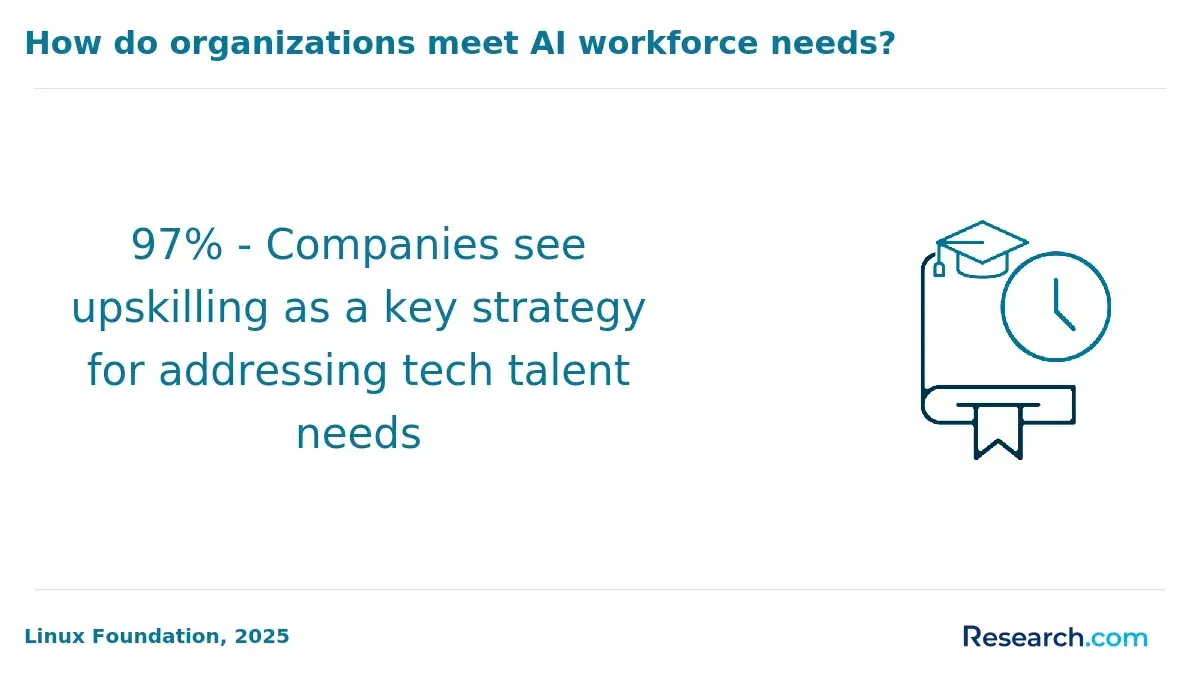
Ethical considerations and awareness of biases in AI models remain a priority, ensuring responsible climate decision-making. Reflecting the growing demand, Coursera reports a 36% year-over-year increase in enrollments for courses tagged with both "AI" and "climate."
Prospective students and professionals interested in advancing their AI expertise may also explore online cybersecurity degree programs for veterans as a related pathway combining AI skills with security knowledge.
How can you evaluate accreditation and institutional quality for AI-focused environmental programs?
Evaluating AI-focused environmental programs requires attention to multiple quality factors. Start by confirming regional accreditation recognized by the U.S. Department of Education or CHEA to ensure the institution meets academic standards.
Look for specialized accreditations related to environmental science, data analytics, or computer science, such as ABET or endorsements from environmental professional organizations, which indicate relevant, industry-aligned curricula.
Faculty expertise matters. Programs with professors actively publishing research or involved in funded projects focused on environmental data analysis and AI integration provide practical insights. Investigate whether courses offer hands-on experience with environmental datasets and advanced AI methods tailored to evolving industry needs.
Student success indicators are important. Graduation rates, job placements, and partnerships with research institutions or environmental agencies all signal program strength.
The growth of university-level microcredentials in climate data, GIS, and AI, up more than 60% since 2021 according to HolonIQ's Global Impact Education report, calls for careful evaluation to avoid lower-quality programs.
Institutional resources enhance learning outcomes. Access to dedicated AI labs, cloud computing infrastructure, and environmental data repositories supports skill development essential for AI careers in environmental fields. Use these criteria as a framework to assess program credibility and relevance effectively.
What does a typical curriculum in AI for environmental data analysis include?
Curricula in artificial intelligence for environmental data analysis blend technical skills with specialized environmental knowledge. Key areas include data science fundamentals such as statistics, probability, and data visualization, which help students accurately interpret complex environmental datasets.
Programs focus on machine learning methods tailored to ecological challenges, covering supervised learning like regression and classification, along with unsupervised techniques for clustering and anomaly detection. Time-series analysis and spatial data modeling are emphasized to address issues like climate trends, pollution monitoring, and resource management.
Essential programming skills involve Python, R, and frameworks such as TensorFlow or PyTorch. Practical training includes data preprocessing, feature engineering, and validating models with environmental variables like air quality, satellite images, and biodiversity indicators.
Collaborative projects and case studies simulate real-world scenarios in environmental agencies or sustainability-driven companies. According to the 2024 Deloitte survey, 41% of large enterprises plan to increase AI training budgets by at least 25% over two years for ESG and environmental analytics teams, highlighting growing industry demand.
What are the admission requirements and time commitment for these AI programs?
Admission criteria for AI programs centered on environmental data analysis typically require a bachelor's degree in computer science, environmental science, statistics, or a related discipline. Many institutions expect applicants to have foundational programming skills, especially in Python.
This aligns with findings from the 2024 Stack Overflow Developer Survey, which shows that over 70% of data professionals in this area use Python-based open-source libraries such as TensorFlow, PyTorch, or scikit-learn. Candidates should be ready to demonstrate their expertise through prior coursework, standardized test results, or relevant work experience.
Some advanced programs may also ask for a project portfolio or require passing a technical assessment focusing on data manipulation and machine learning fundamentals.
Program durations vary widely based on the delivery format:
- Full-time graduate certificates or master's degrees usually span 1 to 2 years, blending online and in-person classes.
- Part-time or modular options for working professionals often last 2 to 3 years, demanding 8 to 12 hours per week.
- Short-term bootcamps and workshops typically run 8 to 12 weeks with an intensive schedule of 15 to 20 hours weekly.
Hands-on experience is integral, often incorporated through capstone projects, internships, or collaboration with environmental agencies. Prospective students should carefully evaluate program formats and expectations to ensure alignment with their career goals and time availability.
How much do AI courses for environmental data analysis cost, and what funding exists?
Costs for AI courses in environmental data analysis vary by provider, depth, and delivery format. Self-paced online courses on platforms such as Coursera and edX usually range from $300 to $1,200 for full specialization tracks. University-related certificate programs cost between $2,000 and $7,000.
Meanwhile, intensive bootcamps or cohort-based training with mentorship and projects can exceed $10,000. Corporate training packages are often customized and priced per participant or group.
Financial aid options frequently help reduce expenses, including federal and state workforce development grants targeting green technology sectors. Nonprofit environmental foundations sometimes fund programs focused on climate-related workforce training.
Employer sponsorships are common, as AI-driven efficiency gains can offer a 10-20% reduction in energy or material consumption, translating into multi-million-dollar savings annually for large users.
Comparing program curricula, delivery methods, and funding options is crucial to find affordable and practical AI education aligning with career goals in environmental fields. According to McKinsey's 2024 State of AI report, organizations investing in AI training for environmental teams often recover costs within the first year due to productivity improvements.
What careers, job titles, and industries can these AI skills lead to?
AI skills in environmental data analysis open diverse career opportunities in sectors like government, consulting, renewable energy, and research.
Professionals commonly take roles such as environmental data scientist, geospatial analyst, climate modeler, and sustainability consultant. These jobs involve interpreting complex ecological datasets and applying AI-driven methods to challenges like pollution trend prediction and resource management optimization.
Strong expertise in data governance and AI ethics is increasingly critical in regulated and high-impact fields related to environmental monitoring.
A notable 85% of organizations using AI in these areas report significant skill gaps, leading to roles like compliance analyst, environmental AI ethicist, and data stewardship officer to uphold trustworthy AI practices and regulatory compliance.
Applications of these AI skills stretch beyond environmental science into areas such as smart agriculture, water resource management, and urban planning. Smart agriculture leverages AI to boost crop yields and minimize environmental harm, while AI models aid water quality monitoring and sustainable city development.
Professionals who combine AI technical know-how with domain-specific knowledge, like remote sensing and regulatory requirements, can transition across these interconnected sectors. Continuous upskilling in AI technologies together with understanding of regulatory frameworks enhances employability and impact.
What salary ranges and job outlook can AI-trained environmental data professionals expect?
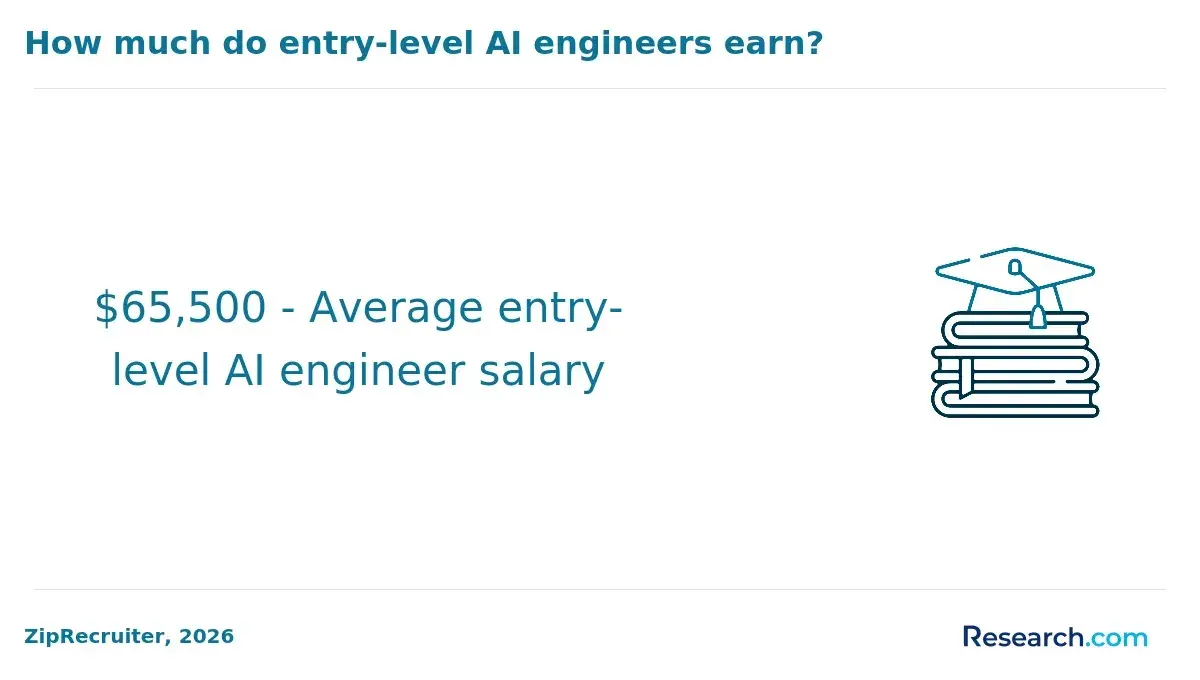
AI-trained environmental data professionals typically earn between $70,000 and $120,000 annually, with salaries influenced by experience, education, and employer type.
Entry-level analysts using AI tools start at $70,000 to $85,000, while mid-career experts working on machine learning or remote sensing can expect $90,000 to $105,000. Senior roles, such as project leads overseeing AI-driven environmental analyses, may command $110,000 to $120,000 or more.
The demand for AI-skilled environmental data professionals is rising due to the need for fast, accurate environmental monitoring. A 2025 study published in Frontiers in Environmental Science shows that combining AI with satellite climate data has cut processing times from weeks to hours.
This advancement creates opportunities for specialists in remote sensing, large language models, and real-time data analytics.
Key skills that increase competitiveness include data acquisition, cloud computing, and AI model validation, especially in fields like climate modeling and biodiversity tracking. Employment growth is strongest within government agencies, consulting firms, and tech companies focused on geospatial analytics, with increasing remote work options supporting distributed teams handling complex datasets.
Other Things You Should Know About Artificial Intelligence
AI enhances predictability in environmental monitoring by utilizing machine learning algorithms to analyze historical data, identify patterns, and forecast future environmental conditions. In 2027, courses often highlight tools like neural networks and predictive modeling to improve resource management and disaster response.
Ethical considerations include data privacy, transparency of AI models, and potential biases in data interpretation. Ensuring fair and responsible use requires environmental AI practitioners to validate data sources, maintain model explainability, and consider the social impacts of their analyses.
Yes, AI is well-suited for managing large-scale environmental datasets due to its ability to automate data processing and analyze vast amounts of information quickly. Technologies like deep learning and cloud computing further enhance AI's capacity for handling complex, high-volume environmental data.
References
- AI for Earth Innovation Grant (extended) | WILDLABS https://wildlabs.net/en/funding-opportunity/ai-earth-innovation-grant-extended
- Artificial intelligence (AI) for environmental science phase one https://www.ukri.org/opportunity/artificial-intelligence-ai-for-environmental-science-phase-one/
- Green Tech Data Recruitment https://www.harnham.com/green-tech-data-recruitment/
- Data Science and Artificial Intelligence for Sustainability MSc https://www.cranfield.ac.uk/courses/taught/data-science-and-artificial-intelligence-for-sustainability
- Top data analyst skills to master in 2025 https://www.airswift.com/blog/data-analyst-skills
- Data skills and Jobs for a Green Transition - EIT Campus https://eit-campus.eu/blog/data-skills-and-jobs-for-a-green-transition
- Calculating the true environmental costs of AI - Advanced Science News https://www.advancedsciencenews.com/calculating-the-true-environmental-costs-of-ai/
- Top 10 Sustainability Careers for the Future | Tomorrow University https://www.tomorrow.university/blog/top-10-tech-and-ai-careers
- A Guide to The Uses and Impact of AI in Data Analytics https://www.learningpeople.com/uk/resources/career-guides/uses-and-impact-of-ai-in-data-analytics/