2027 Best AI Courses for Inventory Planning Teams

Co-Founder and Chief Data Scientist
Inventory planning teams often struggle with demand forecasting errors, leading to overstock or stockouts that disrupt supply chains and inflate costs. The increasing complexity of market dynamics demands more precise, adaptable solutions. Leveraging AI can transform inventory management through improved data analysis, predictive modeling, and automation.
However, gaining the right skills to implement these technologies remains a significant challenge for professionals without a technical background. This article identifies the best AI courses tailored for inventory planning teams, highlighting flexible, accredited programs that equip learners to harness AI tools and optimize inventory decisions effectively.
Key Things You Should Know
- Top AI courses for inventory planning focus on machine learning, demand forecasting, and optimization techniques, reflecting industry needs for accuracy and efficiency in supply chain management.
- By 2025, 62% of supply chain teams integrating AI training report a 20% reduction in inventory waste, highlighting the practical impact of specialized AI education.
- Courses offered by accredited institutions emphasize hands-on projects with real datasets, ensuring learners gain skills applicable to current inventory planning challenges in diverse industries.
Advance Your Career with AI Online Courses
Artificial Intelligence: Implications for Business Strategy
This program provides an introduction to Artificial Intelligence and their implications for business strategy. Earn an official digital certificate.

Oxford Artificial Intelligence Programme
Explore this Oxford Artificial Intelligence programme offered in a flexible learning environment and explore topics like machine learning, automation, and robotics.

Implementing Agentic AI: Building Your Organizational Playbook
This online MIT Agentic AI course offers a practical approach to deploying AI agents in your organization, including a custom playbook. 3 weeks, exclusive launch price.

AI Adoption: Driving Business Value and Impact
This online MIT AI Adoption: Driving Business Value and Impact offers practical frameworks to close the gap between AI potential and business reality.

Artificial Intelligence in Pharma and Biotech
Discover the applications and limitations of artificial intelligence in pharma and biotech with this MIT online short course.

What are the best AI courses for inventory planning and supply chain professionals today?
Top AI courses for inventory planning professionals focus on practical machine learning, demand forecasting, and optimization techniques tailored to supply chain challenges. Recognized programs from institutions such as MIT and Stanford emphasize integrating AI tools to improve inventory accuracy and reduce excess stock.
Programs teaching predictive analytics with Python and R are essential for data-driven decisions, with Coursera's AI in Supply Chain by Rutgers University offering hands-on projects on inventory segmentation and demand sensing.
Udacity's AI for Business Nanodegree includes logistics optimization modules, addressing significant cost reductions companies have reported. These courses blend AI fundamentals with supply chain case studies on lead time variability and supplier risk assessment, key areas for supply chain teams seeking advanced training.
Interactive simulations in these programs allow learners to apply inventory replenishment strategies and improve service levels, reflecting notable real-world gains. Frequent course updates ensure content covers evolving topics like neural networks and reinforcement learning applied to supply chain problems.
Choosing the best AI courses for inventory planning professionals enhances skills linked to substantial inventory improvements and logistics cost savings. Professionals exploring artificial intelligence career paths will find these specialized training options invaluable to advancing their roles within supply chain teams.
Advance Your Career with AI Online Courses
Artificial Intelligence: Implications for Business Strategy
This program provides an introduction to Artificial Intelligence and their implications for business strategy. Earn an official digital certificate.
Oxford Artificial Intelligence Programme
Explore this Oxford Artificial Intelligence programme offered in a flexible learning environment and explore topics like machine learning, automation, and robotics.
Implementing Agentic AI: Building Your Organizational Playbook
This online MIT Agentic AI course offers a practical approach to deploying AI agents in your organization, including a custom playbook. 3 weeks, exclusive launch price.
How can AI training specifically improve inventory planning accuracy and efficiency?
AI training significantly improves inventory planning accuracy by enabling teams to apply ai-driven inventory forecasting techniques and automation tools. Professionals skilled in machine learning algorithms can analyze complex factors like seasonality, market trends, and supplier performance to forecast demand precisely, reducing costly stockouts and overstock situations. This directly enhances customer satisfaction while lowering operational costs.
Incorporating AI-powered systems allows inventory specialists to monitor stock levels in real time and adjust replenishment schedules dynamically, eliminating manual errors and speeding decision-making. The impact of machine learning on inventory accuracy becomes clear when reinforcement learning models optimize reorder points and safety stock based on fluctuating conditions.
Training also covers natural language processing, helping planners extract insights from unstructured supplier communications and customer feedback, which uncovers hidden supply chain bottlenecks. Additionally, AI-based anomaly detection accelerates the identification of inventory discrepancies or potential fraud, surpassing traditional methods.
Organizations adopting AI-based applications are predicted to rise significantly, underlining the need for professionals versed in these tools. Those seeking to advance their skills may consider programs like the cheapest online master's mechanical engineering as a pathway to technical expertise.
Mastering these competencies supports greater operational agility and financial performance in inventory roles, driven by continual improvements in AI-driven inventory forecasting techniques.
What types of AI programs are available for inventory planners: certificates, degrees, or bootcamps?
Inventory planners looking for AI certification programs for inventory planning professionals can choose certificates, degrees, or bootcamps based on their career stage and learning preferences. Certificate programs typically offer focused training on AI applications like demand forecasting and inventory optimization, lasting from weeks to a few months. These options provide practical skills rapidly without a lengthy commitment.
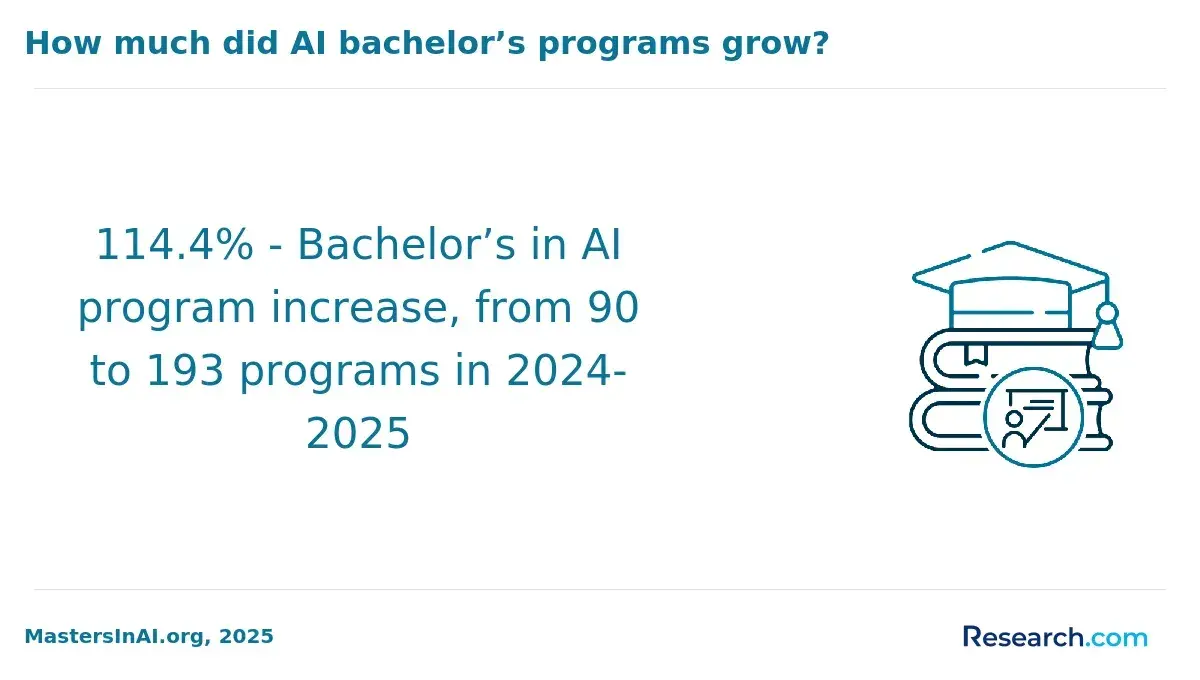
Degree and bootcamp options in AI for supply chain inventory management offer different depths of study. Degrees, including bachelor's and master's in data science or supply chain management with AI specializations, cover comprehensive theory and practice over 1 to 4 years. They prepare students for advanced roles involving programming, predictive analytics, and logistics modeling.
Bootcamps, in contrast, deliver intensive, skills-based training within 8 to 16 weeks, focusing on real-world projects and coding to quickly build capabilities suited for professionals switching careers or enhancing practical expertise.
According to Deloitte's Digital Supply Chain Survey, 83% of supply chain executives plan to boost investments in AI and analytics through 2026, increasing demand for trained professionals across all education paths. Combining certificates for immediate skills with degrees or bootcamps for deeper knowledge can be an effective approach.
Those interested can explore the best online AI degree programs for comprehensive options.
How do online AI courses for inventory planning compare with campus-based programs?
Online AI courses versus campus-based inventory planning programs offer distinct advantages tailored to different professional needs. Virtual AI training for inventory management teams provides flexible access to interactive modules, video lectures, and real-time problem-solving with cloud-based tools.
These opportunities allow learners to apply advanced concepts like machine-learning-based demand forecasting, which studies show can reduce forecasting errors by up to 50% compared to traditional approaches.
Campus-based programs, by contrast, excel in hands-on workshops and face-to-face mentoring, fostering collaboration and networking skills essential for tackling complex supply chain challenges. They frequently use industry case studies and simulation labs, deepening practical knowledge of physical inventory systems.
Online platforms often update their content more frequently, incorporating the latest AI algorithms and offering specialized tracks in inventory optimization and supply chain analytics. This customization supports professionals targeting niche career paths.
Choosing between learning formats depends on individual preferences and career timelines. While online courses enable rapid skill acquisition and immediate application, campus-based programs build comprehensive foundational expertise over longer durations.
Employers increasingly value demonstrated competencies from both, especially projects showcasing AI tools that deliver measurable benefits such as error reduction.
For those seeking advanced academic opportunities, exploring a PhD data science online offers a pathway to deepen expertise in this dynamic field.
What core AI and analytics skills should inventory planning courses teach?
Inventory planning courses should equip students with essential skills in machine learning, predictive analytics, and data visualization to optimize AI integration. Core topics include supervised learning models such as regression and classification, which help forecast demand trends accurately. Time series forecasting is particularly valuable for predicting seasonal fluctuations and managing stock levels effectively.
Proficiency in statistical analysis is vital to interpret inventory metrics like turnover rates and lead times. Courses often cover anomaly detection methods to spot unusual demand patterns, preventing overstocking or shortages. Understanding optimization techniques, including linear programming and genetic algorithms, helps improve inventory allocation and reduce carrying costs.
Hands-on experience with programming languages like Python or R, alongside AI frameworks such as TensorFlow or scikit-learn, prepares students to build and deploy models. Training should also emphasize database querying and manipulation using SQL to handle large-scale inventory data efficiently.
Integrating supply chain context and external factors like supplier performance and market trends refines AI-driven forecasts. Interpreting model outputs through data visualization tools ensures effective communication of insights to stakeholders.
These skills drive measurable operational improvements. According to IBM, organizations using AI for inventory optimization see up to 30% fewer stockouts and reduce carrying costs by 13-25%. Mastering these competencies enables inventory planning professionals to enhance supply chain resilience and profitability.
What prerequisites and professional background are needed to enroll in AI courses for planners?
Enrollment in AI courses for inventory planning typically demands a solid foundation in quantitative skills alongside relevant professional experience. Candidates should understand statistics and data analysis and have at least intermediate Excel or database proficiency. Programming knowledge in Python or R is preferred for advanced courses involving machine learning or predictive analytics.
Professionals from fields such as supply chain management, logistics, operations, or industrial engineering find these courses particularly beneficial. Those lacking a formal background should consider introductory classes in inventory control before advancing to AI-focused training. Familiarity with enterprise resource planning (ERP) systems or inventory management software provides practical insight that aids learning.
A recent Capgemini Research Institute report identified that 77% of supply chain leaders face moderate-to-severe AI skills gaps in their teams. Many programs now include preparatory modules on data handling and algorithm basics to bridge these gaps.
Students should evaluate their own skills and pursue targeted upskilling to stay competitive. For instance, planners with no coding experience may start with no-code AI tools or introductory programming bootcamps.
Employers often encourage foundational certifications prior to advanced AI training in inventory optimization. Successful learners combine quantitative aptitude, domain knowledge, and digital tool exposure, enhancing the impact of AI education designed specifically for inventory planning professionals.
How long do AI courses for inventory planning take, and what do they cost?
AI courses for inventory planning vary widely in duration and cost, typically ranging from 4 weeks to 6 months. Short courses, often lasting 20 to 40 hours, cover basic concepts and are suited for professionals seeking rapid upskilling. More comprehensive programs, including specialization certificates, may exceed 100 hours and blend theory with practical projects and advanced techniques.
Cost depends on factors like course length, provider, and included resources. Entry-level courses usually fall between $100 and $500, making them accessible to budget-conscious learners or those exploring AI applications in inventory management. More intensive courses with hands-on projects, mentorship, or certifications often range from $800 to $3,000, while university or corporate training packages can be more expensive, reflecting their prestige and depth.
Hands-on, project-based learning significantly enhances skill retention and practical application. Data from the Coursera Global Skills Report 2024 shows learners who complete such courses are 2.5 times more likely to use new skills on the job within six months compared to those in lecture-only formats. This highlights the importance of selecting programs with real-world inventory datasets and project components for immediate workplace relevance.
When choosing a course, consider the structure, support, and project opportunities. Balancing theory with applied learning maximizes return on investment and effectiveness in AI-driven inventory planning.
How can learners verify accreditation and program quality for AI inventory planning courses?
When evaluating ai inventory planning courses, verify that the provider is accredited by a recognized U.S. Department of Education-approved agency or a respected regional accreditor, such as the Middle States Commission on Higher Education. This confirmation ensures academic quality and credit transferability. Also, seek out programs aligned with current industry demands and practical AI applications in supply chain management.
Quality curricula include hands-on training focused on AI-driven trade-offs and risk assessment, addressing key industry challenges. For example, KPMG's Global Operations and Supply Chain Outlook highlights that 69% of chief supply chain officers struggle to scale AI without improving leadership skills.
Other markers of program quality include partnerships with established technology firms, transparent employment or hiring partner data, and clear certification opportunities from professional supply chain or AI organizations. Prospective students should also research faculty expertise, project opportunities, and ongoing support by engaging directly with admissions offices.
While online reviews and third-party rankings can be helpful, confirm findings against formal accreditation and official outcome metrics to avoid misleading information.
What inventory and supply chain roles can AI-trained professionals pursue, and what do they earn?
Professionals skilled in AI for inventory and supply chain management often fill roles such as inventory analysts, demand planners, supply chain data scientists, and logistics coordinators. These positions emphasize applying machine learning models to forecast demand, optimize stock levels, enhance supplier choices, and automate warehouse functions.
Inventory analysts work to minimize holding costs and avoid stockouts by evaluating historical data trends. Demand planners leverage predictive analytics to synchronize procurement with sales patterns, reducing waste and excess inventory. Supply chain data scientists create algorithms to streamline entire supply networks, improving decision-making speed and accuracy. Logistics coordinators implement AI tools to boost route efficiency and shorten delivery times.
Compensation varies widely: entry-level inventory analysts earn about $60,000 annually, demand planners make between $75,000 and $95,000, and senior supply chain data scientists can exceed $120,000. The World Economic Forum's AI for Small and Medium Enterprises Playbook highlights that SMBs adopting AI experience an 18% reduction in operating costs and 25% faster decision-making within two years.
Specialized tracks include supply chain risk analysts, who predict disruptions using AI, and inventory automation engineers, developing integrated robotics and AI systems. There is sustained demand for professionals combining domain expertise with AI modeling skills to drive operational resilience and competitive advantage.
What industry certifications support AI skills for inventory planning and supply chain analytics?
Industry certifications that blend data science, machine learning, and supply chain expertise are essential for those developing AI skills in inventory planning and analytics. The Certified Supply Chain Professional (CSCP) from APICS is a leading credential, showcasing capabilities in AI-driven demand forecasting, inventory optimization, and risk management.
The Institute for Supply Management (ISM) offers the Certified Professional in Supply Management (CPSM) certification, which includes modules on digital supply networks and AI applications. This training emphasizes practical AI use to enhance inventory turnover and supplier performance.
For credentials focused directly on AI and data analytics, programs like IBM's AI Engineering Professional Certificate teach machine learning models relevant to supply chain data. Microsoft Certified: Azure AI Fundamentals provides foundational AI skills for big data contexts, supporting improved predictive inventory control.
Role-based certifications produce measurable productivity gains. According to IBM Institute for Business Value's "AI Readiness 2024 Study," 55% of organizations see tangible benefits within a year from targeted AI training, compared to 27% from generic courses. This highlights the advantage of specialized supply chain AI credentials over broad AI programs.
Prospective candidates should seek certifications offering hands-on experience with supply chain AI platforms and tools like Python for inventory analytics or AI-powered ERP systems. Employers value these practical skills for improving forecasting accuracy, reducing stockouts, and optimizing reorder points.
Other Things You Should Know About Artificial Intelligence
The primary challenges include data quality and integration, as AI models rely on accurate and comprehensive data from multiple sources. Additionally, there can be resistance from staff unfamiliar with AI tools, and the complexity of aligning AI outputs with existing business processes can hinder smooth adoption.
Artificial intelligence enables more precise demand forecasting, automated inventory replenishment, and real-time supply chain monitoring. These advancements improve efficiency, reduce waste, and help companies respond quickly to market fluctuations and disruptions.
Ethical concerns include data privacy, especially when AI systems access sensitive supplier or customer information. Transparency in AI decision-making is also important to avoid biases or unfair treatment in procurement and inventory allocation processes.
In 2027, top AI courses for inventory planning teams include "Mastering AI for Supply Chain Professionals" on Coursera, "Artificial Intelligence for Inventory Planning" by edX, "AI in Inventory and Logistics" on Udacity, and MIT’s "Advanced AI Strategies for Inventory Management." These courses offer practical insights and advanced techniques tailored for inventory planning.
References
- Best AI Inventory Planning Software for Modern Businesses https://www.onepint.ai/insights/best-ai-inventory-planning-software-for-modern-businesses
- Universities Race to Prepare Supply Chain Students for AI-Driven Careers https://www.traxtech.com/ai-in-supply-chain/universities-race-to-prepare-supply-chain-students-for-ai-driven-careers
- AI-Driven Forecasting and Optimization for Inventory Control in Manufacturing Supply Chain https://acr-journal.com/article/ai-driven-forecasting-and-optimization-for-inventory-control-in-manufacturing-supply-chain-1619/
- AI Course Supply Chain, 7 MasterClasses https://abcsupplychain.com/ai-course-supply-chain/
- Learn the steps to become an AI developer | edX https://www.edx.org/become/how-to-become-an-ai-developer
- Artificial Intelligence (AI) for Quality Control & Manuf... https://oxford-management.com/course/artificial-intelligence-ai-for-quality-control-manufacturing-analytics
- Top 7 artificial intelligence courses 2025: Comparison of the best online programs https://xd-i.com/en/data-en/ai-courses/
- AI and Supply Chain https://www.oxfordhomestudy.com/courses/ai-courses-online/ai-and-supply-chain
- Supply Chain Skills for AI: What Actually Matters in 2026 https://www.scoperecruiting.com/blog/supply-chain-skills-ai