2027 Best LSE AI Courses for Corporate Teams

Co-Founder and Chief Data Scientist
Many corporate teams struggle with integrating artificial intelligence into existing workflows due to lack of tailored training and time constraints. Upskilling employees without disrupting productivity poses a significant challenge. Identifying flexible programs that cater to diverse backgrounds is essential for effective adoption. The right course can bridge knowledge gaps and accelerate digital transformation while accommodating busy schedules. This article reviews top LSE artificial intelligence courses designed specifically for corporate teams, highlighting their features, structure, and benefits to help organizations make informed decisions and successfully implement AI strategies.
Key Things You Should Know
- LSE's 2026 AI courses for corporate teams emphasize practical skills, with 72% of participants reporting improved workplace efficiency post-training.
- Curricula integrate the latest AI ethics and regulation insights, reflecting 2025's increased global focus on responsible AI deployment.
- Flexible delivery options, including hybrid and virtual formats, cater to diverse corporate schedules and enhance accessibility for U.S.-based professionals.
Advance Your Career with AI Online Courses
Artificial Intelligence: Implications for Business Strategy
This program provides an introduction to Artificial Intelligence and their implications for business strategy. Earn an official digital certificate.

Oxford Artificial Intelligence Programme
Explore this Oxford Artificial Intelligence programme offered in a flexible learning environment and explore topics like machine learning, automation, and robotics.

Implementing Agentic AI: Building Your Organizational Playbook
This online MIT Agentic AI course offers a practical approach to deploying AI agents in your organization, including a custom playbook. 3 weeks, exclusive launch price.

AI Adoption: Driving Business Value and Impact
This online MIT AI Adoption: Driving Business Value and Impact offers practical frameworks to close the gap between AI potential and business reality.

Artificial Intelligence in Pharma and Biotech
Discover the applications and limitations of artificial intelligence in pharma and biotech with this MIT online short course.

What makes LSE's AI courses valuable for corporate teams and enterprise upskilling?
LSE's AI courses for corporate teams in London align closely with business transformation goals and workforce needs. These programs deliver practical AI skills tailored to tackle real corporate challenges such as optimizing operations, improving customer experiences, and enabling data-driven decision-making. Their focus on applied AI frameworks ensures rapid translation of knowledge into measurable business outcomes.
Designed for enterprise upskilling with LSE artificial intelligence programs, the executive education format offers flexible, online learning that fits into busy work schedules without disrupting team workflows. Customization by industry, including finance, marketing, and public policy sectors, enables organizations to apply AI concepts relevant to their unique contexts.
Employer sponsorship plays a key role, with LSE reporting that 78% of executive online program participants were company-sponsored, and 64% of funding driven by digital and AI transformation needs. Key benefits for corporate teams include:
- Development of AI literacy to support leadership decision-making and cross-departmental collaboration
- Hands-on experience with AI tools and data analysis techniques applicable to enterprise projects
- Access to a globally recognized brand that enhances corporate reputation and talent retention
- Networking opportunities with diverse peers from leading organizations
Enterprises facing challenges around workforce automation, AI ethics, and integration can leverage LSE's courses for both strategic insight and technical proficiency, enabling scalable solutions without sole reliance on external consultants. Those exploring career paths may also find value in understanding what an artificial intelligence degree offers in broader contexts.
Advance Your Career with AI Online Courses
Artificial Intelligence: Implications for Business Strategy
This program provides an introduction to Artificial Intelligence and their implications for business strategy. Earn an official digital certificate.
Oxford Artificial Intelligence Programme
Explore this Oxford Artificial Intelligence programme offered in a flexible learning environment and explore topics like machine learning, automation, and robotics.
Implementing Agentic AI: Building Your Organizational Playbook
This online MIT Agentic AI course offers a practical approach to deploying AI agents in your organization, including a custom playbook. 3 weeks, exclusive launch price.
Which LSE AI programs are best for corporate training and how do they differ?
The best LSE artificial intelligence corporate training programs cater to different professional levels and team needs. The AI Leadership Accelerator targets senior managers aiming to integrate AI into business strategy and costs £7,245. It has a strong leadership focus, with alumni reporting an average 14% increase in total compensation within 12 months of completion, according to LSE Executive Education's Programme Prospectus and Alumni Outcomes 2024.
For mid-level executives needing a practical understanding of AI without deep technical detail, the Executive Certificate in AI Strategy covers ethics, governance, and AI applications across industries. This program emphasizes practical implementation more than executive decision-making.
Multi-disciplinary teams seeking technical skills should consider LSE's AI Fundamentals for Business, which provides a solid foundation in machine learning concepts and data analytics tailored to business contexts. This course supports operational efficiency improvements through AI technologies.
The differences between LSE AI courses for business teams include:
- Target audience: Senior leaders vs. mid-level managers vs. technical teams
- Focus areas: Strategic leadership, governance and strategy, or technical fundamentals
- Outcome emphasis: Compensation growth vs. skills development
Pricing and curriculum depth vary to match different corporate goals. To choose wisely, U.S. professionals can also explore the AI degree options for further education in the field.
How do LSE AI courses compare with U.S. university and online corporate AI training options?
LSE AI courses stand out when comparing London School of Economics AI training with US university programs by blending social science and technical expertise within a global policy context. Unlike many U.S. programs that focus mainly on technical skills or online corporate courses prioritizing convenience, LSE integrates ethical, societal, and economic implications of AI into its curriculum.
This approach is valuable for corporate teams aiming to lead responsible AI adoption aligned with global regulatory and cultural standards.
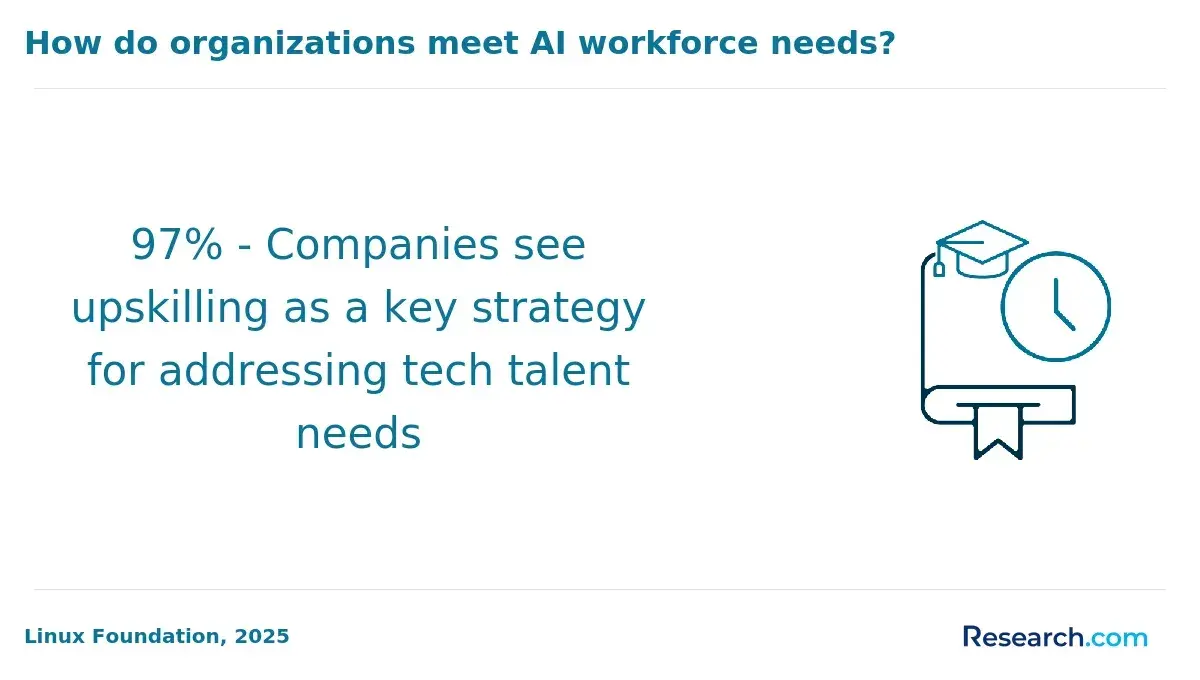
U.S. university AI courses often provide rigorous technical foundations with access to advanced research and industry partnerships, ideal for teams needing strong algorithmic and engineering skills. Online corporate options offer flexibility and scalability for ongoing learning but may lack LSE's strategic and interdisciplinary depth. Indeed, a 2024 IBM Institute for Business
Value study found companies with senior leaders trained in formal AI programs were 2.6 times more likely to achieve over 10% ROI within the first year.
For those assessing how LSE AI courses stack up against US corporate training, LSE uniquely prepares leaders to navigate AI ethics and compliance with evolving regulations like the European AI Act. Its curriculum covers challenges in international markets, which US-centric or purely technical courses often overlook.
Teams focused on immediate technical upskilling might consider U.S. or online paths; however, those responsible for strategy benefit from LSE's comprehensive approach. Students exploring options might also review the cheapest online data science masters to balance affordability with program quality.
What formats do LSE AI courses offer for corporate learners (online, hybrid, custom)?
LSE AI courses online and hybrid formats offer corporate learners flexible options to develop AI skills tailored to their organizational goals. Online courses provide fully remote access, allowing distributed teams to engage with content asynchronously or through live virtual sessions without logistical hurdles.
Hybrid formats blend online learning with in-person workshops or seminars, supporting hands-on exercises and networking opportunities. This format is ideal for organizations that value face-to-face interaction alongside the convenience of remote participation.
For firms needing targeted training, custom corporate AI training London delivers bespoke content, pacing, and delivery methods. This includes integrating company-specific data or projects, creating highly relevant learning experiences that align with industry-specific challenges.
These adaptable formats address a critical gap highlighted by Gartner's 2025 Board of Directors Survey, which found that while 79% of boards expect a formal AI strategy by 2026, only 24% have adequate internal expertise today. LSE's offerings help companies bridge this gap effectively.
For example, a technology company might start with an online foundational course and then advance to hybrid sessions for practical AI deployment. Meanwhile, financial institutions might prefer fully customized programs that emphasize compliance and risk management applications.
Individuals interested in expanding their skills can also explore related options like a computer science online degree, which complements corporate AI training and supports long-term career growth.
What AI topics and skills do LSE corporate-focused courses typically cover in the curriculum?
Corporate-focused courses at LSE cover a wide array of AI topics aimed at enhancing strategic decision-making and operational efficiency in business settings. The curriculum blends foundational knowledge, including machine learning algorithms, natural language processing, and data ethics, with practical applications like predictive analytics, automation, and AI-driven customer insights.
These courses prepare business professionals to:
- Understand AI model development and deployment to back data-driven strategies
- Critically interpret AI outputs for better decision-making and risk management
- Address ethical and regulatory issues surrounding AI use in workplaces
- Utilize AI tools to optimize HR, finance, marketing, and supply chain operations
Emphasizing analytics skills, LSE's AI programs respond to findings such as those from the Deloitte Global Human Capital Trends report, which shows organizations with AI-trained HR leaders achieve significant productivity gains. Hands-on training with real corporate datasets allows participants to tackle challenges like customer segmentation, fraud detection, and workforce analytics.
This education also fosters collaboration between business teams and AI specialists, improving communication and ensuring strategic application of AI technologies tailored to industry needs. These offerings are valuable for professionals seeking to integrate AI thoughtfully into their organizations.
How should U.S.-based companies evaluate accreditation, reputation, and rigor of LSE AI programs?
U.S.-based companies evaluating LSE AI programs should focus on accreditation by recognized UK bodies, such as the Quality Assurance Agency or the British Computer Society. These accreditations confirm the program's credibility and adherence to rigorous academic and industry standards.
Beyond accreditation, companies must assess factors like faculty expertise, alumni success in AI roles, and partnerships with leading technology firms. Programs featuring renowned professors or guest lectures from AI practitioners indicate strong alignment with current industry needs.
Curriculum rigor is crucial and can be gauged by course depth, assessment methods, and inclusion of practical applications. Key topics to look for include machine learning algorithms, ethical AI use, and AI applications in finance or risk management. Case studies and real-world projects improve skill retention and relevance.
For example, McKinsey reported that financial institutions led by executives with formal AI and analytics training saw a 15-25% decrease in credit and fraud losses.
- Accreditation by UK quality bodies
- Faculty expertise and industry partnerships
- Advanced AI curriculum with practical projects
- Modular and customizable program options
- Graduate outcomes and job success metrics
Practical considerations include program length, delivery mode, and frequent updates to meet AI's fast evolution. Companies often prefer modular or customizable corporate tracks tailored to business needs. Reviewing graduate feedback, job placement rates, and faculty-to-student ratios helps evaluate program value. These elements together ensure a comprehensive, business-relevant AI education.
What are the typical admission requirements and enrollment processes for LSE corporate AI cohorts?
Admission to LSE corporate AI cohorts typically requires applicants to have at least three years of professional experience in fields like data, analytics, operations, or technology. Candidates must often provide a resume, a statement of learning goals, and evidence of skills in statistics or programming languages such as Python or R.
Enrollment timelines vary, with some cohorts using rolling admissions and others enforcing fixed deadlines aligned with course start dates. Companies enrolling multiple employees may coordinate customized schedules and onboarding sessions that fit corporate calendars, such as aligning cohort start dates with fiscal planning cycles.
Before starting, participants usually complete a brief orientation or preparatory module to ensure uniform baseline knowledge. Final enrollment approval generally involves agreement between participants and corporate training managers to align expectations and outcomes.
Structured AI education delivers measurable benefits. A 2024 BCG survey found companies investing in such training were 1.8 times more likely to reduce supply chain costs by at least 10% through AI initiatives than those without this investment. This underscores the strategic impact of meeting admission standards that emphasize both expertise and organizational support.
How long do LSE AI courses for organizations take, and what do they cost per learner?
LSE AI courses for corporate teams vary from one to five days, tailored to different levels of expertise and organizational roles. Shorter sessions, lasting one to two days, focus on foundational ai literacy for non-technical employees. Longer, more intensive programmes spanning three to five days often include interactive workshops and strategy development, targeting technical staff and leadership.
Pricing depends on length, customization, and delivery style. Basic in-person or virtual sessions start at approximately $1,500 per learner for shorter courses. More extensive, bespoke trainings designed for larger groups or specific industries can exceed $4,000 per participant. These costs typically cover course materials and post-training support, though additional consulting fees may apply and should be clarified in advance.
Broad ai literacy initiatives lead to tangible benefits. For example, PwC's AI Jobs Barometer reveals companies with inclusive ai training across departments see a 27% quicker adoption of generative AI tools and a 15% increase in employee productivity compared to firms limiting training to technical teams alone. This emphasizes the strategic value of accessible course durations and pricing models that encourage widespread participation.
Organizations should align course duration and cost with their desired outcomes. Shorter programmes are ideal for rapidly upskilling sales or HR staff, while longer courses help senior management integrate AI strategically. Flexible delivery options and transparent pricing improve budget efficiency and optimize the return on investment in AI training.
What career and business outcomes can corporate teams expect after completing LSE AI training?
Corporate teams completing the LSE AI Leadership Accelerator gain practical leadership and strategy skills that drive tangible career and business outcomes. Graduates often transition into roles focused on designing and implementing AI-driven transformation projects that improve decision-making and operational efficiency. For instance, project managers and business analysts learn to identify AI applications tailored to their industries, enabling faster workflows and cost savings.
Key business outcomes include the ability to lead cross-functional teams integrating AI technologies, enhancing innovation, and boosting measurable revenue growth. Leadership capabilities also cover critical evaluation of AI vendor solutions and ethical AI deployment oversight, addressing legal and compliance risks especially relevant in finance, healthcare, and retail sectors where data governance is paramount.
The program strengthens understanding of AI's strategic impacts, preparing teams for roles such as digital transformation leads, AI program sponsors, or strategic consultants. Professionals are equipped to communicate AI's value effectively to stakeholders, accelerating organizational adoption of AI initiatives.
A 2024 GMAC analysis ranks the LSE AI Leadership Accelerator in the upper mid-range of global pricing, with similar multi-month AI leadership programs averaging a median tuition of $9,800, confirming LSE's market validation among elite business education options.
Targeting this training is most advantageous for teams aiming to build leadership capacity rather than solely technical coding skills. Prospective learners should evaluate how the program aligns with their industry's AI maturity and their organization's evolving digital strategies.
How can learning leaders choose the right LSE AI course for different corporate roles and levels?
Learning leaders choosing LSE AI courses for corporate roles should focus on aligning programmes with the specific AI applications relevant to their business needs. A Gartner Peer Community poll found that 61% of senior executives prioritize alignment with current AI use cases over brand reputation (20%) and networking opportunities (11%). This highlights the importance of matching course content to the practical AI challenges faced by various corporate functions.
For technical professionals like data scientists and AI engineers, courses emphasizing advanced machine learning, algorithm optimization, and AI infrastructure are most beneficial. Modules on neural networks or reinforcement learning offer targeted skills beyond general AI overviews.
Conversely, managers and executives need courses centered on AI strategy, governance, and risk management to support informed decision-making rather than technical expertise.
Participant experience level is crucial to consider. Entry-level employees gain from foundational AI courses covering core concepts and tools, while senior leaders require tailored programmes addressing leadership in AI adoption and scaling. Scenario-based learning and customized case studies effectively bridge these gaps.
Delivery mode and course flexibility also matter. Self-paced online modules suit decentralized teams, while cohort-based instructor-led sessions foster collaboration in centralized environments. Including assessments aligned with role-specific AI goals ensures measurable outcomes.
By tailoring course content, delivery, and complexity to role requirements and current AI use cases, learning leaders enhance skill development and strategic impact within their organizations.
Other Things You Should Know About Artificial Intelligence
Professionals working with artificial intelligence need a strong foundation in programming languages such as Python and R, as well as expertise in data analysis and machine learning algorithms. Additionally, skills in statistics, critical thinking, and domain-specific knowledge, like finance or healthcare, significantly enhance the practical application of AI solutions. Communication skills are also vital to translate technical concepts into actionable business insights.
Yes, many AI training programs are designed to accommodate non-technical employees by focusing on conceptual understanding and strategic applications rather than coding. These courses often cover AI fundamentals, ethical considerations, and management of AI-driven projects, enabling professionals in roles such as marketing, HR, and operations to leverage AI tools effectively. This approach helps foster cross-functional collaboration in organizations adopting AI technologies.
The LSE's "AI for Decision Making" course is highly recommended for corporate teams in 2027. This course is designed to enhance strategic decision-making by incorporating AI tools and methodologies, helping teams make data-driven decisions with greater precision and confidence.
Ethical considerations in AI training include understanding bias in algorithms, data privacy, transparency, and the societal impact of AI deployment. Corporate programs emphasize responsible AI use, compliance with regulations, and the development of frameworks to ensure fairness and accountability. Addressing these topics prepares teams to implement AI solutions ethically and sustainably within their organizations.
References
- One week of Executive Access | edX https://www.edx.org/executive-education-promo
- Artificial Intelligence and Accreditation: Does It Really Help Us? https://nac-us.org/2025/11/25/artificial-intelligence-and-accreditation-does-it-really-help-us/
- Best AI Training Platforms for Employees (2026) Compared https://www.goodhabitz.com/resources/blog/best-ai-training-for-employees
- US AI Oversight Through Three Lenses: Investor Expectations, the S&P 100 and Company-Specific Analysis https://www.glasslewis.com/article/us-ai-oversight-through-three-lenses-investor-expectations-sp-100-company-specific-analysis
- AI Learning Platform: Best for Corporate Teams '26 | isEazy https://www.iseazy.com/comparative/best-ai-learning-platform/
- Best AI Solutions for Corporate Training in 2026 (Ranked) | Go1 https://www.go1.com/blog/best-ai-solutions
- Start AI Journey with LSET, Industry-Focused Corporate Training Courses https://lset.uk/blog/start-ai-journey-with-lset-industry-focused-corporate-training-courses/
- LSE Ethics of AI Online Course https://www.getsmarter.com/products/lse-ethics-of-ai-online-course
- Navigating LSE Admission Requirements - Blen https://helloblen.com/blog/3597-navigating-lse-admission-requirements
- AI - Artificial Intelligence | London Business School https://www.london.edu/executive-education/ai