2027 Best AI Courses for Chief Revenue Officers

Co-Founder and Chief Data Scientist
Chief revenue officers often face challenges adapting to fast-paced technological shifts that reshape sales strategies and customer engagement. Many struggle to effectively integrate AI-powered tools without a solid understanding of underlying concepts and practical applications. This disconnect can delay digital transformation and hinder competitive advantage. Addressing this gap requires targeted education that aligns with the specific demands of revenue leadership roles. This article reviews top AI courses designed for chief revenue officers, focusing on flexible, accredited options that build relevant expertise and accelerate career pivots into roles leveraging artificial intelligence to drive business growth.
Key Things You Should Know
- AI courses for chief revenue officers increasingly emphasize practical applications in sales optimization, with 67% of surveyed professionals reporting improved forecast accuracy post-training (2025 data).
- Top programs integrate data analytics and machine learning principles tailored for revenue leadership, addressing the 45% annual growth in AI-driven business decisions.
- Flexible online formats and executive-focused curricula enable working CROs to upskill efficiently, contributing to a 30% ROI boost on AI investments in revenue operations.
Advance Your Career with AI Online Courses
Artificial Intelligence: Implications for Business Strategy
This program provides an introduction to Artificial Intelligence and their implications for business strategy. Earn an official digital certificate.

Oxford Artificial Intelligence Programme
Explore this Oxford Artificial Intelligence programme offered in a flexible learning environment and explore topics like machine learning, automation, and robotics.

Implementing Agentic AI: Building Your Organizational Playbook
This online MIT Agentic AI course offers a practical approach to deploying AI agents in your organization, including a custom playbook. 3 weeks, exclusive launch price.

AI Adoption: Driving Business Value and Impact
This online MIT AI Adoption: Driving Business Value and Impact offers practical frameworks to close the gap between AI potential and business reality.

Artificial Intelligence in Pharma and Biotech
Discover the applications and limitations of artificial intelligence in pharma and biotech with this MIT online short course.

What does a chief revenue officer need from modern AI education and training?
Chief revenue officers (CROs) require AI education that directly supports revenue growth strategies and operational efficiency. Modern AI training for revenue growth leaders emphasizes data-driven decision-making, machine learning for sales forecasting, and customer segmentation techniques that enhance targeting and personalization. CROs must gain practical skills in interpreting AI-generated insights to improve pricing strategies, reduce churn, and expand market share.
Real-world case studies are vital since CROs face challenges transforming AI outputs into actionable business plans. Understanding predictive analytics helps identify high-value leads and churn risks, enabling targeted interventions and better resource allocation. Training also covers integrating AI with existing CRM and ERP systems, ensuring minimal disruption while maximizing impact.
Strategic knowledge of AI ethics and data privacy is increasingly crucial due to regulatory requirements and customer trust concerns. CROs need to implement compliant AI frameworks without sacrificing agility. Leadership training on managing AI-driven teams fosters collaboration between technical experts and sales units, strengthening organizational effectiveness.
According to McKinsey & Company's State of AI survey, firms employing AI in at least one function are 3.5 times more likely to report revenue gains of 10% or more than those without AI. This underscores the need for CROs to master AI as a catalyst for measurable financial performance.
Prospective students curious about AI career paths can explore what can you do with an applied artificial intelligence degree for further opportunities in this evolving field.
Advance Your Career with AI Online Courses
Artificial Intelligence: Implications for Business Strategy
This program provides an introduction to Artificial Intelligence and their implications for business strategy. Earn an official digital certificate.
Oxford Artificial Intelligence Programme
Explore this Oxford Artificial Intelligence programme offered in a flexible learning environment and explore topics like machine learning, automation, and robotics.
Implementing Agentic AI: Building Your Organizational Playbook
This online MIT Agentic AI course offers a practical approach to deploying AI agents in your organization, including a custom playbook. 3 weeks, exclusive launch price.
Which types of AI courses are most valuable for current and aspiring chief revenue officers?
Courses focused on AI applications in sales analytics, revenue operations automation, and predictive decision-making are essential for chief revenue officers aiming to enhance revenue growth strategies. These programs train CROs to integrate AI-driven tools that optimize sales pipelines, identify high-value leads, and personalize customer engagement. Mastery of platforms leveraging machine learning for demand forecasting and customer segmentation is vital to maintaining a competitive edge.
AI courses focusing on revenue growth strategies for chief revenue officers also cover data management and AI ethics, ensuring CROs oversee data quality and comply with regulations. Training on interpreting AI-generated insights helps leaders make informed decisions rather than relying solely on black-box outputs. Such strategic leadership involves understanding both technology and organizational change needed to scale AI initiatives.
Business analytics and artificial intelligence training for CROs often emphasizes collaboration with IT and data science teams to manage complex AI projects effectively. Gartner's research estimates that by 2026, B2B sales organizations using AI-driven decision support will see up to a 20% increase in revenue per sales representative.
Hands-on courses simulating real-world revenue scenarios help CROs apply AI tools for pricing optimization, customer lifetime value, and sales enablement, delivering immediate benefits. Prospective students may also explore affordable AI education options like the cheapest engineering degree programs to build foundational technical skills.
How can AI courses specifically help CROs drive revenue growth and sales performance?
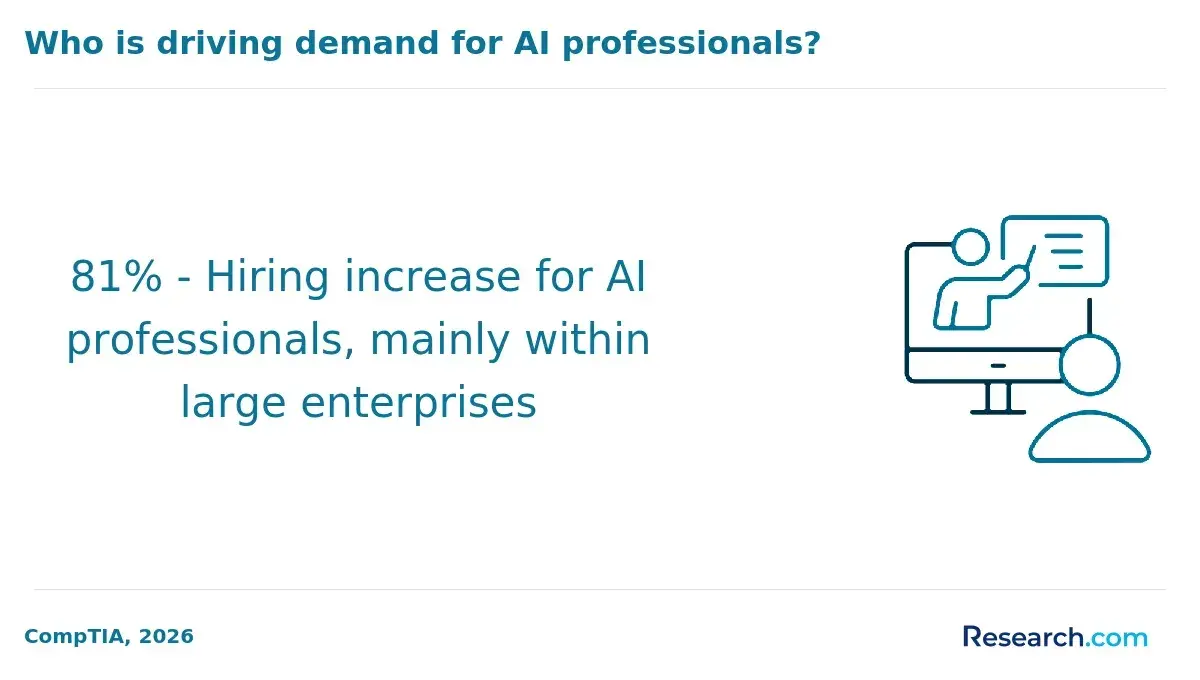
AI courses for chief revenue officers to boost sales performance are designed to equip CROs with targeted skills that directly influence revenue growth and sales effectiveness. These programs emphasize strategy, governance, and practical applications rather than purely technical knowledge, addressing a major challenge faced by 84% of C-suite executives who struggle to translate AI projects into measurable business outcomes.
Such training enhances revenue growth strategies for CRO executives by developing frameworks that improve forecasting accuracy, lead scoring, and AI-driven customer segmentation for more personalized marketing and sales efforts. CROs also learn governance principles to manage AI risks and ethical concerns, maintaining compliance and trust with clients and stakeholders.
- Applying AI insights to refine pricing strategies and quickly spot new market opportunities
- Automating repetitive sales tasks through AI-powered CRM tools to free teams to focus on higher-value activities
- Collaborating effectively with data scientists and IT to drive cross-functional innovation
Despite this need, only 18% of executives have formal AI training focused on strategy, highlighting a skill gap that targeted education can fill. By gaining this expertise, CROs lead initiatives that increase sales, reduce customer acquisition costs, and sustain competitive advantage. Prospective students interested in expanding relevant skills might also consider exploring video game programs, which often include applied AI elements and strategic development techniques.
What AI skills and topics should a CRO-focused curriculum cover in depth?
A CRO-focused AI curriculum combines a range of skills that directly boost revenue strategy and execution. Key components include predictive analytics for sales forecasting and understanding customer behavior trends, enabling precise sales forecasting and predictive analytics using artificial intelligence. Learning machine learning models to optimize pricing and segment customers supports tailored marketing efforts that drive revenue growth.
Mastering natural language processing tools enhances analysis of customer feedback and automates communication to improve engagement efficiency. Data governance and ethical AI use are fundamental for compliance and trust in AI-driven revenue optimization strategies. Familiarity with sales automation platforms streamlines workflows and elevates team performance.
Integrating AI with CRM systems and real-time data visualization allows leaders to act quickly using data-backed insights. Scenario analysis and AI-supported financial planning help manage risks and allocate resources efficiently. Training in AI strategy development equips CROs to spearhead digital transformations aligned with business objectives. According to LinkedIn Learning's report, executives who completed at least one strategy-focused AI course were 25% more likely to gain promotions or new responsibilities within a year.
Practical proficiency means comfortably interpreting AI outputs to optimize sales funnels, identify high-value customer segments, and apply automated upselling ethically. Professionals pursuing a career in this area may also explore an accelerated cyber security degree to complement their AI expertise and improve organizational security posture.
How do online, hybrid, and on-campus AI programs compare for busy CROs?
Chief revenue officers (CROs) seeking to enhance their expertise in artificial intelligence face varied educational formats, each with unique benefits. Online programs offer unmatched flexibility, ideal for CROs managing demanding schedules or working across time zones. Hybrid models combine remote learning with in-person sessions, balancing convenience with hands-on experiences through workshops and labs essential for AI strategy development. On-campus programs require a greater time commitment but create immersive environments with direct access to faculty and peers, fostering deeper strategic engagement.
MIT Sloan's alumni outcomes highlight the value of effective AI education: 71% of participants in AI strategy programs led new AI initiatives or product lines within a year, and 54% experienced direct revenue impact. This data emphasizes aligning program choice with how quickly CROs can apply skills to revenue growth.
Considerations for selecting a format include:
- Time and travel constraints, favoring online or hybrid options.
- The need for immersive, peer-driven learning suited to on-campus programs.
- A preference for rapid, actionable insights found in hybrid formats.
- Faculty access, stronger on-campus but supported in hybrid models.
Ultimately, evaluating these factors helps CROs integrate AI learnings effectively to advance their organizations' revenue strategies.
Which accredited universities and reputable platforms offer AI programs tailored to executives?
Several accredited universities and well-known platforms offer executive programs focused on artificial intelligence, emphasizing strategic applications rather than coding skills. Northwestern University's Kellogg School of Management provides an Executive Program in AI centered on integrating AI-driven decision-making into sales and revenue strategies. Similarly, MIT Sloan Executive Education features a course on Artificial Intelligence: Implications for Business Strategy, designed to help leaders leverage AI for competitive advantage.
Stanford Graduate School of Business offers an AI-focused Executive Leadership program that emphasizes AI adoption in marketing and sales enablement. The University of California, Berkeley's Haas School of Business provides an online AI Certificate for Executives, focusing on operational and revenue-related applications of AI for flexibility and accessibility.
Online platforms like Coursera and edX collaborate with top universities to deliver executive AI courses. Notable examples include the Wharton AI for Business Specialization on Coursera and Harvard Business School Online's CORe program, which integrates decision-making with modern AI tools. These options combine practical frameworks with current AI trends relevant for revenue leaders.
According to Salesforce's 2024 State of Sales report, sales teams that use AI for opportunity scoring and next-best-action recommendations are 33% more likely to exceed revenue targets. This highlights the growing importance of AI expertise in leadership roles related to revenue and sales performance.
What are the admission requirements and ideal background for CROs entering AI programs?
Admission criteria for AI programs aimed at chief revenue officers (CROs) emphasize a combination of leadership experience and a solid grasp of data-driven decision-making. Candidates typically need 5 to 7 years in senior revenue roles, demonstrating skills in sales, marketing, or business development. Experience with CRM systems, analytics tools, or digital transformations significantly strengthens applications.
Educational backgrounds usually require a bachelor's degree in business, engineering, economics, or related fields, with some advanced programs preferring an MBA or equivalent management credentials. Technical requirements often include familiarity with data concepts, statistics, and basic automation. Though deep programming skills are not always mandatory, understanding AI fundamentals such as machine learning or automation workflows helps CROs align strategic objectives with technical teams effectively.
Ideal candidates combine leadership with analytical skills, particularly those who have overseen cross-functional projects involving revenue operations, digital strategies, or AI pilots. For example, a 2024 Deloitte study found that AI adoption in front-office revenue functions led to an average 18% rise in conversion rates and a 25% drop in cost-to-serve within 12 months. Professional certifications in AI basics, data analytics, or automation can substitute gaps in formal education. Successful applicants also display strong problem-solving skills in revenue optimization and clearly communicate their drive to lead AI integration during interviews or essays.
How long do CRO-oriented AI courses typically take, and what do they cost?
AI courses designed for chief revenue officers (CROs) usually last between 4 and 12 weeks, balancing comprehensive content with busy executive schedules. Many programs offer flexible learning formats such as part-time, asynchronous modules or intensive cohort-based sessions. A 6- to 8-week structure is common, allowing CROs to acquire practical AI knowledge without prolonged time away from their roles.
Costs can vary significantly depending on the provider, format, and prestige of the program. Executive-level AI education often ranges from $3,000 to $15,000. Online certificates or micro-credentials may start near $2,000, while extensive executive programs from leading business schools frequently surpass $10,000. These investments typically include access to expert faculty, in-depth case studies, and valuable networking with peers.
Examples include modular AI strategy courses priced around $5,500 for about six weeks, combining AI fundamentals with revenue growth applications. Higher-priced offerings feature immersive on-campus residencies or live virtual workshops aimed at senior leaders seeking advanced technical and strategic insights.
Research shows strong financial returns on such programs. The ExecOnline & ROI Institute analysis found a median 5:1 ROI within two years, with top-tier programs exceeding 9:1. This data highlights the substantial business value and career impact CROs can gain from targeted AI education opportunities.
What career outcomes, salary gains, and promotion prospects can CROs expect after AI upskilling?
Chief revenue officers who develop skills in artificial intelligence can expect notable career benefits, such as higher salaries and improved chances for promotion. PwC's 2024 Global CEO Survey reveals that 70% of CEOs spending at least 10 hours monthly on structured AI learning foresee significant shifts in revenue models within three years. This trend positions CROs as pivotal figures in driving digital transformation and revenue growth.
Data indicates CROs with advanced AI skills earn 15-25% more than those without. These competencies enable leaders to utilize data analytics, predictive modeling, and automation effectively, enhancing sales strategies and customer segmentation.
Promotion opportunities increase as CROs showcase their ability to lead AI-driven initiatives. Executives with AI expertise often advance rapidly to broader C-suite roles like Chief Digital Officer or Chief Growth Officer, roles requiring strong cross-functional leadership. Practical AI knowledge allows them to innovate pricing strategies, improve demand forecasting, and personalize client engagement through machine learning.
Challenges include integrating AI with existing sales workflows and managing data across departments. Successful CROs focus on courses that combine strategic insight with technical skills to tackle these complexities.
How should CROs evaluate AI courses for quality, accreditation, and real-world business impact?
Chief Revenue Officers aiming to select impactful artificial intelligence courses should prioritize three key aspects: course quality, accreditation, and measurable business results. Effective programs blend fundamental AI concepts with applications that drive revenue, such as customer segmentation, predictive analytics, and sales automation. Look for curricula featuring case studies, hands-on projects, or simulations simulating real sales challenges.
Accreditation ensures course credibility. Prefer programs endorsed by reputable academic institutions or professional organizations in technology and business. Valid certifications from trusted providers indicate adherence to recognized standards, minimizing risks of investing in low-value courses.
Practical business impact is critical-courses must show clear outcomes like improved sales forecasting or revenue growth linked to AI strategies. Frameworks for governance and ethical AI use are essential to avoid costly project failures. Research shows 60% of firms with significant AI investments lack formal governance training, tripling the risk of stalled initiatives.
Evaluate instructor expertise and industry experience for relevant insights on current market dynamics. Favor courses offering ongoing support, networking, or executive coaching to help CROs adapt to rapidly evolving AI environments. Avoid programs focused solely on technical skills that neglect cross-functional leadership and collaboration, which are vital for CROs leading AI-driven transformation.
Other Things You Should Know About Artificial Intelligence
Privacy and ethics are critical when employing artificial intelligence in revenue functions. CROs must ensure that AI tools comply with data protection laws such as GDPR and CCPA. Additionally, ethical AI use includes preventing bias in algorithms, ensuring transparency in automated decisions, and maintaining customer trust through responsible data handling.
Artificial intelligence is designed to augment rather than replace human expertise in revenue leadership. While AI can automate routine data processing and provide insights, it cannot replicate the strategic thinking, relationship-building, and contextual judgment that CROs bring to their roles. Effective revenue leadership blends AI-driven analytics with human experience.
CROs should engage in continuous education through courses, workshops, and industry events focused on AI trends and applications in sales and marketing. Staying updated on emerging AI technologies, ethical standards, and integration strategies helps CROs maintain a competitive edge. Networking with AI professionals and subscribing to relevant research publications are also valuable practices.
References
- AI Conversion Rate Optimization: A detailed breakdown | VWO https://vwo.com/blog/ai-conversion-rate-optimization/
- Hybrid Programs- Which Students Want Them? https://encoura.org/resources/wake-up-call/hybrid-programs-which-students-want-them
- 7 Essential Elements of an Effective AI Curriculum in 2026 | Life Hub https://www.lifehubeducation.com/blog/ai-curriculum
- The Ultimate Guide to Conversion Rate Optimization (CRO) https://dragonflyai.co/resources/blog/the-ultimate-guide-to-conversion-rate-optimization-cro
- AI for CROs: Strategies to Improve Sales Performance, Forecast Accuracy, and Revenue Growth https://www.momentum.io/blog/how-cros-use-ai-to-drive-revenue-growth-forecasting-sales
- AI Learning Priorities for All K-12 Students - Computer Science Teachers Association https://csteachers.org/ai-priorities/
- The Future of AI in Sales Training: How Artificial Intelligence Is Transforming Sales Performance | Sales Training https://salestrainings.ca/blog/the-future-of-ai-in-sales-training-how-artificial-intelligence-is-transforming-sales-performance
- Artificial Intelligence: A Guide For CROs, Written By A CRO | Dialpad https://www.dialpad.com/blog/cro-guide-to-ai/
- Top AI Courses After 12th to Kickstart Your Tech Career https://www.msruas.ac.in/blog/lead-the-future-of-artificial-intelligence-with-top-ai-courses-after-12th
- What is a Chief Revenue Officer? - Career Insights | Teal https://www.tealhq.com/career-paths/chief-revenue-officer