2027 Best AI Courses for Data Scientists

Co-Founder and Chief Data Scientist
Many professionals with non-technical backgrounds face barriers when attempting to enter the artificial intelligence field, struggling to find programs that balance rigor with flexibility. This challenge complicates career transitions, especially for those seeking accredited courses that accommodate busy schedules. Without targeted guidance, potential data scientists may invest in irrelevant or non-accredited training, delaying their progress. This article explores the best AI courses tailored for data scientists, emphasizing accredited, accessible, and practical options. It aims to provide clarity on program quality and suitability, helping readers make informed decisions to successfully pivot into artificial intelligence careers.
Key Things You Should Know
- Top ai courses for data scientists in 2026 emphasize practical skills in machine learning, deep learning, and data engineering, reflecting a 40% increase in industry demand for AI-literate professionals since 2024.
- Leading programs now integrate ethical AI training and real-world projects, enhancing graduates' readiness for roles targeting a projected 15% annual job growth in AI-related data science fields.
- Cost-effective online and hybrid courses dominate, with 65% of students favoring flexible learning options that balance affordability and in-depth technical expertise.
Advance Your Career with AI Online Courses
Artificial Intelligence: Implications for Business Strategy
This program provides an introduction to Artificial Intelligence and their implications for business strategy. Earn an official digital certificate.

Oxford Artificial Intelligence Programme
Explore this Oxford Artificial Intelligence programme offered in a flexible learning environment and explore topics like machine learning, automation, and robotics.

Implementing Agentic AI: Building Your Organizational Playbook
This online MIT Agentic AI course offers a practical approach to deploying AI agents in your organization, including a custom playbook. 3 weeks, exclusive launch price.

AI Adoption: Driving Business Value and Impact
This online MIT AI Adoption: Driving Business Value and Impact offers practical frameworks to close the gap between AI potential and business reality.

Artificial Intelligence in Pharma and Biotech
Discover the applications and limitations of artificial intelligence in pharma and biotech with this MIT online short course.

What are the best AI courses for data scientists and who are they right for?
Top artificial intelligence training for data science professionals emphasizes applied machine learning, neural networks, and generative AI to meet evolving industry demands. These programs are designed for those seeking advanced expertise in AI algorithms, data modeling, or AI-driven analytics. Courses such as Stanford's CS229 and MIT's Deep Learning for Self-Driving Cars provide a strong theoretical foundation for professionals pursuing research-level competence. Meanwhile, beginner-friendly options like Coursera's AI For Everyone offer a practical introduction to AI integration without requiring extensive coding skills.
The rising demand for AI and machine learning skills in the U.S. labor market is undeniable. Job postings for these skills have grown roughly 21 times faster than overall listings worldwide between 2016 and 2023, according to LinkedIn's 2024 Future of Work Report. This surge highlights the urgency for data scientists to acquire AI proficiency.
Choosing the best AI courses for data scientists involves considering personal learning goals, prior programming experience, and career plans. Ideal programs balance theory with hands-on projects and provide access to computing resources for real-world application. For data scientists focusing on analytics or business, courses that emphasize generative AI and model deployment hold particular relevance.
For those targeting AI research or product development roles, advanced training in deep learning architectures and mathematical rigor is crucial. Continuous learning is essential due to rapidly evolving frameworks and tools. Exploring AI graduate programs can offer additional guidance on career pathways and training options.
Advance Your Career with AI Online Courses
Artificial Intelligence: Implications for Business Strategy
This program provides an introduction to Artificial Intelligence and their implications for business strategy. Earn an official digital certificate.
Oxford Artificial Intelligence Programme
Explore this Oxford Artificial Intelligence programme offered in a flexible learning environment and explore topics like machine learning, automation, and robotics.
Implementing Agentic AI: Building Your Organizational Playbook
This online MIT Agentic AI course offers a practical approach to deploying AI agents in your organization, including a custom playbook. 3 weeks, exclusive launch price.
How do AI courses for data scientists differ by level, from certificates to master's degrees?
AI courses for data scientists vary widely by skill level and certification type, ranging from short certificate programs to full master's degrees. Certificate programs, often available online through platforms like Coursera or edX, emphasize practical skills such as machine learning frameworks, data preprocessing, and model deployment. These programs suit professionals aiming for quick career pivots or upskilling. According to Coursera's investor presentation, earning a professional certificate in data science or AI can lead to a median 25% salary increase within a year, demonstrating their impact on career growth.
Graduate certificates or professional diplomas provide deeper study than basic certificates without the full length of a degree, covering advanced topics like deep learning architectures and AI ethics. This prepares learners for more specialized roles in AI.
Master's degree programs combine comprehensive theoretical foundations with practical applications, typically lasting 1 to 2 years. Coursework includes statistics, algorithms, and AI research methodology, with thesis projects that foster innovation and research skills. These programs cater to those seeking senior or research-focused positions.
Key differences include:
- Duration: weeks to months for certificates; years for master's degrees.
- Focus: applied skills for certificates; theory and research for master's.
- Career impact: certificates boost salaries quickly; master's open advanced career paths.
For those comparing AI courses for data scientists by skill level and certification type, exploring an online AI degree provides additional options suited to various professional goals.
What should you look for in an accredited, high-quality AI program for data science?
Accredited artificial intelligence programs for data science professionals should emphasize a rigorous curriculum blending core data science principles with specialized AI skills such as machine learning, natural language processing, and neural networks. High-quality artificial intelligence courses with hands-on data science training are essential for developing practical expertise through projects that use real-world datasets, ensuring graduates are job-ready.
Faculty credentials and institutional reputation add to program credibility. For example, MIT Professional Education offers verified certificates, and its Applied Data Science and AI program notes that 81% of graduates achieved expanded job responsibilities or promotions within a year. Accreditation by recognized educational bodies further ensures quality standards and credit transferability, crucial for career advancement.
Flexibility in format-whether part-time, online, or hybrid-supports working professionals without compromising academic rigor. Access to mentorship, career services, and networking also enhances employment outcomes post-completion. Clear learning outcomes, such as proficiency in Python, TensorFlow, or cloud AI platforms, combined with transparent assessments like capstones, provide measurable verification of skills that recruiters value.
Cost should be evaluated alongside value, considering factors like alumni success rates, faculty expertise, and curriculum relevance. Prospective students may find it helpful to explore options for a data science degree online to balance affordability with quality and career impact.
How do online AI courses compare with on-campus programs for data scientists?
Online ai courses versus on-campus data scientist programs reveal distinct advantages for learners. Online courses and bootcamps offer flexibility and focus on practical AI and machine learning skills, enabling learners to gain relevant expertise within months. This suits working professionals and career changers seeking rapid entry or advancement in data science. In contrast, on-campus programs provide broader foundations with theory, mathematics, and domain knowledge, usually requiring more time and financial investment.
Regarding flexibility and outcomes of ai education for data scientists, bootcamps centered on AI/ML report median job placement rates of 83-85% within 180 days of graduation and median starting salaries near $95,000 in the U.S. These results suggest that intensive online training can compete with or outperform some traditional degrees in employment success. Additionally, many campus programs face challenges quickly updating curriculum, while top online courses regularly refresh content to match fast-paced AI technology developments.
Prospective students should align choice with career goals: those seeking academic credentials or research roles might prefer on-campus paths, while those targeting rapid skill acquisition and up-to-date AI tools may find specialized online certificate programs more beneficial. For advanced academic pursuits, exploring available options such as an online data science doctorate can be valuable.
Finally, evaluating course rigor, industry recognition, and alumni success remains essential to choosing an effective AI education path.
What core skills and topics do top AI courses for data scientists usually cover?
Top AI courses for data scientists emphasize essential skills to bridge industry proficiency gaps. Foundational topics include machine learning methods such as supervised and unsupervised learning, feature engineering, and model evaluation metrics. Competence in Python and familiarity with frameworks like TensorFlow or PyTorch are commonly expected.
Advanced training often covers neural networks-convolutional and recurrent architectures-which are vital for processing image, text, and sequence data. Specialized education in deep learning and MLOps is increasingly critical, as a Cisco Networking Academy survey reveals 67% of employers prioritize skills in model deployment and MLOps. However, fewer than 30% of early-career data scientists demonstrate these abilities, underlining a significant skill gap.
MLOps coursework typically includes pipeline automation, CI/CD practices, containerization with Docker, and deploying models on cloud platforms-key capabilities for production-level AI solutions. Other integral subjects span data preprocessing, natural language processing (NLP), reinforcement learning, and ethical considerations in AI implementation.
Programs frequently integrate hands-on projects or case studies that mirror practical challenges, balancing theoretical foundations with applied learning. For those seeking to advance their careers, targeted AI education that combines core theory with MLOps and deployment expertise is vital to meet evolving industry demands.
What are typical admission requirements for AI-focused data science programs?
Admission to AI-focused data science programs typically requires strong foundations in mathematics, programming, and data analysis. Candidates should demonstrate proficiency in linear algebra, calculus, probability, and statistics, which are essential for understanding machine learning and AI algorithms. Programming experience in Python or R is often mandatory, reflecting their prevalent use in AI and data manipulation.
Most programs expect applicants to hold a bachelor's degree in computer science, engineering, mathematics, statistics, or related STEM fields. Some institutions consider equivalent professional experience, especially for executive or part-time tracks. Applicants are usually asked to provide evidence of prior coursework or skills in machine learning, data structures, and databases.
Standardized tests like the GRE may be required, though many schools have relaxed this rule. Professional certifications or completed MOOCs in AI or data science can strengthen applications by highlighting current skills.
Data scientists increasingly integrate advanced AI technologies into their workflows. The 2024 Stack Overflow Developer Survey found that 44% of data scientists and ML specialists use generative-AI tools daily and over 60% plan formal upskilling in LLMs and prompt engineering within a year. This underlines the value of practical experience with AI tools alongside theoretical knowledge.
Letters of recommendation often emphasize analytical ability, coding skills, and problem-solving rather than academic grades alone. Many programs require a statement of purpose outlining the applicant's AI goals, project experience, and career alignment.
How long do AI courses for data scientists take, and what do they cost?
AI courses for data scientists vary widely in duration and depth, ranging from short bootcamps of 4 to 8 weeks to comprehensive certificate programs lasting 3 to 6 months. Part-time options can extend from 6 to 12 months, allowing working professionals to balance learning with job duties. These courses typically cover foundational AI theory, machine learning algorithms, and practical projects.
Costs depend on course type and provider. Bootcamps usually charge between $3,000 and $15,000, reflecting hands-on training and career support. University certificate programs or professional master's courses may cost from $10,000 up to $40,000, influenced by prestige and delivery format. Free or low-cost MOOCs provide accessible education but often lack personalized mentoring and project feedback, which can limit immediate workplace impact.
Structured AI upskilling programs significantly boost productivity. A 2024 IDC report highlights that organizations with formal AI training for data and analytics teams are 2.3 times more likely to realize strong productivity gains. When choosing a program, consider your existing skills, time available, and career goals.
- Juniors benefit from foundational multi-month courses covering data science and AI basics.
- Mid-level professionals may prefer short, targeted courses on advanced AI techniques or tools.
- Corporate training balances cost and results while improving team performance.
What careers can AI courses open for data scientists, and what do these roles involve?
AI courses lead to various specialized roles in data science, each demanding unique skills. Key positions include machine learning engineer, who builds algorithms and predictive models to enhance business decisions and automate workflows; data engineer, focusing on designing and maintaining data pipelines essential for AI systems; and AI research scientist, who advances model architectures and invents novel algorithms to expand AI capabilities.
Additional career paths involve AI product managers, blending domain expertise with AI knowledge to oversee AI-driven products, and business intelligence analysts, who apply AI for sophisticated data visualization and strategic insights. Cybersecurity analysts increasingly utilize AI techniques to identify threats and safeguard data assets.
These professions require practical experience with large datasets, programming languages like Python or R, knowledge of deep learning frameworks, and AI model implementation in real-world contexts. For instance, machine learning engineers often work on natural language processing projects, while data engineers build scalable ETL workflows to support AI services.
A 365 Data Science analysis revealed that completing an affordable online AI or data science course (under $1,000) can increase pay by 18-22% within a year for those transitioning into AI or data roles, highlighting the career and financial benefits of acquiring AI skills.
Choosing AI courses aligned with your targeted roles-technical, research, or managerial-and gaining hands-on experience with specific AI tools and applications improves employability significantly.
How much do AI-focused data scientists earn, and what is the job outlook?
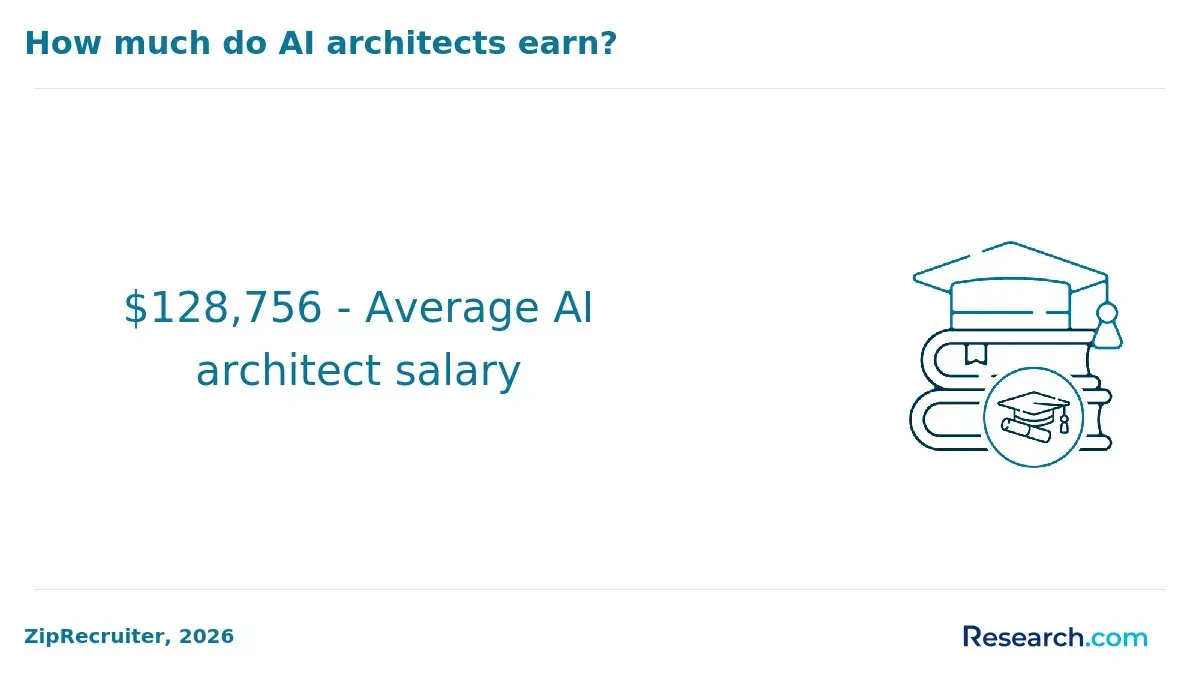
AI-focused data scientists in the U.S. earn a median salary ranging from $120,000 to $150,000 annually, with senior and highly specialized roles exceeding $180,000. Entry-level positions start near $95,000 and grow quickly as professionals build skills in machine learning, deep learning, and data engineering. Salary variations exist across industries, with finance, healthcare, and technology sectors offering the most lucrative pay. Remote and hybrid job opportunities are rapidly expanding and usually include attractive compensation packages and benefits.
The U.S. Bureau of Labor Statistics projects a 28% growth rate in data science-related roles through 2031, significantly higher than the average for all occupations. This strong demand reflects organizations' efforts to integrate AI into business analytics, automation, and decision-making processes.
According to Cisco Networking Academy's 2024 report, emerging market professionals completing AI and data science pathways are 30% more likely to secure remote or hybrid positions than those without such training. Gaining hands-on experience with AI frameworks like TensorFlow and PyTorch, as well as cloud platforms such as AWS SageMaker, greatly improves job prospects.
Certifications and project-based learning remain essential for bridging theory and practical skills, thereby increasing employability and salary potential.
Which AI and data science certifications help data scientists stand out to employers?
Certifications that validate both foundational data science skills and emerging AI innovations are increasingly valuable for data scientists seeking to stand out to employers. Industry-recognized credentials like the Certified Data Scientist by the Data Science Council of America (DASCA) and the Microsoft Certified: Azure AI Engineer Associate credential demonstrate practical, enterprise-ready skills. AI-specific certifications that incorporate generative AI elements-such as OpenAI's fine-tuning and prompt engineering courses-are gaining prominence.
A 2025 market review by Complete AI Training shows that over 55% of new AI and data science courses now explicitly include generative AI topics like large language models (LLMs), prompt engineering, and retrieval-augmented generation (RAG), up from under 10% in 2023. This shift underscores the critical demand for certifications with hands-on generative AI experience.
Candidates should consider programs that offer:
- Practical experience with LLMs and prompt optimization
- Knowledge of RAG techniques to improve model outputs
- Strong skills in data preprocessing, feature engineering, and deployment
Platforms such as Coursera's AI For Everyone specialization, Google's Professional Machine Learning Engineer, and IBM's Applied AI Professional Certificate regularly update their curricula to align with these trends. Holding these certifications signals to employers a candidate's ability to blend classical data science and advanced generative AI competencies, meeting current workforce expectations.
Other Things You Should Know About Artificial Intelligence
In 2027, data scientists face challenges like managing vast data volumes, ensuring data privacy, integrating AI with existing systems, and maintaining model interpretability. Selecting the right AI tools and algorithms while addressing these issues is crucial for successful AI implementation in data science.
Artificial intelligence enhances data science by automating complex data processing tasks, improving predictive analytics, and enabling natural language processing. Machine learning algorithms help identify patterns and insights from large datasets more efficiently than traditional statistical methods. AI tools also assist in data visualization and anomaly detection, making data-driven decisions more accurate and timely.
Key technical skills for AI in data science include proficiency in programming languages like Python and R, knowledge of machine learning frameworks such as TensorFlow and PyTorch, and a solid understanding of algorithms and statistics. Familiarity with data preprocessing techniques and experience handling big data platforms is also critical. These skills enable data scientists to build, optimize, and deploy AI models effectively.
References
- Data Scientist Employment Outlook: BLS 2024-2034 Projections, UK Market & Salaries (2026) | Qualify Nation https://qualifynation.com/en-gb/insights/data-science-job-market/
- How Long Does It Take to Learn AI Completely? https://blog.nobledesktop.com/learn/ai/how-long-do-ai-courses-take
- The Top 5 Topics for Professionals Looking to Upskill in Data and AI https://www.cambridgespark.com/blog/the-top-5-topics-for-professionals-looking-to-upskill-in-data
- Online AI and Data Courses for Career Growth. Learn AI and Data with Certification. – 365 Data Science https://365datascience.com/
- LIVE IT Training & Certification – 500+ Courses | Readynez https://www.readynez.com/en/blog/ai-certification-for-data-scientists-why-it-matters-and-how-to-get-started/
- 10 Best Free AI Data Analytics Tools in 2026 (Tested & Ranked) https://camelai.com/blog/10-best-free-ai-data-analytics-tools-for-businesse
- MSc AI & Data Science: Admission, Fees & Career Scope https://indirauniversity.edu.in/blogs/msc-ai-data-science-admission-course-scope
- Choosing a master’s degree: data science or artificial intelligence | edX https://www.edx.org/resources/choosing-a-masters-degree-data-science-or-artificial-intelligence
- Top 12 AI Tools for Data Analysis in 2026 https://www.domo.com/learn/article/ai-data-analysis-tools
- Online vs Campus Artificial Intelligence Degree Programs: Complete Comparison https://hakia.com/compare/artificial-intelligence-online-vs-campus/