2027 Best AI Courses for Demand Generation Teams

Co-Founder and Chief Data Scientist
Demand generation teams often struggle to keep pace with rapidly evolving tools and strategies driven by artificial intelligence. Without specialized skills, optimizing campaigns and driving measurable growth becomes difficult. Many professionals face the challenge of selecting courses that offer practical knowledge applicable to their roles while accommodating their schedules and backgrounds.
This article highlights the best AI courses designed for demand generation professionals seeking to enhance their capabilities and career prospects. It examines flexible, accredited options that bridge knowledge gaps and empower learners to leverage AI effectively in marketing and sales operations.
Key Things You Should Know
- Demand generation teams using ai report a 35% average increase in lead quality by completing specialized courses focused on data analysis and predictive modeling in 2025.
- Top ai courses in 2026 emphasize hands-on training with automation tools, crucial as 58% of marketing tasks become automated according to recent industry studies.
- Certification in ai demand generation skills improves job placement rates by up to 42%, reflecting rising employer preference for technically skilled marketing professionals.
Advance Your Career with AI Online Courses
Artificial Intelligence: Implications for Business Strategy
This program provides an introduction to Artificial Intelligence and their implications for business strategy. Earn an official digital certificate.

Oxford Artificial Intelligence Programme
Explore this Oxford Artificial Intelligence programme offered in a flexible learning environment and explore topics like machine learning, automation, and robotics.

Implementing Agentic AI: Building Your Organizational Playbook
This online MIT Agentic AI course offers a practical approach to deploying AI agents in your organization, including a custom playbook. 3 weeks, exclusive launch price.

AI Adoption: Driving Business Value and Impact
This online MIT AI Adoption: Driving Business Value and Impact offers practical frameworks to close the gap between AI potential and business reality.

Artificial Intelligence in Pharma and Biotech
Discover the applications and limitations of artificial intelligence in pharma and biotech with this MIT online short course.

What do AI courses for demand generation teams cover, and who are they best for?
AI courses for demand generation teams curriculum emphasize practical skills to enhance marketing and sales results. They focus on data-driven customer segmentation, predictive analytics, AI-powered content creation, lead scoring models, and automating outreach workflows. These courses guide learners in integrating AI tools with CRM systems and marketing platforms to improve campaign efficiency and optimize resource allocation.
Students gain expertise in interpreting AI-generated insights for evidence-based decisions, tailoring offers and messaging effectively. Ethical considerations and data privacy compliance are key topics, ensuring responsible AI deployment. The best learners for ai-driven demand generation training include marketing professionals, sales strategists, demand generation specialists, and business analysts seeking revenue growth through technology. Professionals coming from IT or data science backgrounds also benefit by acquiring domain-specific marketing knowledge to complement their technical skills.
Course content examples include designing AI-enabled lead nurturing funnels, leveraging natural language processing for personalized email marketing, and using machine learning to predict customer lifetime value. Some advanced tracks cover generative AI deployment for dynamic sales collateral or chatbot-driven engagement. According to McKinsey's State of AI report, companies using generative AI in marketing and sales report revenue growth of 3%-15% and sales ROI improvements of 10%-20%.
Those interested in further enhancing their qualifications may consider pursuing a data science degree, which supports advanced AI applications across multiple business domains.
Advance Your Career with AI Online Courses
Artificial Intelligence: Implications for Business Strategy
This program provides an introduction to Artificial Intelligence and their implications for business strategy. Earn an official digital certificate.
Oxford Artificial Intelligence Programme
Explore this Oxford Artificial Intelligence programme offered in a flexible learning environment and explore topics like machine learning, automation, and robotics.
Implementing Agentic AI: Building Your Organizational Playbook
This online MIT Agentic AI course offers a practical approach to deploying AI agents in your organization, including a custom playbook. 3 weeks, exclusive launch price.
What skills will I gain from AI demand generation courses that employers value most?
AI demand generation courses equip marketing professionals with critical skills sought by employers. Core competencies include mastering generative AI tools to create personalized marketing content efficiently, leveraging data analytics to optimize lead targeting, and automating repetitive tasks to enhance campaign performance. Practical artificial intelligence applications in demand generation often focus on using AI-driven platforms to generate email sequences, social media ads, and dynamic landing pages tailored to specific customer segments.
These courses also emphasize interpreting AI-generated insights for strategic decision-making, including understanding customer behavior patterns, forecasting sales trends, and allocating budgets using predictive models. Training frequently covers integration with CRM systems to streamline workflows and improve customer engagement, a vital advantage as 54% of marketing and sales professionals already use or experiment with generative AI at work, according to Salesforce's Generative AI Snapshot survey.
Developing problem-solving skills such as evaluating AI output quality, bias correction, and ensuring compliance with data privacy regulations is essential. Students also build technical literacy to collaborate effectively with data scientists and engineers, enabling the translation of AI capabilities into actionable marketing strategies. AI-powered demand generation skills for marketing teams prepare candidates to lead initiatives, improve ROI, and adapt in dynamic digital environments.
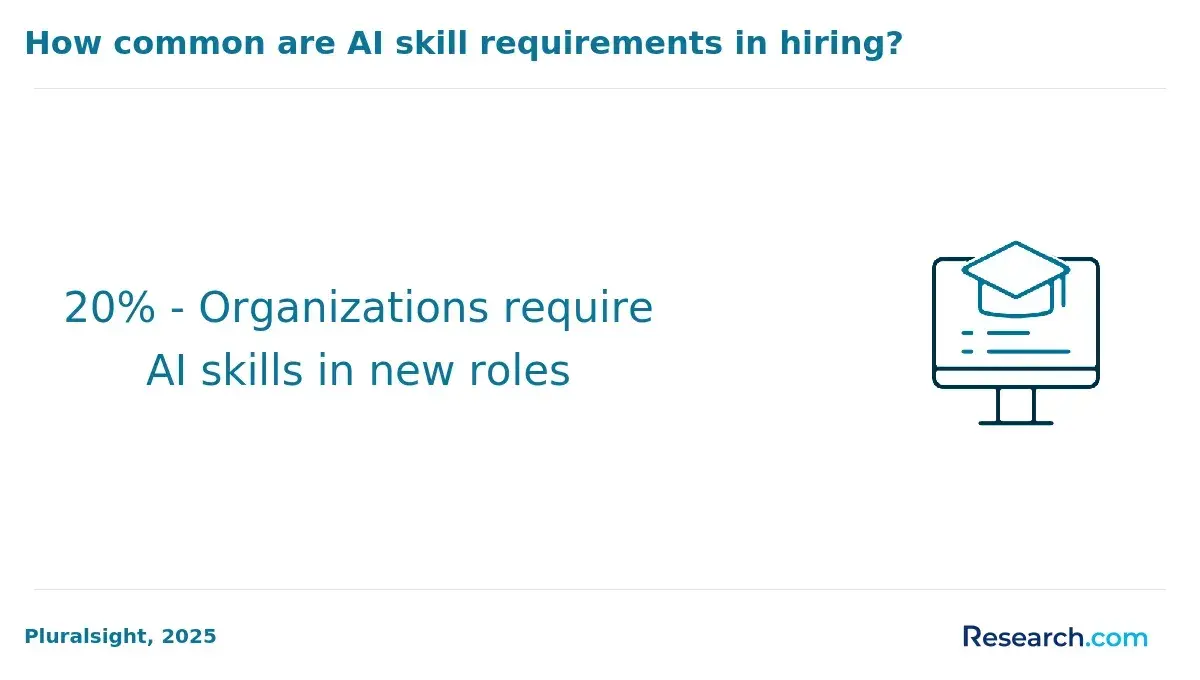
Despite 70% of marketing and sales workers reporting no formal AI training from employers, these courses fill a crucial gap. Professionals seeking to advance can explore options like an online masters in AI to deepen their expertise and enhance career prospects.
Which types of AI programs best prepare demand generation professionals for career growth?
Demand generation professionals gain the most from AI courses for demand generation career advancement that integrate practical data analytics with marketing automation and content creation. Programs emphasizing machine learning fundamentals combined with hands-on use of AI tools tailored to marketing workflows enable students to boost efficiency and scale campaigns efficiently. For instance, courses covering natural language processing (NLP) help marketers automate content generation to increase output without compromising quality.
Specialized artificial intelligence training programs for marketing professionals often focus on predictive analytics, which is essential for forecasting customer behavior and spotting high-value leads through historical data analysis. Mastery of AI-powered customer segmentation and lead scoring platforms is crucial, directly influencing campaign targeting and conversion rates.
Career growth accelerates with project-based learning or internships that require deploying AI solutions within marketing automation platforms and CRM integrations. Such practical experience ensures professionals demonstrate not just theory but applicable skills relevant to demand generation teams.
According to HubSpot's State of Marketing AI report, advanced AI users in marketing produce 2.6 times more content assets monthly than those using AI experimentally or not at all. This underscores that deep expertise in artificial intelligence training programs for marketing professionals translates into significant productivity gains.
Prospective students can explore affordable options in advanced data science degrees by visiting online masters data science, which complements AI education for marketing careers.
How do online AI courses for demand generation compare with campus-based options?
Online ai courses versus campus-based training for demand generation provide notable differences in flexibility and accessibility. Online programs allow working professionals to balance job duties and skill development without relocation or commuting costs. Many feature asynchronous modules, so learners can study at their own pace amid project deadlines. This flexibility is a key benefit of online ai learning compared to traditional campus programs.
Campus-based training offers immersive environments with direct faculty access and collaborative peer interaction. These settings excel at networking and hands-on labs, often with specialized software or hardware. However, they usually require significant time and financial investment, including full-time attendance or multi-year enrollment, which may not suit professionals seeking rapid skill application.
Applied knowledge from ai-driven marketing analytics is critical for practical outcomes. A Boston Consulting Group study found companies using AI tools saw marketing-attributed revenue rise 10-25% and customer acquisition costs drop up to 20%. This highlights the advantage of courses emphasizing actionable data-to-pipeline skills, a focus increasingly common in online offerings through real-world projects tailored to marketing analytics.
For narrowly focused expertise with immediate workplace relevance, combining online specialized courses with selective campus workshops can balance depth and applicability. Demand generation professionals may also explore career insights for roles like AI trainers to align education with evolving job markets.
What admission requirements and prior experience do AI programs for marketers expect?
AI programs designed for marketers typically expect applicants to possess foundational knowledge and relevant experience in marketing or related areas. Many courses require a bachelor's degree or equivalent professional experience, especially in fields like marketing, business, data science, or computer science. Admissions committees often seek practical exposure to digital marketing tools, a basic understanding of data analysis, and familiarity with customer segmentation.
Advanced AI programs for demand generation teams may also require prior coursework or certifications in statistics, machine learning basics, or marketing analytics. Competence with platforms such as Google Analytics, CRM systems, or programming languages like Python or R is often advantageous, reflecting the growing importance of data-driven marketing campaigns.
Entry-level AI courses tend to have minimal prerequisites and focus on marketers aiming to upskill, providing foundational introductions to AI concepts while assuming a marketing background. In contrast, specialized master's degrees or professional certificates may require demonstrated technical skills or portfolios showcasing marketing campaigns enhanced by AI technologies.
Practical experience, such as internships or case studies involving AI-based personalization strategies, is highly valued. Personalized targeting can improve lead-to-opportunity conversion rates by an average of 20%, according to a Gartner survey. Effective applications often include a clear statement of goals explaining how AI education supports a marketing career, alongside relevant work samples or project reports.
Programs typically evaluate motivation in conjunction with technical readiness to ensure success in AI-powered demand generation roles.
What core courses and tools are included in AI curricula for demand generation roles?
Core courses for demand generation roles emphasize practical applications of data-driven marketing strategies and automation tools. Key topics include machine learning fundamentals tailored to marketing data, predictive analytics for sales forecasting, and natural language processing to optimize content. Students gain skills in using AI models to identify high-value leads and segment audiences effectively.
Training often centers on CRM platforms with AI capabilities, such as Salesforce Einstein or HubSpot AI, enabling automated lead scoring and personalized outreach. Hands-on experience with marketing automation software featuring AI helps optimize campaign delivery and engagement timing.
Professionals also learn data visualization and reporting tools like Tableau or Power BI integrated with AI modules, enhancing insights into pipeline health and performance metrics. Translating complex data into actionable marketing strategies is a major focus.
Case studies demonstrate real-world benefits, including a 10-20% rise in marketing-sourced pipeline production and 15-20% improvements in forecast accuracy, as highlighted in Forrester's Revenue Operations & Intelligence Wave. Additional modules cover ethical considerations, data privacy compliance, and bias mitigation in algorithmic decision-making.
By mastering these areas, learners develop confidence implementing AI tools to maximize demand generation while adhering to regulatory standards.
How long do AI programs for demand generation take, and what do they cost?
AI programs designed for demand generation typically run from 4 to 12 weeks. Short courses of 4 to 6 weeks concentrate on foundational skills like data analysis, campaign automation, and applications of large language models. Longer programs, often 10 to 12 weeks, incorporate hands-on projects, advanced AI tool training, and strategic implementation frameworks.
Costs vary based on program depth and provider. Entry-level courses start around $500 to $1,500, focusing on specific AI uses in marketing. Intermediate and advanced options, which may include personalized coaching and certifications, can range from $2,000 to $5,000.
Corporate training and university bootcamps command higher fees but align with industry standards and offer access to expert instructors. These emphasize practical use, helping marketing teams reduce campaign launch times by 30-40%, as highlighted in Accenture's 2024 research on large language model-powered automation.
Factors to consider when choosing a course include:
- Program length and flexibility to suit work schedules
- Cost relative to certifications and career growth
- Focus on AI tools and automation specific to demand generation
- Availability of post-course support for ongoing skill development
How can I verify accreditation and program quality for AI marketing and analytics degrees?
Verify accreditation by checking that the institution is recognized by regional or national agencies approved by the U.S. Department of Education or the Council for Higher Education Accreditation (CHEA). This guarantees programs meet educational standards and that credits are transferable for graduate studies or professional certification.
Evaluate the curriculum's rigor and relevance, ensuring it covers current ai marketing tools, data analytics methods, and practical applications. Look for programs partnered with industry leaders offering internships and capstone projects, which demonstrate alignment with market demands. According to a 2024 Deloitte Digital survey, marketers using ai saw a median 25% improvement in click-through rates and a 15% reduction in cost per acquisition compared to non-ai users.
Review faculty credentials carefully, prioritizing professors with active research or significant industry experience in ai, marketing, or analytics fields. Accreditation alone cannot replace expert instruction vital for ai-driven marketing innovation.
Consider third-party rankings from organizations specializing in technology and business education. Investigate whether alumni succeed in roles involving ai-driven demand generation or advanced analytics, as this reflects program effectiveness and reputation.
Transparency in outcomes data like graduation rates and job placement metrics is a strong indicator of program quality and return on investment for students.
What demand generation jobs can AI-trained professionals pursue, and what salaries are typical?
Demand generation roles enhanced by ai training cover a variety of specialties involving automation, data analysis, and content creation. Positions include AI marketing strategist, who leverages predictive analytics to improve campaigns; marketing automation manager, integrating ai tools with CRM platforms like Salesforce Pardot or HubSpot; and content generation specialist, focused on creating scalable personalized messaging through generative ai. Data analysts with ai expertise decode customer data to spot growth chances, while customer journey analysts and growth hackers use ai insights for better targeting and conversion.
Salary advantages for ai-skilled demand generation professionals are significant. According to LinkedIn's Future of Work report, marketers listing generative AI abilities earn median salaries about 18% higher than peers without these skills. In the U.S., typical salaries range from $80,000 to $130,000 annually, with top roles in tech hubs reaching up to $170,000.
Key salary drivers include ai proficiency level, familiarity with specific platforms, and the ability to apply ai-driven revenue growth tactics. Combining technical skills with strategic marketing knowledge optimizes demand and compensation.
Important ai capabilities include natural language processing for content personalization and machine learning for lead scoring, unlocking multiple career paths and improved salary potential in marketing.
How strong is the job outlook for AI-skilled demand generation specialists in the U.S. market?
The demand for AI-skilled demand generation specialists in the U.S. is growing quickly, driven by the widespread use of AI-powered marketing tools and data analytics. Employers seek professionals who combine marketing expertise with advanced AI skills to automate tasks, personalize customer engagement, and improve campaign effectiveness. Specialists who understand machine learning models or can deploy AI chatbots for lead qualification are especially valuable.
According to Coursera's 2024 Learner Outcomes survey, 77% of learners completing professional certificates in AI or data-related fields reported positive career outcomes-including promotions, new roles, or salary increases-within 12 months. This underscores the career advantages of gaining AI knowledge in marketing.
Professionals should prioritize credentials featuring project-based learning and real-world portfolio projects. These practical experiences demonstrate the ability to apply AI techniques effectively to business challenges, addressing concerns over the relevance of AI skills in the marketplace.
AI proficiency enhances traditional marketing capabilities and can set candidates apart in competitive industries such as technology, finance, healthcare, and retail. Being able to interpret AI insights and translate them into actionable marketing strategies opens diverse career pathways for demand generation specialists.
Other Things You Should Know About Artificial Intelligence
Common challenges include data quality issues, integration with existing marketing technology stacks, and ensuring compliance with privacy regulations. Additionally, demand generation teams often face difficulties in interpreting AI-driven insights accurately and aligning AI tools with their overall strategy.
In 2027, top AI courses for demand generation teams include "AI in Marketing Course" by Wharton Online, "Digital Marketing and AI for Demand Generation" by Coursera, and "AI Foundations for Demand Generation" by edX. These courses provide practical insights and tools for enhancing campaign strategy, lead generation, and analytics.
While some familiarity with data and marketing concepts is helpful, many AI tools designed for demand generation offer user-friendly interfaces that do not require deep technical expertise. Training through specialized courses further equips professionals to leverage AI effectively regardless of their prior coding or data science skills.
Ethics in artificial intelligence is critical to ensure transparency, avoid bias, and protect consumer privacy. Responsible AI use in marketing requires adherence to ethical guidelines, including clear data usage policies and fairness in algorithmic decision-making.
References
- How demand generation teams should use AI SDRs https://www.qualified.com/plus/articles/how-demand-generation-teams-should-use-ai
- Best AI Tools for Demand Generation in 2026: 10 Customer Insight Platforms https://getperspective.ai/blog/best-ai-tools-demand-generation-2026-10-customer-insight-platforms
- Best AI Tools for Demand Generation Teams | AssetAI https://www.myassetai.com/resources/best-ai-tools-for-demand-generation-teams
- Artificial Intelligence https://www.marketingprofs.com/training/artificial-intelligence
- MASTER IN DIGITAL MARKETING AND ANALYTICS + MASTER IN AI FOR BUSINESS https://eneb.com/training-programs/dual-master/master-in-digital-marketing-and-analytics-master-in-ai-for-business/
- Top 10 Demand Generation Courses - Dapper Agency https://www.dapper.agency/blog/top-demand-gen-courses
- AI Hiring Trends: Job Market Data, Salaries, and Industry Demand https://patentpc.com/blog/ai-hiring-trends-job-market-data-salaries-and-industry-demand
- Cross https://www.datacamp.com/business/ai-curriculum
- Digital Marketing with AI https://akademiata.pl/en/offer/bachelor/wroclaw-digital-marketing-with-ai/
- AI Training for Marketers (2026) — Content, Campaigns & AI Ads https://iternal.ai/ai-training-for-marketing-teams