2027 Best AI Courses for Telecom AI Adoption Teams

Co-Founder and Chief Data Scientist
Telecom AI adoption teams often face steep challenges integrating artificial intelligence solutions into legacy systems while balancing cost and scalability concerns. Many professionals lack the specialized knowledge to navigate AI frameworks relevant to telecommunications, slowing innovation and competitive edge. This knowledge gap hinders efficient deployment of machine learning models that could optimize network performance, customer service, and predictive maintenance.
Effective courses tailored for telecom contexts are essential for equipping teams with practical skills and updated methodologies. This article evaluates the best available AI courses, focusing on flexibility, accreditation, and real-world applicability to help professionals accelerate AI integration in telecom environments.
Key Things You Should Know
- Telecom AI adoption teams benefit from courses emphasizing edge computing and real-time data analytics, addressing 62% of network latency challenges reported in 2025 studies.
- 2026 best AI courses integrate practical telecom case studies, enhancing skills in predictive maintenance and automated fault detection, key to reducing downtime by up to 35%.
- Certification programs combining AI and telecom domain expertise see 48% higher job placement rates, reflecting growing industry demand for specialized knowledge in 5G and network optimization.
Advance Your Career with AI Online Courses
Artificial Intelligence: Implications for Business Strategy
This program provides an introduction to Artificial Intelligence and their implications for business strategy. Earn an official digital certificate.

Oxford Artificial Intelligence Programme
Explore this Oxford Artificial Intelligence programme offered in a flexible learning environment and explore topics like machine learning, automation, and robotics.

Implementing Agentic AI: Building Your Organizational Playbook
This online MIT Agentic AI course offers a practical approach to deploying AI agents in your organization, including a custom playbook. 3 weeks, exclusive launch price.

AI Adoption: Driving Business Value and Impact
This online MIT AI Adoption: Driving Business Value and Impact offers practical frameworks to close the gap between AI potential and business reality.

Artificial Intelligence in Pharma and Biotech
Discover the applications and limitations of artificial intelligence in pharma and biotech with this MIT online short course.

What is Telecom AI adoption and why do specialized AI courses matter for these teams?
Telecom AI adoption strategies for improved network performance rely heavily on integrating AI tools into telecommunications operations to boost efficiency, automate workflows, and enhance customer experience. Teams focused on this integration need specialized AI training programs for telecom industry teams because they must blend telecom domain expertise with advanced AI methodologies.
These include machine learning for predictive maintenance, natural language processing for customer service automation, and network optimization algorithms. Without targeted training, professionals might face challenges implementing AI solutions effectively, risking operational inefficiencies.
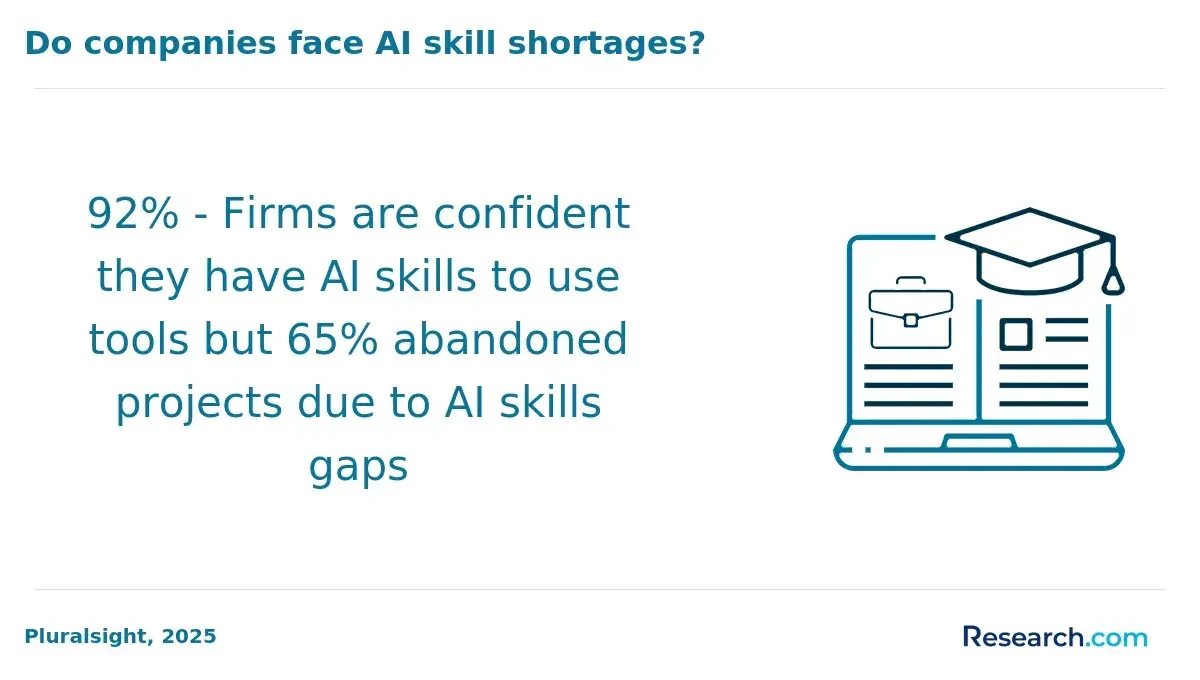
By 2025, 73% of telecom executives identified AI skills gaps as a top-three barrier to reaching their AI goals in networks and operations, according to the World Economic Forum's Artificial Intelligence in Telecommunications 2025 report. This underscores the importance of tailored expertise over general AI knowledge.
Courses designed for telecom AI adoption typically cover:
- Telecom protocols and data structures relevant to AI integration
- Applying machine learning models for anomaly detection in networks
- AI-driven automation for network service provisioning and fault management
- Ethical and regulatory considerations unique to telecom AI implementations
Hands-on projects using real telecom datasets and simulations help bridge theory and practice, preparing learners to navigate data privacy and latency challenges. Graduates can better align AI strategies with telecom business objectives and deliver scalable, measurable improvements. For those wondering what is applied AI engineering, these programs offer a focused pathway into highly specialized AI roles within telecommunications.
Advance Your Career with AI Online Courses
Artificial Intelligence: Implications for Business Strategy
This program provides an introduction to Artificial Intelligence and their implications for business strategy. Earn an official digital certificate.
Oxford Artificial Intelligence Programme
Explore this Oxford Artificial Intelligence programme offered in a flexible learning environment and explore topics like machine learning, automation, and robotics.
Implementing Agentic AI: Building Your Organizational Playbook
This online MIT Agentic AI course offers a practical approach to deploying AI agents in your organization, including a custom playbook. 3 weeks, exclusive launch price.
What types of AI courses are best for Telecom AI adoption teams today?
Telecom AI adoption teams need specialized AI training programs for telecom professionals that emphasize domain-specific data engineering and MLOps. The World Economic Forum predicts that over 60% of AI use cases in telecom by 2025 will rely on these skills, making them crucial for effective deployment. Courses covering data pipelines, feature engineering, and data quality prepare teams to handle vast telecom datasets efficiently.
Practical MLOps training must include deployment, monitoring, and continuous integration to support AI models in ever-changing telecom environments. Hands-on projects using real-world telecom datasets provide context for interpreting network traffic, customer behavior, and anomaly detection. Core machine learning alone falls short without telecom knowledge, so curricula should blend network optimization, signal processing, and predictive maintenance.
Valuable skills also include specialized studies in time-series analysis and graph neural networks to model communication patterns and network topologies effectively. Teams should also receive training on ethical AI use, data privacy, and regulatory compliance like GDPR and CCPA. Cloud computing expertise using platforms such as AWS or Azure, combined with automation tools, supports scalable AI deployments.
The best AI courses for telecom adoption teams include:
- Advanced data engineering and MLOps applied to telecom
- Fundamentals of network optimization and signal processing
- Domain-relevant machine learning techniques, including time-series and graph models
- Ethics, compliance, and data privacy protocols
- Hands-on telecom data projects with cloud deployment
Those seeking comprehensive degrees in AI should prioritize programs integrating telecom-focused curricula to enhance their career prospects.
How do online AI courses for Telecom AI teams compare with campus-based programs?
Online AI courses versus campus-based training for telecom teams present distinct advantages. Online ai courses offer flexibility, rapid updates, and cost efficiency, allowing telecom professionals to access specialized content tailored to real-time industry needs without relocation or extended leave. This agility is vital, as Altman Solon's global telecom survey found that 63% of operators already have generative AI-powered customer chatbots in production.
Campus-based training provides deeper theoretical foundations and valuable face-to-face networking but may lag in quickly incorporating the latest AI developments. In contrast, many online courses include current industry case studies and hands-on projects relevant to telecom scenarios, such as chatbot deployment and network optimization using machine learning.
- Duration: Online courses often run weeks to months; campus programs usually span semesters.
- Curriculum updates: Online programs adapt faster to emergent technologies.
- Hands-on experience: Cloud labs and telecom datasets are common in online courses.
- Cost: Online learning reduces relocation and facility expenses.
- Collaboration: Campus programs better facilitate in-person team projects.
Telecom AI adoption teams should balance immediate implementation needs and budget with academic depth and networking opportunities. Hybrid models combining both formats can provide comprehensive skill development. For those considering advanced education, exploring data science degrees online may offer practical pathways aligned with the industry's evolving demands.
What core AI skills and telecom-specific topics do these courses typically cover?
AI courses designed for telecom adoption teams blend core AI competencies with telecom-specific expertise essential for practical implementation. Students gain knowledge in machine learning techniques for telecom data analysis, covering supervised, unsupervised, and reinforcement learning methods. Hands-on experience often involves Python, TensorFlow, or PyTorch frameworks to build models predicting network demand, optimizing resource allocation, and detecting anomalies.
Telecom-focused modules emphasize network protocols, signal processing, and radio frequency fundamentals. Key operational challenges such as latency reduction, throughput optimization, and fault tolerance are addressed, enabling development of AI solutions for network optimization and fraud detection.
These skills align with trends highlighted by the World Economic Forum's 2025 telecom AI study, where over 80% of Tier-1 operators plan to use AI-driven closed-loop automation for network management by 2027.
Practical applications include AI-driven closed-loop automation systems, predictive maintenance models, and anomaly detection algorithms to enhance security and support self-healing networks. Ethical AI use and regulatory compliance also form a significant part of the curriculum, focusing on privacy and data governance within telecom sectors. Case studies may cover 5G rollout, IoT integration, and edge computing's role in distributed AI inference.
Overall, these programs provide a rigorous framework enabling telecom professionals to apply AI effectively to network challenges. Students interested in further advanced study may consider pursuing a PhD data science online to deepen their expertise in AI applications in telecom network optimization.
Which accredited U.S. universities and platforms offer leading AI programs for telecom roles?
Several accredited U.S. universities and online platforms provide advanced ai programs designed specifically for telecom professionals. Carnegie Mellon University's Master of Science in Artificial Intelligence and Innovation integrates telecom-related topics like network optimization and fraud detection algorithms. Stanford University's AI Graduate Certificate focuses on machine learning applications crucial to billing systems and customer data analytics in telecom.
Flexible learning options are available through online platforms such as Coursera, which partners with the University of Washington to offer specialization courses emphasizing practical skills in signal processing and automated revenue assurance aligned with industry demands.
The World Economic Forum highlights that AI-driven fraud detection and revenue assurance can reduce telecom fraud losses by up to 40% across signaling, billing, and customer channels. This underscores the importance of programs that blend theoretical AI with real-world telecom applications.
Additional notable programs include Columbia University's Master's in Data Science and AI, addressing real-time monitoring and predictive maintenance using advanced AI models. MIT's Professional Certificate in Machine Learning & AI emphasizes scalable network security and customer engagement techniques essential for telecom operations.
When choosing a program, prospective students should seek curricula offering hands-on projects with telecom datasets, partnerships with industry players, and courses covering regulatory compliance and data privacy. These elements are vital for succeeding in the evolving telecom AI landscape.
What are the typical admission requirements and prerequisites for Telecom-focused AI courses?
Admission to telecom-focused AI programs typically requires a solid foundation in technical and quantitative fields. Most applicants hold a bachelor's degree in computer science, electrical engineering, data science, or related STEM areas.
Key prerequisites often include proficiency in programming languages such as Python or R, a basic understanding of machine learning algorithms, and familiarity with data structures and databases.
Some programs may accept substantial professional experience in telecom or analytics instead of a formal degree.
Advanced coursework often demands knowledge of statistics, linear algebra, and signal processing, which are essential for analyzing telecom data and developing AI models. Practical experience with telecom protocols, network architectures, or cloud platforms is especially valuable for courses emphasizing network optimization or predictive maintenance.
Applicants must demonstrate strong math and analytics skills because telecom AI leverages algorithms to enhance customer offerings and improve network performance. For example, AI-driven personalization can increase average revenue per user (ARPU) by 5-15% for telecom operators, according to a World Economic Forum analysis.
Some institutions require a statement of purpose outlining the applicant's interest in telecom AI, letters of recommendation reflecting technical or industry experience, or standardized test scores like the GRE. However, these requirements are becoming less common.
How long do Telecom AI courses usually take, and what do they cost?
Telecom AI courses vary widely in length and depth, from short bootcamps lasting 4-6 weeks to comprehensive programs of 3-6 months. Introductory offerings often focus on AI fundamentals, telecom-specific applications, and cloud-native deployment within two months. More advanced courses emphasize platform orchestration and MLOps for hybrid-cloud environments, reflecting the industry trend where 70% of new AI workloads in telecom will be cloud-native or hybrid-cloud by 2025.
Pricing depends on duration, format, and provider. Short online courses or bootcamps typically cost between $500 and $2,000. Mid-level professional certificates from universities or specialized vendors range from $2,000 to $10,000, while comprehensive programs with live instruction or telecom use case integration may exceed $10,000.
- Self-paced versus instructor-led formats
- Inclusion of hands-on labs or telecom data sets
- Access to cloud environments for practical MLOps experience
- Career support and certification credibility
Prospective students should prioritize courses teaching cloud orchestration, machine learning pipelines, and telecom-specific AI use cases. Shorter courses suit quick upskilling, while longer programs provide the expertise needed for AI platform engineering and deployment strategy roles in telecom operators or vendors.
What Telecom AI career paths, roles, and industries can these courses prepare you for?
Telecom AI courses train students for diverse roles such as AI systems engineers optimizing infrastructure, AI data analysts interpreting network and user data, and product managers integrating AI in telecom services.
These programs also focus on AI governance and risk management, critical as nearly 50% of telecom operators lack formal AI governance frameworks as of 2025. This gap drives demand for specialists adept at compliance, ethical risk mitigation, and aligning AI initiatives with regulatory standards.
Career opportunities extend into cyber security, cloud computing, and IoT, which share strong ties with telecom AI applications. Practical skills taught include developing machine learning models for network reliability, applying natural language processing for customer automation, and implementing predictive maintenance. Roles range from AI research scientists innovating telecom algorithms to business analysts translating AI insights into operations improvements.
Graduates find positions at mobile carriers, infrastructure providers, regulatory agencies, and AI-focused consultancies supporting telecom integration. Specializations in AI policy, operations, or development help students target precise career tracks addressing both technical and organizational demands.
These educational paths equip learners to contribute effectively to the fast-evolving telecom sector, meeting the need for professionals who understand telecom-specific challenges like latency reduction and secure data handling.
What salary ranges and job outlook can Telecom AI specialists expect in the U.S.?
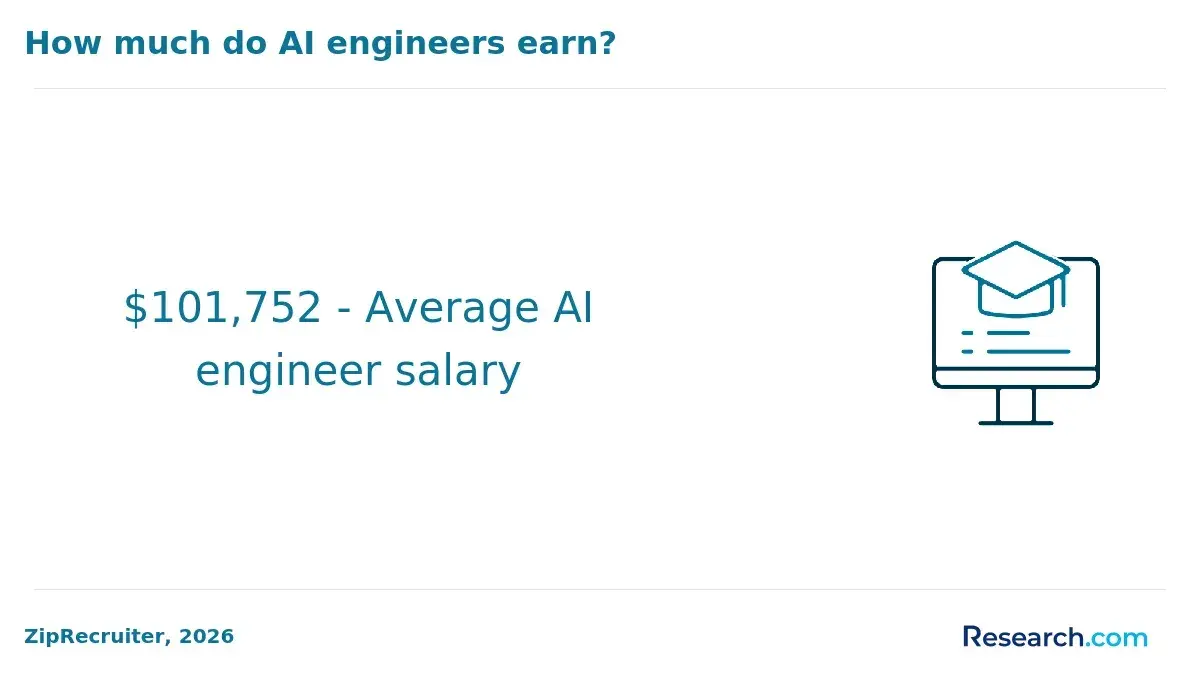
Telecom AI specialists in the U.S. typically earn between $85,000 and $150,000 annually, influenced by experience, education, and role complexity. Entry-level jobs like AI analysts or junior data scientists focusing on telecom usually start around $85,000 to $100,000.
More experienced AI engineers and architects working on telecom-specific applications can reach salaries of $150,000 or higher. Leadership positions such as AI project managers or directors overseeing AI initiatives often command salaries exceeding $160,000.
The job outlook remains robust, with AI playing a critical role in network optimization, customer service, and cybersecurity within the telecom sector. Industry forecasts anticipate demand for AI talent in telecom to grow 15%-20% annually over the next five years.
Case studies from the World Economic Forum reveal that telecom companies investing in systematic AI training for cross-functional teams boost AI project success rates by up to 30 percentage points compared to those relying mainly on external vendors.
Salary and opportunities vary by region and company size: larger carriers and tech-focused firms tend to offer higher pay and more innovative projects, while regional providers provide broader responsibilities and cross-functional exposure. Building expertise in machine learning, network data analytics, and AI automation enhances career growth.
Professionals who combine technical skills with business understanding within telecom AI adoption teams unlock better career potential and pay. Ongoing education and certifications that address telecom AI use cases remain essential in this rapidly evolving field.
How can Telecom AI teams evaluate and choose reputable, industry-aligned AI training programs?
Telecom AI teams should focus on programs that demonstrate strong industry alignment when selecting their training. Prioritize courses developed in partnership with major telecom firms or taught by instructors with hands-on experience in telecommunications technology. This approach ensures the curriculum tackles real-world challenges such as network optimization, fraud detection, and customer experience enhancement.
Look for practical case studies or projects tailored to telecom applications instead of generic AI topics.
Evaluate the syllabus for current telecom AI frameworks, tools, and programming languages like Python and TensorFlow, which are widely adopted in the sector. Certifications recognized by established industry bodies or technology vendors can offer additional confidence in the program's value.
Consider the flexibility of course delivery formats and durations to suit team schedules. Modular, shorter courses enable incremental learning without disrupting work. Online platforms with active community support or mentoring enhance understanding, especially for complex AI projects.
Check outcomes by reviewing feedback from alumni and employment data to measure effectiveness in developing telecom AI careers. AI course enrollments among technology and telecom professionals increased over 160% year over year. Pricing models vary, with some providers offering enterprise licenses that can reduce costs for team training.
Other Things You Should Know About Artificial Intelligence
Explainability is critical in telecom AI because stakeholders need to understand how decisions are made, especially in areas like network management and customer service automation. Transparent AI models help ensure trust, regulatory compliance, and facilitate troubleshooting, making explainability a key feature for adoption in telecom environments.
Key challenges include managing the complexity of telecom infrastructure, ensuring data quality and security, and addressing scalability issues. Additionally, integrating AI systems with legacy technologies and aligning AI-driven insights with business goals require careful planning and cross-functional collaboration.
Yes, AI helps reduce operational costs by automating routine tasks, optimizing network resource allocation, and predicting maintenance needs to prevent downtime. These efficiencies enable telecom companies to lower manual labor expenses and improve overall network reliability, positively impacting the bottom line.
References
- Transformative Applications of AI in Telecommunications: Use Cases, Strategies & Future Trends - Riseup Labs https://riseuplabs.com/transformative-applications-of-ai-in-telecommunications/
- AI in Telecom: Hype with Benefits https://blog.portaone.com/ai-in-telecom-use-cases-and-challenges/
- What is MSc Artificial Intelligence? A Comprehensive Guide | Walbrook https://www.walbrook.ac.uk/subjects/ai/what-is-msc-in-artificial-intelligence/
- Top 10 AI Learning Platforms for 2026: Features, Benefits, and How to Choose https://www.docebo.com/learning-network/blog/ai-learning-platforms/
- Major Organizations Commit to Supporting AI Education https://www.whitehouse.gov/releases/2025/09/major-organizations-commit-to-supporting-ai-education/
- AI Masterclass for Telecom Professionals | Telefocal Asia - Telecoms Training https://www.telefocal.com/courses/ai-masterclass-telecom/
- TM Forum Community https://engage.tmforum.org/discussion/bridging-the-ai-skills-gap-in-telecoms-looking-for-best-practices-and-sharing-vnpts-roadmap
- Digital Regulation Platform https://digitalregulation.org/a-guide-towards-collaborative-ai-frameworks/
- What Are the Career Paths After a Bachelor of Science in AI https://tetr.com/blog/what-are-the-career-paths-after-a-bachelor-of-science-in-ai
- Top 12 AI-powered learning platforms in 2026 https://www.absorblms.com/blog/top-ai-learning-platforms