2027 Best Agentic AI Courses for Knowledge Management

Co-Founder and Chief Data Scientist
Many professionals face challenges managing vast amounts of data effectively while seeking to enhance decision-making through agentic AI. Without specialized knowledge, leveraging AI tools for knowledge management can seem daunting and inefficient, limiting career growth opportunities. Flexible learning options that balance technical depth with practical application are crucial for those transitioning from unrelated fields.
This article evaluates top agentic AI courses designed to equip learners with essential skills in knowledge management. It aims to guide readers toward accredited programs that offer the flexibility and expertise needed to advance in this dynamic sector.
Key Things You Should Know
- Agentic AI courses in 2026 emphasize practical knowledge management skills, integrating machine learning techniques to optimize data-driven decision-making processes in enterprises.
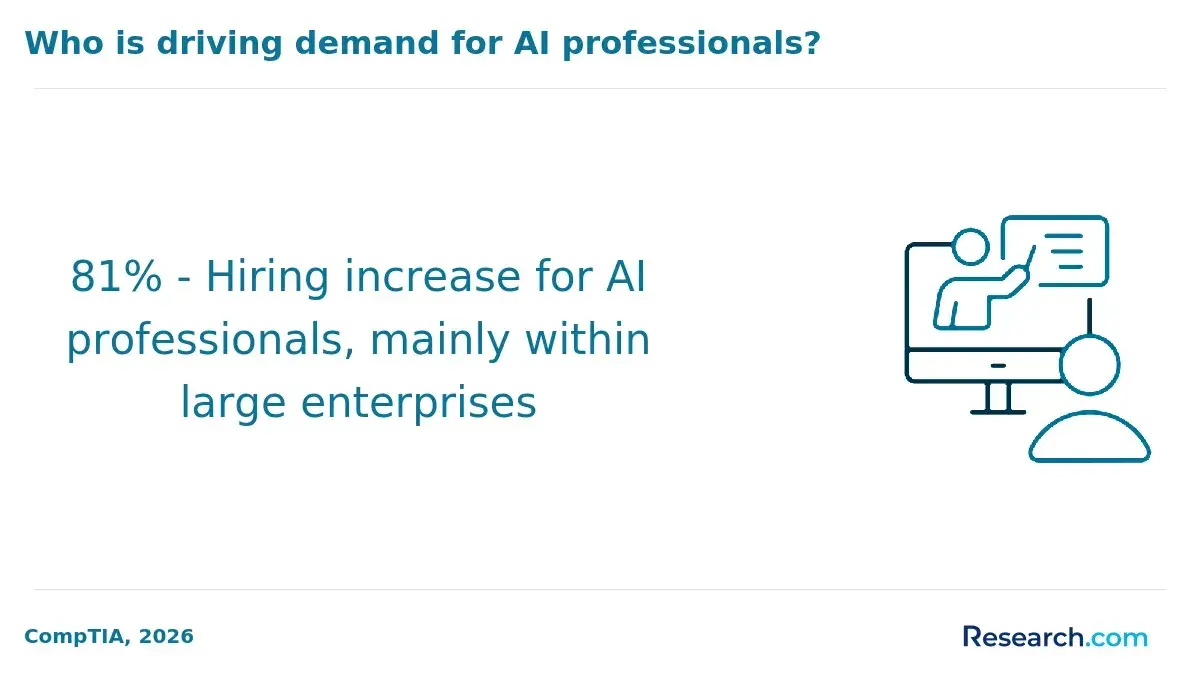
- Recent studies show a 35% increase in industry demand for professionals skilled in agentic AI and knowledge management, driven by expanding AI adoption across sectors.
- Leading programs now focus on ethical AI deployment and human-AI collaboration, preparing students for the evolving challenges in knowledge-intensive environments.
Advance Your Career with AI Online Courses
Artificial Intelligence: Implications for Business Strategy
This program provides an introduction to Artificial Intelligence and their implications for business strategy. Earn an official digital certificate.

Oxford Artificial Intelligence Programme
Explore this Oxford Artificial Intelligence programme offered in a flexible learning environment and explore topics like machine learning, automation, and robotics.

Implementing Agentic AI: Building Your Organizational Playbook
This online MIT Agentic AI course offers a practical approach to deploying AI agents in your organization, including a custom playbook. 3 weeks, exclusive launch price.

AI Adoption: Driving Business Value and Impact
This online MIT AI Adoption: Driving Business Value and Impact offers practical frameworks to close the gap between AI potential and business reality.

Artificial Intelligence in Pharma and Biotech
Discover the applications and limitations of artificial intelligence in pharma and biotech with this MIT online short course.

What is agentic AI for knowledge management and why does it matter for careers?
Agentic AI applications in knowledge management are transforming how organizations handle information by autonomously performing tasks like document search, data summarization, and expert identification. These systems operate proactively with minimal human input, streamlining workflows and reducing time spent on routine and complex cognitive duties. This shift is particularly impactful for professionals in knowledge-intensive roles, including research analysts and content strategists.
The career impact of agentic AI for information systems is significant. According to McKinsey Global Institute, advanced AI agents could automate 60-70% of tasks in knowledge work, reshaping job roles and emphasizing AI collaboration, oversight, and strategic decision-making over manual data handling. To stay relevant, knowledge management professionals must develop skills in training AI agents, evaluating their outputs, and integrating them effectively into workflows. Ethical considerations around automated decisions are also increasingly important.
Agentic AI enhances expert search accuracy and speeds decision-making by leveraging internal and external knowledge efficiently. This provides a competitive edge for workers adept at harnessing these technologies. Key career advice for those pursuing expertise in this domain includes continuous learning, AI tool integration, and honing analytical thinking to interpret AI-generated insights critically.
For those interested in advancing their education quickly to capitalize on these emerging trends, a fast track computer science degree offers a valuable pathway to develop the necessary technical foundation and sharpen AI skills.
Advance Your Career with AI Online Courses
Artificial Intelligence: Implications for Business Strategy
This program provides an introduction to Artificial Intelligence and their implications for business strategy. Earn an official digital certificate.
Oxford Artificial Intelligence Programme
Explore this Oxford Artificial Intelligence programme offered in a flexible learning environment and explore topics like machine learning, automation, and robotics.
Implementing Agentic AI: Building Your Organizational Playbook
This online MIT Agentic AI course offers a practical approach to deploying AI agents in your organization, including a custom playbook. 3 weeks, exclusive launch price.
What types of agentic AI courses are best for knowledge management skills?
Agentic AI knowledge management courses for professionals emphasize automation, workflow orchestration, and decision-making enabled by autonomous agents. These programs focus on designing intelligent workflows, integrating AI-driven knowledge bases, and improving information retrieval through multi-agent collaboration. Practical skills in programming languages like JADE and RPA tools, as well as knowledge representation and trust management in automated workflows, are central to training.
Key modules typically include:
- Agent programming languages and platforms (e.g., JADE, RPA tools)
- Knowledge representation and reasoning within agentic systems
- Human-agent interaction and trust management in automated knowledge workflows
- Data architecture for supporting autonomous agent decision-making
- Security and privacy considerations in knowledge management with AI agents
Courses that combine AI orchestration with knowledge engineering train learners to create systems where agents autonomously gather, filter, and disseminate information. Another vital focus is enterprise content management, preparing students for roles in digital asset optimization and workflow automation. Choosing the best agentic AI training programs in knowledge management can accelerate expertise for growing corporate demands.
With market growth forecasted to jump from $5 billion in 2024 to over $27 billion by 2030, professionals skilled in developing and managing agentic AI will be in high demand. Candidates should seek programs offering hands-on projects using industry-standard tools and live demos addressing agent coordination, scalability, and data integrity challenges. For those exploring options, the best online AI degree programs offer accessible pathways in this evolving field.
How do agentic AI knowledge management courses differ from general AI or data science programs?
Agentic AI knowledge management training versus general AI programs differ fundamentally in focus and application. Agentic AI courses emphasize AI as an autonomous decision-maker that dynamically adapts and manages knowledge assets, unlike broader programs covering machine learning algorithms, data engineering, and statistical analysis.
These specialized courses concentrate on:
- Integrating AI agents into enterprise knowledge management systems with tools for content classification, semantic search, and automated updates.
- Developing human-AI collaboration models to improve organizational learning and information flow.
- Employing frameworks for knowledge graph construction, natural language understanding, and context-aware AI responses.
Students learn practical skills such as deploying AI to identify outdated policies or duplicate documents automatically. This contrasts with general AI or data science education where such autonomous, proactive uses in knowledge workflows are less emphasized.
Data from the IBM Institute for Business Value reveals organizations investing in structured AI skills training for knowledge workers report a 15% higher ROI on AI initiatives compared to those focusing solely on technology tools. This shows mastering agentic AI applications delivers a clear competitive edge.
These differences between agentic AI courses and data science education make agentic AI pathways ideal for roles requiring autonomous oversight of knowledge assets.
Prospective students seeking affordable options may explore the cheapest masters in data science to begin foundational AI training before specializing.
What accredited U.S. colleges and universities offer agentic AI courses in knowledge management?
Several accredited U.S. colleges offer agentic AI knowledge management courses within computer science, information systems, or business analytics departments. Carnegie Mellon University includes coursework on autonomous agents and knowledge systems, emphasizing practical use in enterprise settings. Massachusetts Institute of Technology (MIT) provides specialized programs blending AI, machine learning, and knowledge management, equipping students to design AI agents supporting research synthesis and decision-making.
Stanford University integrates agentic AI topics into its artificial intelligence curriculum, focusing on expert-routing and proposal drafting commonly used in corporate knowledge workflows. The University of California, Berkeley offers courses on deploying autonomous AI in knowledge-intensive environments, featuring projects that replicate enterprise challenges. These programs balance theoretical frameworks with applied skills essential to building intelligent agents capable of autonomous operation within knowledge workflows.
Industry trends support this training focus; a 2024 Deloitte global survey reports 31% of leading AI adopters have implemented autonomous or semi-autonomous AI agents for research synthesis and expert-routing. Prospective students should target programs providing hands-on projects, enterprise AI tool experience, and interdisciplinary collaboration to enhance employability in emerging autonomous AI careers.
Those seeking the fastest way to get a cybersecurity degree online may find similar accelerated pathways in AI knowledge management programs, linking technical proficiency with AI-driven knowledge solutions.
How do online, hybrid, and campus-based agentic AI courses compare for flexibility and support?
Online, hybrid, and campus-based agentic AI courses differ markedly in flexibility and learner support, affecting how students balance education with work or personal life. Online programs offer the greatest flexibility by letting learners access materials anytime and anywhere, ideal for professionals with irregular schedules. However, this often means less real-time instructor interaction, with reliance on asynchronous forums and digital tools.
Hybrid courses blend scheduled live or in-person sessions with asynchronous elements, providing a balance of flexibility and timely support. This format suits students who need some real-time mentorship and collaboration while maintaining some autonomy. Campus-based options offer the most direct engagement through face-to-face interaction, hands-on labs, and networking, benefiting those who thrive in structured environments but require fixed schedules and location.
Agentic AI education's complexity benefits from direct guidance, especially for less-experienced learners. Research from the Boston Consulting Group shows a 25-30% increase in task throughput for knowledge workers using agentic AI, highlighting the value of structured support for mastery.
Students should weigh factors such as:
- Workload and scheduling flexibility
- Access to immediate instructor feedback and peer interaction
- Preference for hands-on practice versus self-paced learning
- Availability of technical resources for online study
Hybrid courses often provide the best compromise, combining effective support with scheduling flexibility to enhance learning outcomes.
What core topics and tools are covered in agentic AI knowledge management curricula?
Agentic AI knowledge management education focuses on integrating autonomous AI agents with organizational knowledge systems to improve decision-making and automate workflows. Students engage with cognitive architectures that enable AI agents to perceive, reason, and act independently within digital environments. They study knowledge representation frameworks such as ontologies, semantic networks, and knowledge graphs to organize complex data effectively.
Key curriculum elements include machine learning models for natural language processing, allowing AI agents to interpret and generate human-like language, improving knowledge access. Additional focus areas are multi-agent systems for AI-human collaboration and reinforcement learning to enhance adaptability in dynamic knowledge contexts.
Practical training involves programming with Python libraries like TensorFlow and PyTorch and deploying conversational AI using platforms such as OpenAI's APIs. Knowledge management tools like SharePoint and Confluence integrated with AI modules illustrate real-world applications. Data management and AI-driven analytics skills support large-scale knowledge bases.
Per the World Economic Forum's Future of Jobs Report 2024, 44% of workers' core skills will be disrupted by AI and automation by 2028, with over 75% of companies prioritizing AI and big data expertise involving AI agents. Hands-on experience with agent design, ethical AI use, and scalable architectures is essential to meet growing workforce demands.
What are the typical admission requirements and prerequisites for these courses or certificates?
Admission to agentic AI courses and certificates in knowledge management usually requires a bachelor's degree in fields like computer science, information systems, data science, or business analytics. Applicants must often demonstrate programming skills in languages such as Python or R, along with knowledge of databases and machine learning principles. Advanced certificates may ask for prior coursework in statistics or algorithm design.
Relevant professional experience in knowledge management, IT, or AI projects can significantly strengthen an application. Some programs targeting working professionals accept at least two years of industry experience in place of formal degrees.
- Basic programming competency (e.g., Python)
- Understanding of data structures and algorithms
- Introductory machine learning or AI concepts
- Familiarity with knowledge management systems or automation tools
Many programs also require a statement of purpose or an interview to assess motivation and suitability for evolving AI demands. For candidates with limited technical background, bridge courses in coding or data analytics may be mandatory before full admission.
Data from the LinkedIn Economic Graph highlights that jobs in knowledge roles requiring AI and automation skills command a 25-35% higher median salary than comparable positions without these skills. Meeting these admission prerequisites thus not only delivers academic opportunities but also tangible career and compensation benefits.
How long do agentic AI knowledge management programs take and what do they cost?
Agentic AI knowledge management programs vary significantly in length and depth, typically lasting from a few weeks up to six months. Short, focused courses designed for working professionals usually run 4 to 8 weeks, emphasizing practical AI applications in business settings. More extensive certificate programs or bootcamps extend from 3 to 6 months, integrating project-based learning and deep dives into autonomous systems within knowledge workflows.
Tuition costs range widely, often between $300 and $2,000. Entry-level modules from popular platforms generally cost $300 to $600, offering affordable options for quick skill acquisition. Advanced certificates or specialized tracks featuring mentorship or case studies can exceed $1,500. University-sponsored programs or executive education typically demand higher fees, reflecting the credential's prestige and instructor involvement.
Choosing a program depends on career objectives and your current role. Shorter courses are ideal for rapidly adopting agentic AI tools in existing workflows, while longer programs provide strategic and technical expertise through hands-on projects. Increasing enrollment in these areas, according to Coursera's 2024 Global Skills Report, highlights agentic AI's growing importance across diverse professional fields.
Prospective students should evaluate course delivery, instructor quality, and industry recognition. Certificates from well-regarded providers help enhance resumes and open opportunities in roles focused on intelligent automation and autonomous decision-making within knowledge management systems.
What jobs, salaries, and career paths can agentic AI knowledge management training lead to?
Agentic AI knowledge management training equips professionals for high-demand roles such as AI governance specialists, workflow architects, AI product managers, and knowledge engineers. These experts develop frameworks to ensure autonomous systems operate safely and effectively within organizations.
Salary data reflects the specialized nature of these jobs, with AI governance specialists earning between $95,000 and $160,000 annually. AI product managers and knowledge engineers typically earn $110,000 to $180,000, depending on factors like location and company size. Such compensation highlights the financial benefits of expertise in this field.
The 2024 KPMG Global Tech Report reveals that 73% of firms deploying autonomous AI identify "lack of internal skills to design safe workflows" as a critical risk. This gap emphasizes the need for trained professionals who can integrate agentic AI safeguards into company knowledge systems.
Career growth often follows mastery of AI governance protocols and system design. Professionals may advance to roles including chief AI ethics officers, compliance leads, or strategic technology consultants focusing on safe AI adoption. Industries such as healthcare, finance, and manufacturing particularly value these skills.
Employers prioritize candidates who combine theoretical learning with practical know-how to manage AI lifecycles, ethical constraints, and real-time data control. Developing these competencies positions learners for success in an increasingly automated workplace.
Are there industry certifications or standards that validate agentic AI knowledge management skills?
Industry certifications specifically validating agentic AI knowledge management skills remain limited and specialized. The rapid growth in AI agent use, forecasted by Gartner to become a primary enterprise knowledge interface for 20% of knowledge workers, has increased demand for verified expertise. However, formal certifications focused solely on agentic AI in knowledge management are not yet widespread.
Currently, validation often comes from broader credentials in artificial intelligence and knowledge management. Examples include the Certified Knowledge Manager (CKM) and AI certifications from the Association for the Advancement of Artificial Intelligence (AAAI) or IEEE AI programs. These provide foundational AI knowledge but usually do not focus on agent-specific capabilities.
Specialized courses targeting AI integration within enterprise knowledge systems are emerging. They emphasize skills such as agent orchestration, natural language processing, and cognitive automation design. Many programs collaborate with technology providers and industry consortia but lack unified standards.
Professionals looking to strengthen their credentials should seek interdisciplinary programs combining AI, knowledge management, and enterprise IT governance. Participation in workshops and events from recognized organizations like Gartner and IEEE also supplements formal certifications with up-to-date best practices and standards.
Other Things You Should Know About Artificial Intelligence
One of the main challenges is ensuring data quality and consistency, as agentic AI relies heavily on accurate and comprehensive information. Another challenge involves integrating AI systems with existing enterprise software without disrupting workflows. Additionally, addressing ethical concerns such as data privacy and algorithmic bias remains critical when deploying agentic AI solutions in knowledge management.
Proficiency in data analysis, programming, and understanding of machine learning concepts is essential for working with agentic AI tools. Communication skills are also important to translate AI-generated insights into actionable strategies. Familiarity with AI ethics and governance helps practitioners ensure responsible use of these technologies within their organizations.
Yes, agentic AI courses equip students with transferable skills valuable in sectors such as healthcare, finance, education, and government. Because agentic AI focuses on automating knowledge processes, its applications extend to any field that depends on data-driven decision-making and knowledge sharing. This versatility broadens career opportunities beyond conventional tech environments.
References
- High School Classes Required for College Admission - National Association for College Admission Counseling (NACAC) https://www.nacacnet.org/high-school-classes-required-for-college-admission/
- What is Agentic AI | Why you need it https://www.egain.com/what-is-agentic-ai/
- Is Knowledge Management a Good Career Path? (And How AI Is Transforming KM Careers) – Modern KM https://modernkm.com/is-knowledge-management-a-good-career-path-and-how-ai-is-transforming-km-careers/
- The Importance of Knowledge Management in Agentic AI Projects for Technical Support - PeopleCert’s Tool Vendor Accreditation https://atv.peoplecert.org/the-importance-of-knowledge-management-in-agentic-ai-projects-for-technical-support/
- Agentic AI Courses by JHU, MIT PE, Texas McCombs & IIT with Online Certificate https://www.mygreatlearning.com/agentic-ai/courses
- AI Agents vs Agentic AI: What Organisations Need to Know https://oxford-review.com/ai-agents-vs-agentic-ai-what-organisations-need-to-know/
- How Long Does Agentic AI Implementation Take for Enterprises? https://blog.anyreach.ai/how-long-does-agentic-ai-implementation-take-for-enterprises/
- Agentic AI: Concepts, Architectures, Frameworks, and Challenges https://www.ijert.org/agentic-ai-concepts-architectures-frameworks-and-challenges-ijertv15is020321
- Introduction to Agentic AI https://cognitiveclass.ai/courses/introduction-to-agentic-ai
- Agentic AI Governance: Data Certification for Compliance https://truescreen.io/articles/ai-agent-data-certification-governance-compliance/