2027 Best AI Strategy Courses for Healthcare Leaders Evaluating AI ROI

Co-Founder and Chief Data Scientist
Healthcare leaders often struggle to evaluate the return on investment when integrating artificial intelligence tools. Limited expertise in both healthcare operations and AI strategy creates uncertainty around cost-effectiveness and measurable outcomes. This challenge risks stalled projects and missed opportunities to improve patient care and operational efficiency. Understanding how to align AI initiatives with organizational goals is crucial for informed decision-making. This article reviews top strategy courses tailored for healthcare professionals aiming to master AI ROI evaluation techniques, offering a clear pathway to bridge knowledge gaps and confidently lead AI-driven transformations within healthcare systems.
Key Things You Should Know
- Healthcare leaders increasingly prioritize AI strategy courses that emphasize quantitative methods for evaluating AI ROI, with 67% reporting improved decision-making confidence post-training in 2025 surveys.
- Top courses integrate real-world case studies from healthcare settings, helping leaders understand AI's impact on patient outcomes and operational efficiency, crucial for justifying investments over multi-year horizons.
- Emerging curricula highlight ethical considerations and regulatory compliance, reflecting a 30% rise in healthcare AI implementations influenced by policy changes from 2024 onward.
Advance Your Career with AI Online Courses
Artificial Intelligence: Implications for Business Strategy
This program provides an introduction to Artificial Intelligence and their implications for business strategy. Earn an official digital certificate.

Oxford Artificial Intelligence Programme
Explore this Oxford Artificial Intelligence programme offered in a flexible learning environment and explore topics like machine learning, automation, and robotics.

Implementing Agentic AI: Building Your Organizational Playbook
This online MIT Agentic AI course offers a practical approach to deploying AI agents in your organization, including a custom playbook. 3 weeks, exclusive launch price.

AI Adoption: Driving Business Value and Impact
This online MIT AI Adoption: Driving Business Value and Impact offers practical frameworks to close the gap between AI potential and business reality.

Artificial Intelligence in Pharma and Biotech
Discover the applications and limitations of artificial intelligence in pharma and biotech with this MIT online short course.

What is an AI strategy course for healthcare leaders focused on measuring AI ROI?
AI strategy courses for healthcare leaders focused on measuring AI ROI provide essential skills to quantify the financial, operational, and clinical value generated by artificial intelligence implementations. These courses emphasize healthcare AI strategy for ROI evaluation, covering methods to assess both direct and indirect returns such as cost savings, revenue growth, operational efficiency, and enhanced patient outcomes.
Core content includes frameworks for defining measurable KPIs before deploying AI, tools for data-driven performance analysis, and strategies to uncover hidden costs like integration difficulty and staff training requirements. Translating AI's predictive and diagnostic advantages into monetary value for executive and board-level communication is a key challenge addressed.
Participants explore critical questions including:
- How to set baseline metrics for AI initiatives?
- Which financial models capture cost avoidance and new revenue streams?
- How to weigh short-term implementation costs against long-term strategic benefits?
- How to communicate AI ROI effectively to diverse stakeholders?
As global healthcare AI spending exceeds $20.9 billion in 2024 with a 41.2% compound annual growth rate through 2032, the need for AI investment return assessment for healthcare executives is greater than ever. Without these competencies, leaders risk misallocating resources and failing to leverage AI's transformative impact on care delivery and management.
Those interested in advancing their expertise in related fields may consider a data scientist degree to complement their healthcare leadership skills.
Advance Your Career with AI Online Courses
Artificial Intelligence: Implications for Business Strategy
This program provides an introduction to Artificial Intelligence and their implications for business strategy. Earn an official digital certificate.
Oxford Artificial Intelligence Programme
Explore this Oxford Artificial Intelligence programme offered in a flexible learning environment and explore topics like machine learning, automation, and robotics.
Implementing Agentic AI: Building Your Organizational Playbook
This online MIT Agentic AI course offers a practical approach to deploying AI agents in your organization, including a custom playbook. 3 weeks, exclusive launch price.
How can AI strategy training help healthcare executives evaluate and improve AI return on investment?
AI strategy training equips healthcare executives with critical skills to evaluate the financial and operational impacts of AI projects, enhancing their ability to analyze return on investment effectively. Such training programs for healthcare leaders focused on improving ROI analysis emphasize defining clear performance metrics linked to clinical and business goals, like reducing patient wait times or cutting administrative costs. This data-driven approach improves leaders' capacity to interpret AI insights and identify key value drivers.
Training includes scenario analysis and cost-benefit frameworks that help healthcare executives anticipate risks and allocate resources efficiently. For example, natural language processing can automate documentation, allowing leaders to measure time savings against implementation expenses. This pragmatic focus ensures AI investments support organizational priorities, boosting both efficiency and patient care outcomes.
Executives also develop skills in cross-functional collaboration, which is vital for integrating AI solutions across clinical, IT, and finance teams, thus minimizing redundancies and enhancing overall ROI potential. A prominent analysis suggests generative AI could generate $60-$110 billion annually in healthcare through productivity improvements and streamlined clinical workflows.
Key benefits of AI strategy training for ROI evaluation include:
- Understanding AI's financial impact through clear KPIs and cost metrics
- Applying economic modeling techniques to predict ROI scenarios
- Identifying operational bottlenecks AI can address
- Aligning AI projects with regulatory and ethical standards to mitigate compliance risks
- Enhancing collaboration across departments to maximize value capture
Individuals interested in advancing their knowledge in AI applications may explore opportunities related to a mechanical engineering online program, which often includes exposure to emerging technologies and data analytics relevant to AI integration.
What types of AI strategy courses are available for healthcare leaders, and who should take them?
AI strategy courses for healthcare leadership development generally fall into foundational, applied, and executive-level categories. Foundational courses introduce basic AI concepts, machine learning principles, and healthcare data management, ideal for those new to AI seeking broad literacy about its role in improving patient outcomes and clinical workflows.
Applied programs emphasize practical integration of AI tools, focusing on use cases such as predictive analytics, clinical decision support, and operational efficiency. These are valuable for clinicians, healthcare managers, and IT specialists driving AI implementation. For instance, AI scribes can reduce physician documentation time by 27%, leading to an estimated $1.7 million annual savings per hospital, highlighting tangible financial benefits.
Executive-level programs cater to senior leaders responsible for strategic decisions, ROI evaluation, and policy development. Healthcare leaders evaluating artificial intelligence ROI training programs gain skills to align AI investments with institutional goals and address regulatory challenges confidently.
Professionals should choose courses that match their experience and objectives, combining technical, financial, and ethical insights for better outcomes. For those seeking further education, exploring a master data science online can provide advanced competencies supporting AI initiatives in healthcare.
How do online AI strategy programs for healthcare compare with on-campus and hybrid options?
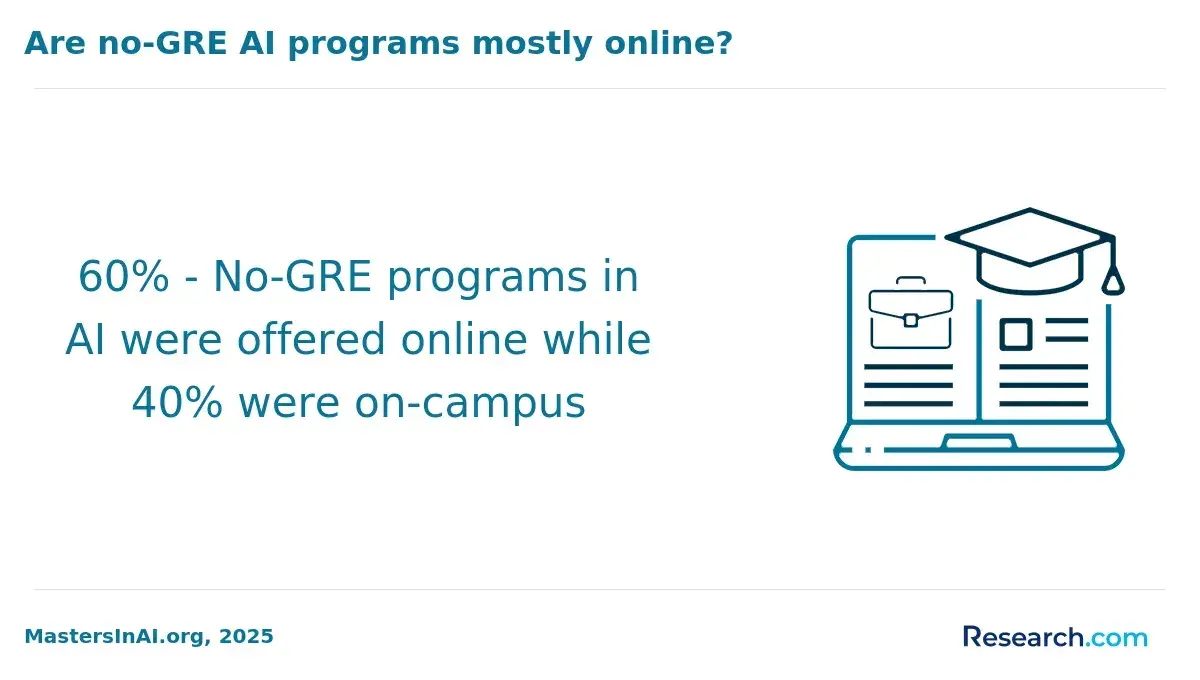
Online AI strategy courses for healthcare leaders offer unmatched schedule flexibility, catering especially to professionals balancing clinical or administrative duties. These programs provide asynchronous access to coursework, ideal for busy healthcare leaders who cannot commit to fixed class times. By contrast, on-campus options typically deliver stronger networking opportunities and hands-on experiences like live case studies and use of campus AI labs, though they require commuting and adherence to set schedules.
Hybrid AI strategy programs in healthcare combine the benefits of online learning with occasional in-person sessions. This approach appeals to those seeking practical exposure while maintaining some flexibility. However, hybrid formats can involve travel, which may reduce the advantages of remote learning.
Evaluating AI ROI in healthcare involves both technological impact and workforce adoption. A recent KLAS Research survey found that hospitals using ambient clinical AI documentation tools reduced physicians' after-hours electronic health record (EHR) work by 30-50% less time. Additionally, 82% of healthcare organizations reported improved clinician productivity, highlighting AI's operational value.
Programs focusing on real-world AI implementation through case studies or data analytics projects help healthcare leaders translate AI benefits into strategic decisions. Choosing the right program depends on individual goals, with hybrid or on-campus options favored by those prioritizing immediate workforce management, while fully online programs suit those needing schedule flexibility without sacrificing quality.
Prospective students may also explore a veteran friendly online cybersecurity degree as a complementary path to strengthen technical expertise in healthcare technology.
What core topics and case studies do AI ROI-focused healthcare strategy courses typically cover?
AI ROI-focused healthcare strategy courses equip professionals with essential skills to assess the financial and clinical impacts of artificial intelligence integration. Core topics include quantifying AI-driven cost savings, frameworks for embedding AI into clinical workflows, and methodologies to measure patient outcome improvements relative to investment. Students learn to build business cases by analyzing return on investment using evidence-based metrics and risk assessments.
Real-world case studies highlight AI contributions to healthcare, such as clinical decision-support systems that enhance diagnostic accuracy and reduce errors. For example, a 2024 meta-analysis in The Lancet Digital Health found these systems lowered medication prescribing errors by 39% on average across hospitals, linking AI use to improved safety and financial savings.
Additional modules explore AI's role in optimizing administrative operations-patient scheduling and billing-and issues of scalability and interoperability with existing health IT. Predictive analytics for population health management and personalized medicine are also emphasized as key ROI drivers.
Practical training involves financial modeling and scenario planning, helping healthcare leaders weigh upfront costs against long-term benefits. Risk management covers regulatory compliance, ethical considerations, and mitigating AI bias. This comprehensive approach ensures leaders are prepared to champion AI projects aligned with institutional goals and patient care priorities.
How can healthcare leaders verify accreditation and institutional quality for AI strategy programs?
Healthcare leaders assessing AI strategy programs should focus on accreditation by agencies recognized by the U.S. Department of Education or the Council for Higher Education Accreditation (CHEA). Such accreditation ensures programs meet rigorous academic and operational standards. Affiliations with established universities or medical schools enhance credibility and support integration with healthcare-specific AI frameworks.
Evaluate curricula for alignment with industry standards and inclusion of evidence-based learning objectives, especially in health technology applications. Faculty expertise should be transparent, highlighting publications or partnerships with recognized healthcare institutions or AI research centers. Certifications or endorsements from professional bodies like the Healthcare Information and Management Systems Society (HIMSS) or the American Medical Informatics Association (AMIA) add further validation.
Review student outcomes and program effectiveness through graduate employment rates in healthcare AI roles and the use of real-world projects and case studies. For instance, courses demonstrating how AI optimizes virtual care reflect practical application. A 2024 Accenture survey found U.S. health systems adopting AI-driven digital front doors and chatbots saw a 25-30% drop in call-center volume and a 10-15 percentage point rise in patient self-service appointment scheduling.
Transparency about tuition, refund policies, and student support services is critical. Avoid programs without clear accreditation or those outside the U.S. lacking recognized equivalency, as this may limit credential recognition and career advancement.
What are the typical admission requirements and time commitment for AI strategy courses in healthcare?
Admission to AI strategy courses in healthcare typically requires a bachelor's degree in healthcare, business, technology, or a related field. Many programs prefer candidates with professional experience in health administration, clinical practice, or data analytics. Executive courses often ask for 3 to 5 years of relevant work experience to help learners apply AI concepts within healthcare settings. Technical prerequisites may include basic programming or statistical knowledge, and some programs offer introductory courses to address gaps. Applicants usually submit a statement of purpose outlining their AI-driven healthcare career goals.
Course duration varies by format: certificate programs last 3 to 6 months with 5 to 10 hours per week of study, while executive education may run full-time for 1 to 3 weeks or part-time over 6 to 12 months. Master's level programs generally require 1 to 2 years part-time, covering 30 to 45 credit hours that combine theory with applied healthcare projects.
The rapid regulatory evolution also shapes course content. The U.S. Food and Drug Administration reports a 69% increase in authorized AI/ML-enabled medical devices, from 521 to 882, reflecting the need for education that balances technical AI skills with knowledge of regulatory strategy and return on investment.
How much do AI strategy programs for healthcare leaders cost, and what funding options exist?
AI strategy programs for healthcare leaders vary widely in cost, from about $1,500 for focused short courses to over $10,000 for comprehensive executive or master's level education. Online self-paced formats tend to be less expensive, while in-person and cohort-based programs featuring faculty engagement and case studies are generally pricier.
Funding can be a challenge, but employers often provide tuition assistance or reimbursement. A 2024 HIMSS survey highlighted that 59% of healthcare organizations see AI and data analytics as crucial workforce gaps, yet only 23% have formal upskilling initiatives. This gap creates opportunity for professionals to seek employer support actively.
Additional avenues to explore include:
- Scholarships and grants targeting healthcare leadership or technology education
- Flexible payment plans or income share agreements from some providers
- Professional development stipends available within healthcare or hospital budgets
- Government or state workforce development programs focused on digital health skills
Prospective students should check eligibility for employer programs and external scholarships before enrolling. Communicating how new AI skills align with organizational goals can improve chances of financial backing.
What leadership roles, responsibilities, and career paths can AI strategy training support in healthcare?
AI strategy training empowers healthcare leaders such as chief information officers (CIOs), chief medical officers (CMOs), health IT directors, and innovation leads to evaluate and align AI investments with organizational objectives. CIOs utilize AI strategy to enhance IT infrastructure, ensuring secure deployment and interoperability, while CMOs integrate AI-driven clinical decision support tools that boost patient outcomes and streamline workflows.
Career paths benefiting from this training include digital transformation managers, AI program directors, and healthcare analytics strategists. These roles focus on prioritizing AI projects, managing interdisciplinary teams, and linking AI capabilities to cost reduction and quality improvement.
Key responsibilities developed through AI strategy training include creating investment roadmaps, performing AI ROI analyses, overseeing vendor partnerships, and leading initiatives to prepare clinical and administrative staff for AI adoption to minimize resistance.
According to the 2024 Bain & Company Healthcare Provider IT Report, U.S. health systems plan to increase AI-related IT spending by an average of 18% annually over the next three years. This growth highlights the urgent need for leaders skilled in assessing AI's strategic value to foster sustainable innovation management.
What salaries, job outlook, and skills demand can healthcare leaders expect after AI strategy training?
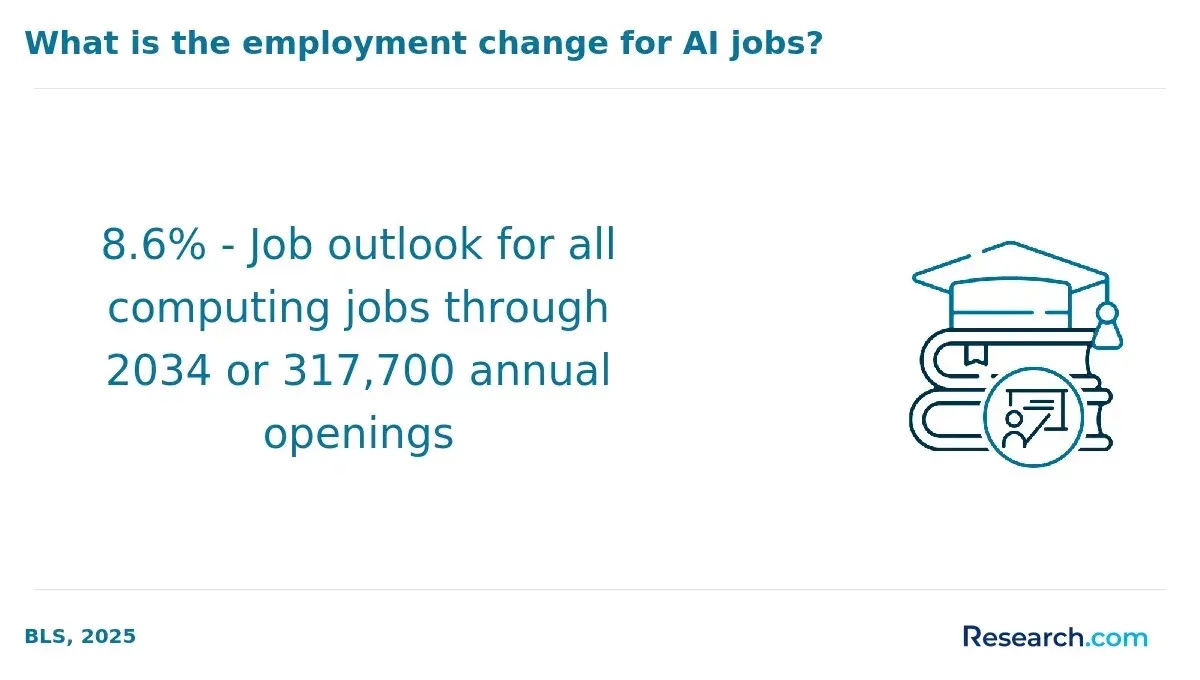
Healthcare leaders with AI strategy expertise are in high demand, commanding annual salaries between $130,000 and $210,000. Roles such as chief AI officer, AI program manager, and healthcare data strategist offer clear paths to executive leadership. These positions require a strong ability to guide AI investments and drive digital transformation within healthcare organizations.
The job outlook remains robust as hospitals and health systems rapidly adopt AI to enhance clinical and operational efficiency. According to a 2024 Deloitte survey, 63% of hospitals with significant AI deployments reported positive ROI within three years, with an average internal rate of return of 24%. This underscores the increasing value placed on leaders who can assess and optimize AI-driven initiatives effectively.
Key skills gained from AI strategy training include AI project management, financial modeling for AI ROI, healthcare data governance, and facilitating collaboration between clinical and technical teams. Proficiency in interpreting AI performance metrics, addressing ethical issues, navigating regulatory environments, and managing change are especially prized.
Practical experience with AI vendor selection, pilot deployment, and scaling successful programs enhances employability. Healthcare professionals who can translate AI technologies into measurable business outcomes are well-positioned to thrive as healthcare innovation advances.
Other Things You Should Know About Artificial Intelligence
In 2027, top AI strategy courses for healthcare leaders include the AI in Healthcare Leadership program by MIT, Stanford's AI & ROI in Healthcare Strategies, and the Healthcare Executive AI Program by Harvard. These courses focus on developing strategic initiatives for evaluating AI investments and optimizing returns.
AI enhances patient care by providing advanced analytics that support early diagnosis and personalized treatment plans. It assists clinical decision-making through predictive models that can identify risk factors and suggest interventions. However, the final clinical judgment must remain with healthcare professionals to ensure ethical and context-aware care.
Ethical concerns in AI include ensuring data privacy, preventing biases in algorithms, and maintaining transparent decision-making processes. Leaders need to evaluate how AI tools might affect patient trust and equity of care. Establishing governance frameworks is essential to uphold ethical standards in AI deployment.
Yes, AI can streamline administrative tasks such as billing, scheduling, and resource allocation, leading to significant operational efficiencies. Automation reduces human error and frees staff for patient-centered activities. Optimizing workflows with AI can ultimately lower costs and improve overall healthcare delivery.
References
- AI in Healthcare Business Transformation 2025: Proven Frameworks Driving 3.2X ROI and 30% Efficiency Gains https://strativera.com/ai-healthcare-business-transformation-frameworks-2025/
- Cost Of Implementing AI In Healthcare 2025: Crucial Factors https://murphi.ai/cost-of-implementing-ai-in-healthcare/
- AI in Healthcare: From Strategy to Implementation - Digital Health Canada https://digitalhealthcanada.com/learning-pathways/ai-in-healthcare-from-strategy-to-implementation/
- Leveraging AI for Strategic Decision-Making in Healthcare Operations | AJHCS https://ajhcs.org/articles/Leveraging-AI-for-Strategic-Decision-Making-in-Healthcare-Operations
- Measuring AI ROI: Build an AI Strategy That Drives Value | Propeller https://propeller.com/blog/measuring-ai-roi-how-to-build-an-ai-strategy-that-captures-business-value
- Cost Of Artificial Intelligence In Healthcare - GlobalNodes AI https://globalnodes.tech/blog/cost-of-artificial-intelligence-in-healthcare/
- Artificial Intelligence in Health Care - URAC https://www.urac.org/accreditation-cert/healthcareai/
- Who Will Determine the Standards for AI Governance in U.S. Healthcare? - Applied Policy https://www.appliedpolicy.com/setting-standards-for-ai-governance-in-u-s-healthcare/
- Four tips from healthcare leaders for finding ROI in AI https://www.notablehealth.com/blog/four-tips-from-healthcare-leaders-for-finding-roi-in-ai
- lindad-ai.com - AI Strategy Courses for Leaders and Professionals https://www.lindad-ai.com/home/Blog/AI-Strategy-Courses