2027 Best AI Courses for Recent Graduates

Co-Founder and Chief Data Scientist
Recent graduates from non-technical fields often face a significant challenge when attempting to enter the rapidly evolving artificial intelligence sector. Many lack foundational programming skills or formal training, which hinders their ability to compete for AI roles. This gap creates uncertainty about how to effectively transition without committing to lengthy or costly degree programs.
Identifying flexible, accredited courses tailored to newcomers can provide a targeted solution. This article explores top AI courses designed for graduates seeking to build relevant skills efficiently and reliably, guiding readers toward meaningful career pivots in the artificial intelligence industry.
Key Things You Should Know
- Recent graduates choosing AI courses in 2026 benefit from programs emphasizing practical skills, with 72% offering hands-on projects that align with employer needs in data science and machine learning.
- Top AI courses now integrate ethical AI and AI policy modules, reflecting industry calls for 45% of new roles to require knowledge of AI governance and responsible use.
- Online platforms and hybrid learning models dominate, with enrollment growth in AI courses rising 38% since 2024, enabling flexible access for diverse U.S. students and professionals.
Advance Your Career with AI Online Courses
Artificial Intelligence: Implications for Business Strategy
This program provides an introduction to Artificial Intelligence and their implications for business strategy. Earn an official digital certificate.

Oxford Artificial Intelligence Programme
Explore this Oxford Artificial Intelligence programme offered in a flexible learning environment and explore topics like machine learning, automation, and robotics.

Implementing Agentic AI: Building Your Organizational Playbook
This online MIT Agentic AI course offers a practical approach to deploying AI agents in your organization, including a custom playbook. 3 weeks, exclusive launch price.

AI Adoption: Driving Business Value and Impact
This online MIT AI Adoption: Driving Business Value and Impact offers practical frameworks to close the gap between AI potential and business reality.

Artificial Intelligence in Pharma and Biotech
Discover the applications and limitations of artificial intelligence in pharma and biotech with this MIT online short course.

What types of AI courses are best for recent graduates entering the job market?
Recent graduates seeking the best entry-level artificial intelligence courses for recent graduates should focus on programs that teach practical skills in machine learning, data analysis, and natural language processing. Hands-on projects using tools such as Python, TensorFlow, and PyTorch help build strong portfolios essential for job interviews and early career success.
Specialized training in generative AI and ethical AI use is also increasingly valuable, with 82% of students and 88% of educators recognizing the positive impact of mastering these technologies on career prospects. Top practical AI training programs for job market readiness often emphasize algorithm development and AI system integration, preparing students for software engineering and AI product roles.
Interdisciplinary courses that combine AI with business analytics or biomedical applications open doors to sector-specific careers. Foundational courses alongside electives in fields such as robotics or computer vision offer flexibility to those still exploring their specialization.
Certifications from reputable online platforms and bootcamps provide additional proof of competence that employers value. Practical experience gained through internships or open-source AI projects strengthens readiness for the competitive job market. For those exploring career paths, learning more about opportunities with an AI degree offers valuable insights and guidance.
Advance Your Career with AI Online Courses
Artificial Intelligence: Implications for Business Strategy
This program provides an introduction to Artificial Intelligence and their implications for business strategy. Earn an official digital certificate.
Oxford Artificial Intelligence Programme
Explore this Oxford Artificial Intelligence programme offered in a flexible learning environment and explore topics like machine learning, automation, and robotics.
Implementing Agentic AI: Building Your Organizational Playbook
This online MIT Agentic AI course offers a practical approach to deploying AI agents in your organization, including a custom playbook. 3 weeks, exclusive launch price.
How do AI certificates, bootcamps, and master's degrees compare for new grads?
For recent graduates weighing certificate programs versus bootcamps in artificial intelligence, differences come down to depth, duration, and cost. Certificates deliver focused, short-term training on specific AI tools and concepts, ideal for quickly gaining job-ready skills. Yet, a Cengage Group survey found 55% of new graduates feel unprepared to use generative AI tools in the workforce, indicating many certificate programs still lack comprehensive generative AI coverage.
Bootcamps offer intensive, project-driven learning over several weeks or months. They emphasize real-world applications, including generative AI, data handling, and programming, matching the 70% of graduates seeking these skills in their education. Bootcamps are well suited for those looking to switch careers or rapidly upskill but may not provide the academic rigor found in degrees.
Master's degrees compared to AI bootcamps for recent graduates provide a more thorough education, combining theoretical foundations, research opportunities, and advanced skills. Typically spanning 1-2 years and requiring significant financial input, they prepare graduates for specialized roles in research, development, and leadership. Graduates with advanced degrees tend to feel more confident facing AI challenges.
Graduates exploring AI education options should consider career goals, time constraints, and finances. For those interested in broader engineering fields that include artificial intelligence components, the mechanical engineering online program landscape also offers relevant flexible pathways.
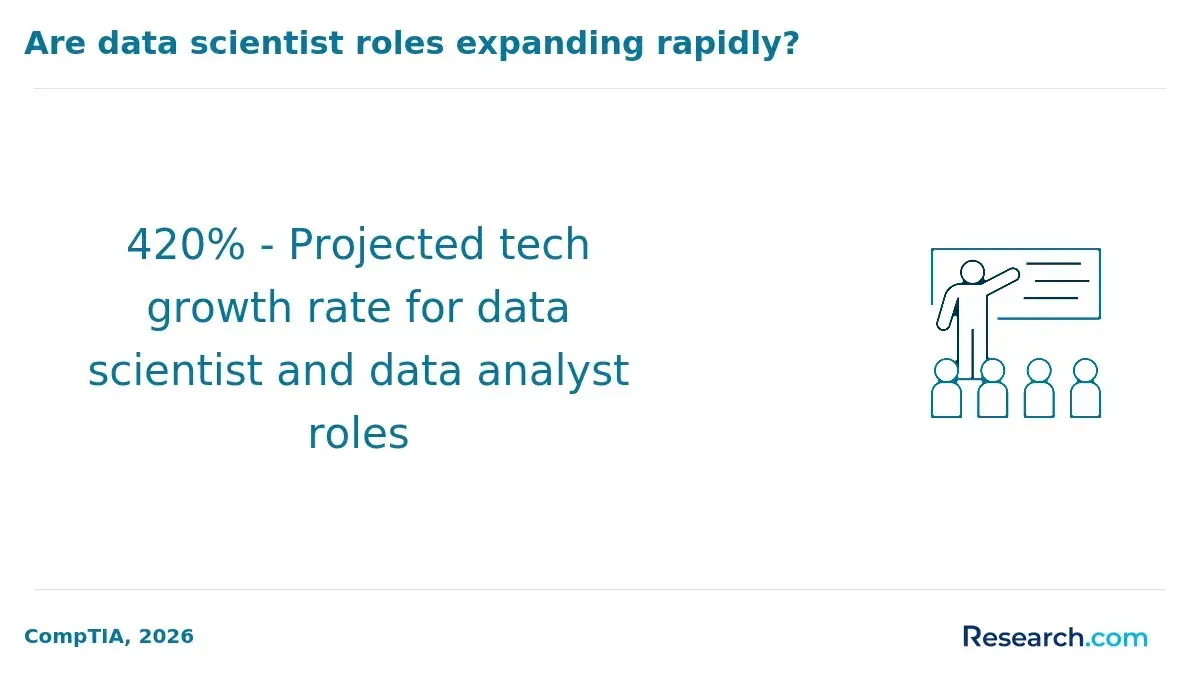
What should recent graduates look for when choosing a reputable AI program?
Recent graduates should focus on programs emphasizing practical, hands-on learning in key areas like machine learning, data analysis, and neural networks. The growing market demand-valued at $9.58 billion globally with 64% driven by machine learning technology-highlights the need for expertise in these domains, especially in North America. When searching for the best AI programs for recent graduates, it's essential to choose courses with current curricula aligned with industry requirements to develop relevant skills.
Accreditation and faculty expertise are vital criteria for choosing reputable artificial intelligence courses. Graduates should ensure instructors are actively engaged in AI research or industry application, which guarantees exposure to the latest tools and technologies. Programs linked with respected institutions or companies offer additional value and networking opportunities.
Flexibility in delivery matters. Part-time, online, or blended learning formats support graduates balancing job searches or employment. Including capstone projects, internships, or business partnerships increases real-world experience and employability. Considering cost and duration is crucial; evaluate total expenses against career benefits, seeking transparent pricing and clear timelines, like those found in an online cybersecurity degree.
Finally, reviewing alumni outcomes such as job placement rates, employer partnerships, and AI roles secured offers insight into program effectiveness. Choosing a reputable program requires assessing curriculum relevance, faculty qualifications, practical exposure, scheduling flexibility, and measurable career support to meet evolving AI demands.
Which accredited U.S. universities and platforms offer strong entry-level AI courses?
Accredited U.S. universities offering entry-level artificial intelligence courses provide some of the most reliable foundational training for recent graduates. Prestigious schools like Stanford University, Massachusetts Institute of Technology (MIT), and Carnegie Mellon University lead in this field, focusing on essential topics such as machine learning, AI theory, and computer science.
These programs highlight hands-on projects and practical applications, preparing students effectively for real-world AI roles. For beginners, Stanford's AI for Everyone course and MIT's Introduction to Computational Thinking and Data Science cover crucial AI concepts accessibly. Carnegie Mellon's AI Undergraduate Program blends theoretical knowledge with practical skills, catering to students from various academic backgrounds.
Top U.S. platforms for beginner artificial intelligence training such as Coursera and edX collaborate with these universities to offer accredited courses with verified certificates. Examples include Coursera's AI For Everyone by Stanford and IBM's AI Engineering Professional Certificate, which cater to learners with limited technical experience but strong career goals.
Surveys reveal that only about one-third of U.S. educational institutions provide any AI training, and only 19% of those include explicit AI skills instruction. This means a mere 5.89% of schools deliver effective AI education, highlighting the importance of selecting programs from trusted institutions and platforms.
Students should prioritize courses with curricula emphasizing Python programming, algorithm understanding, data analysis, project portfolios, and faculty mentoring to maximize career readiness. For those interested in technical fields related to engineering, military-friendly online electrical engineering degree programs can offer additional pathways.
How do online AI courses compare with on-campus programs for flexibility and outcomes?
Online AI courses offer greater flexibility than traditional on-campus programs, allowing learners to study part-time while balancing work or other commitments. This setup is ideal for professionals wanting to upskill quickly without pausing their careers. Unlike the fixed schedules of on-campus degrees, online courses adapt to varying availability and learning paces.
Many online programs match or exceed on-campus outcomes, especially in specialized tracks. For instance, DataCamp's AI Engineer for Developers and AI Engineer for Data Scientists courses ranked highest in a review of 27 AI engineer programs, with practical skills scores of 8.4 and a typical completion time of 4-6 weeks at a low subscription cost, according to Eugene Yan's 2025 YouTube course comparison.
These focused programs prioritize hands-on projects, preparing students directly for roles in AI engineering. On-campus education tends to provide a broader theoretical foundation and networking opportunities but often at higher costs and with less scheduling flexibility. When choosing between formats, consider:
- Time available for multi-year study versus shorter courses
- Cost and possible financial aid
- Preference for hands-on work or classroom settings
- Career goals-fast job entry or deep theoretical knowledge
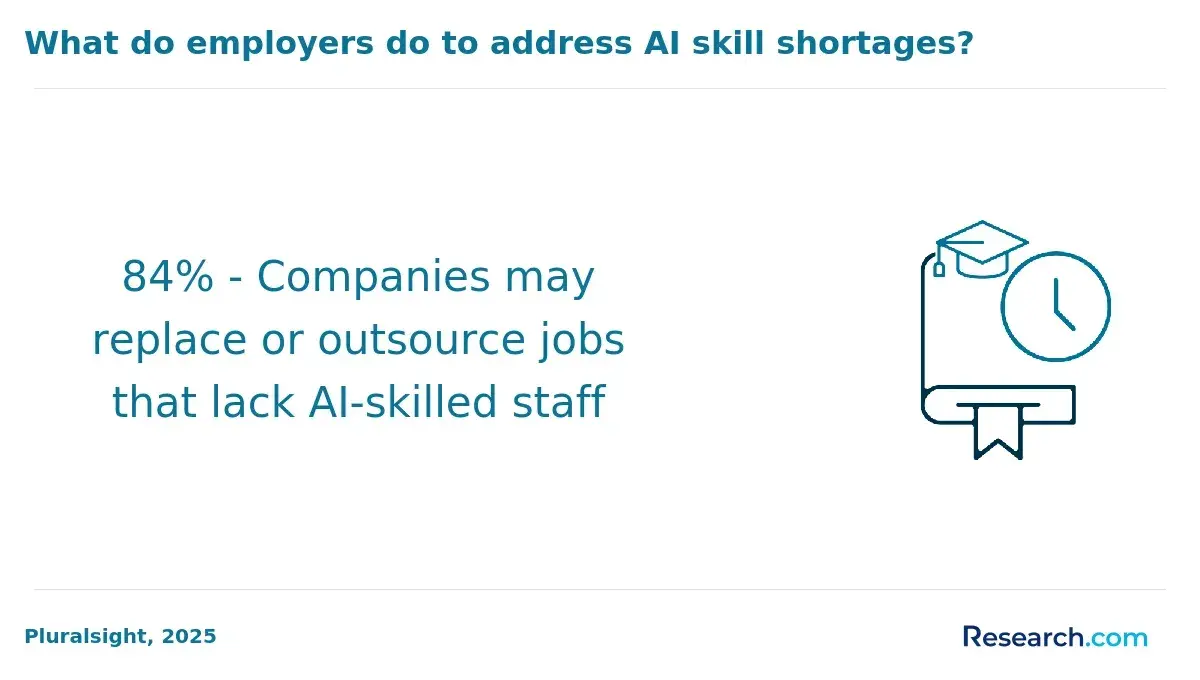
What core skills and topics do high-quality AI courses for beginners typically cover?
High-quality artificial intelligence courses for beginners build a solid foundation in both theory and practice. Core topics frequently include supervised and unsupervised machine learning techniques-such as linear regression, classification algorithms, clustering, and dimensionality reduction-that are essential for data processing and predictive modeling.
Programming skills are emphasized, particularly in Python and key libraries like NumPy, Pandas, and Scikit-learn. Hands-on coding exercises help learners manipulate data and implement algorithms effectively. Students also develop expertise in data preprocessing, feature engineering, and model evaluation metrics to ensure robust real-world performance.
Advanced courses often introduce neural networks, deep learning architectures, and transformer-based models, including Large Language Models (LLMs). These curricula train learners in fine-tuning and deploying cutting-edge systems, as seen in widely recommended programs like Stanford's Machine Learning Specialization followed by the Deep Learning Specialization, noted for guiding progress from fundamentals to modern applications.
Mathematical foundations-linear algebra, calculus basics, and probability theory-are key for understanding algorithm behavior. Ethics and AI safety are increasingly integral, preparing students to consider societal impacts and bias mitigation.
What are the typical prerequisites and admission requirements for AI courses?
Success in artificial intelligence courses typically requires a solid foundation in mathematics-especially linear algebra, calculus, probability, and statistics-as well as strong programming skills, primarily in Python. Most programs expect applicants to hold a bachelor's degree in computer science, engineering, statistics, or related STEM fields, though some accept candidates with equivalent technical skills from broader disciplines.
Applicants often need to submit transcripts evidencing strong academic performance in quantitative subjects. Competitive programs may also require GRE scores, letters of recommendation, and a statement of purpose outlining career goals and relevant experience. Online and industry certificate programs often have more flexible entry requirements, emphasizing practical skills over formal degrees.
For instance, IBM's AI Engineering Professional Certificate on Coursera focuses on AI deployment and machine learning operations, targeting professionals with basic programming and data science knowledge without mandating a full degree. This reflects industry demand for applicable skills rather than just academic credentials.
Prospective students should check course-specific prerequisites such as familiarity with neural networks or cloud computing. Many institutions offer preparatory courses to help bridge gaps in knowledge. Essential success factors include:
- Strong math background
- Proficiency in programming languages like Python
- Relevant bachelor's degree or equivalent skills
- Proof of quantitative academic achievement
- Sometimes GRE scores and recommendation letters
Industry-recognized certifications provide an alternative route into AI careers, especially for recent graduates avoiding traditional graduate programs. This trend is supported by rankings from TechTarget and education specialists.
How long do AI programs for recent graduates take, and what do they cost?
Programs in artificial intelligence for recent graduates vary from a few weeks to an academic year, depending on the depth and format. Leading universities like Harvard, MIT, and Stanford offer online introductory generative AI courses lasting 6 to 12 weeks, often culminating in a portfolio project that demonstrates practical skills. Alternatively, some institutions provide senior-year capstone projects lasting a semester.
Costs range significantly based on program type and school. University-led online courses generally cost between $1,000 and $4,000, with Harvard's professional certificate programs near the $2,000 range for short formats. More extensive programs linked to degree credit or capstone projects can range from $10,000 to $20,000, reflecting private institution tuition.
Recent graduates should consider their goals when choosing a program:
- Short courses with portfolio projects are suitable for quick skill acquisition or career changes.
- Structured academic capstones benefit those targeting research roles or competitive industry positions, requiring project experience.
Financial aid and employer tuition reimbursement can help offset costs, typically between $1,000 and $20,000, making these options more accessible. Confirming the inclusion of capstone or portfolio elements is critical, as these enhance employability. University-led generative AI programs remain widely recommended for graduates seeking current expertise in the field, as reported by Inside Higher Ed on the 2024 Cengage survey.
What entry-level AI and machine learning roles can these courses help graduates access?
Entry-level AI and machine learning courses equip recent graduates for roles such as machine learning engineer, data analyst, AI research assistant, and AI software developer. These jobs often demand foundational skills in programming, algorithms, and data management-core elements in quality AI programs. Graduates typically engage in developing, testing, and deploying machine learning models, processing datasets, or supporting senior teams on AI initiatives.
The growing demand for roles like AI product analyst and AI operations specialist allows candidates to apply AI tools in business environments without requiring extensive research experience. Many organizations seek analysts capable of interpreting AI outputs and recommending practical improvements. According to Programs.com, 60% of educators use AI, yet 81% report lack of time and 75% lack knowledge to create AI-focused training.
Companies also hire AI application testers and quality assurance engineers to ensure reliable system performance. Entry-level positions in AI system support and training data preparation remain common, with 43% of educators personally acquiring AI tools on budgets often under $10/month, pointing to a strong market for affordable, user-friendly AI solutions.
Look for courses that include hands-on projects in natural language processing, computer vision, or predictive analytics to align with job demands in healthcare, finance, and tech startups, preparing graduates for diverse AI career paths.
What starting salaries and long-term career outlook can AI-trained graduates expect?
Starting salaries for graduates trained in artificial intelligence typically range from $85,000 to $110,000 annually, influenced by role, location, and company size. For example, AI software engineers and data scientists often earn toward the higher end, especially in tech hubs such as San Francisco, Seattle, and New York. Entry-level machine learning engineers can expect approximately $90,000, while AI research assistants and junior analysts may start near $80,000.
The career outlook for AI professionals remains strong, with projected growth rates over 20% through 2030 according to the U.S. Bureau of Labor Statistics. This growth is driven by AI's expanding applications across healthcare, finance, automotive, and other sectors. Seasoned experts frequently advance to roles such as senior AI engineers, project managers, or AI ethicists, earning from $150,000 to upwards of $250,000 annually.
Increasing use of generative AI in education has shifted curricula: student engagement rose from 27% in 2024 to 44% in 2025 (AIPRM and Tyton Partners survey). Graduates with formal AI credentials, hands-on experience, and proficiency with cloud platforms like AWS or Azure strengthen their positions for competitive roles.
Key factors affecting AI salaries include:
- Specialization in areas like natural language processing or computer vision
- Experience with AI deployment on cloud platforms
- Continuous skill development aligned with industry trends
Other Things You Should Know About Artificial Intelligence
A top AI course in 2027 is Stanford University’s "Machine Learning Specialization," offered online through Coursera. It provides a comprehensive introduction to AI, covers essential algorithms, and real-world applications. Taught by industry experts, this course offers a strong foundation for recent graduates interested in AI careers.
While some introductory AI courses may offer programming basics, having prior knowledge of programming, especially in Python, significantly enhances the learning experience. Programming skills allow students to implement algorithms, work with data sets, and build AI models effectively. Without coding experience, students might face a steeper learning curve.
Mathematics is fundamental to understanding artificial intelligence, particularly in areas such as machine learning and neural networks. Key topics include linear algebra, calculus, statistics, and probability theory. A strong mathematical foundation helps in grasping how AI algorithms function and enables better problem-solving.
Yes, artificial intelligence skills are highly transferable and are increasingly in demand across various industries beyond technology. Fields such as healthcare, finance, marketing, and manufacturing use AI for tasks like data analysis, predictive modeling, and automation. This versatility makes AI expertise valuable in diverse professional environments.
References
- Ultimate Guide: How to Choose the Right AI Training Course to Boost Your Career - ONLC https://www.onlc.com/blog/how-to-choose-ai-training-courses/
- Entry Level Machine Learning Jobs 2025: Skills, Tips & Salaries https://www.peopleinai.com/blog/entry-level-machine-learning-jobs
- What are the prerequisites for an AI course if I’m from a non-technical background? https://www.h2kinfosys.com/blog/what-are-the-prerequisites-for-an-ai-course-if-im-from-a-non-technical-background/
- Best Online AI Courses and Certifications in 2025 https://www.upskillist.com/blog/online-ai-courses-certifications/
- AI Is Changing Entry-Level Jobs. How Will Workers Build Experience? https://www.cengagegroup.com/news/perspectives/2026/ai-is-changing-entry-level-jobs/
- The Difference Between an AI Bootcamp, a Certificate, and a Degree https://www.nexford.edu/insights/the-difference-between-an-ai-bootcamp-a-certificate-and-a-degree
- Experts offer advice to new college grads on entering the workforce in the age of AI https://www.cbsnews.com/news/ai-jobs-chatgpt-college-graduate-work/
- Understanding AI: AI tools, training, and skills https://ai.google/learn-ai-skills/
- Artificial Intelligence Course Eligibility: Requirements & Prerequisites https://www.mygreatlearning.com/artificial-intelligence/courses/eligibility
- The 8 best AI courses for beginners in 2026 | Zapier https://zapier.com/blog/best-ai-courses/