2027 Best AI Courses for Hospitality Revenue Management Teams

Co-Founder and Chief Data Scientist
Hospitality revenue management teams often face challenges predicting demand fluctuations and optimizing pricing strategies amid rapidly changing market conditions. Traditional methods struggle to keep pace with complex data and consumer behavior shifts, causing revenue losses and missed opportunities. Integrating artificial intelligence offers a way to analyze vast datasets swiftly and generate actionable insights.
However, many professionals lack the specialized training to effectively implement these technologies. This article highlights the best AI courses tailored for hospitality revenue management teams, focusing on flexible, accredited programs designed to equip learners with practical skills for enhancing revenue strategies through artificial intelligence applications.
Key Things You Should Know
- AI courses for hospitality revenue management teams in 2026 emphasize data analytics, predictive modeling, and dynamic pricing to improve decision-making and maximize revenue.
- Recent studies show a 32% increase in hotels using AI-driven revenue tools, highlighting the sector's demand for specialized AI education to stay competitive.
- Top programs combine practical software training with hospitality-focused case studies, preparing professionals to implement AI strategies tailored to fluctuating market trends and customer behavior.
Advance Your Career with AI Online Courses
Artificial Intelligence: Implications for Business Strategy
This program provides an introduction to Artificial Intelligence and their implications for business strategy. Earn an official digital certificate.

Oxford Artificial Intelligence Programme
Explore this Oxford Artificial Intelligence programme offered in a flexible learning environment and explore topics like machine learning, automation, and robotics.

Implementing Agentic AI: Building Your Organizational Playbook
This online MIT Agentic AI course offers a practical approach to deploying AI agents in your organization, including a custom playbook. 3 weeks, exclusive launch price.

AI Adoption: Driving Business Value and Impact
This online MIT AI Adoption: Driving Business Value and Impact offers practical frameworks to close the gap between AI potential and business reality.

Artificial Intelligence in Pharma and Biotech
Discover the applications and limitations of artificial intelligence in pharma and biotech with this MIT online short course.

What are AI courses for hospitality revenue management teams?
AI courses for hospitality revenue management teams equip professionals with skills to use advanced data analytics and machine learning for optimizing pricing, forecasting, and inventory control. These programs cover AI-powered tools that analyze booking trends, market demand, and competitor rates in real time, enabling faster, data-driven decisions that enhance profitability.
Hospitality revenue management and artificial intelligence training often includes predictive analytics, dynamic pricing algorithms, and hands-on work with platforms like Duetto and Rainmaker.
Curricula focus on applying models such as neural networks and decision trees to forecast based on seasonality, events, and economic factors. Training also addresses common challenges like data fragmentation and manual pricing errors, teaching techniques to automate competitor benchmarking and customer segmentation. This reduces human error while allowing revenue managers to prioritize strategic analysis.
According to a 2024 ZS analysis, hotels using AI-powered revenue management saw an average 7.2% revenue increase compared to those relying on traditional methods. Professionals can choose from options including workshops, certificate programs, and graduate-level courses to match their time availability and career goals.
For those interested in further expanding their expertise in related fields, exploring data science rankings can provide valuable insight into affordable education opportunities across the USA.
Advance Your Career with AI Online Courses
Artificial Intelligence: Implications for Business Strategy
This program provides an introduction to Artificial Intelligence and their implications for business strategy. Earn an official digital certificate.
Oxford Artificial Intelligence Programme
Explore this Oxford Artificial Intelligence programme offered in a flexible learning environment and explore topics like machine learning, automation, and robotics.
Implementing Agentic AI: Building Your Organizational Playbook
This online MIT Agentic AI course offers a practical approach to deploying AI agents in your organization, including a custom playbook. 3 weeks, exclusive launch price.
Which AI skills matter most in revenue management?
Critical AI skills in hospitality revenue management emphasize data-driven decision-making and advanced analytics. Mastery of predictive analytics supports accurate demand forecasting, dynamic inventory adjustment, and optimized room pricing. Teams use machine learning algorithms to analyze booking patterns, customer segmentation, and market trends, enabling AI-driven revenue forecasting techniques for hospitality that automate pricing strategies to maximize profits.
Proficiency with natural language processing tools allows revenue managers to perform customer sentiment analysis on online reviews and social media, providing insights to improve marketing and promotions. Given that 68% of hotel executives plan increased investment in AI and advanced analytics for pricing, understanding AI-powered revenue management systems integrating real-time market and competitor data is essential.
These skills align with essential AI skills for hotel revenue management teams that collaborate with data scientists to interpret outputs and translate insights into actionable tactics.
Technical capabilities in SQL, Python, and data visualization software enhance communication of complex data to stakeholders. Practical experience with AI-driven revenue tools and scenario modeling helps teams simulate pricing under varying market conditions to reduce financial risk.
An ethical understanding of AI's role in pricing transparency and fairness fosters customer trust. Professionals seeking to develop such competencies may explore programs like the best online masters in artificial intelligence to strengthen their expertise for the evolving hospitality sector.
How do you choose the best AI course for your team?
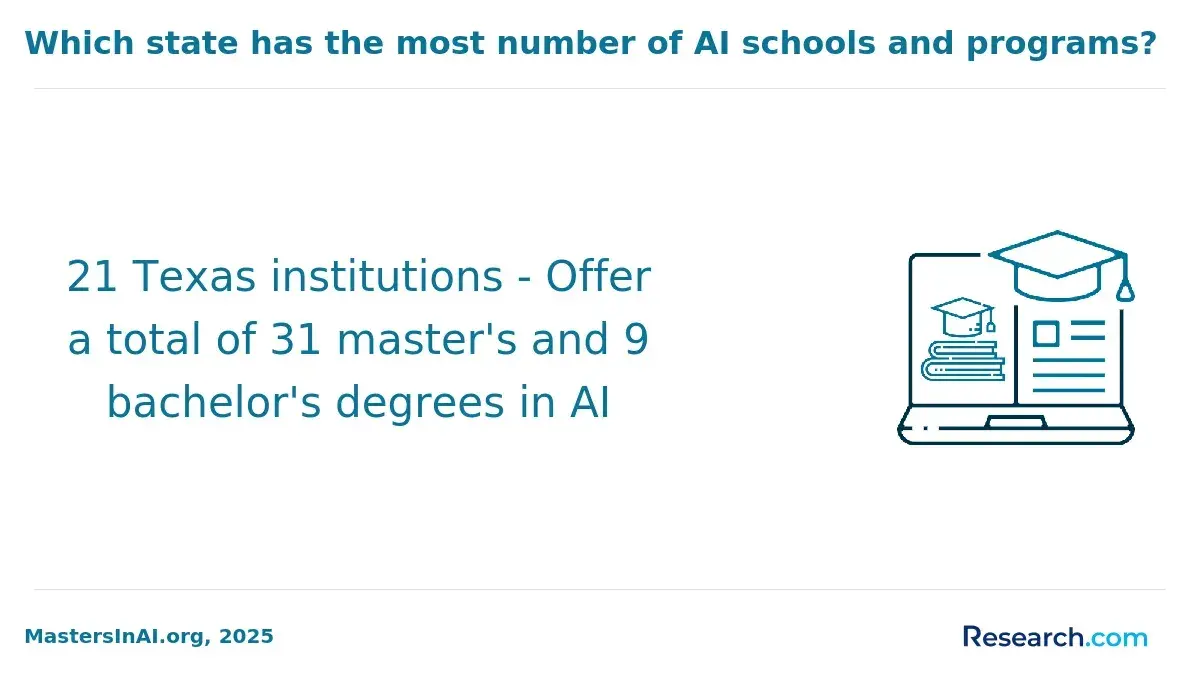
Selecting the best AI training programs for hospitality revenue managers means focusing on the specific skills your team needs most, such as demand forecasting, dynamic pricing, or advanced data analytics. Prioritize courses that emphasize practical applications for the hospitality industry and include hands-on projects or simulations based on real hotel or travel sector revenue challenges. This real-world context boosts knowledge retention and operational effectiveness.
Evaluate course formats carefully; flexible schedules combining self-paced modules and live sessions work best for busy professionals. Instructor expertise is crucial—look for programs led by industry experts or academics well-versed in hospitality revenue management and AI integration. Consider whether the curriculum features up-to-date tools like machine learning for pricing optimization or natural language processing for customer insights, ensuring your team's skills stay current.
Companies investing in AI-related upskilling often see significant productivity gains, with the World Economic Forum reporting a 15% average uplift in labor productivity compared to firms that do not. Also, verify if the course offers certifications recognized by industry bodies, as these validate learning rigor and motivate participation.
For those interested in deeper, affordable academic credentials, an online master in data science can also enhance technical expertise, supporting broader data-driven decision-making within hospitality teams focused on how to select effective AI courses for hospitality teams.
Are online AI courses better than in-person training?
Online AI courses vs. in-person training for hospitality revenue management reveal distinct advantages tailored to different learning styles and operational needs. Online AI courses offer unmatched flexibility, enabling hospitality revenue teams balancing demanding schedules to learn at their own pace, revisit complex modules, and benefit from frequently updated content that reflects the latest AI tools. For example, modules on AI-driven demand forecasting can be reviewed multiple times, which is less feasible in traditional classroom settings.
In-person training offers direct interaction with instructors and peers, facilitating immediate clarification and hands-on experiences, particularly useful for mastering complex data analytics software. It also improves networking opportunities, supporting collaborative problem-solving in real-world hospitality environments. However, these sessions may be restricted by fixed schedules and geographic limitations, potentially excluding remote or understaffed teams.
The benefits of online AI training for hospitality revenue teams are highlighted by the 2024 HSMAI/Revfine survey, emphasizing that 82% of hotel revenue leaders prioritize data literacy and the ability to interpret AI-generated insights over the next three years. Effective online programs often integrate interactive data visualization exercises and tailored case studies, focusing on practical skills rather than solely theory.
Combining online instruction for foundational AI and data skills with in-person workshops focused on strategic implementation forms an optimal hybrid approach. Professionals seeking advanced education in technology can explore an affordable online computer science degree to supplement their expertise in this field.
What topics do AI hospitality revenue courses cover?
AI hospitality revenue courses are designed to enhance skills in maximizing revenue for hotel and hospitality businesses through advanced data-driven strategies. Participants delve into data analytics techniques, learning to interpret datasets involving booking trends, customer behavior, and market dynamics. A major focus is on machine learning models that forecast demand and enable dynamic pricing adjustments, helping businesses optimize occupancy and revenue.
The curriculum often includes automation tools for rate management, channel distribution, and inventory control. Trainees gain hands-on experience with AI-powered systems that automate routine tasks, minimizing human error and improving operational efficiency. Customer segmentation and personalized marketing also feature prominently, where AI assists in identifying guest profiles to craft targeted promotional offers.
Risk management topics teach rapid identification of challenges such as overbooking or unexpected market shifts. Courses emphasize ethical use of AI and strict compliance with data privacy regulations to ensure responsible handling of guest information.
Examples used in training include setting rates with reinforcement learning algorithms and employing natural language processing to analyze customer reviews to enhance service quality.
Research shows that short, stackable online courses greatly improve skill application on the job—employees completing microlearning are 46% more likely to use new competencies effectively. This highlights the importance of focused modular training in mastering practical AI applications in hospitality.
What prerequisites do hospitality revenue teams need?
Hospitality revenue management teams require a mix of technical expertise and industry knowledge to effectively use AI-driven tools. Key skills include data literacy, which helps professionals understand analytics, statistical models, and demand forecasts. Familiarity with spreadsheet software and basic programming languages like Python or SQL enhances their ability to analyze large datasets produced by AI systems.
Understanding hospitality operations remains critical. Revenue managers must grasp room inventory management, seasonality, and competitive benchmarking to interpret AI recommendations within real-world market conditions. This knowledge helps prevent overdependence on AI outputs that may overlook sudden local events or disruptions.
Basic competency in AI and machine learning concepts improves collaboration with technical teams and aids in identifying anomalies or biases in algorithmic pricing decisions.
Soft skills such as analytical thinking, critical evaluation, and decision-making under uncertainty enable teams to balance algorithmic suggestions with human judgment.
A recent industry survey found that while over half of hotels use or pilot AI revenue management systems, a significant skills gap remains, emphasizing the need for specialized training. Certification programs combining revenue management fundamentals with practical AI applications—covering demand prediction, dynamic pricing, and performance analytics—are valuable for maximizing technology investments effectively.
How long do AI revenue management courses take?
AI revenue management courses vary widely in duration depending on the curriculum's depth and delivery style. Foundational programs tailored for hospitality revenue teams typically last 4 to 8 weeks, requiring 3 to 6 hours of weekly commitment. These concise, intensive courses emphasize understanding AI-driven revenue management systems (RMS), basic data analytics, and integration with hotel software.
More advanced certifications can extend to three months or more, involving practical projects, case studies, and in-depth training on forecasting algorithms, price optimization, and strategic adaptation. For example, a 12-week course might include weekly live sessions alongside assignments, enabling teams to apply AI tools in real-world contexts.
Self-paced online modules provide flexibility but may extend over several months to accommodate working professionals balancing full-time jobs. These allow learners to tailor their pace, ideal for gradual upskilling.
Short workshops or bootcamps lasting 1 to 3 days offer rapid skill-building for teams familiar with revenue management but new to AI applications, focusing on operational impacts and quick wins rather than extensive theory.
Research from the Cornell School of Hotel Administration, cited by ZS, highlights that hotels using AI-based RMS combined with trained revenue teams achieved an 11-15% increase in RevPAR compared to those relying on manual pricing or basic automation. This evidence supports that even moderately timed, well-structured courses can yield significant performance benefits.
How much do AI hospitality revenue courses cost?
AI hospitality revenue courses vary widely in cost, from free introductory options to advanced certifications priced between $500 and $3,000. Corporate training programs designed for revenue management teams typically range from $2,000 to $5,000 per participant, reflecting their tailored, industry-specific content. Online platforms may offer modular classes costing $200 to $700 each, while bootcamps and certificate programs from recognized hospitality institutions often exceed $2,500.
Investment in AI and digital skills training for hospitality employees is growing significantly. According to PwC's 2024 Global Workforce Hopes and Fears Survey, there is a 23% annual increase in spending per employee on digital and AI capabilities within the travel and hospitality sectors. This trend highlights the priority to equip teams with up-to-date knowledge and tools, which encourages enrollment in higher-priced, quality courses.
When selecting programs, students and professionals should consider factors such as course depth, provider reputation, practical hospitality case studies, and access to mentoring or post-training support. Lower-cost courses might lack certification or real-world application, while premium programs often include valuable networking opportunities.
Many hospitality firms prefer group training for relevance and cost-efficiency. They also adopt subscription-based AI software tools to ensure continuous skill enhancement aligned with industry trends.
What jobs can AI revenue management training support?
AI revenue management training plays a critical role across multiple hospitality positions, focusing on optimizing pricing, forecasting demand, and maximizing profitability. Revenue managers, for instance, use AI tools to analyze booking trends and adjust room rates dynamically. Data analysts applying machine learning models can better predict customer behavior through market segmentation and competitive benchmarking.
Revenue management system specialists utilize this training to implement and maintain automated pricing systems integrated with property management software. Operations managers improve inventory distribution across channels with AI-driven insights, while marketing teams leverage AI personalization to create targeted promotions and packages based on guest preferences.
Finance directors and strategy analysts depend on AI-generated forecasts for budgeting and long-term planning. In smaller properties, general managers often blend revenue strategy with daily operations, enhanced through AI skills. Frontline staff benefit from training by confidently interacting with AI-powered platforms, which reduces errors and improves service quality.
Investing in AI revenue management training also boosts employee retention, a key factor in hospitality's talent shortage. According to LinkedIn's 2024 Workplace Learning Report, 94% of employees are more likely to stay at companies that invest in their development, especially in AI and data skills.
By preparing teams for evolving roles, hospitality organizations maintain a competitive edge in increasingly data-driven markets.
Which certifications and providers are most credible?
Certifications from established providers with strong industry recognition hold significant value in hospitality revenue management. Notable options include credentials from Cornell University's School of Hotel Administration, known worldwide for hospitality education, and the Hospitality Sales and Marketing Association International (HSMAI), which offers certifications focused on revenue management analytics with an emphasis on AI integration.
These programs emphasize skills such as AI-powered pricing strategies, demand forecasting, and customer segmentation, all crucial to hospitality roles.
Technical certifications from providers like Google Cloud and IBM also carry weight, offering advanced machine learning and AI engineering expertise vital for implementing dynamic pricing and personalized customer experiences.
Endorsements from professional bodies such as HSMAI and the American Hotel & Lodging Educational Institute (AHLEI) further enhance credential value and help employers identify capable candidates.
The World Economic Forum's 2024 Future of Jobs report projects a 30% rise in demand for data and AI specialists in hospitality and tourism by 2030. Programs featuring practical experiences with real-world hospitality datasets and revenue management software simulations improve job readiness significantly.
Choosing certifications that blend hospitality-specific knowledge with fundamental data science or AI application skills offers the best competitive advantage for professionals adapting to the evolving market.
Other Things You Should Know About Artificial Intelligence
The best AI courses for hospitality revenue management teams in 2027 typically cover AI applications in pricing, forecasting, and data analysis. Notable options include courses from top institutions such as MIT, Coursera's "AI for Business," and tailored programs focusing on the hospitality industry's unique revenue challenges.
Ethical considerations include ensuring data privacy, fairness in algorithmic decision-making, and transparency with customers. Hospitality businesses must avoid bias in AI models and comply with regulations to maintain trust and protect sensitive guest information.
Yes, artificial intelligence solutions are often designed to integrate seamlessly with existing property management and booking systems. This integration allows for automated workflows, enhanced data sharing, and more accurate revenue management insights without disrupting current operations.
Common challenges include data quality issues, lack of in-house AI expertise, and resistance to change from staff. Additionally, implementing AI requires investment in technology and training, which can be a barrier for smaller hospitality businesses.
References
- Revenue Management: Human Touch vs AI Future https://taktikon.com/revenue-management-human-touch-vs-ai/
- AI assistant for hotel revenue management https://virtualworkforce.ai/ai-assistant-for-hotel-revenue-management/
- Careers at Revenue AI https://revenue.ai/careers/
- Exploring the Best Fit: Virtual vs. In-Person Training https://www.pryor.com/blog/exploring-the-best-fit-virtual-vs-in-person-training-weighing-the-pros-and-cons.html
- Certificate in Revenue Management (Hospitality) | HSMAI Academy https://academy.hsmai.org/certificate-revenue-management-hospitality/
- How to use AI to ease staffing pressure in hotel revenue and distribution teams https://www.mylighthouse.com/resources/blog/ai-staffing-pressure-hotel-revenue-teams
- Which Online Certification Programs Are Recognized by Employers in the U.S.? https://fellow.msicertified.com/blog/which-online-certification-programs-are-recognized-by-employers-in-the-u-s
- Revenue Management Systems - BEONx - BEONx https://beonx.com/revenue-management-systems-total-guide/
- AI Revenue Management: Boost Your Profits in 2025 | Copy.ai https://www.copy.ai/blog/ai-revenue-management