2027 Best Udacity AI Courses With Certificates

Co-Founder and Chief Data Scientist
Many professionals face challenges transitioning into the artificial intelligence field due to lack of formal training or accredited certification. Without a clear path, acquiring relevant skills while balancing current job responsibilities becomes difficult. This creates barriers to entering AI roles despite high market demand. Accessible, recognized courses that provide flexibility and credible credentials are essential for those seeking a career pivot.
This article highlights the best Udacity AI courses with certificates, focusing on options that combine rigorous content, practical skills, and certification. It aims to guide readers toward effective learning paths that enhance employability in artificial intelligence.
Key Things You Should Know
- Udacity's AI courses in 2026 offer industry-recognized certificates, enhancing employability in a growing job market projected to reach 36 billion USD by 2027 in the U.S. alone.
- Courses focus on practical skills like machine learning, natural language processing, and computer vision, aligning with demands from top tech companies and startups.
- Flexible, self-paced learning and project-based assessments provide students and professionals optimized paths to upskill without disrupting career timelines.
Advance Your Career with AI Online Courses
Artificial Intelligence: Implications for Business Strategy
This program provides an introduction to Artificial Intelligence and their implications for business strategy. Earn an official digital certificate.

Oxford Artificial Intelligence Programme
Explore this Oxford Artificial Intelligence programme offered in a flexible learning environment and explore topics like machine learning, automation, and robotics.

Implementing Agentic AI: Building Your Organizational Playbook
This online MIT Agentic AI course offers a practical approach to deploying AI agents in your organization, including a custom playbook. 3 weeks, exclusive launch price.

AI Adoption: Driving Business Value and Impact
This online MIT AI Adoption: Driving Business Value and Impact offers practical frameworks to close the gap between AI potential and business reality.

Artificial Intelligence in Pharma and Biotech
Discover the applications and limitations of artificial intelligence in pharma and biotech with this MIT online short course.

What makes Udacity's AI courses and Nanodegree programs different from other online options?
Udacity's AI courses and Nanodegree programs emphasize project-based learning with real-world applications, making them distinct in the online education landscape. Developed in collaboration with leading tech companies, these programs focus on equipping learners with industry-relevant skills that prepare them for the growing demand in AI roles. This approach stands out among other options that often rely heavily on video lectures without practical or mentorship components.
Core advantages include:
- Hands-on projects requiring completion of neural networks, natural language processing models, and other AI applications.
- Mentor and career support offering personalized guidance to help learners succeed and optimize their job market positioning.
- Modular course designs targeting specific AI subfields such as computer vision and reinforcement learning, suitable for diverse experience levels.
- Industry-recognized certification that enhances professional credibility.
Udacity's nanodegree programs are designed to provide industry-relevant skills through collaboration with top tech companies, ensuring learners gain practical experience that distinguishes them from other online AI education options. For those interested in further studies, exploring accelerated computer science programs may be beneficial. Overall, Udacity's AI courses stand out due to their project-based learning approach with real-world applications and exclusive mentorship support for personalized growth.
Advance Your Career with AI Online Courses
Artificial Intelligence: Implications for Business Strategy
This program provides an introduction to Artificial Intelligence and their implications for business strategy. Earn an official digital certificate.
Oxford Artificial Intelligence Programme
Explore this Oxford Artificial Intelligence programme offered in a flexible learning environment and explore topics like machine learning, automation, and robotics.
Implementing Agentic AI: Building Your Organizational Playbook
This online MIT Agentic AI course offers a practical approach to deploying AI agents in your organization, including a custom playbook. 3 weeks, exclusive launch price.
Which Udacity AI courses currently offer verified certificates and Nanodegree credentials?
Udacity AI courses with verified certificates provide valuable credentials for professionals and students seeking recognized validation of their expertise. Notably, Nanodegree credentials for Udacity AI programs such as the AI Programming with Python Nanodegree, Machine Learning Engineer Nanodegree, and Deep Learning Nanodegree offer comprehensive, project-based training alongside verified digital certificates. These certificates demonstrate mastery in neural networks, machine learning algorithms, and deep learning frameworks, recognized by employers.
Individual Udacity AI courses within Nanodegree tracks also award completion certificates that learners can share on professional networks like LinkedIn, helping them highlight specific skills effectively. This blend of verified certificates and practical projects enhances job market readiness and reflects industry standards.
Udacity's programs differ by integrating mentor support, which addresses common challenges of self-paced learning, such as stagnation or lack of guidance. For working professionals, these factors make Nanodegree credentials especially valuable.
The U.S. Bureau of Labor Statistics projects a 26% employment growth for computer and information research scientists by 2033, emphasizing demand for validated AI skills. Those considering affordable education options may also explore mechanical engineering programs online as an alternative STEM pathway.
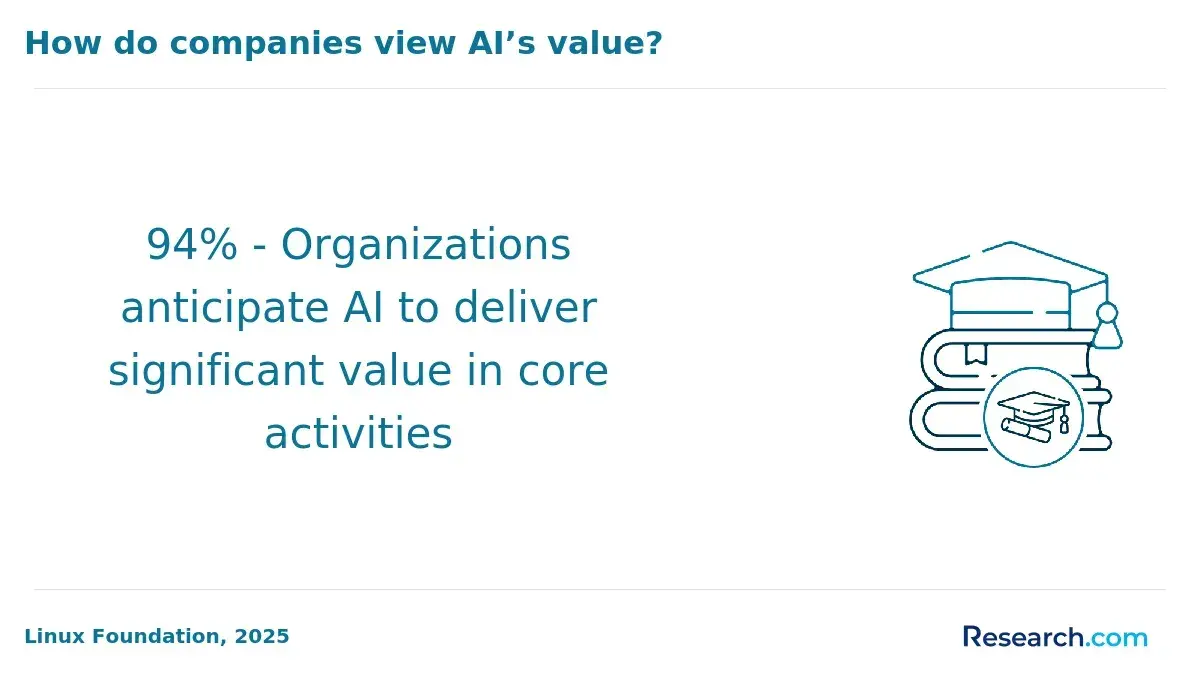
How do Udacity AI Nanodegrees compare to university AI degrees and bootcamps?
Udacity AI Nanodegrees offer a practical, skill-driven alternative to traditional university artificial intelligence programs comparison reveals that Nanodegrees focus on hands-on projects and industry-relevant skills, usually completed within months rather than years. This makes them especially suitable for working professionals or graduates seeking rapid career advancement without the extended time commitment of a university degree.
In contrast with many AI bootcamps, Udacity's programs provide structured curricula developed in collaboration with leading tech companies, ensuring content quality and market relevance. Students receive expert-reviewed projects, enhancing job readiness more effectively than some shorter or less detailed bootcamps. The advantages of Udacity AI bootcamps over traditional artificial intelligence degrees include more flexible pacing and recognized certification.
Cost is a significant consideration: Udacity AI Nanodegree pricing starts at about $249 per month, presenting a more affordable option compared to universities with tuition in the tens of thousands. The total expense varies by the student's completion speed and any discounts offered. This contrasts with universities' higher fees and some premium-priced bootcamps. Udacity also supports online study, beneficial for those balancing work or family commitments.
For learners seeking comprehensive theoretical knowledge or academic research opportunities, a university degree or even an online PhD in AI remains unparalleled. Still, Udacity Nanodegrees provide a concise, cost-effective path to acquiring job-ready AI skills in today's competitive market.
What prerequisites and technical skills are recommended before starting an AI course on Udacity?
Success in Udacity's artificial intelligence courses depends on mastering certain recommended technical skills for Udacity artificial intelligence courses. Proficiency in Python programming is foundational since most AI tools and frameworks rely on it. Equally important is a solid grasp of data structures, algorithms, and object-oriented programming concepts, which enable efficient handling of complex problems.
A strong math background is crucial, especially in linear algebra, calculus, probability, and statistics, as these areas form the basis for many machine learning models and training procedures. Students less confident in these topics should consider reviewing preliminary courses to build essential competencies.
Handling data effectively using libraries such as Pandas and NumPy and familiarity with software environments like Jupyter notebooks are valuable practical skills. They ensure students can preprocess and manipulate data required for real-world projects.
- Programming experience, primarily in Python
- Foundational math including linear algebra and statistics
- Data manipulation skills using relevant libraries
- Familiarity with machine learning concepts for intermediate courses
The prerequisites for starting an AI course on Udacity often include some understanding of neural networks or machine learning concepts, which many beginner courses introduce gently. Keeping this foundation strong positions learners well for expanding into advanced AI topics.
Coursera's AI job-skills analysis highlights the sharp increase in demand for AI professionals, underscoring the importance of proper preparation to enhance employability in this growing field. For individuals seeking complementary skills, exploring cybersecurity courses online can broaden career opportunities and technical versatility.
What core topics and hands-on projects do Udacity's AI courses typically include?
Udacity's AI courses focus on essential topics that build a strong foundation in artificial intelligence and machine learning. Key subjects include supervised and unsupervised learning, deep learning architectures like convolutional neural networks (CNNs) and recurrent neural networks (RNNs), natural language processing, reinforcement learning, and computer vision. Students also learn about data preprocessing, handling large datasets, and important evaluation metrics such as precision, recall, and F1 score.
Hands-on projects are central to Udacity's teaching method. Learners create real-world applications like image classifiers, sentiment analysis tools, chatbots, and recommendation systems. Such practical experience helps students understand how algorithms work outside controlled settings. For instance, projects may involve designing neural networks for object detection or reinforcement learning models to improve game strategies.
The curriculum incorporates widely-used tools and frameworks like TensorFlow, PyTorch, and Scikit-learn, giving students industry-relevant technical skills. Python programming and data science principles are also integrated throughout the courses, ensuring well-rounded expertise.
With the machine learning market projected to grow from $79.3 billion in 2024 to $503.4 billion by 2030, according to Grand View Research, Udacity's focus on core AI topics meets increasing demand across sectors including healthcare, finance, and autonomous systems. Their course design balances theoretical knowledge with practical application, preparing students for competitive job markets.
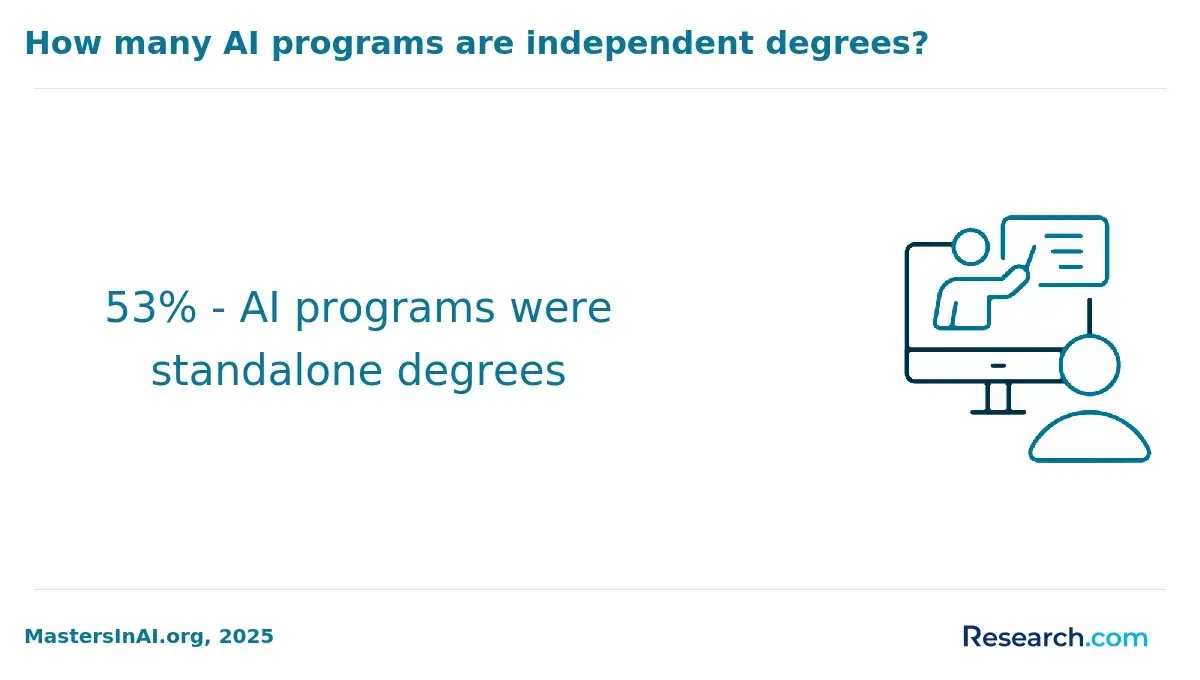
How long do Udacity AI Nanodegrees take, and what do they cost overall?
Udacity AI Nanodegrees generally take 3 to 6 months to complete, with most learners dedicating 10 to 15 hours per week. Self-paced options allow some flexibility to move faster or slower based on personal schedules. Costs range from about $399 to $799 per month, leading to total expenses between $1,200 and $2,500 depending on course length and specialization.
For example, a 4-month program at $399 monthly results in around $1,600. Programs focused on deep learning or autonomous systems tend toward the higher cost range. Students should weigh these costs against career benefits, as Udacity includes real-world projects and personalized feedback that enhance learning outcomes. Verified certificates earned upon completion also strengthen resumes for roles in AI development, research, and data science.
Industry demand reinforces this investment; Nvidia's report highlights surging growth in generative AI, fueling data center revenues of $22.6 billion. This growth underscores the value of timely course completion and certification for career competitiveness.
- Flexible monthly payment plans help manage upfront costs
- Udacity offers scholarships and discounts to lower financial barriers
Understanding the required time and financial commitment helps students plan effectively and align with evolving market needs in artificial intelligence careers.
How do Udacity's AI certificates support U.S. career pathways and job readiness?
Udacity's AI certificates provide targeted skills that align closely with U.S. job market demands, focusing on practical, hands-on projects often created in collaboration with top tech companies. These programs enable learners to develop portfolios demonstrating real-world expertise, essential for roles like AI engineers, data scientists, and AI product managers.
The curriculum incorporates cutting-edge trends such as generative AI, which is rapidly transforming industry needs. The Stanford AI Index Report 2025 highlights that U.S. private investment in generative AI hit $25.2 billion in 2024, a ninefold increase since 2022, signaling strong demand for these capabilities. Graduates with specialized certificates can pursue opportunities in dynamic sectors including healthcare analytics, autonomous systems, and natural language processing.
Career support plays a significant role, with services like personalized resume reviews, interview prep, and direct networking with employers to boost job readiness. Emphasizing real-world applications also helps graduates quickly adapt on the job, reducing typical onboarding times.
For professionals, Udacity's flexible, self-paced learning fits alongside existing careers, allowing continuous skill advancement without disruption. Recent graduates benefit by showcasing specialized knowledge beyond traditional degrees, helping them stand out in competitive hiring.
What AI job roles, salaries, and industry demand can graduates realistically expect?
Graduates of Udacity AI courses can pursue roles such as machine learning engineer, data scientist, computer vision specialist, and AI research analyst. Entry-level salaries often start around $90,000 annually, with experienced professionals earning over $150,000 in major tech hubs. Machine learning engineers typically report median salaries near $120,000, reflecting strong demand. Key industries hiring AI talent include healthcare, automotive, finance, retail, and technology, where AI powers automation and predictive analytics.
Computer vision, a specialized AI field, illustrates robust market growth. The market is projected to reach $24.8 billion by 2025, according to MarketsandMarkets, fueled by applications like autonomous vehicles, medical imaging, and security systems. Those completing Udacity's computer vision courses can leverage this demand.
AI skills are also in demand for natural language processing, robotics, and AI product management roles. Graduates often work on teams integrating AI models into business operations, requiring both technical skills and domain knowledge. Continuous learning remains essential, with employers favoring candidates proficient in Python and frameworks like TensorFlow. Building a portfolio through certificate projects significantly enhances employability.
How should learners choose the best Udacity AI course for their goals and experience level?
Learners choosing Udacity AI courses should align options with their career goals and current skills. Beginners without programming experience benefit most from foundational courses like Intro to Artificial Intelligence or AI Programming with Python Nanodegree, which cover Python, linear algebra, and basic machine learning concepts. These build a necessary base for progressing to advanced subjects.
Those with programming knowledge but limited AI expertise often select courses focusing on areas such as computer vision, natural language processing, or deep learning. The Deep Learning Nanodegree provides practical training with neural networks and deploying models, valuable for research and industry roles.
Advanced learners seeking leadership or research positions should consider Nanodegrees that emphasize AI strategy, ethics, and reinforcement learning. These typically include capstone projects simulating real-world challenges, essential for a strong portfolio.
The U.S. Bureau of Labor Statistics reports a median annual wage of $132,270 for software developers, highlighting the financial opportunities in AI-related fields. Selecting courses with employer-recognized certificates can improve hiring potential.
When selecting a course, keep these tips in mind:
- Match prerequisites to your current skills to avoid learning gaps
- Choose Nanodegrees with hands-on projects for practical experience
- Consider course length and flexibility to fit your schedule
- Look for programs offering career support or mentor access
How do Udacity AI certificates fit alongside professional certifications and further education?
Udacity AI certificates provide hands-on, industry-relevant credentials that complement traditional professional certifications and academic degrees. These certificates focus on applied skills in machine learning, neural networks, and natural language processing without requiring years of study.
Designed for flexibility, Udacity's AI nanodegree programs enable rapid upskilling or career pivots, meeting the fast-changing demands of the tech sector. For instance, a software engineer can leverage these certificates to boost their qualifications for roles involving AI integration and predictive analytics, enhancing profiles alongside core computer science knowledge.
Unlike many professional certifications, which emphasize theoretical knowledge and standards compliance, Udacity centers its curriculum on project-based learning. This approach allows learners to demonstrate concrete results, strengthening their portfolios and making a stronger impression on potential employers.
A LinkedIn 2025 report highlights AI literacy as one of the fastest-growing skills in job postings, with companies offering hiring premium incentives for professionals skilled in AI. This trend underscores the value of acquiring Udacity AI certificates for those without formal AI degrees, providing a competitive edge in a shifting job market.
Other Things You Should Know About Artificial Intelligence
Learning artificial intelligence often involves grappling with complex mathematical concepts such as linear algebra, calculus, and probability. Additionally, mastering programming languages like Python and understanding various AI frameworks can be difficult for beginners. The rapidly evolving nature of AI requires continuous learning and adaptation to new tools and techniques.
While some AI courses are designed for complete beginners, most require at least basic coding knowledge, especially in Python. For those without coding experience, starting with introductory programming courses before advancing to AI can be beneficial. Many Udacity AI courses offer foundational modules to help beginners build the necessary technical skills.
For 2027, the "Deep Learning Nanodegree" is highly recommended as the best Udacity AI course with a certificate. It provides in-depth training in neural networks, model building, and deployment, making it ideal for those looking to excel in AI careers.
AI professionals can work as machine learning engineers, data scientists, AI researchers, or AI software developers, among other roles. Positions may focus on developing AI models, analyzing large datasets, or creating intelligent automation solutions. Demand for these roles is growing across sectors such as technology, healthcare, and finance.
References
- Udacity Reviews https://www.coursereport.com/schools/udacity
- Udacity On Resume: How To List Nanodegree Programs, Individual Cour... https://www.visualcv.com/udacity-on-resume/
- Learn the Latest Tech Skills; Advance Your Career | Udacity https://www.udacity.com/catalog
- My Review of Udacity After Completing 7 Nanodegrees https://oscarleo.com/udacity-review/
- What’s actually happening with entry-level and graduate jobs? https://www.techuk.org/resource/what-s-actually-happening-with-entry-level-and-graduate-jobs.html
- What AI Really Means for Graduate Jobs | Newswise https://www.newswise.com/articles/what-ai-really-means-for-graduate-jobs
- AI Education Partnerships for Universities https://www.becomeaicertified.com/learning-solutions-for-individuals/for-universities
- Digital Education Council | Certificate in AI for Higher Education https://www.digitaleducationcouncil.com/digital-education-council-certificate-in-ai-for-higher-education
- Choosing the Right AI Course: A Comprehensive Guide https://www.upskillist.com/blog/choosing-the-right-ai-course-a-comprehensive-guide/
- Ultimate Guide: How to Choose the Right AI Training Course to Boost Your Career - ONLC https://www.onlc.com/blog/how-to-choose-ai-training-courses/