2027 Best AI Courses for SEO Professionals Managing AI Adoption

Co-Founder and Chief Data Scientist
SEO professionals face mounting challenges as artificial intelligence reshapes search algorithms and content strategies. Many struggle to understand how to integrate AI tools effectively while maintaining compliance with best SEO practices.
This gap often leads to inefficient workflows and lost competitive advantage. The rapid pace of AI adoption demands targeted, practical training that bridges technical knowledge with SEO expertise.
This article identifies top courses tailored for SEO professionals, focusing on flexible, accredited programs that equip learners with the skills to manage AI adoption confidently and optimize SEO performance in an evolving digital landscape.
Key Things You Should Know
- AI courses for SEO professionals in 2026 emphasize practical skills in automation, data analysis, and content optimization, reflecting a 45% surge in AI-based SEO tool adoption since 2024.
- Training increasingly covers ethical AI use and bias mitigation, addressing concerns raised by 60% of industry experts regarding AI-driven decision transparency.
- Top programs integrate hands-on learning with real-world SEO datasets, boosting job placement rates by up to 35% within six months post-certification.
Advance Your Career with AI Online Courses
Artificial Intelligence: Implications for Business Strategy
This program provides an introduction to Artificial Intelligence and their implications for business strategy. Earn an official digital certificate.

Oxford Artificial Intelligence Programme
Explore this Oxford Artificial Intelligence programme offered in a flexible learning environment and explore topics like machine learning, automation, and robotics.

Implementing Agentic AI: Building Your Organizational Playbook
This online MIT Agentic AI course offers a practical approach to deploying AI agents in your organization, including a custom playbook. 3 weeks, exclusive launch price.

AI Adoption: Driving Business Value and Impact
This online MIT AI Adoption: Driving Business Value and Impact offers practical frameworks to close the gap between AI potential and business reality.

Artificial Intelligence in Pharma and Biotech
Discover the applications and limitations of artificial intelligence in pharma and biotech with this MIT online short course.

What does "AI for SEO" mean and why should marketing professionals study it now?
AI for SEO applies artificial intelligence technologies to optimize websites, content, and user experience for search engines. It improves how artificial intelligence improves SEO strategies by leveraging machine learning, natural language processing, and generative AI to analyze search intent, automate content creation, and personalize SEO efforts.
Marketing professionals are adopting AI rapidly that by 2027, 80% of search-driven customer journeys will be influenced by generative AI systems rather than just keyword searches.
This evolution requires skills to interpret AI-generated insights, optimize for AI-powered search algorithms, and integrate AI tools into content workflows. AI can identify semantic search opportunities, create topic clusters, and predict user queries, allowing more precise content targeting.
Additionally, successful integration involves managing ethical considerations, data bias, and maintaining content quality amid AI automation.
Benefits of AI adoption for marketing professionals include tackling challenges such as balancing AI-driven automation with human creativity, optimizing for voice and visual AI-powered searches, managing AI-influenced search algorithm updates, and discerning reliable AI solutions from hype.
Proficiency in AI for SEO equips marketers to stay competitive, lead AI integration projects, and generate measurable ROI. For those interested in advancing in this field, pursuing an accelerated bachelor's degree computer science online can provide essential technical knowledge and career growth opportunities.
Advance Your Career with AI Online Courses
Artificial Intelligence: Implications for Business Strategy
This program provides an introduction to Artificial Intelligence and their implications for business strategy. Earn an official digital certificate.
Oxford Artificial Intelligence Programme
Explore this Oxford Artificial Intelligence programme offered in a flexible learning environment and explore topics like machine learning, automation, and robotics.
Implementing Agentic AI: Building Your Organizational Playbook
This online MIT Agentic AI course offers a practical approach to deploying AI agents in your organization, including a custom playbook. 3 weeks, exclusive launch price.
Which types of AI courses best support SEO professionals managing AI adoption?
Courses that best support SEO professionals managing AI adoption blend technical expertise with practical SEO applications.
Foundational education in machine learning and natural language processing (NLP) is critical, offering insights into how AI models process and generate content to enhance keyword research and SERP optimization. Such courses often include coverage of supervised learning and transformer architectures related to GPT models.
AI training programs for SEO specialists managing adoption typically emphasize AI-powered SEO tools, enabling users to harness data analysis, rank tracking, and competitor insights more effectively. Hands-on workshops with AI writing assistants and automated SEO audits further help maintain strategic control while improving efficiency.
Data analytics and AI ethics are increasingly essential areas of focus. SEO professionals must responsibly interpret AI-driven insights and mitigate bias in automated content, while understanding privacy and ethical implications to avoid negative SEO outcomes.
LinkedIn's 2025 Global Skills Report notes a 130% increase in job postings requiring combined SEO and AI capabilities between 2023 and 2024, reflecting the growing demand for integrated skills. Prospective learners should seek programs that merge coding basics, AI tool proficiency, and SEO strategy adaptation, including courses on Python for SEO and AI content generation best practices.
One way to explore relevant educational paths is to compare affordable options like online mechanical engineering degrees, which often incorporate AI fundamentals applicable to SEO professionals aiming to future-proof their careers.
How do you choose reputable AI courses for SEO, including accreditation and instructor quality?
Choosing reputable AI courses for SEO professionals relies heavily on how to evaluate AI course accreditation and credibility. Accreditation from recognized bodies like the Digital Marketing Institute, Interactive Advertising Bureau (IAB), or university departments ensures course content meets industry standards. Such accredited programs often provide up-to-date curricula that reflect current AI and SEO practices.
Quality indicators for AI instructors in SEO training include demonstrated expertise in AI technologies and SEO strategies. Instructors actively working with generative AI tools such as ChatGPT or Gemini bring valuable practical insights. Those with published research, case studies, or consulting experience with SEO firms offer an authoritative perspective that enhances course value.
Earnings uplift data underlines the importance of selecting the right course. According to a Payscale analysis, U.S. SEO specialists who highlight generative AI skills earn 18-22% higher salaries than those without. This reinforces the need for hands-on AI integration and practical applications in the learning process.
Additional factors include:
- Transparent course syllabi covering AI models, data training, and SEO optimization
- Student feedback and completion rates on learning platforms
- Access to real-world projects or labs using current AI tools
- Post-course mentorship and professional networking opportunities
For professionals seeking advanced options, exploring AI PhD programs can further deepen technical skills and research competence in the field.
What core AI and machine learning concepts should SEO managers learn first?
SEO managers benefit greatly from mastering machine learning fundamentals for SEO professionals, especially concepts like supervised and unsupervised learning that enable algorithms to classify user queries and cluster content topics effectively.
Natural language processing (NLP) plays a crucial role in helping search engines interpret semantic meaning and user intent through techniques such as tokenization, part-of-speech tagging, and sentiment analysis, allowing content to align better with ranking factors.
Data preprocessing and feature engineering are important skills for structuring and transforming SEO data to improve model accuracy. These approaches allow customized AI models to predict keyword rankings and analyze user behavior more effectively. Familiarity with evaluation metrics like precision, recall, and F1 score equips SEO managers to critically assess AI tools in their workflows.
Hands-on experience with training models, automation, and integrating real-time data supports practical applications such as forecasting SERP changes and identifying content gaps, which optimize SEO efforts. The value of applied knowledge is underscored by the Coursera 2024 Learner Outcomes Survey, where 52% of professionals who completed short AI courses use these skills weekly compared to only 29% from longer theoretical programs.
Key artificial intelligence concepts for SEO managers are best acquired through targeted, project-based learning. For those interested in related fields, exploring the best online cybersecurity degree programs for veterans can provide additional career pathways and technical expertise.
What coursework teaches practical generative AI skills for keyword research and content optimization?
Courses teaching practical generative AI skills for keyword research and content optimization focus on leveraging AI tools to boost SEO effectiveness. Core topics include prompt engineering for content creation, using AI-powered keyword analysis platforms, and automating content audits.
These programs often emphasize hands-on projects involving models like GPT to generate semantically rich keywords and optimize meta descriptions efficiently.
Students gain expertise in blending AI technologies with traditional SEO methods, enabling faster identification of high-ROI keywords and reducing manual research time. Training may cover AI-driven intent-based keyword clustering, content rewriting for improved rankings, and interpreting AI insights for backlink strategies and competitor analysis.
Udemy's 2024 Workplace Learning Trends report reveals a 240% year-over-year rise in enrollments for courses combining "SEO" and "AI," illustrating strong demand for specialized AI training tailored to SEO roles.
This growth significantly outpaces general SEO course enrollment, emphasizing the value of generative AI skill development. Learners study case-based scenarios where AI actively shapes content strategy and ranking outcomes.
Key problem-solving skills include crafting AI prompts to elicit relevant keyword variations and fine-tuning AI models for niche market trends. Ethical considerations, such as avoiding AI-generated spam and complying with search engine guidelines, are also integral.
These programs prepare professionals to manage AI adoption confidently within SEO workflows for measurable results.
How do online AI programs for marketers compare with campus-based and bootcamp options?
Online AI programs for marketers offer greater flexibility and more current content compared to campus-based and bootcamp options, which is essential in the rapidly evolving AI SEO field. They provide on-demand access, allowing professionals to learn while working-a convenience not often found in campus degrees with fixed schedules and longer durations.
Campus programs provide a broader theoretical foundation and stronger academic rigor but may fall behind in applying the latest AI tools and SEO techniques.
Bootcamps emphasize intensive, practical skills over a short period, focusing on hands-on experience with current AI SEO platforms. This makes them ideal for quickly acquiring relevant skills, though they might miss deeper strategic or analytical training available in longer online or campus courses.
Data from HubSpot's "State of Marketing AI" survey highlights the value of platform-specific AI SEO training: marketers with at least one AI platform certification were 38% more likely to report significant positive ROI from AI initiatives than those without certifications.
Key considerations include:
- If immediate tool application and certification matter, online courses or bootcamps are preferable.
- For long-term, theory-based knowledge and formal credentials, campus programs suit better.
- Those needing to balance work and study will find online programs most flexible.
- Measurable ROI comes with platform-focused online training.
These insights help professionals choose the best AI education path for their career goals in marketing.
What are the typical admission requirements, time commitment, and costs for AI courses in marketing?
AI courses in marketing generally expect foundational knowledge of digital marketing and basic data analysis. Experience with SEO tools or marketing analytics coursework is often helpful. While most programs do not require strict prerequisites, advanced certifications may ask for documented work experience in marketing or analytics roles.
Course durations vary widely. Short bootcamps typically last 4 to 8 weeks with 5 to 10 hours of weekly study, ideal for working professionals seeking rapid upskilling.
More extensive certificate programs or university-affiliated courses can range from 3 to 6 months, demanding 8 to 15 hours per week including practical projects applying artificial intelligence in SEO. Self-paced courses provide flexibility but require disciplined time management.
Costs fluctuate from free introductory classes to $2,000 or more for specialized certificates. Platforms like Coursera and edX generally charge between $300 and $1,000 for professional certificates, while university-led programs often exceed $1,500, reflecting instructor expertise and credential value.
According to CXL's 2025 "AI in Marketing Skills" survey, 61% of mid-to-large companies invest in internal AI SEO training, showing an industry trend toward funding tailored educational resources.
Prospective students should consider costs, time commitments, and outcomes carefully. Hands-on AI SEO projects foster practical skills. Those with limited marketing exposure benefit from introductory modules that bridge gaps before advancing to AI-focused material.
Which AI, analytics, or marketing certifications matter most for SEO professionals today?
For SEO professionals navigating AI adoption, certifications in ai-driven marketing, data analytics, and machine learning are increasingly valuable. BrightEdge's 2024 Search Landscape Report shows that 58% of organic clicks now originate from non-traditional search surfaces like AI overviews, chatbots, and vertical search, demanding skills beyond traditional SEO.
Prominent certifications include Google's Professional Data Engineer and TensorFlow Developer credentials, which focus on applying machine learning models to analyze search data. The Digital Marketing Institute (DMI) offers programs emphasizing ai-powered content strategies and customer journey analytics to optimize content across emerging search environments.
The Certified Marketing Analytics Professional (CMAP) credential teaches data interpretation essential for refining SEO strategies amid automation and conversational AI. Knowledge of predictive analytics helps anticipate user queries shaped by ai-driven platforms.
Certificates in natural language processing (NLP), like Coursera's specialization, provide an edge for content creators. Mastering multi-channel analytics and AI integration helps SEO specialists unify insights from traditional engines, chatbots, and voice assistants.
These certifications demonstrate proficiency crucial for career advancement in an evolving digital landscape influenced by AI. Staying current with these credentials supports adaptation to shifting search behaviors and maximizes competitive advantage.
What AI-related roles, salaries, and career paths can SEO specialists pursue after upskilling?
Professionals who enhance their skills with artificial intelligence open doors to diverse, high-demand roles such as AI SEO strategist, automation specialist, data analyst, and AI content developer. These positions often require a strong mix of technical and marketing abilities, including coding to automate processes and improve efficiency.
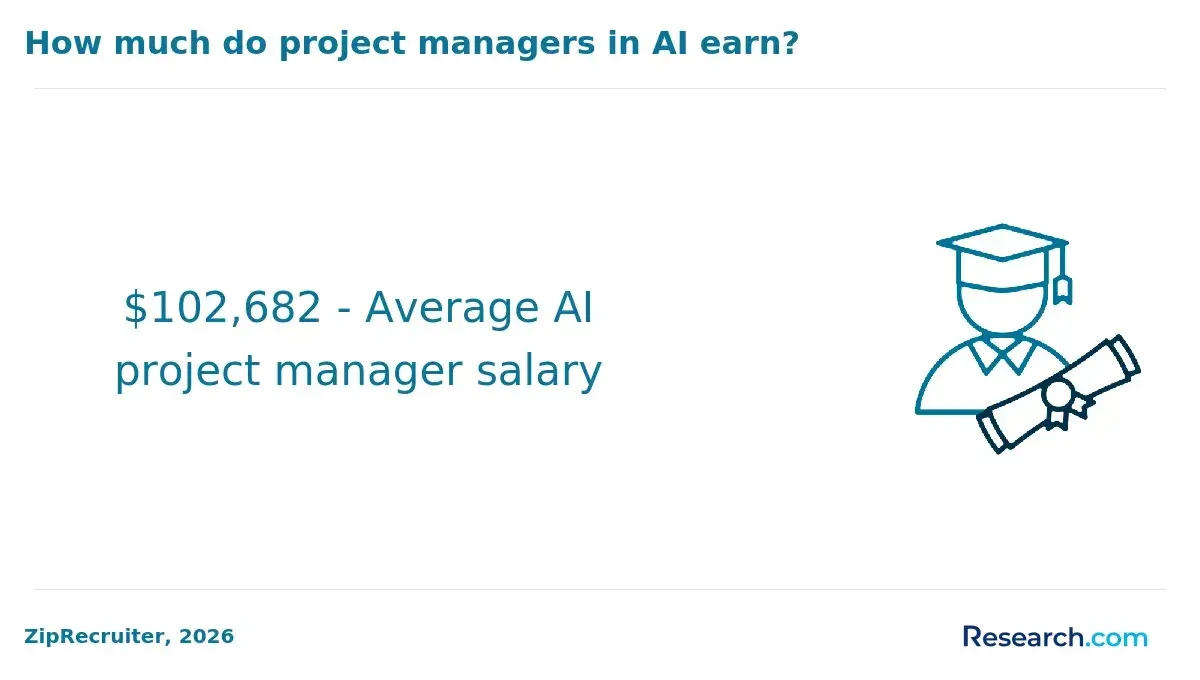
Salary expectations vary widely depending on experience and role: entry-level AI SEO analysts generally earn $60,000-$80,000, mid-level specialists and managers between $85,000-$120,000, and senior AI SEO consultants or digital marketing leads can command $130,000-$160,000 annually.
Adoption of AI transforms SEO career paths by integrating automation and predictive analytics. AI tools analyze extensive datasets to uncover emerging keywords and optimize content planning.
A 2024 McKinsey study on gen-AI in marketing found that teams with marketers skilled in AI coding increase SEO output by 30-40% without adding staff, enhancing organizational value and career advancement potential.
To leverage these opportunities, SEO professionals should develop expertise in AI programming languages like Python, machine learning frameworks, and data analysis. Additionally, focusing on AI ethics and transparency can lead to specialized roles addressing algorithmic bias and fairness in search optimization.
How can SEO leaders responsibly govern AI use, data privacy, and compliance in marketing?
SEO leaders must implement strong governance frameworks to ensure responsible artificial intelligence use, data privacy, and regulatory compliance in marketing.
This involves establishing clear ethical guidelines to prevent bias in algorithmic content recommendations and maintaining transparency in AI-powered decisions. Regular audits of AI tools help identify privacy risks and misuse early on.
Compliance with data privacy laws like CCPA and GDPR is essential. This requires enforcing strict controls on data collection, storage, and usage, including anonymizing user data and obtaining explicit consent when AI personalizes marketing campaigns or analyzes consumer behavior. Collaboration with legal and data security teams is key to staying aligned with evolving regulations.
Training marketing professionals on AI ethics and privacy increases organizational accountability. Workshops on interpreting AI outputs and data governance reduce errors that could cause breaches.
Monitoring AI model performance also helps detect anomalies that might harm data security or produce misleading SEO guidance.
Documenting AI policies and compliance procedures clarifies roles across teams. Leveraging AI compliance software platforms automates risk assessment and reporting, improving efficiency.
Investing in AI SEO upskilling delivers measurable results. According to Salesforce's 2025 State of Marketing report, 54% of high-performing marketing organizations credit at least a 10% increase in organic traffic or lead generation to AI-focused SEO training over the past 12 months. Responsible governance combined with training drives real business value.
Other Things You Should Know About Artificial Intelligence
In 2027, top AI courses for SEO professionals managing AI adoption include "AI in SEO" by Coursera, which covers real-world applications of AI in search engine optimization, and "Machine Learning for SEO" by Udacity, focusing on AI-driven data analysis for better SEO strategies.
Common challenges include understanding the complexity of AI tools, integrating them with existing SEO workflows, and ensuring data quality. Additionally, there is often a skills gap requiring upskilling or hiring specialists familiar with AI applications. Managing ethical considerations and maintaining transparency with AI-driven content also pose ongoing difficulties.
AI enables content personalization by analyzing user behavior, preferences, and intent in real time. This allows SEO professionals to deliver tailored content recommendations that increase user engagement and conversion rates. Machine learning models can continually refine personalization strategies based on new data.
AI automates competitor analysis by efficiently processing competitor websites, backlink profiles, and keyword strategies. It identifies gaps and opportunities faster than manual methods, offering actionable insights for SEO professionals. This helps in crafting more effective strategies to outperform competitors in search rankings.
References
- List of the Best Digital Marketing Certifications to Enroll in 2026 | Certifier https://certifier.io/blog/best-digital-marketing-certification
- Machine Learning & AI for SEO | FourFront https://www.fourfront.us/blog/machine-learning/
- Empowerment AI: Marketing Bootcamp (Two-Day Open Enrollment) | School of Marketing | ANA https://www.ana.net/training/course/id/CD-EAM-MD-CS
- 15 Marketing Certifications to Build Must-Have 2025 Skills https://www.cmswire.com/digital-marketing/10-marketing-certifications-that-can-help-you-earn-a-better-salary/
- AI Marketing Specialist Certifications: Best Credentials to Advance Your Career | Teal https://www.tealhq.com/career-paths/ai-marketing-specialist-certifications
- Online Course: Generative AI for Keyword Research from Coursera | Class Central https://www.classcentral.com/course/coursera-generative-ai-for-keyword-research-297263
- SEO + Machine Learning for Dummies: Simple, Actionable Steps to Rank Higher https://www.hypesuite.ai/post/seo-machine-learning-for-dummies
- SEO in an AI-Driven World: How to Strategize? - Convince & Convert https://www.convinceandconvert.com/ai/seo-in-an-ai-driven-world-how-to-strategize/