2027 Best LinkedIn Learning AI Courses for Executives

Co-Founder and Chief Data Scientist
Executives often face challenges in understanding and integrating artificial intelligence into their strategic decisions. The rapid evolution of ai technologies demands continuous learning to remain competitive and lead innovation effectively. Many lack convenient access to courses that balance advanced concepts with practical leadership applications. This gap can delay digital transformation initiatives and hinder organizational growth.
This article identifies the best LinkedIn Learning AI courses tailored for executives, emphasizing flexibility, relevance, and credibility. It aims to guide professionals seeking to enhance their ai knowledge and leverage these skills to drive impactful business outcomes.
Key Things You Should Know
- LinkedIn Learning's 2026 AI courses for executives emphasize practical skills in AI strategy and leadership, aligning with a 37% projected growth in AI-focused managerial roles by 2030.
- Top courses incorporate latest industry tools like machine learning frameworks and ethical AI governance, reflecting a 2025 survey where 68% of executives prioritized AI ethics training.
- Flexible online formats enable busy executives to upskill efficiently, supporting the trend of 54% of professionals pursuing AI education alongside full-time employment in 2024-2026.
Advance Your Career with AI Online Courses
Artificial Intelligence: Implications for Business Strategy
This program provides an introduction to Artificial Intelligence and their implications for business strategy. Earn an official digital certificate.

Oxford Artificial Intelligence Programme
Explore this Oxford Artificial Intelligence programme offered in a flexible learning environment and explore topics like machine learning, automation, and robotics.

Implementing Agentic AI: Building Your Organizational Playbook
This online MIT Agentic AI course offers a practical approach to deploying AI agents in your organization, including a custom playbook. 3 weeks, exclusive launch price.

AI Adoption: Driving Business Value and Impact
This online MIT AI Adoption: Driving Business Value and Impact offers practical frameworks to close the gap between AI potential and business reality.

Artificial Intelligence in Pharma and Biotech
Discover the applications and limitations of artificial intelligence in pharma and biotech with this MIT online short course.

What makes LinkedIn Learning AI courses valuable for executives and senior leaders?
LinkedIn learning ai courses tailored for executive leadership provide targeted and practical knowledge essential for senior leaders navigating AI's expanding role in business. These programs emphasize strategic decision-making skills in areas such as predictive analytics, automation, and ethical governance, helping executives effectively oversee AI integration and align initiatives with corporate goals.
According to PwC's 2024 Global CEO Survey, while 70% of CEOs anticipate significant changes in their business models due to AI within three years, only 32% believe their leadership teams are highly competent in AI use. This gap illustrates the crucial need for AI training that goes beyond technical skills to include strategic thinking and risk management.
Designed to fit busy schedules, these courses include real-world case studies that focus on practical outcomes like workflow optimization and enhancing customer experience. Executives gain skills to deploy AI for tasks such as market analysis and predictive maintenance without needing deep programming expertise. The courses also cover key leadership challenges:
- Understanding AI's impact on organizational culture and workforce planning
- Evaluating AI vendors and technology partners effectively
- Ensuring compliance with data privacy and AI ethics regulations
By building these competencies, leaders can confidently drive AI transformation initiatives internally, reducing dependence on outside consultants. For those considering further education to broaden their technical foundation, exploring an online computer science degree can complement leadership skills in AI strategically.
The impact of artificial intelligence training on senior business leaders is clear: it enhances their ability to manage AI-driven teams and make informed decisions that connect technology advancements directly to business value.
Advance Your Career with AI Online Courses
Artificial Intelligence: Implications for Business Strategy
This program provides an introduction to Artificial Intelligence and their implications for business strategy. Earn an official digital certificate.
Oxford Artificial Intelligence Programme
Explore this Oxford Artificial Intelligence programme offered in a flexible learning environment and explore topics like machine learning, automation, and robotics.
Implementing Agentic AI: Building Your Organizational Playbook
This online MIT Agentic AI course offers a practical approach to deploying AI agents in your organization, including a custom playbook. 3 weeks, exclusive launch price.
How do LinkedIn Learning AI courses compare with MBA or university executive programs?
LinkedIn Learning AI courses offer a targeted and flexible alternative to traditional university executive education and MBA programs. These courses focus specifically on artificial intelligence applications and leadership integration, enabling executives to gain relevant skills quickly without the lengthy commitment or higher expenses of multi-year programs. The benefits of AI courses versus traditional university executive education include updated content reflecting real-world AI tools and leadership challenges, unlike many executive programs that may rely on outdated case studies or theoretical frameworks.
Another advantage is accessibility. LinkedIn Learning AI courses can be completed asynchronously and on-demand, allowing busy professionals to balance work responsibilities without fixed schedules or campus attendance. This flexibility contrasts with executive MBAs, which often require intensive residencies or time away from the workplace.
The 2024 Workplace Learning Report noted a 160% growth in enrollment for AI courses geared toward leaders, demonstrating rising interest in this focused training. Executives benefit from practical modules covering machine learning basics, AI ethics, and data-driven decision-making-topics that MBA programs may only briefly address. For U.S. students exploring options, these courses provide a more efficient pathway to AI leadership skills.
Cost is another crucial factor. LinkedIn Learning subscriptions generally cost less than MBA tuition or executive programs, offering a high return on investment for those prioritizing AI skill development over broader business education. Those seeking specialized AI leadership training rather than comprehensive business curricula may find these courses a better fit.
Prospective students should also consider alternatives like the cheapest online civil engineering degree programs for related career pathways in technology fields. Overall, LinkedIn Learning's AI courses provide a distinct option for executives, highlighting how LinkedIn Learning AI courses compare with executive MBA programs in delivering practical, up-to-date, and accessible education.
Which LinkedIn Learning AI courses are best for non-technical executives and board members?
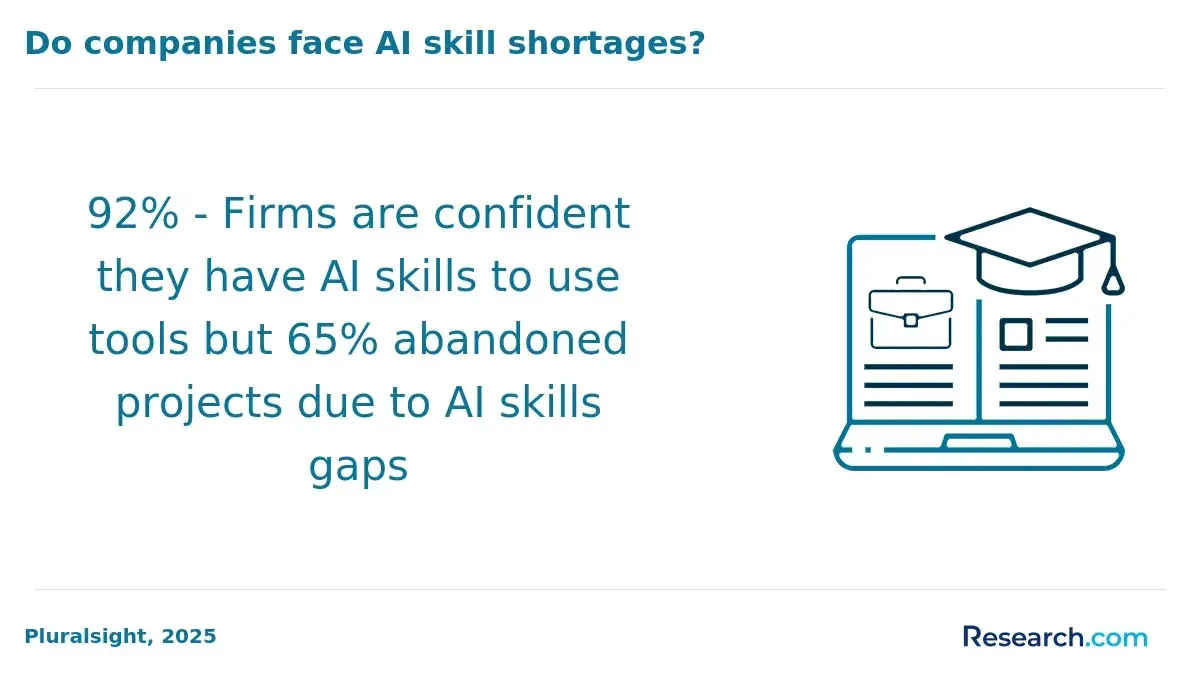
Non-technical executives and board members benefit most from AI courses tailored to strategic understanding rather than coding or technical details. The LinkedIn Learning Path "AI for Organizational Leaders by Microsoft and LinkedIn" is highly recommended for addressing leadership challenges in AI adoption. It focuses on business impact, ethics, and change management, essential topics as 79% of leaders recognize the need for AI training but 60% report a lack of formal upskilling programs.
The best LinkedIn Learning artificial intelligence courses for non-technical executives provide key insights into leveraging AI for decision-making, aligning AI strategy with business goals, and guiding digital transformation. Courses covering AI ethics and governance help board members oversee risk and compliance effectively. Programs that explain AI terminology without requiring programming enable better communication across technical teams.
Executives also gain from practical case studies showing AI-driven improvements in customer experience and supply chains. Additional modules on vendor evaluation and AI tool selection assist leaders in making informed investment decisions. This hands-on approach fits the needs of executives facing integration challenges.
Those seeking to expand their expertise can also explore broader educational options, including best online AI degree programs that complement these top AI courses on LinkedIn Learning for board members and executives.
What AI fundamentals should every executive learn to make data-driven decisions?
Executives aiming to lead data-driven decision making must grasp essential AI fundamentals for executives in data-driven decision making. This starts with a strong understanding of core AI concepts such as machine learning, natural language processing, and neural networks, which clarifies the capabilities and limitations of AI systems. With this foundation, leaders can set realistic expectations and identify where AI can add value within their organizations.
Data literacy is another critical skill for business leaders, enabling them to interpret data sources accurately, evaluate data quality, and recognize biases in algorithms. Awareness of how incomplete or skewed datasets affect AI predictions helps prevent costly mistakes and enhances oversight of AI-driven projects.
AI ethics and compliance deserve special attention. Executives must know the legal frameworks and privacy laws governing AI, ensuring that deployments are ethically sound and aligned with corporate values. This focus safeguards trust among customers and stakeholders alike.
Practical knowledge in AI integration and change management helps address common challenges in adopting new technologies. Effective leaders understand how AI tools merge with existing workflows and use reskilling strategies to support their teams through transitions.
Reports, including Gartner's survey highlighted in the "AI for Managers by Microsoft and LinkedIn" Learning Path, reveal a concerning skills gap: while 63% of companies expect frontline and middle managers to drive AI adoption, only 19% receive specialized AI training. To bridge this divide, executives can explore roles such as AI trainers who focus on building essential artificial intelligence skills for business leaders.
How can executives use LinkedIn Learning to build an AI strategy roadmap?
Executives can build an effective AI strategy roadmap by focusing on both foundational knowledge and practical applications. Begin with learning paths covering emerging AI technologies, data analytics, and ethical considerations. Prioritize strategic implementation courses like AI project management and change leadership to align AI initiatives with business goals.
Clear milestones are essential; follow LinkedIn Learning's structured modules to progress from introductory AI concepts to advanced applications in finance, marketing, and operations. Complement technical training with leadership content that emphasizes fostering innovation and managing AI-driven transformation teams.
- Seek courses with case studies and scenario-based learning tailored to your industry challenges.
- Healthcare leaders might explore AI in patient data management.
- Retail executives can focus on AI-powered customer experience improvements.
Active engagement matters. According to McKinsey's 2024 Global Survey on Generative AI, organizations led by senior executives deeply engaged with generative AI are 2.6 times more likely to see revenue growth of at least 5%. This highlights the importance of applying AI insights consistently.
Use platform features like skill assessments and personalized recommendations to track progress and refine your roadmap. Peer learning via LinkedIn groups and forums provides real-time insights and helps update strategies based on emerging trends.
How do LinkedIn Learning AI certificates fit into professional development and HR upskilling plans?
LinkedIn Learning AI certificates enhance professional development and HR strategies by aligning skill-building with business objectives. Executives who earn these certificates gain structured knowledge that supports embedding AI into wider corporate strategies, boosting leadership in AI-driven transformation. According to BCG's 2024 "AI for Business" report, companies that integrate AI into their strategy are 3.5 times more likely to achieve substantial financial gains compared to those conducting isolated pilot projects.
These certificates address various organizational requirements:
- Standardizing AI competencies within leadership teams, aiding HR departments in targeted upskilling.
- Providing measurable evidence of AI proficiency to assist succession planning and career advancement.
- Closing the gap between technical AI teams and executives by delivering relevant AI concepts and strategic frameworks.
For instance, executives who build AI literacy through LinkedIn Learning can better assess AI investments, drive change management, and promote an innovation-driven culture. HR professionals benefit by embedding these certificates into tailored learning pathways focused on AI's strategic impacts rather than solely technical skills, preventing knowledge silos and enhancing collaboration. Additionally, the modular course structure offers flexibility, accommodating executive schedules and corporate priorities effectively.
LinkedIn Learning AI certificates provide a practical, evidence-based solution for organizations striving to advance AI leadership skills and support sustainable transformation instead of short-term experimentation.
What is the time commitment and cost of LinkedIn Learning AI courses for busy executives?
LinkedIn Learning offers AI courses designed for busy executives, requiring between 2 to 10 hours depending on the course depth. Modular formats allow professionals to learn at their own pace by fitting lessons into short daily or weekly sessions. Foundational courses often last 2-4 hours, while specialized modules on AI applications in operations or strategy may extend to 8-10 hours, supporting flexible schedules without significant disruption.
The platform operates on a subscription model, with access to all AI courses costing about $39.99 per month or $239.88 annually. This subscription includes unlimited access to thousands of courses, making it more economical than purchasing single courses individually. Many users benefit from a one-month free trial to evaluate the offerings before subscribing.
Investing in these courses can yield tangible business benefits. According to Accenture's 2024 Work, Workforce, Workers study, generative AI could boost labor productivity by up to 34% in high-income economies by 2030. Early adopters have reported 10-15% productivity gains in specific functions. For executives, completing AI courses enhances strategic decision-making and operational efficiency.
To maximize results:
- Start with shorter introductory courses to quickly build foundational knowledge.
- Choose advanced modules that focus on AI applications relevant to your industry.
- Use the subscription model to explore multiple courses and stay updated on AI trends.
How can executives stack LinkedIn Learning AI courses with university certificates or microcredentials?
Executives can enhance their expertise by stacking LinkedIn Learning AI courses with university certificates or microcredentials, aligning practical skills with formal recognition. Selecting LinkedIn Learning courses that complement university frameworks, such as AI ethics or governance, enables reinforcement through applied case studies. For example, pairing microcredentials on AI ethics with relevant LinkedIn courses deepens understanding and skill.
Sequencing credentials helps build proficiency progressively. Starting with foundational AI courses on LinkedIn Learning provides hands-on experience before advancing to specialized university certificates in areas like ethical AI or AI strategy. This approach showcases continuous learning via digital badges and accredited certificates.
Many programs offer prior learning credits or flexible enrollment, so confirming whether LinkedIn Learning completions count toward university microcredentials is essential. Additionally, displaying stacked credentials on LinkedIn boosts professional credibility-critical given that IBM's AI Ethics and Governance Report highlights 85% of organizations with formal AI governance report higher trust from customers and regulators, compared to 46% without.
Executives should consider cross-disciplinary LinkedIn Learning courses in data privacy and risk management alongside university certificates to build a comprehensive skill set. This strategy effectively meets evolving business demands and governance standards while enhancing career prospects.
What AI leadership and ethics topics should executives prioritize in their learning path?
Executives need to develop strong leadership skills in ai, focusing on both foundational literacy and strategic decision-making related to its ethical use. Key areas for mastery include understanding ai fundamentals to collaborate effectively with technical teams and accurately assess opportunities.
- Implementing ethical frameworks that address bias mitigation, fairness, transparency, and accountability to reduce reputational and legal risks.
- Establishing governance models that incorporate ai risk assessment and comply with evolving regulations.
- Managing organizational change to align ai initiatives with company culture and workforce dynamics.
- Applying privacy and data security principles to maintain customer trust and meet legal standards.
Deloitte's "State of AI in the Enterprise" survey highlights that 62% of top-performing organizations require ai literacy training for non-technical executives, compared to 27% in lower-performing firms. This data signals the importance of moving beyond intuition to develop a thorough understanding of ai's capabilities and limitations.
Executives should critically evaluate model outputs to avoid overdependence on black-box algorithms and recognize ethical challenges like algorithmic bias in hiring or lending. These issues demand both technical knowledge and ethical judgment.
Aligning ai ethics with corporate social responsibility enhances long-term value. Reviewing case studies of ethical lapses, such as data breaches and biased outcomes, sharpens executive insight.
Prioritizing ai literacy along with practical leadership and governance training empowers executives to lead innovation responsibly and ethically.
How can executives evaluate course quality, instructor credibility, and real-world relevance on LinkedIn Learning?
Executives selecting courses on LinkedIn Learning should focus on those rated above 4.5 stars with clear objectives that match strategic roles such as decision-making and AI ethics. Evaluating instructor credentials is essential; look for professionals with advanced degrees, relevant consulting experience, or leadership in tech industries. LinkedIn profiles and endorsements offer transparent insights into their expertise.
Courses featuring case studies, practical applications, and up-to-date content on AI's latest business uses-like machine learning for operational efficiency or AI-driven customer insights-are especially valuable. Frequent updates ensure content stays current amid AI's rapid evolution. Aligning learning with measurable business outcomes is key. LinkedIn's 2024 Workplace Learning Report shows companies that invest heavily in digital learning, including AI upskilling via LinkedIn Learning, are 57% likelier to improve revenue and 64% likelier to retain employees.
Executives can also preview course segments, compare similar offerings, and consult peer reviews within their industry. Choosing courses with post-completion resources or professional network access boosts long-term value and application in fast-changing AI environments.
Other Things You Should Know About Artificial Intelligence
Executives often struggle with data quality and integration issues when deploying artificial intelligence solutions. Ensuring organizational alignment and change management is also a significant challenge, as successful AI adoption requires buy-in from multiple departments. Additionally, understanding AI ethics, compliance, and risk management is crucial to avoid unintended consequences.
Continuous learning is essential for executives to keep pace with the rapid advancements in artificial intelligence technologies. Staying informed helps leaders make strategic decisions, evaluate emerging tools, and understand regulatory changes. This ongoing education enables them to maintain a competitive edge and effectively guide their organizations through digital transformation.
In 2027, LinkedIn Learning offers several top AI courses for executives, including "AI for Business Leaders," "Artificial Intelligence Foundations," and "Data-Driven Strategy Using Artificial Intelligence." These courses focus on equipping executives with practical AI skills to enhance strategic decision-making in their organizations.
Executives should cultivate skills in data literacy, problem-solving, and strategic thinking to collaborate effectively with AI professionals. Familiarity with AI concepts, such as machine learning and natural language processing, helps leaders ask informed questions and evaluate technical proposals. Strong communication skills are also vital to translate AI insights into actionable business strategies.
References
- AI Decision Making: Empowering Executives for Success https://executiveaipartners.com/ai-decision-making-for-executives/
- AI Ethics at Work: Key Issues & What Firms Must Know https://www.techclass.com/resources/learning-and-development-articles/ethics-of-ai-at-work-what-every-company-should-consider
- AI-Driven Decision Making: Your Next Step in Harnessing Data https://www.fullstory.com/blog/ai-driven-decision-making/
- What Every Leader Needs to Know About AI - Mindtools Membership https://www.mindtools.com/aela7v3/what-every-leader-needs-to-know-about-ai/
- AI Leadership Compass: Succeeding as a Leader in the Age of Artificial Intelligence https://executiveacademy.at/en/knowledge/leadership/ai-leadership-compass
- Why Every Manager Should Learn AI Fundamentals for Business Success - Toronto Innovation College https://torontoinnovationcollege.ca/why-every-manager-should-learn-ai-fundamentals-for-business-success/
- 10 Top LinkedIn Learning AI Courses to Build Skills in 2025 | DigitalOcean https://www.digitalocean.com/resources/articles/linkedin-learning-ai-courses
- The AI upskilling guide for executives https://www.bvp.com/atlas/the-ai-upskilling-guide-for-executives
- AI Fundamentals: Complete Guide for Business Leaders | Dan Cumberland Labs https://dancumberlandlabs.com/blog/ai-fundamentals/
- LinkedIn Learning Statistics: 2025 Data & ROI Analysis - Sales So https://salesso.com/blog/linkedin-learning-statistics/