2027 Best AI Governance Courses for Healthcare Revenue Cycle Teams

Co-Founder and Chief Data Scientist
Healthcare revenue cycle teams face mounting challenges as artificial intelligence tools become integral to optimizing processes. Without proper governance knowledge, teams risk compliance errors, data mismanagement, and operational inefficiencies that can lead to financial losses and regulatory penalties. Navigating the ethical and legal complexities of AI applications requires specialized education tailored to healthcare contexts. This article examines the best AI governance courses designed for professionals seeking to build expertise in managing AI systems within healthcare revenue cycles, providing clear guidance on selecting flexible and accredited programs that enable a successful career pivot into this emerging field.
Key Things You Should Know
- Healthcare revenue cycle teams increasingly rely on ai governance courses focusing on ethical algorithm design and bias mitigation to improve claim accuracy and reduce denials, with 67% of institutions adopting such programs since 2024.
- Top courses integrate practical case studies on regulatory compliance (HIPAA, HITECH) and data security, reflecting the 35% annual growth in ai-related healthcare fraud prevention training.
- Completion of specialized ai governance certifications correlates with a 20% boost in team productivity and enhanced cross-disciplinary collaboration between IT and revenue cycle departments in 2025.
Advance Your Career with AI Online Courses
Artificial Intelligence: Implications for Business Strategy
This program provides an introduction to Artificial Intelligence and their implications for business strategy. Earn an official digital certificate.

Oxford Artificial Intelligence Programme
Explore this Oxford Artificial Intelligence programme offered in a flexible learning environment and explore topics like machine learning, automation, and robotics.

Implementing Agentic AI: Building Your Organizational Playbook
This online MIT Agentic AI course offers a practical approach to deploying AI agents in your organization, including a custom playbook. 3 weeks, exclusive launch price.

AI Adoption: Driving Business Value and Impact
This online MIT AI Adoption: Driving Business Value and Impact offers practical frameworks to close the gap between AI potential and business reality.

Artificial Intelligence in Pharma and Biotech
Discover the applications and limitations of artificial intelligence in pharma and biotech with this MIT online short course.

What is AI governance for healthcare revenue cycle teams and why does it matter?
AI governance frameworks for healthcare revenue cycle management establish the policies and procedures that ensure ethical and effective use of artificial intelligence in financial operations such as billing, claims processing, and payment collections. These frameworks help maintain data integrity, oversee algorithm transparency, and ensure regulatory compliance, which is crucial to mitigating risks like data breaches, biased decision-making, and costly operational errors.
The importance of ethical AI in healthcare revenue cycle teams continues to grow as these technologies increasingly influence billing accuracy, denial management, and revenue forecasting. For instance, 51% of healthcare leaders prioritized AI and advanced technologies in revenue cycle management, up from 33% the year before, highlighting the rise in adoption and the need for strong governance to protect sensitive patient information and uphold trust.
Key components of AI governance include:
- Data governance: securing patient and financial data in line with HIPAA requirements.
- Algorithm transparency: ensuring AI decisions are fair and unbiased.
- Risk management: monitoring AI for operational errors and fraud detection.
- Regulatory adherence: complying with healthcare laws and industry standards.
Revenue cycle teams require clear guidelines detailing who manages AI tools, auditing procedures, and responses to conflicts between AI output and human judgment. Training on these frameworks supports staff in critically assessing AI impact, safeguarding financial integrity and patient rights.
Those interested in AI governance and healthcare revenue cycle management may explore specialized education options like data science programs to advance their expertise in this evolving field.
Advance Your Career with AI Online Courses
Artificial Intelligence: Implications for Business Strategy
This program provides an introduction to Artificial Intelligence and their implications for business strategy. Earn an official digital certificate.
Oxford Artificial Intelligence Programme
Explore this Oxford Artificial Intelligence programme offered in a flexible learning environment and explore topics like machine learning, automation, and robotics.
Implementing Agentic AI: Building Your Organizational Playbook
This online MIT Agentic AI course offers a practical approach to deploying AI agents in your organization, including a custom playbook. 3 weeks, exclusive launch price.
What types of AI governance courses best support healthcare revenue cycle functions?
Effective AI governance training for healthcare revenue cycle management emphasizes compliance with regulatory standards such as HIPAA and the False Claims Act, ensuring secure handling of patient financial data. These comprehensive AI compliance courses for healthcare finance teams cover risk management strategies to prevent algorithmic bias in billing and claims processing. Core modules often include data management principles, such as audit controls, data provenance, and requirements for transparency, which help revenue cycle professionals justify automation decisions to auditors and payers.
Hands-on case studies focusing on denial management automation and revenue integrity tools provide practical insights relevant to daily operations. By 2025, approximately 22% of U.S. healthcare organizations had adopted domain-specific AI solutions, highlighting the importance of training that addresses continuous monitoring, model drift, and updates aligned with evolving billing regulations.
Governance education also prepares professionals for interdisciplinary collaboration with IT, compliance, and clinical teams to mitigate risks from algorithm errors affecting reimbursement. Specialized courses may cover ethical AI procurement and patient consent mechanisms in automated billing systems.
For those exploring educational paths toward these competencies, researching affordable engineering schools can provide valuable options for developing skills in AI and healthcare finance technology. Resources like affordable engineering schools offer accessible routes to expertise supporting AI governance and compliance in healthcare revenue cycles.
How can healthcare organizations evaluate the best AI governance programs for their revenue cycle staff?
Healthcare organizations evaluating top AI governance programs in healthcare revenue cycle management should prioritize curricula that address real challenges like fragmented data systems, identified by 62% of healthcare leaders as a key barrier. Effective courses include modules on data integration, HIPAA compliance, and AI risk management tailored for revenue cycle staff.
Assessment criteria typically cover:
- Alignment with industry standards and regulatory requirements impacting revenue cycle operations.
- Hands-on training for managing disparate healthcare data sources.
- Ethical frameworks guiding AI use in patient billing and coding accuracy.
- Case studies or simulations reflecting practical revenue cycle scenarios.
Instructor expertise is vital; educators should have real-world experience in healthcare revenue management and AI governance. Programs must stay current with anticipated technological and regulatory changes. Examining the impact on metrics like revenue integrity and claim denial reduction helps gauge effectiveness.
Comprehensive programs also offer scalable, flexible formats such as self-paced or cohort-based learning. Cross-disciplinary content fostering communication skills alongside technical AI knowledge prepares revenue cycle teams to collaborate effectively with IT and compliance departments.
Prospective learners interested in advancing their expertise might explore the best online MS in data science, which can complement knowledge gained from AI governance courses in healthcare contexts.
How to assess AI governance courses for healthcare revenue teams involves balancing practical skills, ethical considerations, and industry relevance to ensure preparedness for evolving AI tools and governance demands.
What curriculum topics are most important in AI governance courses for revenue cycle teams?
Curriculum topics most important in AI governance frameworks for healthcare revenue cycle focus heavily on regulatory compliance, ethical use, data privacy, and risk management. Teams learn to navigate healthcare regulations such as HIPAA and the False Claims Act, ensuring AI applications protect patient confidentiality and maintain billing accuracy. Ethical frameworks are emphasized to prevent bias in algorithmic decisions, which supports fairness in claim approvals and denials.
Key curriculum components in AI governance for revenue teams also cover data governance, including data integrity, source validation, and secure handling of financial and clinical data. Understanding how AI systems process large datasets while preventing breaches is vital. Risk assessment training helps identify potential failures or unintended consequences in automated claims processing.
Operational integration teaches how to align AI tools with existing revenue cycle workflows and human oversight to optimize outcomes. This includes monitoring AI predictions to catch errors before they affect reimbursements and learning continuous performance evaluation metrics and audit procedures to ensure ongoing accuracy.
With healthcare organizations reporting improvements of 20% or more in revenue cycle outcomes after AI deployment, these governance topics equip professionals with practical skills to manage AI-driven revenue cycles securely and efficiently. Those interested in enhancing their skills can explore cybersecurity courses online to complement their knowledge in technology and compliance.
Which accredited U.S. universities and providers offer AI governance training for healthcare revenue cycle?
Several accredited U.S. universities and professional organizations offer specialized training in AI governance tailored to healthcare revenue cycle teams. Carnegie Mellon University provides a Healthcare AI Governance certificate that emphasizes ethical frameworks, regulatory compliance, and risk management. Similarly, the University of California, Berkeley offers a Professional Certificate in AI Ethics and Governance, covering healthcare data privacy, bias mitigation, and audit processes.
Professional bodies like the Healthcare Financial Management Association (HFMA) and the American Health Information Management Association (AHIMA) deliver targeted courses and webinars on AI governance for revenue cycle applications. These programs focus on aligning AI deployment with federal healthcare regulations and financial accuracy standards. Platforms such as Coursera collaborate with institutions like Duke University to offer courses featuring real-world healthcare case studies and governance best practices for billing and coding automation.
Effective training often covers key areas including:
- Regulatory compliance related to HIPAA and CMS guidelines
- Data governance ensuring security and integrity in revenue cycle AI models
- Ethical issues to prevent bias in claims processing and patient financial interactions
- Risk assessment and mitigation strategies for AI-driven revenue cycle management
With 45% of healthcare organizations having established AI governance or ethics frameworks by 2025, selecting education that integrates these components is essential. Such training equips healthcare revenue cycle professionals to manage fragmented data challenges and responsibly advance AI solutions.
How do online AI governance courses compare to on-campus options for revenue cycle learners?
Online AI governance courses provide flexibility that fits the busy schedules of revenue cycle professionals, especially through asynchronous modules. This format is ideal for working learners who cannot commit to fixed class times typical of on-campus programs. While on-campus courses offer face-to-face interaction and strong networking opportunities, many online programs now include virtual collaboration tools, live sessions, and discussion forums to foster engagement.
Real-time case studies and simulations in online courses mirror current trends, such as 37% of health systems adopting generative AI in revenue management and 45% applying it in denial workflows, according to Healthcare Finance News. This practical approach enhances understanding beyond theory, preparing learners for real-world challenges.
Cost is another important factor: online courses usually have lower tuition and remove relocation or commuting costs, making education more accessible. On-campus programs, however, often provide more extensive resources like dedicated labs and direct faculty support, which can benefit those focusing on complex regulatory or ethical aspects of AI governance.
Choosing the right format depends on personal learning style, career demands, and budget considerations. Both delivery methods aim to equip revenue cycle teams to implement effective AI governance frameworks aligned with evolving industry practices.
Online Delivery of AI Programs, by Institution Type

What are typical admission requirements and prerequisites for AI governance programs in healthcare?
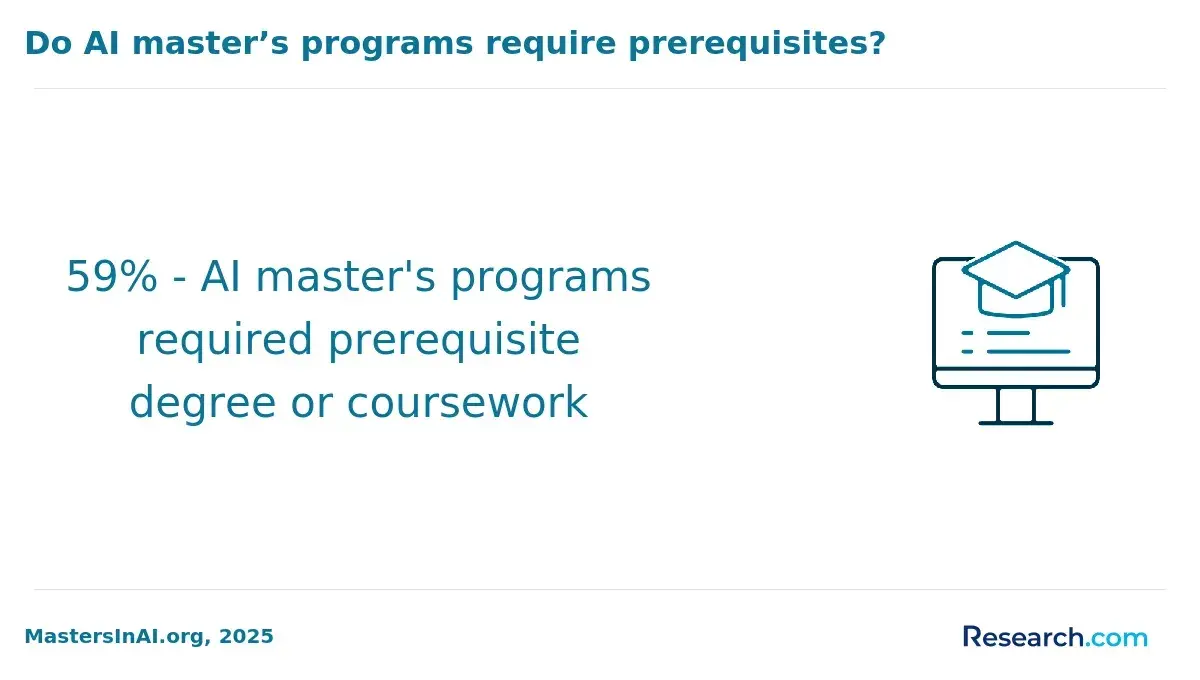
Admission to AI governance programs in healthcare generally requires a bachelor's degree in fields like healthcare administration, information technology, computer science, or public health. Professional experience in healthcare revenue cycle management, clinical operations, or data analytics is often expected. Advanced programs may ask for a master's degree or significant industry experience, especially for executive education tracks. Applicants typically submit a resume, letters of recommendation, and a statement of purpose outlining their interest in AI governance within healthcare.
Prerequisites usually include foundational knowledge of healthcare regulations, data privacy laws such as HIPAA, and basic AI principles. Coursework or demonstrated proficiency in areas like data management, ethics, and risk assessment is commonly required. Some programs insist on introductory courses in machine learning or healthcare informatics to ensure readiness for technical content.
With 88% of health systems using AI but only 17% having mature governance structures, training focuses on compliance, policy development, and strategic planning. Case studies and regulatory frameworks prepare candidates for real-world governance challenges. Applicants with experience in healthcare finance or revenue cycle teams should emphasize their operational and regulatory knowledge. Practical skills in AI risk identification and bias mitigation are highly valued. Some programs provide bridging modules for professionals lacking formal AI or technology backgrounds.
How long do AI governance courses for revenue cycle teams take and what do they cost?
AI governance courses for healthcare revenue cycle teams typically last between 4 and 12 weeks, depending on curriculum focus and depth. Shorter programs, around one month long, cover foundational topics like AI ethics, compliance, and data management relevant to revenue cycle functions. Extended courses of up to three months or more often include hands-on training with AI tools, risk assessment models, and regulatory guidance.
Pricing varies widely by provider, course length, and specialization. Entry-level training often starts near $500, ideal for an overview of AI in healthcare. More advanced and certification courses generally range from $1,200 to $3,000. University programs may price tuition based on credit hours or offer supplemental materials. Employers frequently subsidize or reimburse these costs due to the increasing need for AI expertise in revenue cycle roles.
The projected adoption of AI, with estimates that 35-40% of hospitals will implement AI by 2026 and 70-80% of large health systems using ambient documentation, highlights the importance of governance training. These courses focus on managing ethical and operational risks related to claims processing, patient data handling, and compliance audits.
Students should consider programs tailored to their job functions, such as:
- Modular compliance tracks centered on data privacy and HIPAA standards
- Technical courses for revenue analysts using AI-powered predictive tools
- Leadership paths covering AI policy and governance oversight
Flexible online options ensure working professionals can align training with their schedules and organizational needs.
What career outcomes, roles, and advancement paths follow AI governance training in revenue cycle?
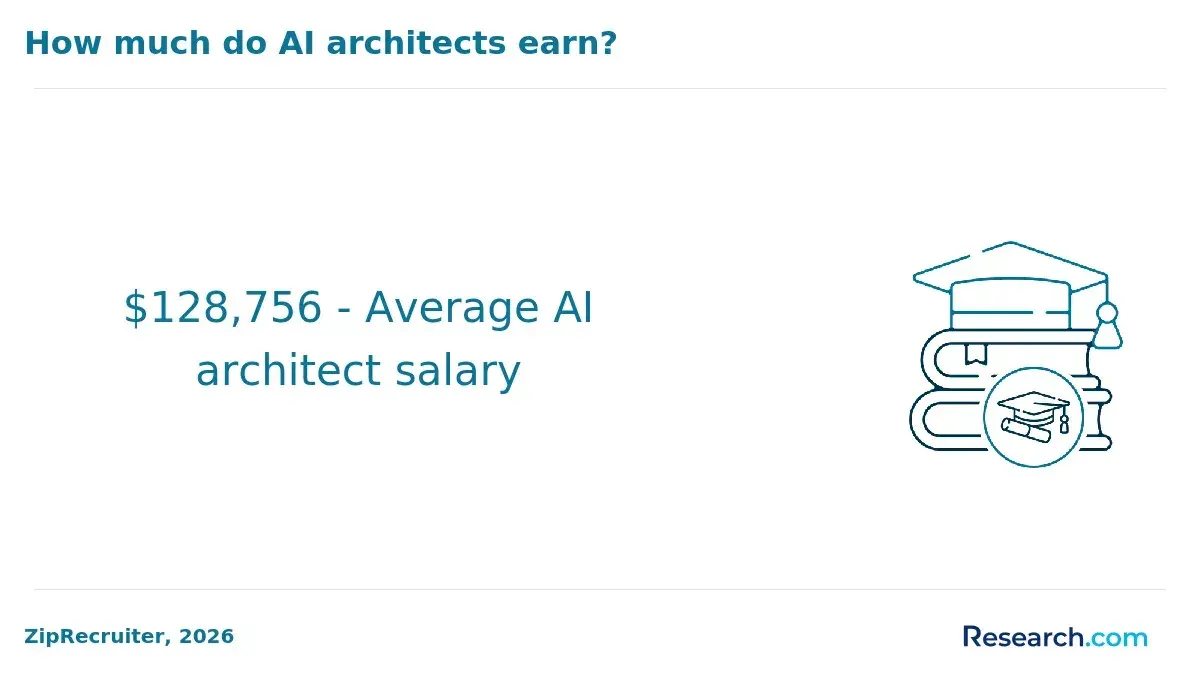
AI governance training equips healthcare revenue cycle professionals with skills critical for advancing in roles managing AI-driven financial systems. Graduates often secure positions like AI compliance analyst, revenue integrity specialist, or healthcare data governance coordinator, focusing on ethical AI use, data privacy, and regulatory compliance. By 2025, 63% of healthcare organizations adopted AI in at least one workflow, while 52% expanded its use across departments, according to BusinessWire.
Experienced professionals frequently move into leadership roles such as AI strategy manager or director of revenue cycle innovation. These roles ensure AI algorithms maintain fairness and accuracy in billing, coding, and claims processing. Knowledge in risk management and auditing AI applications enhances opportunities in compliance and consulting sectors advising healthcare providers.
Career growth can involve specialization in AI ethics, compliance auditing, or project management within healthcare finance. Addressing fragmented data-identified by 62% of healthcare leaders as a major barrier to AI scaling-prepares individuals to lead data harmonization efforts that improve reimbursement accuracy and reduce audit risks.
Entry-level candidates can expect progression to mid-level roles within 2-4 years by combining domain expertise with AI governance skills. Certifications in healthcare AI ethics or data governance, along with collaboration experience across IT, legal, and clinical teams, strengthen advancement prospects in this evolving field.
Are there certifications or professional standards for AI governance in healthcare revenue cycle?
Emerging certifications and professional standards are now targeting AI governance in healthcare revenue cycle management. These credentials address ethical AI use, data privacy, regulatory compliance, and transparency specific to financial healthcare operations. Leading organizations such as the American Health Information Management Association (AHIMA) and the Healthcare Information and Management Systems Society (HIMSS) have developed programs with AI governance modules tailored for revenue cycle professionals.
Key focus areas include algorithmic bias mitigation, auditing AI-driven claims processing, compliance with HIPAA and the 21st Century Cures Act, and protecting patient financial data. For instance, HIMSS offers training in data governance with an emphasis on AI decision-making oversight, while AHIMA provides certifications that emphasize healthcare data integrity essential for billing and coding AI applications.
Healthcare systems increasingly demand standardized AI governance. Beckers Hospital Review reports that 70% of health systems feel more comfortable sharing data to support AI models with trusted vendors, underscoring the need for validated frameworks.
Professionals aiming to lead AI governance should pursue certifications that cover AI risk management and operational impact, combined with practical expertise in healthcare compliance and revenue cycle analytics. This blend ensures responsible AI strategy implementation in healthcare finance.
Other Things You Should Know About Artificial Intelligence
Bias in artificial intelligence can lead to inaccurate predictions and unfair treatment of data related to patient billing and insurance claims. If the training data is not representative or contains historical disparities, AI models may perpetuate these issues, resulting in errors or inequities in revenue cycle decisions. Proper governance includes identifying and mitigating bias to ensure fair and accurate outcomes.
Several 2027 AI governance courses highlight the importance of data privacy, including those offered by Stanford University and MIT. These courses focus on ethical data management practices, ensuring compliance with regulations like HIPAA, and understanding the implications of data breaches in healthcare revenue cycles.
Yes, artificial intelligence can enhance fraud detection by analyzing patterns and anomalies in billing data that might be difficult for humans to identify. Machine learning algorithms can flag suspicious activities such as duplicate claims or incorrect coding. Effective AI governance ensures these systems are regularly updated and audited to maintain accuracy and compliance.
One major challenge is ensuring compatibility between AI technologies and legacy revenue cycle systems, which may require significant technical adjustments. Additionally, staff may need training to work effectively with AI tools, and organizations must manage potential disruptions during implementation. Strong governance helps address these challenges by setting clear policies and support structures for integration.
References
- Key Elements of an AI Governance Program in Healthcare https://www.sheppard.com/insights/blogs/key-elements-of-an-ai-governance-program-in-healthcare
- How AI is Revolutionizing Revenue Cycle Management https://cpamedicalbilling.com/how-ai-is-revolutionizing-revenue-cycle-management/
- Responsible AI in Healthcare Revenue Cycle https://www.r1rcm.com/industry-insights/responsible-ethical-ai-the-future-of-revenue-cycle-management
- The Revenue Cycle of the Future: AI boom and workflow redesigns accelerate rev cycle transformation https://www.hfma.org/revenue-cycle/the-revenue-cycle-of-the-future-ai-boom-and-workflow-redesigns-accelerate-rev-cycle-transformation/
- AI Governance Career Guide - EvalCommunity Academy https://academy.evalcommunity.com/ai-governance-career-guide/
- Top AI Revenue Cycle Management Tools in 2026 https://www.rapidclaims.ai/blogs/top-ai-revenue-cycle-management-tools
- Top 10 Healthcare Revenue Cycle Management Companies in the USA (2026 Guide) https://www.combinehealth.ai/blog/ai-tools-for-revenue-cycle-management
- Top 10 Revenue Cycle Management Certification Providers for 2026 https://www.aptarro.com/insights/top-revenue-cycle-management-certification-providers
- Guide | The Impact and Future of Generative AI in RCM | ADS https://www.adsc.com/generative-ai-in-revenue-cycle-management
- AI for healthcare revenue cycle management | Charta Health https://www.chartahealth.com/resources/ai-healthcare-revenue-cycle