2027 Best AI Courses for SQL Professionals With Certificates

Co-Founder and Chief Data Scientist
Many SQL professionals face challenges transitioning into roles that require advanced artificial intelligence skills due to the gap between database management and AI expertise. This obstacle often limits career growth despite strong data handling backgrounds. Bridging this gap is essential as AI increasingly integrates with data analytics and business intelligence, amplifying demand for interdisciplinary knowledge.
This article explores the best AI courses offering certification tailored for SQL professionals. It aims to guide learners toward flexible, accredited programs that enhance AI competencies, facilitating successful career pivots into the evolving tech landscape.
Key Things You Should Know
- Top AI courses for SQL professionals in 2026 emphasize integrating machine learning with database management, boosting data-driven decision-making skills essential for evolving tech roles.
- Industry demand for AI-skilled SQL experts rose by 38% from 2024 to 2025, reflecting increased adoption of automation and predictive analytics in database environments.
- Certifications from accredited programs enhance career prospects, with 72% of hiring managers favoring candidates showing formal AI and SQL combined expertise.
Advance Your Career with AI Online Courses
Artificial Intelligence: Implications for Business Strategy
This program provides an introduction to Artificial Intelligence and their implications for business strategy. Earn an official digital certificate.

Oxford Artificial Intelligence Programme
Explore this Oxford Artificial Intelligence programme offered in a flexible learning environment and explore topics like machine learning, automation, and robotics.

Implementing Agentic AI: Building Your Organizational Playbook
This online MIT Agentic AI course offers a practical approach to deploying AI agents in your organization, including a custom playbook. 3 weeks, exclusive launch price.

AI Adoption: Driving Business Value and Impact
This online MIT AI Adoption: Driving Business Value and Impact offers practical frameworks to close the gap between AI potential and business reality.

Artificial Intelligence in Pharma and Biotech
Discover the applications and limitations of artificial intelligence in pharma and biotech with this MIT online short course.

What makes an AI course specifically valuable for SQL and database professionals?
A valuable AI course tailored for SQL and database professionals must blend machine learning techniques for database professionals with practical applications. Emphasis should be placed on integrating AI models directly within SQL databases to enable automated data retrieval, transformation, and predictive analytics. Courses that teach professionals to optimize SQL queries specifically for AI workloads or to implement AI-driven anomaly detection in extensive datasets address vital industry demands.
Such programs need to tackle challenges unique to database environments, including handling large-scale structured data efficiently and maintaining data quality to ensure AI model accuracy. Crucial skills include building data pipelines that combine SQL with AI frameworks, such as Python libraries for machine learning. Students should learn to write advanced SQL queries supporting AI features like real-time recommendations or fraud detection, which significantly enhance their marketability.
The career impact of mastering AI applications for SQL database optimization is substantial. According to LinkedIn's 2024 Future of Work Report, AI-related skills are among the fastest growing, with job postings mentioning "AI" or "generative AI" rising 36% year-over-year and applications increasing by 17%. Professionals combining SQL expertise with AI capabilities gain a notable competitive edge in roles like AI-enriched data engineering, database administration, and analytics.
Courses often include hands-on projects applying AI algorithms to SQL databases and offer certifications validating interdisciplinary skills. Those seeking to evaluate affordable and recognized AI and data science education options might consider rankings such as the data science master rank.
Advance Your Career with AI Online Courses
Artificial Intelligence: Implications for Business Strategy
This program provides an introduction to Artificial Intelligence and their implications for business strategy. Earn an official digital certificate.
Oxford Artificial Intelligence Programme
Explore this Oxford Artificial Intelligence programme offered in a flexible learning environment and explore topics like machine learning, automation, and robotics.
Implementing Agentic AI: Building Your Organizational Playbook
This online MIT Agentic AI course offers a practical approach to deploying AI agents in your organization, including a custom playbook. 3 weeks, exclusive launch price.
Which AI certificates are best for SQL analysts, developers, and data engineers?
The best artificial intelligence certification programs for SQL professionals focus on integrating AI tools with advanced data skills, emphasizing practical, hands-on learning. Certifications like the Microsoft Certified: Azure AI Fundamentals and Google Cloud Professional Data Engineer offer solid foundations in AI concepts combined with SQL and data engineering expertise.
These programs teach AI-driven data processing, machine learning deployment, and AI-enhanced SQL tools applied to real-world workflows.
Top AI certificates for SQL analysts and data engineers include IBM's AI Engineering Professional Certificate and DataCamp's AI for SQL Users. These credentials blend SQL proficiency with AI techniques such as natural language processing and predictive analytics. They also emphasize practical experience through labs focused on AI-augmented SQL queries and API integration in database environments.
With 61% of hiring managers prioritizing skills and applied experience over traditional degrees, per Coursera's 2024 Global Skills Report, candidates should seek certifications featuring project-based assessments and real datasets. Favored programs typically cover AI model training, optimization, deployment, and SQL performance tuning.
Career focus matters: analysts benefit from AI-driven data visualization paired with SQL data extraction, whereas data engineers require certificates focusing on AI pipeline automation and scalable infrastructure to support AI workloads. Practical applications include AI-enhanced anomaly detection in SQL logs, predictive customer segmentation using SQL-featured AI models, and automated query optimization using machine learning.
For those comparing educational expenses, the mechanical engineering degree online cost offers insight into affordability benchmarks when considering advanced technology training paths.
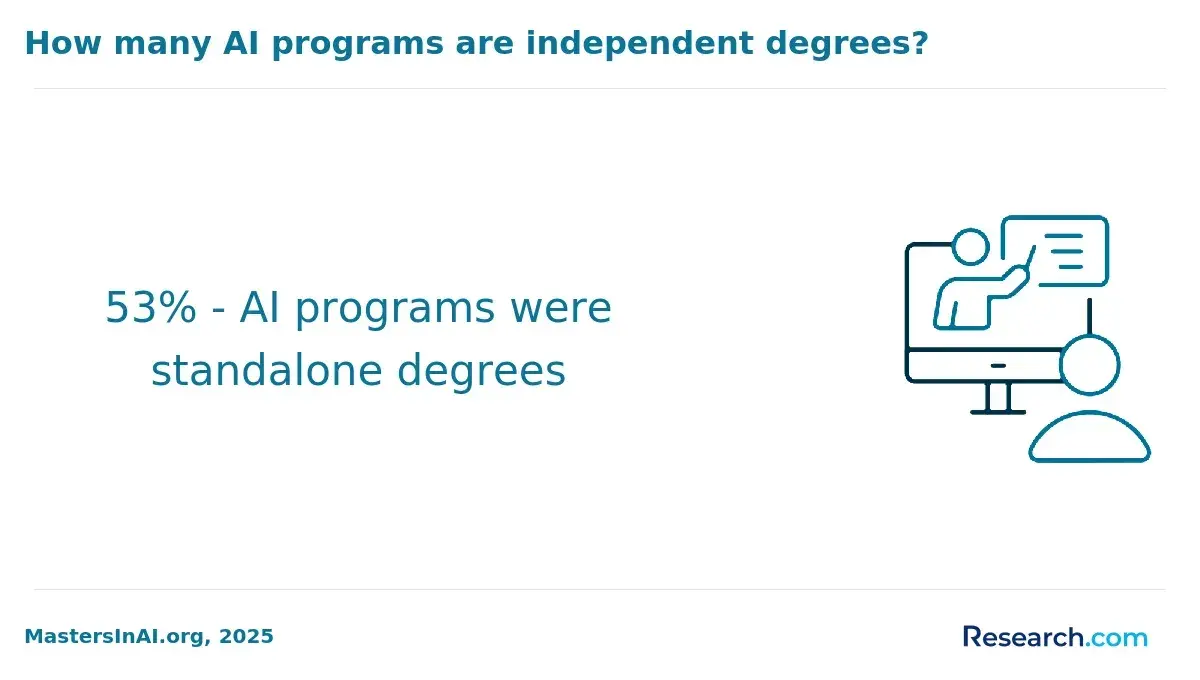
How do AI courses for SQL professionals differ from general AI and data science programs?
AI training tailored for SQL professionals focuses on integrating machine learning and automation within database management and query optimization. Unlike broader data science programs, these specialized AI courses enhance SQL skills by applying AI-driven tools such as predictive analytics on structured data, natural language querying, and automated data cleaning within SQL environments.
This approach distinctly separates them from general AI courses that emphasize statistical modeling, algorithms, and handling unstructured data. Core differences include a stronger emphasis on:
- Applying AI techniques specifically to relational databases rather than general-purpose data sets
- Leveraging AI to optimize SQL query performance and streamline data workflows
- Deploying AI-powered features in existing SQL tools like Microsoft SQL Server, Oracle, or PostgreSQL
- Understanding integration of AI models with SQL for real-time business intelligence
Specialized AI courses vs general data science programs reveal a practical focus; for instance, embedding machine learning predictions directly into SQL queries to enhance business decision-making. This benefits database administrators and data analysts aiming to maximize value from transactional and operational data.
Reports show learners finishing entry-level AI certificates experienced a median salary increase of 13% within 12 months, highlighting the growing value of AI fluency in SQL-heavy roles.
Prospective students should prioritize courses offering real-world SQL-AI applications and certification to advance their careers in data-driven industries. To explore advanced study options, consider the best online data science masters programs available.
What core AI and machine learning skills should SQL professionals learn first?
SQL professionals benefit from mastering core AI and machine learning skills for SQL professionals that complement their deep data knowledge. Key techniques include data preprocessing steps like cleaning, normalization, and feature engineering, which ensure machine learning models receive high-quality input. Proficiency in supervised learning algorithms such as linear regression, logistic regression, decision trees, and random forests is essential, as these models frequently support business analytics integrated with SQL workflows.
Essential machine learning techniques for SQL experts also involve understanding unsupervised learning methods like clustering and dimensionality reduction, broadening their ability to detect patterns without labeled data. Leveraging SQL extensions such as Microsoft's SQL Server Machine Learning Services enables model training and scoring directly within databases, improving efficiency by minimizing data transfers.
Practical experience with Python or R is important for implementing advanced workflows using libraries like scikit-learn or TensorFlow. In addition, familiarity with cloud AI platforms-particularly Azure AI services-adds significant value; roles requiring Azure data and AI skills command up to 9% higher salaries in the U.S. tech market.
For professionals exploring further education options, exploring electrical engineering programs online for veterans can open alternative pathways.
SQL professionals should also grasp model evaluation metrics such as accuracy, precision, recall, and AUC-ROC for rigorous predictive performance assessment. An understanding of basic neural networks and deep learning concepts supports expansion into advanced AI applications, enhancing their analytical toolkit.
Developing these skills positions SQL experts at the center of AI-driven environments, combining their database expertise with modern AI capabilities for career growth.
How do online, hybrid, and campus AI programs compare for working SQL professionals?
Online, hybrid, and campus AI programs each deliver unique benefits for working SQL professionals tailored to their schedules and goals. Online formats provide maximum flexibility through asynchronous courses and live virtual sessions, ideal for those balancing work and study on irregular hours. They often include affordable options and broad access to multi-cloud AI + SQL curriculum.
Hybrid programs mix online learning with occasional on-campus sessions, offering hands-on experience and peer interaction while retaining flexibility. This approach suits professionals aiming to develop practical skills through labs or workshops with minimal work disruption. For example, weekend intensive modules paired with online theory combine convenience with direct mentorship.
Campus-based programs provide immersive, full-time environments emphasizing face-to-face interaction, networking, and access to campus resources. Though less convenient for full-time workers, these programs benefit those seeking rapid skill acquisition or career shifts needing deep engagement and credential prestige.
According to Skillsoft's 2024 IT Skills and Salary Report, professionals certified in AI and SQL across AWS, Azure, and GCP earn on average 13% higher salaries compared to uncertified peers. Choosing the right format depends on individual circumstances, time commitment, and access to multi-cloud AI content essential for maximizing career growth.
What accreditation and industry recognition should AI courses for SQL professionals have?
AI courses for SQL professionals should have accreditation from recognized organizations like ABET, AACSB, or regional U.S. accreditation agencies to guarantee curriculum quality. Professional recognition is strengthened when certificates come with endorsements from leading tech companies such as Microsoft, Google, or IBM, ensuring the training aligns with current industry standards and tools.
Alignment with industry frameworks and standards from associations like the Data Management Association (DAMA) or the Association for Computing Machinery (ACM) is important. Courses that integrate AI Ethics Guidelines by IEEE or modules based on the National Institute of Standards and Technology (NIST) recommendations help learners stay compliant with evolving AI regulations.
Practical validation matters greatly. Effective courses often include hands-on projects using tools like GitHub Copilot, which a recent report highlighted for improving developer task completion speed by 55% and reducing cognitive load by 27%. Certificates demonstrating proficiency with such AI-assisted coding tools are highly valued by employers seeking productivity improvements.
Prospective students should look for credentials stating clear skills acquired, such as AI-driven database optimization or SQL query automation with AI tools. Transparent assessment methods and final project evaluations further enhance certificate credibility and practical relevance.
What are typical admission requirements and prerequisites for AI courses targeting SQL users?
Admission to AI courses for SQL professionals commonly requires a solid foundation in SQL alongside basic programming skills, typically in Python or R. Candidates should be familiar with database management, querying, and relational database principles. A working knowledge of statistics and linear algebra is often expected, as these mathematical areas support understanding of machine learning algorithms within SQL data workflows.
Prerequisites usually include completing introductory data science or programming courses to prepare students for intermediate topics like data cleaning, feature engineering, and deployment of models in SQL environments. Experience with business intelligence tools such as Tableau or Power BI is sometimes necessary to manage visualization aspects linked to AI outputs.
Applicants without formal backgrounds may need to complete preparatory modules on SQL basics, Python programming, and foundational statistics. This step is increasingly important given that 88% of large enterprises invest in advanced analytics and AI initiatives, yet only 41% consider themselves data-driven, according to the 2024 NewVantage Partners Data and AI Leadership Executive Survey.
This highlights the need for professionals to bridge expertise gaps in AI and machine learning while leveraging their SQL proficiency.
Practical experience with databases and version control systems like Git can strengthen applications. Some programs also ask for portfolios showcasing projects that integrate SQL, machine learning, and dashboards-for example, a simple ML model predicting customer churn based on queried datasets.
How long do AI certificate programs for SQL professionals take, and what do they cost?
AI certificate programs for SQL professionals vary in length from a few weeks to a full year, depending on the curriculum and format. Bootcamp-style courses typically last 8 to 12 weeks and focus on practical skills such as integrating AI models with SQL databases and automating data workflows. More comprehensive certificates, often offered by universities or professional organizations, cover machine learning, natural language processing, and data engineering within SQL environments over several months.
Costs differ widely based on program level. Entry-level online certificates generally range from $1,000 to $3,000, making them affordable for many working professionals. More advanced executive and graduate-level programs, especially those affiliated with recognized institutions, can cost between $5,000 and $15,000. These higher-tier options frequently include advanced subjects like AI-driven data analytics, predictive modeling, and ethical issues in data science.
Choosing the right program depends on your career goals and schedule. Shorter courses offer quick certification and hands-on projects for immediate skill application. Longer, strategic programs benefit those aiming for leadership or specialized analytics roles, supported by research showing strong employer demand for graduates of AI and analytics certificates.
Financial options such as payment plans or employer tuition assistance may be available. Assessing program accreditation and alignment with industry needs is essential to ensure your investment advances your career effectively.
What careers, job titles, and responsibilities can AI-trained SQL professionals pursue?
AI-trained SQL professionals have numerous career paths blending data management, analytics, and machine learning expertise. Common roles include data analyst, data engineer, business intelligence developer, machine learning engineer, and database administrator. Success in these positions relies on strong SQL capabilities paired with AI knowledge to automate queries, optimize data workflows, and develop predictive models.
Responsibilities differ by job but often include designing efficient data pipelines, creating AI-powered dashboards, and implementing algorithms to improve data accuracy and business decisions. For instance, data engineers frequently use AI to automate data cleaning and preparation, while machine learning engineers extract and validate training data within large SQL databases.
Specializations such as AI data strategist and AI operations analyst focus on aligning database design with AI objectives and monitoring AI outputs, respectively. Junior and mid-level professionals typically work on database optimization for AI workloads and integrating AI APIs that enhance data retrieval and storage.
Accessible, budget-friendly AI and SQL training options are essential for professionals reskilling to meet evolving job demands. The World Economic Forum highlights that a significant portion of core job skills will be disrupted soon, underscoring the need for affordable upskilling opportunities for those aiming to stay competitive in AI-enhanced SQL careers.
What salary ranges and job outlook can SQL professionals expect after adding AI skills?
SQL professionals with artificial intelligence skills are seeing notable salary growth and expanded job opportunities. Entry-level AI-focused data engineers typically earn between $85,000 and $110,000 annually. Those with combined SQL and AI expertise and experience can command salaries from $120,000 to $160,000 or higher. This reflects an increasing premium for AI competency in database management, machine learning integration, and automation workflows.
The demand for SQL experts who specialize in AI is strong, driven by organizations' reliance on data-driven decision-making. According to IBM's 2024 Global AI Adoption Index, 59% of IT professionals have accelerated AI adoption recently, but 35% report a skills shortage, highlighting high demand for professionals bridging SQL and AI capabilities.
Career paths include roles such as machine learning engineer focused on databases, AI data engineer, and AI solutions architect. These positions require fluency in SQL and AI tools, often involving AI model deployment, data pipeline optimization, and predictive analytics enhancement.
Key steps to advance include earning certifications in AI-integrated data engineering, mastering programming languages like Python or R for AI deployment, and gaining experience with platforms such as TensorFlow or PyTorch in database contexts. Upskilling in these areas frequently boosts salaries by $20,000 to $50,000 versus traditional SQL roles.
Acquiring artificial intelligence proficiency positions SQL professionals well for thriving in evolving, data-centric industry environments.
Other Things You Should Know About Artificial Intelligence
While programming skills are highly beneficial for learning artificial intelligence, they are not always mandatory to get started. Many introductory AI courses for SQL professionals focus on foundational concepts and use tools that require minimal coding. However, to implement advanced algorithms and customize AI models, understanding programming languages like Python or R becomes essential.
Ethical considerations in artificial intelligence include issues around bias, privacy, transparency, and accountability. AI systems trained on biased data can perpetuate unfair outcomes, while concerns about data privacy arise when large datasets are used. Developers and users must ensure AI applications are transparent and accountable to prevent misuse or harm.
In 2027, top AI courses for SQL professionals include "AI for SQL Experts" by Coursera, "Machine Learning for Data Analysis" on edX, and "SQL Skills for AI Applications" by Udemy. These courses offer certificates upon completion and are designed to integrate SQL skills with cutting-edge AI techniques.
Continuous learning is critical in artificial intelligence due to the rapid pace of technological advancements and evolving methodologies. Staying updated with new algorithms, tools, and ethical standards enables professionals to maintain competitive skills. Many AI courses offer ongoing access to updated materials or communities to support lifelong learning.
References
- 11 Best SQL Certifications in 2026 (+ When to Skip Them) https://www.dataquest.io/blog/best-sql-certifications/
- SQL Certification Course with AI & ChatGPT [English] - TechVidvan https://techvidvan.com/sql-course-multilingual/
- 12 Best SQL Certifications in 2026 - Mimo https://mimo.org/blog/best-sql-certifications
- Online vs Campus Artificial Intelligence Degree Programs: Complete Comparison https://hakia.com/compare/artificial-intelligence-online-vs-campus/
- AI Courses - Azure, Fabric, Power BI & Python AI Training https://sqlschool.com/ai/
- AI certificates | edX https://www.edx.org/certificates/ai-certificates
- AI & Machine Learning Course Fees in 2026: Complete Guide https://www.almabetter.com/bytes/articles/ai-and-ml-course-fees-2026
- AI vs DS: Understanding the Differences and Overlaps | Flatiron School https://flatironschool.com/blog/ai-vs-ds-understanding-the-differences-and-overlaps/
- SQL Training Courses https://www.learningtree.com/courses/data-analytics-and-artificial-intelligence/sql/
- 16 Artificial Intelligence Career Paths https://www.calmu.edu/news/artificial-intelligence-career-paths