2027 AI Agent Courses vs LLM Courses

Co-Founder and Chief Data Scientist
Professionals seeking to transition into artificial intelligence often face confusion about whether to pursue AI agent courses or large language model (LLM) courses. Each offers distinct skills but caters to different industry demands and technical focuses. Choosing the wrong course can delay career progress and reduce job market relevance. This article compares these educational paths, clarifying their core differences, practical applications, and potential career outcomes. It aims to guide prospective students and career changers toward informed decisions that align with evolving AI industry requirements and personal professional goals.
Key Things You Should Know
- AI agent courses emphasize practical development of autonomous systems, while LLM courses focus on natural language understanding and generation, reflecting distinct career applications in 2026.
- Data from 2025 shows AI agent programs grew 22% annually, outpacing 14% growth in LLM courses, indicating rising industry demand for multi-functional AI systems.
- Typical AI agent curricula include robotics, decision-making, and reinforcement learning, whereas LLM courses prioritize linguistics, large-scale pretraining, and transformer architectures.
Advance Your Career with AI Online Courses
Artificial Intelligence: Implications for Business Strategy
This program provides an introduction to Artificial Intelligence and their implications for business strategy. Earn an official digital certificate.

Oxford Artificial Intelligence Programme
Explore this Oxford Artificial Intelligence programme offered in a flexible learning environment and explore topics like machine learning, automation, and robotics.

Implementing Agentic AI: Building Your Organizational Playbook
This online MIT Agentic AI course offers a practical approach to deploying AI agents in your organization, including a custom playbook. 3 weeks, exclusive launch price.

AI Adoption: Driving Business Value and Impact
This online MIT AI Adoption: Driving Business Value and Impact offers practical frameworks to close the gap between AI potential and business reality.

Artificial Intelligence in Pharma and Biotech
Discover the applications and limitations of artificial intelligence in pharma and biotech with this MIT online short course.

What is the difference between AI agent courses and LLM courses for students?
AI agent training programs for students focus on building autonomous systems that interact dynamically with their environments. These programs include topics such as multi-agent systems, reinforcement learning, decision-making algorithms, and robotics integration. Students develop skills to create intelligent agents capable of complex tasks like self-driving cars and adaptive virtual assistants. Comfort with algorithmic problem-solving and advanced programming is essential for success in these courses.
By contrast, LLM courses concentrate on large language models like GPT and BERT, emphasizing natural language processing, model architectures, ethical considerations, and applications such as text generation and summarization. These programs often cover data preparation and prompt engineering, appealing to those interested in linguistics, data science, and AI applications involving text and communication.
- AI agent courses prepare graduates for fields like autonomous vehicles, robotics, and adaptive interfaces.
- LLM courses open opportunities in AI-powered content creation, customer support automation, and language-based analytics.
- Both fields require strong computational skills but diverge in domain-specific tools and expertise.
The World Economic Forum's Future of Jobs Report 2025 projects over 30% growth in AI and machine-learning roles between 2025 and 2027, emphasizing the value of specialized skills. Understanding the differences between AI agent courses and LLM courses helps students align their education with career goals. For more on career pathways, explore the AI career path.
Advance Your Career with AI Online Courses
Artificial Intelligence: Implications for Business Strategy
This program provides an introduction to Artificial Intelligence and their implications for business strategy. Earn an official digital certificate.
Oxford Artificial Intelligence Programme
Explore this Oxford Artificial Intelligence programme offered in a flexible learning environment and explore topics like machine learning, automation, and robotics.
Implementing Agentic AI: Building Your Organizational Playbook
This online MIT Agentic AI course offers a practical approach to deploying AI agents in your organization, including a custom playbook. 3 weeks, exclusive launch price.
Which careers are AI agent courses versus LLM courses best suited to support?
AI agent courses best support careers that focus on developing autonomous systems interacting dynamically with their environments. These programs benefit robotics engineers building delivery drones, developers creating customer service chatbots with proactive behaviors, and specialists designing multi-agent simulations for training. Key skills include control theory, reinforcement learning, sensor integration, and real-time decision-making. This aligns well with the best careers supported by AI agent training, particularly in robotics, digital assistants, and game AI.
By comparison, job opportunities for LLM course graduates center on natural language processing, content generation, and data analysis. Positions like generative AI engineers, computational linguists, and AI research scientists depend heavily on expertise in transformer architectures, fine-tuning large language models, and managing extensive datasets. Data from Levels.fyi indicates that generative AI and LLM engineers in the U.S. earn median total compensation 45-50% higher than general software engineers, with top roles exceeding $500,000 at major tech companies, reflecting the strong demand for these skills.
LLM professionals often tackle automated content creation, sentiment analysis, and AI-assisted coding challenges. AI agent experts focus more on robotics navigation, multi-agent coordination, and autonomous system control. Prospective students should align courses with their career goals: select AI agent paths for sensor-driven, interactive AI fields or pursue LLM studies for language-centric, high-compensation roles in AI-driven content and data intelligence. Those interested in expanding technical expertise might explore related engineering degrees online.
How do AI agent and LLM curricula differ in skills, tools, and project work?
AI agent and LLM curricula emphasize different skills, tools, and project work. AI agent courses focus on integrating multiple AI components, including large language models, to design autonomous systems interacting with real-world environments. Key skills include system design, decision-making algorithms, and multi-modal data processing. Students use reinforcement learning frameworks, task automation platforms, and APIs for business systems integration. Projects often involve building agents for end-to-end tasks like scheduling, inventory management, or personalized customer service, reflecting industry demand for actionable AI. This distinction is captured in AI agent course skill development comparisons, highlighting practical system integration.
Conversely, LLM training tools and project differences center on natural language understanding, generation, and optimization. These courses emphasize linguistic theory, transformer architectures, fine-tuning, prompt engineering, and bias mitigation. Typical tools include Hugging Face libraries, cloud-based training setups, and text analytics platforms. Project work focuses on chatbots, summarization tools, or language translation systems, prioritizing textual analysis over autonomous decision-making.
A 2025 IBM survey shows 61% of organizations piloting generative AI plan to deploy AI agents capable of autonomous business actions, while only 38% expect to use LLMs solely for text generation and Q&A. This highlights the push toward embedding autonomous capabilities beyond pure language tasks.
Students pursuing Artificial Intelligence education should also explore practical paths like online cyber security degrees which complement AI skills with software engineering and multitasking expertise.
What types of degrees and certificates offer focused training in AI agents and LLMs?
Focused training in AI agents and large language models (LLMs) is often delivered through specialized degrees and certification programs in computer science, data science, and machine learning. Many universities offer graduate and undergraduate tracks covering AI agent architectures, natural language processing, and LLM development. For example, master's degrees in AI or machine learning typically include courses on reinforcement learning, conversational AI, and transformer models, which are crucial for building advanced agents and LLMs.
Professional certificate programs focused on these technologies have become increasingly popular with working professionals. Platforms like Coursera and edX provide tailored certificates in generative AI and LLM applications that emphasize practical skills such as fine-tuning language models or deploying AI agents in real-world environments. According to Coursera's Global Skills Report 2025, enrollments in generative AI and LLM-related courses rose by 72% year-over-year, highlighting demand for ai agent certification programs.
Specialized diplomas in AI and data science often incorporate modules on LLMs and agent-based systems. Executive education programs and bootcamps also condense these topics into intensive, short-term courses for professionals seeking rapid upskilling. Core competencies include deep learning architectures, prompt engineering, and AI ethics, all vital for emerging AI agent deployments.
Prospective students should seek degrees in large language model technologies that explicitly highlight natural language processing, reinforcement learning, and generative AI. Hands-on experience through projects and labs focusing on agent design or LLM customization significantly improves employability. For those curious about career entry points, reviewing how to become an AI trainer with no experience can provide valuable insights.
How do online AI agent and LLM programs compare with campus-based options?
Online AI agent and large language model (LLM) programs provide flexible, up-to-date learning experiences that often surpass campus-based courses in accessibility and speed of curriculum updates. With rapid advancements in AI, online courses offer immediate exposure to the latest frameworks and cloud platforms through hands-on projects, enabling learners to apply skills in real-world scenarios on their own schedules.
In contrast, campus-based programs generally offer stronger theoretical foundations and direct mentoring from expert faculty, along with valuable networking opportunities within academic and industry communities. However, these programs typically demand longer commitments and adjust curriculum less frequently, which can be a disadvantage in fast-evolving AI fields.
For working professionals, online AI and LLM courses are particularly practical. Studies such as the Gallup-Amazon Web Services report show that workers who complete digital skills training in AI and cloud technologies see significant salary increases and productivity gains.
- Online courses excel in flexibility, current content, and practical cloud-based AI tool use.
- Campus programs offer theoretical depth, faculty guidance, and research access.
- Working professionals benefit most from agile online training for immediate career enhancement.
What admission requirements and prior experience do AI agent and LLM programs expect?
Admission requirements for ai agent and large language model (LLM) programs vary widely, reflecting distinct educational goals and student profiles. AI agent courses, often offered in bootcamp formats, usually require applicants to have basic programming skills, particularly in Python, plus foundational machine learning knowledge. These bootcamps typically accept candidates with bachelor's degrees in STEM fields or equivalent practical experience. Some waive formal degree requirements if applicants pass coding challenges or skills assessments. This pathway suits professionals aiming for rapid skill development.
By contrast, LLM graduate programs generally demand a bachelor's degree in computer science, engineering, mathematics, or closely related fields. Admissions often include GRE scores, letters of recommendation, and prerequisite coursework in calculus, linear algebra, and probability. Prior research experience and familiarity with deep learning frameworks such as TensorFlow or PyTorch are advantageous. Those with software development backgrounds but no formal graduate education may find traditional LLM programs harder to access.
Cost differences highlight program distinctions: comprehensive online ai/LLM engineer bootcamps range from $6,000 to $16,000, according to CourseFacts 2025 data, while typical U.S. graduate computer science tuition averages $20,000 to $30,000 annually. Bootcamps provide financially accessible, practical options for non-traditional candidates, while graduate programs emphasize theoretical depth and research preparation.
- Bootcamps focus on hands-on skills and fast entry into ai careers
- Graduate programs offer in-depth theory and research opportunities
- Cost and admission requirements vary significantly between formats
How long do AI agent and LLM programs take, and what do they typically cost?
AI agent and large language model (LLM) courses vary significantly in length and price, reflecting different learning goals and formats. Short foundational courses typically last 6 to 12 weeks, ideal for working professionals seeking targeted skills quickly. More extensive bootcamps and certificate programs may range from 3 to 6 months. University-level programs or specializations often span an academic semester or longer, with master's and graduate degrees incorporating these topics over 1 to 2 years.
Course costs range from free or affordable online modules to thousands of dollars for intensive options. Popular platforms like Coursera and edX offer courses priced between $200 and $800. Bootcamps focusing on LLM applications and AI agent development can cost between $5,000 and $15,000, depending on the provider and included support services. Graduate-level study may exceed $20,000 annually at public institutions, with private universities charging more.
According to Deloitte's 2025 State of Generative AI in the Enterprise report, 57% of large enterprises increased their budget on generative AI and agent training, dedicating an average of 19% of their AI budgets to workforce upskilling. Employers largely prefer shorter, skills-focused courses that emphasize practical training in AI agent orchestration and LLM fine-tuning.
Prospective students should balance cost, duration, and career objectives, choosing between rapid skill acquisition or in-depth academic study. Many programs combine self-paced and live instruction to accommodate working professionals.
How can students compare accreditation and quality standards for AI agent and LLM programs?
Students evaluating ai agent versus large language model (LLM) programs should first confirm institutional accreditation from U.S. Department of Education- or CHEA-approved agencies. Accreditation guarantees a baseline of educational quality, while partnerships with industry and advisory boards help ensure curricula reflect current technology trends.
Programs focused on ai agents emphasize agentic workflows, enabling autonomous system actions, contrasting with LLM programs centered on language model theory and application. Research from McKinsey's analysis highlights that agentic workflows can unlock up to 40% more automation potential in knowledge work than LLMs functioning mainly as text copilots. This suggests that agentic workflow training may better prepare students for evolving job markets.
Key factors for students to review include:
- Hands-on projects showcasing multi-system automation and integration aligned with agentic workflows
- Advanced courses in natural language processing, ethics, and model fine-tuning relevant to LLM expertise
- Internships or collaborations with companies developing autonomous AI agents or LLM deployments
Assessing faculty credentials, research publications, and alumni career outcomes specific to each specialization can further gauge program quality. Graduates from agent-focused programs may report stronger placement in automation or robotics roles. Students are encouraged to request syllabi, connect with current students, and compare outcome data.
Certification or micro-credential programs tied to agentic AI or advanced language model skills also serve as valuable industry-recognized credentials. These augment traditional academic accreditation by showcasing practical mastery to employers.
What are typical salaries and job outlooks for roles using AI agents and LLMs?
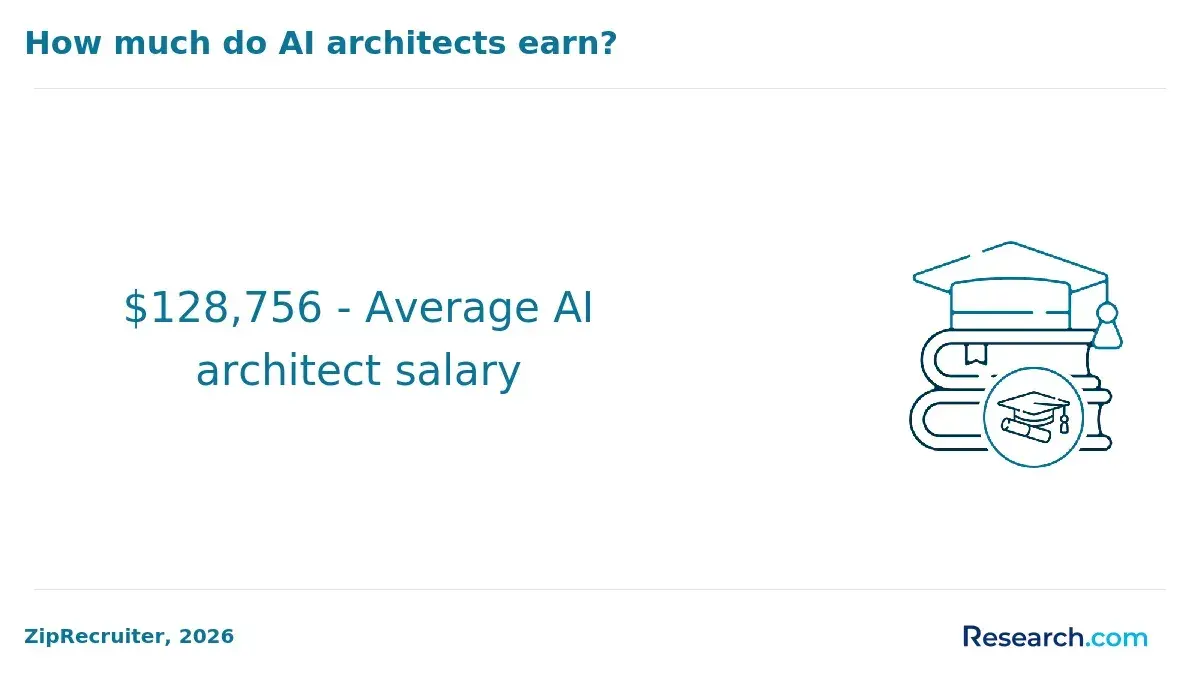
Roles involving AI agents and large language models (LLMs) offer highly competitive salaries that reflect strong industry demand. AI agent developers, who typically work with frameworks like LangChain or LangGraph, often earn between $110,000 and $140,000 annually. Senior or specialized positions can surpass $180,000, highlighting the value placed on advanced technical expertise and scarce talent.
LLM-focused roles, such as prompt engineers and model fine-tuners, generally start in the range of $100,000 to $130,000. However, many AI agent projects integrate LLMs, allowing hybrid roles to command salaries at the top of these ranges.
Job growth for AI agent framework roles is particularly notable. According to GitHub repository data summarized by LangChain, projects using agent frameworks grew over 300% year-over-year from 2023 to 2024, significantly outpacing overall generative-AI project growth. This surge indicates demand for professionals skilled in orchestrating autonomous AI workflows, beyond just developing or fine-tuning LLMs.
Success in these careers requires strong software engineering skills combined with expertise in AI model integration and automation. Continuous learning of emerging tools and frameworks remains essential, as the field evolves rapidly.
- AI agent developers: $110,000-$180,000+ annual
- LLM engineers and prompt specialists: $100,000-$130,000 annual
- Job growth for agent framework roles: 300%+ YoY increase (2023-2024)
What industry certifications and portfolios strengthen applications to AI agent and LLM roles?
Certifications and portfolios play a vital role in strengthening applications for AI agent and LLM roles, with distinct focuses depending on the path. For AI agent positions, certifications like the Certified Artificial Intelligence Professional (CAIP) or credentials from the Association for the Advancement of Artificial Intelligence (AAAI) emphasize system design, reinforcement learning, and AI integration. Portfolios that highlight projects in robotics, game platforms, or conversational AI demonstrate practical experience in autonomous systems.
Conversely, LLM roles prioritize certifications centered on natural language processing, transformer architectures, and ethical AI. Examples include the DeepLearning.AI TensorFlow Developer Certificate and specialized generative AI certifications. Effective portfolios showcase skills in fine-tuning large language models on varied datasets, developing domain-specific language models, or building chatbots.
According to a Coursera learner outcomes survey, 77% of professionals completing career-focused generative AI or LLM programs reported positive career impacts such as promotions, new roles, or pay raises within 12 months. This highlights the tangible benefits of targeted certifications for advancing in these fields.
Candidates should:
- Highlight certifications aligned with the technical demands of their desired role.
- Include portfolios with documented, relevant projects in AI agents or LLM implementation.
- Seek endorsements from recognized experts or reputable programs.
- Combine credentials with contributions to open-source AI projects or public repositories to demonstrate collaboration skills.
Other Things You Should Know About Artificial Intelligence
Python is the primary programming language used in both AI agent and LLM courses due to its extensive libraries and frameworks for machine learning and natural language processing. Other useful languages include Java, C++, and R, which serve specific purposes like performance optimization and data analysis. Familiarity with SQL and JavaScript can also be beneficial for integrating AI models into larger systems.
Ethical issues are increasingly emphasized in AI education, including topics such as bias mitigation, fairness, privacy, and accountability. Both AI agent and LLM courses usually include modules that address responsible AI development and deployment. These ethical considerations are critical for ensuring AI technologies serve people without causing harm or reinforcing inequalities.
Students in AI and LLM courses often work on applications like chatbots, recommendation systems, autonomous agents, and speech recognition. LLM courses specifically focus on natural language processing tasks such as text generation, translation, summarization, and question answering. Practical projects help students understand real-world problem solving and the integration of AI into existing workflows.
AI agent and LLM courses in 2027 are increasingly designed to be accessible to students without strong math backgrounds. Many programs emphasize foundational concepts and hands-on projects over complex mathematical theories. This approach helps ensure that learners can grasp practical applications and participate effectively in these fields.
References
- From single-agent to multi-agent: a comprehensive review of LLM-based legal agents https://www.oaepublish.com/articles/aiagent.2025.06
- AI vs ML vs LLM vs Generative AI vs Agentic AI | Galileo https://galileo.ai/blog/ai-vs-ml-llm-vs-generative-ai
- AI Agent Development Cost: Full Breakdown for 2026 - Riseup Labs https://riseuplabs.com/ai-agent-development-cost/
- NVIDIA Agentic AI LLMs Certification https://www.nvidia.com/en-us/learn/certification/agentic-ai-professional/
- AI Careers - Top AI Jobs with Education Requirements and Pay https://aidegreeprograms.org/ai-careers/
- Skills vs Tools for AI Agents: Production Guide https://www.arcade.dev/blog/what-are-agent-skills-and-tools/
- Build Real Products with LLMs, Context Engineering, RAG. https://academy.towardsai.net/courses/beginner-to-advanced-llm-dev
- Information on LLM Eligibility https://www.lsac.org/llm-other-law-program-applicants/application-process-llm-other-law-programs/information-llm
- Here is where you find a new job. Check salaries and apply. https://nofluffjobs.com/artificial-intelligence
- Mastering AI Key Concepts: AI Agents vs LLMs vs Agentic AI https://ili.digital/resource/understanding-llms-ai-agents-agentic-ai/