2027 Best AI Courses for Healthcare Workflow Redesign Teams

Co-Founder and Chief Data Scientist
Healthcare workflow redesign teams often struggle to integrate emerging technologies that enhance efficiency while maintaining patient care quality. This challenge intensifies when team members lack specialized knowledge in artificial intelligence, delaying project progress and innovation. Without targeted training, adopting AI tools can seem daunting, leading to missed opportunities for improvement.
This article reviews top AI courses designed for healthcare professionals seeking to bridge this skills gap. It highlights accessible, accredited programs that empower teams to leverage AI effectively, ultimately fostering smoother workflow transformations and better healthcare outcomes.
Key Things You Should Know
- AI courses for healthcare workflow redesign emphasize practical applications, focusing on automation, data integration, and patient care optimization to improve efficiency and outcomes in clinical settings.
- Enrollment in AI healthcare programs increased 35% from 2024 to 2025, reflecting growing demand for skilled professionals able to implement AI-driven solutions in medical environments.
- Top courses incorporate interdisciplinary training, combining healthcare knowledge with AI techniques such as machine learning, natural language processing, and predictive analytics for comprehensive skill development.
Advance Your Career with AI Online Courses
Artificial Intelligence: Implications for Business Strategy
This program provides an introduction to Artificial Intelligence and their implications for business strategy. Earn an official digital certificate.

Oxford Artificial Intelligence Programme
Explore this Oxford Artificial Intelligence programme offered in a flexible learning environment and explore topics like machine learning, automation, and robotics.

Implementing Agentic AI: Building Your Organizational Playbook
This online MIT Agentic AI course offers a practical approach to deploying AI agents in your organization, including a custom playbook. 3 weeks, exclusive launch price.

AI Adoption: Driving Business Value and Impact
This online MIT AI Adoption: Driving Business Value and Impact offers practical frameworks to close the gap between AI potential and business reality.

Artificial Intelligence in Pharma and Biotech
Discover the applications and limitations of artificial intelligence in pharma and biotech with this MIT online short course.

What is an AI course for healthcare workflow redesign, and who are these programs for?
AI courses for healthcare workflow redesign teams train professionals to integrate artificial intelligence tools like machine learning and predictive analytics to streamline healthcare operations. These programs focus on improving patient flow, resource allocation, documentation accuracy, and decision support systems within clinical environments.
Primarily aimed at healthcare managers, quality improvement specialists, clinical informaticists, and IT professionals in healthcare organizations, healthcare workflow redesign with AI training programs build skills to lead AI-driven change.
Experienced clinicians and graduates looking to merge clinical knowledge with AI insights also benefit. Course topics often include automating appointment scheduling, minimizing documentation redundancy, and enhancing real-time data analytics for patient monitoring.
Adoption of AI in healthcare workflows has grown from 28% in 2019 to 75% in 2024, yet only 15% of organizations report having personnel with sufficient AI expertise to effectively redesign workflows. This gap highlights the urgent need for targeted education to prepare teams capable of managing AI integration in complex healthcare settings.
Effective programs emphasize hands-on training using real-world healthcare data and case studies. They teach how to tackle technical, regulatory, and ethical challenges, analyze workflow bottlenecks, implement AI solutions, and measure impacts on efficiency and patient outcomes.
Those interested in applied artificial intelligence jobs will find these courses essential to advancing careers as innovators in healthcare operations.
Advance Your Career with AI Online Courses
Artificial Intelligence: Implications for Business Strategy
This program provides an introduction to Artificial Intelligence and their implications for business strategy. Earn an official digital certificate.
Oxford Artificial Intelligence Programme
Explore this Oxford Artificial Intelligence programme offered in a flexible learning environment and explore topics like machine learning, automation, and robotics.
Implementing Agentic AI: Building Your Organizational Playbook
This online MIT Agentic AI course offers a practical approach to deploying AI agents in your organization, including a custom playbook. 3 weeks, exclusive launch price.
How do AI in healthcare workflow courses differ from general healthcare informatics or data science programs?
AI in healthcare workflow redesign training programs focus on applying artificial intelligence technologies to optimize clinical and administrative processes within healthcare settings.
Unlike broader healthcare informatics or data science courses, these specialized programs emphasize practical AI tool integration, addressing issues such as electronic health record automation, patient flow, resource allocation, and predictive analytics for treatment pathways.
This focus differs markedly from healthcare workflow automation versus data science courses, which typically center on data management, interoperability, and general machine learning techniques without the same healthcare-specific context.
These AI healthcare workflow courses often include leadership components that help bridge technical development with clinical practice. Research shows hospitals where leaders undertake targeted digital and AI strategy training are 2.5 times more likely to expand AI projects beyond pilots, underscoring the value of executive education.
Many programs offer hands-on experience in AI system deployment, workflow mapping, and interdisciplinary collaboration, tackling real-world challenges including regulatory compliance, patient safety, and user adoption.
Such pragmatic training equips healthcare professionals to lead digital transformation efforts that produce measurable clinical and operational improvements. For those seeking affordable educational opportunities in technology-related fields, exploring online engineering degrees can provide foundational skills useful in AI-enhanced healthcare settings.
What types of degrees, certificates, and microcredentials prepare teams for AI-enabled workflow redesign?
Degrees, certificates, and microcredentials designed for AI healthcare certification programs for workflow redesign teams combine clinical knowledge, data science, and process improvement expertise.
Programs like master's degrees in health informatics, biomedical informatics, or healthcare administration with technology integration emphasize data analytics, machine learning fundamentals, and clinical workflow design to prepare professionals to leverage AI tools effectively.
Certificates in data science, machine learning, or AI for healthcare offer targeted upskilling without the commitment of a full degree. These include graduate certificates in AI applications for healthcare or professional certificates from universities and technical schools.
Microcredentials provide concise, skills-focused learning in areas such as predictive analytics, natural language processing in clinical data, and AI ethics in healthcare settings.
Technical training should also focus on IT and analytics staff who deploy AI systems.
According to the Gartner 2024 Healthcare Provider Digital Workforce Survey, health systems investing over $1,000 annually per employee in AI and data science training achieve a 41% faster time-to-deployment for AI clinical workflow tools compared to systems investing under $200.
This underscores the importance of comprehensive, ongoing education for technical staff alongside clinical teams.
Programs that offer practical experience in AI tool implementation and foster collaboration across disciplines are essential. Healthcare workflow redesign requires understanding both clinical priorities and data-driven decision-making, so interprofessional education, including clinicians, data analysts, and IT specialists, is increasingly valuable. For those exploring options, data science degrees provide a strong foundation in these skills.
Degrees and microcredentials in AI for healthcare process improvement equip professionals to drive innovation in clinical settings while maintaining patient-centered care.
What core curriculum should the best AI courses for healthcare workflow redesign teams include?
The core curriculum for AI in healthcare process improvement must integrate interdisciplinary knowledge bridging clinical expertise and technical skills. Key elements include data fundamentals such as data governance, cleaning, and healthcare data standards like HL7 and FHIR, which help clinicians and data scientists correctly frame and interpret clinical data for AI applications.
Applied machine learning tailored to healthcare involves supervised and unsupervised learning, natural language processing for unstructured clinical notes, and predictive modeling for patient outcomes.
Healthcare workflow redesign using artificial intelligence relies on practical training in AI tools within clinical decision support and operational workflows, emphasizing hands-on experience with real-world healthcare datasets.
Teams learn process mapping, bottleneck identification, and human factors engineering to redesign workflows that incorporate AI recommendations without disrupting care. Strong coverage of ethical, legal, and regulatory aspects is essential, focusing on patient privacy (HIPAA), algorithmic bias, and explainability.
Leadership and project management training foster cross-functional collaboration, reducing AI project failure by 32% due to better clinical alignment (World Economic Forum & Boston Consulting Group). Additional beneficial topics include interoperability standards, clinical trial design for AI validation, and change management strategies.
For those exploring broader tech education, online cybersecurity degrees for veterans offer another valuable path within healthcare IT careers.
How do online, hybrid, and campus-based AI programs for healthcare professionals compare?
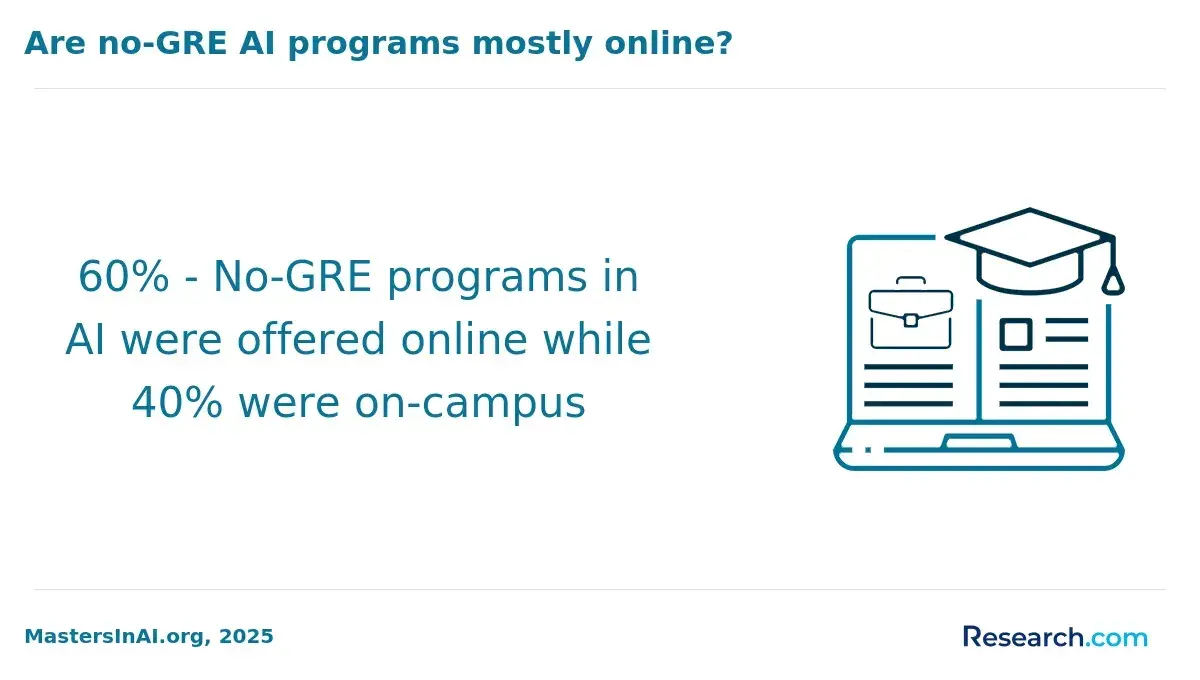
Online, hybrid, and campus-based AI programs each offer unique benefits for healthcare professionals aiming to improve workflow redesign. Online programs provide maximum flexibility with asynchronous modules designed for clinicians unable to attend live classes, though they might lack hands-on clinical exposure needed for skill application.
Hybrid options blend remote learning with in-person workshops or labs, offering convenience alongside practical experience. These programs facilitate stronger connections with faculty and peers compared to purely online formats and often include process-improvement simulations on campus.
Campus-based programs deliver immersive experiences crucial for interdisciplinary collaboration and understanding healthcare team dynamics. Participants gain direct clinical exposure, yet these programs typically require full-time commitment and possible relocation, limiting access for many working professionals.
All formats integrating methods like Lean or Six Sigma with AI-focused workflow redesign show measurable benefits. Merative's 2024 report indicates a median 25% reduction in clinician documentation time within 12 months when such combined training is used.
Professionals should seek programs emphasizing hands-on workflow redesign projects and process improvement frameworks to enhance clinical efficiency regardless of delivery mode.
Which accreditation and industry standards should AI in healthcare programs meet in the United States?
AI in healthcare education programs in the United States need to align with established accreditation and industry standards to ensure safety, compliance, and ethical practice.
Top programs adhere to criteria from bodies like the Commission on Accreditation of Healthcare Management Education (CAHME) for healthcare management and the Accreditation Board for Engineering and Technology (ABET) for technical content quality.
Programs targeting AI-driven clinical tools also follow U.S. Food and Drug Administration (FDA) standards for software as a medical device (SaMD).
Curricula must cover regulatory frameworks such as the Health Insurance Portability and Accountability Act (HIPAA), focusing on patient privacy and security. Ethical AI use training should incorporate guidelines from the American Medical Association (AMA) and the National Institutes of Health (NIH), emphasizing transparency, bias mitigation, and patient consent.
Notably, research shows that only 18% of U.S. hospitals provide formal AI governance training, yet those with such programs are three times more likely to meet compliance and safety standards (OECD 2024 "Health Data, AI and Governance" survey).
This highlights the necessity for accreditation to require robust regulatory, ethics, and governance education. Additionally, standards from the Office of the National Coordinator for Health Information Technology (ONC) ensure programs address interoperability and data standards.
Prospective students should verify courses include:
- Formal governance and ethics training compliant with federal laws.
- FDA and HIPAA-aligned clinical AI applications.
- Interoperability standards from ONCAssessment based on multidisciplinary accreditation such as CAHME or ABET.
This preparation equips graduates to navigate complex regulatory landscapes and safely implement health AI solutions in clinical and administrative roles.
What admissions requirements and prior experience do AI courses for healthcare teams typically expect?
AI courses for healthcare workflow redesign typically require foundational knowledge in healthcare operations and data literacy. Candidates usually need at least a bachelor's degree in areas like healthcare administration, nursing, public health, or computer science.
Some advanced programs prefer applicants with experience in clinical or administrative healthcare settings to better understand workflow challenges AI targets.
Technical skills often expected include familiarity with programming languages such as Python or R, statistics, and data analysis-essential for healthcare AI applications like machine learning and data manipulation.
Courses focusing on Electronic Health Records (EHR) optimization may also require experience with healthcare IT systems or standards like Health Level Seven International (HL7).
Admissions assess applicants' ability to work in interdisciplinary teams, involving clinicians, IT professionals, and administrators. Requirements can include letters of recommendation or statements of professional goals related to healthcare AI.
Practical experience in process improvement or workflow automation tools is valuable, supporting faster comprehension of AI's impact, such as reducing clinician documentation time by 30-40%, according to the KPMG 2024 Healthcare AI Adoption Study.
Enrollment criteria range widely-from open admission with basic skills to selective programs for professionals with strong healthcare and technical backgrounds.
How long do these AI programs take, and what tuition, fees, and funding options should you expect?
AI programs focused on healthcare workflow redesign generally span from 3 months to a year, varying by curriculum depth and format. Shorter certificate and professional development programs typically last 8 to 16 weeks, catering to working professionals seeking quick skill acquisition.
More extensive options like graduate certificates or master's degrees require 6 to 12 months of part-time study, accommodating career commitments while providing thorough expertise.
Tuition varies significantly across program types and institutions. Professional certificates range from $2,000 to $6,000, while master's level programs can cost between $15,000 and $40,000.
Many educational providers offer flexible financing options, including employer tuition assistance, federal student aid, and payment plans designed to ease financial burdens. Scholarships targeting healthcare professionals interested in AI-driven operations and capacity management are also available.
Funding avenues include:
- Federal financial aid for eligible degree programs.
- Employer sponsorship or reimbursement.
- Scholarships and grants specific to healthcare and technology fields.
- Short-term loans catering to professional certification courses.
Specialized AI programs for hospital operations report up to 35% improvements in bed utilization and patient-flow efficiency, based on PwC's analysis. Rapid certificate programs enable healthcare leaders to apply predictive analytics promptly, optimizing workflows and driving measurable outcomes without extended delays.
What careers, roles, and real-world projects can AI healthcare workflow redesign training lead to?
Training in AI healthcare workflow redesign equips professionals for roles focused on optimizing clinical operations, data management, and patient care through intelligent automation and analytics.
Key career paths include clinical informaticists who embed AI tools into electronic health records to support data-driven decisions, healthcare data analysts skilled in predictive modeling for patient outcomes, and AI project managers directing digital transformation efforts in hospital systems.
Specialist roles involve developing machine learning algorithms to automate administrative tasks like appointment scheduling and billing, significantly reducing overhead. Professionals also deploy natural language processing to improve clinical documentation and coding accuracy.
Real-world applications often involve multidisciplinary teams working on robotics-assisted surgery planning, AI-enabled diagnostic support, and personalized treatment recommendation platforms. Success in these projects depends on expertise in workflow mapping, technology assessment, and change management to facilitate seamless AI integration.
Healthcare executives and policy analysts with AI knowledge evaluate technology adoption, conduct cost-benefit analyses, and ensure regulatory compliance, shaping strategic AI use in healthcare.
Graduates of AI-in-healthcare certifications experience notable career benefits including a 21% average salary increase and a 46% rise in job responsibilities related to digital transformation within a year, according to the Coursera 2025 Global Skills Report - Healthcare & AI.
What are the salary ranges and job outlook for professionals leading AI-driven workflow redesign in healthcare?
Professionals leading AI-driven workflow redesign in healthcare earn between $110,000 and $170,000 annually, influenced by role, experience, and organization size.
Clinical informaticists and healthcare data scientists focused on AI integration typically earn $120,000 to $150,000, while senior AI project managers and chief AI officers can exceed $170,000. Geographic location and certifications in AI and healthcare analytics further shape compensation.
The demand for AI skills in healthcare is growing rapidly. By 2028, 60% of clinical workflow tools are expected to incorporate generative or multimodal AI, signaling major operational changes.
However, 70% of healthcare organizations report lacking in-house expertise to evaluate and govern these systems, creating a strong need for qualified professionals (IDC 2024 "Worldwide AI in Healthcare Futurescape").
Opportunities span hospitals, health systems, insurance firms, and AI vendors, requiring knowledge in healthcare processes plus technologies such as natural language processing, predictive analytics, and machine learning. Expertise in ethical AI deployment, regulatory compliance, and cross-disciplinary teamwork is highly sought after.
Key factors for career advancement include:
- Advanced degrees in health informatics.
- AI certification programs.
- Hands-on project experience combining AI and healthcare workflow knowledge.
This combination enhances employability and earning potential for professionals aiming to lead AI initiatives in healthcare.
Other Things You Should Know About Artificial Intelligence
Ethical considerations in artificial intelligence for healthcare workflow redesign include patient privacy, data security, and algorithmic bias. Ensuring transparent decision-making and avoiding discrimination based on race, gender, or socioeconomic status are critical. Professionals must also consider informed consent and maintain accountability for AI-driven clinical decisions.
Artificial intelligence systems used in healthcare workflows undergo rigorous validation using real-world clinical data sets. Testing typically involves performance metrics such as sensitivity, specificity, and predictive value. Continuous monitoring after deployment is essential to detect errors and maintain reliability as workflows and patient populations evolve.
Key challenges include interoperability with legacy electronic health record systems, resistance to change among staff, and data quality issues. Teams must also manage regulatory compliance and ensure that AI tools align with clinical workflows without causing disruptions. Comprehensive training and clear communication are vital for successful adoption.
References
- Using AI in HEOR https://heorinstitute.com/course/using-ai-in-heor/
- AI App Development Costs & How To Pay Less [2026 Guide] https://www.zite.com/blog/ai-app-development-costs
- Al in Clinical Workflow Market Report 2025-2030, By Offering, Technology, and Geo https://www.marketsandmarkets.com/Market-Reports/ai-clinical-workflow-market-175075380.html
- Artificial Intelligence in Health Care - URAC https://www.urac.org/accreditation-cert/healthcareai/
- How Much Does it Cost to Learn AI? https://blog.nobledesktop.com/learn/ai/ai-cost-to-learn
- Best AI Training for Healthcare Teams (2026) — HIPAA Safe https://iternal.ai/ai-training-for-healthcare
- Medical schools to prepare students with AI and data science skills - Medical Schools Council https://www.medschools.ac.uk/latest/news/medical-schools-to-prepare-students-with-ai-and-data-science-skills/
- Artificial Intelligence in Healthcare | AI Campus https://ki-campus.org/en/learning-opportunities/courses/artificial-intelligence-healthcare
- GenAI in Healthcare Training | Safe AI Use in Healthcare | Skills for Health https://www.skillsforhealth.org.uk/products/elearning/gen-ai-healthcare-training/
- Ultimate Guide: How to Choose the Right AI Training Course to Boost Your Career - ONLC https://www.onlc.com/blog/how-to-choose-ai-training-courses/