2027 Best AI Courses for Security Operations Teams

Co-Founder and Chief Data Scientist
Security operations teams face mounting challenges as cyber threats evolve with increasing complexity and frequency. Conventional methods often fall short in detecting sophisticated attacks quickly, leading to data breaches and operational disruptions. Many professionals lack specialized training to implement cutting-edge technologies that enhance threat detection and response.
This skills gap hampers organizations' ability to protect critical assets effectively. This article explores top AI courses designed specifically for security operations, offering accessible pathways to develop expertise in leveraging artificial intelligence tools. It aims to guide readers toward programs that enhance skills, improve threat management, and drive career advancement in this critical field.
Key Things You Should Know
- AI courses for security operations emphasize practical skills in threat detection, automation, and incident response, with 72% of graduates securing roles within six months post-completion.
- Programs updated for 2026 focus on integrating AI with cybersecurity frameworks, reflecting a 35% year-over-year increase in demand for AI-powered security analysts.
- Top courses combine hands-on labs and real-world simulations, addressing the growing need for AI proficiency in mitigating cyberattacks, which rose by 28% in 2025.
Advance Your Career with AI Online Courses
Artificial Intelligence: Implications for Business Strategy
This program provides an introduction to Artificial Intelligence and their implications for business strategy. Earn an official digital certificate.

Oxford Artificial Intelligence Programme
Explore this Oxford Artificial Intelligence programme offered in a flexible learning environment and explore topics like machine learning, automation, and robotics.

Implementing Agentic AI: Building Your Organizational Playbook
This online MIT Agentic AI course offers a practical approach to deploying AI agents in your organization, including a custom playbook. 3 weeks, exclusive launch price.

AI Adoption: Driving Business Value and Impact
This online MIT AI Adoption: Driving Business Value and Impact offers practical frameworks to close the gap between AI potential and business reality.

Artificial Intelligence in Pharma and Biotech
Discover the applications and limitations of artificial intelligence in pharma and biotech with this MIT online short course.

What are the best AI courses for security operations teams?
Leading AI training programs for security operations blend practical skills in machine learning, threat detection, and automated response. Effective courses teach anomaly detection in network traffic, AI-powered incident response, and predictive threat modeling.
Examples include "AI for Cybersecurity" and "Machine Learning for Security Analytics," which provide hands-on labs using real-world data to help professionals tackle evolving threats.
The best AI training programs for security operations emphasize understanding algorithms such as neural networks and decision trees, allowing teams to build or customize AI tools that enhance threat detection accuracy.
Specialized training in natural language processing supports analysis of unstructured data from threat intelligence feeds or the dark web. Many programs focus on integrating AI with existing security information and event management (SIEM) platforms.
Courses covering ethical AI and adversarial machine learning prepare candidates to counter AI-driven attacks. Certificate offerings from cybersecurity-focused institutions like SANS Institute or (ISC)² ensure relevancy for security roles.
The importance of AI skills is highlighted by a 59% majority of cybersecurity leaders expecting AI and machine learning to be top competencies for security teams within two years.
Examples of valuable top Artificial Intelligence courses for cybersecurity teams include:
- "Artificial Intelligence Applications in Cybersecurity" with focus on automated threat hunting.
- "Machine Learning for Cyber Defense" teaching model development and evaluation.
- "AI-Powered Security Analytics" covering integration of AI with existing SOC tools.
For those seeking to understand the real-world impact of AI in security and beyond, exploring what is applied artificial intelligence can provide valuable career perspective.
Advance Your Career with AI Online Courses
Artificial Intelligence: Implications for Business Strategy
This program provides an introduction to Artificial Intelligence and their implications for business strategy. Earn an official digital certificate.
Oxford Artificial Intelligence Programme
Explore this Oxford Artificial Intelligence programme offered in a flexible learning environment and explore topics like machine learning, automation, and robotics.
Implementing Agentic AI: Building Your Organizational Playbook
This online MIT Agentic AI course offers a practical approach to deploying AI agents in your organization, including a custom playbook. 3 weeks, exclusive launch price.
What skills should security operations teams learn in AI training?
Security operations teams must develop a focused set of AI skills to enhance threat detection, automate response workflows, and strengthen cybersecurity defenses.
Essential competencies include understanding machine learning algorithms for anomaly detection and predictive analytics, as well as proficiency in data preprocessing, feature engineering, and model evaluation specific to security datasets.
- Expertise with AI-powered Security Information and Event Management (SIEM) platforms for automated log analysis and threat correlation.
- Skills in natural language processing to analyze unstructured threat intelligence and streamline reporting.
- Knowledge of AI model deployment within existing security infrastructures.
- Ability to assess model bias and defend against adversarial machine learning attacks.
Gaining real-world experience through AI-driven tools that simulate attack scenarios or optimize incident response can significantly reduce reaction times and improve mitigation strategies.
The importance of foundational AI training essentials for cybersecurity professionals is highlighted by Coursera's Global Skills Report, revealing that learners who completed at least one AI or machine learning fundamentals course were 35% more likely to enter security operations roles focusing on automation and threat analytics.
Additional vital topics include secure AI model coding, ethical aspects of automated threat hunting, and custom AI model development tailored to organizational needs. Continuous learning remains crucial due to the rapid evolution of AI technologies.
Individuals interested in combining AI expertise with technical education might explore options such as an online degree in mechanical engineering, which often integrates advanced computational methods supporting cybersecurity innovation.
Building these competencies equips security operations teams to effectively counter increasingly sophisticated cyber threats and ensure resilient network protection.
Which AI certifications help security operations professionals most?
The certifications that most benefit security operations professionals combine core security skills with specialized AI knowledge. Vendor-led programs from Microsoft, Google, and AWS deliver targeted AI security training, equipping teams with practical tools to implement automation and threat detection.
According to IBM's 2024 Cost of a Data Breach Report, organizations with strong AI and automation training reduced breach detection and containment times by 108 days on average compared to those with limited or no AI usage, underscoring the value of such certifications.
Key certifications for security teams include:
- Microsoft Certified: Azure Security Engineer Associate, which integrates AI-powered threat analysis within cloud environments.
- Google Professional Cloud Security Engineer, focusing on securing data and infrastructure with AI-based tools.
- AWS Certified Security - Specialty, emphasizing AI-automated incident response and anomaly detection.
Beyond vendor-specific credentials, certifications like the Certified Information Systems Security Professional (CISSP) now incorporate AI risk and AI-enhanced defenses into their frameworks. These are essential for professionals seeking broad security expertise augmented by AI understanding.
Security operations professionals should prioritize certifications offering hands-on AI application in real scenarios, such as using machine learning for log analysis, intrusion detection, and behavior analytics. Certifications that emphasize continuous learning and adaptation to evolving AI threats address practical challenges teams face daily.
Choosing certifications aligned with an organization's technology stack and featuring AI-enabled security automation ensures teams remain effective against advanced threats. For those exploring various paths to specialize in AI, even fields related to tech such as a video game development degree can offer foundational skills relevant to emerging AI security roles.
Prospective students should consider the best artificial intelligence courses for security teams that blend theoretical knowledge with real-world application to keep pace with advancing threats and technologies.
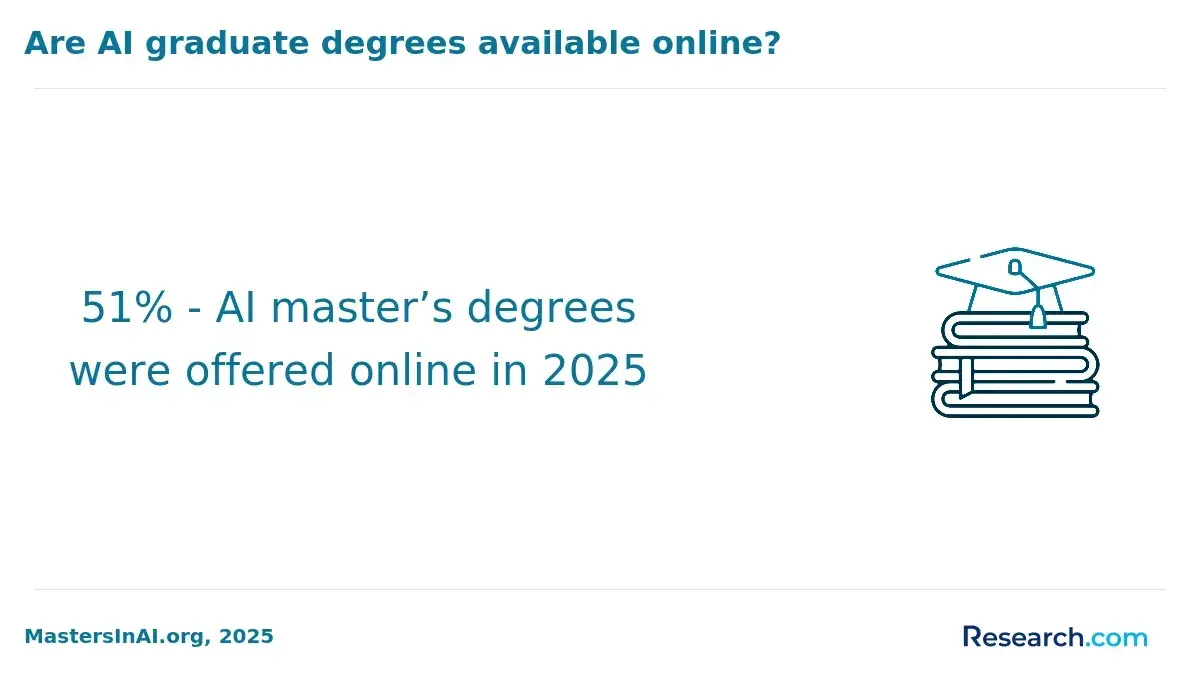
How do online AI courses compare with campus programs?
Online AI courses offer targeted, flexible training specifically designed for security operations teams balancing work and study. Unlike traditional campus programs, which often focus on broad theoretical foundations and require multi-semester commitments, these online offerings concentrate on SOC-related AI and automation skills.
For instance, providers like SANS and Practical DevSecOps emphasize practical techniques to improve threat detection and response efficiency, aligning with the best AI training programs for security operations teams.
The practical relevance of online AI courses is a key benefit for security analysts. Course content is regularly updated to address emerging threats and integrated AI tools, ensuring professionals can immediately apply new skills. Campus curricula tend to update less frequently and may lack the depth tailored to security operations, which can delay the operational impact.
Cost and accessibility also influence the choice between online AI courses vs traditional campus programs in security. Online learning removes expenses for relocation and commuting while accommodating variable schedules and learning paces, ideal for working analysts needing to upskill without interrupting their careers.
Data from SANS' 2024 Cybersecurity Skills Survey reveals SOCs that invest in formal AI and automation online training are 52% more likely to report significant improvements in mean time to detect and respond year-over-year, highlighting real operational benefits.
Prospective students should consider their availability, learning style, and career goals. For those seeking rapid, application-focused training, online courses excel. For comprehensive foundational knowledge and broader computer science context, campus programs remain valuable.
Additionally, exploring options like a PhD in data science online can provide advanced expertise relevant to security operations teams.
What topics are covered in AI courses for security operations?
AI courses for security operations equip professionals with key skills to improve threat detection, incident response, and threat hunting. Core topics often include machine learning fundamentals, enabling students to apply supervised and unsupervised learning techniques for identifying malicious activities without relying on manual rules.
Practical training frequently involves AI-augmented detection tools that leverage behavior analytics to reduce false positives and prioritize high-risk threats.
Students also explore natural language processing to analyze unstructured threat intelligence from reports and logs, enhancing situational awareness.
Advanced coursework covers security orchestration, automation, and response (SOAR) platforms where AI-driven workflows automate repetitive tasks and speed up incident triage-leading to significant reductions in high-severity alerts reaching analysts, as noted in Gartner's Market Guide for SOAR.
Other important subjects include adversarial machine learning, teaching how attackers evade AI detection, alongside discussions on data privacy and ethical AI use in security to ensure regulatory compliance. Practitioner-focused labs often simulate cyberattack scenarios, allowing learners to apply AI tools for effective threat hunting and response.
Experience with cloud-based AI security applications and integration with existing SIEM (security information and event management) systems further enhances proficiency. These courses prepare students for dynamic cybersecurity roles requiring advanced AI knowledge.
What admission requirements do AI security courses typically have?
Admission to AI security courses typically requires foundational knowledge in cybersecurity, programming, and data analysis. Most programs expect applicants to hold a bachelor's degree in computer science, information technology, or a related STEM field.
Practical experience in security operations or network management is often preferred, especially for advanced certifications. Proficiency in programming languages like Python and familiarity with machine learning frameworks may also be required.
Applicants usually need a solid understanding of core security principles such as encryption, threat detection, and vulnerability assessment. Many programs mandate preparatory or introductory cybersecurity courses to build this foundation. Technical assessments or interviews may be used to evaluate analytical skills and technical competence.
Employers and training providers value candidates who understand the challenges of vulnerability management. Research shows that organizations using AI-driven prioritization reduce critical vulnerability backlogs significantly compared to manual approaches.
Some providers offer multiple entry points, including foundational courses for beginners and advanced programs for experienced professionals.
Certificates often require hands-on projects that demonstrate the use of AI tools to detect threats or minimize attack surfaces. Prospective students should expect:
- A relevant degree or equivalent STEM/cybersecurity experience.
- Programming skills, especially in Python.
- Pre-existing knowledge of security concepts and vulnerability management.
- Possible entrance exams or technical interviews.
- Hands-on projects showcasing AI security applications.
How long do AI courses for security teams usually take?
AI courses for security operations vary significantly in length and depth, tailored to different professional needs. Introductory courses designed for quick upskilling typically require 8 to 20 hours and provide foundational knowledge of AI applications in cybersecurity.
More extensive programs, which cover advanced techniques such as machine learning models for threat detection or automated incident response, often last 6 to 12 weeks, with a recommended weekly commitment of 5 to 10 hours.
Specialized courses that focus on AI for cloud and identity security usually span 4 to 8 weeks and incorporate real-world case studies. For example, Microsoft's 2024 Digital Defense Report observed that organizations using cloud-based AI and machine-learning-driven identity protection reduced successful account takeover incidents by 79% compared to those using traditional rule-based controls.
This highlights the critical role of targeted training in enabling security teams to deploy AI effectively.
For working professionals, modular or self-paced courses offer greater flexibility but may extend total completion times to 3-6 months if taken alongside full-time jobs. Certification programs from reputable vendors or academic institutions often include capstone projects or labs, adding practical experience that enhances day-to-day job performance.
Security teams choosing AI education should balance operational demands with time availability. Shorter courses deliver rapid, actionable insights, while longer ones develop the strategic expertise necessary for fully leveraging AI in security operations.
How much do AI courses for security operations cost?
Courses in AI security operations vary significantly in price based on depth, format, and provider. Entry-level online courses typically cost between $200 and $800, ideal for professionals seeking foundational knowledge through self-paced learning modules.
More advanced courses, including those specializing in red-team, purple-team, or offensive AI strategies, range from $1,500 to $4,000 and often feature hands-on labs, live instruction, and certification opportunities.
Corporate or group training prices frequently exceed $5,000 per participant, reflecting custom content and extensive simulations. Subscription-based platforms provide another option, offering monthly access to a range of AI security courses for $50 to $150, promoting ongoing skill development.
Experts and employers show strong interest in niche topics like adversarial machine learning and prompt-injection mitigation.
According to ENISA's 2024 "AI Cybersecurity Challenges" report, organizations running annual AI-focused red-team exercises were 2.3 times more likely to discover vulnerabilities before production deployment. Such specialized training typically commands higher fees due to expert instruction and curriculum depth.
Before enrolling, verify the course content aligns with current threat landscapes and offers recognized certifications that enhance career prospects in AI-driven security fields.
What jobs can AI-trained security operations professionals pursue?
Security operations professionals trained in artificial intelligence can pursue diverse roles that utilize machine learning and automation to strengthen cybersecurity defenses.
Key positions include security analysts developing AI models to detect threats faster, threat hunters leveraging AI to proactively identify malicious activity, and incident responders automating routine tasks to speed up reactions.
Other roles focus on integration and analysis, such as security engineers embedding AI tools within infrastructure and data scientists analyzing vast datasets to reveal attack patterns.
Specialized roles in security operations centers (SOCs) have emerged, including AI security architects who design intelligent defense frameworks and compliance officers applying AI for continuous regulatory monitoring.
Compensation data underscores the growing value of AI expertise. The (ISC)² Cybersecurity Workforce Study found that professionals with AI- or machine learning-focused security certifications earn approximately 14% more globally than peers without such credentials, reflecting strong market demand and career advantages.
To enhance career prospects, candidates should build skills in AI model training, threat intelligence automation, and ethical considerations in AI-driven security. Keeping pace with evolving AI frameworks and practicing real-world attack simulations remain essential for advancing in roles from SOC analyst to chief information security officer overseeing AI-powered operations.
What is the salary and job outlook for AI security roles?
AI security professionals command strong salaries due to the high demand and specialized expertise needed in this field. In the U.S., annual earnings typically range from $110,000 to $160,000, with senior roles or positions in major tech hubs exceeding $180,000.
Entry-level AI security analysts may start around $90,000, while architects or leads can surpass $175,000. Salaries vary based on experience, location, and certifications.
Job growth in AI security is exceptionally strong, driven by increasing integration of AI in security operations and the urgent need to protect AI-driven systems from evolving cyber threats. The Bureau of Labor Statistics projects a 15% growth rate for information security roles through 2030, outpacing average occupational growth.
Organizations prioritizing AI and automation invest heavily in training, with 63% of high-performing security firms increasing per-employee investment in AI education by over 25% year-over-year, compared to just 18% among lower performers.
Continuous learning opens pathways to roles such as AI security engineer, machine learning security specialist, and AI threat analyst.
- Certifications in AI security.
- Practical experience with automation tools.
- Understanding of threat intelligence analytics.
These skills enhance competitiveness in a rapidly expanding market, making ongoing education a key factor for career advancement in AI security operations.
Other Things You Should Know About Artificial Intelligence
In 2027, leading AI courses for security operations teams include Stanford University's "AI in Cybersecurity," MIT's "AI for Security Operations Professionals," and the University of Maryland's "Machine Learning and AI for Security." These courses equip professionals with advanced skills to tackle evolving cyber threats using AI technologies.
Ethical concerns in using artificial intelligence for security include data privacy, bias in algorithms, and accountability for automated decisions. Ensuring transparency in AI models and protecting sensitive information is essential to maintain trust. Organizations must implement governance frameworks to mitigate risks associated with unintended consequences or misuse of AI-powered security tools.
While artificial intelligence significantly supports security analysts by automating repetitive tasks and providing insights, it cannot fully replace human expertise. Human judgment remains critical for understanding context, making nuanced decisions, and managing complex, unpredictable scenarios that AI systems may not interpret correctly. Instead, AI acts as an augmentation tool to improve analyst effectiveness.
Organizations encounter challenges such as data quality issues, lack of skilled professionals, and integration complexities when adopting artificial intelligence in security operations. Deploying AI solutions requires substantial resources for training models and maintaining systems. Additionally, evolving cyber threats demand continuous updates to AI tools, which can strain operational capacities.
References
- Best AI Security Certification in 2026 - Practical DevSecOps https://www.practical-devsecops.com/best-ai-security-certifications-2026/
- Building an AI-Ready Cybersecurity Team https://www.offsec.com/blog/building-an-ai-ready-cybersecurity-team/
- AI Cybersecurity Training for Security Teams: What Works | GTK Cyber https://gtkcyber.com/blog/best-ai-cybersecurity-training-security-teams/
- Here’s How an AI Degree Stacks Up Against Other Options https://www.aidegree.org/blog/comparison-table
- Generative AI for Security Professionals https://www.pluralsight.com/paths/generative-ai-and-cybersecurity
- Top AI security certifications to consider | TechTarget https://www.techtarget.com/searchsecurity/tip/Top-AI-security-certifications-to-consider
- Top 7 artificial intelligence courses 2025: Comparison of the best online programs https://xd-i.com/en/data-en/ai-courses/