2027 Best AI Courses for Revenue Operations Teams With Certificates

Co-Founder and Chief Data Scientist
Revenue operations teams often face challenges in efficiently leveraging artificial intelligence tools due to a lack of specialized training and formal recognition. This gap limits their ability to optimize sales processes, forecast accurately, and enhance customer engagement. Professionals attempting to pivot into AI roles within revenue operations require accessible learning paths that combine practical skills with credible certification.
The absence of flexible courses tailored to this niche hinders career advancement and organizational performance. This article reviews the best AI courses with certificates designed specifically for revenue operations teams, helping readers identify programs that boost expertise and validate their competencies in this evolving field.
Key Things You Should Know
- Top AI courses for revenue operations in 2026 emphasize practical skills in data analysis, automation, and predictive analytics, aligning with a 27% projected job growth in revenue operations roles by 2028.
- Certificate programs from accredited institutions validate expertise, enhancing career advancement and salary potential, with certified professionals earning up to 20% more.
- Updated curricula reflect 2025 advances in machine learning and AI integration tools, essential for improving sales forecasting, customer segmentation, and revenue optimization strategies.
Advance Your Career with AI Online Courses
Artificial Intelligence: Implications for Business Strategy
This program provides an introduction to Artificial Intelligence and their implications for business strategy. Earn an official digital certificate.

Oxford Artificial Intelligence Programme
Explore this Oxford Artificial Intelligence programme offered in a flexible learning environment and explore topics like machine learning, automation, and robotics.

Implementing Agentic AI: Building Your Organizational Playbook
This online MIT Agentic AI course offers a practical approach to deploying AI agents in your organization, including a custom playbook. 3 weeks, exclusive launch price.

AI Adoption: Driving Business Value and Impact
This online MIT AI Adoption: Driving Business Value and Impact offers practical frameworks to close the gap between AI potential and business reality.

Artificial Intelligence in Pharma and Biotech
Discover the applications and limitations of artificial intelligence in pharma and biotech with this MIT online short course.

What is revenue operations and why do RevOps teams need AI training and certificates?
Revenue operations (RevOps) integrates sales, marketing, and customer success to enhance revenue growth through coordinated processes, technology, and data analytics. Effective revenue operations AI training benefits teams by enabling them to analyze vast datasets, predict customer behavior, personalize outreach, and automate tasks like lead scoring and forecasting with greater accuracy.
A 2025 Salesforce "State of Sales" report shows that 74% of high-performing sales organizations regard AI-driven revenue operations as "very important" or "critical" to meeting quotas, compared to only 39% of underperformers. Certified AI courses for revenue operations teams validate essential skills in predictive analytics, automation, and CRM AI integration-helping professionals deliver measurable revenue gains and keep pace with evolving technologies.
Without AI training, teams may find it difficult to interpret complex analytics, manage multiple platforms, or scale strategies efficiently. Formal certificates ensure proficiency in machine learning basics, data visualization, and workflow automation, empowering RevOps teams to maintain agility in dynamic markets. For those considering how to build these skills, exploring the most affordable data science master's programs offers a practical pathway to strengthen AI expertise and drive success in revenue operations.
Advance Your Career with AI Online Courses
Artificial Intelligence: Implications for Business Strategy
This program provides an introduction to Artificial Intelligence and their implications for business strategy. Earn an official digital certificate.
Oxford Artificial Intelligence Programme
Explore this Oxford Artificial Intelligence programme offered in a flexible learning environment and explore topics like machine learning, automation, and robotics.
Implementing Agentic AI: Building Your Organizational Playbook
This online MIT Agentic AI course offers a practical approach to deploying AI agents in your organization, including a custom playbook. 3 weeks, exclusive launch price.
Which AI courses with certificates are best for RevOps professionals right now?
Top AI courses with certificates for revenue operations professionals focus on aligning AI skills with sales, marketing, and customer success workflows. The best online artificial intelligence training for RevOps teams integrates data analytics and AI automation to drive revenue growth. LinkedIn's 2024 Workplace Learning Report reveals 63% of learning leaders prioritize AI skills, but only 27% find courses align well with company tech stacks, highlighting a need for tailored programs.
Recommended courses blend foundational AI knowledge with practical applications such as predictive analytics for sales forecasting, customer segmentation via machine learning, and AI-powered CRM optimization. Hands-on experience with tools like Salesforce Einstein or HubSpot AI enhances job readiness. Popular offerings include Coursera's "AI for Business" specialization and LinkedIn Learning's "AI in Sales and Marketing," which deliver actionable insights for revenue operations.
Essential criteria to evaluate include:
- Certificate recognition by industry and recruiters.
- Customized content on AI applications within revenue generation processes.
- Integration with widely-used RevOps software.
- Real-world case studies and project work.
- Accessible updates reflecting the fast-evolving AI landscape.
Modular programs allow specialization in pricing optimization, customer lifetime value prediction, or AI-driven lead scoring. Emphasizing data governance and interpretability equips learners to implement AI responsibly. For those also exploring other educational paths, programs like the cheapest online mechanical engineering degree can provide affordable, quality options.
How do AI certificates compare to traditional degrees for advancing a RevOps career?
AI certificates offer a streamlined route for revenue operations professionals to gain relevant skills quickly, often requiring fewer than 10 hours of study. They provide targeted expertise in AI-driven analytics and process automation, which are crucial for optimizing revenue streams, sales forecasting, and customer segmentation. This focus on practical, job-relevant skills makes AI certification benefits for revenue operations professionals especially valuable for busy individuals needing rapid upskilling.
Traditional degrees, while providing comprehensive theoretical foundations and broader business insights, tend to take several years to complete. These programs may not deliver the immediacy that many professionals require to stay competitive. For mid-career RevOps experts, certificates can enable faster adaptation to emerging tools without the substantial time and financial burden of degrees. Entry-level candidates also gain foundational skills that enhance their employability and promotion prospects.
Employers increasingly prioritize demonstrated competencies with current AI tools over general credentials, which means combining AI certificates with work experience can accelerate career advancement more effectively than degrees alone. This dynamic is particularly apparent when comparing AI certificates versus traditional degrees in RevOps careers. One practical example includes exploring options like a game design online degree, which illustrates how specialized programs can provide flexible learning pathways aligned with industry needs.
What core AI skills should a high-quality RevOps course teach?
High-quality revenue operations (RevOps) courses focusing on AI must teach core ai skills for revenue operations professionals that are directly applicable to optimizing sales, marketing, and customer success functions. These include data literacy, where learners interpret and manipulate large datasets to generate actionable insights. Essential ai techniques taught in top revops courses also cover AI-driven forecasting using machine learning models that improve sales pipeline accuracy and identify market trends.
Automation design is another crucial skill, enabling professionals to create AI-based workflows that reduce manual tasks such as lead scoring, customer segmentation, and personalized email outreach, thereby increasing efficiency. Practical applications of natural language processing (NLP), like sentiment analysis and chatbot integration, help enhance customer engagement and real-time support.
Courses also emphasize AI analytics tools, guiding students in building dashboards for clear, data-driven revenue growth recommendations. Ethical considerations and data privacy compliance, including GDPR and CCPA, form an integral part of the curriculum, ensuring responsible AI use.
According to a MIT Sloan Management Review/BCG survey, companies with senior RevOps leaders trained in AI and data-driven decision-making are 2.6 times more likely to benefit financially from AI initiatives. Prospective learners may also explore cyber security online courses to complement their skills in securing AI-driven operations. In summary, top courses blend advanced AI modeling, automation proficiency, real-world tool application, and governance knowledge to prepare professionals capable of driving measurable business outcomes.
How can I evaluate accreditation and institutional quality for AI programs in the U.S.?
Verify that AI programs in the U.S. hold regional or national accreditation from recognized bodies such as the Middle States Commission on Higher Education or the Accrediting Commission for Community and Junior Colleges. Accreditation indicates adherence to standards covering curriculum rigor, faculty qualifications, and administrative effectiveness.
Assess the curriculum's relevance to revenue operations by identifying courses focused on AI applications in sales forecasting, data analytics, and pipeline management that mirror industry demands. Programs linked to reputable universities or professional organizations often uphold higher academic standards.
Look into faculty expertise, emphasizing those with academic credentials and real-world experience in AI for sales or revenue operations. Evaluate student outcomes by considering factors like certification recognition by employers, graduation rates, and alumni career success. Certificates with clear industry value can significantly improve job prospects when aligned with market needs.
Insights from Gartner's 2024 Sales Technology Survey reveal that organizations using AI-driven forecasting tools saw a 12-15 percentage point improvement in forecast accuracy and a 10% increase in quota attainment. Programs incorporating such methodologies demonstrate practical relevance. Engage with current students or alumni via forums or social media to gather qualitative feedback on program quality and institutional support, adding real-world perspective beyond formal accreditation checks.
What are the pros and cons of online, hybrid, and campus AI programs for RevOps teams?
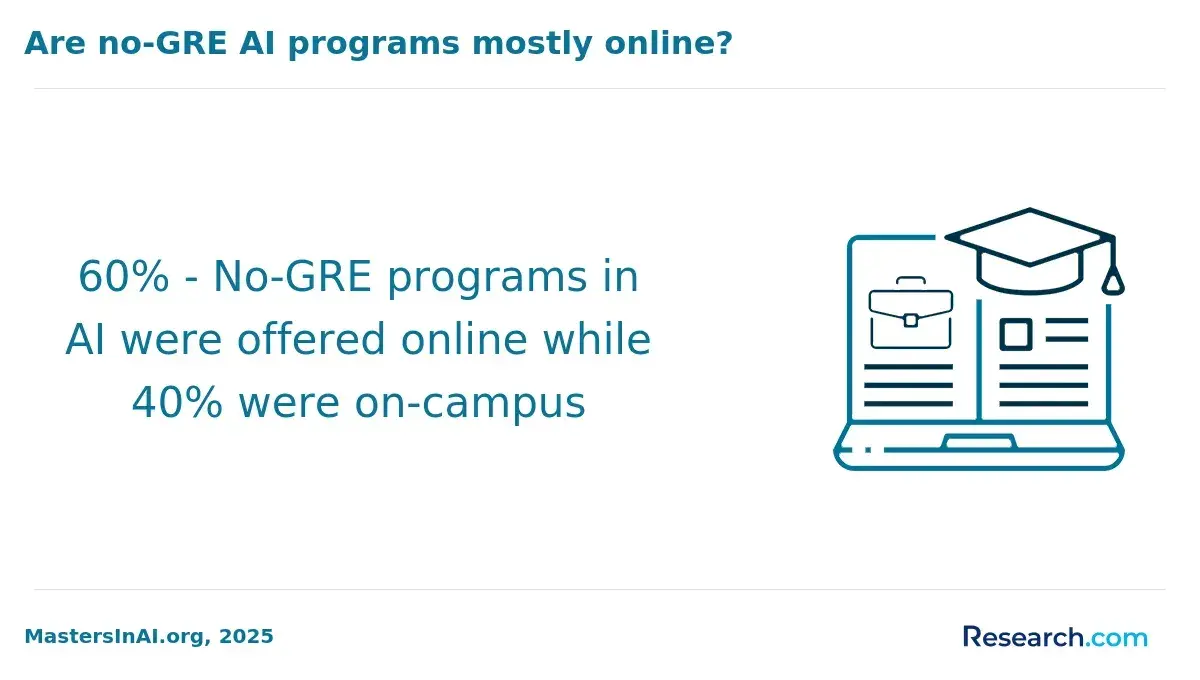
Online AI programs provide valuable flexibility for revenue operations (RevOps) professionals who need to balance work and study. While these programs often lack real-time interaction and networking opportunities, they frequently incorporate interactive simulations and AI lab environments to help bridge that gap. Hybrid models blend online coursework with periodic on-campus sessions, offering convenience alongside practical experience. This approach benefits RevOps teams aiming to build applied skills in lead scoring, segmentation, and attribution without sacrificing workplace productivity, though scheduling and travel can pose challenges.
Campus-based AI education delivers direct access to expert faculty and immersive collaboration, fostering deep technical expertise critical for strategic RevOps roles. Notably, Forrester's 2024 Revenue Operations & Intelligence Forecast highlights how AI-enhanced lead scoring can boost marketing-sourced pipelines by 20-30% and improve conversion rates by 10-15%. However, on-campus study often requires full-time commitment and entails higher tuition and logistical burdens, limiting accessibility for working professionals.
Each format supports essential AI skills differently: online facilitates ongoing learning; hybrid balances flexibility and hands-on practice; campus immerses students deeply but restricts flexibility. Organizations must weigh team schedules, budgets, and learning goals-such as enhancing pipeline velocity or opportunity conversion-when choosing programs proven to impact key performance indicators directly.
How long do AI courses for RevOps usually take and what do they cost?
AI courses for revenue operations (RevOps) teams vary in length and depth, typically ranging from short workshops to extensive certificate programs. Many professional courses require between 20 and 40 hours of study, often allowing flexible pacing. Hands-on programs that focus on AI integration with platforms like HubSpot and OpenAI usually last 4 to 6 weeks, combining practical use with theoretical concepts. In contrast, brief one- or two-day courses generally cover fundamental topics and basic CRM AI implementations, while more advanced courses explore predictive analytics and automation strategies in depth.
Costs for these programs differ widely based on content and delivery. Entry-level workshops may be priced under $200, whereas comprehensive certificates from recognized providers generally range from $500 to $2,000. Specialized training, which may include personalized coaching or access to exclusive tools, can exceed these amounts. When choosing a course, consider curriculum quality and instructor expertise to ensure alignment with career objectives.
According to HubSpot's State of AI in CRM report, teams leveraging AI integrated within their CRM close deals 17% faster and record 28% more complete deal data compared to those using AI tools separately. This emphasizes the advantage of courses that stress applied AI skills in CRM environments for tangible performance gains.
What admission requirements and prerequisites do AI certificates for RevOps typically have?
Admission requirements for AI certificates in revenue operations (RevOps) typically prioritize foundational skills in business analytics, sales processes, and data interpretation. Applicants usually need a bachelor's degree in business, information technology, or a related field, although some programs may accept equivalent professional experience in RevOps, sales operations, or marketing analytics instead.
Essential prerequisites often include proficiency in Excel and data visualization tools like Tableau or Power BI, alongside familiarity with CRM platforms such as Salesforce. Candidates are expected to understand key RevOps principles like pipeline management, revenue forecasting, and cross-functional alignment between sales, marketing, and customer success teams.
Higher-level certificates may require introductory programming skills in Python or SQL to support data integration and automation, which are vital for AI workflows. Experience or coursework in statistics or machine learning can enhance an applicant's profile but is usually not mandatory. Some programs include practical assessments or require submission of projects applying AI methods to optimize revenue, ensuring candidates can translate theory into operational improvements.
LinkedIn's 2025 Global Skills & Salary Report highlights that professionals with AI or data-analytics certificates see an average 9% salary increase within a year and are 2.1 times more likely to advance into senior operations roles, underscoring the value of meeting admission criteria that prepare students for impactful careers.
What RevOps job roles, promotions, and salary gains can AI training support?
AI training plays a critical role in advancing careers within revenue operations (RevOps), enhancing opportunities for promotions and salary growth. Entry-level roles such as revenue analysts and data specialists benefit by automating data processing and producing actionable insights, which improve efficiency and decision-making accuracy.
Mid-level professionals like RevOps managers and business operations strategists leverage AI skills for improved forecasting, pipeline analysis, and cross-functional alignment, driving revenue growth and operational excellence. Senior leaders, including directors and heads of RevOps, use AI-driven predictive analytics to optimize complex sales and marketing workflows, strengthening leadership credibility and positioning themselves for executive promotions.
Salary increases correspond closely with AI proficiency. Deloitte's 2024 Human Capital Trends report shows companies investing at least $1,000 per employee annually in AI and data upskilling are significantly more likely to exceed revenue targets and experience productivity growth. As a result, AI-skilled RevOps professionals often earn 10% to 25% more than industry averages.
Upskilling in AI also opens doors to specialized roles such as AI RevOps analyst or automation architect, supporting both vertical and lateral career moves. Training focused on machine learning applications for lead scoring, customer segmentation, and sales funnel optimization addresses common revenue challenges. AI certifications validate expertise, enhancing promotion potential and salary negotiation leverage in data-driven RevOps environments.
How can RevOps leaders choose and implement AI training for their entire team?
RevOps leaders should identify their team's current skills and revenue operation challenges that AI can solve. Effective training focuses on tailored AI applications in sales forecasting, customer segmentation, and marketing automation. Prioritize courses offering hands-on experiences, enabling immediate application to daily workflows. Modular or role-specific tracks benefit sales, marketing, and customer success specialists by matching content to job functions.
Successful implementation requires clear timelines and measurable benchmarks to monitor progress and ROI. Incorporating assessments and certifications boosts skill validation and team motivation, particularly when partnering with accredited providers. Ongoing learning is essential-integrate AI training with current projects to reinforce skills and encourage innovation.
Future-proofing skills means selecting courses aligned with projections like IDC's 2025 Worldwide AI Spending Guide, which anticipates a 28.3% annual growth rate in AI-driven sales, marketing, and service tools through 2028. This highlights the importance of up-to-date curricula addressing evolving AI technologies impacting revenue operations.
Budget and time constraints often dictate training choices. Opt for scalable options such as online self-paced modules or live virtual sessions. Certifications from recognized providers enhance team credentials. Evaluating provider reputations and alumni success helps ensure quality and relevance.
Other Things You Should Know About Artificial Intelligence
In 2027, some of the best AI courses for enhancing revenue operations include "AI for Business Leaders" by Coursera, "Applied AI for Revenue Management" on edX, and "AI in Sales and Marketing Strategies" from LinkedIn Learning. These courses not only boost understanding but also provide certificates to validate your skills.
Yes, many AI tools are designed to integrate seamlessly with popular revenue operations platforms such as CRM and ERP systems. AI-driven analytics and automation features often connect via APIs, enabling real-time data synchronization and enhanced workflow efficiency. This compatibility allows teams to leverage AI capabilities without overhauling their current software infrastructure.
A computer science background is helpful but not strictly necessary to begin learning artificial intelligence for revenue operations roles. Many courses start with foundational concepts and focus on practical applications relevant to business users. However, some technical knowledge of data analytics or programming can improve comprehension and hands-on skills.
Ethical considerations are increasingly integrated into AI training programs, emphasizing responsible data use, bias mitigation, and transparency. Programs often include modules on algorithmic fairness and compliance with privacy regulations. These elements help revenue operations professionals understand the impact of AI on customers and business integrity.
References
- Accreditation and AI: Ensuring Quality in an Era of Smart Learning https://www.qahe.org/article/accreditation-and-ai-ensuring-quality-in-an-era-of-smart-learning/
- AI agents and RevOps: Benefits and use cases https://nexos.ai/blog/ai-agents-and-revops/
- AI Prerequisites: What to Learn Before AI https://blog.nobledesktop.com/learn/ai/ai-prerequisites
- What are the requirements for completing the Introduction to AI and Building AI courses? https://www.elementsofai.com/faq/what-are-the-requirements-for-completing-the-introduction-to-ai-and-building-ai-courses-2
- The Transformative Power of AI in RevOps https://www.everstage.com/blog/the-transformative-power-of-ai-in-revops-enhancing-efficiency-and-driving-growth
- AI for RevOps Crash Course (2026) - The Workflow Pro https://theworkflowpro.com/ai-for-revops-crash-course/
- The Value of Revenue Operations: Getting Started | Abacum https://www.abacum.ai/blog/the-value-behind-revenue-operations-how-to-get-started
- AI Certification Programs: Which Ones Matter for Your Career https://www.businessplusai.com/blog/ai-certification-programs-which-ones-matter-for-your-career
- Best AI Certifications to Boost Your Career in 2026 – Dataquest https://www.dataquest.io/blog/best-ai-certifications/
- Generative AI Specialization: Certification & Skill Badge Requirements | Google Skills for Partners https://partner.skills.google/paths/422