2027 Best Generative AI Courses for Business Leaders

Co-Founder and Chief Data Scientist
Business leaders often struggle to integrate generative ai effectively due to rapidly evolving technologies and unclear training options. This gap can hinder strategic decision-making and innovation within organizations. Many find it challenging to identify courses that balance practical skills with business relevance, especially when transitioning from unrelated fields. Without targeted education, executives risk falling behind competitors who leverage generative ai to streamline processes and enhance customer experiences. This article outlines the best generative ai courses tailored for business leaders, focusing on flexible, accredited programs designed to equip professionals with the necessary expertise to drive digital transformation confidently.
Key Things You Should Know
- Generative AI courses for business leaders in 2026 emphasize practical skills for integrating AI tools into decision-making, boosting efficiency by up to 40% in early adopters.
- Top courses combine ethics, strategy, and technology, reflecting a 2025 survey showing 67% of businesses prioritize ethical AI deployment in leadership training.
- Flexible, hybrid learning formats dominate, with 72% of prospective students favoring online modules paired with live case studies for real-world application.
Advance Your Career with AI Online Courses
Artificial Intelligence: Implications for Business Strategy
This program provides an introduction to Artificial Intelligence and their implications for business strategy. Earn an official digital certificate.

Oxford Artificial Intelligence Programme
Explore this Oxford Artificial Intelligence programme offered in a flexible learning environment and explore topics like machine learning, automation, and robotics.

Implementing Agentic AI: Building Your Organizational Playbook
This online MIT Agentic AI course offers a practical approach to deploying AI agents in your organization, including a custom playbook. 3 weeks, exclusive launch price.

AI Adoption: Driving Business Value and Impact
This online MIT AI Adoption: Driving Business Value and Impact offers practical frameworks to close the gap between AI potential and business reality.

Artificial Intelligence in Pharma and Biotech
Discover the applications and limitations of artificial intelligence in pharma and biotech with this MIT online short course.

What are the best generative AI courses for business leaders and how do they differ?
Business leaders seeking the best generative AI courses tailored for business leaders should look for programs that combine strategic insight with practical skills. Some courses emphasize executive decision-making, focusing on AI's effect on business models and competitive advantage. Others offer hands-on training in AI tools, enabling leaders to guide implementation and innovation effectively.
Courses like "AI for Business Leaders" offered by leading MBA programs cover critical topics such as governance, ethics, and value chain transformation. These programs help executives integrate AI into operations while managing organizational change.
In contrast, offerings from technology institutes often emphasize technical literacy like prompt engineering and AI architectures, which are vital for executives working directly with data science teams.
The differences between top generative AI training programs for executives often include key areas:
- Strategic impact analysis vs. technical proficiency
- Ethical and regulatory considerations vs. practical tool application
- Industry-specific AI use cases vs. broad AI strategy frameworks
PwC's 2024 Global CEO Survey reveals that although 70% of CEOs expect generative AI to transform value creation within three years, only 23% feel their organizations are fully prepared. This highlights the importance of courses blending leadership strategy with implementation skills. Leaders must both grasp AI potential and develop actionable plans to scale adoption.
Choosing the right course depends on expertise and role-CFOs may benefit from AI applications in finance while CMOs focus on AI-driven customer engagement. Accredited programs offering case studies and peer interactions enhance readiness.
Professionals interested in further technical foundations may consider a data science degree to deepen expertise.
Advance Your Career with AI Online Courses
Artificial Intelligence: Implications for Business Strategy
This program provides an introduction to Artificial Intelligence and their implications for business strategy. Earn an official digital certificate.
Oxford Artificial Intelligence Programme
Explore this Oxford Artificial Intelligence programme offered in a flexible learning environment and explore topics like machine learning, automation, and robotics.
Implementing Agentic AI: Building Your Organizational Playbook
This online MIT Agentic AI course offers a practical approach to deploying AI agents in your organization, including a custom playbook. 3 weeks, exclusive launch price.
How can business leaders choose between online, hybrid, and on-campus generative AI programs?
Business leaders often weigh the benefits of online, hybrid, and on-campus generative AI programs when choosing training that matches their needs. Online options provide the greatest flexibility and accessibility, suitable for executives managing demanding schedules or remote work.
These courses typically offer asynchronous content, enabling learners to study at their own pace, though they might lack direct interaction and hands-on elements important to some. This evaluation is essential when considering how business leaders evaluate generative AI training formats.
Hybrid programs combine online learning with periodic in-person sessions, offering a balance of flexibility and live engagement. Leaders benefit from monthly workshops or team-building activities, which enhance practical skills and foster mentorship and peer networking.
On-campus programs deliver immersive experiences with direct faculty interaction and access to research facilities, ideal for those focused on strong local networks and in-depth collaboration. However, their rigid schedules and travel requirements can pose challenges for full-time professionals.
When choosing between online hybrid and on-campus generative AI programs for executives, factors to consider include:
- Current workload and time availability
- Preference for live interaction versus self-paced study
- Need for hands-on labs or real-time projects
- Importance of networking and mentorship
- Budget and travel limitations
Demand in the job market reinforces the need for generative AI skills. LinkedIn's 2024 Jobs on the Rise report shows roles requiring this expertise have increased more than 30-fold globally since 2022, with such jobs attracting 17% more applications.
Prospective students seeking comprehensive education may explore options such as a mechanical engineering program online for added flexibility while maintaining strong academic rigor.
What should executives look for in an accredited generative AI program for business?
Executives selecting accredited generative AI training programs for business executives should seek curricula that blend technical knowledge with strategic application. Effective programs demonstrate how generative AI transforms business models, workflows, and decision-making. Leaders benefit from practical learning methods including case studies, simulations, and real-world problem solving tailored to their industries.
Key features of accredited generative AI courses for leaders include validation by recognized educational or industry bodies, ensuring aligned learning outcomes and measurable skills. Governance, ethics, and risk management play crucial roles, where executives learn regulatory compliance, bias reduction, and data privacy to lead AI initiatives responsibly.
Flexible formats, such as hybrid or online learning with short modules or executive boot camps, accommodate busy schedules and improve engagement. Programs encouraging interdisciplinary collaboration connect AI technology with finance, operations, and strategy, while networking with peers and experts enhances leadership readiness.
According to research, senior leaders who undergo structured AI and generative AI training are significantly more likely to realize strong returns on AI investments, underscoring the value of quality education. For professionals seeking further advancement, exploring offerings like cybersecurity degrees can complement AI expertise in safeguarding digital assets.
Which skills and topics do top generative AI courses teach specifically for business use?
Top generative AI courses for business leaders emphasize practical skills and generative AI applications for business strategy, enabling effective adoption in enterprise settings. These programs cover automating content creation, personalized marketing to boost customer engagement, and optimizing supply chains. Leaders also learn to assess AI tools for ROI while navigating ethical concerns, data privacy, and compliance issues specific to their industries.
Key skills taught in generative AI courses for leaders include AI strategy development, helping executives integrate AI into workflows or redesign processes for greater efficiency. Training often includes change management to handle workforce impacts, reskilling needs, and cultural shifts toward AI-driven decision-making.
While not deeply technical, the courses build enough technical literacy to understand AI architectures like transformers and prompt engineering. This knowledge helps business professionals collaborate better with data science teams, bridging strategic vision and technical execution.
Performance measurement modules guide leaders to track productivity and profitability metrics to validate AI investments. For instance, McKinsey's 2024 State of AI report highlights that 65% of organizations regularly use generative AI in at least one function, with 40% of them generating over 10% of EBIT from these applications.
Examples include automating legal document review, enhancing customer service with AI chatbots, and dynamic e-commerce content creation.
Those interested in advancing their careers in AI can explore how to become an AI trainer with no experience how to become an AI trainer with no experience.
What are the typical admission requirements for executive and professional generative AI programs?
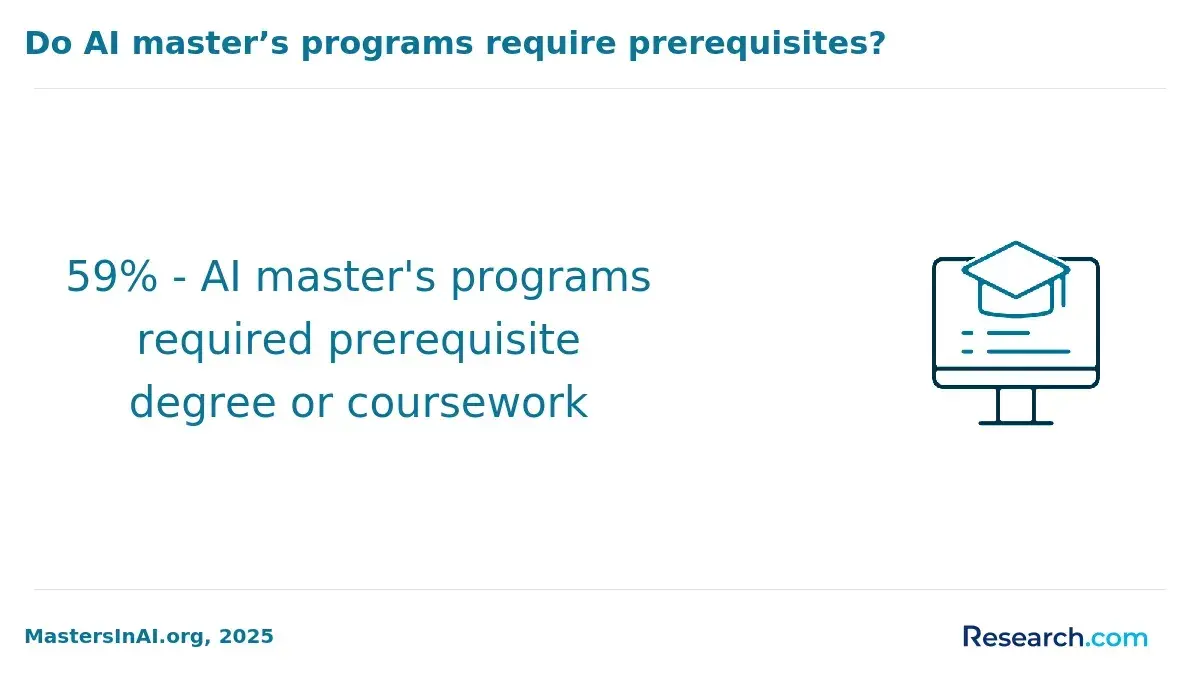
Admission to executive and professional generative AI programs typically prioritizes relevant leadership experience and foundational technical knowledge over traditional academic credentials. Most programs require a minimum of five years in strategic decision-making roles to ensure participants understand how to apply generative AI within complex business settings.
Applicants usually submit a resume highlighting managerial roles and a statement of purpose explaining their AI objectives. Some programs mandate prerequisite coursework in data science, machine learning, or programming languages such as Python, while others place more emphasis on business acumen, especially in shorter executive courses.
Additional evaluations like interviews or assessments are common in competitive programs to measure readiness for AI engagement. International candidates might need to prove English proficiency depending on the institution.
These criteria align with Deloitte's 2024 survey showing that 79% of executives expect generative AI to transform their sectors soon, yet 58% cite leadership understanding as a barrier to adoption.
To improve acceptance chances, prospective students should tailor their preparation by acquiring necessary technical skills and clarifying how generative AI fits their strategic roles. This balanced approach helps bridge the leadership skills gap and supports meaningful learning outcomes.
How long do generative AI programs for business leaders take and what do they cost?
Generative AI programs for business leaders vary from brief, intensive courses lasting one to three days to extensive certificates spanning three to six months of part-time study. Short programs emphasize practical skills like strategic implementation and ethical considerations, ideal for executives seeking quick upskilling.
Longer programs delve into technical foundations, use-case development, and leadership in AI transformation, fitting those aiming to embed generative AI deeply within their organizations.
Costs differ significantly based on program length, depth, and provider reputation. Entry-level workshops typically range from $1,000 to $3,000, offering affordable options for fast adoption. More comprehensive certificates or executive education programs through top universities or specialized institutes usually fall between $5,000 and $15,000.
Premium offerings may exceed this range, particularly if they include personalized coaching or hands-on projects. Often, employers sponsor such training as a strategic investment to stay competitive.
Research.com highlights that companies slow to adopt generative AI risk profit margins 5-15 percentage points lower over five years, underscoring the urgency for leaders to find programs that balance cost, depth, and duration.
- Short programs suit urgent decision-making needs.
- Longer options develop broader strategic and technical competence.
Leaders should align program choice with organizational goals and personal capacity to maximize the benefits of AI education.
What career paths and leadership roles can generative AI training open for business professionals?
Generative AI training prepares business professionals for advanced career paths in leadership and innovation. Key roles include AI product managers who direct the creation and launch of AI-driven solutions tailored to specific business goals. AI strategy consultants help organizations integrate generative AI ethically and effectively, optimizing overall performance. Data science managers oversee AI model development to ensure alignment with strategic objectives and quality standards.
This training also enables professionals to lead automation and workflow improvements. For instance, operations managers can boost productivity, as a 2024 MIT-Stanford study found knowledge workers completed tasks 25-40% faster with generative AI and produced outputs 20-30% higher in quality. These gains enhance project management, product development, and customer experience roles.
- AI ethics and governance specialists focus on responsible AI use and regulatory compliance.
- Digital transformation leaders drive cost reduction and scalability by embedding AI into legacy systems.
- Cross-functional expertise combining AI with finance, marketing, or supply chain prepares candidates for executive roles such as Chief AI Officer or VP of Innovation.
Business professionals aiming to leverage generative AI should cultivate a blend of technical knowledge and traditional business skills to stay competitive and lead AI-driven growth effectively.
What salary impact and ROI can business leaders expect after completing generative AI training?
Business leaders with generative AI training often see salary increases between 10% and 25%, reflecting their ability to lead AI-driven improvements in operational efficiency and innovation. For instance, those leveraging generative AI tools to automate customer insights or product development experience faster decision-making and cost savings, which justify higher compensation.
Return on investment (ROI) from AI training also manifests in greater strategic influence and accelerated career growth. Leaders equipped to steer AI-powered transformations become key assets for companies focused on digital expansion, often earning promotions or bonuses for their expertise.
The 2024 Future of Learning report from the World Economic Forum and PwC reveals that 69% of senior business leaders prefer short, modular online programs for AI and generative AI upskilling, and 54% are willing to dedicate at least one month of working time annually for such learning. This approach minimizes disruption while enabling quick skill development, enhancing ROI through immediate application.
Effective programs target practical uses like AI-driven market analysis and automated content creation, helping leaders translate skills directly into income by boosting productivity and opening growth avenues. Prioritizing structured, modular learning maximizes both salary gains and overall organizational impact.
Are there recognized certificates or microcredentials in generative AI for business executives?
Recognized certificates and microcredentials in generative AI tailored for business executives are increasingly valued by employers. These programs emphasize practical knowledge on integrating generative AI into strategic decision-making, risk management, and ethical considerations rather than coding skills. Leading institutions like Stanford Graduate School of Business and MIT Sloan offer executive certificates focusing on AI strategy and business impact.
Typically spanning four to eight weeks, microcredentials offer flexibility for busy professionals and cover topics such as prompt engineering, generative AI tools for innovation, and managing AI-driven transformation projects. Many conclude with a verified certificate, demonstrating mastery suitable for leadership roles.
Gartner's 2024 CIO and Executive Survey highlights a 61% increase in enterprise spending on AI training and change management from 2023 to 2026. Companies increasingly allocate budgets specifically for generative AI education, underscoring the growing demand for certified executives who can lead AI initiatives effectively.
Prospective students should choose programs from accredited institutions or reputable business schools that integrate case studies, practical exercises, and strategic perspectives. This approach enhances applicability beyond theory and addresses challenges like scaling AI pilots and ensuring regulatory compliance.
Earning recognized credentials supports career advancement and credibility in an AI-driven business environment.
How can business leaders evaluate program quality, faculty expertise, and industry partnerships?
When choosing generative AI courses, prioritize program quality, faculty expertise, and strong industry partnerships. Verify that the curriculum covers current, evidence-based topics, especially AI ethics, governance, and risk management. Accenture's 2024 Responsible AI report reveals only 27% of companies provide formal training in these areas, yet these organizations face 2.4 times fewer serious AI-related compliance or reputational issues, underscoring the importance of ethical AI education.
Faculty credentials matter: look for instructors with proven experience in applied AI in business, including published research, consulting roles, or leadership in AI projects. Transparency about faculty members' ongoing involvement in AI advancement helps ensure course content stays relevant.
Key questions to ask before enrolling include:
- Does the program provide measurable outcomes related to AI governance and ethics?
- Are faculty members active contributors to AI research or business innovation?
- What is the scale and depth of industry partnerships?
- Is there ongoing support, such as alumni networks for AI leadership?
Industry partnerships enrich learning with practical insights and networking. Check if the program collaborates with respected companies or AI think tanks through guest lectures, case studies, internships, or capstone projects. Such connections demonstrate alignment with market needs and real-world applications.
Other Things You Should Know About Artificial Intelligence
Business leaders often face challenges related to data privacy, integration with existing systems, and aligning AI initiatives with strategic goals. Additionally, managing organizational change and addressing workforce skill gaps can complicate successful AI implementation. Overcoming these hurdles requires clear leadership and a well-defined adoption strategy.
Artificial intelligence enhances decision-making by providing data-driven insights, predictive analytics, and automation of routine tasks. This allows leaders to make faster, more accurate decisions based on real-time information. However, human oversight remains essential to interpret AI outputs within the broader business context.
Ethical considerations include ensuring transparency, fairness, and accountability in AI systems. Business leaders must prevent biases embedded in AI algorithms and protect user privacy. Establishing guidelines and compliance frameworks helps maintain trust among customers and stakeholders.
In 2027, "Harvard's AI Transformational Leadership Course" stands out. It equips business leaders with strategies to incorporate generative AI into their organizations effectively, focusing on innovation, competitive advantage, and ethical considerations in AI deployment.
References
- AI Executive Certificate https://esmt.berlin/executive-education/analytics-ai/ai-executive-certificate
- Four AI Upskilling Strategies for Business Leaders https://www.jff.org/blog/four-ai-upskilling-strategies-business-leaders/
- Generative AI for Business Professionals https://www.pluralsight.com/paths/generative-ai-for-business-professionals
- Generative AI Careers: Roles, Skills & Opportunities in 2026 https://online.iitkgp.ac.in/blog/generative-ai-careers
- AI Courses for Beginners: Your Business Training Guide | GoSkills https://www.goskills.com/ai/resources/beginner-ai-courses
- 16 Artificial Intelligence Career Paths https://www.calmu.edu/news/artificial-intelligence-career-paths
- Executive Program in Artificial Intelligence | ISDI https://www.isdi.education/en/programs/artificial-intelligence
- Unlocking the Potential of Generative AI for Business: How Commercial Teams Can Harness Transformative New Technology https://www.correlation-one.com/blog/generative-ai-for-business-commercial-teams
- Elevate Your Leadership in the AI Era: EXIN AI Certifications for Business Professionals https://www.exin.com/article/exin-ai-certifications-for-business-professionals/
- Simplirise https://simplirisebiz.com/advancedAppliedGenAI