2027 Best AI Courses for Technical Product Managers With Certificates

Co-Founder and Chief Data Scientist
Many technical product managers face the challenge of integrating artificial intelligence into their projects without formal training in the field.
This gap in skills can hinder product innovation and delay decision-making in fast-paced tech environments. Securing relevant certifications is key to demonstrating proficiency and gaining credibility with employers.
This article examines top AI courses designed for technical product managers, focusing on those that offer flexible learning and accredited certificates. The goal is to guide professionals seeking an effective, recognized way to enhance their AI knowledge and accelerate career growth in the technology sector.
Key Things You Should Know
- By 2026, 68% of technical product managers report increased efficiency upon completing AI courses with certificates tailored to apply AI in product lifecycle management.
- Top AI courses emphasize practical skills like machine learning model evaluation, data-driven decision-making, and AI ethics, essential for managing AI-powered products.
- Industry leaders increasingly demand verified AI certifications, with certified technical product managers earning up to 25% higher salaries compared to non-certified peers in 2025 data.
Advance Your Career with AI Online Courses
Artificial Intelligence: Implications for Business Strategy
This program provides an introduction to Artificial Intelligence and their implications for business strategy. Earn an official digital certificate.

Oxford Artificial Intelligence Programme
Explore this Oxford Artificial Intelligence programme offered in a flexible learning environment and explore topics like machine learning, automation, and robotics.

Implementing Agentic AI: Building Your Organizational Playbook
This online MIT Agentic AI course offers a practical approach to deploying AI agents in your organization, including a custom playbook. 3 weeks, exclusive launch price.

AI Adoption: Driving Business Value and Impact
This online MIT AI Adoption: Driving Business Value and Impact offers practical frameworks to close the gap between AI potential and business reality.

Artificial Intelligence in Pharma and Biotech
Discover the applications and limitations of artificial intelligence in pharma and biotech with this MIT online short course.

What does an AI course for technical product managers typically cover and who is it for?
An AI course content for technical product managers typically covers core areas such as machine learning principles, data science fundamentals, natural language processing, and model lifecycle management. These courses prioritize AI ethics, bias mitigation, and interpretability to prepare managers for responsible AI deployment.
Technical product manager skills gained from artificial intelligence courses include practical expertise in data analysis, feature engineering, and AI system integration. Participants learn to collaborate effectively with data scientists and engineers, interpret technical reports, and translate AI capabilities into clear product requirements and user stories. Real-world case studies often illustrate AI product development across sectors like healthcare, finance, and e-commerce.
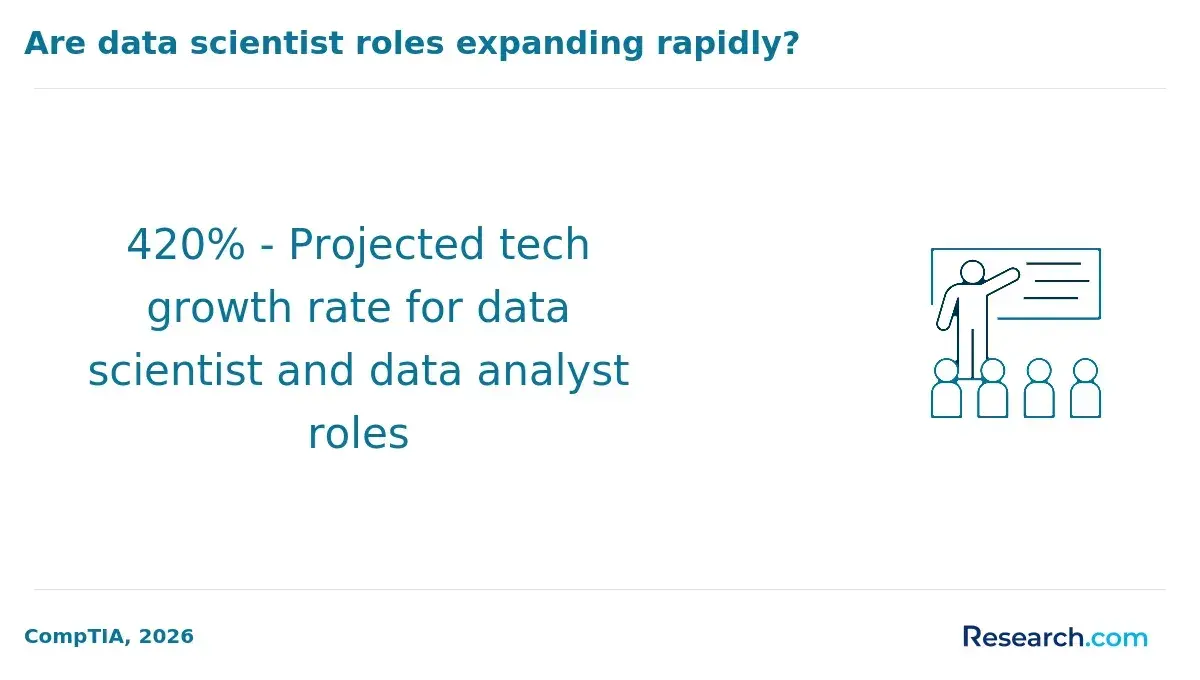
Such programs suit technical product managers with backgrounds in software, engineering, or analytics who want to upskill or lead AI-focused projects. Entry-level PMs often benefit from foundational learning, while experienced managers pursue advanced certifications emphasizing AI strategy and governance. With the rise of AI roles, from 13% to 35% of tech job postings for PM-related roles in recent years, this specialization has become critical.
Challenges faced by technical product managers include setting measurable AI product goals, managing cross-functional teams, and ensuring regulatory compliance. Dedicated AI courses incorporate project management frameworks tailored to AI projects and industry standards, enabling PMs to address these effectively.
For those considering further education options, programs like a 1 year computer science degree online can provide accelerated pathways to deepen technical knowledge alongside AI expertise.
Advance Your Career with AI Online Courses
Artificial Intelligence: Implications for Business Strategy
This program provides an introduction to Artificial Intelligence and their implications for business strategy. Earn an official digital certificate.
Oxford Artificial Intelligence Programme
Explore this Oxford Artificial Intelligence programme offered in a flexible learning environment and explore topics like machine learning, automation, and robotics.
Implementing Agentic AI: Building Your Organizational Playbook
This online MIT Agentic AI course offers a practical approach to deploying AI agents in your organization, including a custom playbook. 3 weeks, exclusive launch price.
Which AI certificates are most valuable for technical product managers today?
For technical product managers, valuable AI certificates focus on the practical use of AI and machine learning within product development and management. These certificates showcase the ability to translate AI capabilities into real-world market solutions and oversee AI-driven products effectively.
Leading programs, including Stanford University's AI for Product Managers, IBM AI Engineering Professional Certificate, and the MIT Sloan Artificial Intelligence: Implications for Business Strategy, offer skills tailored to technical product managers' needs.
The top accredited AI certifications for product managers in the US emphasize AI model lifecycle management, ethical AI considerations, and integrating AI into product roadmaps. They also highlight collaboration with data scientists and engineers, crucial as job postings requiring AI or ML skills for product managers have increased by 74% year-over-year, according to Indeed Hiring Lab's 2024 AI Jobs Trends.
Certifications from platforms like Coursera, edX, and Udacity often include hands-on projects and case studies addressing real-world AI challenges, preparing managers to lead cross-functional teams. Emphasis on business strategy and AI adoption frameworks ensures alignment with company goals and user needs.
Prospective learners should seek certificates balancing technical depth with managerial strategy, updated AI ethics and regulations, and recognized credentials respected by hiring managers. Programs with project-based assessments validate skills more effectively than exam-only options.
For those exploring affordability, consider programs like the cheapest online industrial engineering degree that incorporate AI elements applicable to product management.
How do online AI certificate programs compare with on-campus options for product managers?
Online AI certificate programs for product managers offer unmatched flexibility compared to traditional on-campus options, ideal for professionals balancing work and learning. These programs often feature self-paced curricula, allowing product managers to develop AI skills without fixed schedules or commuting. In contrast, campus programs require set times and physical presence, which may not suit dynamic project timelines.
When comparing campus vs online AI courses for technical product management, accreditation and recognition are key considerations. On-campus certificates usually come from established universities with strong institutional credibility.
However, reputable online providers like Stanford Online and MITx now deliver equally rigorous and current content that aligns well with industry needs. For instance, many online certificates focus on machine learning applications directly relevant to product management roles.
Cost is another important factor. Online certificates typically cost 40-70% less than their on-campus counterparts, as they eliminate expenses like housing and commuting. This affordability broadens access while maintaining quality, particularly when top universities partner with online platforms.
Networking still favors campus programs with face-to-face interaction, but many online options now include live sessions and collaborative projects to promote engagement.
Product managers who master AI and machine learning skills earn 18-25% more in total compensation in major tech hubs, per Glassdoor's Product Management Compensation Report. Those considering advanced study may also explore data science masters online to deepen expertise and career prospects.
Online Delivery of AI Programs, by Institution Type

What admission requirements and technical prerequisites do AI certificate programs usually have?
Admission requirements for AI certificate programs often include a bachelor's degree in fields like computer science, engineering, mathematics, or business analytics. Some programs also accept applicants with strong professional experience in technology or data science, even if their degree is unrelated.
Key technical prerequisites for AI certification courses usually cover programming languages such as Python, statistics proficiency, and basic machine learning concepts. More advanced certificates may require knowledge of linear algebra, calculus, and data structures.
Program rigor varies considerably. Entry-level certificates focus on beginners with minimal prior knowledge, while specialized programs demand demonstrated coding and data manipulation skills. Many providers offer online assessments or preparatory modules that help candidates meet necessary competencies before admission.
For example, an AI certificate designed for product managers may require familiarity with software development life cycles and data-driven decision-making.
Applicants should carefully verify each program's specific prerequisites, as they differ widely. Those without a formal technical background often benefit from foundational courses in programming or statistics prior to enrollment.
Demonstrating a commitment to continuous learning is advantageous, since programs frequently prioritize candidates showing clear goals in AI product leadership. Some professionals may also consider pursuing a doctorate in data analytics online to deepen their expertise and open higher-level career paths.
Choosing a certificate with industry recognition maximizes return on investment. According to Coursera's Global Skills Report, professionals earning AI certificates reported a 21% median salary increase within 12 months, compared to 9% among part-time master's graduates. This highlights the value of targeted AI education for advancing in technical product management roles.
How long do AI courses for technical product managers take and what do they cost?
AI courses tailored for technical product managers vary widely in length, typically lasting from 4 weeks to 6 months depending on depth and format. Short, intensive programs aimed at working professionals generally span 4 to 8 weeks, emphasizing core AI concepts and practical applications in product management.
More extensive certificate courses, often lasting up to 6 months, explore advanced subjects like machine learning integration, AI ethics, and data-driven decision-making in product development.
Course pricing depends on provider, certification, and duration. Entry-level options usually cost between $300 and $1,200, ideal for those seeking foundational knowledge. Comprehensive certification programs offered by universities or specialized platforms range from $1,500 to $5,000.
Employer-sponsored initiatives are increasingly common in large companies, providing access at no personal cost to employees, highlighting AI fluency's growing strategic importance in product and technology teams.
Examples include a focused 6-week AI for product managers course priced around $1,000 and a 4-month professional certificate covering AI strategy, data analytics, and user-centric design nearing $4,000. McKinsey's 2024 State of AI in the Enterprise survey found that 61% of large firms have expanded AI upskilling since 2022.
When selecting a course, consider flexibility in time commitment, recognition of certification, and curriculum relevance to your role or career goals. Hybrid formats combining self-paced and live instruction often provide the best outcomes for busy professionals.
What core AI skills and tools should the best courses teach product managers?
Top AI courses for technical product managers focus on essential machine learning concepts like supervised and unsupervised learning, neural networks, and natural language processing. Managers must interpret AI model outputs and evaluate data quality to drive sound product decisions.
Proficiency with AI frameworks such as TensorFlow, PyTorch, and scikit-learn is crucial for prototyping features. Cloud platforms like AWS SageMaker and Google AI Platform support scalable AI deployments, while knowledge of data pipelines and model lifecycle management ensures alignment between product goals and technical execution.
Ethical AI integration and bias mitigation are critical skills, including understanding explainability methods and meeting compliance standards. Courses often include training on designing user experiences tailored to AI-driven products, helping build user trust.
Generative AI topics such as prompt engineering, quality control, and evaluation metrics are increasingly important. A Gartner survey reports that 78% of digital product leaders aim to embed generative AI within 12-24 months, and 42% have already launched genAI features, highlighting the need for practical genAI expertise.
Managers also benefit from learning to collaborate with data scientists, navigate AI product lifecycles, identify AI opportunities, and measure feature impact after release.
How can you verify accreditation and the credibility of an AI certificate program?
Verifying the accreditation and credibility of an AI certificate program involves a detailed approach centered on transparency and recognized standards. Start by confirming if the program is accredited by legitimate educational bodies, such as regional accreditors in the U.S. like the Higher Learning Commission or Middle States Commission. Accreditation by these organizations ensures industry recognition and institutional legitimacy.
Next, assess the reputation of the institution offering the program. Certificates from well-known universities and reputable online platforms, such as Stanford, MIT, or established Coursera partnerships, generally indicate rigorous academic quality.
Evaluate the curriculum and instructor qualifications. Credible programs provide detailed course outlines and include instructors with proven industry or academic expertise, ensuring content is aligned with evolving industry trends and practical knowledge.
Look for industry partnerships or endorsements. Programs backed by recognized AI firms, tech companies, or professional organizations suggest relevance and alignment with current market demands.
Consider alumni outcomes and authentic testimonials. Transparent data on graduate career progression helps confirm a program's real-world impact. Be wary of certificates claiming broad AI expertise without clear specifics, as AI roles require specialized skills.
With only 29% of technical product managers confident in defining AI evaluation metrics and 72% involved in AI decision-making (Productboard's 2024 Product Management Skills Benchmark), enrolling in a verified program with recognized accreditation is essential for gaining credible AI skills and career advantage.
What career outcomes and job titles can AI-trained technical product managers pursue?
Technical product managers with training in artificial intelligence often hold roles such as AI product manager, machine learning product owner, data product manager, and AI program manager. These positions emphasize overseeing product development cycles that incorporate AI technologies to solve complex challenges and improve user experiences.
Many AI-trained professionals also advance into roles like AI strategy consultant or AI business analyst. These jobs involve advising organizations on AI adoption, data-driven insights, and requirements gathering.
Collaboration is key, as these managers work closely with data scientists, engineers, and stakeholders to prioritize AI features and ensure successful implementation.
Enrollment trends reflect this demand. According to edX's 2024 Industry Microcredentials Report, global enrollments in AI and machine learning professional certificates grew 92% from 2022 to 2024, with courses like AI for product management among the fastest-growing offerings.
This surge highlights the increasing value of professionals skilled in bridging AI technical expertise with strategic market needs to drive advanced AI products from concept to commercialization.
What salary impact can AI certificates have for technical product managers in the U.S.?
Technical product managers in the U.S. who earn recognized AI certificates often receive notable salary boosts. According to Emeritus' Employer Perceptions of Online Credentials survey, 46% of hiring managers for senior PM roles regard AI or machine learning certificates as a "strong positive signal." This recognition typically results in higher starting salaries, faster promotions, and salary premiums between 10% and 20% above those without such credentials.
For example, a technical product manager with an average salary of $120,000 might see an annual increase ranging from $12,000 to $24,000 after obtaining a reputable AI certificate. These benefits hold across major tech hubs and vary somewhat by company size and region. Certificates from well-known providers also boost candidate credibility and competitive advantage during recruitment.
Beyond salary, these certificates facilitate access to senior roles focused on AI strategy, close collaboration with data science teams, and managing advanced feature rollouts. Such positions frequently offer additional compensation in the form of performance bonuses and stock options.
Professionals aiming to grow their careers should prioritize certificates that cover practical AI applications in product management. Expertise in machine learning models, ethical AI considerations, and data-driven decision-making signals readiness for leadership roles with greater responsibility.
How should technical product managers choose the best AI course and build a learning plan?
Technical product managers seeking AI education should choose courses that align with their expertise and career goals. Focus on programs covering core concepts like machine learning algorithms, data pipelines, and model deployment, alongside key product management skills such as AI ethics, user-centric design, and stakeholder communication.
Hands-on projects or simulations are essential to develop practical skills necessary for effective decision-making and leading cross-functional teams.
Course provider reputation and accreditation matter, especially if certification supports career growth. Certificates from respected institutions enhance credibility in competitive U.S. job markets and can aid in promotions.
According to LinkedIn's 2024 AI Talent Trends by Region report, job postings in North America increased by 81%, emphasizing strong demand for candidates with proven AI proficiency.
Creating a structured learning plan is beneficial: start with foundational AI fundamentals, then advance to specialized modules in sectors like healthcare, finance, or retail. Allocating weekly time for hands-on work, collaboration, and case studies deepens understanding. Staying updated with AI trends and compliance guidelines ensures continued market relevance.
Consider personal schedules and preferred learning formats. Options include self-paced online courses, live virtual sessions, or hybrid models. Professionals balancing workloads may prefer flexible pacing, while immersive cohort-based classes with mentorship suit those seeking deeper engagement.
Reviewing alumni outcomes and course feedback helps confirm quality and relevance to real-world AI product challenges.
Other Things You Should Know About Artificial Intelligence
In 2027, top AI courses for technical product managers include Stanford's "AI for Product Managers", MIT's "AI: Implications for Business Strategy", and "AI for PMs" by edX. Each offers in-depth insights tailored for product managers and provides a certificate upon completion, focusing on practical AI applications in product management.
AI bias arises when training data or algorithms reflect existing prejudices, which can lead to unfair or skewed outcomes. For technical product managers, understanding and mitigating AI bias is crucial to ensure products are ethical and perform accurately across diverse user groups. This requires careful dataset selection, ongoing testing, and integrating fairness audits into the AI development lifecycle.
Ethical considerations in AI include issues like privacy, transparency, accountability, and avoiding discrimination. Product managers must ensure AI systems respect user data privacy, provide explainable results, and include mechanisms to address unintended consequences. Adhering to ethical principles is essential to maintain user trust and comply with regulatory standards.
Yes, technical product managers do not need deep AI coding expertise to lead AI projects effectively. Their role focuses on defining product vision, understanding user needs, coordinating cross-functional teams, and translating AI capabilities into business value. However, a solid foundational knowledge of AI concepts and tools helps improve communication with technical teams and informed decision-making.
References
- Best AI Certifications to Boost Your Career in 2026 – Dataquest https://www.dataquest.io/blog/best-ai-certifications/
- AI Product Management Masterclass https://www.institutepm.com/knowledge-hub
- International Board for AI Accreditation | Professional Accreditation Body https://www.aiaccreditationboard.org/
- AI Product Manager Certifications: Best Credentials to Advance Your Career | Teal https://www.tealhq.com/career-paths/ai-product-manager-certifications
- AI Learning Roadmap for Product Managers https://productschool.com/blog/artificial-intelligence/ai-learning-roadmap
- Certification of AI systems https://verifywise.ai/lexicon/certification-of-ai-systems
- AI Product Manager Certification| Pragmatic Institute https://www.pragmaticinstitute.com/product/ai-product-management-expert-certification/
- AI Product Manager: Role, Salary, Skills & Career Path Guide https://www.simpliaxis.com/resources/ai-product-manager-guide