2027 Best AI Courses for Instructional Designers Using Generative AI

Co-Founder and Chief Data Scientist
Instructional designers often face challenges integrating generative AI tools effectively into curriculum development due to rapidly evolving technology and limited specialized training options. This gap can hinder the creation of engaging, adaptive learning experiences that meet modern educational demands.
As the need for AI-driven instructional strategies grows, professionals must quickly acquire relevant skills without disrupting their current career trajectories. Identifying the right courses tailored for instructional designers is critical in addressing these challenges.
This article reviews top AI courses designed to enhance generative AI expertise, aiming to guide professionals toward flexible, accredited programs that support a successful career pivot into this innovative field.
Key Things You Should Know
- Instructional designers increasingly leverage generative AI tools to create personalized, adaptive learning experiences, improving learner engagement by up to 45% according to 2025 studies.
- Top AI courses in 2026 emphasize practical skills in prompt engineering, ethical AI use, and integrating generative AI with Learning Management Systems (LMS) for scalable content delivery.
- Demand for AI-savvy instructional designers grew 35% between 2024 and 2025, reflecting industry shifts toward automation and data-driven curriculum development.
Advance Your Career with AI Online Courses
Artificial Intelligence: Implications for Business Strategy
This program provides an introduction to Artificial Intelligence and their implications for business strategy. Earn an official digital certificate.

Oxford Artificial Intelligence Programme
Explore this Oxford Artificial Intelligence programme offered in a flexible learning environment and explore topics like machine learning, automation, and robotics.

Implementing Agentic AI: Building Your Organizational Playbook
This online MIT Agentic AI course offers a practical approach to deploying AI agents in your organization, including a custom playbook. 3 weeks, exclusive launch price.

AI Adoption: Driving Business Value and Impact
This online MIT AI Adoption: Driving Business Value and Impact offers practical frameworks to close the gap between AI potential and business reality.

Artificial Intelligence in Pharma and Biotech
Discover the applications and limitations of artificial intelligence in pharma and biotech with this MIT online short course.

What are the best AI courses for instructional designers using generative AI today?
The best ai courses for instructional designers using generative AI focus on practical skills and real-world applications.
Top generative AI training for instructional designers includes prompt engineering, AI integration in e-learning platforms, and ethical considerations. Coursera's "AI For Everyone" provides foundational knowledge ideal for beginners, while LinkedIn Learning offers specialized courses on generative AI tools targeting course creation and learner engagement. EdX's "AI in Education" explores adaptive learning systems that use AI to personalize instruction effectively.
Training programs addressing urgent industry trends show promise as 71% of learning and development leaders reported piloting or scaling generative AI in 2025, up from 15% in 2023 according to the LinkedIn Learning 2025 Workplace Learning Report. This makes mastering AI-based tools essential for instructional designers.
When choosing courses, look for coverage of key topics including:
- Understanding generative AI fundamentals and capabilities
- Applying AI to automate content creation and assessment
- Implementing AI-driven analytics to improve learner outcomes
- Ethical AI use and bias mitigation in educational content
Hands-on projects with platforms like ChatGPT or DALL-E are vital for developing transferable skills. Universities such as the University of Illinois also offer advanced AI courses tailored to create scalable, personalized learning experiences.
For those exploring pathways in AI and technology, consider reviewing data science programs available across the USA to complement instructional design expertise with broader technical knowledge.
Advance Your Career with AI Online Courses
Artificial Intelligence: Implications for Business Strategy
This program provides an introduction to Artificial Intelligence and their implications for business strategy. Earn an official digital certificate.
Oxford Artificial Intelligence Programme
Explore this Oxford Artificial Intelligence programme offered in a flexible learning environment and explore topics like machine learning, automation, and robotics.
Implementing Agentic AI: Building Your Organizational Playbook
This online MIT Agentic AI course offers a practical approach to deploying AI agents in your organization, including a custom playbook. 3 weeks, exclusive launch price.
How can generative AI skills enhance an instructional design career and salary potential?
Generative AI skills for instructional design career growth significantly enhance the ability to develop personalized, adaptive learning content. Instructional designers proficient in generative AI can automate routine tasks such as content creation and assessments, allowing for greater focus on innovative and strategic instructional planning. This capability increases engagement and retention, making professionals more competitive and often translating to higher salaries.
Integrating generative AI tools, including language models and image synthesis, can reduce course development timelines by up to 30%, according to industry data.
Additionally, AI-driven analytics enable designers to measure learner outcomes more effectively and fine-tune training programs, skills that are increasingly valued in corporate and academic settings. The impact of generative AI on instructional designer salary potential is also notable, with pay increases between 15%-25% over professionals without AI expertise.
Choosing the right educational format to acquire these skills is important. Professionals are 2.5 times more likely to complete short, modular online courses lasting under two hours than longer offerings, making microlearning and self-paced modules ideal for busy schedules. Cohort-based courses provide interaction and mentorship that can accelerate practical skill application.
Instructional designers should seek courses balancing generative AI theory, practical tools, and ethics to maximize employability. Many prospective students explore an online AI degree to gain comprehensive training and distinction in an evolving job market focused on scalable, personalized learning solutions.
Which online vs campus AI programs are best for instructional designers?
For instructional designers seeking expertise in generative AI, the best online AI training programs for instructional designers offer significant flexibility and access to the latest tools. Institutions like Georgia Tech and the University of Illinois focus on applied learning through practical projects involving large language models and prompt engineering.
These programs adapt rapidly to industry needs, allowing learners to develop skills aligned with employer demand, especially in e-learning content innovation.
Top campus-based AI certification courses for instructional designers, available at universities such as Stanford and Carnegie Mellon, provide in-depth theoretical foundations and valuable networking opportunities. These residential programs blend AI research with instructional design, ideal for professionals targeting leadership or academic roles requiring comprehensive knowledge of AI ethics, pedagogy, and frameworks.
Choosing the right path depends on individual career goals and time availability. Online programs suit working professionals seeking quick upskilling, while campus courses offer immersive study experiences. Hybrid models also exist, combining virtual workshops with in-person residencies for balanced flexibility and hands-on interaction.
Job postings for instructional designers listing generative AI or LLM skills rose by 412% from January 2024 to March 2025, underscoring the importance of AI proficiency. Certifications in prompt design, AI content creation, and data analytics enhance practical skills efficiently.
For those interested in related fields, consider exploring a cybersecurity degree online as a complementary pathway.
What admission requirements do AI courses for instructional designers typically have?
Admission requirements for AI courses in instructional design generally vary but often include foundational knowledge and relevant experience. Many certificate and professional development programs expect applicants to have a background in instructional design, education, or related fields like learning technology or curriculum development.
Prerequisites for instructional designer AI training programs often require one to two years of experience in instructional design or training roles, ensuring participants can effectively apply generative AI concepts.
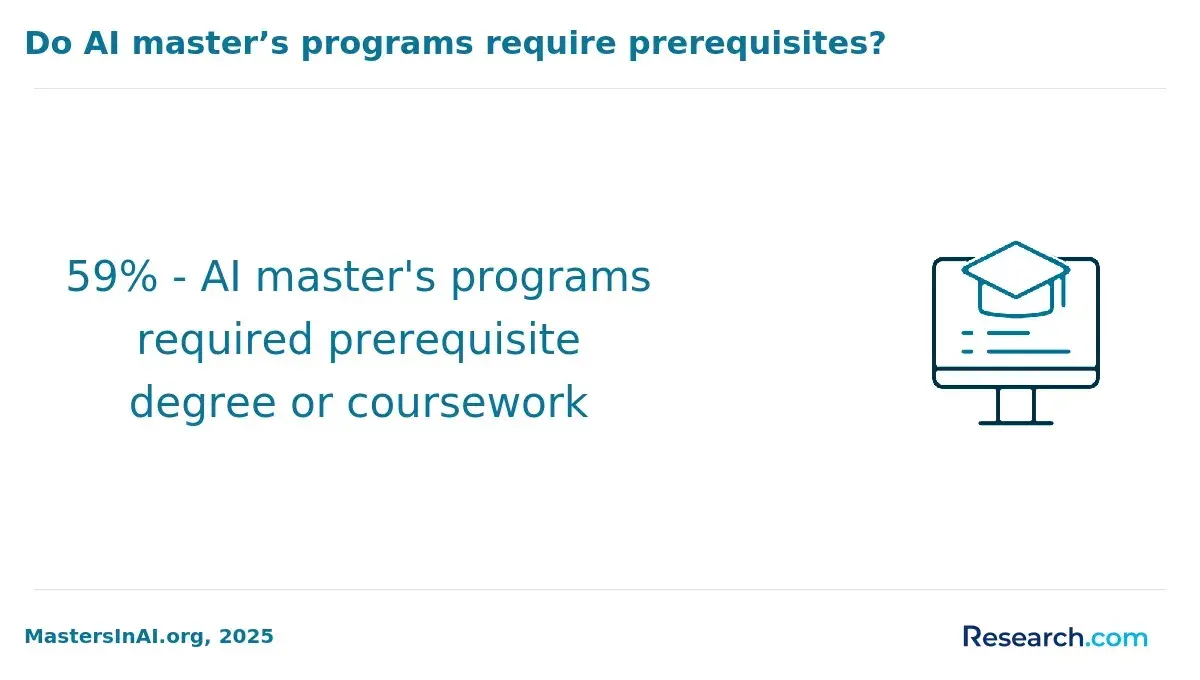
Technical skills frequently sought include familiarity with basic programming or data concepts. Some courses expect proficiency in Python, data analysis, or machine learning, while others provide introductory modules for learners lacking technical backgrounds. These learners might need to complete preparatory coursework before core AI classes.
Academic criteria typically involve a bachelor's degree in education, instructional design, computer science, or an equivalent professional background.
Graduate-level programs usually require an undergraduate degree, along with letters of recommendation or statements of purpose explaining goals with generative AI integration. Project-based programs emphasize practical skills, often requiring portfolios or instructional design project examples to demonstrate readiness.
Additionally, some specialized courses require access to particular software or platforms and may conduct interviews assessing motivation and fit. Successful candidates combine instructional design expertise, basic technical skills, and a clear vision for leveraging AI in education.
For those exploring advanced paths, considering an online data science PhD can further deepen expertise and career potential.
What core topics and tools do AI courses for instructional designers usually cover?
AI courses tailored for instructional designers focus on integrating generative AI into educational content creation and delivery. Key topics include ethical implications, generative AI concepts, and hands-on use of tools like ChatGPT, GPT-4, and AI-driven authoring software to develop quizzes, simulations, and personalized learning paths.
Data literacy is a critical component, enabling designers to collect, analyze, and apply learner data for improving AI models and adaptive learning experiences. Familiarity with platforms such as OpenAI, Google's Vertex AI, and Microsoft Azure Cognitive Services is commonly included. Prompt engineering, which involves crafting precise inputs for AI to generate accurate educational content, is also emphasized.
Workflow integration teaches how to embed AI tools into existing learning management and content management systems. This often automates routine tasks like content updates, feedback processing, and learner assessments.
Legal and ethical issues are mandatory subjects, covering data privacy, algorithmic bias, and intellectual property rights to ensure responsible AI use. Case studies of AI successes and failures in education help designers understand risk management.
According to the Udemy Business 2024 Workplace Learning Trends Report, 52% of professionals completing entry-level AI courses applied generative AI in their work within three months, highlighting the practical value these skills bring to instructional design.
How long do AI programs for instructional designers take and what do they cost?
AI programs for instructional designers vary in length and depth, from short courses lasting 4 to 8 weeks to extensive certificate programs of 3 to 6 months.
Introductory classes on generative AI tools often require less than 20 hours, while advanced options with practical projects and adaptive learning design can exceed 100 hours. Part-time formats help working professionals manage their schedules and improve learning retention.
Costs differ widely depending on program scope and provider. Basic online courses usually range from $300 to $1,000, appealing to those building foundational skills in generative AI. More comprehensive certificate programs, often offered by universities or specialized platforms, typically cost between $1,500 and $5,000. Higher fees tend to cover expert instruction, personalized feedback, and project-based assessments that develop authentic skills.
Advanced AI training offers measurable efficiency gains. Research from McKinsey & Company indicates teams using adaptive or AI-personalized learning cut time-to-competence by 25-60% compared to traditional e-learning. This speed can justify initial costs through faster course development and learner mastery.
When selecting AI courses, consider flexibility, industry relevance, and credential recognition. Programs that emphasize hands-on use of generative AI for content creation and learner analytics provide tangible practical benefits. Employers increasingly value proven AI competencies, making recognized certifications an investment in career advancement.
Tech Employees' AI Usage

How do I verify accreditation and quality for AI-focused instructional design programs?
Confirm institutional accreditation through recognized U.S. agencies such as those endorsed by the Council for Higher Education Accreditation (CHEA) or the U.S. Department of Education to ensure the program meets academic standards and offers legitimate credentials.
Review course content for coverage of AI-driven learning analytics, personalization techniques, and generative AI tools integration. Quality programs often feature hands-on projects and case studies, demonstrating practical application.
For instance, the Brandon Hall Group Learning & Development Benchmarking Study 2024 shows organizations using AI-driven learning analytics are 3.4 times more likely to report significant learning impact improvements.
Evaluate faculty expertise by prioritizing instructors actively involved in AI research or industry practice relevant to instructional design. Look for transparently disclosed credentials, publications, or partnerships with reputable AI research centers, all of which indicate program depth.
Consider external validation such as industry endorsements, collaborations with technology firms, and positive alumni outcomes. Student reviews can provide practical insights into program quality and applicability.
Program flexibility, offering online, hybrid, or in-person formats, allows balancing professional commitments while gaining valuable skills.
What AI-related job roles can instructional designers pursue after these courses?
Instructional designers who complete AI-focused courses can pursue specialized roles that blend artificial intelligence into learning environments. Examples include AI Learning Experience Designers, who craft adaptive course content driven by data insights, and AI Curriculum Developers, who create AI-enhanced instructional materials and automated assessments.
Another key role is the AI Integration Specialist, responsible for embedding AI tools within learning management systems to enable personalized education and real-time feedback.
Ethics is a growing concern in AI application. AI Ethics Compliance Officers within learning and development departments ensure systems operate fairly, transparently, and securely. This role addresses bias and data privacy, important issues given that only 29% of organizations using generative AI in HR/L&D have formal policies to manage these risks.
Instructional technologists with AI skills may work as AI Content Curators, tailoring AI-generated resources to learning goals, or as AI Training Facilitators, guiding educators in effective AI use. For research-oriented professionals, AI Learning Analytics Specialists analyze learner data to continuously improve AI-driven training programs.
Success in these positions requires knowledge of AI technologies, ethical frameworks, system integration, and ongoing evaluation to ensure AI tools enhance learning outcomes without compromising fairness or privacy.
What industry certifications support AI skills for instructional designers?
Industry certifications significantly enhance AI skills for instructional designers and improve their employability. Important credentials include the AI in Learning Design Certification offered by organizations such as the Association for Talent Development (ATD). This certification emphasizes the use of generative AI tools to create personalized learning experiences.
Additionally, Certified Learning Experience Designer (CLED) programs increasingly integrate AI components focused on adaptive content development using AI algorithms.
Technical certifications like Microsoft Certified: Azure AI Fundamentals and the IBM AI Engineering Professional Certificate demonstrate expertise in AI platforms and tools essential for content automation and analytics. These certifications provide practical skills to effectively integrate generative AI in instructional environments.
Specialized credentials such as Google AI for Education courses highlight critical areas like AI ethics, bias mitigation, and transparency in instructional design, a growing priority in responsible AI implementation.
Research from Indeed Hiring Lab shows candidates with AI-enhanced portfolios receive 38% more interview invitations for learning design roles, demonstrating the value of combining certifications with practical AI project experience. Employers now prioritize demonstrable AI proficiency coupled with recognized certifications and robust portfolios showcasing hands-on use of generative AI.
How should instructional designers choose the right generative AI course for their goals?
Instructional designers selecting generative AI courses should focus on alignment with their career goals and essential skills. Identify AI applications relevant to your work, such as content generation, adaptive learning design, or data-driven assessment. Prioritize courses offering hands-on experience rather than purely theoretical knowledge.
For example, designers interested in curriculum personalization should seek courses covering machine learning fundamentals and real-world case studies.
Course technical depth matters. Beginners benefit from introductory options covering core AI concepts and practical examples without heavy programming. Advanced learners might look for courses on prompt engineering or AI customization. Reviewing syllabi and instructor credentials helps determine the best fit.
Credentials that enhance your resume are valuable. Well-regarded certificates or programs affiliated with reputable organizations can demonstrate tangible skills to employers. The Burning Glass Institute reports that instructional design roles requiring AI skills offer median salaries 18-22% higher than those without, emphasizing the market value of these competencies.
Budget and time are important considerations. Online courses vary widely in cost and duration. Balance affordability with thorough coverage to ensure essential skills are taught. Reading learner reviews can offer insights into course effectiveness and practical AI knowledge that supports instructional design innovation.
Other Things You Should Know About Artificial Intelligence
In 2027, top AI courses for instructional designers using generative AI include "AI for Educators" by Coursera, "Generative AI in Instructional Design" by edX, and LinkedIn Learning's "AI Techniques for Learning Experience Design." These courses focus on practical applications and innovative strategies for enhancing educational content.
Artificial intelligence enables instructional designers to personalize learning paths through adaptive content and real-time feedback. It automates routine tasks like content curation and assessment grading, allowing designers to focus on creativity and learner engagement. AI also facilitates data-driven insights that help tailor materials to diverse learner needs.
AI tools may lack contextual understanding, leading to inaccuracies or inappropriate content suggestions. There can be overreliance on AI outputs, which risks reducing critical human input and creativity. Additionally, technical challenges such as integration complexity and cost can pose barriers for instructional designers.
Continuous professional development through AI-focused workshops, webinars, and industry conferences is essential. Following reputable research publications and joining professional networks specialized in education technology helps designers keep updated. Engaging with AI communities and experimenting with new tools also fosters ongoing learning and adaptation.
References
- AI-Integrated Instructional Design in Higher Education: A Systematic Exploration of Tools, Roles, and Challenges https://citejournal.org/volume-25/issue-4-25/general/ai-integrated-instructional-design-in-higher-education-a-systematic-exploration-of-tools-roles-and-challenges
- AI and Instructional Design | Enhanced Learning Experiences https://www.digitallearninginstitute.com/blog/ai-and-instructional-design
- Will AI Change the Work of Instructional Designers? Maybe It Already Has - Learning Guild https://www.learningguild.com/articles/will-ai-change-the-work-of-instructional-designers-maybe-it-already-has
- Instructional Design & Technology Career Roadmap https://www.snu.edu/instructional-design-and-technology-career-roadmap
- How can AI help to improve your instructional design workflow? https://www.neovation.com/learn/82-how-ai-help-improve-your-instructional-design-workflow
- Generative AI for Instructional Design: Changes, Chances, Challenges - AACE https://aace.org/review/generative-ai-for-instructional-design-changes-chances-challenges/