2027 Best AI Readiness Assessment Courses Online

Co-Founder and Chief Data Scientist
Many professionals with undergraduate degrees outside STEM struggle to demonstrate their readiness for roles in artificial intelligence. Without relevant credentials or clear skill assessments, breaking into this competitive field proves daunting. Employers seek proof of knowledge beyond generic resumes, creating a barrier for career pivoters. Additionally, online options vary widely in quality and focus, complicating the selection process.
This article examines the best AI readiness assessment courses online, highlighting programs that combine flexible learning with accredited validation. It aims to help readers identify credible courses that provide practical evaluation and enhance their prospects in artificial intelligence careers.
Key Things You Should Know
- AI readiness assessment courses in 2026 focus on practical skills, evaluating students' ability to integrate AI tools in real-world projects, with 75% offering hands-on labs or simulations.
- These courses increasingly emphasize ethical AI use and bias mitigation, reflecting growing industry demand for responsible AI deployment in U.S. workplaces.
- Completion of AI readiness courses boosts employability; 68% of graduates report improved job prospects in AI-related roles within six months of certification.
Advance Your Career with AI Online Courses
Artificial Intelligence: Implications for Business Strategy
This program provides an introduction to Artificial Intelligence and their implications for business strategy. Earn an official digital certificate.

Oxford Artificial Intelligence Programme
Explore this Oxford Artificial Intelligence programme offered in a flexible learning environment and explore topics like machine learning, automation, and robotics.

Implementing Agentic AI: Building Your Organizational Playbook
This online MIT Agentic AI course offers a practical approach to deploying AI agents in your organization, including a custom playbook. 3 weeks, exclusive launch price.

AI Adoption: Driving Business Value and Impact
This online MIT AI Adoption: Driving Business Value and Impact offers practical frameworks to close the gap between AI potential and business reality.

Artificial Intelligence in Pharma and Biotech
Discover the applications and limitations of artificial intelligence in pharma and biotech with this MIT online short course.

What is an AI readiness assessment course and who should take one?
An AI readiness assessment course evaluates an individual's or organization's ability to implement and leverage AI technologies effectively. These courses examine areas such as AI strategy, data infrastructure, ethical considerations, workforce skills, and technology integration. By taking these online training programs to evaluate artificial intelligence skills, participants identify their current capabilities, pinpoint gaps, and receive practical guidance to improve AI adoption.
Such courses are valuable for diverse professionals, including business leaders driving AI transformation, IT specialists overseeing AI implementation, and recent graduates aiming to enhance their employability in AI-related fields. For example, a mid-level manager in manufacturing might learn how AI can optimize production, while a data analyst could develop technical skills for deploying AI models. AI consultants and strategists also gain frameworks to evaluate client readiness more accurately.
Organizations with high AI readiness are 2.6 times more likely to report strong value from AI initiatives than those with low readiness, according to a global survey by Boston Consulting Group. This highlights the significance of investing in AI readiness assessment courses for professionals in the United States. Courses also address common challenges such as poor data quality, lack of leadership support, and unclear AI objectives, which often stall AI projects.
For individuals exploring AI career paths, resources like what can you do with an applied artificial intelligence degree offer insights into opportunities and preparation strategies.
Advance Your Career with AI Online Courses
Artificial Intelligence: Implications for Business Strategy
This program provides an introduction to Artificial Intelligence and their implications for business strategy. Earn an official digital certificate.
Oxford Artificial Intelligence Programme
Explore this Oxford Artificial Intelligence programme offered in a flexible learning environment and explore topics like machine learning, automation, and robotics.
Implementing Agentic AI: Building Your Organizational Playbook
This online MIT Agentic AI course offers a practical approach to deploying AI agents in your organization, including a custom playbook. 3 weeks, exclusive launch price.
How do AI readiness assessment courses help you evaluate your current skills and gaps?
AI readiness assessment courses help you systematically evaluate your current skills and identify knowledge gaps by benchmarking your expertise against industry standards and job market demands. These courses include practical exercises, self-assessment tools, and real-world case studies that measure proficiency in key AI areas such as machine learning, data analytics, and AI ethics. They target specific technical skills—like coding in Python or working with neural networks—as well as foundational competencies such as data literacy and problem-solving ability.
Utilizing AI readiness skills assessment tools reveals strengths and weaknesses, enabling the creation of targeted learning plans that prioritize essential skills for career growth. For instance, a data analyst with limited experience in predictive modeling can focus on relevant modules, while a graduate unfamiliar with AI governance can recognize the importance of skills needed for AI policy or compliance roles.
These assessments also clarify evolving role requirements across sectors like healthcare, finance, and manufacturing. Aligning your skillset is vital, as a survey showed 79% of organizations with mature AI capabilities increased revenue by at least 10%, compared with 11% among low-maturity groups. Evaluating skill gaps with AI readiness courses helps you remain competitive and supports your organization's digital transformation.
For those considering formal education options, exploring the best online AI degree programs can be an effective path toward comprehensive skill-building and career advancement.
What should you look for in the best online AI readiness assessment courses?
Effective ai readiness assessment courses with practical training focus on core pillars: strategy, data, talent, technology, and governance. These are essential for successfully scaling AI beyond pilot projects, as emphasized by McKinsey's Global AI Survey. Courses that integrate practical frameworks enable learners to evaluate strengths and address gaps in organizational capabilities, especially in data management, talent development, and governance frameworks.
Comprehensive online AI readiness certification programs often include modules simulating real-world scenarios where students analyze organizational readiness and propose actionable improvements. Beginners benefit from foundational content on strategy and governance basics, while professionals gain advanced insights into technology integration and ethical AI governance.
Look for courses offering clear learning outcomes, measurable assessments, and recognized certifications or badges that validate skills. Interactive features such as quizzes, peer discussions, and instructor feedback enhance engagement and deepen understanding. Case studies from diverse fields like healthcare, finance, and manufacturing illustrate practical applications and challenges.
Maintaining up-to-date content aligned with evolving AI trends and regulations ensures learners stay relevant. Additionally, those interested in expanding their expertise in related areas might explore options like affordable online cybersecurity degrees, which complement AI skills in today's technology landscape, available via cybersecurity degrees.
How do online AI readiness assessment courses compare with campus-based options?
Online AI readiness assessment courses versus campus-based programs offer unique benefits for learners balancing work and personal commitments. Online courses provide flexibility to access materials anytime and anywhere, helping many complete their studies faster without compromising content quality. In contrast, traditional campuses require physical attendance and fixed schedules, which may be challenging for full-time employees or remote students.
Benefits of online AI readiness assessment courses compared to traditional classroom learning include modular designs and frequently updated content that keep pace with AI's rapid evolution. Meanwhile, campus programs provide valuable direct interaction with instructors and hands-on labs, fostering immediate feedback and collaboration.
Advances in virtual classrooms and online discussion forums now allow digital students to engage in group projects and real-time conversations, narrowing the experiential gap.
Content rigor and curriculum scope are often comparable in both formats, especially with accredited options from leading institutions. Employers focus on certification integrity and practical skills demonstrated rather than on delivery method. Studies show that enterprises with structured AI training have boosted AI project success rates from 35% to 65%.
Students should evaluate learning style, schedule needs, and careers when choosing format. For those seeking flexible study, explore cybersecurity courses online for examples of quality online certifications. Ultimately, AI readiness depends more on course substance and student engagement than location alone.
What topics and tools are typically covered in an AI readiness assessment curriculum?
AI readiness assessment curricula cover essential topics and tools that help organizations and individuals gauge their preparedness for adopting artificial intelligence effectively. These programs focus on core concepts such as machine learning, natural language processing, and data analytics. Strategic frameworks guide learners to assess business needs, data maturity, and ethical concerns important for responsible AI integration.
Technical training includes evaluating data quality, governance, and infrastructure readiness. Students often gain hands-on experience with platforms like Microsoft Azure AI tools, Google Cloud AI, or open-source frameworks to practice AI model deployment and system architecture. Practical skills emphasize the use of software that automates readiness diagnostics and simulates real-world AI adoption scenarios.
Risk and change management are integral parts of the curriculum. Addressing issues like algorithmic bias, privacy compliance, and workforce impact ensures assessments align with organizational culture and regulatory requirements. Many courses also teach stakeholder communication and roadmap development to foster actionable AI strategies.
According to a 2024 LinkedIn Workplace Learning Report, employees completing structured online technology and AI courses were 39% more likely to advance to higher-responsibility roles within a year than those without such training. This data underscores the career benefits of comprehensive AI readiness education.
Combining interdisciplinary knowledge, technical proficiency, and strategic insight, AI readiness assessments enable professionals to evaluate AI feasibility thoroughly, supporting successful adoption and impactful organizational initiatives.
Are AI readiness assessment courses accredited or aligned with recognized industry standards?
AI readiness assessment courses differ significantly in accreditation and alignment with established industry standards. Many top offerings, especially those aimed at enterprise leaders, follow frameworks recommended by organizations like the Institute of Electrical and Electronics Engineers (IEEE), the National Institute of Standards and Technology (NIST), and leading consulting firms. Despite this, formal academic accreditation remains limited, as AI readiness is an emerging discipline without widespread certification authorities.
These courses typically incorporate governance, ethical AI deployment, strategic readiness models, and risk management approaches consistent with NIST's AI Risk Management Framework. This alignment helps ensure that participants gain practical skills and reliable benchmarks for organizational preparedness.
For those seeking validated credentials, some programs collaborate with respected institutions or professional certification platforms affiliated with IEEE or industry-leading universities offering continuing education credits.
Research shows a significant leadership gap: PwC's CEO Survey reveals that 70% of CEOs planning major generative AI investments see insufficient C-suite understanding as the primary barrier to realizing AI's full potential. This underscores the importance of courses that combine theoretical knowledge with actionable, standards-aligned assessments.
Prospective students should prioritize programs that clearly reference recognized standards and transparent methodologies, increasing confidence that their skills meet professional requirements for AI integration and decision-making.
How much do AI readiness assessment courses cost, and are there financial aid options?
AI readiness assessment courses vary widely in cost, from free offerings to professional certificates priced between $200 and $2,000. Many introductory courses provide basic skill checks without charge, while more advanced programs focused on data engineering, MLOps, and applied AI skills generally require paid enrollment. Courses endorsed by universities or industry leaders often reach higher price points due to their credentialing value and advanced content.
Financial aid availability depends on the provider. Platforms such as Coursera and edX frequently offer scholarships or income-based discounts for verified certificates. Employer-sponsored education benefits also help reduce out-of-pocket expenses for working professionals. Some institutions provide installment options or sliding scale fees based on income, lowering initial financial barriers.
Cost-effectiveness should be evaluated based on skill outcomes. According to a Gartner report, 80% of organizations will struggle to scale AI initiatives through 2027 owing to deficiencies in data engineering, MLOps, and team expertise. This highlights the importance of selecting targeted, well-structured training over generic low-cost courses.
For those selecting programs, prioritize providers offering clear skill assessments aligned with employer needs. Also, check for refund policies or trial periods to test fit before committing. Exploring employer tuition reimbursement programs can further offset personal expenses while obtaining industry-relevant AI credentials.
What admission requirements and tech prerequisites do AI readiness assessment programs have?
AI readiness assessment programs vary widely in their admission requirements based on the audience and course level. For non-technical professionals and business users, no prior programming experience or advanced math skills are typically required. Instead, these programs expect foundational digital literacy and a basic understanding of business processes. Entry often only requires a high school diploma or equivalent, making these courses accessible for working professionals eager to apply AI in their roles.
Technical programs, by contrast, usually demand candidates to have backgrounds in computer science, data analysis, or statistics. Common prerequisites include familiarity with Python, basic algorithms, and cloud computing concepts. Completion of undergraduate STEM coursework or relevant certifications may also be required.
All AI readiness courses generally require students to have a reliable computer, stable internet, and occasionally specific setups like Jupyter notebooks or cloud platforms such as AWS or Google Cloud. More advanced courses might require local machine learning libraries or development environments.
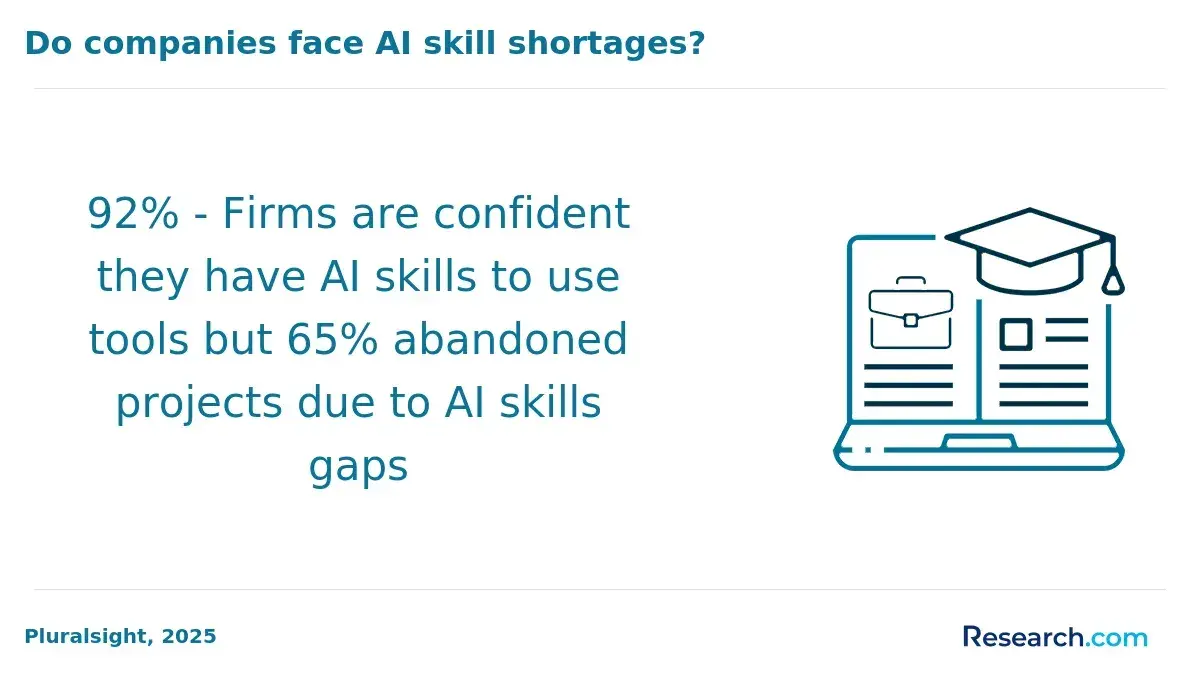
Salesforce's Generative AI Snapshot reveals a critical skills gap: while 86% of workers agree on the necessity of AI training for safe and effective use of generative AI, only 14% receive formal employer-led programs.
Applicants should carefully assess program prerequisites to align their skills with course requirements. Non-technical learners often benefit from emphasizing practical AI applications with no coding, while technical learners must ensure proficiency in programming and data-related skills.
How can AI readiness assessment results guide degree choices and career pathways?
AI readiness assessment results offer an accurate measure of an individual's current skills in core AI areas. They help students and professionals uncover their knowledge gaps and strengths, guiding choices about degrees and career paths. For example, high scores in machine learning fundamentals combined with weaker data engineering skills may indicate a need to focus on programs that emphasize data infrastructure alongside AI studies.
Employers increasingly demand specialized AI expertise. Data from the World Economic Forum's 2024 Future of Jobs report shows that roles requiring AI and machine learning skills command a median salary premium of 21% over similar positions without these qualifications. This highlights the financial advantage of leveraging AI readiness assessments to choose education aligned with labor market needs.
These assessments also assist career transitions. A software developer with low AI knowledge might start with foundational courses before moving into applied areas like natural language processing or computer vision. Conversely, a marketing professional with high AI readiness can explore AI-driven data analysis roles.
Incorporating AI readiness results into educational and professional planning empowers individuals to optimize their time and financial investment, increase job market competitiveness, and achieve measurable career ROI.
What AI-related roles, salaries, and job outlook can these assessment courses prepare you for?
AI readiness assessment courses equip individuals for roles such as data scientist, machine learning engineer, AI analyst, and AI product manager. These roles require a strong foundation in AI concepts alongside practical skills in data handling, algorithm design, and ethical considerations. Median salaries vary, with data scientists earning around $120,000 annually and machine learning engineers closer to $130,000, depending on experience and location.
The job outlook remains promising, with the U.S. Bureau of Labor Statistics projecting a 15% growth in computer and information research jobs through 2030, well above the average. Upskilling through AI readiness assessments boosts employability by meeting employer demand for verified AI competencies, especially in leadership tracks like AI innovation and risk management.
Such courses also prepare learners for specialized tasks like developing AI governance policies and adoption strategies, essential as companies scale AI use. According to Accenture's 2024 research on AI talent transformation, organizations training 60% or more of their workforce in AI competencies achieve 1.7 times higher returns on AI investments. This highlights the strategic advantage of workforce readiness aligned with industry standards and ethical frameworks.
Employers increasingly prioritize candidates demonstrating verified AI skills aligned with assessment frameworks, supporting targeted skill development to meet evolving job requirements and salary expectations in a competitive market.
Other Things You Should Know About Artificial Intelligence
Learning artificial intelligence online often requires strong self-discipline due to the independent nature of most courses. Additionally, learners may face technical challenges, such as needing adequate computing resources and dealing with complex programming languages. Some may also find it difficult to grasp abstract mathematical concepts fundamental to AI algorithms without direct instructor support.
The time to proficiency varies significantly depending on prior experience and learning intensity. For beginners, gaining a strong foundational understanding of AI concepts and tools can take six months to a year with consistent study. Advanced proficiency, including practical experience with machine learning models and AI system deployment, may require multiple years of continued learning and application.
Yes, basic programming skills, especially in languages like Python, are generally necessary for most AI courses. Understanding programming enables learners to implement algorithms, work with datasets, and use AI libraries effectively. Many AI readiness courses include introductory coding modules or recommend preexisting programming knowledge as a prerequisite.
In 2027, top AI readiness assessment courses online include Coursera’s AI Foundations, edX’s AI Essentials, and LinkedIn Learning’s AI and Machine Learning Pathway. These courses are designed to evaluate and enhance your readiness to engage with advanced AI tools, suitable for both beginners and experienced professionals.
References
- AI Readiness: Build an AI-Ready Data Foundation in 8-12 Weeks https://quicklaunchanalytics.com/ai-readiness/
- AI Readiness Assessment: 50 Questions to See If Your AI Investment Makes Sense - Notch https://wearenotch.com/blog/ai-readiness-assessment/
- AI readiness assessment: are you prepared for AI integration? https://www.future-processing.com/blog/ai-readiness-assessment-checklist/
- AI Readiness Assessment: Is Your Business Ready for AI? https://www.mimacom.com/learning-hub/ai-readiness-assessment
- AI Readiness Assessment: What It Is and Why You Need One Before Transforming - Ableneo https://www.ableneo.com/ai-transformation-faq/ai-readiness-assessment/
- How to Build AI-Ready Courses Without Overloading Your Faculty https://feedbackfruits.com/blog/ai-instructional-design-higher-education
- Free AI Readiness Assessment Tool | Score Your Enterprise | ASAS AI https://asas.ai/tools/ai-readiness-assessment
- AI Readiness in Higher Education: A Strategic Imperative https://dynamiccampus.com/blog/ai-readiness-in-higher-education-5-questions-for-institutional-leaders/
- AI Readiness Assessment: 8-Dimension Framework [2026] https://thinking.inc/en/pillar-pages/ai-readiness-assessment/