2027 Best AI Courses for Newsletter Teams

Co-Founder and Chief Data Scientist
Newsletter teams often struggle to keep up with ever-evolving content demands while maintaining high-quality audience engagement. Without specialized knowledge in artificial intelligence, automating personalization, optimizing delivery times, and analyzing reader behavior can seem unreachable. This gap limits growth and leaves teams overwhelmed by manual processes.
Identifying flexible, credible course options tailored to working professionals or career changers is crucial for overcoming these challenges. This article highlights top-tier AI courses designed specifically for newsletter teams, focusing on accessible learning paths that equip them with practical skills to innovate and streamline their workflows effectively.
Key Things You Should Know
- Top AI courses for newsletter teams in 2026 emphasize practical skills in natural language processing and automation to enhance content generation efficiency by up to 40%.
- Many leading programs integrate hands-on projects with real-world datasets, aligning with 2025 industry demands for AI-savvy communication professionals.
- Enrollment in AI-related media and communication courses grew 35% nationwide since 2024, reflecting career shifts toward AI-enhanced editorial workflows.
Advance Your Career with AI Online Courses
Artificial Intelligence: Implications for Business Strategy
This program provides an introduction to Artificial Intelligence and their implications for business strategy. Earn an official digital certificate.

Oxford Artificial Intelligence Programme
Explore this Oxford Artificial Intelligence programme offered in a flexible learning environment and explore topics like machine learning, automation, and robotics.

Implementing Agentic AI: Building Your Organizational Playbook
This online MIT Agentic AI course offers a practical approach to deploying AI agents in your organization, including a custom playbook. 3 weeks, exclusive launch price.

AI Adoption: Driving Business Value and Impact
This online MIT AI Adoption: Driving Business Value and Impact offers practical frameworks to close the gap between AI potential and business reality.

Artificial Intelligence in Pharma and Biotech
Discover the applications and limitations of artificial intelligence in pharma and biotech with this MIT online short course.

What are the best AI courses specifically designed for newsletter and audience development teams?
The best AI courses for newsletter growth teams emphasize practical skills in content creation, personalization, and audience engagement. These programs focus on mastering generative AI tools that can automate up to 60-70% of marketing tasks, addressing the deficiency in AI proficiency found in only 28% of teams. Core topics include natural language processing (NLP), AI-driven audience segmentation, and data analytics to target subscribers more precisely.
Top AI training programs for audience development professionals often feature hands-on experience with platforms like OpenAI's GPT models and AI-powered marketing automation software. Students learn to generate compelling email copy, analyze subscriber behavior, and optimize send times using machine learning. Additionally, these courses cover ethical AI use and compliance, crucial for maintaining subscriber trust and long-term engagement.
For those seeking foundational knowledge, courses such as "Introduction to AI in Marketing" explore predictive analytics and performance measurement relevant to newsletter strategies. Advanced options teach dynamic content generation based on real-time data, helping newsletters adapt to individual reader preferences.
Many curricula also include modules on integrating AI with existing customer relationship management (CRM) systems and A/B testing frameworks. This practical experience allows teams to measure impact and iterate efficiently. Professionals interested in expanding their expertise may consider pursuing an accelerated CS degree to deepen their technical skills and strategic understanding of AI in marketing.
Advance Your Career with AI Online Courses
Artificial Intelligence: Implications for Business Strategy
This program provides an introduction to Artificial Intelligence and their implications for business strategy. Earn an official digital certificate.
Oxford Artificial Intelligence Programme
Explore this Oxford Artificial Intelligence programme offered in a flexible learning environment and explore topics like machine learning, automation, and robotics.
Implementing Agentic AI: Building Your Organizational Playbook
This online MIT Agentic AI course offers a practical approach to deploying AI agents in your organization, including a custom playbook. 3 weeks, exclusive launch price.
How can AI courses help newsletter teams improve content creation, personalization, and analytics?
AI courses enhance newsletter teams' abilities by teaching AI-powered content creation strategies for newsletter teams such as natural language generation, automated editing, and topic trend analysis. These skills enable teams to generate draft articles or headlines, reducing content production time by up to 30% and allowing creators to focus on refining story narratives.
Personalization and analytics training for newsletter content optimization is crucial, as AI-driven audience segmentation and behavior prediction help deliver tailored content that boosts engagement and subscription retention. Predictive analytics identify reader interests, supporting timely and relevant story delivery.
AI education also improves analytics capabilities, teaching teams to interpret complex data dashboards and optimize content strategies by tracking click-through rates, reader interactions, and conversions for data-driven decisions that enhance newsletter performance.
The World Economic Forum's Future of Jobs Report 2025 highlights that AI and big data literacy will be among the top three skills sought by 44% of employers by 2028. This underscores the importance of adopting AI competencies to stay competitive in the evolving industry landscape.
Newsletter teams facing challenges in scaling content production or extracting actionable insights can master tools like GPT-based writing assistants, recommendation algorithms, and visualization software to deliver high-quality, personalized newsletters with measurable impact. For those interested in further AI education, exploring options such as an AI degree online can provide foundational knowledge and advanced training.
What types of AI training paths exist for newsletter teams, from short courses to certificates and degrees?
Newsletter teams aiming to develop skills in AI training programs for newsletter team skills development have various educational options tailored to different timeframes and expertise levels. Short courses focusing on practical skills like prompt engineering, AI content generation, and automation suit marketers seeking quick upskilling without deep technical knowledge. Certificate programs offer a structured curriculum lasting several months, covering foundational AI concepts, data ethics, and implementation strategies. Such certificates are valuable for professionals pursuing certified AI learning paths for newsletter professionals and formal recognition in the field.
More comprehensive training is available through associate and bachelor's degrees in data science, machine learning, or AI applications, typically completed over two to four years. These programs delve into advanced algorithms, programming, and AI system design, preparing students for leadership roles. Graduate certificates and master's degrees emphasize strategic AI integration and advanced research, ideal for senior newsletter managers and analysts. Those interested might explore data science masters online to deepen their expertise.
According to a Salesforce State of Marketing report, marketers with formal prompt-engineering training are 3.4 times more likely to experience significant productivity gains from generative AI than those without such training. This underscores the benefit of structured AI instruction regardless of course length.
Newsletter teams should evaluate their expertise, time, and goals when selecting paths from short courses to advanced degrees, ensuring accessible and effective AI adoption.
How do online AI courses for newsletter professionals compare with campus or bootcamp options?
Online AI courses offer a flexible and focused approach compared to campus programs for newsletter professionals. While campus programs often require full-time enrollment and cover broad theories, online AI courses concentrate on skills directly relevant to newsletter workflows and fast-evolving AI tools. This distinction is particularly important when evaluating online ai courses vs campus programs for newsletter professionals, as the former allows learners to progress at their own pace, accommodating busy schedules.
Bootcamp and online AI training comparison for newsletter teams highlights key differences. Bootcamps provide immersive, short-term, and hands-on experiences but can be intensive and costly. In contrast, online courses frequently update their curricula to include practical applications such as automated fact-checking and natural language generation, which are immediately valuable to newsletter teams.
The Reuters Institute Digital News Report found that 39% of journalists use AI tools for research and fact-checking, yet only 14% feel adequately trained, underscoring the need for accessible education. When choosing a course, consider these factors:
- Relevance to newsletter workflows and AI tools.
- Opportunities for practical experience with real datasets.
- Cost and time investment aligned with career goals.
- Access to instructor support and peer engagement.
For those exploring career opportunities related to AI, including AI trainer jobs provide an example of potential paths after gaining practical AI skills suited to newsrooms. Overall, online AI courses combine accessibility, up-to-date content, and adaptability without sacrificing depth or quality.
What core AI skills and topics should newsletter-focused courses cover in their curriculum?
Newsletter-focused AI courses emphasize key skills such as content personalization, data analysis, and automation. Core topics include natural language processing (NLP) techniques that enable crafting targeted email copy. Proficiency in machine learning models like sentiment analysis and topic modeling is vital for effective newsletter tailoring.
Practical data skills taught include customer segmentation through clustering algorithms and predictive analytics to forecast subscriber behavior. Familiarity with A/B testing frameworks integrated with AI tools enhances optimization of open and click-through rates. For example, HubSpot's 2024 Email Marketing Benchmark report shows a 52% increase in click-through rates when AI-driven personalization is employed.
Automation training covers AI-powered trigger-based workflows that deliver personalized email sequences. Ethical AI use is highlighted, focusing on privacy compliance and bias mitigation in decision-making algorithms. Hands-on projects often simulate real challenges like adapting subject lines based on subscriber preferences or identifying the best sending times using AI predictions.
Additional competencies include basic coding skills in Python or R for AI model customization, API usage for integrating AI services, and interpreting AI-generated analytics. User experience design with AI feedback loops ensures newsletters remain engaging and relevant. Measuring ROI through AI-powered metrics dashboards enables informed, data-driven marketing decisions.
How can newsletter teams evaluate the quality and accreditation of AI programs and providers?
Newsletter teams evaluating AI education should start by verifying accreditation from reputable organizations like the Accreditation Board for Engineering and Technology (ABET) or regional agencies such as the Middle States Commission on Higher Education. Accreditation guarantees programs meet accepted industry and academic standards.
Programs should have a curriculum emphasizing data analytics, machine learning, and practical AI applications tailored to marketing and communication. Instructor qualifications matter greatly-prioritize those with strong research or industry experience related to AI-driven marketing technologies.
Consider measurable outcomes, including graduate employment rates and testimonials from roles in newsletter and digital communications. Hands-on experience with AI tools like predictive send-time optimization is critical, given data from Mailchimp showing a 27% increase in email revenue per subscriber when using these techniques combined with automated A/B testing.
Partnerships with recognized AI or marketing firms signal up-to-date, industry-aligned training. Also look for certifications or micro-credentials focusing specifically on marketing or newsletter-related AI applications, which supplement degrees and show specialized skills to employers. Combining these factors enables newsletter teams to select ai programs that truly prepare them for real-world challenges in digital communication and marketing.
What are the typical admission requirements and time commitment for AI courses for working professionals?
Admission requirements for AI courses targeting working professionals usually emphasize foundational knowledge and practical experience over advanced degrees. Applicants often need backgrounds in computer science, mathematics, or related fields. Familiarity with programming languages like Python, basic statistics, and linear algebra is commonly expected. Some programs provide preparatory modules or mandate prerequisite courses if these skills are missing. Typical application materials include a resume, academic transcripts, and sometimes a statement of purpose outlining AI-related career goals.
Time commitment varies by course format. Part-time and online professional courses typically demand 5 to 10 hours weekly over 8 to 16 weeks. Intensive bootcamps may require 20+ hours weekly for 4 to 12 weeks. Self-paced courses offer flexibility but require strong discipline, with average completion times spanning 3 to 6 months. Employers supporting staff enrollment should weigh these time demands against project schedules.
Working professionals should carefully assess scheduling flexibility and workload when selecting courses. For example, short AI courses focused on generative AI tools help marketing teams quickly gain new capabilities. Canva's 2024 Visual Economy Report notes that marketing teams using generative AI for visual content create campaign assets 33% faster while maintaining or improving brand compliance, highlighting the impact targeted AI training can have on productivity and quality.
How much do AI courses for newsletter teams cost, and what funding or employer support is available?
Costs for AI courses designed for newsletter teams vary widely, from free introductory sessions to over $1,000 for advanced certifications. Basic offerings on platforms like Coursera or edX often provide foundational knowledge for under $100. More extensive, career-centered programs from private providers or institutions can range from $500 to $2,000 depending on course length, content depth, and certification.
Employer support significantly affects accessibility. Many organizations value AI fluency but struggle with policies and training implementation. IBM's 2024 AI Adoption Index reveals that 74% of firms adopting generative AI face data privacy and regulatory compliance barriers, yet only 29% maintain formal AI-use policies or training. This gap allows employees to seek employer-funded training or reimbursement through development budgets.
Common funding routes include:
- Direct employer sponsorship within upskilling or marketing and tech departments.
- Government grants or workforce development funds targeting digital skills.
- Professional development accounts allocating employee benefits for education.
- Tuition assistance programs covering partial or full course fees.
Learners should present solid use cases highlighting how AI training improves newsletter personalization, data handling, or process automation. Emphasizing compliance risks and training benefits aligns with organizational priorities from the IBM report. Exploring courses offering certification in AI ethics and regulation also strengthens funding appeals.
What career outcomes, roles, and salary ranges can AI-trained newsletter professionals expect?
Newsletter professionals trained in artificial intelligence can pursue a range of careers, including roles as content strategists, AI integration specialists, and data analysts who focus on subscriber behavior. Many work as AI content coordinators, using machine learning tools to tailor and enhance email communications. Gartner's 2025 Marketing Technology Forecast projects that by 2027, 80% of marketing technology stacks will feature at least one AI content-generation or orchestration tool, a significant increase from 15% in 2023, reflecting the sector's fast AI adoption.
Common positions include:
- AI-powered content editor, specializing in automated copywriting and testing.
- Marketing automation manager applying AI for segmentation and targeting.
- Data analyst focusing on AI-driven performance metrics.
- AI implementation consultant supporting newsletter teams with tool deployment.
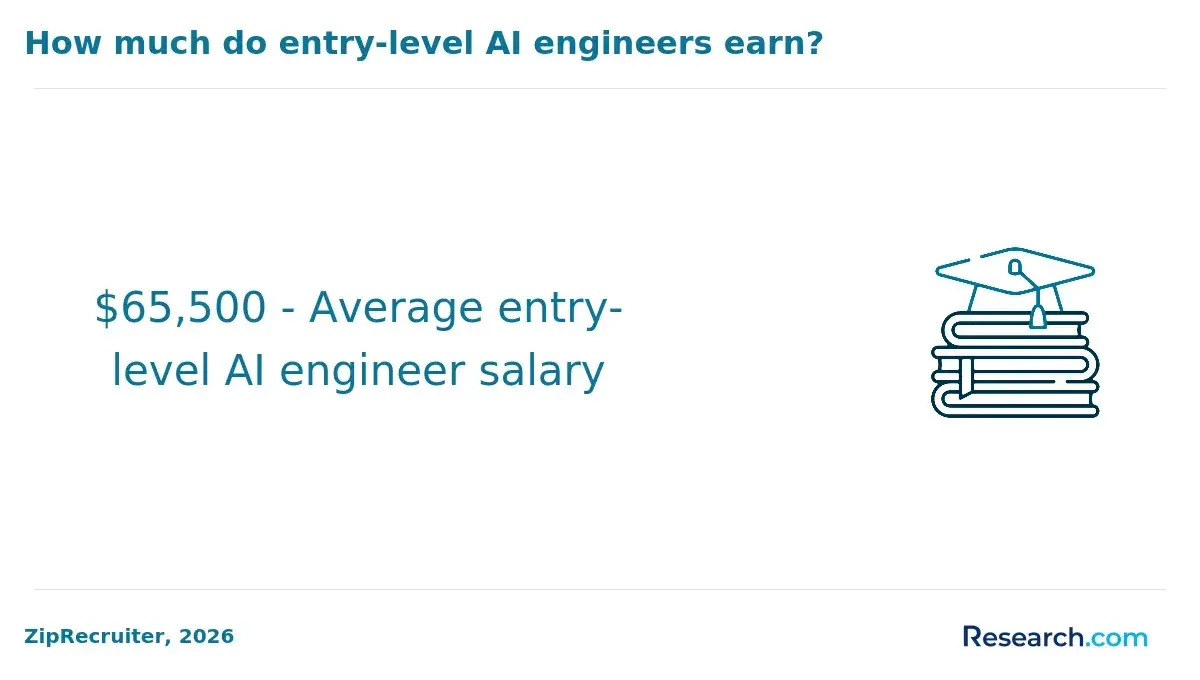
Salaries vary based on experience and location, with entry-level roles starting near $55,000. Mid-career specialists with AI expertise earn between $75,000 and $110,000 annually, while senior roles such as AI marketing directors can command salaries above $130,000 per year.
Proficiency in AI tools like natural language generation and predictive analytics enhances employability and salary. Candidates should be adept at data interpretation and managing AI platforms. Addressing challenges like AI content bias and workflow integration will raise a specialist's value in this rapidly evolving field.
Are there industry-recognized AI certifications relevant to email, CRM, and newsletter marketing teams?
AI certifications relevant to email marketing, CRM, and newsletter teams are increasingly important for demonstrating practical skills. These credentials validate expertise in using AI tools to enhance campaign targeting, automate personalization, and boost customer engagement. Examples include the Microsoft Certified: Azure AI Fundamentals, Google Cloud Professional Machine Learning Engineer, and IBM AI Enterprise Workflow certifications. Although not marketing-specific, these programs cover AI applications directly applicable to marketing automation and CRM analytics.
Email and newsletter marketers often pursue specialized certifications like the Marketo Certified Expert and Salesforce Marketing Cloud Consultant. These focus on AI-driven strategies such as AI-powered analytics, natural language generation, and predictive segmentation, crucial for improving campaign effectiveness.
Structured AI upskilling shows clear business value. A 2025 Deloitte survey on generative AI in marketing found teams with formal training achieved an 18% reduction in campaign production costs and a 14% increase in marketing-attributed revenue within 12 months. This highlights how recognized certification signals competence to employers and clients alike.
Other Things You Should Know About Artificial Intelligence
Common challenges include integrating AI tools with existing newsletter platforms, ensuring data privacy and compliance, and managing the quality of AI-generated content. Teams often face technical barriers, such as the need for custom training or adjustments to AI algorithms to achieve accurate personalization. Additionally, resistance to change within organizations can slow AI adoption.
Artificial intelligence systems rely heavily on user data, which raises concerns around privacy and security. Newsletter teams must ensure AI tools comply with regulations like GDPR and CCPA by implementing data anonymization and secure storage. Proper governance and transparent data policies are essential to protect subscriber information while leveraging AI insights.
In 2027, top AI courses for newsletter teams include "AI for Content Marketing" on Coursera and "AI in News Media" by edX. These courses focus on leveraging AI in content creation, personalization, and audience engagement, enabling teams to enhance newsletter effectiveness and efficiency.
While AI can optimize content personalization and automate routine tasks, it cannot fully replace human judgment in newsletters. Creativity, ethical considerations, and nuanced understanding of audience sentiment require human oversight. AI should be viewed as a tool that supports rather than supplants editorial decisions.
References
- What are the Best AI Newsletters for Tech and Business Leaders? https://www.clickittech.com/ai/best-ai-newsletters/
- University Degree vs AI Bootcamp: Which is Best Career Path? https://agilefever.com/university-degree-vs-ai-bootcamp-which-is-best/
- AI Training Cost Per Employee 2026 https://www.pertamapartners.com/insights/cost-per-employee-ai-training-budgeting
- AI Training for Employees: How to Get & Stay Ahead of the Curve https://guild.com/education-benefits/ai-employee-training
- The Best AI Training Courses for HR, Managers, and Employees in 2026 | Article | Lattice https://lattice.com/articles/ai-training-courses-for-every-team
- A Comprehensive Guide to AI Training for Small Businesses https://www.uschamber.com/co/start/strategy/ai-training-guide-small-business
- Best AI Newsletters in 2026: 12 Picks Ranked by Use Case https://www.readless.app/blog/best-ai-newsletters-to-subscribe
- AI in Email Marketing: A Complete Guide (2026) https://www.salesforce.com/marketing/email/ai/
- 2026 promises generous pay for IT pros, but you’d better know AI - Spiceworks https://www.spiceworks.com/it-careers/2026-promises-generous-pay-for-it-pros-but-youd-better-know-ai/
- Best AI Training for Sales Teams (2026) — Close More with AI https://iternal.ai/ai-training-for-sales-teams